
REVIEW · BOSTON
Walk the Historic Freedom Trail with Costumed Guide
Boston’s Freedom Trail is easiest to understand when someone connects the bricks, churches, graveyards, and meeting halls into one story. This 90-minute walk follows the central downtown stretch, with a costumed guide explaining how Boston moved from Puritan rule to protest, revolution, and American self-government.
I like the short format, which gives you a useful first look without taking half a day. I also like the guides’ theatrical approach: James Otis, Thomas, Jeff, Steven, and others use period dress, sharp stories, and humor to keep the politics and names from turning into a blur. The main concern is group size and street noise. Even with a microphone, hearing every word can be hard near traffic or construction.
Key points to know before you book
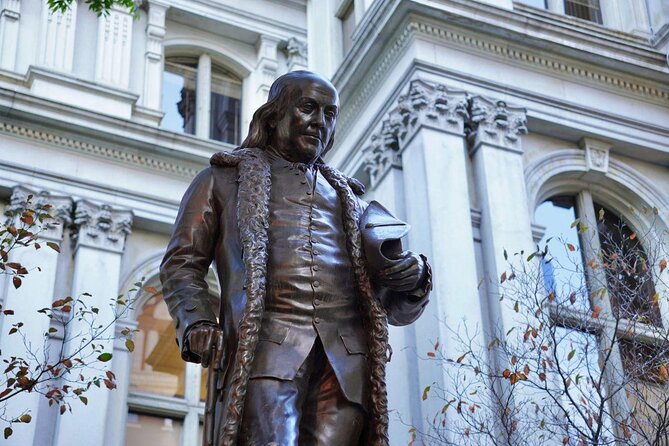
- A 90-minute route covers the core downtown section, from Park Street Church to Faneuil Hall Marketplace.
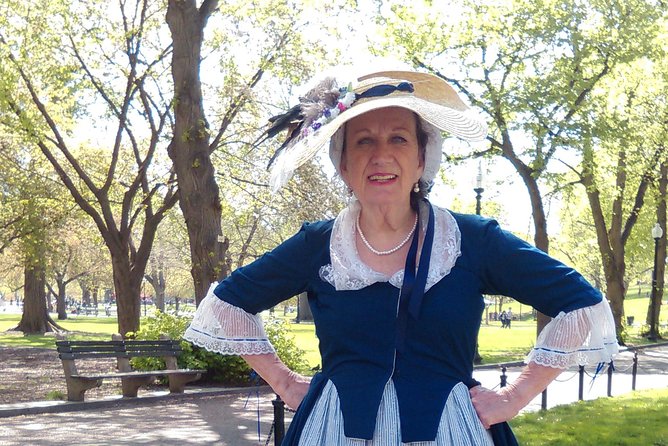
- Costumed guides make the past feel immediate, with figures such as James Otis presenting the story in character.
- Granary Burying Ground gets a full 15 minutes, useful if you want time to see the graves and hear about the people buried there.
- The route is short and mostly easy, but it includes plenty of standing and nearly a mile of walking.
- Morning and afternoon departures help with planning, especially if you have only one day in Boston.
- Street noise and group size can affect the experience, so stand near the guide, particularly if hearing is difficult.
Why this short Freedom Trail walk works
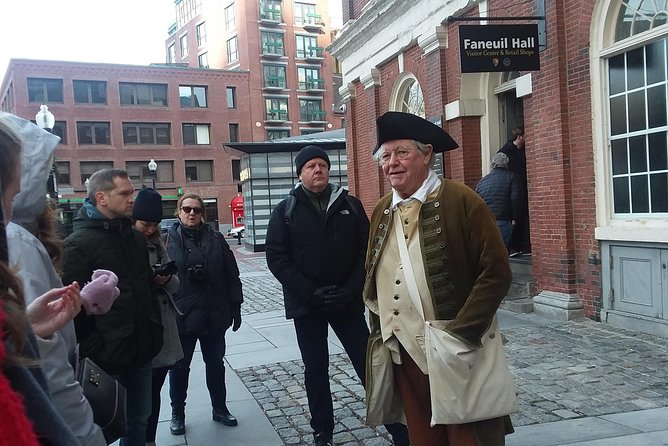
The full Freedom Trail is longer than most first-time visitors expect. This version trims the route to about an hour and a half, yet still links many of the major sites in central Boston. The advertised coverage is 11 of the trail’s 16 stops, while the timed route highlights ten main locations.
That makes this a good first chapter, not a complete study of every site. You get the broad political story, see the key buildings, and finish at Faneuil Hall with time left for the North End, a museum, shopping, or lunch.
The walk is less than a mile and does not involve serious hills. Still, do not mistake short for effortless. You will stop often, listen while standing, cross busy streets, and remain outdoors for the whole tour. Wear shoes you can walk in and dress for the forecast.
More Guided Tours in Boston:
- Harvard University Campus Guided Walking Tour
★ 4.5 · 3,632 reviews - Boston Freedom Trail Walking Tour with Costumed Guide
★ 4.5 · 2,531 reviews - Self Guided Classic Freedom Trail Location Aware (GPS) Walking Audio Tour
★ 4.5 · 258 reviews
Park Street Church and Boston Common
The tour begins at 139 Tremont Street, beside Park Street Church. This is a useful starting point because the church sits at the edge of Boston Common, where several layers of the city’s early story meet.
At Park Street Church, the guide explains the shift from early Puritan belief toward Protestant abolitionism. That is a complicated change to cover in five minutes, so expect a brisk introduction rather than a full religious history lesson.
The next stop is Boston Common, with about ten minutes devoted to the early settlement and growth of Boston. The Common is not just a pleasant patch of grass. Its long public role helps explain how the town functioned before the modern city took shape.
I like this opening because it places you in the city before the most famous revolutionary events begin. You are not simply moving from one famous building to another. You are getting the setting first.
The Massachusetts State House and Granary Burying Ground
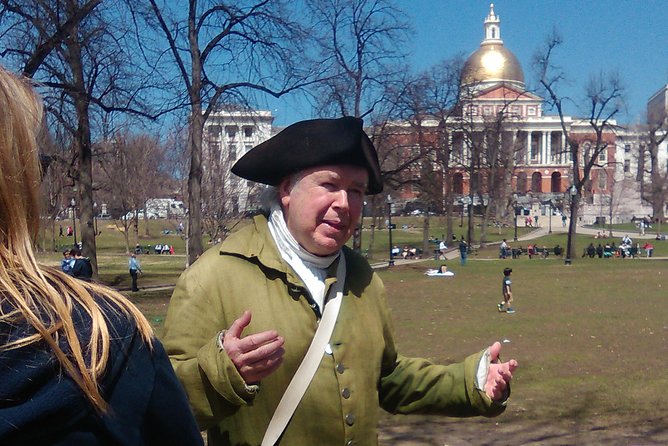
The Massachusetts State House receives a short stop of about five minutes. Built in 1795, it introduces the idea that government depends on the consent of the people. The building also helps connect the colonial rebellion to the political system that followed it.
Do not expect a full tour of the State House interior. The value here is the guide’s explanation of the building’s role and the argument behind the American Revolution. If you want detailed architecture or government history, you will need more time elsewhere.
The most substantial stop is Granary Burying Ground, with about 15 minutes. This is one of the places where the walk slows down and the names become personal. The cemetery is more than 350 years old and contains the graves of major figures from Boston’s early political and religious life.
The stop also highlights the fact that more signers of the U.S. Constitution are buried here than in any other cemetery in the country. That is a striking detail, but the real benefit is hearing the stories attached to specific people and graves.
Some visitors may find 15 minutes in a cemetery longer than expected, especially on a tight schedule. I think the time is justified. Without a pause here, the Revolution can feel like a string of dates and slogans. Granary Burying Ground gives the story human faces and final resting places.
King’s Chapel and Boston Latin School
King’s Chapel was originally an Anglican church, first built around 1688. Its place on the route shows that colonial Boston was not politically or religiously uniform. The shift from an English church to an American setting reflects the larger tensions that eventually pushed the colonies toward independence.
The stop lasts about ten minutes, enough for the guide to explain the church’s origins and its place in the city. This is another exterior-focused stop, so set your expectations accordingly. The tour is about context and storytelling, not an extended indoor inspection.
At Boston Latin School, you hear about the oldest public school in the United States, founded in 1635. The stop takes only about five minutes, but it adds an important civic theme. Education, public institutions, and access to learning were part of Boston’s identity long before the Revolution.
I find this pair of stops useful because they widen the story beyond battles and famous speeches. You see religion, education, and public life developing alongside the political dispute with Britain.
A few more walking tours around Boston worth a look
- Boston: Freedom Trail History Small Group Walking Tour
★ 5.0 · 6,450 reviews - The Full Revolutionary Story Epic Small Group Boston Walking Tour
★ 5.0 · 2,356 reviews - Boston’s Freedom Trail: A Revolutionary Walking Tour
★ 4.9 · 1,748 reviews - Boston: Freedom Trail History Small Group Walking Tour
★ 4.9 · 1,590 reviews
Old South Meeting House and the road to rebellion
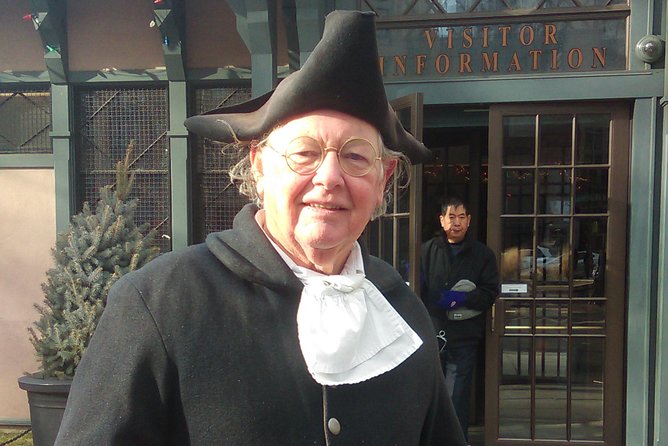
Old South Meeting House is one of the strongest stops for understanding how protest became organized action. Major meetings took place here, including the gathering just before the Boston Tea Party in 1773.
The guide has about ten minutes to explain how a meeting house could serve as a public forum. That matters because the Revolution did not appear out of nowhere. It grew through arguments, decisions, and large public gatherings.
This is also one of the places where a costumed guide can help. A plain lecture about the Tea Party may feel familiar from school. A guide speaking in period dress can make the setting feel more like a public meeting than a textbook paragraph.
The stop is short, so you will not get every detail about the Tea Party or the building’s later use. I see that as a fair trade for a route that keeps moving. The tour aims to give you a clear framework, then leaves you free to investigate the subjects that catch your interest.
The Old State House and Boston Massacre site
The Old State House dates to 1713 and served as Boston’s original state house. British control came first, followed by American control in 1775. This building neatly captures the change in authority that defines the Freedom Trail.
The guide uses the stop to explain how colonial government worked and how control shifted during the revolutionary period. You get about five minutes here, so listen for the main political points rather than expecting an architectural tour.
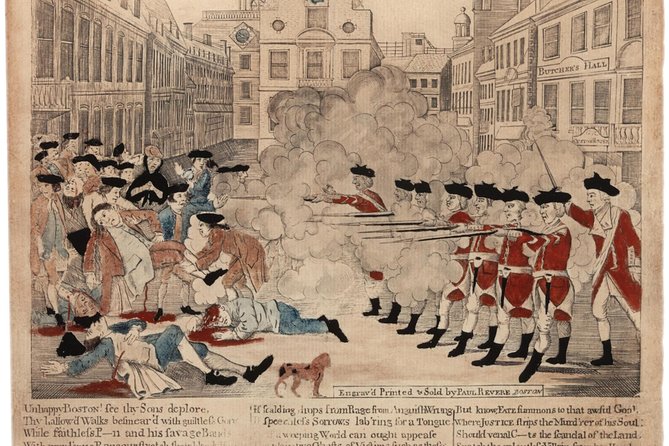
Nearby, the Boston Massacre site marks the 1770 killing of five Americans by British soldiers. Paul Revere later produced a famous engraving of the event. The guide can use this location to discuss both the event itself and the way images and printed stories shaped public opinion.
The site is visually modest. That is part of the lesson. A small marker in a busy downtown setting can represent a moment that helped push Boston closer to open rebellion. Traffic and construction noise are possible here, and the guide may need to position the group carefully.
Ending at Faneuil Hall Marketplace
The walk ends at Faneuil Hall Marketplace, with about five minutes devoted to the area. Faneuil Hall is tied to Boston’s public meeting tradition, and the statue of Samuel Adams provides a final link to the revolutionary story.
Ending here is practical. You are near restaurants, shops, and routes into the North End. You can also continue your own exploration without needing to return to the starting point.
The ending works best if you treat it as a launch point rather than a grand finale. You may want to visit more Freedom Trail sites, find a meal, or follow the guide’s suggestions for local food. One guide, Thomas, has been praised for sharing tips about lobster rolls and the North End, but suggestions can vary by guide.
What the costumed guides add
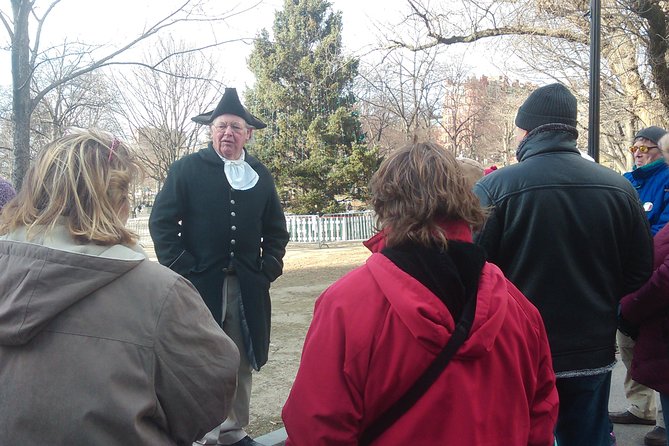
The period clothing is not just decoration. It gives the tour a clear personality and helps separate the walk from a standard city orientation. Guides including James Otis, Thomas, Jeff, Steven, Samuel Gray, and a Belgian guide named Adri have been singled out for strong delivery, humor, and command of the subject.
The style varies by person, but the common thread is an effort to make history lively without turning the walk into a comedy show. The best moments come when a joke helps you remember a fact, rather than replacing the fact.
The guides also answer questions, according to the experience description and the many comments about their friendly manner. That is useful on a short tour because you can ask about a person or event that interests you instead of waiting for a long lecture.
Still, the guide’s skill cannot remove every practical problem. Downtown Boston has traffic, construction, and other groups moving through the same narrow areas. One guide may be easy to hear in a quiet spot, while another stop may require you to move closer.
Group size, pace, and comfort
The stated maximum is 45 people. Responses from the provider also refer to caps of 30 or 35, so the actual group size may vary by departure or operating conditions. If a compact group matters to you, confirm the number before booking.
A larger group can make the walk less personal. It can also make it harder to hear, particularly at the Boston Massacre site or near a busy road. Stand close to the guide from the start. If you have hearing difficulty, staying near the speaker is especially important.
The pace is gentle. The walk covers less than a mile, with frequent stops, but you will be on your feet for roughly 90 minutes. The tour suits most people who can manage ordinary city walking and standing. Service animals are allowed, and the route is near public transportation.
Bring weather-appropriate clothing. The experience depends on good weather, and poor conditions can lead to a new date or a full refund. Comfortable shoes matter more than stylish ones here.
Is $30 a fair price?
At $30 per person, the tour is priced as a low-cost introduction to Boston’s central historic district. You are paying for a guide, a planned route, a clear timeline, and stories that help you read the buildings as you pass them.
The value is strongest if you are new to Boston, have a short visit, or want an orientation before exploring alone. A self-guided walk costs less, but you must supply the route, research, and historical context yourself. A private tour would offer more control, but costs more and is a different product.
I would not choose this experience if you want long interior visits, a complete walk of all 16 Freedom Trail sites, or a quiet small-group setting. For those goals, you need a longer or private option.
The 90-minute length is the real selling point. You can take a morning departure, spend the afternoon elsewhere, or use the tour before a flight. One person even booked a morning walk with limited time in Boston. That flexibility is useful in a city where major sights are spread through a busy downtown.
You can cancel for a full refund up to 24 hours before the start time. Inside that window, refunds and changes are not accepted. The tour also requires a minimum number of participants, so a cancellation for that reason comes with the choice of another date or a full refund.
Who should book this walk?
I would recommend it to first-time Boston visitors, American history students, couples, families with older children, and anyone who wants a quick orientation without committing to a three-hour route. The tone suits adults, but teenagers can follow the story, especially if they enjoy politics, rebellion, or dramatic characters.
It also works well for visitors with a narrow schedule. You see Boston Common, the State House, Granary Burying Ground, King’s Chapel, Old South Meeting House, the Old State House, the Boston Massacre site, and Faneuil Hall in one compact outing.
I would think twice if you dislike standing, have trouble hearing in city noise, or prefer to explore at your own speed. A group of up to 45 can feel crowded, and the route does not give you long stretches inside the buildings.
Should you book the Freedom Trail walk?
Book it if you want a lively 90-minute introduction to Boston’s revolutionary center, especially with a morning or afternoon free. The cost is reasonable, the route is manageable, and the costumed presentation gives familiar events some spark.
Skip it if your priority is a full Freedom Trail experience or detailed access to each historic building. For most visitors, though, this is a practical way to get oriented, learn the main story, and finish near Faneuil Hall with the rest of the day still available.
FAQ
How long does the Freedom Trail tour last?
The walk lasts approximately 1 hour and 30 minutes.
Where does the tour begin?
It begins at 139 Tremont Street, Boston, Massachusetts 02111.
Where does the tour end?
The tour ends at Faneuil Hall Marketplace in Boston.
What language is the tour offered in?
The tour is offered in English.
How much does the tour cost?
The listed price is $30 per person.
How much walking is involved?
The route covers less than one mile, but includes frequent standing and walking on city streets.
Is the tour suitable for people with hearing difficulties?
The guides are miked, and people with hearing difficulties are encouraged to stay close to the speaker. Street noise can still make hearing harder at some stops.
Are service animals allowed?
Yes. Service animals are allowed.
What happens if bad weather cancels the tour?
You will be offered a different date or a full refund if poor weather causes the cancellation.
Can I cancel for a refund?
Yes. You can receive a full refund if you cancel at least 24 hours before the experience begins. Cancellations within 24 hours are not refunded.
Just added around Boston
- Boston’s Architecture, History + Photo Walking Tour (SMALL Group)★ 5.0 · 91 reviews
- Beacon Hill Boston History + Photo Walking Tour (SMALL Group)★ 5.0 · 163 reviews
- Boston Private Food Tour of 6+ Tastings, Cannoli, Lobster Roll★ 5.0 · 165 reviews
- Boston’s North End Food and History Walking Tour★ 5.0 · 459 reviews
- Freedom Trail Guided Walking Tour (SMALL GROUP)★ 4.5 · 98 reviews
- Haunted Boston’s Historic Streets Walking Guided Tour★ 4.5 · 184 reviews
- 2 Hour North End ‘Little Italy’ Walking Tour★ 4.5 · 125 reviews
- Haunted Boston Booze and Boos Ghost Walking Tour★ 4.5 · 155 reviews
Walking Tours, compared.

Magical London: Harry Potter Guided Walking Tour
Read our review →
Reykjavik Food Walk – Local Foodie Adventure in Iceland
Read our review →
History and Hauntings of Salem Guided Walking Tour
Read our review →
New Orleans Premier Ghost, Voodoo and Vampire Walking Tour
Read our review →
Amsterdam Anne Frank: Small-Group Walking Tour & Local Guide
Read our review →

Edinburgh Castle: Guided Walking Tour with Entry Ticket
Read our review →
Anne Frank’s Story – Guided Walking Tour through Amsterdam
Read our review →Browse the lists this tour appears in