
REVIEW · BERLIN
Berlin: Walking Tour of the Top 10 Sightseeing Attractions
Berlin’s story comes at you fast on this two-hour walk from the government district to Museum Island. You’ll move from the modern Chancellery and Reichstag to the Brandenburg Gate, Holocaust Memorial, Gendarmenmarkt, and Berlin Cathedral, getting a useful first look at the city’s Prussian, Nazi, Cold War, and post-reunification chapters.
I like the clear route through Berlin’s big landmarks and the guides’ focus on stories rather than dry dates. I also like that the pace includes time for questions and photos, something Guide Max handled especially well. The tradeoff is simple: about 4 kilometers in two hours means you see exteriors and hear the context, but you will not have time to visit the buildings or museums inside.
Key points to know before you book
- Start at the Paul-Löbe-Haus: Meet opposite the Federal Chancellery in Berlin’s government district.
- See the city’s major symbols: The route includes the Reichstag, Brandenburg Gate, Holocaust Memorial, Gendarmenmarkt, Bebelplatz, Berlin Cathedral, and Museum Island.
- Cover about 4 kilometers: This is a brisk orientation walk, not a slow museum tour.
- Hear Berlin’s difficult stories: The guide addresses the Nazi era, book burnings, the Cold War, and the fall of the Wall.
- Choose your language: Tours run in English, Spanish, or German.
- Pay for a focused overview: At $82 per person, the value is strongest if you want a guide-led introduction to central Berlin.
Why this two-hour Berlin walk works as an introduction

Berlin can feel scattered at first. Its sights are spread across several districts, and the city’s history is layered rather than neatly arranged. This tour gives you a usable map in a short time, linking the government quarter with the old royal center and Museum Island.
The route also gives you a quick lesson in how Berlin changed. You begin beside modern government buildings, pass the Reichstag and Brandenburg Gate, walk along Unter den Linden, then reach squares and buildings shaped by Prussia, war, division, and reunification.
I see this as a first-day tour. It helps you decide where to return later, which museums deserve your time, and how the main sights fit together. If you already know central Berlin well, the pace and storytelling may feel less useful than a specialist tour devoted to one period.
The guide is central to the experience. The stated approach combines historical explanation, local recommendations, and Berlin humor. That matters here because the walk covers serious subjects, including Nazi persecution, the Holocaust, censorship, and the Cold War. A good guide can give those subjects the weight they need without turning every stop into a lecture.
A few more walking tours around Berlin worth a look
- Discover Berlin Half-Day Walking Tour
★ 5.0 · 9,624 reviews - Berlin City walk Government District and Places of Democracy
★ 4.7 · 8,467 reviews - Berlin: Third Reich & Cold War Guided Walking Tour
★ 4.9 · 8,378 reviews
Starting at the Paul-Löbe-Haus and the Chancellery
Meet in front of the main entrance to the Paul-Löbe-Haus at Konrad-Adenauer-Straße 1. The building is opposite the Federal Chancellery, putting you in the heart of the government district from the first minute.
The opening view takes in the Chancellery, Berlin Central Station, and the Bell Tower in Tiergarten. This is a useful place to begin because you see the modern capital before moving into the older city. The contrast is part of Berlin’s character: large contemporary government buildings sit only a short walk from royal avenues, war memorials, and rebuilt landmarks.
From here, you walk toward the Reichstag. The tour focuses on the building’s role as the seat of the German Parliament and its place in Berlin’s modern political story. You should expect an exterior visit rather than a parliamentary interior tour.
The Reichstag and Brandenburg Gate
The Reichstag is one of the key stops, and the guide uses it to explain Berlin’s government district. You’ll hear about the building’s political importance and its connection to the city’s changing fortunes.
The walk then reaches the Brandenburg Gate, the most instantly recognizable stop of the day. Once linked with Prussian power and later divided by the Berlin Wall, it now represents German unity and change. The guide pauses here for explanation and photographs, so keep your camera ready.
The area around the gate gives you several sights in one view. You can look toward the American and French embassies, the Hotel Adlon, the Victory Column, and the Soviet War Memorial in the distance. These details help place the gate in a wider political setting rather than treating it as an isolated photo stop.
I like this part of the tour because it shows how one monument can carry several meanings. The Brandenburg Gate is not simply an old arch. It has been a royal symbol, a Cold War image, and a modern national emblem.
The Holocaust Memorial and Potsdamer Platz

The route continues to the Memorial to the Murdered Jews of Europe, usually called the Holocaust Memorial. The guide provides historical context as you walk through the site. This is a serious pause in an otherwise fast-moving tour, and you should allow yourself a little quiet attention here.
The experience does not include the memorial’s underground information center, so you will need a separate visit if you want its fuller documentation. Still, seeing the field of concrete blocks and hearing the basic historical setting helps connect the modern city with the crimes committed under the Nazi regime.
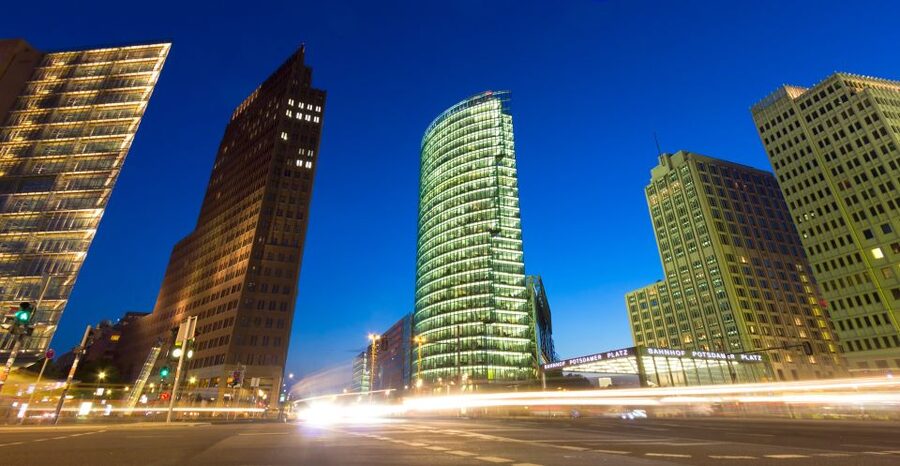
Potsdamer Platz follows as another example of Berlin’s rebuilding. The tour uses the area to show how the city changed after division and reunification. You get a sense of the sharp shift from memorial sites and wartime history to modern urban development.
Because the tour covers this stretch quickly, you will not receive a detailed architectural study of Potsdamer Platz. Its value here is as part of the larger timeline: Berlin moves from imperial power to dictatorship, destruction, division, and a new capital.
Same streets, a different route:
- Berlin: Discover Berlin Walking Tour
★ 4.9 · 5,998 reviews - Berlin’s Best: 2 Hour Walking Tour Third Reich and the Cold War
★ 5.0 · 5,486 reviews - Berlin: Hidden Backyards Guided Walking Tour
★ 4.8 · 5,360 reviews - Explore Berlin: See All The Iconic Sights & Some Hidden Gems
★ 5.0 · 4,429 reviews
Unter den Linden and the weight of Bebelplatz
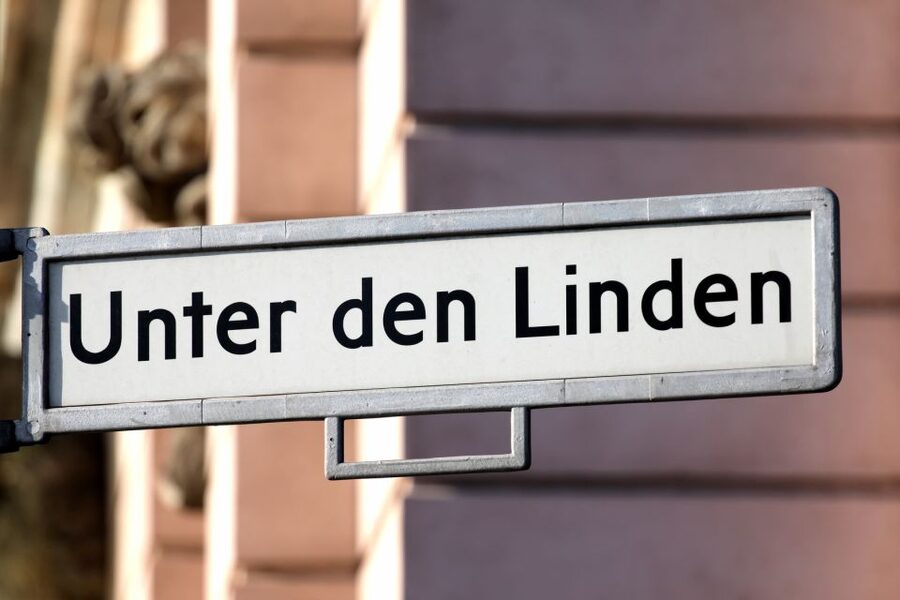
The walk continues along Unter den Linden, Berlin’s famous boulevard. The avenue links the Brandenburg Gate with the old royal center and gives the tour a strong sense of direction. Along the way, your guide explains how emperors, political movements, and major events shaped the city.
Bebelplatz is one of the most important stops for anyone interested in German history. It is associated with the Nazi book burning of 1933, when books deemed politically or culturally unacceptable were destroyed. The square asks you to think about censorship and the early stages of Nazi control, not just the later years of war.
The stop includes guided explanation and some free time. That balance is useful. You can ask questions, take in the surrounding architecture, and give the subject a moment of thought instead of rushing straight through.
Bebelplatz also shows how Berlin’s historic center combines beautiful buildings with painful memories. The setting is grand, but the story is disturbing. A guide who can connect both sides gives you more than a quick photograph.
Gendarmenmarkt and its three landmarks
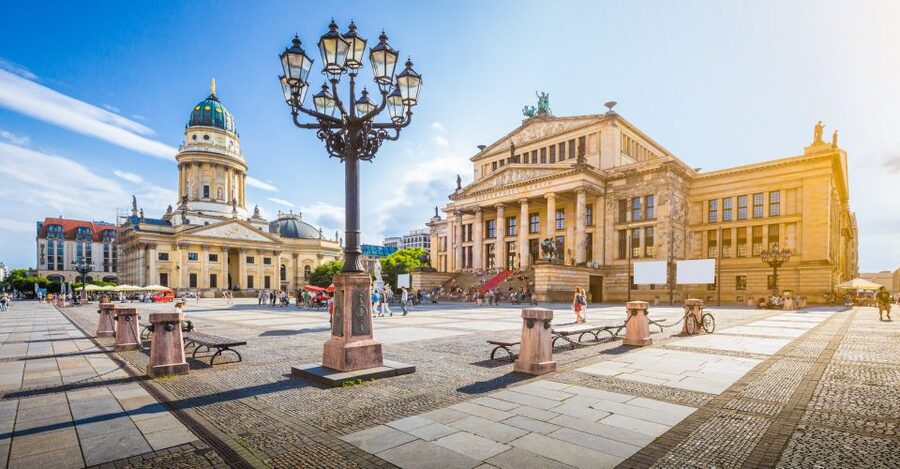
Gendarmenmarkt is one of the tour’s strongest architectural stops. The square is framed by the German Cathedral, the French Cathedral, and the Konzerthaus. Together, the three buildings create one of central Berlin’s most impressive urban views.
The guide explains the role of the square and points out the differences between the buildings. You will hear less about individual interiors because this is an exterior walking tour, but the surrounding architecture still gives you a clear sense of Berlin’s former importance as a Prussian capital.
This stop also provides a change of pace. After the serious subjects at the Holocaust Memorial and Bebelplatz, Gendarmenmarkt lets you focus on design, public space, and the city’s cultural life. The guide’s humor can work well here, especially after the heavier parts of the route.
The square may be busy, and the tour is not designed for long, quiet architectural study. If you want time to enter the cathedrals or attend a performance at the Konzerthaus, plan a separate visit.
Lustgarten, Berlin Cathedral, and Museum Island
The final section brings you toward Lustgarten, Berlin Cathedral, Museum Island, and the New City Palace area. Lustgarten has strong links to Prussian history and offers a broad view of the cathedral and nearby landmarks.
Berlin Cathedral is one of the route’s most striking buildings. You will hear about its place in the historic center and have time to appreciate its scale from outside. The tour does not include an interior visit, so check the cathedral separately if you want to see the inside.
Museum Island adds another major piece to the city’s cultural map. The tour helps you understand where Berlin’s principal museum buildings sit and why this small area matters so much to the city. It is an excellent place to end an orientation tour because you can return later for a museum visit.
The walk finishes at Friedrichsbrücke. Along the way, the guide also points out the view toward the Berlin TV Tower and the Nikolaiviertel, often described as the birthplace of Berlin, dating to 1237. That final contrast is striking: medieval origins, Prussian monuments, modern government, and a postwar skyline all appear within a compact central route.
Pace, guide style, and what you really get
Two hours is short for this much ground. The benefit is efficiency. You see the main sights without spending half a day on one neighborhood. The cost is depth. You will hear key stories and useful background, but you should not expect detailed treatment of every landmark.
The guides are described as certified local professionals who speak English, Spanish, or German. The strongest qualities to look for are clear storytelling, willingness to answer questions, and a good sense of timing. Guide Max is specifically praised for answering questions and allowing time for photographs and reflection. Another guide is noted for extending the tour beyond the planned time, though you should not assume every group will receive extra time.
The small-group and private options matter. A smaller group makes it easier to hear on busy streets and ask questions. A private tour gives you more control, though the $82 price per person may feel high if you are traveling alone or with a large family.
The tone includes Berlin humor. That can make a long chain of dates easier to follow, but the guide still needs to handle places such as the Holocaust Memorial and Bebelplatz with care. The stated focus on both humor and historical seriousness is a good fit for visitors who want an engaging tour without a stiff classroom feel.
Is $82 a fair price?
At $82 per person, this is not the cheapest way to see Berlin’s center. You can walk past many of these sights on your own for nothing. The price pays for the guide’s route, explanations, local context, and the chance to ask questions as you go.
I think the value is strongest for a first visit, a short stay, or anyone who wants a quick historical framework before choosing later visits. It also makes sense for families and groups who want one organized walk instead of working out the route themselves.
The value is weaker if you want interior access, museum time, or a slow architectural tour. No museum admission is included, and the experience remains a walking overview. You are paying for interpretation and efficiency, not entry tickets.
Free cancellation up to 24 hours before the start and the option to reserve now and pay later add useful flexibility. Tours run in all weather, so you should bring water, wear comfortable walking shoes, and carry rain protection when the forecast looks uncertain.
Who should book this Berlin walking tour?
I would recommend it to first-time visitors, families, older travelers who can manage about 4 kilometers, and anyone with only a short window in Berlin. The route includes many of the city’s most important central sights, and the guide helps turn a long list of monuments into a connected story.
It also suits visitors who want to return to the Reichstag area, Brandenburg Gate, Bebelplatz, or Museum Island later. You get a practical sense of distances and priorities before spending more time at individual sites.
I would choose another format if your main goal is museum access, World War II detail, Cold War history, or a very slow photography walk. This tour touches all of those subjects but cannot explore one in depth during 120 minutes.
FAQ
Where does the tour start?
The meeting point is in front of the main entrance to the Paul-Löbe-Haus at Konrad-Adenauer-Straße 1, opposite the Federal Chancellery.
Where does the tour finish?
The walk ends at Friedrichsbrücke near Museum Island.
How long is the tour?
The walking tour lasts two hours and covers approximately 4 kilometers.
Which sights are included?
The route includes the German Chancellery, Reichstag, Brandenburg Gate, Holocaust Memorial, Potsdamer Platz, Gendarmenmarkt, Bebelplatz, Lustgarten, Berlin Cathedral, Museum Island, and the New City Palace area.
What languages are available?
The tour is offered in English, Spanish, and German.
Is the tour wheelchair accessible?
Yes, the activity is listed as wheelchair accessible.
Does the tour run in bad weather?
Yes, tours operate in all weather conditions. Comfortable walking shoes and a water bottle are recommended.
Should you book it?
Book this tour if you want a fast, guided introduction to central Berlin and prefer stories and local humor to wandering from monument to monument alone. The route is well chosen, the pace is efficient, and the strongest value comes from the guide’s ability to connect the Reichstag, Brandenburg Gate, Berlin’s memorials, Prussian squares, and Museum Island.
Skip it if you want museum interiors or detailed study of one historical period. For everyone else, especially on a first visit, this is a practical way to get your bearings and decide where Berlin deserves more of your time.
Just added around Berlin
- East Berlin and the Wall: Walking Tour★ 4.9 · 407 reviews
- Cold War, Berlin Wall, Spies and the East Side Gallery★ 4.8 · 254 reviews
- Berlin: walking tour about Charité★ 4.4 · 537 reviews
- Berlin: Sightseeing Walking Tour of the Top 20 Attractions★ 4.5 · 196 reviews
- Berlin: The Time of National Socialism Walking Tour★ 5.0 · 220 reviews
- Berlin : Must-see attractions Walking Tour★ 4.8 · 83 reviews
- Berlin: Kreuzberg Guided Walking Evening Tour★ 4.7 · 555 reviews
- Berlin: Hitler’s Berlin The Rise & Fall Guided Walking Tour★ 4.9 · 239 reviews
Walking Tours, compared.

Magical London: Harry Potter Guided Walking Tour
Read our review →
Reykjavik Food Walk – Local Foodie Adventure in Iceland
Read our review →
History and Hauntings of Salem Guided Walking Tour
Read our review →
New Orleans Premier Ghost, Voodoo and Vampire Walking Tour
Read our review →
Amsterdam Anne Frank: Small-Group Walking Tour & Local Guide
Read our review →

Edinburgh Castle: Guided Walking Tour with Entry Ticket
Read our review →
Anne Frank’s Story – Guided Walking Tour through Amsterdam
Read our review →Browse the lists this tour appears in