
REVIEW · BERLIN
Berlin: Hitler’s Berlin The Rise & Fall Guided Walking Tour
Berlin’s Nazi past is easiest to understand when you connect the buildings, memorials, and street corners into one clear story. This 150-minute walk follows that story from Hitler’s rise to power through dictatorship, terror, war, and defeat in 1945.
I like the way the tour links politics and daily life, rather than treating World War II as a string of dates. I also like the use of historic maps and Then & Now photographs, which help you picture places that were damaged, rebuilt, or deliberately left without visible traces. The main drawback is simple: this is a serious outdoor walk, so rain, cold, heat, or tired feet can affect the experience.
Key points
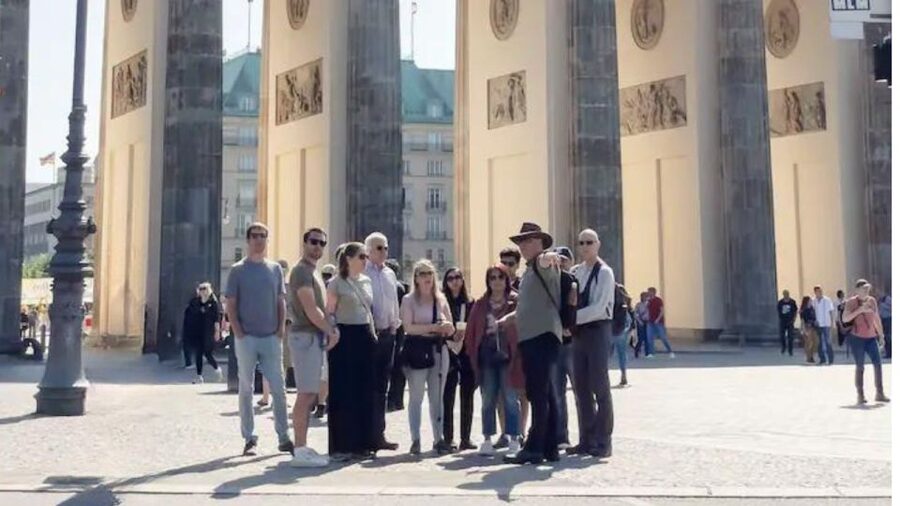
- Starts at Brandenburg Gate: Meet at the Tourist Office and look for the blue umbrella.
- Covers major Nazi-era sites: The Reichstag, Holocaust Memorial, Hitler’s bunker site, Topography of Terror, and more.
- Explains how dictatorship took hold: The guide connects elections, propaganda, repression, antisemitism, and war.
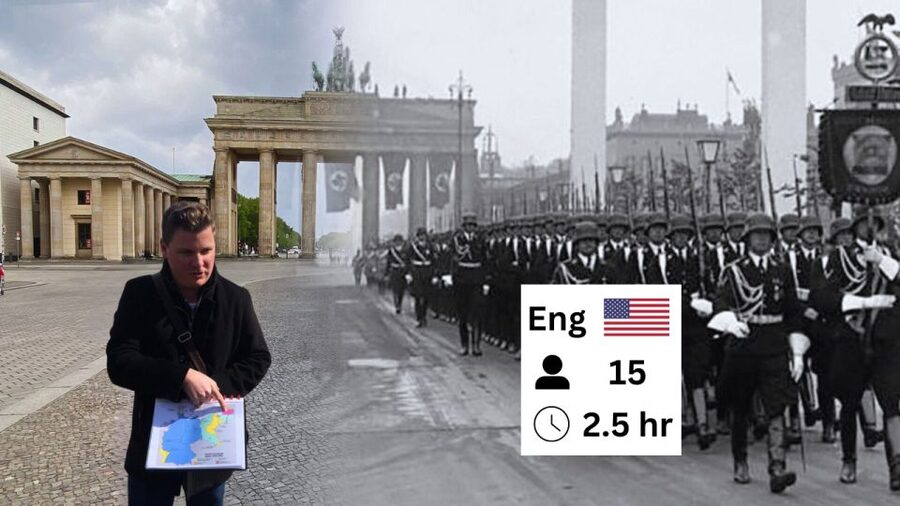
- Uses maps and Then & Now images: These make vanished buildings and changed streets easier to understand.
- Led in English by trained historians: Scott, Hannah, Matthew, Mark, Ben, Jörg, and other guides have received especially strong praise for clear explanations and easy conversation.
- Outdoor and wheelchair accessible: Bring comfortable shoes, weatherproof clothing, and water.
A clear route through Berlin’s darkest chapter
This is not a tour of preserved Nazi buildings. Much of Hitler’s Berlin was destroyed, rebuilt, or intentionally marked only by memorials and information panels. That makes a good guide especially important.
The walk gives you a framework for understanding how the Nazi regime took control. You hear how Hitler came to power, how democratic institutions were weakened, how Jewish people were persecuted, and how fear and propaganda helped maintain control. The story then moves into wartime Berlin and the final battle that brought the regime down.
I appreciate that the tour treats ideology, government, military events, and ordinary life as connected subjects. You are not left with the impression that Hitler’s dictatorship appeared fully formed overnight. Instead, the guide shows how power was seized and then consolidated.
The route also makes room for questions. Guides such as Scott, Hannah, Matthew, and Mark are repeatedly praised for explaining difficult subjects in plain English and for answering follow-up questions without making the walk feel like a formal classroom lecture.
More Guided Tours in Berlin:
- Berlin: Third Reich & Cold War Guided Walking Tour
★ 4.9 · 8,378 reviews - Berlin: Hidden Backyards Guided Walking Tour
★ 4.8 · 5,360 reviews - Berlin: City Street Art Guided Walking Tour
★ 4.8 · 1,051 reviews
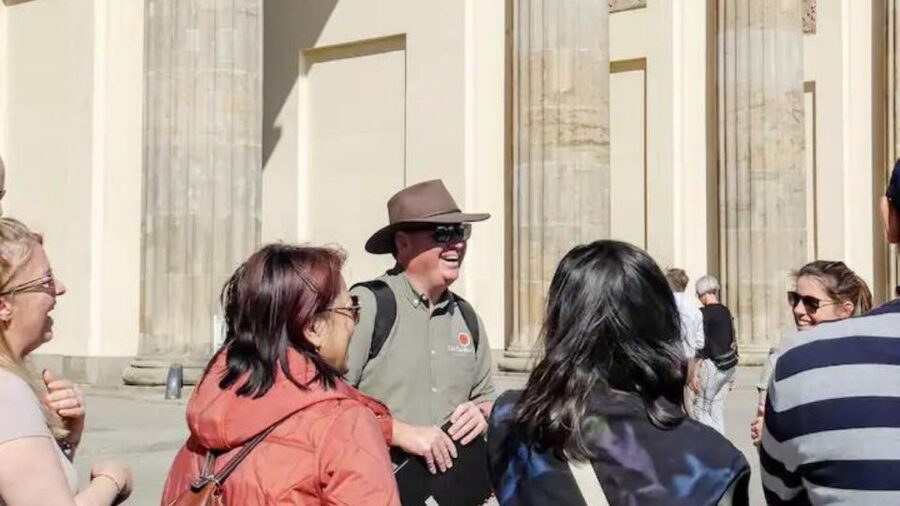
Starting at Brandenburg Gate
Meet your guide at the Tourist Office beside Brandenburg Gate. The identifying sign is a blue umbrella, a useful detail in a crowded central area.
Brandenburg Gate is a fitting place to begin because it can represent several different chapters of German history. It is associated with Prussian power, modern Germany, Nazi ceremony, division during the Cold War, and reunification. Here, the guide begins placing Hitler’s rise within the wider political setting of Berlin.
The stop lasts about 10 minutes. Expect a short introduction, photographs, and an explanation of what you will see during the walk. The gate itself is familiar from countless photographs, but the tour’s value comes from showing how its meaning changed over time.
You should arrive ready to walk. The route crosses central Berlin streets and open public spaces, with pauses at memorials and historical sites. The tour is wheelchair accessible, though the experience still takes place outdoors and includes considerable walking.
The Sinti and Roma memorial and the Reichstag
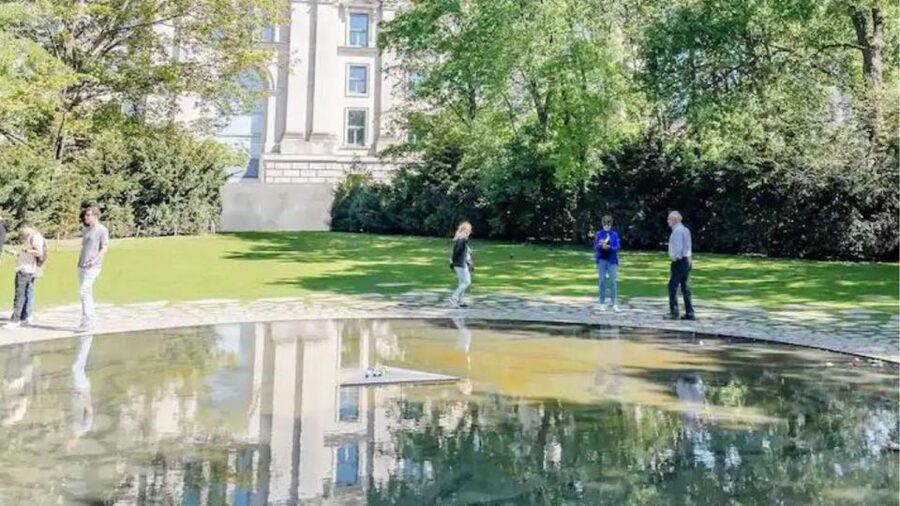
The next stop is the Memorial to the Sinti and Roma Victims of National Socialism. This quiet memorial broadens the story beyond the persecution of Jewish people, showing how Nazi racial policy also targeted Sinti and Roma communities.
That inclusion matters. A short visit cannot cover every group persecuted by the regime in equal detail, but this stop makes clear that Nazi persecution was built on a wider racial ideology. The guide explains the memorial and its place in the larger story before continuing toward the Reichstag.
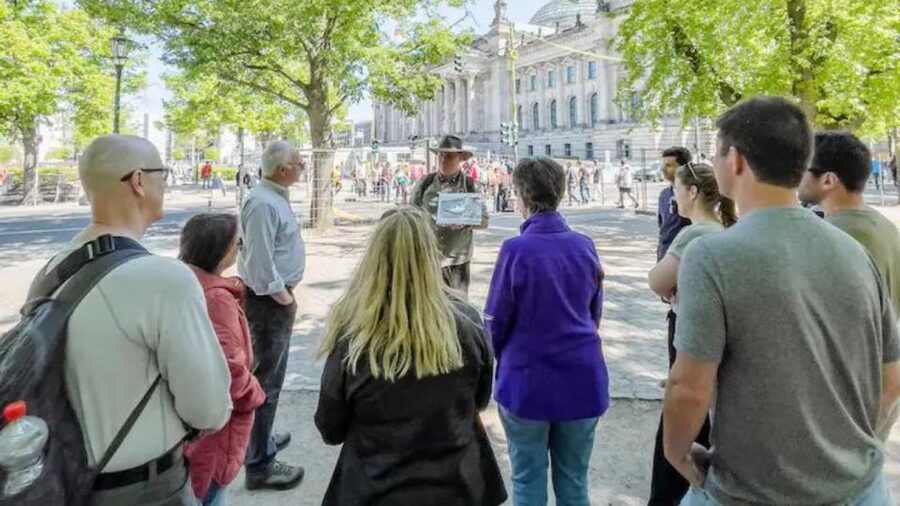
The Reichstag receives about 20 minutes. You visit the exterior and hear about its importance as a symbol of democracy, dictatorship, and German unity. It is one of the most useful stops for understanding how democratic government was weakened and replaced by one-party rule.
Do not expect an indoor Reichstag visit. The tour is conducted outside, and access to indoor museum exhibitions is not included. If you want to see the building’s interior or dome, you will need to make a separate arrangement.
The Soviet War Memorial in Tiergarten
The walk continues to the Soviet War Memorial in Tiergarten, where you spend about 20 minutes. This large memorial recalls the Soviet forces who died in the Battle of Berlin, the brutal final fight that destroyed much of the city in 1945.
The memorial helps shift the story from political control to military collapse. By this point, you have heard how the Nazi regime ruled Berlin. Here, the focus turns to what happened when the war reached the capital itself.
I like this stop because it keeps the end of the war tied to the city’s physical setting. Berlin was not a distant headquarters observing events elsewhere. It became a battlefield, and the final fighting brought enormous destruction and loss of life.
The stop also adds a useful postwar layer. Berlin’s memorials reflect different memories of the conflict, and the Soviet monument presents the war from the perspective of the Red Army. Your guide can help connect that viewpoint to the wider history of the city.
A few more walking tours around Berlin worth a look
- Discover Berlin Half-Day Walking Tour
★ 5.0 · 9,624 reviews - Berlin City walk Government District and Places of Democracy
★ 4.7 · 8,467 reviews - Berlin: Discover Berlin Walking Tour
★ 4.9 · 5,998 reviews - Berlin’s Best: 2 Hour Walking Tour Third Reich and the Cold War
★ 5.0 · 5,486 reviews
The Memorial to the Murdered Jews of Europe
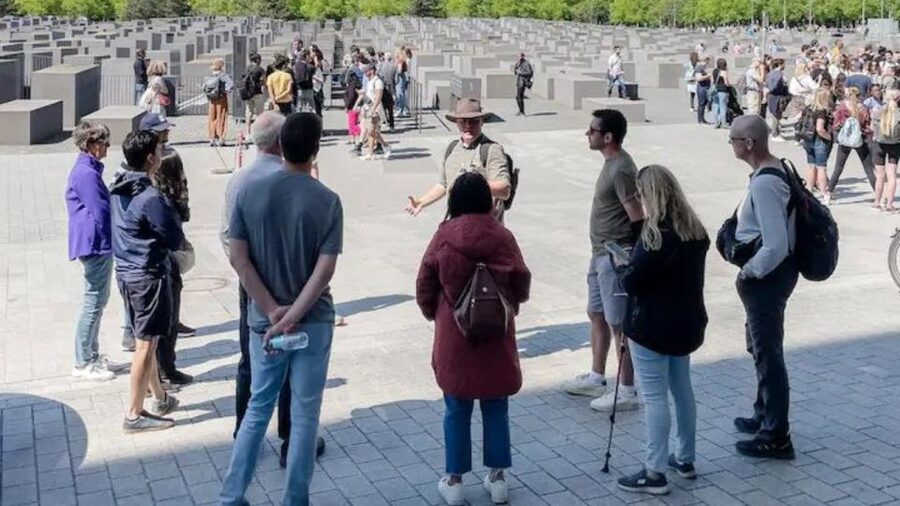
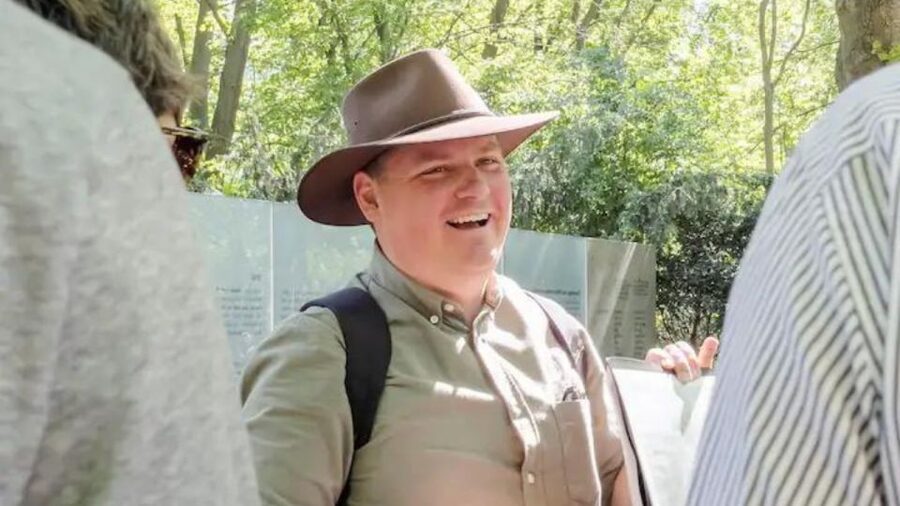
The Holocaust Memorial is one of the most emotionally powerful stops on the route. You have about 20 minutes to see the field of concrete stelae and hear how the memorial invites reflection without telling one simple, fixed story.
This is not a museum visit, and the tour does not replace a longer visit to the nearby underground information center. Still, the guide gives the memorial useful historical context. The stop connects Nazi ideology to the systematic persecution and murder of Europe’s Jewish population.
A respectful approach is important here. The memorial is a place for reflection, not a backdrop for careless behavior. Your guide helps establish that tone while explaining how the memorial fits into Berlin’s effort to confront the crimes committed in the name of the German state.
For many people, this is the point where the earlier discussion of laws, propaganda, and repression becomes more human. The route has dealt with institutions and military events, but here the focus returns to the people targeted by Nazi policy.
Hitler’s bunker site and the end of the regime
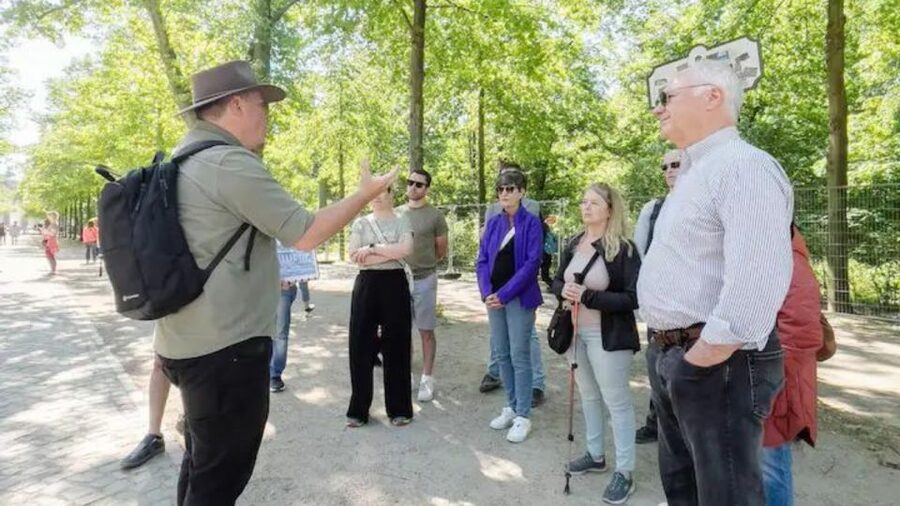
The former site of Hitler’s bunker is another 15-minute stop. There is no grand underground attraction to enter. The bunker was destroyed, and the modern site is deliberately understated.
That absence is part of the lesson. You stand near the place where Hitler spent his final days as the war closed in around Berlin. The regime that had presented itself as permanent ended in confinement, chaos, and defeat.
The guide explains what happened in the final days of the war and why the location matters. Historic photographs and maps are especially useful here because the modern setting gives little visual sense of the wartime scene.
I find the lack of spectacle appropriate. A dramatic reconstruction could turn the bunker into a shrine or curiosity. Instead, the site asks you to consider how a dictatorship ended, and how little physical evidence remains of the people who directed it.
Johann Georg Elser and the German Finance Ministry
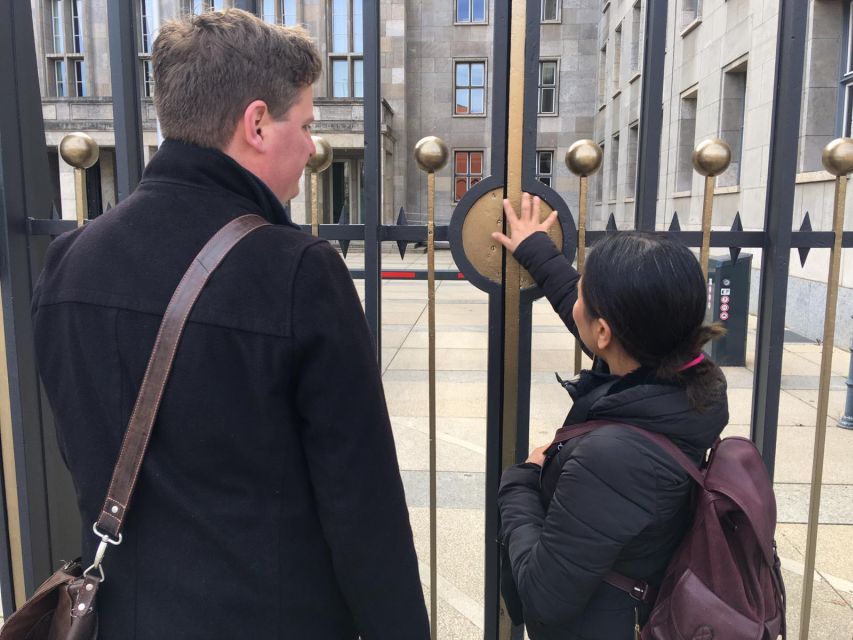
The Johann Georg Elser Memorial gives the walk another important angle. Elser attempted to kill Hitler in 1939 with a bomb, acting before the war had reached its later scale of destruction.
His story challenges the idea that all opposition began only when Germany was clearly losing. It also opens a discussion about individual resistance, moral choices, and the danger faced by people who acted against the regime.
The stop lasts about 10 minutes. It is brief, but it adds balance to the route. The tour is mainly about how Nazi control worked, yet this memorial shows that some people recognized the danger and tried to stop it.
The German Finance Ministry is a shorter, five-minute stop. The building helps explain the administrative side of the Nazi state and the way government offices supported the regime. This is a quick pause rather than a major attraction, but it helps show that dictatorship depended not only on Hitler and the SS. It also relied on institutions, officials, paperwork, and routine administration.
Topography of Terror and the Nazi terror system
The walk finishes at Topography of Terror, where the former Gestapo and SS headquarters once operated. You spend about 15 minutes here with the guide.
This is one of the most important stops because it shifts attention from Hitler personally to the machinery of terror. The Gestapo and SS were central to surveillance, repression, imprisonment, and mass violence. The guide explains how these organizations helped turn Nazi ideology into practical control.
The tour ends outdoors at the Topography of Terror site. Indoor museum access is not included, so allow extra time if you want to explore the exhibition separately. The location is well suited to continuing your study because it deals directly with the institutions that enforced Nazi rule.
Ending here gives the route a strong structure. You begin with political power at Brandenburg Gate and finish with the organizations that maintained control through fear. Along the way, you see the victims, the battlefield, the bunker, the resistance memorial, and the administrative offices that supported the regime.
How the guides handle difficult history
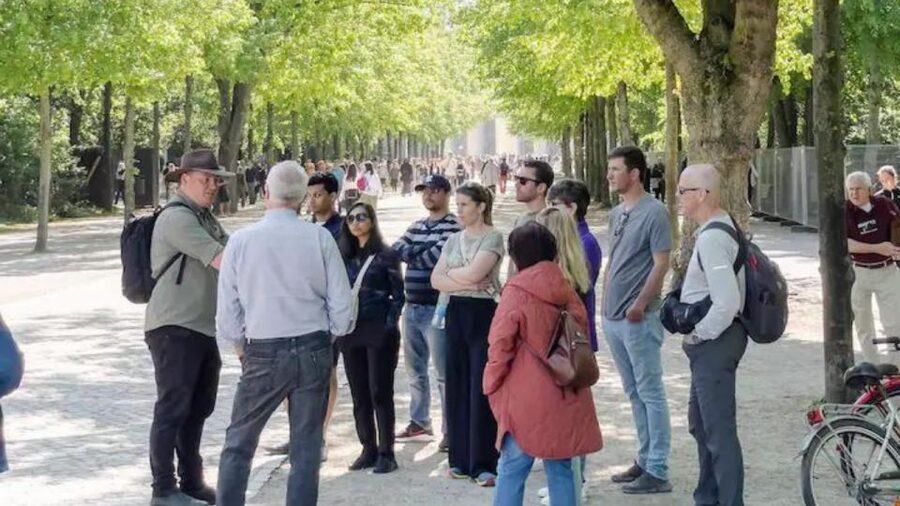
The guide is the heart of this experience. The company describes its guides as historians with an academic background in World War II, and the strongest pattern in the feedback is the clarity of their explanations.
Scott is frequently singled out for his friendly manner, strong command of the subject, and willingness to answer questions. Hannah is praised for bringing the history to life with personal and thoughtful stories while presenting more than one angle. Matthew is described as engaging, well prepared, and able to give detailed answers without losing the group.
Mark, Ben, and Jörg have also led tours that received strong praise for clear explanations and an easy, welcoming style. One useful point for you is that the tone is not stiff. The guides encourage questions, use occasional humor appropriately, and explain unfamiliar subjects without assuming that everyone already knows the background.
The experience may suit you if you already know a fair amount about World War II. Several comments from experienced history-minded participants describe learning something new. It can also work for first-time learners because the route follows a logical sequence instead of dropping isolated facts on you.
The guide may sometimes continue beyond the advertised time when questions and discussion run long. That can be a benefit if you want detail, but it is worth leaving some flexibility in your schedule.
Maps, photographs, and the outdoor format
The included Then & Now photographs and historic maps are more than decoration. Berlin changed so drastically during and after the war that many important locations no longer look as they did in 1933, 1940, or 1945.
A photograph can show you the former appearance of a government building. A map can explain the movement of troops through Berlin or the location of a vanished structure. These tools help bridge the gap between the modern city and the wartime capital.
The outdoor format keeps you connected to the streets, but it also limits the amount of material the guide can cover. You will not receive a full museum exhibition, a long archival presentation, or an indoor display of original objects. Think of this as a guided historical walk that gives you structure and context, not a substitute for every Berlin museum.
Weather is the practical concern. Bring comfortable shoes, water, and clothing suited to the forecast. Umbrellas and walking sticks are not provided, so bring your own if you need them. The tour has continued in poor weather, but an unexpected downpour can still make the experience less comfortable.
Is $47 a fair price?
At $47 per person, this is not the cheapest way to see central Berlin. You can walk past Brandenburg Gate, the Reichstag, and several memorials without paying anything.
The price makes more sense if you want the historical connections explained properly. You are paying for 150 minutes with a specialist guide, a planned route, group discussion, historic maps, and photographs that help you interpret places that otherwise may seem disconnected.
The small group format should also make it easier to hear the guide and ask questions, though the exact group size is not provided. Food, drinks, transport, and hotel pickup are not included. You are responsible for getting to the start and away from the finish.
I would consider the tour good value for a first visit, especially if Nazi Germany and wartime Berlin are major reasons for your trip. If you prefer to read at your own pace or already have a detailed plan for Berlin’s museums, you may find the price harder to justify.
Who should book this walk?
This tour is best for adults and older teenagers who want a serious, guided introduction to Berlin between 1933 and 1945. It can suit people new to the subject and those who already know the basic chronology but want to connect it to real places.
It is also a good choice for anyone who wants to understand how a modern democracy was dismantled. The route does not focus only on battle scenes or military hardware. It covers elections, propaganda, racism, state terror, resistance, daily life, and the collapse of the regime.
You should think twice if you dislike long outdoor walks, need frequent indoor seating, or want access to museum exhibitions during the tour. The walk is wheelchair accessible, but you should still consider the amount of time spent outside and the weather on your chosen day.
English is the tour language. Because the subject is heavy, the guide’s ability to explain difficult material clearly matters more than flashy presentation. Based on the consistently strong response to guides including Scott, Hannah, and Matthew, that is where this experience earns its price.
My booking advice
I would book this tour if you want a firm historical backbone for your time in Berlin. The route covers the key sites, but its real value is the explanation between them: how political power became dictatorship, how terror was organized, and how the regime ended in the ruins of its own capital.
Book it early in your stay if possible. That gives you a useful map of Berlin’s Nazi-era sites before visiting places such as the Topography of Terror on your own. Bring water, sturdy shoes, and rain protection, and leave a little time after the finish if you want to explore the indoor exhibition separately.
Skip it only if you want a self-guided stroll or a museum-heavy experience. For an outdoor tour led in clear English by a specialist history guide, $47 is a reasonable price for the context you receive.
FAQ
How long does the Hitler’s Berlin walking tour last?
The tour lasts 150 minutes, or two and a half hours.
How much does the tour cost?
The listed price is $47 per person.
Where does the tour begin?
Meet at the Tourist Office at Brandenburg Gate and look for the blue umbrella.
Where does the tour finish?
The tour finishes at Topography of Terror.
Is the tour conducted in English?
Yes. The live tour guide language is English.
Is indoor museum admission included?
No. The tour takes place outdoors, and access to indoor museum exhibitions is not included.
Is the tour wheelchair accessible?
Yes, the activity is listed as wheelchair accessible.
What should I bring?
Wear comfortable shoes and dress for the weather. Bring a water bottle, and bring your own umbrella or walking stick if you need one.
Can I cancel for a full refund?
Yes. You can cancel up to 24 hours in advance for a full refund.
Do I have to pay when I book?
No. The reserve now and pay later option lets you book without paying immediately.
Just added around Berlin
- East Berlin and the Wall: Walking Tour★ 4.9 · 407 reviews
- Cold War, Berlin Wall, Spies and the East Side Gallery★ 4.8 · 254 reviews
- Berlin: walking tour about Charité★ 4.4 · 537 reviews
- Berlin: Walking Tour of the Top 10 Sightseeing Attractions★ 4.7 · 150 reviews
- Berlin: Sightseeing Walking Tour of the Top 20 Attractions★ 4.5 · 196 reviews
- Berlin: The Time of National Socialism Walking Tour★ 5.0 · 220 reviews
- Berlin : Must-see attractions Walking Tour★ 4.8 · 83 reviews
- Berlin: Kreuzberg Guided Walking Evening Tour★ 4.7 · 555 reviews
Walking Tours, compared.

Magical London: Harry Potter Guided Walking Tour
Read our review →
Reykjavik Food Walk – Local Foodie Adventure in Iceland
Read our review →
History and Hauntings of Salem Guided Walking Tour
Read our review →
New Orleans Premier Ghost, Voodoo and Vampire Walking Tour
Read our review →
Amsterdam Anne Frank: Small-Group Walking Tour & Local Guide
Read our review →
Edinburgh Castle: Guided Walking Tour with Entry Ticket
Read our review →
Anne Frank’s Story – Guided Walking Tour through Amsterdam
Read our review →Browse the lists this tour appears in