
REVIEW · BERLIN
Berlin: Alternative Berlin Walking Tour
Berlin’s alternative identity comes into focus on this four-hour walk from Alexanderplatz through Mitte and Kreuzberg to Friedrichshain. You’ll see street art, former squats, cafés, community projects, and neighborhoods shaped by migration, music, protest, and creative reuse.
I especially like the tour’s personal storytelling and its range: one moment you’re hearing about currywurst or the Prater Beer Garden, and the next you’re discussing graffiti, punk, African communities, or Berlin’s gay scene. I also like that guides such as Rhys, Reece, Jake, Jonathan, Damien, Antonio, and Ben bring their own voices to the route. The main drawback is pace. Four hours on foot, with public transport, can feel demanding, and one review found that a planned rest and bathroom break would have helped.
Key points at a glance
- A different Berlin: Focuses on counterculture, migration, music, street art, squats, and social change rather than only the Berlin Wall and major museums.
- Mitte to Kreuzberg: Moves between central cafés, shopping streets, Turkish neighborhoods, canals, murals, and alternative gathering places.
- Food with a story: Connects Berlin staples such as currywurst and döner with the city’s changing communities.
- Strong guides: Rhys, Reece, Jake, Jonathan, Damien, Antonio, and Ben have all led highly praised tours, each adding personal style and local perspective.
- A full four hours: Expect a fast-moving route, some public transport, refreshment stops, and plenty of standing.
- Plan for the weather: Tours run year-round, so bring clothing and shoes suited to rain, cold, or snow.
Berlin beyond the Wall and Brandenburg Gate
Most first visits to Berlin begin with the familiar subjects: Prussian power, Nazi Germany, the Berlin Wall, and the Cold War. Those subjects matter, but they do not explain why Berlin feels so open-ended today.
This tour looks at the city through subculture and daily life. You’ll hear how artists, musicians, migrants, activists, queer communities, and squatters helped shape neighborhoods that now attract cafés, shops, galleries, and curious visitors. The route gives you a useful second layer to Berlin, especially if you have already seen the main memorials.
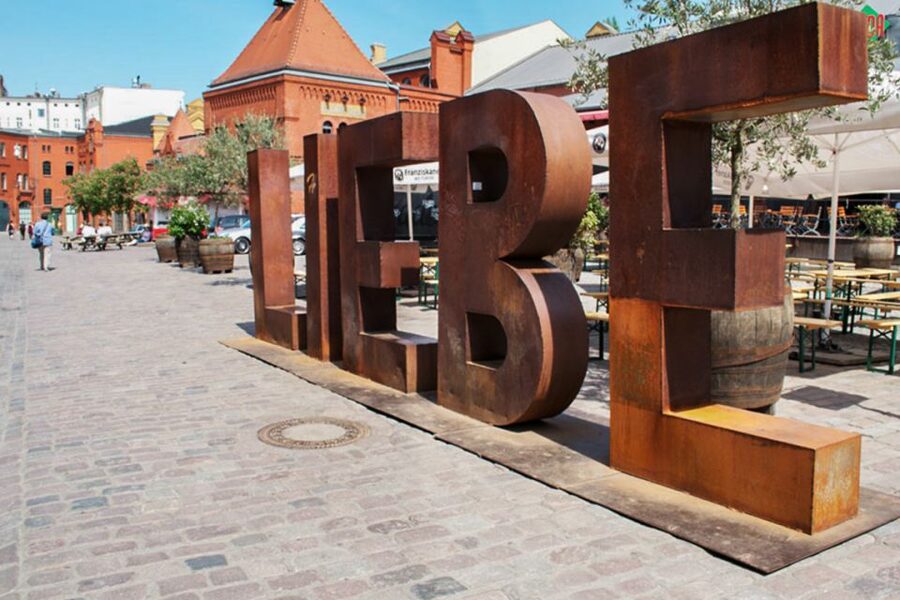
The tour is not simply a search for colorful walls. It connects art and buildings to politics, migration, housing, music, and the way Berliners reuse old spaces. A former squat, an independent shop, or a patch of urban farmland can become a doorway into a larger story.
That is where the experience earns its $29 price. A self-guided walk can show you murals and cafés, but it is much harder to understand why those places matter or how separate neighborhoods connect. The guide supplies that context while keeping the walk social and informal.
A few more walking tours around Berlin worth a look
- Discover Berlin Half-Day Walking Tour
★ 5.0 · 9,624 reviews - Berlin City walk Government District and Places of Democracy
★ 4.7 · 8,467 reviews - Berlin: Third Reich & Cold War Guided Walking Tour
★ 4.9 · 8,378 reviews
Starting at Alexanderplatz and entering Mitte
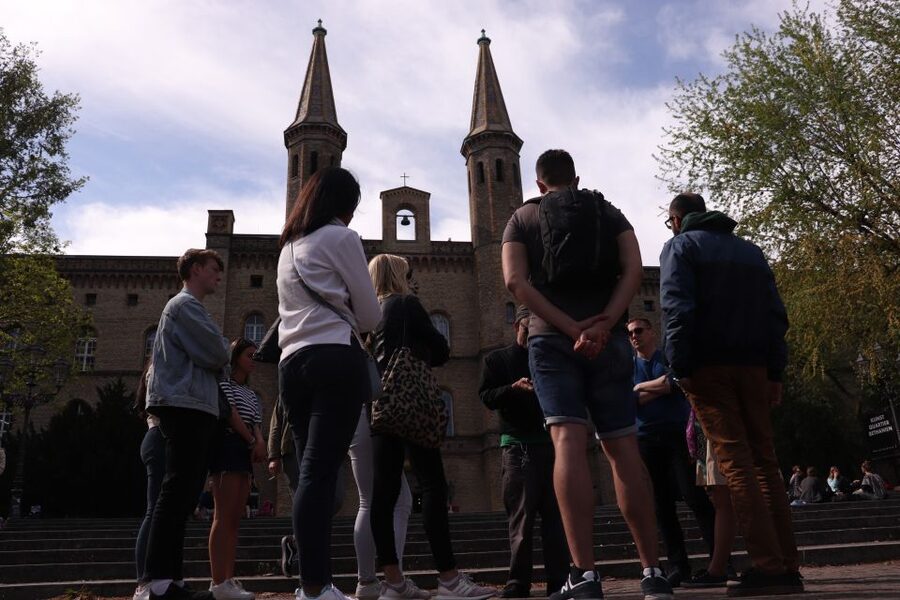
The meeting point is in front of Vapiano by the Alexanderplatz TV Tower. Alexanderplatz is one of the easiest places in Berlin to reach, and the tower gives you a clear landmark in a busy part of town.
From there, the first section explores Mitte for about an hour. This is central Berlin, but the tour does not treat it as a string of grand monuments. Instead, you’ll look for the city’s newer creative life, café districts, shopping areas, galleries, and traces of communities that have shaped the center.
Mitte can feel polished in places, which makes the contrast useful. You begin to see how alternative culture can move from the margins toward the mainstream. A café, gallery, or design shop may look fashionable now, but its setting can reflect older waves of artistic activity and urban change.
The guide also uses Mitte to compare former East and West Berlin. The city’s division was political, but it also affected buildings, streets, rents, public spaces, and the kinds of people drawn to different districts. Those comparisons help you read Berlin as you walk instead of treating each neighborhood as an unrelated stop.
Kreuzberg’s Turkish and international Berlin
The two-hour Kreuzberg section is the heart of the tour. Here you’ll encounter the Turkish neighborhoods that helped give the district its distinctive food, shops, street life, and political character.
The tour also addresses Berlin’s African communities and former Jewish communities. These subjects broaden the usual story of the city. Berlin’s identity has never come from one group alone, and Kreuzberg makes that clear through its buildings, businesses, public art, and cultural spaces.
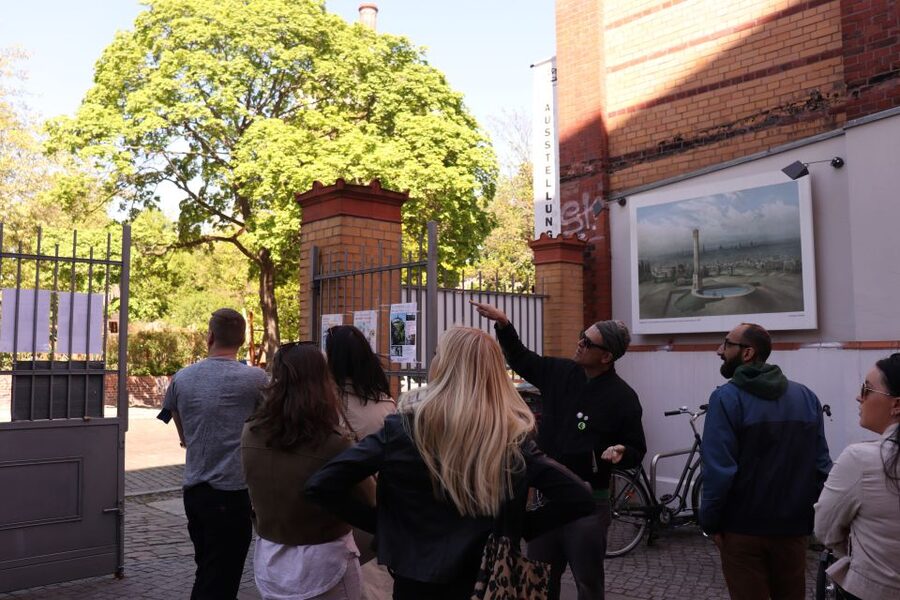
You may stop near canals, community projects, underground galleries, or urban farms funded by local residents. These places show a practical side of alternative Berlin. They are not only art displays. They can represent shared space, local organizing, and attempts to make city life less commercial or less isolated.
The route also touches Berlin’s gay community and one of its more extravagant neighborhoods. That part of the walk helps explain the city’s reputation for personal freedom, experimentation, and tolerance, while keeping the focus on real places rather than abstract slogans.
Kreuzberg is also a good place to discuss food. The tour explains the origins of Berliner currywurst and döner, two quick meals that say a great deal about Berlin’s working life and migration. A food stop may include currywurst, as one recent tour did, but food is not the main event and you should not treat the $29 price as a meal package.
Street art, squats, and the politics of reuse
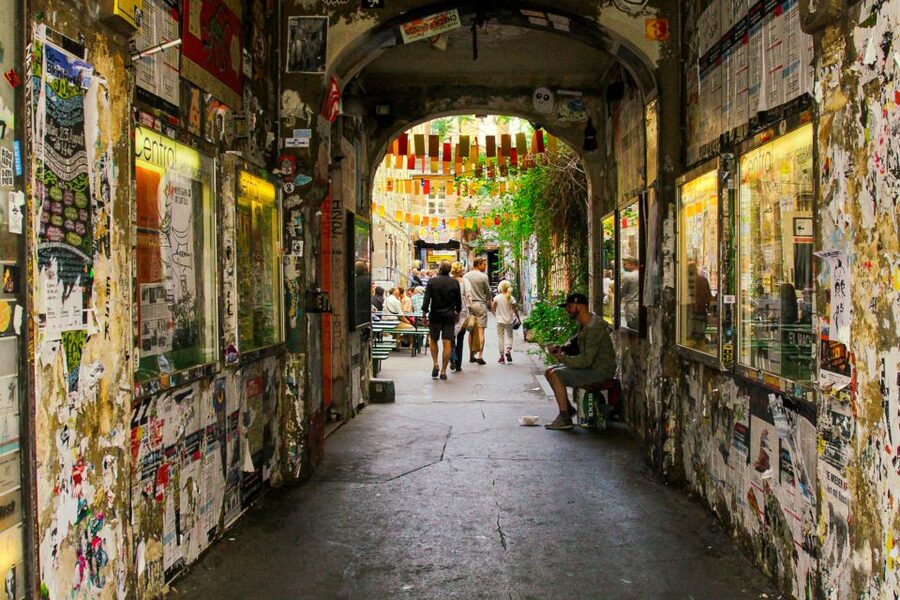
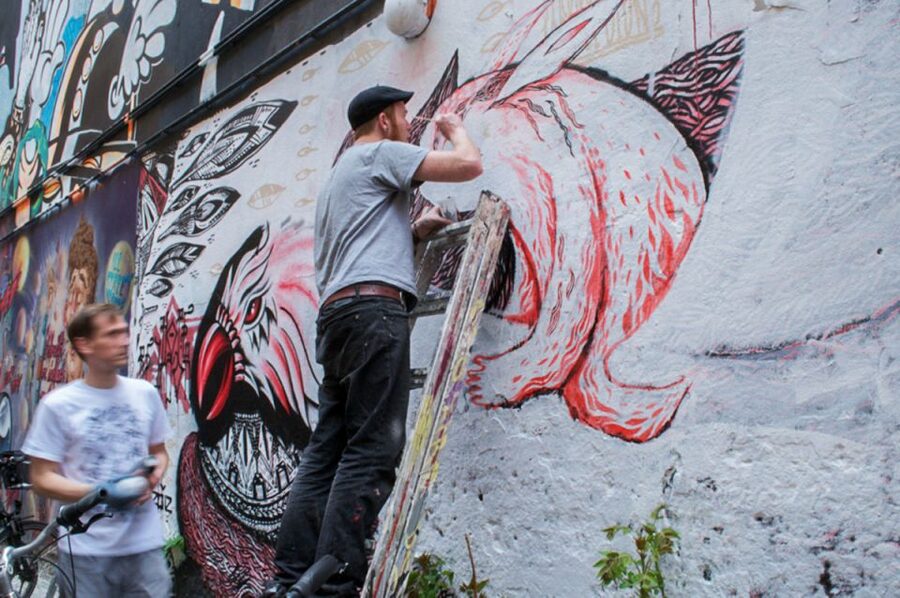
Street art is one of the clearest reasons to choose this tour. You’ll see murals and graffiti at close range, then hear about the artists, local movements, and political ideas behind them.
The best part is the explanation. Berlin has plenty of striking walls, but a guide can point out how graffiti developed alongside punk, squatting, music, and protest. You’ll also hear about the way artists and residents reused neglected buildings and spaces.
Several guides have connected the route through the idea of repurposing. That theme makes the walk more useful than a simple list of colorful locations. You begin to notice how an old building, empty lot, record shop, community garden, or independent gallery can reflect a wider argument about who gets to shape a city.
The tour may also discuss long-running squats and alternative housing. This subject can be politically charged, but the guides appear to present it as part of Berlin’s development rather than as a novelty. That balance matters. You are not just being shown an eccentric neighborhood. You are learning how housing, protest, art, and city policy have collided.
Do keep your expectations realistic. Alternative Berlin is not preserved behind glass. Some places change, some projects close, and some former counterculture areas become commercial. That tension is part of the story, not a flaw in the tour.
Same streets, a different route:
- Berlin: Discover Berlin Walking Tour
★ 4.9 · 5,998 reviews - Berlin’s Best: 2 Hour Walking Tour Third Reich and the Cold War
★ 5.0 · 5,486 reviews - Berlin: Hidden Backyards Guided Walking Tour
★ 4.8 · 5,360 reviews - Explore Berlin: See All The Iconic Sights & Some Hidden Gems
★ 5.0 · 4,429 reviews
Music, markets, and the African beach bar
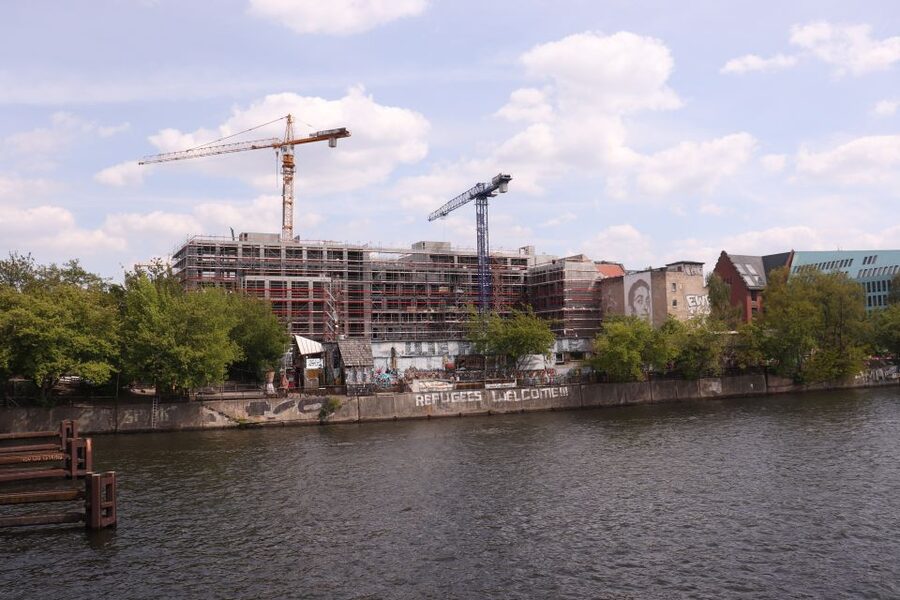
Music is another major thread. The tour explores Berlin’s music scene and includes a stop at an African beach bar and market. This gives the afternoon a more relaxed turn after the heavier discussions of politics, housing, and social change.
The stop also adds a human scale to the route. Instead of treating culture as something found only in clubs or concert halls, you’ll see how food, music, markets, and gathering places overlap. The guide may connect these settings with the city’s African communities and the wider movements that have shaped Berlin’s nightlife.
Refreshment breaks are included, with stops selected for the route. Still, I would carry water and a small snack. Four hours is a long stretch, and one account of the walk specifically wished for a planned 30-minute break for food, rest, and bathrooms. That is a fair caution, particularly in cold weather or if you prefer a slower walk.
Finishing in Friedrichshain

The tour finishes in Friedrichshain, after passing through the central and southern parts of the route. Ending there gives the experience a sense of movement. You are not simply returning to Alexanderplatz after a loop. You have crossed several districts and watched the city’s character shift.
Friedrichshain is a fitting finish because it is closely tied to nightlife, art, independent culture, and the changing face of former East Berlin. The end point also gives you a useful base for continuing your evening, though the exact local recommendation will depend on your guide and the day’s route.
The route can change according to current art, local conditions, and the guide’s choices. That flexibility is useful because Berlin’s alternative places are not fixed museum exhibits. It also means you should not book this expecting an exact checklist of every gallery, farm, canal, or bar named in the tour description.
The guides make the biggest difference
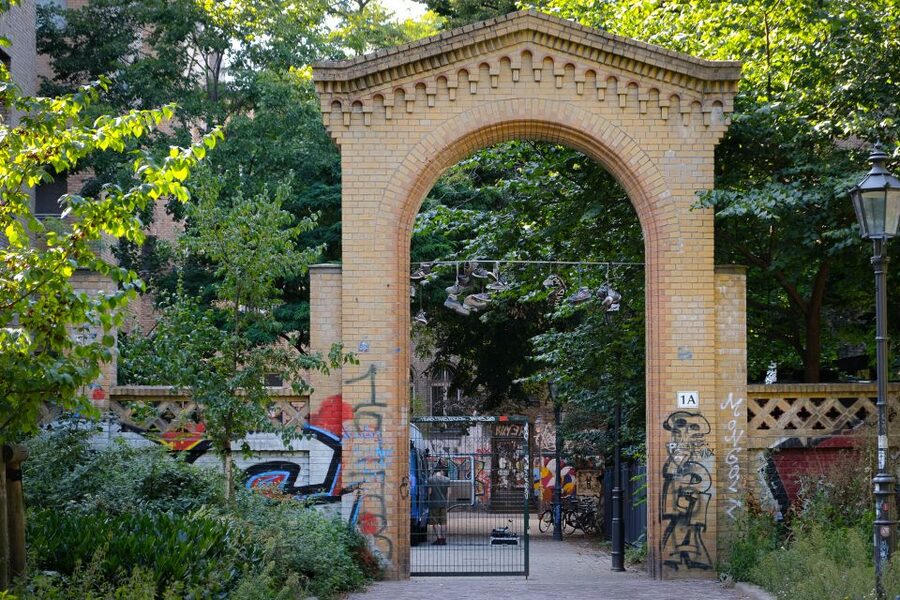
The guide is central to this experience. Rhys is repeatedly praised for humor, energy, strong storytelling, and a clear passion for Berlin. Reece receives similar praise for combining jokes with stories about artists, musicians, squats, and neighborhood change.
Jake is described as especially good at adapting to harsh weather while keeping the group engaged. Jonathan is noted for explaining the connection between Berlin’s political past, its districts, and its pop culture. Damien, Antonio, Ben, and AD have also led tours praised for personal insight and lively delivery.
You should expect different personalities rather than one fixed presentation. One guide may lean toward music and punk, another toward migration or political history. That variety can make the tour feel personal, but it also means the exact emphasis may differ from one departure to another.
The strongest common feature is the conversational style. The guides are not simply reading dates from a script. They answer questions, tell stories, and connect small places to larger changes. That approach suits people who like history when it is tied to streets, meals, music, and human choices.
What four hours feels like on foot
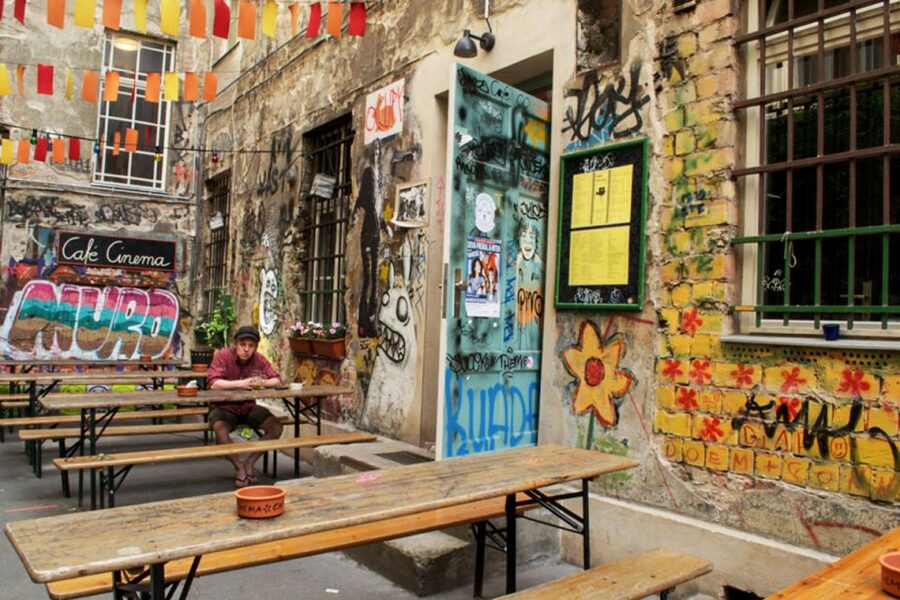
Four hours allows the tour to cover more than a compact central walk, but it also demands stamina. You’ll be standing, walking, and likely using public transport as the route moves between Mitte, Kreuzberg, and Friedrichshain.
One review described the pace as too fast for someone with mobility issues. That is important advice. The tour is not presented as an accessible, slow-paced stroll, and the route may include busy streets, changes in transport, and limited opportunities to sit.
Wear comfortable shoes and check the forecast. Tours run in all weather and throughout the year. Recent departures have gone ahead in freezing temperatures, snow, and heavy rain, with guides adapting the presentation and route to help keep people comfortable.
You also need an AB public transport ticket unless you book the option that includes BVG transport. The exact need can vary with the art and route. If you plan to use Berlin’s trains and trams elsewhere that day, a day ticket may be simpler than buying several individual tickets, but confirm the current fare before you go.
Is $29 a fair price?
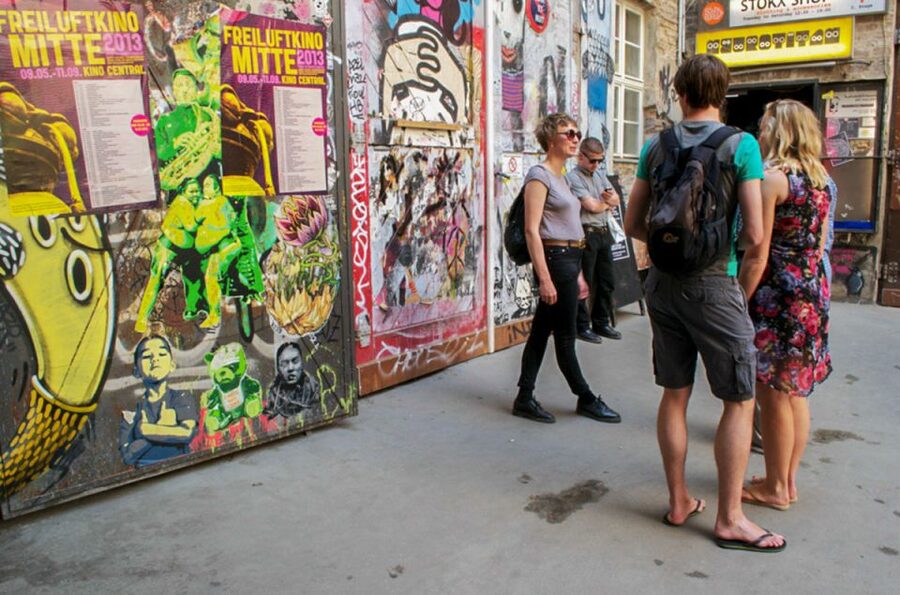
At $29 per person, this is good value if you want interpretation rather than just a walk between sights. The tour lasts four hours, includes a guide, local tips, photo opportunities, and refreshment breaks, and reaches districts you might not think to visit on your own.
The price does not appear to cover a full meal or every public transport ticket. You may need an AB ticket, or you can select the option with BVG included. Keep a little extra money available for food, drinks, and any stop that catches your eye.
I would rate the value highest for a first or second visit to Berlin. On a first visit, it adds a social and cultural side to the standard history circuit. On a later visit, it can reveal places you missed before. If you already know Berlin’s alternative districts well, the value will depend more on the guide’s storytelling than on the locations alone.
Free cancellation up to 24 hours before the start and the option to reserve now and pay later make it easier to fit the tour into a changing schedule. Those policies are useful, but the real reason to book is the access to local context.
Who should book this Berlin walking tour?
I would choose this tour if you want to understand Berlin through music, migration, street art, housing, and social change. It suits curious adults, solo visitors, and couples who enjoy meeting an international group and asking questions along the way.
It is also a strong pick if standard sightseeing feels too formal. You will still see important parts of Berlin, but the emphasis falls on the places and stories that many visitors pass without noticing.
I would hesitate if you want a relaxed pace, a guaranteed list of fixed stops, or a tour focused mainly on the city’s major war and Cold War monuments. You should also think twice if four hours of walking and public transport sounds tiring.
For most people who want a different view of Berlin, I would book it early in the visit. The local tips can help shape the rest of your stay, and the tour may point you toward cafés, galleries, markets, music spots, and neighborhoods worth returning to.
FAQ
Where does the Alternative Berlin Walking Tour start?
It starts in front of Vapiano by the Alexanderplatz TV Tower in Berlin.
Where does the tour finish?
The tour finishes in Friedrichshain, Berlin.
How long does the tour last?
The walking tour lasts four hours.
What language is the tour in?
The tour is conducted in English with a live guide.
Is public transport included?
An AB public transport ticket may be required, depending on the route and current art stops. You can bring your own ticket, buy one at a station, or book the option that includes BVG transport.
Does the tour run in bad weather?
Yes. Tours operate throughout the year and in all weather conditions.
Can I cancel for a full refund?
Yes. You can cancel up to 24 hours before the tour for a full refund. You can also reserve now and pay later.
Just added around Berlin
- East Berlin and the Wall: Walking Tour★ 4.9 · 407 reviews
- Cold War, Berlin Wall, Spies and the East Side Gallery★ 4.8 · 254 reviews
- Berlin: walking tour about Charité★ 4.4 · 537 reviews
- Berlin: Walking Tour of the Top 10 Sightseeing Attractions★ 4.7 · 150 reviews
- Berlin: Sightseeing Walking Tour of the Top 20 Attractions★ 4.5 · 196 reviews
- Berlin: The Time of National Socialism Walking Tour★ 5.0 · 220 reviews
- Berlin: Kreuzberg Guided Walking Evening Tour★ 4.7 · 555 reviews
- Berlin : Must-see attractions Walking Tour★ 4.8 · 83 reviews
Walking Tours, compared.

Magical London: Harry Potter Guided Walking Tour
Read our review →
Reykjavik Food Walk – Local Foodie Adventure in Iceland
Read our review →
History and Hauntings of Salem Guided Walking Tour
Read our review →
New Orleans Premier Ghost, Voodoo and Vampire Walking Tour
Read our review →
Amsterdam Anne Frank: Small-Group Walking Tour & Local Guide
Read our review →
Edinburgh Castle: Guided Walking Tour with Entry Ticket
Read our review →
Anne Frank’s Story – Guided Walking Tour through Amsterdam
Read our review →Browse the lists this tour appears in