
REVIEW · USA
Austin: Downtown History Walking Tour
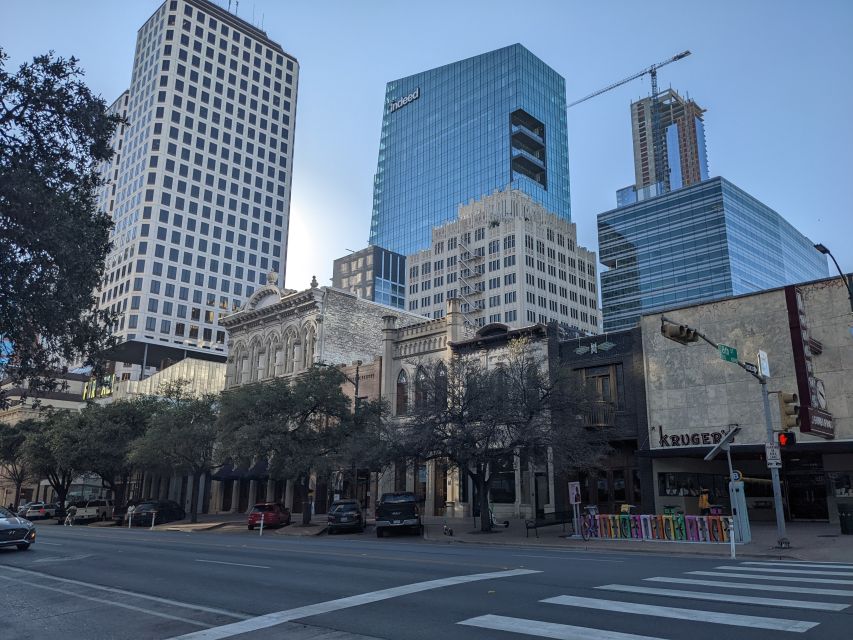
Austin’s past comes alive through its buildings, music venues, oddball legends, and changing streets. This two-hour downtown walk moves from an old vice district to the Driskill Hotel, with plenty of stories about the people who helped shape the city.
I like the way the tour connects places to larger themes, especially Austin’s music roots and the idea behind Keep Austin Weird. I also like that guides such as Emily and Caroline add food tips and local suggestions, rather than simply reciting dates.
The main drawback is the format: you cover 1.1 miles with few chances to sit, and much of the experience is standing while the guide talks. Austin’s heat can make that tiring, so bring water, wear good shoes, and consider an early start.
Key points at a glance
- Old Austin comes first: Begin near Halcyon Coffee in an area once known for vice, then see how downtown changed after 1913.
- The Driskill is a highlight: Step inside Austin’s oldest operating hotel for stories in its ornate Romanesque-style halls.
- Music gets proper context: Antone’s and Sixth Street help explain how Austin earned its music reputation.
- The tour is story-led: Guides including Emily, Caroline, Kim, and Emmily focus on people, folklore, buildings, and local character.
- The pace is manageable: The route covers 1.1 miles in two hours, with more talking than walking at several points.
- Plan for the weather: The tour runs rain or shine, with limited seating and a recommendation for comfortable, weather-ready clothing.
Why this Austin walking tour is worth your morning
At $29 per person, this is a reasonably priced way to get your bearings in central Austin. You are not paying for transport or admission to several major attractions. Instead, you are paying for access to a guide who can explain why ordinary-looking streets, buildings, and statues matter.
That difference matters in Austin. A walk through downtown on your own can show you polished hotels, nightlife streets, and new towers, but it may not explain the layers beneath them. This tour links the city’s earlier days with its present identity as a music center and home of unconventional culture.
The strongest part is the storytelling. Emily has led many of the tours and is repeatedly praised for her enthusiasm, clear voice, humor, and care with the group. Other named guides include Caroline, Kim, and Emmily. The guide you receive may vary, but the tour is designed around local stories rather than a fixed list of photo stops.
You should also expect questions and conversation. Guides have offered restaurant suggestions, local tips, and ideas for other things to do. If you are visiting Austin for only a day, that practical advice can help you use the rest of your time better.
More History Walking Tours in the USA
- New Orleans Garden District History Walking Tour
★ 5.0 · 2,879 reviews - Philadelphia Old City Historic Walking Tour with 10+ Top Sites
★ 5.0 · 2,020 reviews - Southern Flavors Food, Pub Crawl, and History Walking Tour
★ 4.5 · 1,623 reviews
Starting at Halcyon and the old vice district
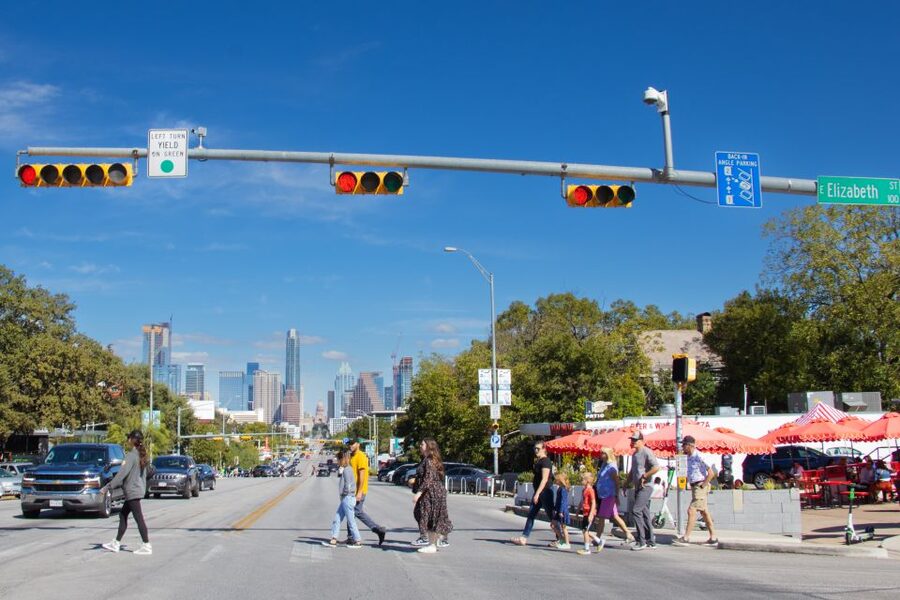
Meet outside Halcyon Coffee on 4th Street, at the corner of Lavaca Street. This is a useful starting point because you can grab a drink before the walk, use the restroom, and prepare for two hours outdoors.
The opening section looks at what was once a rowdy vice district. The area later changed in 1913, and the guide uses that shift to show how Austin moved from a rough frontier town toward the downtown you see today.
This is a good early lesson in how the tour works. You are not only looking at a building and hearing its construction date. You are hearing how streets were used, who occupied them, and how the city’s public image changed over time.
Some of the material involves mature historical themes, which is why the suggested age is 13 and up. The age rule is not strictly enforced, but this is not designed as a children’s tour. Parents should decide if stories about vice, nightlife, and Austin’s more colorful characters suit their children.
Warehouse District and the changing face of downtown
The route continues through the Warehouse District, with about 20 minutes of walking and explanation. This part helps you see the contrast between older commercial Austin and the newer downtown filled with condos, offices, restaurants, and nightlife.
The tour’s title promises a journey from cowboys to condos, and this is where that change becomes clear. Rather than treating modern development as separate from the past, the guide explains how one period led into another.
You will spend more time listening than walking during parts of the tour. That is good news if you want detail without a rushed pace, but it may disappoint you if you expect constant movement or a long list of attractions. One visitor described the format as more talking than walking, which is an accurate way to set your expectations.
There are limited opportunities to sit. You should be comfortable standing on sidewalks and outside buildings while the guide speaks. The route is only 1.1 miles, but two hours on your feet can feel longer in hot weather.
Antone’s and Austin’s musical identity
Antone’s Nightclub gets a dedicated stop of about 20 minutes. This is one of the most useful parts of the tour because it places Austin’s music reputation in a physical downtown setting.
The guide explains how Austin became known as the Live Music Capital. You will hear about the local artists, performers, and free spirits who helped shape that identity, along with the wider culture that keeps music central to the city.
Do not expect a full concert or an extended indoor visit. This is a history stop, not a live-music event. Its value is in understanding why certain venues and streets matter before you spend an evening exploring Austin’s nightlife on your own.
If you plan to attend music later, pay attention here. The background can make the city’s live venues feel less random. Instead of seeing Austin’s music scene as a collection of bars, you begin to understand it as part of the city’s long public identity.
Same streets, a different route:
- History and Hauntings of Salem Guided Walking Tour
★ 5.0 · 14,564 reviews - New Orleans Premier Ghost, Voodoo and Vampire Walking Tour
★ 4.5 · 12,856 reviews - Little Havana Food and Walking Tour in Miami
★ 5.0 · 8,882 reviews - Chicago: Gangsters and Ghosts Walking Tour
★ 5.0 · 7,155 reviews
Downtown Austin, Sixth Street, and Keep Austin Weird
The downtown section lasts about 30 minutes and gives the guide room to connect architecture, local people, and social change. You may hear stories about famous and infamous residents, artists, eccentric figures, and the buildings they influenced.
This is also where the phrase Keep Austin Weird gets useful context. The slogan is easy to treat as a marketing line, but the tour presents it as part of a longer local attitude that values unusual people, creative work, and an independent streak.
The tour then passes through the Sixth Street Historic District for about 10 minutes. Sixth Street is one of Austin’s best-known nightlife areas, so seeing it with historical background is more useful than simply walking through it after dark.
The stop is relatively short, but it fits the larger story. You see how entertainment, business, and city growth overlap. The guide may point out details you would likely miss alone, including the connection between particular blocks and Austin’s past.
For first-time visitors, this context is especially helpful. Several people who had little prior knowledge of Austin’s past found that the guide’s explanations made the rest of their stay easier to understand. I would book this near the start of your visit for that reason.
Inside the Driskill Hotel
The Driskill is the tour’s signature indoor stop. It is the oldest operating hotel in Austin, and stepping into its Romanesque-style halls gives you a break from the sidewalks while adding one of the city’s most atmospheric interiors.
The guide uses the hotel to tell stories about eccentric and visionary figures connected with Austin. The ornate setting gives those stories more force. You are not hearing about the city in an abstract lecture room. You are standing in a building that has been part of Austin’s public life for generations.
Allow about 20 minutes here. The stop is long enough to appreciate the interior and follow the stories, but it is not a full hotel tour. The focus remains on Austin and the people who made it unusual.
I particularly like this part because it gives the walk a change of pace. Downtown tours can become repetitive when every stop takes place on a sidewalk. The Driskill adds an indoor setting, visual detail, and a stronger sense of place.
Angelina Eberly, the Koppel Building, and the final stories
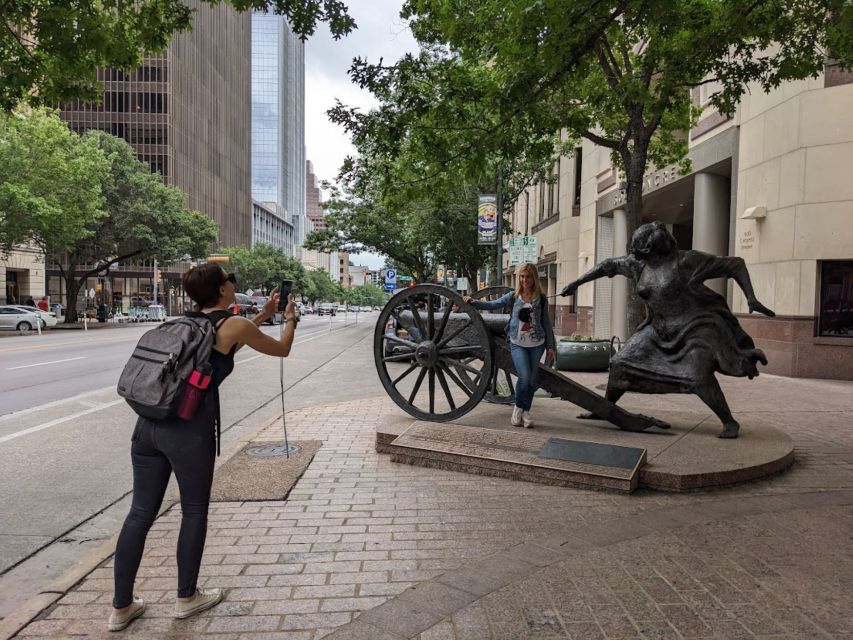
After the Driskill, the route visits the Angelina Eberly Statue for about 10 minutes. The guide explains why this figure matters to Austin, using the statue as a prompt for another piece of local history rather than treating it as a quick photo opportunity.
The final stop is the Koppel Building, with another 10 minutes of explanation. By this point, the walk has moved from broad city history to specific people and structures. That progression helps you remember the material because each story is attached to a real place.
The tour ends at 320 Congress Avenue, Austin, Texas 78701. Restrooms are available near the end, which is useful after a two-hour walk. You finish downtown, so you can continue sightseeing or stop for food without arranging another ride.
The route does not return to Halcyon Coffee. Keep that in mind when planning your next activity. The ending point is still central, but it is worth checking your map before booking something with a tight schedule.
Guides, pace, and the personal touch
The strongest praise centers on the guides’ delivery. Emily is often singled out for her enthusiasm, humor, clear speaking voice, and ability to pack in a lot of information without making the walk feel like school.
Caroline is also described as engaging and full of energy, with a friendly style and useful local advice. Kim has been praised for linking each place to its historical setting and for showing clear affection for the city. Emmily has been noted for catching stories about streets and buildings and for giving first-time visitors helpful context.
That range of guide personalities matters. A history walk succeeds or fails on delivery, and these guides appear to adjust their pace and conversation to the group. The tour may even operate with a very small group, including a solo booking, which can make it feel more personal.
At the same time, the exact guide is not guaranteed. You should book this for the content and format, not on the assumption that a particular person will lead your date.
If you need the guide to use a voice amplifier at every stop, tell them when you arrive. One guide was specifically praised for using a clear voice and amplification, but it is sensible to state your needs before the walk begins.
Weather, mobility, and practical preparation
Austin weather can shape this experience. The tour runs rain or shine, and much of the time is spent outdoors. Bring water, wear comfortable shoes, and dress for the forecast. A hat can help on sunny days, and an early morning start may feel easier in hot weather.
There are limited chances to sit, so this is not a relaxed café-to-café stroll. You should be able to stand and walk for two hours, even though the distance itself is modest.
The activity information lists the tour as wheelchair accessible, but it also says it is not suitable for people with mobility impairments. Those statements do not fully explain the route or seating conditions, so contact the provider before booking if you use a wheelchair or need regular rest stops.
Video recording is not allowed. You can still take in the buildings and make notes, but plan to listen rather than record the guide’s presentation.
The tour is in English. Free cancellation is available up to 24 hours before the start, and you can reserve now and pay later. Those terms are useful if your Austin plans are still changing.
Who should book this walk?
I would recommend it to first-time visitors who want the city to make sense before exploring on their own. It is also a good fit for anyone who enjoys local personalities, unusual anecdotes, architecture, and stories about how a city changes.
The tour works well for a short Austin visit. If you have only one day, two hours gives you a useful introduction without taking over the entire schedule. It also suits people who want food and neighborhood suggestions from someone who knows the city personally.
You may want something else if your priority is live music, nightlife, or a fast photo tour. Antone’s and Sixth Street are discussed, but there is no concert included. You also should not book this expecting nonstop walking or a large number of interior visits.
The 4.9 rating from 123 bookings reflects very strong satisfaction, but the practical details matter more than the number. You need to be comfortable outdoors, standing, and listening to a story-led presentation.
Is the Austin Downtown History Walking Tour good value?
At $29, I think this is good value if you use it as an introduction rather than a stand-alone attraction. The Driskill visit, downtown route, music history, local advice, and personal storytelling give you more than a basic orientation walk.
The best return comes when you schedule it early in your stay. You can use the guide’s restaurant tips and sightseeing suggestions afterward, and the stories may change how you look at Sixth Street, Antone’s, Congress Avenue, and the surrounding buildings.
Book it if you want Austin explained through people and places, not just dates. Skip it if heat, standing, or mature historical themes will make two hours uncomfortable. For most curious first-time visitors, this is a smart, friendly way to understand why Austin became the unusual city it is today.
FAQ
How long is the Austin Downtown History Walking Tour?
The tour lasts two hours and covers about 1.1 miles through downtown Austin.
Where does the tour begin?
Meet your guide outside Halcyon Coffee on 4th Street, at the corner of Lavaca Street.
Where does the tour finish?
The tour ends at 320 Congress Avenue, Austin, Texas 78701.
Is the Driskill Hotel included?
Yes. The tour includes a guided visit inside the Driskill Hotel, the oldest operating hotel in Austin.
Is the tour suitable for children?
The suggested age is 13 and up because some historical themes are mature. The age suggestion is not strictly enforced, and unaccompanied minors are not allowed.
What should I bring?
Bring comfortable shoes, water, comfortable clothing, and weather-appropriate layers. The tour runs rain or shine and has limited chances to sit.
Just added around the USA
- Walking Tour in Beaufort★ 5.0 · 310 reviews
- Healdsburg Wine and Food Pairing Guided Walking Tour★ 5.0 · 400 reviews
- Healdsburg Small-Group Food and Wine Walking Tour★ 5.0 · 433 reviews
- Grand Canyon South & East Rim: Driving & Walking Audio Tour★ 4.0 · 112 reviews
- Gettysburg One-Hour Walking Tour: The Civilian Experience★ 5.0 · 121 reviews
- Top Rated Wine and Shine Walking Tour★ 5.0 · 438 reviews
- The Galveston Cemetery Tour – Walk With The Dead!★ 5.0 · 366 reviews
- The Shadows of Revelry Walking Ghost Tour★ 5.0 · 104 reviews
History Walking Tours, compared.



Berlin’s Best: 2 Hour Walking Tour Third Reich and the Cold War
Read our review →
Third Reich Berlin: Hitler and WWII Walking Tour
Read our review →
New Orleans Garden District History Walking Tour
Read our review →
Cartagena: Historic Center and Getsemaní Shared Walking Tour
Read our review →
Imperial Palace and Shogun Historical Walking Tour
Read our review →Browse the lists this tour appears in