
REVIEW · ITALY
Assisi Private Walking Tour including St. Francis Basilica
Assisi makes the most sense when someone connects its steep streets, Roman forum, medieval churches, and saintly legends. This private walk does that, ending at the Basilica of Saint Francis, where Giotto, Cimabue, and the spiritual force of the town come together. The guide is the main attraction.
I like the private format, since your group can ask questions, set the pace, and focus on art, church history, or the lives of Francis and Clare. I also like the route’s range, from the humble Chiesa Nuova to the ancient Temple of Minerva and the grand basilica. The main drawback is that Assisi is hilly, and the standard two-and-a-half-hour schedule can feel short if you want to linger at every church.
Key points to know
- A private guide for up to 15 people: The $278.16 group price can be good value for a larger family or party, but less so for one or two people.
- A strong Francis and Clare focus: Expect stories about both saints, their followers, and the religious life that shaped Assisi.
- Roman and medieval Assisi in one walk: The route links the ancient Temple of Minerva with the medieval center and major basilicas.
- A serious art stop: At Saint Francis’s Basilica, your guide can explain works associated with Giotto and Cimabue, along with how frescoes were made.
- Headsets cost extra: Basilica headsets are not included and cost €3 per person.
- Dress carefully: Knees and shoulders must be covered in places of worship, or entry can be refused.
Why a private walk works well in Assisi
Assisi is not hard to walk around, but it is easy to miss what you are seeing. A plain stone façade may hide a major religious story. A Roman temple may look like just another old building until someone explains why it survived and how it became a church.
That is where this experience earns its keep. You are not simply following a pin on a map. Your guide can explain why Saint Francis mattered, how Saint Clare carried his ideals forward, and how the town changed from Roman settlement to medieval pilgrimage center.
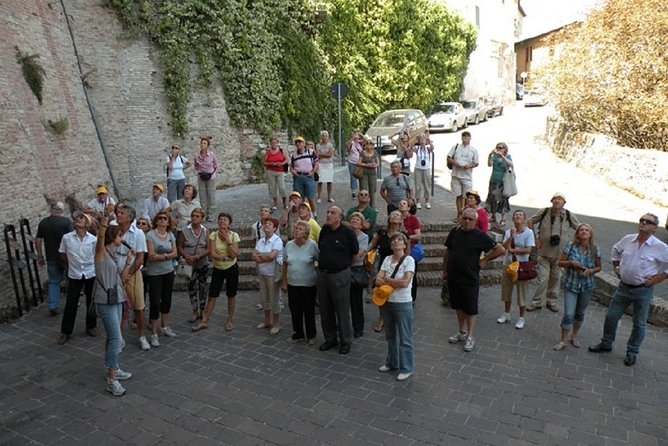
The private setup is especially useful for families and mixed-interest groups. Several guides have been praised for making the subject work for teenagers, children, art lovers, and people with a strong personal interest in Franciscan history. Guides named Michele, Francesca, Andrea, Antonella, Alessandra, and others have been described as warm, clear, and flexible.
You can ask for more art, more religious history, or more local orientation. One guide helped a family find a restaurant, a bank, and other sights after the formal walk. Another adjusted the pace during hot weather and helped a guest dealing with a back injury. Those details matter because a good walking tour should respond to the people in front of the guide.
More Private Walking Tours in Italy
- Venice: Private Walking Tour with a Local
★ 4.6 · 761 reviews - Palermo: Private Custom Walking Tour with Local Guide
★ 4.7 · 661 reviews - Palermo: Private Walking Tour with a Local
★ 4.6 · 393 reviews
Starting at Saint Clare’s Basilica
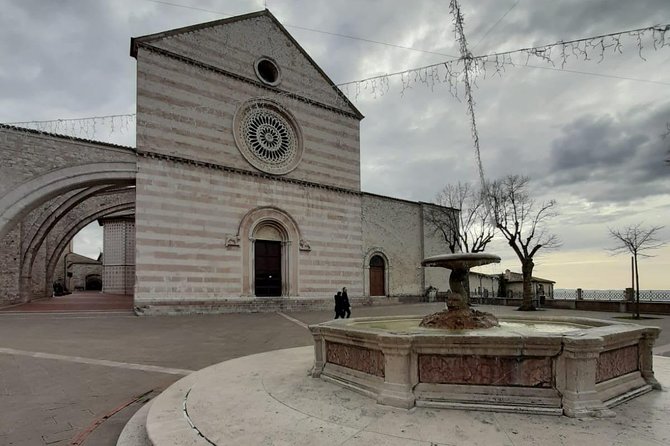
The meeting point is Piazza Santa Chiara, beside the Basilica of Saint Clare. This is a sensible place to begin because Saint Clare gives you the other half of Assisi’s story.
Clare was a follower of Saint Francis and founded the Order of Poor Ladies, now known as the Order of Saint Clare. Her basilica contains her remains, making it both an important church and a place of pilgrimage. Your guide can set out the relationship between Clare and Francis before you move through the center of town.
The church also gives you an early lesson in Assisi’s spiritual character. This is not only a town of famous names and attractive stone streets. Religious communities, pilgrims, and quiet acts of devotion remain part of its daily atmosphere.
The exact time spent here can vary with the guide and the group. If Saint Clare matters especially to you, say so at the start. The private format makes it easier to give her story more room instead of treating the church as a quick opening stop.
Chiesa Nuova and the home of Saint Francis
The first listed stop is Chiesa Nuova, built in 1615 on the site believed to be Saint Francis’s family home. Its Renaissance design gives it a different look from the medieval churches that dominate much of Assisi.
The brick façade is organized by four pillars and a Doric entablature, with an attic gable and a hemispherical dome above. Your guide can point out these details, but the more important question is what the building represents: Assisi later marked the place of Francis’s early life with a church.
The scheduled visit is about 20 minutes, and there is no separate admission charge. That makes it a useful early stop, though anyone hoping for a long interior visit should remember that this is a compact walking tour, not a full-day church study.
I like this stop because it brings Francis down to earth. Before he became a saint, he was a local young man with a home, family, and place in the town. That human scale helps keep the later basilica from feeling like an isolated monument.
Piazza del Comune and Roman Assisi
Piazza del Comune occupies the site of the ancient Roman Forum. It is the town’s main civic space, linking toward the Basilica of Saint Clare along Corso Mazzini and looking up toward Rocca Maggiore.
The square includes the sixteenth-century Fountain of the Three Lions, later revised in 1762 by Giovanni Martinucci. The scheduled stop is only about 10 minutes, so expect a concise explanation rather than a long pause.
This is one of those places where a guide adds context quickly. Without help, you may see a handsome square and a fountain. With a good explanation, you can picture the public center of Roman Assisi beneath the later buildings and understand how the town kept changing while holding onto its old street pattern.
Rocca Maggiore dominates the view above, though the itinerary does not include a visit inside the fortress. The square is also a good place to notice Assisi’s slope. The town is built on a hill, and even short walks can involve stairs or inclines.
Same streets, a different route:
- Venice: Doge’s Palace and St Mark’s Basilica Walking Tour
★ 4.4 · 6,291 reviews - Milan: Guided Walking Tour & Last Supper Visit with Ticket
★ 4.7 · 5,409 reviews - Naples: Street Food Walking Tour with Local Guide
★ 4.9 · 4,976 reviews - Florence: Highlights Walking Tour with Expert Guide
★ 4.6 · 4,662 reviews
Santa Maria sopra Minerva, a Roman temple turned church
Santa Maria sopra Minerva is perhaps the route’s most striking example of old and new sharing one façade. The building began as a Roman Temple of Minerva in the first century. It was funded by Gnaeus Caesius and Titus Caesius Priscus, local officials who helped pay for its construction.
The structure later became a church, built in 1539 and remodeled in Baroque style during the seventeenth century. The scheduled visit is about 30 minutes, with no separate admission charge.
This stop gives you a sharp lesson in how Assisi’s religious story was layered onto its Roman past. The ancient temple did not disappear. Its form survived, then served a new purpose.
I would pay close attention to the guide’s explanation here, especially if you are interested in architecture. The change from Roman temple to Christian church raises useful questions about reuse, preservation, and the way later communities understood earlier monuments.
It is also a good pause before the final basilica section. The first part of the walk moves through everyday streets and civic spaces. Santa Maria sopra Minerva helps prepare you for the larger artistic and religious setting at Saint Francis.
Reaching the Basilica of Saint Francis
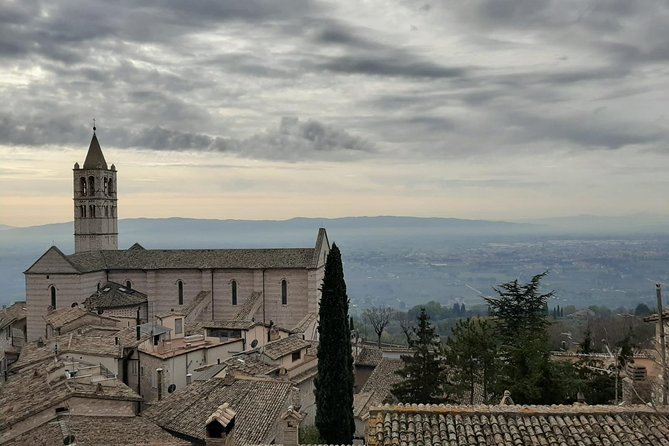
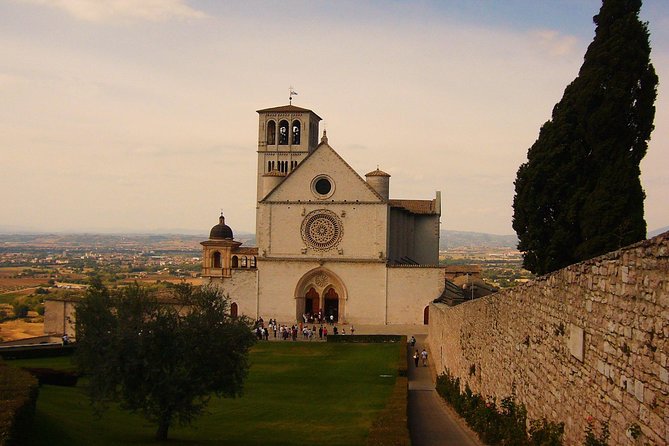
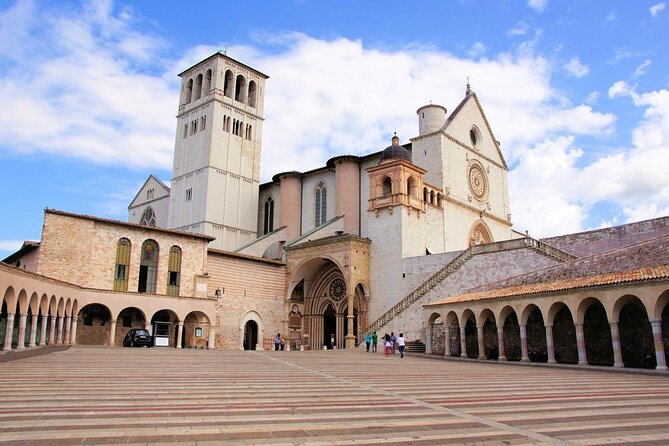
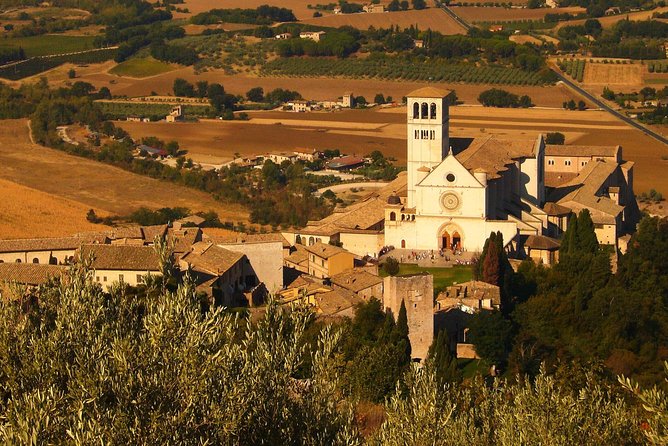
The tour ends at the Papal Basilica and Sacred Convent of Saint Francis, at Piazza Inferiore di San Francesco. This is the emotional center of the experience and the place where the itinerary spends the most time.
The basilica is the mother church of the Conventual Franciscans. Saint Francis was born and died in Assisi, and his connection to this town is not a side note. It explains why the basilica became such an important destination for prayer, art, and pilgrimage.
The schedule allows two 45-minute portions at the basilica, which appears to give this final stop roughly 90 minutes in all. The practical split may depend on the guide’s route and current church rules, but you should expect the basilica to receive far more attention than any individual stop earlier in town.
Inside, the church has a broad single nave with four bays, cross-vaulted ceilings, a transept, and a polygonal apse. The ribbed vaults alternate between golden stars on blue backgrounds and painted decoration. Even if you are not an art specialist, the scale and color make the space memorable.
A strong guide can help you look rather than simply stare. Alessandra, for example, has been praised for explaining the stories shown in religious paintings and for discussing the difference between wet and dry fresco techniques. She also explained how iron in certain pigments can oxidize over time, creating a photo-negative effect.
That sort of detail changes the visit. You begin to see the basilica as both a place of worship and a visual teaching tool. In the Middle Ages, paintings carried stories to people who could not rely on film, radio, television, or the internet. The guide can help you read those scenes and understand why they were placed where they are.
The basilica is also associated with major artists including Giotto and Cimabue. The experience does not turn you into an art historian in 45 minutes, but it can give you a useful starting point and help you recognize why the decoration matters.
Church rules, headsets, and holiday limits
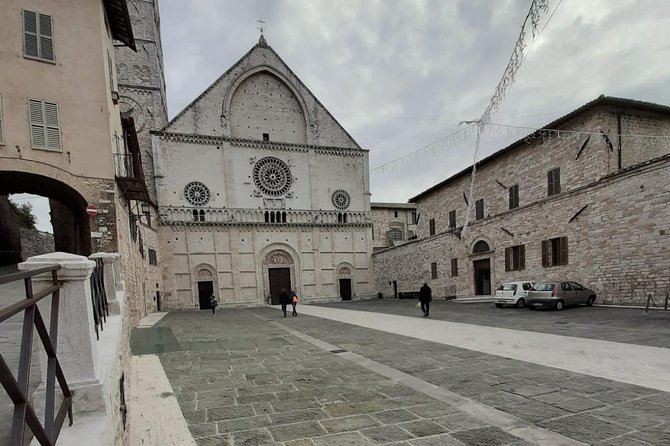
The €278.16 price covers a private professional guide for your group, but it does not cover Basilica of Saint Francis headsets. Those cost €3 per person. For a large group, add that small fee to your planning. A headset may also make it easier to hear inside a large church, especially when other groups are present.
Dress rules are firm. Men and women must cover their knees and shoulders in places of worship and selected museums. Shorts and sleeveless tops can lead to refused entry, so dress for the church before leaving your hotel rather than trying to improvise at the meeting point.
There is an important Sunday and holiday limitation. On Sundays, major Catholic holidays, and Italian national holidays, guided tours inside Saint Francis’s Basilica are forbidden. Your guide will explain the church from outside, and you will enter alone in silence.
Access to the basilica is also suspended from February 15 through April 6, 2026, because of the public display of Saint Francis’s relics. During that period, the guide explains the basilica from outside. If the basilica interior is your main reason for booking, check your date carefully.
Hills, timing, and the real value of the price
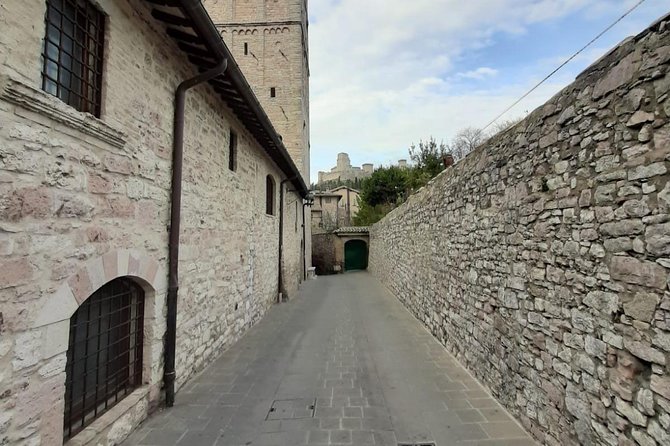
The tour lasts about two hours and 30 minutes. That is enough time for a strong introduction to Assisi, but not enough for slow, extended visits at every church. You will walk from Piazza Santa Chiara to Saint Francis’s Basilica, and the route includes Assisi’s familiar uphill and downhill streets.
I would not book this expecting an easy flat stroll. One person specifically noted the amount of up-and-down walking, while another guide adjusted the pace during hot weather and around a back injury. Tell your guide about physical limits at the start. The private format makes that conversation useful.
The price is charged per group, up to 15 people, rather than per person. For a family or group of six to 10, it can be a sound deal because you are buying a dedicated guide instead of joining strangers. For one or two people, the cost per person is much higher, and you should care more about personal attention, art interpretation, and the ability to shape the walk.
The tour is booked an average of about 60 days ahead, which suggests you should not leave it until the last moment if your schedule is fixed. Confirmation arrives at booking, and the tour is available in English.
Free cancellation is available up to 24 hours before the start time. Changes or cancellations inside that 24-hour window are not accepted for a refund.
Which guide style will suit you?
The experience depends heavily on the individual guide, but the pattern is clear. Michele has been praised for tailoring the route to a family of four, explaining both Assisi and Umbria, and taking physical needs seriously. Francesca has been singled out for clear storytelling and a strong grasp of art, history, and church tradition.
Andrea has been appreciated for answering questions patiently and explaining art. Antonella has been described as a strong teacher who brought together the town’s history, church life, Saint Clare, Saint Francis, and art. Alessandra’s strength is close attention to the stories behind paintings and fresco methods.
You cannot select a particular guide from the information provided, so book this for the private format and subject matter rather than for one named person. Still, these examples give you a useful idea of the kind of guiding you may receive: personal, story-led, and able to move between religious meaning, architecture, and practical town advice.
Who should book this Assisi walk?
I would recommend it most to first-time visitors who want the town to make sense quickly. It also suits families, groups with teenagers, and people who want to ask questions without worrying about slowing down a large public group.
It is a good choice if Saint Francis and Saint Clare are central to your visit, or if you want help understanding the basilica’s art. The route also works for anyone who wants a local orientation before exploring more of Assisi alone.
I would think twice if you prefer to wander silently, read your own guidebook, and stop wherever you please. One person felt the price was too high and the amount of free exploration too limited. That criticism is fair for independent visitors who already know the town.
You should also reconsider if you cannot manage hills or if your visit falls during a date when guided entry into Saint Francis’s Basilica is not allowed. The outside explanation can still be useful, but it is not the same as having the guide interpret the interior with you.
Should you book it?
Book this private walk if you want meaning and context, not just a checklist of churches. Its best qualities are the dedicated guide, the connection between Roman Assisi and the Franciscan story, and the time given to Saint Francis’s Basilica.
For a larger group, the fixed group price makes better financial sense. For a couple, the decision depends on how much you value a private guide’s help with art, religious history, and local orientation. Check the church calendar, wear suitable clothing, allow for hills, and remember the €3 headset fee.
If you want a clear introduction to Assisi with room for questions, this is a strong choice. If your ideal day is slow, independent wandering, use the route as a guide to the town and consider exploring the churches on your own.
FAQ
How long does the private Assisi tour last?
The tour lasts approximately two hours and 30 minutes.
Where does the tour begin?
It begins at Piazza Santa Chiara in Assisi, beside the Basilica of Saint Clare.
Where does the tour end?
It ends at the Papal Basilica and Sacred Convent of Saint Francis in Assisi, at Piazza Inferiore di San Francesco 2.
Is the tour private?
Yes. Only your group participates, with up to 15 people included in the group arrangement.
Is the tour offered in English?
Yes. English is the offered language.
What is included in the price?
The price includes a professional guide and a private tour.
Are Basilica of Saint Francis admission tickets included?
No. Admission is not included, and headsets for the basilica cost €3 per person.
What should I wear?
You must cover your knees and shoulders to enter places of worship and selected museums. Shorts and sleeveless tops are not permitted, and entry may be refused if you do not meet the dress requirements.
Can the Basilica of Saint Francis be visited with the guide on holidays?
On Sundays, major Catholic holidays, and Italian national holidays, guided tours inside the basilica are forbidden. The guide explains the church from outside, and you enter alone in silence. Access is also suspended from February 15 through April 6, 2026, while Saint Francis’s relics are publicly displayed.
Just added around Italy
- Genoa Walking Tour: Explore Top Sights & Hidden Gems★ 4.0 · 138 reviews
- Genoa Food, Wine Tasting & History Walking Tour★ 5.0 · 212 reviews
- Taste Genoa: A Full Meal Walking Food Tour by Do Eat Better★ 5.0 · 509 reviews
- Genoa Walking Tour: Discover Hidden Treasures and Street Food★ 5.0 · 80 reviews
- Tasty Florence Street Food with Guided Walking of the City★ 5.0 · 174 reviews
- Medici Legends & Renaissance Wonders: Florence Small Group Tour★ 5.0 · 205 reviews
- Florence Food Tour of 10+ Authentic Tastings with Cheeses & Wines★ 5.0 · 155 reviews
- Florence Private Walking tour with Skip-the-line to Accademia★ 4.5 · 236 reviews
Private Walking Tours, compared.
Barcelona Helicopter, Sailboat & Old Town Private Walking Tour
Read our review →
Lyon: Private Walking Tour of “Traboules” in the Old Town
Read our review →
Browse the lists this tour appears in