
REVIEW · ITALY
Alberobello: Walking Tour among Trulli Houses with a Local
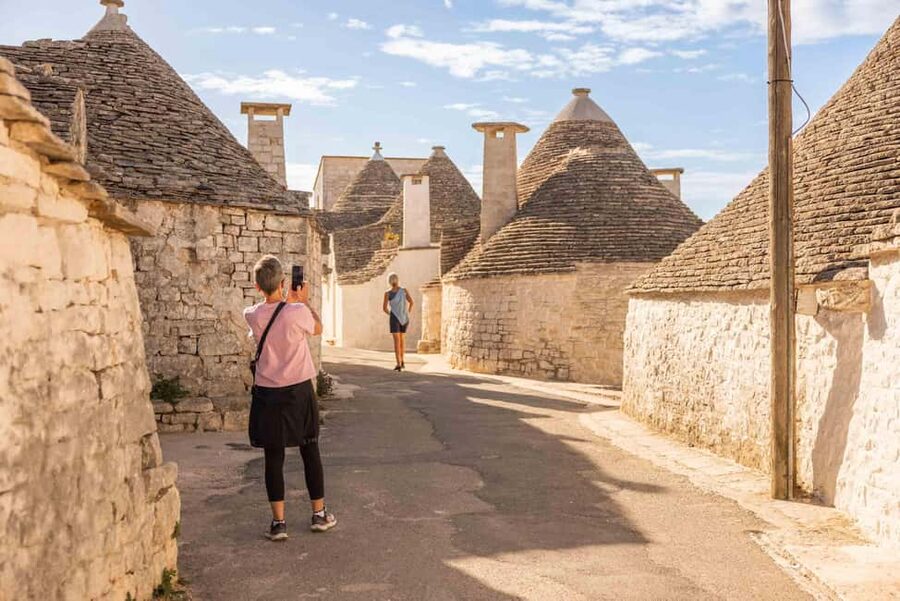
Alberobello makes a quick visual impression: whitewashed walls, gray stone cones, and narrow lanes that look almost too neat to be real. This two-hour walk gives those famous trulli houses a useful backstory, from dry-stone building methods to local legends and modern life in town.
I like the route’s quieter side, especially Aia Piccola, where the trulli feel more residential than commercial. I also like the guides’ practical touch. Guido has used old photos and maps to explain the town, while Ksenia has been praised for adjusting the pace, taking photos, and making sure everyone could hear.
The main consideration is group size and timing. Most outings are smooth, but a larger group can make it harder to hear, and one departure was rescheduled from morning to afternoon. Some visitors also found a strong accent or fast speech difficult to follow.
Key points to know before you book
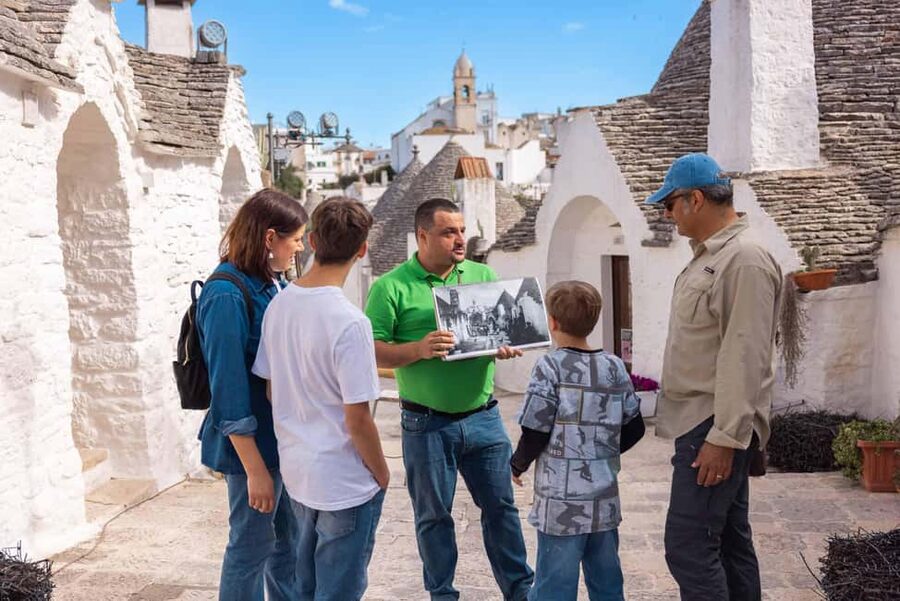
- A local look at Alberobello: Guides such as Guido and Ksenia connect the buildings to present-day life, not just postcard views.
- Aia Piccola is the best part for atmosphere: This quieter district offers a more residential look at the trulli.
- The tour covers major sights without rushing: Expect a two-hour route with stops at Trullo Sovrano, Casa D’Amore, the Basilica of Saints Cosmas and Damian, and several viewpoints.
- Dry-stone construction gets proper attention: You learn why the roofs and walls look the way they do, and how old the building tradition is.
- Shade and photos matter: The walk includes pauses, and guides have helped with photographs, toilet stops, and finding relief from strong sun.
- You pay for context, not admission tickets: The $44 price includes the guide and walk, but museum entry is extra.
Why Alberobello makes more sense with a guide

You can walk through Alberobello’s trulli district on your own and enjoy the unusual shapes. What you cannot easily see is how much meaning sits behind the simple stonework.
A local guide explains why the roofs are cone-shaped, how dry-stone construction works, and how the buildings fit into the town’s past. The tour also brings in legends and anecdotes, which help separate local storytelling from popular myths. One guide has even used a self-made photo book and old maps to show how Alberobello changed over time.
That context matters because the trulli can otherwise become a string of attractive doorways and souvenir shops. Once you understand the construction and the way the neighborhoods developed, you start noticing the details: the layering of stone, the whitewashed surfaces, the symbols painted on some roofs, and the difference between a home and a shop.
The tour also gives you a better sense of present-day Alberobello. Guido, who was born and raised in town, has discussed what it is like to live there now, while other guides have pointed out places beyond the standard shopping route. You get a short lesson in architecture, local identity, and daily life in one walk.
A few more walking tours around Italy worth a look
- Venice: Doge’s Palace and St Mark’s Basilica Walking Tour
★ 4.4 · 6,291 reviews - Milan: Guided Walking Tour & Last Supper Visit with Ticket
★ 4.7 · 5,409 reviews - Naples: Street Food Walking Tour with Local Guide
★ 4.9 · 4,976 reviews
Starting at Piazza Sacramento
The meeting point is Piazza Sacramento, a central and practical place to begin. From there, the walk heads into the town center and toward the main trulli sights.
The route is on foot, so comfortable shoes are sensible. The streets and lanes are the reason to take this tour, but they can also become crowded, especially when several groups arrive at once. Guides have often paused in shade while explaining the town, a welcome detail during hot months.
The advertised duration is two hours. That is long enough to cover the main points without turning the outing into an all-day history class. It also leaves you with time afterward to browse shops, stop at a café, or return to a favorite street for photographs.
Trullo Sovrano: a useful first stop
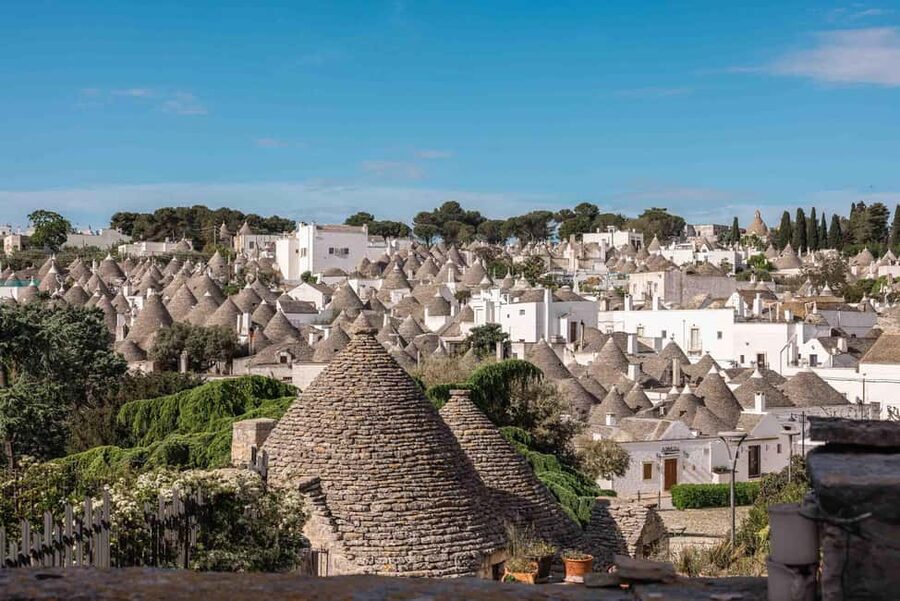
The visit to Trullo Sovrano lasts about 15 minutes. It provides a clear introduction to the trullo form before you see the wider district.
This stop is especially useful if you want to understand how a cone-roofed building functions rather than simply admire its exterior. The guide can put the stone walls and roof into context, then help you recognize similar details in the homes that follow.
The museum entry ticket is not included, so check the current arrangements when you book. The tour itself includes the visit and explanation, but you should budget separately if entry inside is required.
The church and Casa D’Amore
The route then reaches the Church of Saints Cosmas and Damian, with about 10 minutes of guided attention. It gives the walk a welcome change of subject. Alberobello is not only a collection of photogenic houses, and this stop places the trulli districts within the town’s broader civic and religious setting.
Casa D’Amore follows, also with around 10 minutes of explanation. This is one of the stops where the guide’s storytelling matters most. A short pause can tell you more about the town’s building rules, local power, and changing way of life than a quick look at another roof.
The itinerary uses short stops rather than long indoor visits. That keeps the walk moving, though anyone hoping for a detailed museum tour should plan extra time independently.
Same streets, a different route:
- Florence: Highlights Walking Tour with Expert Guide
★ 4.6 · 4,662 reviews - Venice: San Marco to Rialto Walk & Spritz Like a Local
★ 4.2 · 3,651 reviews - Uffizi & Accademia Timed Entry: Small Group Duomo Walking Tour
★ 4.5 · 3,630 reviews - Venice Walking Tour and Gondola Ride
★ 3.5 · 3,630 reviews
The panoramic trulli view
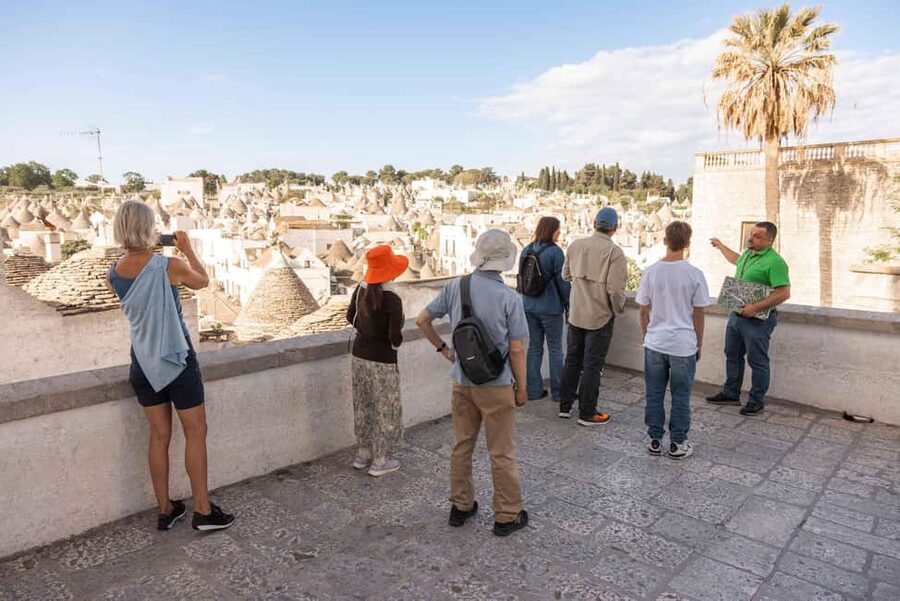
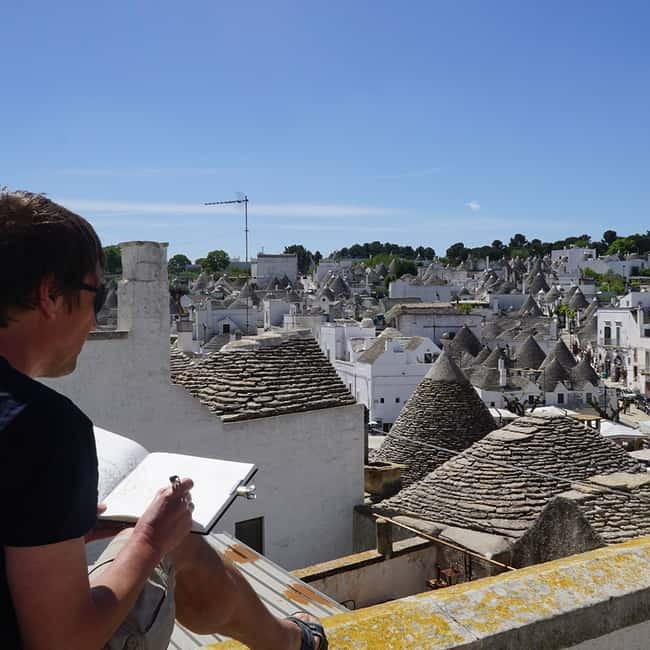
A viewpoint gives you the chance to stop and take photographs of Alberobello’s distinctive roofline. The sight is best understood after the earlier explanations, since you can now see the town as a group of related structures rather than isolated white houses.
This is also a practical pause. You can listen, look around, and take pictures without trying to keep pace through a narrow lane. Several guides have been praised for helping with photos, which is useful if you are traveling alone or want a picture of your whole group.
The view can be busy at popular times. If photography is your main goal, an afternoon departure may suit you better, since one visitor found the later tour quieter. That will depend on the date and the number of groups in town.
Aia Piccola is the route’s strongest section
The walk spends about 20 minutes in Aia Piccola, and this is the part I would most want to understand with a local. The district offers a less commercial side of Alberobello, with trulli that feel connected to ordinary residential life rather than only to sightseeing.
This section helps explain why the tour does not simply follow the busiest shopping lanes. The main tourist area is easy to find on your own, but the quieter streets benefit from a guide who can point out what is original, what has been adapted, and how people use these buildings today.
You should still expect a short visit, not a full neighborhood study. The guide has to keep the group moving, and the exact time at each place may change with crowds, questions, and late arrivals. Even so, Aia Piccola gives the tour a stronger local character.
More trulli, then Largo Martellotta
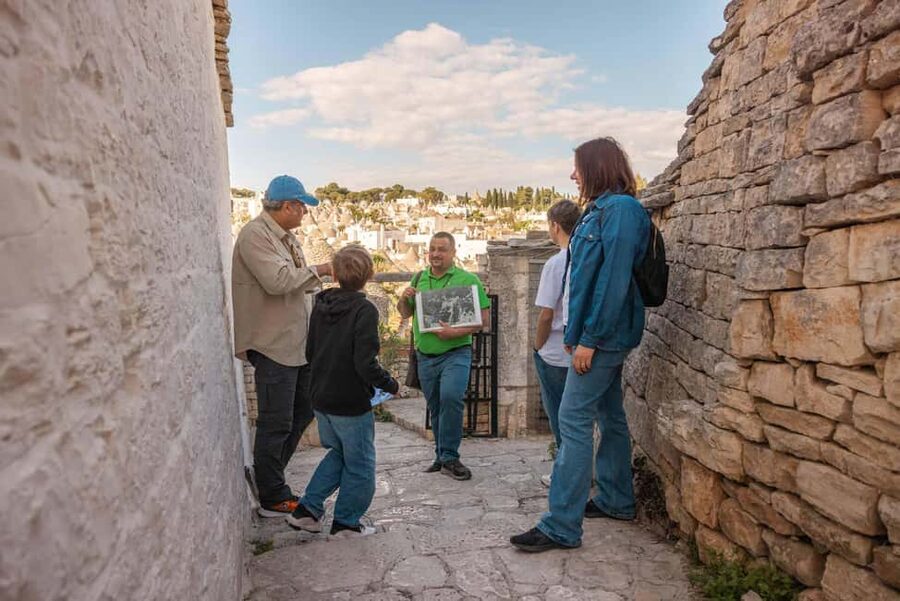
The route continues through the trulli area for about 10 minutes before ending at Largo Martellotta. This finish is convenient because you remain in the center, with no need for a shuttle or return transfer.
After the guided part, you can revisit the streets that interested you most. You might browse local boutiques, look for a café, or continue taking photos. The tour does not try to fill your entire day, and that is one of its strengths. You get orientation first, then freedom to explore at your own speed.
Some guides also offer food suggestions at the end. Guido has recommended restaurants and helped people plan the next part of their Italian trip. Those tips are not a formal part of the package, but they can make the walk more useful than a standard monument-by-monument tour.
The guides make the biggest difference
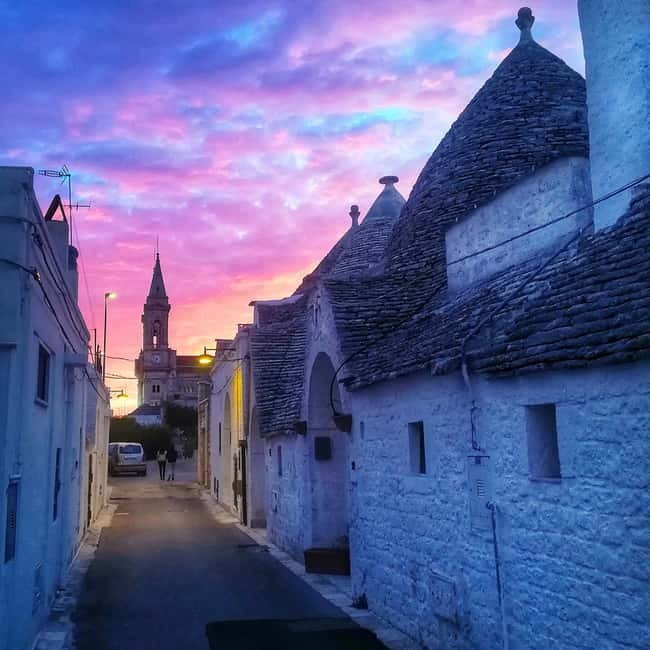
The strongest praise goes to the local guides, especially Guido and Ksenia. Guido is often described as prepared, friendly, humorous, and particularly strong on local history. His use of old photographs and maps gives the commentary something concrete, instead of relying only on spoken explanation.
Ksenia has been praised for a patient pace and thoughtful handling of group needs. She has answered questions, taken photographs, included a toilet stop, and shared extra information after the walk. Another guide, referred to as Tanya in one account, helped organize a restaurant afterward.
Guide quality can vary by departure, and the information does not promise one named guide every time. You should also be aware that one person found the guide’s fast speech and heavy accent difficult to follow. Most comments on communication are positive, but your enjoyment will depend partly on how clearly you can hear in a crowded street.
How crowded is the walk?
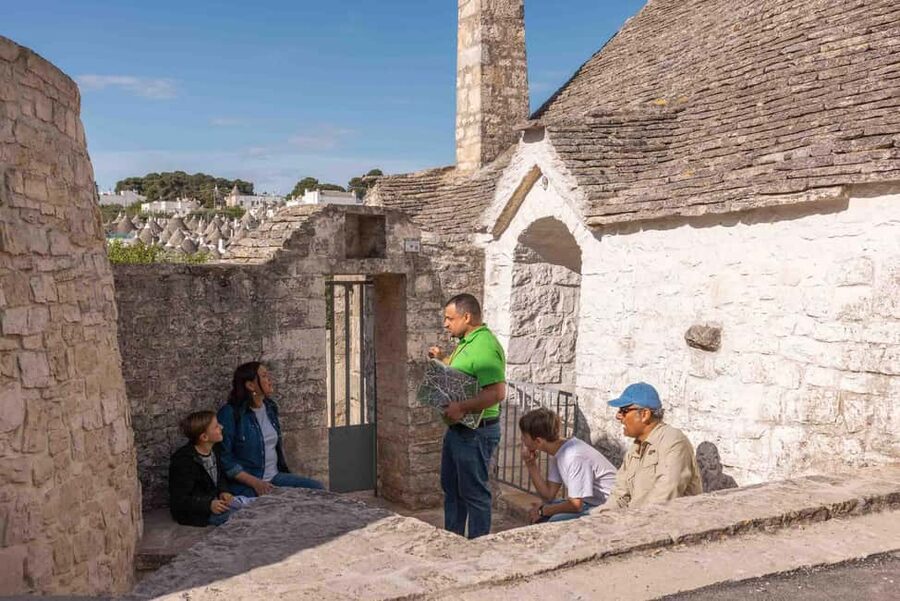
The tour has sometimes been small, which makes it easier to ask questions and hear the commentary. One visitor still wished the group had been limited to 10, so group size is worth checking if that matters to you.
Crowds can affect the experience in two ways. First, you may have trouble standing close enough to hear. Second, waiting for late arrivals can reduce the time available for the actual walk. One outing included more than 15 minutes of waiting, and another was shifted from 10:30 in the morning to 3:00 in the afternoon, forcing a change of plans.
These appear to be practical risks rather than the normal pattern, but they are worth keeping in mind if you have a tight train connection or a fixed lunch booking. Leave some space around the two-hour estimate.
Is $44 a fair price?
At $44 per person, this is not the cheapest way to see Alberobello. You can walk through the trulli districts without paying for a guide.
The value comes from interpretation. You are paying for two hours of local explanation, route planning, photo stops, legends, architectural details, and access to the quieter side of town. If you would otherwise spend your time wondering which buildings matter or why the roofs were built that way, the fee can be worthwhile.
The value is strongest on a first visit, especially if you care about history, architecture, or local stories. It is less compelling if you mainly want a quick photo stop and already understand the town. Remember that museum admission is not included, and there is no pickup or drop-off.
The tour includes children’s activities, making it a practical option for families who want more than a self-guided stroll. The two-hour length also helps younger visitors, since you can finish before the walk becomes tiring and then choose a café or a slower afternoon activity.
Timing, weather, and practical comfort
Alberobello can be hot, and several guides have made a point of speaking in shaded areas. Wear shoes suited to walking and bring what you need for sun protection. The route is wheelchair accessible, but the streets can still be busy, so it is sensible to allow time and avoid treating the schedule as exact.
An afternoon departure may be appealing if you want fewer people around, based on one particularly positive account of a quieter later walk. Morning can still work well if it fits your plans. The key point is to check the available start time rather than assume the advertised hour is fixed.
The tour is conducted in English. It is not described as multilingual, so make sure English commentary suits everyone in your party. If hearing every detail is important, stay close to the guide and ask for a slower explanation when needed.
Free cancellation is available up to 24 hours before the activity for a full refund. You can also reserve and pay later, which helps if your Apulia plans are still shifting.
Who should book this walking tour?
I would choose this tour for a first visit to Alberobello, especially if you want to understand the trulli rather than simply photograph them. It suits couples, families, and curious walkers who like local stories but do not want a long formal lecture.
It is also a good fit if you appreciate practical help. Guides have pointed out places to eat, helped with photos, adjusted the pace, and tried to find shade. Those small touches can matter more than another list of facts.
I would think twice if you have only a short window in town, need a perfectly fixed schedule, or prefer to explore alone. You might also want to ask about group size before booking if crowded commentary bothers you.
Should you book it?
Book it if the idea of Alberobello interests you beyond its appearance. The trulli are easy to admire, but the dry-stone methods, local legends, neighborhood differences, and present-day life give the town much more substance.
At $44, the walk earns its price through local context and a well-planned route. Just allow a little flexibility for crowds, late arrivals, guide assignment, and possible schedule changes. If you can do that, this is a useful two-hour introduction, with Aia Piccola and the local storytelling likely to be the most rewarding parts.
FAQ
How long does the Alberobello walking tour last?
The walking tour lasts two hours.
Where does the tour begin?
The meeting point is Piazza Sacramento in Alberobello.
Where does the tour finish?
The walk ends at Largo Martellotta, 70011 Alberobello BA, Italy.
What language is the tour conducted in?
The live tour guide speaks English.
Which places are included on the route?
The route includes Trullo Sovrano, the Church of Saints Cosmas and Damian, Casa D’Amore, a panoramic trulli viewpoint, Aia Piccola, and additional trulli in Alberobello.
Is museum admission included?
No. Museum entry tickets are not included in the tour price.
Is transportation provided?
No. Pickup and drop-off are not included. This is a walking tour.
Is the tour wheelchair accessible?
Yes, the activity is listed as wheelchair accessible.
Can I cancel the booking?
Yes. You can cancel up to 24 hours in advance for a full refund. You can also reserve now and pay later.
Just added around Italy
- Ferrara: City Highlights Walking Tour with Local Guide★ 4.6 · 219 reviews
- Verona: Romeo and Juliet Guided Walking Tour★ 4.6 · 82 reviews
- Discover Pompeii: French Walking Tour of the Buried City★ 4.8 · 253 reviews
- Naples: Maradona Stadium Guided Exterior Walking Tour★ 4.3 · 113 reviews
- Dark Heart of Rome – Facts, Legend & Mystery Walking Tour★ 4.5 · 329 reviews
- Catania: Street Food Guided Walking Tour★ 4.9 · 326 reviews
- Cefalù: History and Legends Guided Walking Tour★ 4.8 · 132 reviews
- Catania: Guided Street Food Walking Tour★ 4.7 · 300 reviews
Walking Tours, compared.

Magical London: Harry Potter Guided Walking Tour
Read our review →
Reykjavik Food Walk – Local Foodie Adventure in Iceland
Read our review →
History and Hauntings of Salem Guided Walking Tour
Read our review →
New Orleans Premier Ghost, Voodoo and Vampire Walking Tour
Read our review →
Amsterdam Anne Frank: Small-Group Walking Tour & Local Guide
Read our review →

Edinburgh Castle: Guided Walking Tour with Entry Ticket
Read our review →
Anne Frank’s Story – Guided Walking Tour through Amsterdam
Read our review →Browse the lists this tour appears in