
REVIEW · INDIA
Agra Walking Tour
Agra’s best stories are not all lined up behind the Taj Mahal. This private walk takes you into the old city, where a huge mosque, a 650-year-old temple, British-era railway architecture, crowded clothing markets, and a famous white-pumpkin sweet all fit into one compact outing. I like the local scale and the chance to see places many first-time visitors miss.
I also like the personal attention that comes with a private guide. Amit has been praised for bringing energy to the walk, while Ritik has been singled out for being professional, responsive, and easy company. The main caution is timing: although the tour is advertised for two to three hours, some bookings have finished much sooner, so you should confirm the start time and expected length with your guide.
Key points to know before booking
- Seven stops in the old city: The route includes Jama Masjid, Shri Mankameshwar Temple, Agra Fort Railway Station, Kinari Bazar, a pethe shop, Subash Bazar, and several small local sites.
- A private experience: Only your group participates, giving you more room to ask questions and adjust the pace.
- Transport is part of the plan: The experience includes transportation, and one outing used the metro and tuk-tuks along with walking.
- Agra’s sweet specialty is included: You get time to see how pethe connects with the city’s food culture at Gopal Das Pethe Wale.
- Strong overall rating: The experience has a 4.9 rating from 109 reviews, with 96 percent recommending it.
- Allow extra time: The stated duration is two to three hours, but at least one booking lasted only about 75 minutes.
Why this Agra walk is worth considering
Most Agra sightseeing follows a familiar pattern: Taj Mahal, Agra Fort, perhaps Itmad-ud-Daulah, then back to the hotel. This walk takes a different route. It is less about grand monuments and more about how the old city works day to day.
You will pass through religious spaces, shopping lanes, transport links, and small places whose locations may not appear clearly on online maps. That makes the guide important. Without local help, you could walk past a modest doorway or side street and never know why it matters.
At $11, the price is low for a private, guided outing. The value depends on how much time and attention you receive. If your guide gives you the full two to three hours, explains the sites, helps with local transport, and makes time for questions, this is a useful way to get oriented. If the walk is cut to around an hour, the value drops quickly.
The tour is not a formal museum visit or a long heritage walk. Think of it as an introduction to Agra’s old neighborhoods, with short stops and movement between them. You will spend about 20 minutes at most locations, so the experience favors variety over extended sightseeing.
A few more walking tours around India worth a look
- Fontainhas Heritage Walk by Make It Happen
★ 5.0 · 2,834 reviews - The Great Indian Food Tour: Old Delhi Food and Heritage Walk
★ 5.0 · 1,698 reviews - Group Guided Walking Tour in Fort and Colaba
★ 5.0 · 1,073 reviews
Starting at Jama Masjid
The meeting point is Jama Masjid in the old city, near Subash Bazar, Kinari Bazar, Hing ki Mandi, and Mantola. This puts you directly into one of Agra’s busiest historic areas rather than starting at a hotel or a distant tourist landmark.
Jama Masjid is described as one of the city’s largest mosques. You have about 20 minutes here, enough for an introduction to the building and its place in the neighborhood. The mosque is free to enter, but dress and behavior should be respectful because this remains an active religious site.
The practical point is to make sure your guide takes you beyond a quick look from outside. One person had to ask specifically to see the mosque entrance door and other details. That is a useful reminder to speak up if you want more than a brief stop.
Starting here also gives you a fast sense of the old city. Shops, lanes, and local traffic are close at hand. The setting may feel hectic, especially if you have just arrived in Agra, but that is part of the point. This is a working neighborhood, not a staged heritage zone.
Stories at Shri Mankameshwar Temple
The next stop is Shri Mankameshwar Mandir, a temple said to be 650 years old. The visit lasts about 20 minutes and is free of charge.
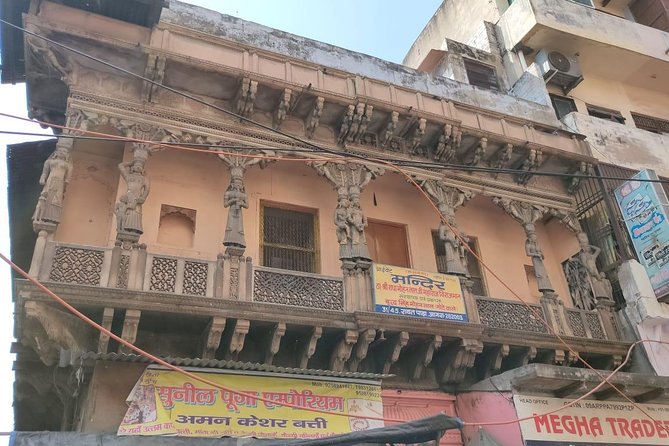
The appeal here is not only the age of the temple. The tour description points to the stories connected with it, and a local guide can explain why the site matters to worshippers and to Agra’s older identity. The temple gives the walk a useful contrast with Jama Masjid. Within a short route, you see two major religious traditions in places that remain part of everyday city life.
As with the mosque, this is a religious setting first and a sightseeing stop second. You should follow the guide’s instructions on footwear, clothing, photography, and where to stand. The supplied information does not promise a detailed ritual visit, so expect a concise introduction rather than a long temple tour.
Agra Fort Railway Station and its British-era design
Agra Fort Railway Station is one of the more unusual stops. The route describes it as the oldest railway station in the city, built during British rule, with distinctive architecture and many stories connected to it.
You get about 20 minutes here, and admission is included. This stop adds a layer that many Agra itineraries miss. The city is usually presented through Mughal monuments, but the railway station points to another period, when British transport networks changed movement across India.
A station is also a practical place to observe how the city connects. You may see the contrast between old religious quarters and the infrastructure that linked Agra with other parts of the country. The exact access and viewing arrangements can vary, so it is sensible to follow the guide rather than expect a full station tour.
The station stop is particularly useful if you enjoy architecture and urban history more than simply collecting monument photographs. It also breaks up the religious and market visits.
Same streets, a different route:
- Spiritual City Walking Tour-THE Pushkar Route
★ 5.0 · 907 reviews - Private Guided Walking Tour in Fort & Colaba
★ 5.0 · 895 reviews - Old Goa Heritage Walk by Make It Happen
★ 5.0 · 797 reviews - Old Delhi Food, Heritage&Cultural Walk with Rickshaw ride to Masterji Kee Haveli
★ 5.0 · 742 reviews
Kinari Bazar, a 400-year-old shopping quarter
Kinari Bazar is described as a 400-year-old market where the old city’s character remains strong. You have roughly 20 minutes to walk through it.
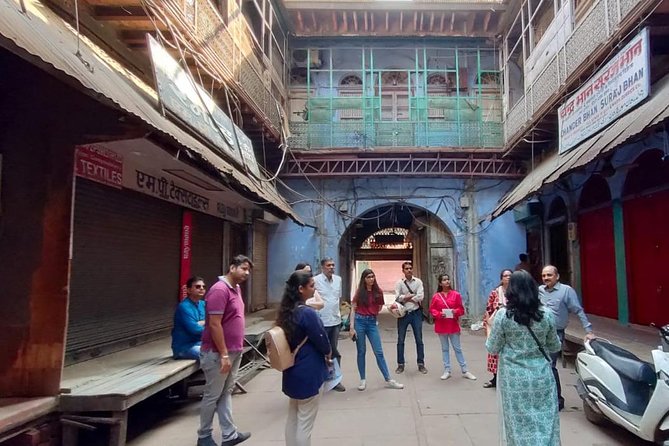
This is the sort of place where the guide can make a major difference. A local can point out what different shops sell, explain how the lanes are organized, and help you understand the market as more than a wall of signs and moving people. You might find the walk slow at busy points, and the narrow streets are not designed for a relaxed stroll.
The market is also a good place to notice the contrast between Agra’s monumental image and its commercial life. Here, the old city is about shopping, work, errands, and trade. You may want to browse, but the short stop means you should not plan on a long shopping session.
If you hope to buy something, ask your guide about prices and where locals shop. The tour is not described as a shopping tour, and personal purchases are not included.
Pethe, Agra’s famous white-pumpkin sweet
At Gopal Das Pethe Wale Johri Bazar, the route turns to one of Agra’s best-known foods. Pethe is made from white pumpkin, and the visit lasts about 15 minutes. Admission is included, though food expenses are not, so you should expect to pay for anything you choose to buy or taste.
This is a small stop, but it gives the walk a welcome food angle. You are not just hearing that Agra has a famous sweet. You are seeing the kind of shop associated with it and hearing the story behind the product.
Pethe can be an acquired taste, and you may find several versions in local shops. The guide can help you understand what you are looking at and may suggest what to try, but the supplied details do not promise a tasting menu or a cooking demonstration.
I like this stop because it is simple and specific. A good city walk should leave you with something you can remember besides building names. In Agra, that may be the taste and story of pethe.
Subash Bazar and the business of Indian clothing
Subash Bazar is described as a wholesale market for Indian wear, with clothing for many needs. You have about 20 minutes here.
The word wholesale matters. This is not presented as a quiet boutique district designed for tourists. You may see local shoppers comparing clothes, prices, and styles in a market with a strong working rhythm. The route calls it a place with a great local feel, but you should be ready for crowds, noise, and limited room to pause.
This can be a useful stop if you want to buy Indian clothing or simply see how local shopping works. It is less useful if you dislike markets or want a calm, carefully arranged shopping experience.
Ask the guide before making a purchase if you are unsure about prices or quality. Personal expenses are not included, and the tour itself does not promise shopping assistance. The main value is the setting and the explanation, not a guaranteed bargain.
The final local places that maps may miss
The last part of the route allows about 25 minutes for smaller places around Agra. The description emphasizes that some of these locations may not appear on Google Maps and are not famous in their own right.
This is where the tour’s concept makes the most sense. Agra’s character often comes through minor sites, side streets, local stories, and details that do not justify a separate ticket. You may pass a small shrine, an old building, a lane with a particular story, or another place that only makes sense once someone explains it.
The exact stops are not fixed in the information provided, so you should not book this expecting a named monument at the end. Instead, ask your guide what they plan to show your group that day.
This flexible section can be a strength. A private guide can respond to your interests and to conditions on the street. It can also be a weakness if you prefer a precise schedule. The experience works best when you are open to short, local discoveries rather than demanding a checklist of famous sights.
Walking, metro rides, and tuk-tuks
Despite the name, this is not necessarily a walk from beginning to end. Transportation is provided, and one outing included a metro ride plus tuk-tuks used to move through the busy streets and alleyways.
That mix can make the tour more practical. Agra traffic can slow a route, and local transport lets you cover more ground than walking alone. It also gives you a glimpse of how people move around the city.
You should still wear comfortable shoes and expect time on your feet. The listed stops add up to roughly two hours and 20 minutes, before allowing for transfers, conversations, and delays. The advertised total is two to three hours.
Confirm the transport plan with your guide at the start. The experience includes transportation, but the information does not specify exactly which vehicle will be used for every group. The metro and tuk-tuk combination has worked well for at least one outing, but you should treat it as a possible part of the route, not a guaranteed sequence.
What the guide can change
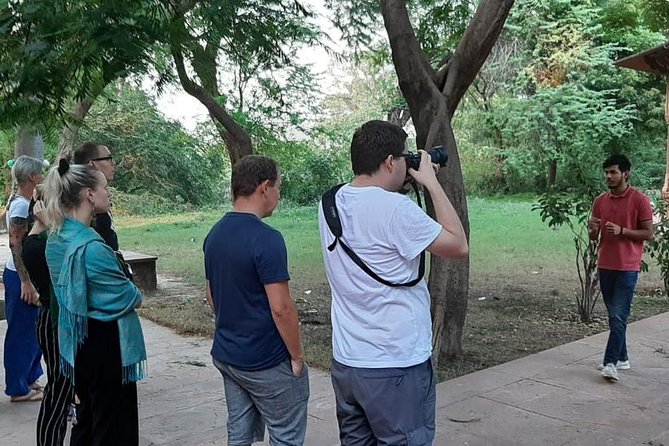
Because this is a private tour, your guide has a large effect on the experience. An English-speaking local is included, and only your group participates. That gives you a chance to ask about religion, markets, food, architecture, or daily life without waiting for a large group to catch up.
Amit has been praised for his energy and for making the outing fun while using the metro, walking through side streets, and taking tuk-tuks. Ritik has been described as professional, communicative, detailed, responsive, and accommodating. Another booking with Ritik was valued for its easy conversation and clear explanations of the region’s past.
Those names are useful when you book, but they do not guarantee that either guide will lead your tour. Ask who is assigned to your group and confirm the meeting point.
The main concern is punctuality and duration. One booking began 20 minutes late and ended after about 75 minutes instead of the expected two to three hours. That is not a small difference. If you have a train, flight, meal reservation, or Taj Mahal visit afterward, leave a generous buffer.
Who will get the most from this experience
I would recommend this walk to you if you have already seen, or plan to see, Agra’s major monuments and want a look at the city beyond them. It is also a good choice for a first afternoon when you want an introduction to the old city before exploring on your own.
The tour suits you best if you:
- Like markets and everyday city scenes
- Want a private guide rather than a large group
- Enjoy short stops with varied subjects
- Are curious about religious sites, food, and local transport
- Can handle street noise, crowds, and an informal route
- Have some flexibility if the schedule runs late
It may not suit you if you want long visits inside each site, a polished museum-style tour, or a firm timetable. The route is varied, but each stop is brief.
The tour is also less appealing if you expect all costs to be covered. Personal purchases and food are extra. The included admissions cover the stated stops, but you should carry money for snacks, sweets, clothing, or other items you may want along the way.
Timing, meeting point, and cancellation
The tour begins at Jama Masjid in Agra’s old city and ends back at the same meeting point. It is near public transportation, and confirmation is provided at booking. The activity is listed as available from 4:00 AM to 10:00 PM, Monday through Sunday, during the stated operating period.
That wide operating window gives you flexibility, but the actual start time should be agreed upon with the provider. An early start may help with heat and market activity, while a later outing may offer a different feel. Poor weather can cancel the experience, in which case you can receive another date or a full refund.
Free cancellation is available up to 24 hours before the start time. Cancellations or changes inside that 24-hour period are not refunded or accepted. Keep the local time in mind when making changes.
Is this $11 Agra walking tour a good buy?
At $11, this is an inexpensive way to add local context to an Agra visit. The private format, included transportation, English-speaking guide, and mix of religious sites, markets, railway architecture, and food make the price attractive when the full route is delivered.
I would book it if you want an informal look at old Agra and can keep your schedule flexible. Before paying, I would confirm three things: who your guide will be, how long the tour is expected to last, and how transportation will work.
If you need a guaranteed two to three hours, ask for that clearly. The experience has a high 4.9 rating from 109 reviews and a 96 percent recommendation rate, but the shorter outings show why expectations matter.
Book this tour for variety, local stories, and a chance to see Agra away from the Taj Mahal. Skip it if your priority is a long, formal tour of major monuments. For the right kind of visitor, $11 buys a useful introduction to the city’s streets, markets, places of worship, and everyday character.
FAQ
How long does the Agra Walking Tour last?
The stated duration is approximately two to three hours. The individual stops add up to about two hours and 20 minutes, before transportation and time between locations. Confirm the expected length with your guide because at least one booking lasted about 75 minutes.
Where does the tour start?
The tour starts at Jama Masjid in Agra, near Subash Bazar, Kinari Bazar, Hing ki Mandi, and Mantola.
Where does the tour end?
The activity ends back at the meeting point at Jama Masjid.
Is transportation included?
Yes. Transportation is provided. One outing used the metro, walking, and tuk-tuks, but the exact transport plan may vary.
Is this a private tour?
Yes. Only your group participates in the activity.
What sites are included?
The route includes Jama Masjid, Shri Mankameshwar Mandir, Agra Fort Railway Station, Kinari Bazar, Gopal Das Pethe Wale Johri Bazar, Subash Bazar, and additional small local places in Agra.
Are food and personal purchases included?
No. Personal expenses and food expenses are not included. Admission for the stated stops is free or included as specified.
Can I cancel for a full refund?
Yes, if you cancel at least 24 hours before the experience start time. Cancellations or changes made less than 24 hours before the start time are not refunded. If poor weather causes the operator to cancel, you are offered another date or a full refund.
Just added around India
- Wine Tasting Experience At 150 Years Old Indo-Portuguese House★ 5.0 · 269 reviews
- Fontainhas Heritage Walk At Latin Quarters of Goa★ 5.0 · 531 reviews
- The Goan Hinterland Experience in South Goa★ 5.0 · 112 reviews
- Food And Drink Walking Tour In Panjim★ 5.0 · 286 reviews
- Private Aguada Jail Heritage Walk Tour★ 5.0 · 102 reviews
- Georgetown heritage walking tour in Chennai about the founding of Chennai★ 5.0 · 144 reviews
- Gods of Mylapore walking tour- tourism ministry approved company★ 5.0 · 267 reviews
- Mahabalipuram walking tour by tourism ministry approved company★ 5.0 · 102 reviews
Walking Tours, compared.

Magical London: Harry Potter Guided Walking Tour
Read our review →
Reykjavik Food Walk – Local Foodie Adventure in Iceland
Read our review →
History and Hauntings of Salem Guided Walking Tour
Read our review →
New Orleans Premier Ghost, Voodoo and Vampire Walking Tour
Read our review →
Amsterdam Anne Frank: Small-Group Walking Tour & Local Guide
Read our review →

Edinburgh Castle: Guided Walking Tour with Entry Ticket
Read our review →
Anne Frank’s Story – Guided Walking Tour through Amsterdam
Read our review →Browse the lists this tour appears in