
REVIEW · ATHENS
Acropolis, Parthenon & Athens Old City Heritage Walking Tour
The best part of this tour is the way it links Athens’ grand monuments with its everyday old streets. You begin below the Acropolis at the Theatre of Dionysus, climb past the Odeon of Herodes Atticus and the Propylaea, then stand before the Parthenon and Erechtheion. If you choose the longer option, you continue through Plaka to the Roman Forum, Tower of the Winds, and Monastiraki Square.
I like two things especially: early access helps with heat and crowds, and the wireless audio system lets you hear the guide while standing among hundreds of other people. Guides such as Michael, Kiki, Panagiota, and Christina have earned praise for turning complicated mythology and ancient politics into clear stories. The main drawback is physical: the climb is demanding, there is little shade, and the Acropolis plus Plaka can feel rushed if you want lots of free time.
Key points to know before booking
- The route begins at the Theatre of Dionysus, the ancient venue tied to the birth of Greek drama.
- Early morning departures are the smart choice, especially in July and August, when the stone gets hot and crowds build quickly.
- The Parthenon is only part of the story, with the Erechtheion, Temple of Athena Nike, Propylaea, and hillside views all included.
- The Plaka extension adds real value, taking you to Anafiotika, the Roman Forum, the Bathhouse of the Winds, and Monastiraki.
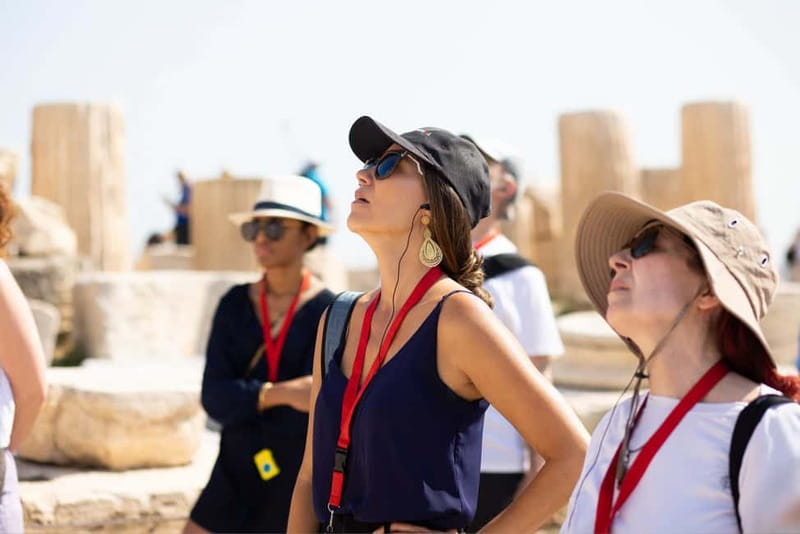
- The wireless audio devices matter, since guides can explain details without shouting over the crowd.
- Check the ticket option carefully, because the Acropolis entrance may cost extra if it is not included in your booking.
Starting below the Acropolis at the Theatre of Dionysus
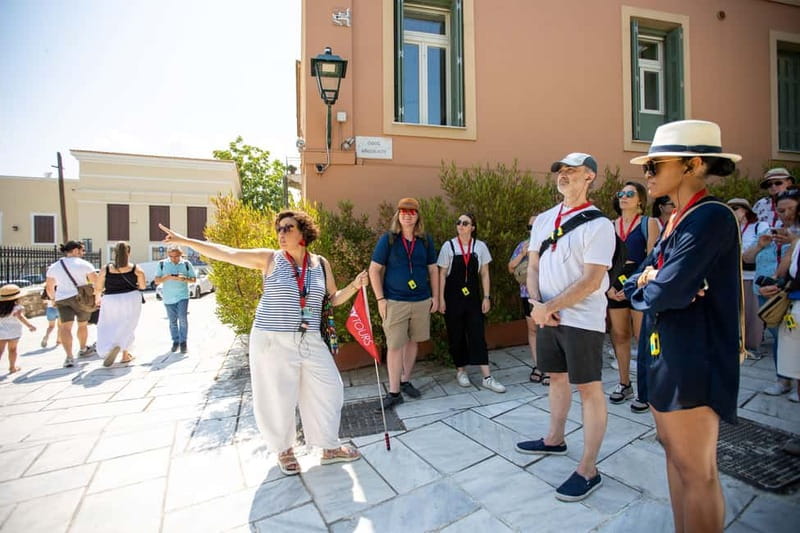
Meet at the Key Tours office near the Athens Gate Apt area. The opening gathering can be crowded, with several groups sometimes leaving at once, so arrive early and confirm your guide, language, and departure time before moving off. One practical weakness at the start is noise around the office, which can make announcements hard to hear.
The first stop is the Theatre of Dionysus on the Acropolis south slope. This is a fine opening because it places the monuments in a human setting. Before you look at temples and columns, you see the ancient stage where drama took shape.
Your guide spends roughly 15 minutes here, explaining the theatre and its role in ancient Athens. The tour does not simply send you straight uphill to the Parthenon. It builds the visit from the lower slope, giving you a sense of how the Acropolis functioned as a sacred and civic center.
You then pass the Odeon of Herodes Atticus. This large Roman-era performance venue sits against the Acropolis rock and remains one of the most striking sights on the approach. You get about 10 minutes of guided attention here, enough to understand its place in the larger complex and take in the scale of the stone auditorium.
More History Walking Tours in Athens:
- Berlin: Third Reich & Cold War Guided Walking Tour
★ 4.9 · 8,378 reviews - Munich: Third Reich & WWII Walking Tour
★ 4.6 · 6,181 reviews - Berlin’s Best: 2 Hour Walking Tour Third Reich and the Cold War
★ 5.0 · 5,486 reviews
The climb to the Propylaea and Temple of Athena Nike
The ascent is scenic, but do not treat it as a gentle stroll. The route includes uneven ancient surfaces and a steady climb. In summer, the effort becomes much harder, especially once the sun reaches the pale stone.
The Propylaea forms the monumental gateway to the Acropolis plateau. Your guide pauses here for about 10 minutes, helping you read the entrance as architecture rather than a simple doorway. The scale matters: the gateway announces that you are entering a special precinct, not just reaching a viewpoint.
Nearby, the Temple of Athena Nike receives another short stop. Its position near the entrance makes it easy to miss if you explore alone, especially when the route is packed. A guide helps you notice smaller structures that can disappear behind the famous Parthenon.
The tour uses wireless audio devices, and this is where they become useful. Your guide can speak while the group spreads out slightly for photos, and you can listen without standing shoulder to shoulder. Several guides have also been praised for keeping groups together, using a flag, choosing shade when possible, and checking on people who need a slower pace.
The Parthenon and Erechtheion
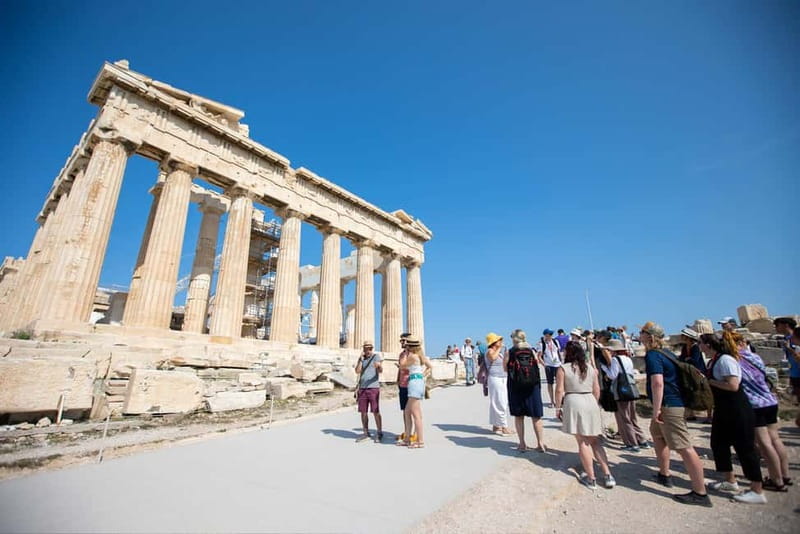
The Parthenon gets the longest single stop, about 30 minutes. That sounds generous, but the time passes quickly. You need to listen, look at the surviving architecture, find a clear photo angle, and absorb the constant movement of other groups.
A strong guide makes a major difference here. Michael has been praised for combining humor, storytelling, and a strong command of English. Kiki has been noted for finding shade and helping the group through crowded areas. Panagiota, sometimes introducing herself as Yoda, has been praised for explaining where the group was going and how long each stop would last.
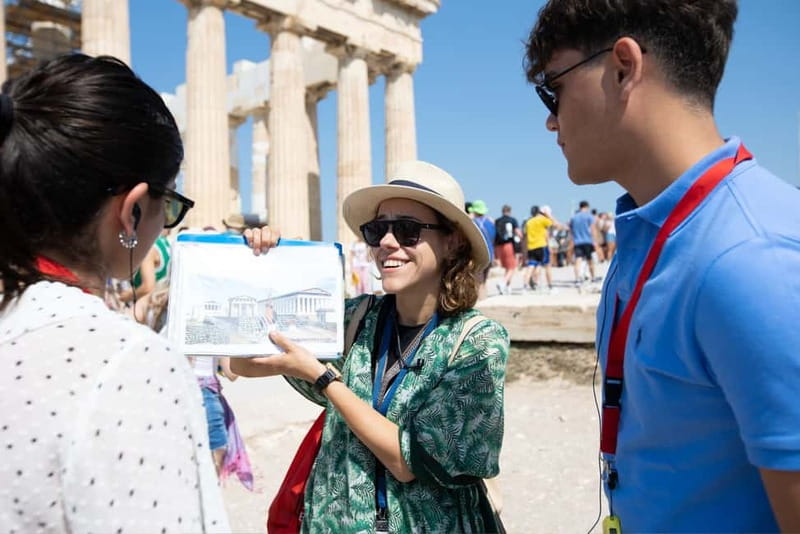
The value is not just historical information. Your guide helps you look at the Parthenon as a building with purpose, structure, and political meaning, rather than as a famous pile of columns. Stories about gods, civic identity, and ancient Athens give the stones a human scale.
The Erechtheion follows, with about 15 minutes of guided time. Its unusual design makes it a useful contrast to the Parthenon. Here you can pay attention to the different parts of the Acropolis instead of treating the plateau as one single monument.
The Acropolis stop ends with about 30 minutes for photos and free time. This is important because a guided explanation and personal looking are different activities. You can use the pause to photograph Athens, revisit a favorite view, or simply stand near the monuments without having to follow a running commentary.
Still, manage your expectations. The site can be packed even during the first morning departure. Early entry reduces some of the pressure and helps with the heat, but it does not give you an empty Parthenon. On especially busy days, the group may need to keep moving.
Views across Athens from the Acropolis
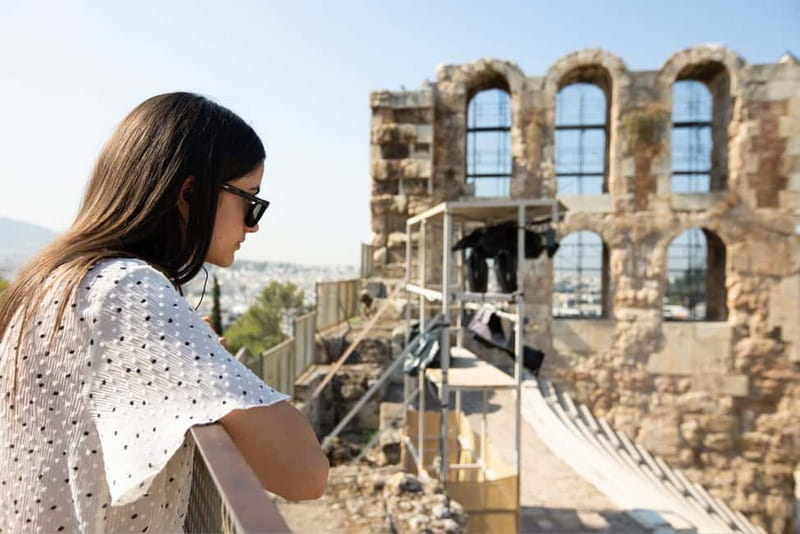
The Acropolis offers more than close views of temples. Your guide points out the Odeon of Herodes Atticus, Ancient Agora, National Observatory of Athens, and the hills of Filopappou, Mars Hill, and the Pnyx.
These references help you understand Athens as a connected ancient city. Looking outward from the Acropolis, you can see how religious sites, political gathering places, theatres, and hills fit together. It is one reason a guided visit earns its price over a quick solo walk around the monuments.
The views also give you breathing room after the climb. The route is not only about standing in front of famous buildings. You get a wider sense of Athens, with the city stretching beyond the archaeological site.
Bring water, sunglasses, and a hat. Some people also prefer a light cover-up for the sun. There is limited shade, and one summer report described temperatures of 35 degrees Celsius at 9 a.m. Comfortable shoes are essential. Large bags, luggage, pets, and baby strollers are not allowed.
More Old Town Walking Tours in Athens:
- Underground Vaults Walking Tour in Edinburgh Old Town
★ 4.5 · 8,506 reviews - Prague: 3-Hour Walking Tour of Old Town & Prague Castle
★ 4.7 · 5,696 reviews - Dubrovnik: Old Town Walking Tour
★ 4.8 · 5,174 reviews - Split: Old Town and Diocletian Palace Walking Tour
★ 4.9 · 4,727 reviews
Anafiotika and Plaka after the monuments
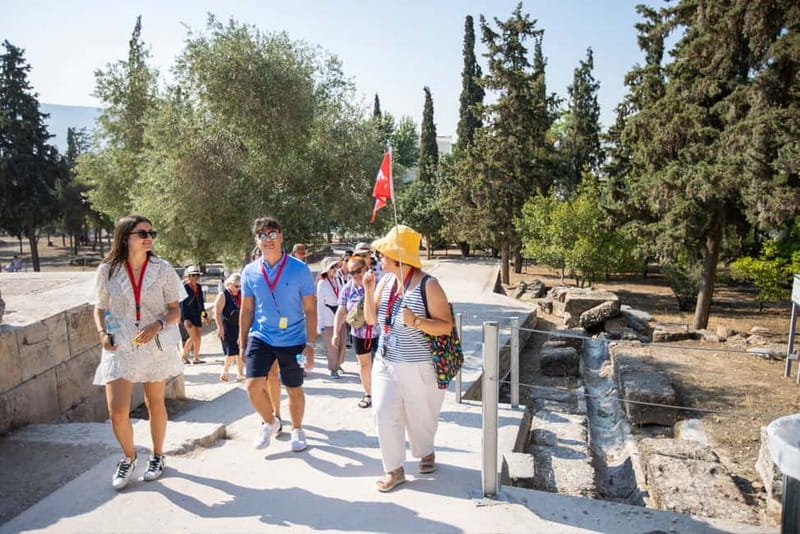
If you choose the Acropolis and Old City option, the walk continues downhill into Plaka. This extension changes the mood completely. You leave the open stone plateau and enter narrow cobbled lanes, small passages, and the Anafiotika area beneath the Acropolis.
Anafiotika is one of the most memorable sections because it feels unlike the broad avenues of modern Athens. Your guide points out details that are easy to pass without context, along with corners that many independent visitors miss. The route through this area takes about 30 minutes.
The tradeoff is time. After the Acropolis, your legs may already be tired, and Plaka is not a second archaeological site with long stops at every building. The guide gives you an introduction and points out key places, but you should not expect hours to shop, eat, or wander alone.
Some tours have had changes to the Plaka portion, so confirm the exact option you booked. If the Old City section is cancelled or altered, an audio guide is not quite the same as walking with a person who can answer questions and adjust the pace.
Roman Forum, Tower of the Winds, and ancient Athens

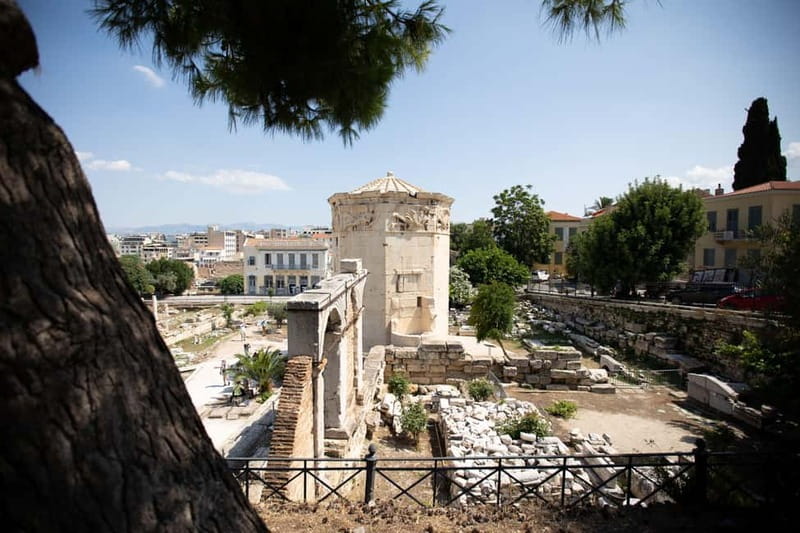
The route continues to the Roman Forum of Athens, with roughly 15 minutes of guided walking. This area helps show how the city continued to develop after the height of classical Athens. It is a useful counterpoint to the Parthenon, since you are no longer looking only at the fifth century BCE.
The Tower of the Winds receives a brief stop of about five minutes. The structure is easy to overlook when you are focused on larger ruins, but its place along the route makes it a worthwhile detail. A guide can explain why it mattered and connect it to the wider Roman Forum area.
You also see the Fethiye Mosque Museum. This stop is short, around five minutes, but it adds another period to the walk. Athens is not a single-era museum, and the route shows how the city’s buildings changed use across centuries.
The Bathhouse of the Winds is another special feature of the Old City option. The tour description identifies it as Athens’ last surviving public bath. It is not as famous as the Acropolis monuments, but that is exactly why it adds character. You get a glimpse of ordinary urban life rather than only grand temples and state buildings.
Hadrian’s Library to Monastiraki Square
Hadrian’s Library gets about 15 minutes of guided attention. The name can make it sound like a quiet book room, but the important point is its role as a major complex in Roman Athens. Your guide helps you place it within the city you have been walking through.
The route then passes Tzisdarakis Mosque before finishing at Monastiraki Square. These short stops work best as a connected walk, not as separate headline attractions. You see layers of Athens close together, from ancient remains to later religious and civic buildings.
Monastiraki Square is a practical ending point. It is central and gives you a useful place to continue exploring on your own. The tour itself does not include hotel pickup or drop-off, so plan your route to and from the Key Tours office and the final square.
Some guides add personality to this stretch. Michael has been praised for using song to explain parts of Old Athens, including a brief performance in a street setting and inside a church to demonstrate the acoustics. That is not a guaranteed part of every departure, but it shows how much the guide can shape the experience.
What the $34 price really gets you
At about $34 per person, the tour is good value if your booking includes the Acropolis entrance and the Old City walk. You are paying for a licensed guide, early access, audio equipment, and a structured route through the city’s most important ancient sites.
The ticket detail needs careful attention. Some booking choices do not include the Acropolis entrance, and you must buy the ticket for the correct timed entry before the tour begins. One booking experience noted an additional cost of about €20 per person, so do not compare prices until you know exactly what is included.
If you qualify for free admission, the rules still require planning. EU citizens under 25 and non-EU citizens under 18 must obtain the free ticket online through the official archaeological site. Because entry is timed, free spaces may not be available at your preferred hour on the day.
The tour is especially good value for first-time visitors who want context and do not want to manage timed entry alone. It is less suited to someone who prefers long museum stops, quiet photography, or complete freedom to set the pace.
Choosing the right departure and guide experience
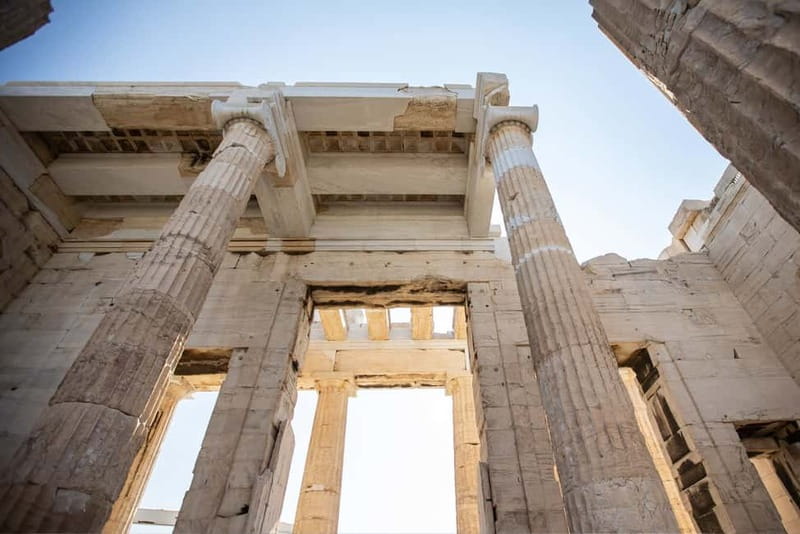
Choose the earliest available start, especially in summer. Reports consistently point to the 8 a.m. or 9 a.m. departures as the more comfortable choices. The Acropolis can already be busy early, but later in the morning the heat and crowds become more difficult.
The guide quality appears to be one of the strongest parts of the experience, though names vary by date. Guides praised for clear storytelling include Michael, Kiki, Panagiota, Christina, Tina, Maria, Evri, and Stavros. Their styles differ, but the best traits are consistent: clear explanations, humor, good group control, and attention to shade and comfort.
The audio devices also help when the group is large. One drawback at the meeting office is that several groups may gather at once, so stay alert during the initial instructions. Once the tour begins, the audio system makes it easier to follow the guide without crowding around.
The tour is rated as moderate difficulty and is not suitable for wheelchair users or people with mobility impairments. The ascent, uneven surfaces, heat, and downhill walk through Plaka require a reasonable level of fitness. Families can manage it, but young children may need extra care, and strollers are not allowed.
Should you book the Acropolis and Plaka tour?
Book it if you want the major Acropolis monuments explained by a licensed guide, prefer an early start, and like the idea of finishing with a guided walk through old Athens. The combination of the Parthenon, Erechtheion, Theatre of Dionysus, Anafiotika, Roman Forum, and Monastiraki gives you a strong first look at the city.
Skip it if you want to linger at every ruin, avoid a fixed pace, or find climbing difficult. Also check the ticket choice before paying, since the low advertised price may not include Acropolis admission.
For most first-time visitors, I would choose the earliest departure with entrance tickets included and the Plaka extension. Bring water, wear serious walking shoes, and allow about three and a half hours. You will see the famous Athens, but the Old City section gives you a better feel for the place beyond the postcard.
FAQ
How long does the Acropolis and Old City tour last?
The advertised duration is 210 minutes, or three and a half hours. The exact pace can vary depending on crowds, group movement, and the selected tour option.
Does the tour include the Acropolis entrance ticket?
The Acropolis ticket is included only if you choose the ticketed option. If you book without admission, you must purchase the ticket before the activity at the timed departure slot.
Where does the tour meet?
You meet at the Key Tours office. Hotel pickup and drop-off are not included.
Which languages are available?
The live guide is available in English and Spanish.
Is early access included?
Early Acropolis access is included as part of the activity. An early morning departure is also recommended for cooler temperatures and smaller crowds.
What should I bring?
Bring a passport or ID card, comfortable shoes, sunglasses, a sun hat, and water.
Is the tour suitable for wheelchair users?
No. The tour is not suitable for wheelchair users or people with mobility impairments because of the climb and uneven terrain at the Acropolis.
Just added around Athens
- Eat Your Way Through Athens: A Local Food Walk★ 4.9 · 97 reviews
- Athens: The Acropolis Guided Walking Tour in Dutch★ 4.9 · 107 reviews
- Athens: Women in Ancient Greece Guided Walking Tour★ 5.0 · 86 reviews
- Athens: The Acropolis Walking Group Tour with a French Guide★ 4.7 · 469 reviews
- Athens: The Acropolis Guided Walking Tour in German★ 5.0 · 362 reviews
- Athens: Private Walking Tour with a Local★ 4.5 · 93 reviews
- Athens: Evening Food Walking Tour★ 4.9 · 422 reviews
- Athens: Guided Mythological Walking Tour★ 4.9 · 125 reviews
Old Town Walking Tours, compared.
Underground Vaults Walking Tour in Edinburgh Old Town
Read our review →
3-Hour Walking Tour of Old Town & Prague Castle
Read our review →


Old Town and Jewish Quarter Guided Walking Tour
Read our review →
Marrakech: Ben Youssef, Secret Garden, & Souks Walking Tour
Read our review →Browse the lists this tour appears in