
REVIEW · DRESDEN
Dresden Old Town – Guided Walking Tour in English
Dresden’s Old Town looks old enough to have watched Saxon princes ride past, but much of what you see was rebuilt after the Second World War. That tension between historic design and modern reconstruction is the heart of this 2.5-hour walking tour, led in English by guides such as Nicolo, Nicolas, Nikolai, Dominica, and James.
I like two things here. First, the route links grand buildings to the people and politics behind them, rather than treating Dresden as a row of pretty façades. Second, guides have a knack for making the city’s Germanic and Slavic connections clear without turning the walk into a lecture. The main consideration is the pace and length: it can run beyond two hours, and there may be no planned toilet stop.
Key points at a glance
- See Dresden’s royal core on foot: The route covers Neumarkt, the Frauenkirche, Dresden Castle, the Fürstenzug, Hofkirche, Semperoper, Brühlsche Terrasse, and Zwinger Palace.
- Understand the city’s reconstruction: You learn why Dresden can look centuries old even though large parts of the center were rebuilt after wartime destruction.
- Hear history in context: The story runs from a small Slavic settlement and medieval trading center to the court of Saxon electors and kings of Poland.
- Expect lively English guiding: Nicolo, Nicolas, Nikolai, Dominica, and James are among the guides praised for clear explanations, humor, and strong storytelling.
- Plan for a long walk: Wear comfortable shoes, arrive 10 minutes early, and consider using a toilet before the start.
- Good value at $35: The fee covers the reservation and guide payment, giving you a structured introduction to Dresden without paying for transport.
Starting at Neumarkt and the Martin Luther statue
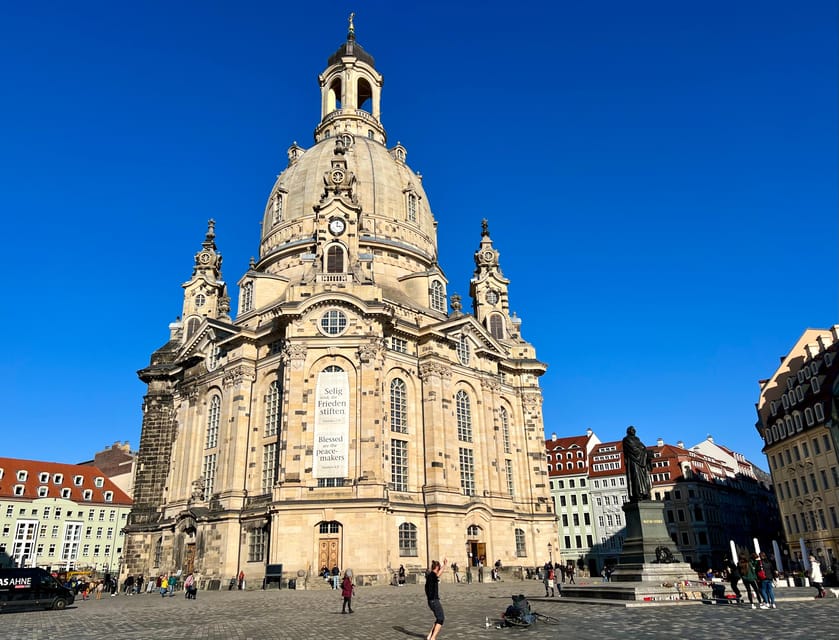
The meeting point is easy to identify: find the Martin Luther statue beside the Frauenkirche at Neumarkt, then look for the guide carrying a yellow umbrella. Arrive 10 minutes early so you are not trying to spot the group as it moves off.
Neumarkt is a fitting starting place because it brings Dresden’s most important themes together in one square. The Frauenkirche dominates the view, yet its present form is tied to both destruction and patient rebuilding. The church was lost in the bombing of Dresden and later reconstructed using historic plans and salvaged stones where possible.
That detail changes how you look at the square. You are not simply admiring an old church. You are seeing a modern act of remembrance built around an older design. The guide can help you read those layers, which is useful because a quick solo look may leave you thinking the whole setting survived intact.
The Martin Luther statue adds another thread. Dresden’s religious and political identity cannot be separated from the Reformation, the Saxon court, and the changing role of the church. The tour uses the square to set up those connections before leading you through the royal center.
More Old Town Walking Tours in Germany
- Nuremberg: Old Town Guided Walking Tour
★ 4.6 · 2,416 reviews - Munich: Old Town & Viktualienmarkt City Walk in German
★ 4.7 · 2,304 reviews - Heidelberg: Walking Tour of the Old Town
★ 4.6 · 1,742 reviews
From Slavic settlement to Saxon power
One of the more interesting ideas in this walk is that the Elbe did not simply divide Germanic and Slavic worlds. It also connected them. Dresden began as a small Slavic settlement, and the city’s name still sounds familiar to people who speak Czech, Slovak, Polish, or Sorbian.
That early background gives Dresden a stronger Central European character than its formal German architecture might suggest. You are not getting a simple story of one culture replacing another. Instead, the city developed through trade, political change, and contact across the Elbe.
By the end of the Middle Ages, Dresden had grown into an important trading center. Silver and lead from the nearby Rudavy mountains helped fuel its prosperity. This is the sort of practical detail I appreciate on a city walk because it explains why a place grew, not just when a building was built.
In the late 15th century, Dresden became the seat of the Holy Roman Empire’s prince-electors. That shift brought status and money, but the city’s grandest phase came later, when the Wettin rulers became Kings of Poland and Grand Dukes of Lithuania. Their expanded political reach helped give Dresden its almost imperial appearance.
Fürstenzug and the story in tile
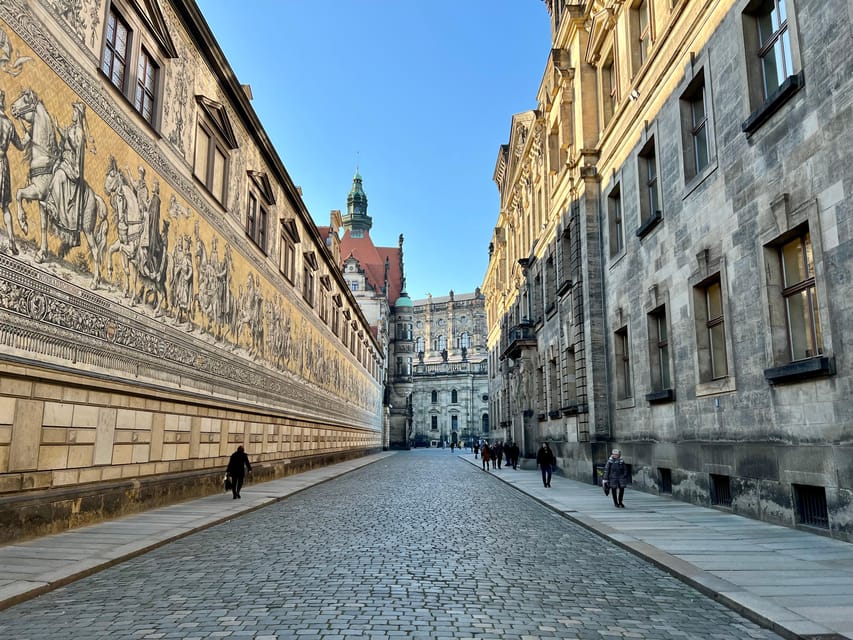
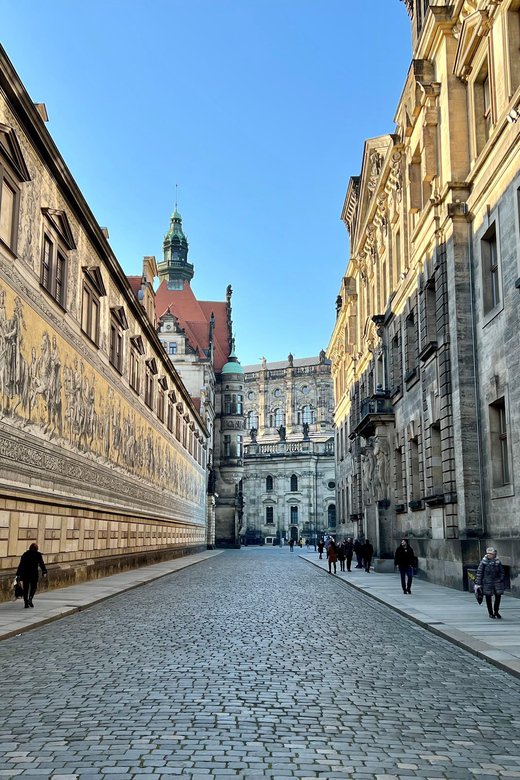
The Fürstenzug, or Procession of Princes, is one of the route’s most memorable stops. This long wall image presents the rulers of Saxony in sequence, giving you a visual guide to the dynasty that shaped the city.
The work is especially useful on a walking tour because it turns a complicated political story into something you can follow with your eyes. The guide can point out the rulers, explain the role of the electors, and connect the procession to Dresden Castle and the wider royal district.
Do not rush past it for a quick photograph. This is where the city’s political history becomes personal. You see a line of rulers, not an abstract list of dates. The setting also shows how Dresden used art in public spaces to reinforce royal identity.
The route is not only about famous names. Guides such as Nicolo and Nicolas have been praised for placing Dresden’s story within wider European history. That approach matters here because the Saxon court was tied to Poland, Lithuania, the Holy Roman Empire, and trade routes well beyond the city.
Dresden Castle and the royal center
Dresden Castle gives the tour another chance to explain how power worked. It was the home of Saxon rulers and part of the central group of buildings that made Dresden a court city.
You will see the castle from the outside as part of the walking route. That means this experience is best treated as an orientation tour, not a substitute for visiting Dresden’s museums or palace interiors. If you want detailed time inside the castle collections, you will need to plan that separately.
Still, the exterior matters. The castle helps connect the Fürstenzug to the larger royal district, while the nearby churches, palace buildings, and ceremonial spaces show how closely religion, government, and dynastic display were tied together.
The route also passes Altmarkt, Kreuzkirche, and the Palace of Culture. This section adds a different period to the walk. Dresden is not only Baroque courts and reconstructed monuments. It also has reminders of the 20th century and the changes that followed the war.
Same streets, a different route:
- Discover Berlin Half-Day Walking Tour
★ 5.0 · 9,624 reviews - Berlin City walk Government District and Places of Democracy
★ 4.7 · 8,467 reviews - Berlin: Third Reich & Cold War Guided Walking Tour
★ 4.9 · 8,378 reviews - Munich: Third Reich & WWII Walking Tour
★ 4.6 · 6,181 reviews
Altmarkt, Kreuzkirche, and Dresden’s difficult 20th century
Dresden’s wartime destruction is not a small footnote. The city center was bombed so heavily that much of it was left beyond recognition. A good guide needs to explain this plainly, without letting the tragedy become a dramatic backdrop for pretty photographs.
This is one of the tour’s strongest features. The route includes the city’s 20th-century story, including Nazi rule, the Second World War, and the long process of rebuilding. You learn why the old center can feel remarkably complete even though so much of it is new.
The reconstruction also raises questions. Dresden used old techniques and design elements, and many buildings were restored to their historic appearance. That gives the center a sense of continuity, but it can also blur the line between survival and recreation.
I find that distinction useful. It helps you look at the Frauenkirche, Neumarkt, and surrounding streets with more care. You can admire the result while remembering that the present city is also a record of loss, political choices, and decades of work.
The walk’s treatment of this subject appears to be a major reason it suits first-time visitors. A short city stroll that only covers Baroque architecture would leave out the event that most shaped modern Dresden.
Brühlsche Terrasse and the Elbe connection
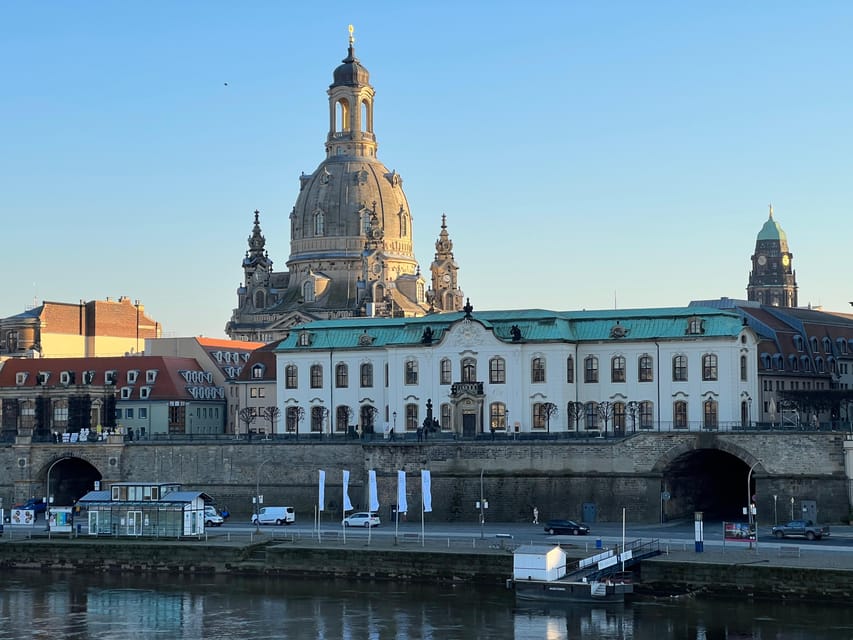
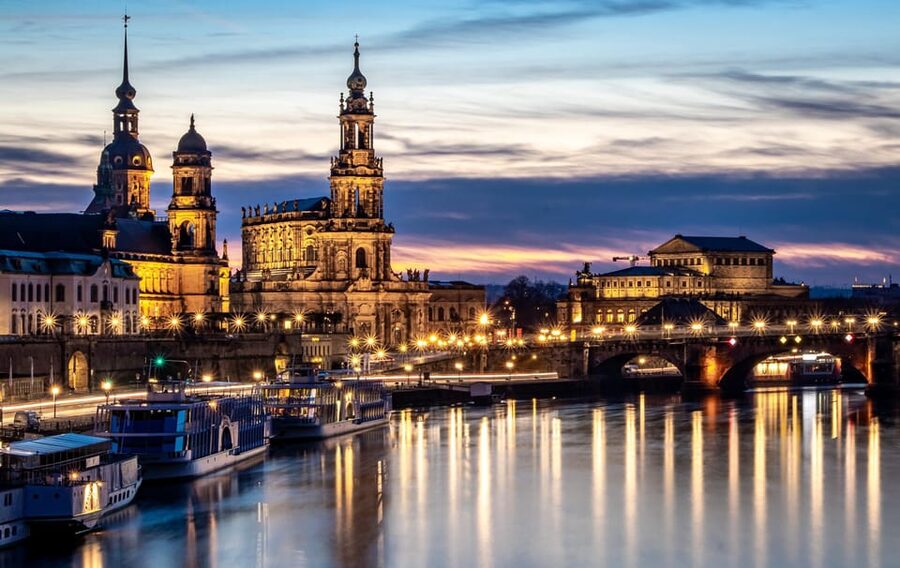
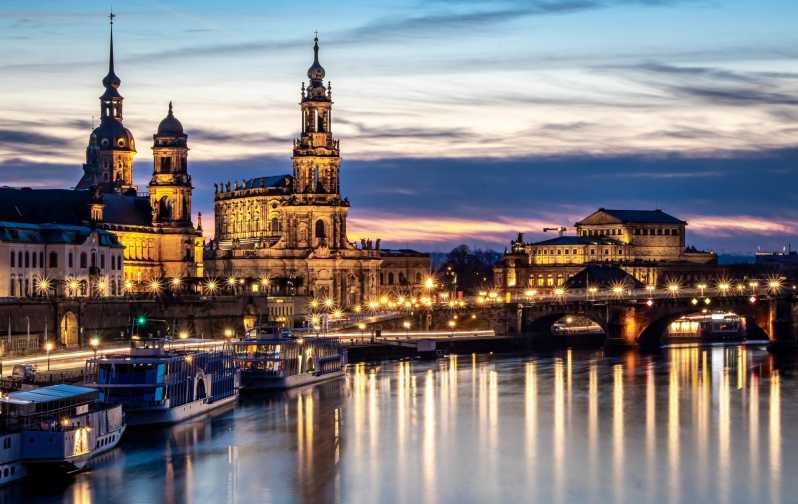
Brühlsche Terrasse offers a change of pace from tightly packed squares and royal buildings. The terrace sits above the Elbe and gives you a chance to think about Dresden’s position along the river.
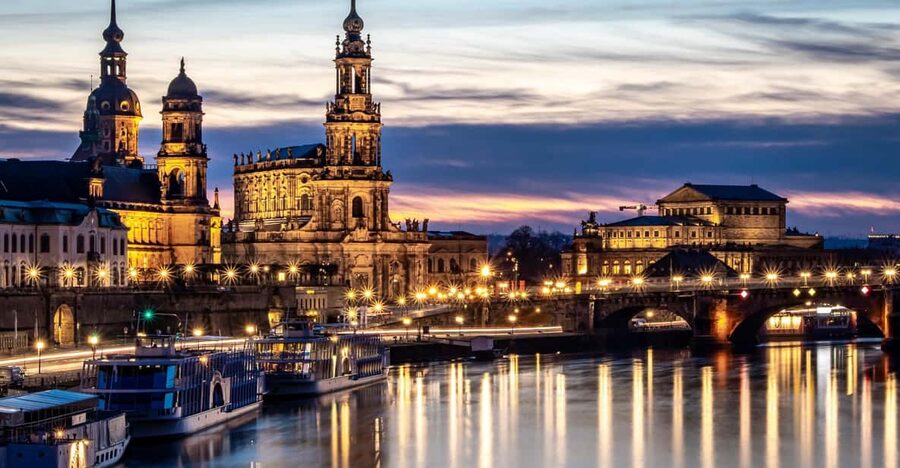
The river is not merely a scenic feature. It helps explain the city’s growth, its trading role, and its relationship with communities to the east and south. The tour’s Germanic and Slavic theme makes more sense here because the Elbe acted as a route for movement as well as a boundary.
You will want comfortable shoes for this part of the walk. The tour remains on foot, and the full route can last longer than the advertised two and a half hours. One person specifically wished for a toilet stop, so use facilities before meeting the guide and keep your expectations realistic if you prefer frequent breaks.
The terrace is also a good place to take in Dresden as a whole. You are seeing a city built around a river, shaped by a court, damaged by war, and rebuilt for modern life.
Hofkirche and the Semperoper
The Hofkirche, or Court Church, brings the royal and religious stories together. Its position near the castle makes clear how close the Saxon rulers kept their spiritual and political institutions.
The church also helps explain Dresden’s Catholic connection within a region strongly associated with Protestant history. That contrast is one reason the city’s story is more complicated than a simple tale of Lutheran Saxony.
The Semperoper then shifts the focus toward music, performance, and court culture. Dresden’s reputation was not built only on government. Art and ceremony were central to the city’s public image, and the opera house remains one of the clearest symbols of that ambition.
Here, your guide’s delivery matters. Several guides have been praised for using humor and small facts to keep the group attentive. Nicolo was noted for adding jokes and unusual details at the right moments, while Dominica was praised for storytelling and enthusiasm. Those qualities help when you are standing among several grand buildings and trying to remember what connects them.
Zwinger Palace near the Elbe bridge
Zwinger Palace is the architectural high point of the walk for many people. Its Baroque forms show the ambition of the Saxon court at its most confident, when Dresden was being shaped into a royal capital with European reach.
You will see the palace near the Elbe bridge as part of the route. The tour gives you the setting and historical background, but it does not include transport or a dedicated museum visit. If you want to explore the palace galleries, courtyards, or collections at length, plan another visit after the walk.
That is not a weakness so much as a useful boundary. A 2.5-hour walking tour can introduce the building, explain its place in Saxon history, and show you where to return. It cannot replace a full afternoon inside the complex.
The sequence of the route works well. By the time you reach the Zwinger, you have already heard how Dresden grew, how the Wettin rulers gained influence, and why the city developed such a grand Baroque center. The palace then feels like the result of that story rather than an isolated attraction.
Guide style and the value of the English tour
The English guiding is a major part of the experience. Nicolo, Nicolas, and Nikolai have each been praised for clear explanations, humor, and strong command of Dresden’s past. Dominica has been described as an engaging storyteller, while James received praise for giving the city a broad historical frame.
Names and accents can vary because Walkative uses different guides. One guide spoke quickly enough that a listener needed a few minutes to adjust, so tell yourself to settle into the rhythm rather than panic if the first explanation moves fast.
The best fit is someone who enjoys a story with context. You will hear about rulers, religion, trade, war, architecture, and reconstruction. The guide is not simply pointing left and right at buildings. The goal is to show how the pieces connect.
The tour can work well for families and adults who want a lively introduction. A family of four found the explanations engaging, and another group appreciated that the guide kept the walk entertaining without losing the historical detail. If you prefer complete silence, lots of independent photo time, or a very short route, this may feel too structured.
Is $35 good value for Dresden?
At $35 per person, the tour is fairly priced for a two-and-a-half-hour guided walk through Dresden’s core. You are paying for an English-speaking guide and a planned route that covers many of the city’s major sights.
The value is strongest if this is your first visit, or if you know the buildings but not the story behind them. The walk gives you a framework for the rest of your time in Dresden. Afterward, you can return to the Frauenkirche, castle, Zwinger, or museums with a better sense of how they fit together.
The price also includes the guide’s payment and reservation fee under the pay-what-you-wish format. In practical terms, this is not a free tour where you later decide how much to hand over. Your $35 booking payment covers the arrangement and the guide’s compensation.
You can reserve now and pay later, and cancellation is allowed up to 24 hours before the start for a full refund. The walk is wheelchair accessible, though the duration and cobbled streets are still worth considering for anyone who needs frequent rests.
Who should book this Dresden walk?
I would choose this tour if you want a clear first look at Dresden, especially if you care about the city’s rebuilding after the war. It is also a good choice if you want a guide to explain the link between the Saxon court, Poland and Lithuania, the Elbe, and the city’s Slavic roots.
It suits first-time visitors, history fans, families, and anyone who likes architecture with a story attached. It is less suitable if you mainly want interior visits, a slow photography walk, or a route with guaranteed comfort breaks.
Book it early in your Dresden stay if possible. That way, the walk can help you decide where to spend more time afterward. Arrive early, wear comfortable shoes, use a toilet before the meeting point, and keep the yellow umbrella in sight.
Should you book the Dresden Old Town walking tour?
Yes, if you want Dresden’s major sights explained as parts of one long story. The route covers the essential Old Town landmarks, but its real value lies in the connections between them: Slavic beginnings, medieval trade, Saxon royal power, Baroque ambition, wartime destruction, and careful reconstruction.
The tour is not a replacement for going inside the Frauenkirche, Dresden Castle, or Zwinger Palace. It is a strong orientation walk that helps you understand why those places matter. At $35, with English guiding, flexible booking, and a route that can run beyond two hours, it offers solid value for a first visit.
FAQ
Where does the Dresden walking tour meet?
Meet next to the Martin Luther statue at Neumarkt, beside the Frauenkirche. Look for the guide with the yellow umbrella.
How long does the tour last?
The scheduled duration is 2.5 hours. It may run longer, so allow extra time after the official finish.
Is the tour conducted in English?
Yes. The tour has a live English-speaking guide.
Which Dresden sights are included?
The route includes Neumarkt and the Frauenkirche, the Martin Luther statue, Fürstenzug, Dresden Castle, Altmarkt, Kreuzkirche, the Palace of Culture, Brühlsche Terrasse, Hofkirche, Semperoper, and Zwinger Palace near the Elbe bridge.
Does the tour include transportation?
No. This is a walking tour, and transportation is not included.
Can I cancel or pay later?
You can reserve your place and pay later. Cancellation is allowed up to 24 hours in advance for a full refund.
Just added around Germany
- Hamburg: Guided Port Walk for Families★ 4.6 · 191 reviews
- East Berlin and the Wall: Walking Tour★ 4.9 · 407 reviews
- Dresden: Shared Small Group Walking Tour in English★ 4.8 · 172 reviews
- Dresden: Taste of Dresden Food Walk★ 4.6 · 397 reviews
- Dresden: Private Guided Walking Tour★ 4.5 · 81 reviews
- Dresden: Guided City Walk and Panometer Entrance Ticket★ 4.5 · 176 reviews
- Dresden: Neustadt District Street Art Guided Walking Tour★ 4.3 · 333 reviews
- Dresden: Guided Walking Tour and Chocolate Museum Ticket★ 4.5 · 479 reviews
Old Town Walking Tours, compared.

Underground Vaults Walking Tour in Edinburgh Old Town
Read our review →
3-Hour Walking Tour of Old Town & Prague Castle
Read our review →


Old Town and Jewish Quarter Guided Walking Tour
Read our review →
Marrakech: Ben Youssef, Secret Garden, & Souks Walking Tour
Read our review →Browse the lists this tour appears in