

REVIEW · DRESDEN
Dresden: Guided Walking Tour and Chocolate Museum Ticket
Dresden’s past comes in two delicious halves here: a brisk walk through grand Old Town squares, followed by the story of how the city became Germany’s chocolate capital. You’ll hear about the Middle Ages, Renaissance, Baroque splendor, the peaceful revolution of 1989, and German reunification, then see how cocoa beans became candy.
I like the compact route, which links major sights such as the Frauenkirche, Semperoper, Zwinger, and Dresden Cathedral without taking up your whole day. I also like the museum tasting, especially the chance to see one of the world’s largest collections of chocolate molds by Anton Reiche. The main catch is simple: the walking tour is in German, and you visit the museum by yourself.
Key points to know
- A 90-minute Old Town route: Follow a guide from Dresden Castle through Brühl’s Terrace, the Procession of Princes, Stallhof, Dresden Cathedral, Taschenbergpalais, and Augustus Bridge.
- German-language guiding: The tour is led live in German, so it suits German speakers best.
- A separate museum visit: Your voucher gives you entry to the Chocolate Museum on the same day, but the guide does not accompany you.
- Useful timing tip: If you select the 4:00 PM walk, visit the museum before the tour because it closes at 6:00 PM.
- Chocolate history with a local angle: Learn why Dresden is linked to milk chocolate and see historic molds made for 19th-century factories.
- Good value at $18: You get a guided city walk, museum admission, and a tasting in a short package.
Dresden’s grand story in a short walk

This experience is a good fit if you want a quick introduction to Dresden before exploring on your own. In 90 minutes, you move through the central Old Town and hear how the city changed from a medieval settlement to a Renaissance center, then into the polished Baroque capital associated with Augustus the Strong.
The guide also covers harder chapters. You’ll hear about the difficult conditions of the Middle Ages, the energy of the Renaissance, and the grandeur of the Baroque era. Later, the story reaches the peaceful revolution of 1989 and the reunification of East and West Germany.
That range is the real value of the walk. Dresden’s famous buildings can look like a handsome collection of stone and domes if you only snap photos. A good explanation gives the streets a timeline, helping you understand why the city looks so ornate, why it carries the scars of its past, and how modern Germany came together.
The tour is in German, so your enjoyment depends heavily on your language skills. The live guide is a strength if you understand German, but this is not the right choice if you need English commentary or multilingual support.
More Dessert Tastings in Germany:
- Brussels: Historical Walking Tour with Chocolate & Waffle Tasting
★ 5.0 · 1,165 reviews - Private Montmartre Food Tour with Wine, Cheese & Pastries
★ 5.0 · 1,027 reviews - Brussels Chocolate Walking Tour and Workshop
★ 4.5 · 885 reviews
Starting below the QF Passage
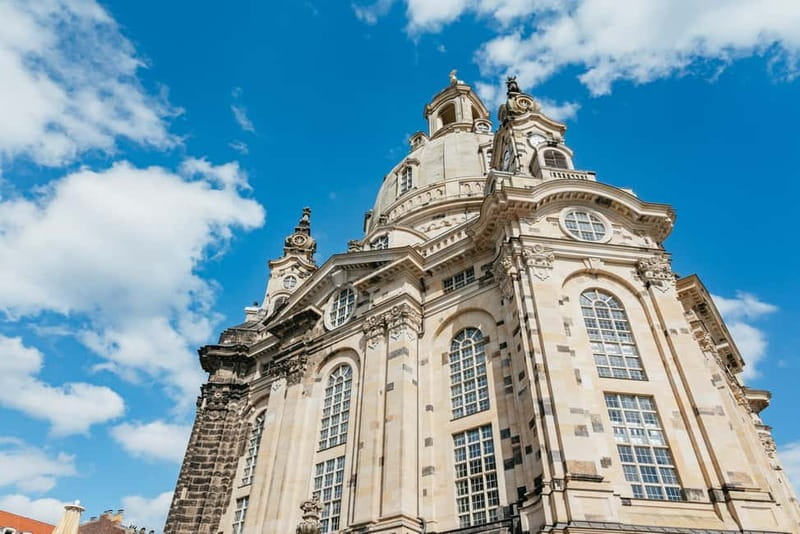
The meeting point is in the basement of the QF Passage, in the seating area of Dresden Information. Give yourself a little extra time to find it, especially if you do not know the passage or are arriving with luggage.
This is a practical starting place in the center of Dresden’s Old Town. It puts you close to the major sights, so the walk can get to the historic core quickly rather than spending precious time on a long approach through ordinary streets.
The exact starting time matters because you choose it when booking. The chocolate museum ticket works differently: you can use the voucher at any time during the museum’s opening hours on the day of your walking tour, without making a separate reservation.
That split schedule gives you some freedom. You might visit the museum first, take a break for lunch, and then join the city walk. Or you can take the morning walk and visit the museum afterward. The one firm timing rule is for the 4:00 PM tour. Visit the museum before the walk, since the museum is open from 11:00 AM to 6:00 PM daily.
From Dresden Castle to Brühl’s Terrace
The walk begins at Dresden Castle, one of the city’s central historic landmarks. From here, the route moves into the royal and ceremonial heart of Dresden.
You then reach Brühl’s Terrace, the broad riverside promenade often associated with Dresden’s grand architectural views. It is a useful place to pause and take in the city from a wider angle. You get a sense of how Dresden’s buildings relate to the river, the Old Town, and the major civic monuments nearby.
The guide’s job here is not just to point at façades. You’ll hear how different periods shaped the city. The Middle Ages provide the early framework, the Renaissance brings a new sense of vigor and design, and the Baroque era supplies the theatrical scale that most people associate with central Dresden.
The route is short enough to remain manageable, but it is not a sit-down sightseeing experience. You will be on foot for the full 90 minutes. Comfortable shoes are sensible, and you should expect the outdoor portion to be affected by the weather.
Procession of Princes and Stallhof
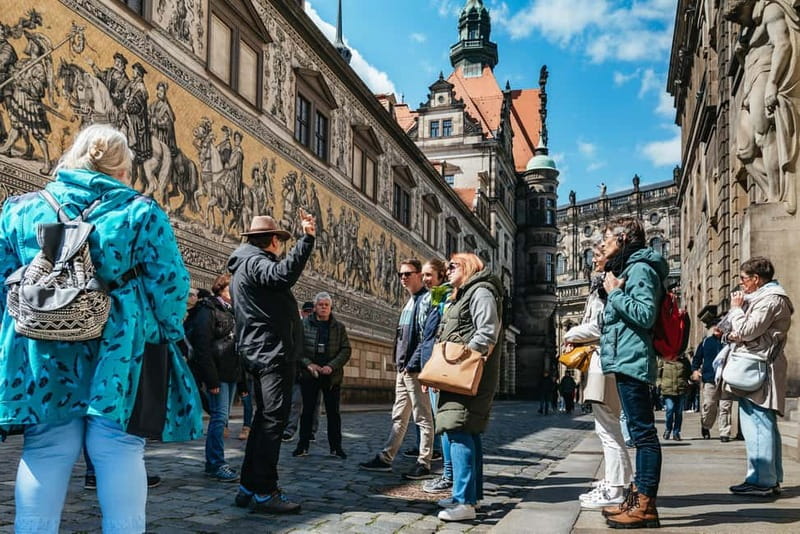
From Brühl’s Terrace, the walk continues toward the Procession of Princes and Stallhof. The Procession of Princes is one of Dresden’s most memorable public artworks, presenting a long historical procession on porcelain tiles.
It gives the guide a natural opening to explain Saxon rulers, dynastic power, and the way Dresden used art to present its political importance. The scale of the artwork also makes this one of the stops where you can understand the city’s taste for public spectacle.
Stallhof, the former tournament courtyard, adds another layer. Its presence helps you picture the ceremonial life of the royal court rather than only its churches and museums. These stops are especially useful for visitors who want more than a checklist of the Frauenkirche and Semperoper.
The walk stays focused on the Old Town, so you are not being rushed across widely separated parts of Dresden. That is good for a first look, though the 90-minute length means the guide cannot explore every building in detail. Think of it as a well-shaped orientation walk, not a full study of Dresden’s architecture.
More Museum Visits in Germany:
- Berlin: Berlin Wall & East Side Gallery Walking Tour
★ 4.9 · 264 reviews - Cold War, Berlin Wall, Spies and the East Side Gallery
★ 4.8 · 254 reviews - Acropolis monuments & Parthenon Walking Tour with Optional Acropolis Museum
★ 5.0 · 2,678 reviews - Frida Kahlo VIP [Museum Tickets Included] Walk, Markets & Churros
★ 5.0 · 982 reviews
Dresden Cathedral and the Taschenbergpalais
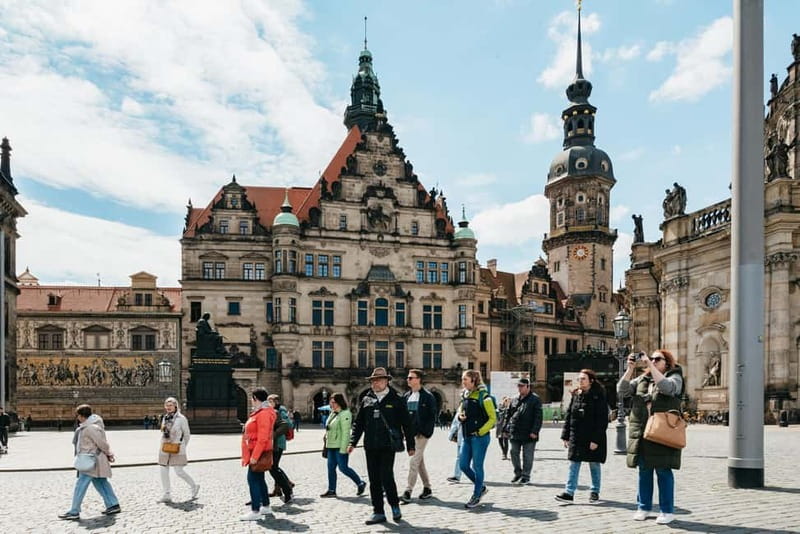
The route reaches Dresden Cathedral, another major landmark in the city center. Its place near the royal complex shows how closely religion, court life, and political power were linked in historic Dresden.
Next comes the Taschenbergpalais. This palace adds to the sense that the Old Town was planned around royal residences, formal courtyards, churches, and spaces built to impress. You’ll see how the city’s Baroque identity was not limited to one grand building. It was a whole urban setting.
The guide also connects the physical city to modern German history. The discussion of the 1989 peaceful revolution and reunification is important because Dresden’s story does not stop with the Baroque period. You get a reminder that these streets belong not only to Saxony’s royal past, but also to the political changes that reshaped Germany at the end of the 20th century.
For me, this historical range makes the tour more useful than a simple monument walk. You are not just hearing dates. You are being shown how Dresden’s identity shifted across centuries.
Augustus Bridge and the walk’s finish
The route includes Augustus Bridge before ending near the Frauenkirche. The bridge gives you another clear view of Dresden’s central setting and helps tie the river to the Old Town route.
Finishing near the Frauenkirche is convenient. The church is one of Dresden’s best-known landmarks, and the area around it gives you plenty of options for continuing your day. You can remain in the historic center, find a meal, or make your own way to the Chocolate Museum.
The Frauenkirche is also a fitting final point because it represents both Dresden’s Baroque glory and the city’s painful modern history. Even if the tour does not spend a long time inside, its exterior and location make it a powerful marker of the city’s survival and rebuilding.
The walk covers many famous sights, but the strongest benefit is the sequence. Dresden Castle, the royal courtyards, Brühl’s Terrace, the cathedral, the palace, bridge, and Frauenkirche are easier to remember when you encounter them as parts of one connected story.
Semperoper and the Zwinger from the outside
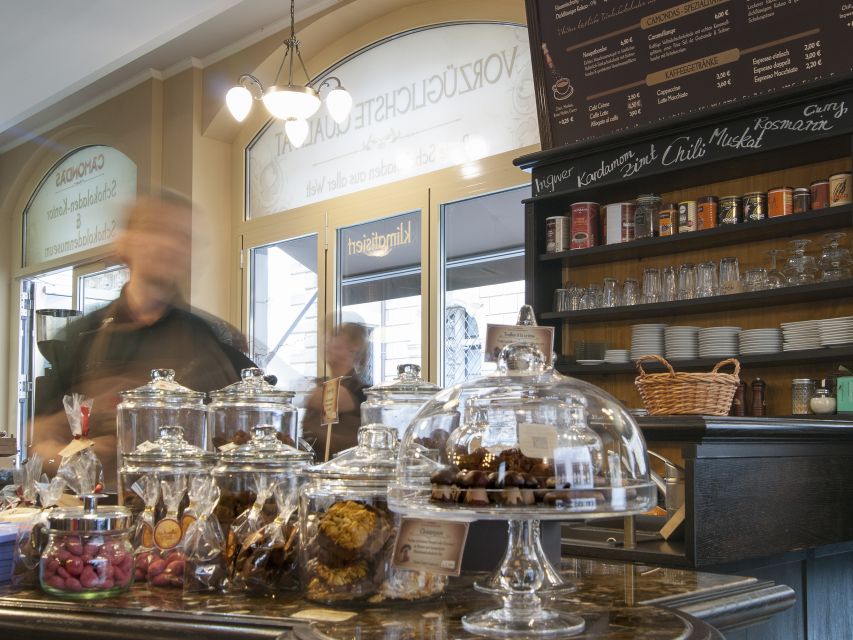
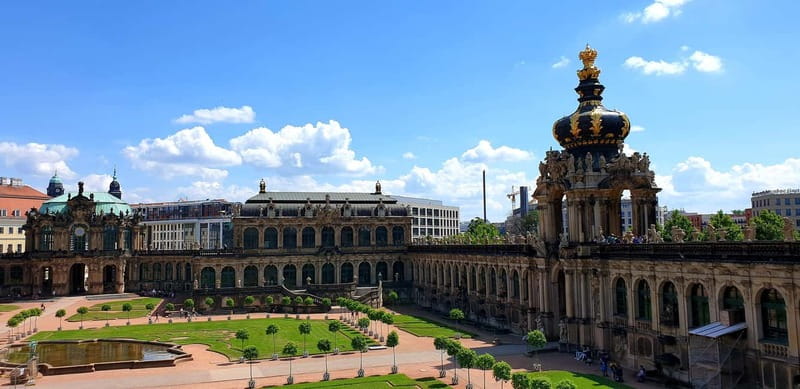
The experience also includes views of the Semperoper and the Baroque Zwinger. These are two of Dresden’s essential architectural sights.
The Semperoper is tied to the city’s musical and courtly reputation. Even from outside, its formal design helps explain why Dresden became known for polished cultural institutions as well as royal architecture.
The Zwinger provides another strong example of Baroque ambition. Its courtyards and decorated structures show the period’s love of ceremony, symmetry, and visual drama. The tour gives you a chance to place the Zwinger within the wider Old Town rather than treating it as an isolated stop.
Do keep your expectations realistic. The supplied details describe views of these landmarks during the walk, not a full interior visit or an in-depth museum tour. If you want to see an opera performance or spend hours inside the Zwinger’s collections, you will need separate plans.
What the Chocolate Museum adds
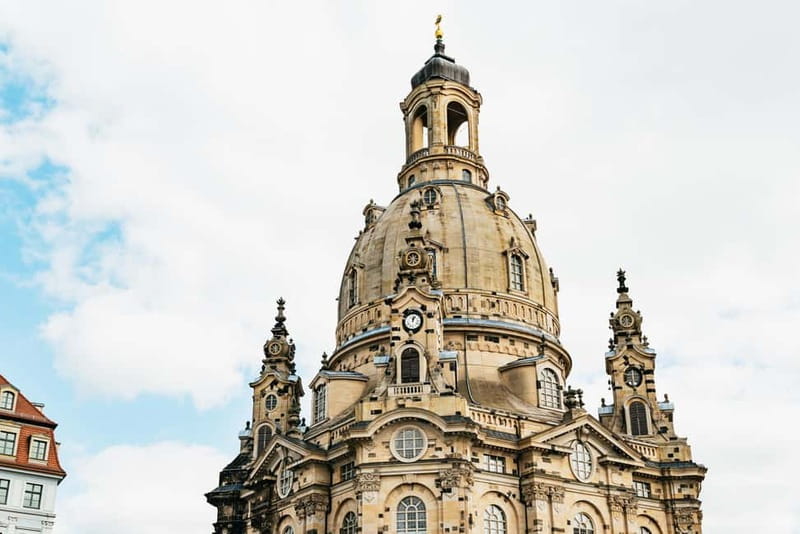
After the walking tour, your voucher opens the door to Dresden’s Chocolate Museum. This part is self-guided. The city guide does not accompany you, which is both a limitation and a benefit.
It is a limitation if you want one continuous guided experience. It is a benefit if you prefer to move at your own speed, read the displays carefully, or fit the museum around meals and other sightseeing.
The museum focuses on Dresden’s former status as Germany’s capital of chocolate. You’ll learn about the origins of milk chocolate, which is said to have been invented in Dresden, and about the many chocolate factories that operated in the city during the 19th century.
That local focus gives the museum more substance than a general exhibit about candy. You are connecting chocolate to Dresden’s industrial and commercial past. The museum also explains the main components of good chocolate and traces the process from cocoa beans to the finished product.
One of the most distinctive displays is the large collection of chocolate molds made by Anton Reiche. These molds reveal how chocolate was shaped and presented before modern mass production took over. They also show that chocolate was once closely tied to design, seasonal customs, advertising, and factory craft.
The tasting at the end
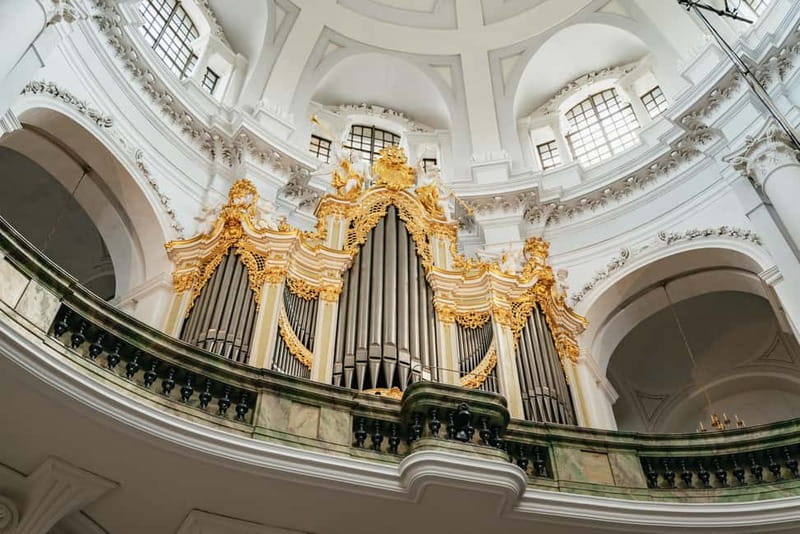
The tasting is a small but welcome finish. You get to discover what early chocolate bars may have tasted like, then sample German milk chocolate.
This is not a chocolate-making workshop, and the details do not promise a long tasting session. Think of it as a pleasant conclusion to the museum visit rather than the main event. Still, tasting the product after learning how cocoa is processed makes the displays more memorable.
If you have children with you, the museum’s subject should have easy appeal, though school classes and youth groups of 10 or more people, with participants under 15, are asked to book an exclusive group tour. For an individual family booking, the key issue is simply keeping the museum’s hours in mind.
The museum is open daily from 11:00 AM to 6:00 PM, but special closures can occur. Check its website before you go, particularly if your Dresden schedule is tight.
Is $18 a fair price?
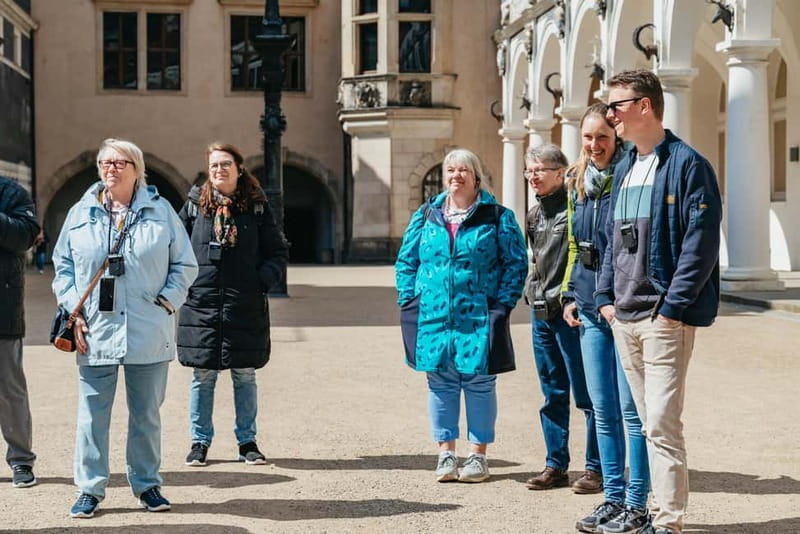
At $18 per person, this is a strong value if you want both a guided introduction to Dresden and a museum visit. You are paying for a 90-minute live walking tour, admission to the Chocolate Museum, and a tasting.
The price is especially reasonable for a first afternoon in town. A private guide would cost much more, while exploring the Old Town without context gives you less background. The combination lets you get your bearings, see the headline monuments, and add an unusual local subject to your day.
The value drops if you do not understand German. Since the tour guide speaks German, you may still enjoy the buildings and use the museum ticket, but you would lose the central historical commentary that justifies much of the price.
It is also not the best option if you want a full-day experience. The walking portion lasts 1.5 hours, and the museum is independent. You will need to plan your own time between the two parts.
Free cancellation up to 24 hours before the activity and the option to reserve now and pay later make the booking less rigid. The tour is also wheelchair accessible, which is useful for visitors checking access before committing.
Who should book this Dresden experience?
I would choose this tour if you speak German and want a concise introduction to Dresden’s Old Town. It works well for a first visit, a short stay, or a day when you want one organized activity without surrendering the rest of your schedule.
It suits history fans who enjoy moving from medieval beginnings through the Renaissance and Baroque period into the political changes of 1989 and reunification. It also suits anyone who likes an offbeat museum subject. Dresden’s chocolate past is not as obvious as its royal buildings, and that contrast makes the day more interesting.
Families and casual sightseers may appreciate the tasting and the short format. You can visit the museum at your own pace, and the walk does not require a full day of concentration.
I would skip it if you need an English-language guide, want extensive time inside each landmark, or prefer a single guide to lead both the city walk and museum visit. You should also avoid choosing the late walk without first checking your museum timing. At 4:00 PM, the museum visit comes first.
FAQ
How long does the Dresden experience last?
The guided walking tour lasts 1.5 hours. The Chocolate Museum visit is self-guided, so you can spend time there according to your schedule before or after the walk.
Is the tour available in English?
No. The live tour guide speaks German. The activity information lists German as the tour language.
When can I visit the Chocolate Museum?
You can use your voucher at any time on the day of your walking tour, without prior notice. The museum is open daily from 11:00 AM to 6:00 PM, though special closing times may apply.
Can I visit the museum after a 4:00 PM walking tour?
No. If you choose the 4:00 PM walking tour, you should visit the Chocolate Museum before the walk because the museum closes at 6:00 PM.
Does the guide accompany me through the Chocolate Museum?
No. The museum visit is on your own. The guide leads the walking tour but does not accompany you inside the museum.
Is the activity wheelchair accessible?
Yes. The activity is listed as wheelchair accessible. The meeting point is in the basement of the QF Passage, in the seating area of Dresden Information.
Should you book it?
Book this experience if you want a short, good-value German-language walk through Dresden’s historic center, with a chocolate museum and tasting added at no extra planning effort. The route covers the city’s major architectural names while also explaining the 1989 peaceful revolution and reunification, so it does more than point at pretty buildings.
The best plan is to take an earlier walking tour and visit the museum afterward, or visit the museum first if your walk begins at 4:00 PM. Choose it for the mix of royal Dresden, modern history, historic chocolate molds, and milk chocolate tasting. Skip it if you need English commentary or a fully guided museum visit.
Just added around Germany
- Hamburg: Guided Port Walk for Families★ 4.6 · 191 reviews
- East Berlin and the Wall: Walking Tour★ 4.9 · 407 reviews
- Dresden: Shared Small Group Walking Tour in English★ 4.8 · 172 reviews
- Dresden: Taste of Dresden Food Walk★ 4.6 · 397 reviews
- Dresden: Private Guided Walking Tour★ 4.5 · 81 reviews
- Dresden: Guided City Walk and Panometer Entrance Ticket★ 4.5 · 176 reviews
- Dresden Old Town – Guided Walking Tour in English★ 4.8 · 135 reviews
- Dresden: Neustadt District Street Art Guided Walking Tour★ 4.3 · 333 reviews
Museums, compared.

Acropolis monuments & Parthenon Walking Tour with Optional Acropolis Museum
Read our review →![Frida Kahlo VIP [Museum Tickets Included] Walk, Markets & Churros](https://2.thewalkingtraveler.com/wp-content/uploads/frida-kahlo-vip-museum-tickets-included-walk-markets-churros-400x267.jpg)
Frida Kahlo VIP [Museum Tickets Included] Walk, Markets & Churros
Read our review →
French Quarter Walking Tour With Comp 1850 House Museum Admission
Read our review →
Sydney Cricket Ground (SCG) and Museum Walking Tour
Read our review →
Bogotá City Tour with Monserrate, Gold and Botero Museums
Read our review →
Cold War, Berlin Wall, Spies and the East Side Gallery
Read our review →
Picasso Museum Entry, Digital Guide & Born Walk
Read our review →Browse the lists this tour appears in