
REVIEW · DRESDEN
Dresden: Complete Walking Tour with Frauenkirche Visit
Dresden’s great strength is how much it packs into a short walk. In two hours, you move from the rebuilt Frauenkirche to royal courtyards, the Elbe overlook, and the carved sandstone world of the Zwinger. The route gives you a useful first look at the city rather than parking you in one square.
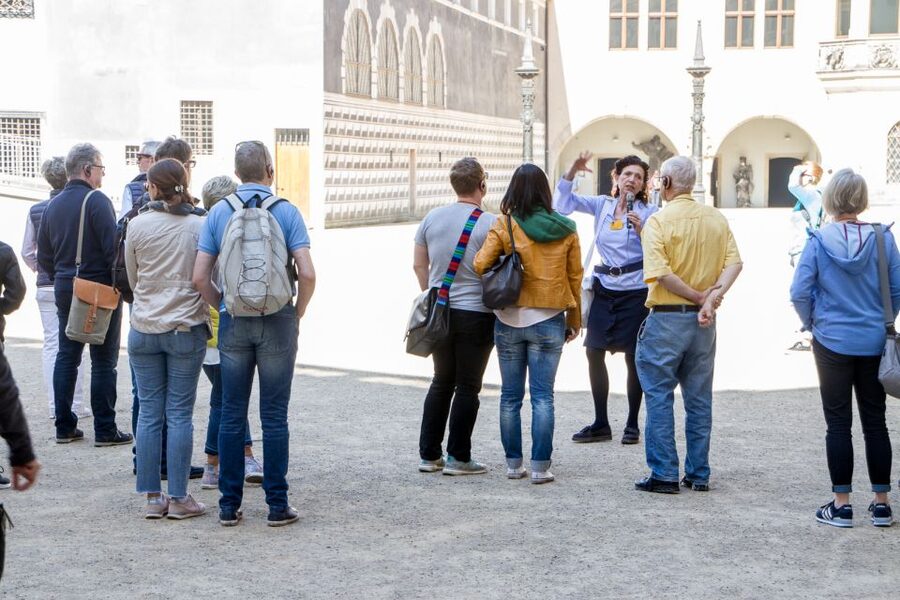
I like the small group of no more than 10 people, which makes it easier to hear, ask questions, and keep moving through the old town. I also like the headsets, especially around busy streets and open squares. Guide Dagmar Renger has been singled out for her humor, clear answers, and strong feeling for her hometown.
The main consideration is language: the live tour and audio support are in German. Also, entry to the royal castle museums, Zwinger museums, and Semper Opera is not included. The Frauenkirche visit is part of the plan, but church events or preparations can occasionally prevent entry, so the indoor portion is not completely guaranteed.
Key points at a glance
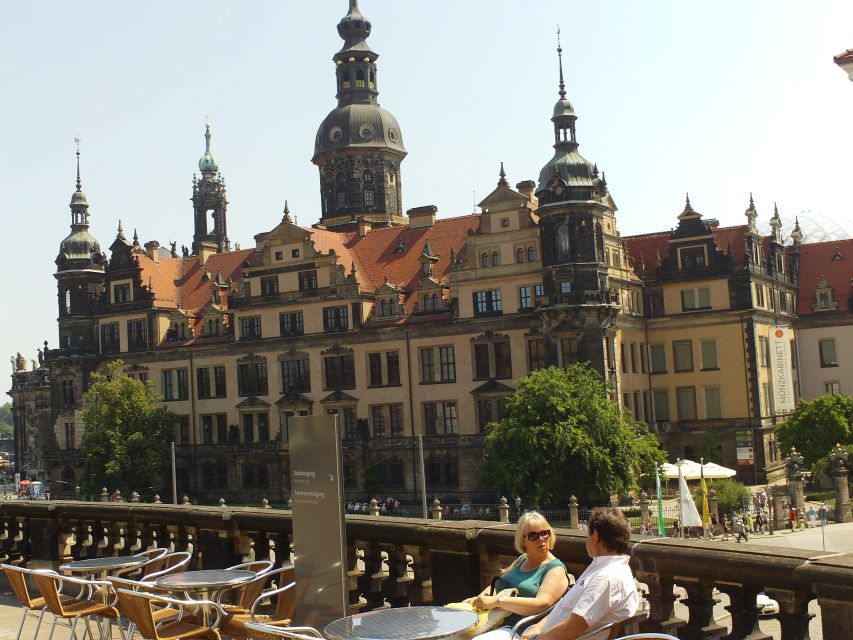
- Frauenkirche interior: See the altar, murals, historic crypt, unusual nave, and lower church when access is possible.
- A compact old-town route: Cover Neumarkt, Stallhof, Fürstenzug, Schlossplatz, Hofkirche, Theaterplatz, Brühl Terrace, and the Zwinger in two hours.
- German storytelling with headsets: Hear the guide clearly while walking through open squares and city streets.
- Dagmar Renger’s local style: Her lively delivery and ability to answer questions have earned especially warm praise.
- Good value at $16: You get a personal guide, headsets, a postcard, and a focused introduction to Dresden’s center.
- Small-group setting: With up to 10 participants, this feels more personal than a large city tour.
Why this Dresden walk works well as a first introduction
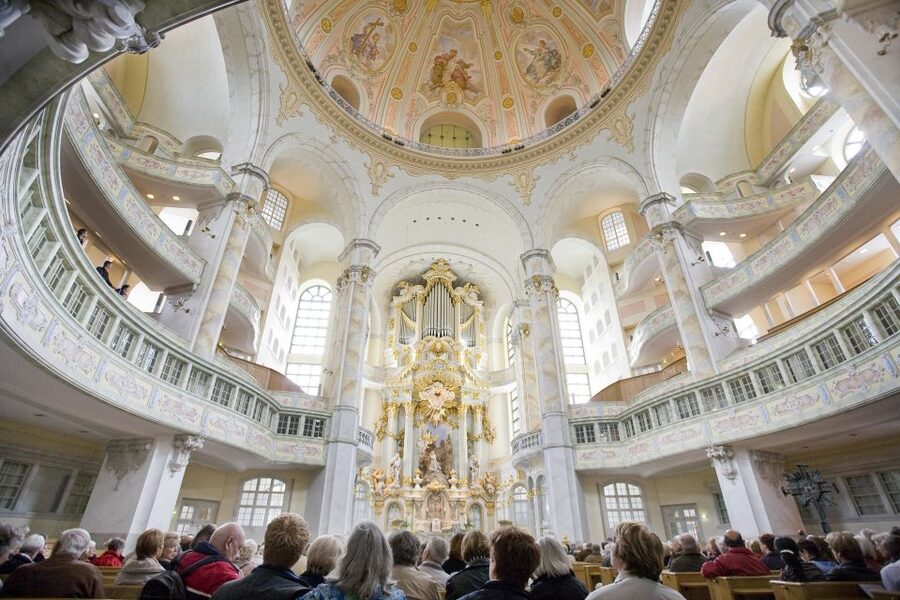
Dresden can feel confusing at first because its grandest sights sit in a fairly tight historic center, yet each square tells a different part of the city’s story. This tour gives you a clear sequence. You start at Neumarkt, move through the former royal quarter, reach the Elbe at Brühl Terrace, and finish among the Baroque buildings and sculptures of the Zwinger District.
That route matters. You are not simply checking off famous buildings. You see how Dresden’s church, palace, opera, riverfront, parade grounds, and court gardens fit together. A guide can point out the connections that are easy to miss when you walk alone with a map.
The tone is meant to be lively rather than academic. You hear stories about Dresden’s prosperous court years, its famous rulers, and present-day events, with humor mixed into the explanation. That balance is useful if you want facts without a long lecture.
The $16 price is fair for a two-hour guided walk, particularly because it includes a live guide, headsets, and a postcard. You are paying for orientation and interpretation, not museum admission. If you plan to enter the royal castle or Zwinger museums afterward, budget separately for those tickets.
A few more walking tours around Germany worth a look
- Discover Berlin Half-Day Walking Tour
★ 5.0 · 9,624 reviews - Berlin City walk Government District and Places of Democracy
★ 4.7 · 8,467 reviews - Berlin: Third Reich & Cold War Guided Walking Tour
★ 4.9 · 8,378 reviews
Meeting at Neumarkt and getting started
The meeting point is Neumarkt 2, in front of the tourist information office on the sub-level floor of the QF Passage. Look for the guide holding a sign marked Glanzlichter Dresdens. Arrive five to 10 minutes early, since the group needs to gather and receive the headsets before setting off.
This is a practical starting point. Neumarkt is one of Dresden’s most recognizable central squares, and beginning here puts you close to the Frauenkirche and several major sights. You do not waste the first part of the tour on a long transfer from the meeting point.
The headsets are a real advantage. Dresden’s old town includes broad squares, stone buildings, and open riverfront areas where voices can scatter. With the guide’s commentary coming directly through the headphones, you can look at the architecture instead of crowding close around the speaker.
The group limit of 10 also helps. You still walk as a group, but the format should feel more like a guided conversation than a large procession. If you have a question about a building or story, there is a better chance of getting a direct answer.
Neumarkt, Stallhof, and the Fürstenzug
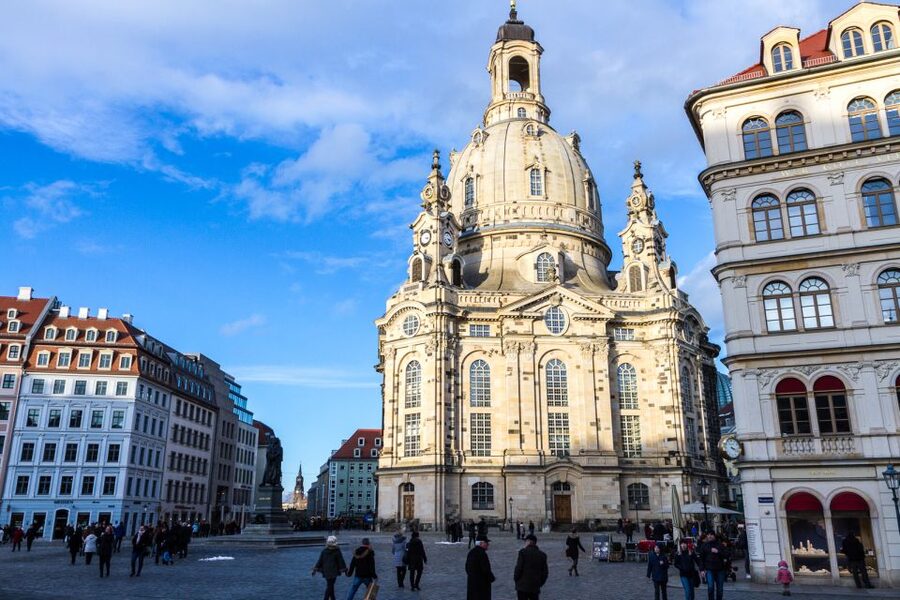
Neumarkt sets the tone with Dresden’s best-known church at its center. From here, the guide introduces the old town and explains why Dresden remains so closely tied to Saxon royal power, Baroque design, and rebuilding.
You then move toward Stallhof, the historic stable courtyard, and the Fürstenzug. The Fürstenzug is a long wall picture made from porcelain tiles, showing Saxon rulers in procession. It is one of those sights that can look like a decorative wall until someone explains what you are seeing and why it matters.
The tour is especially useful here because the details are not always obvious from street level. You get context for the former court, the people represented, and the way public spaces were used for ceremony. The guide also connects the old royal setting with Dresden’s present-day center.
You will not have a long time at every stop. That is the tradeoff of fitting so much into two hours. If the Fürstenzug or Stallhof catches your interest, note it and return later at your own pace.
Inside the Frauenkirche
The Frauenkirche is the emotional center of the walk. Its great stone dome and rebuilt interior make it one of Dresden’s most important symbols, but the tour does more than point at the exterior.
When entry is available, you step inside to see the altar, murals, historic crypt, and lower church. The nave is unusual, with a shape and arrangement that differ from the more familiar long church interiors found in many European cities. The guide explains the building’s design and the role of its decorative elements, helping you read the room rather than simply admire its color and scale.
The crypt adds another layer. It brings the church’s story down to a more personal and historical level, away from the bright upper interior. You also get a look at the murals and the details around the altar, which can be easy to overlook without guidance.
I would treat the Frauenkirche visit as planned access, not an absolute promise. One scheduled tour had to skip the church because of preparations for a television production. Church services, events, or other arrangements can affect entry. If going inside is essential to your Dresden plans, check the situation on the day and keep some flexibility.
Even with that caution, the church remains an important reason to choose this tour. You see it early, when the building has the most impact, and you gain context before wandering back on your own.
Same streets, a different route:
- Munich: Third Reich & WWII Walking Tour
★ 4.6 · 6,181 reviews - Berlin: Discover Berlin Walking Tour
★ 4.9 · 5,998 reviews - Berlin’s Best: 2 Hour Walking Tour Third Reich and the Cold War
★ 5.0 · 5,486 reviews - Berlin: Hidden Backyards Guided Walking Tour
★ 4.8 · 5,360 reviews
Schlossplatz and the Catholic Hofkirche
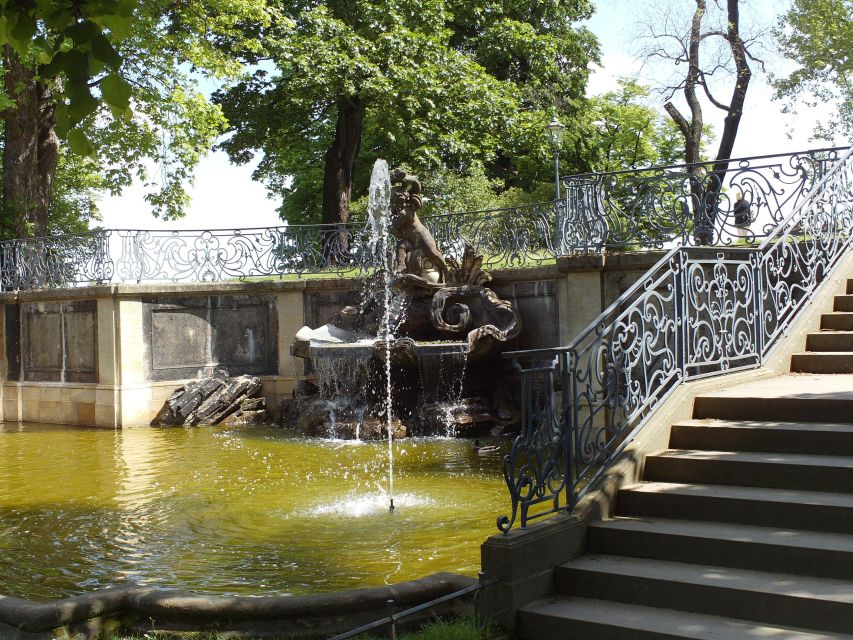
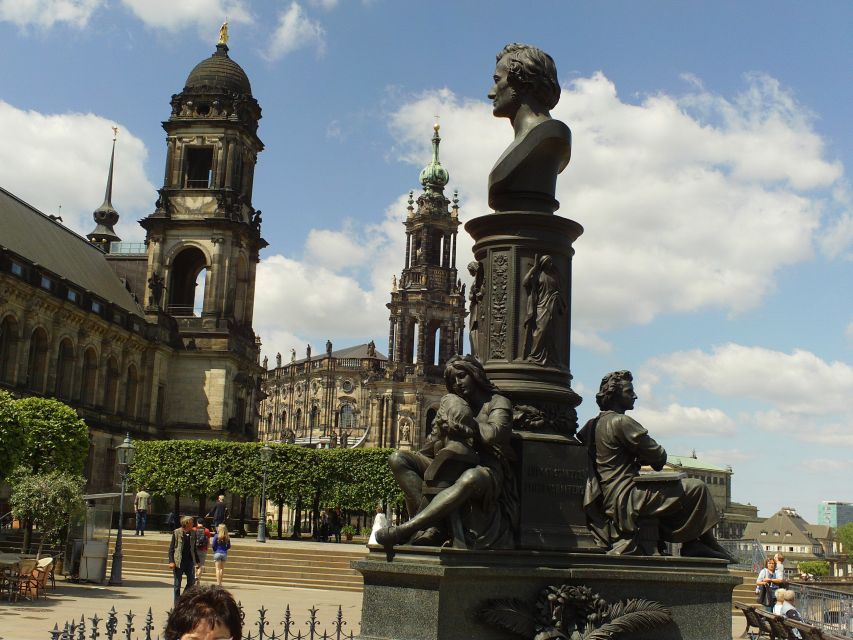
From the Frauenkirche, the route continues toward Schlossplatz and the Catholic Hofkirche. This section shifts the focus from the Protestant Frauenkirche to the Catholic presence at the Saxon court.
The Hofkirche gives you a useful reminder that Dresden’s rulers and court culture were not defined by one religious tradition alone. The building’s formal exterior and prominent position help explain the close link between religion, royal authority, and public ceremony.
Schlossplatz adds another important piece of the city center. Here, you are surrounded by major buildings tied to Saxony’s rulers, including the Royal Palace. The guide’s job is valuable because these structures can blur together when seen in quick succession. A good explanation gives each one a role.
You do not enter the royal castle museums on this walk. That is not a flaw, but it is worth understanding before booking. The tour shows you the setting and tells you what the buildings were used for. You can then decide if you want to return for the museum collections.
Theaterplatz and the Semper Opera
The route next reaches Theaterplatz, one of Dresden’s most impressive open spaces. The Royal Palace and Semper Opera help create a grand architectural frame, and the guide explains how the square functioned as part of the city’s public and cultural life.
The Semper Opera is a highlight from the outside. Its detailed facade and prominent location make it one of the city’s signature buildings. Since opera admission is not included, you should think of this stop as architectural orientation rather than a theater visit.
That arrangement suits a short city walk. You get enough explanation to recognize the building and understand its place in Dresden, then keep moving rather than spending most of the morning inside one attraction.
If the opera or palace is high on your personal list, return later for an interior visit or museum experience. This tour gives you the framework, while your own follow-up visit can go into greater detail.
Brühl Terrace and the Elbe view
Brühl Terrace offers a change of pace. After several dense city squares and ceremonial buildings, you walk along the riverfront and look out toward the Elbe.
The view helps you understand Dresden’s setting. The river is not just a pretty backdrop here. It explains part of the city’s shape and gives you a visual break from the tightly packed old town. You can also appreciate how the grand historic center sits beside a broad natural corridor.
This is one of the places where the headphones are useful. The group spreads out along the terrace, but you can continue listening without having to stand shoulder to shoulder with the guide.
The stop may be brief, since the tour still has the Zwinger District ahead. Take a moment to enjoy the view and make a note of the terrace if you want to return for photos or a slower walk later.
The Zwinger District and Saxon Baroque
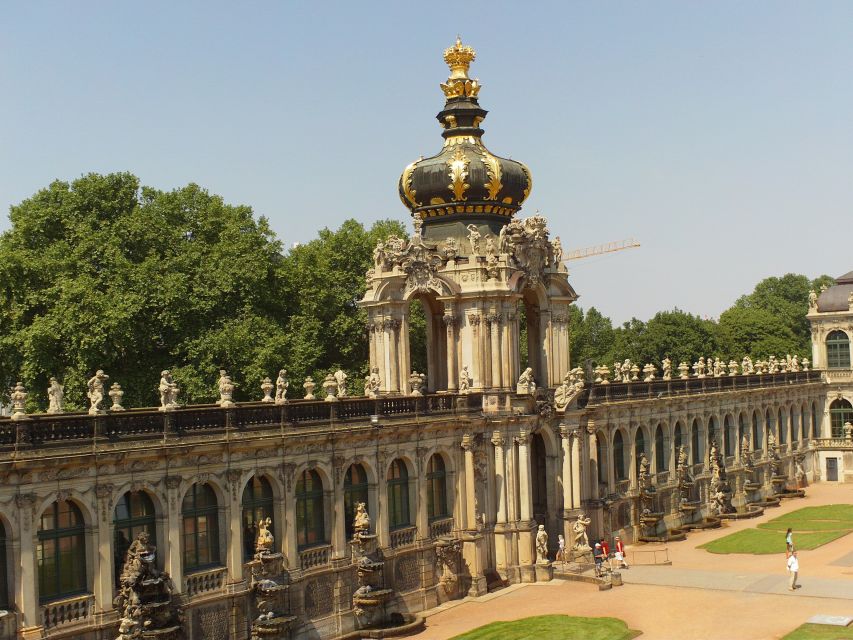
The final major section takes you into the Zwinger District, where Dresden’s court culture reaches its most theatrical expression. The sandstone sculptures are the stars here. They are not random decoration, and the guide explains the stories, former functions, and court traditions behind them.
You learn how the Zwinger was connected to festivals held under Augustus the Strong. The focus is not only on the building’s appearance but also on how the court used architecture, sculpture, and ceremony to display power and entertain its circle.
This is where the tour’s storytelling style pays off. A courtyard full of carved figures can become a blur of stone without context. With an explanation of the figures and their original purpose, you can look at the sculptures with more interest and notice the humor, movement, and symbolism in the decoration.
The Zwinger is also still used as a museum complex. The tour does not include museum entry, so you will see the exterior spaces and receive an introduction rather than a full art collection visit. If you want to explore inside, plan another block of time and a separate ticket.
Guide style, language, and group comfort
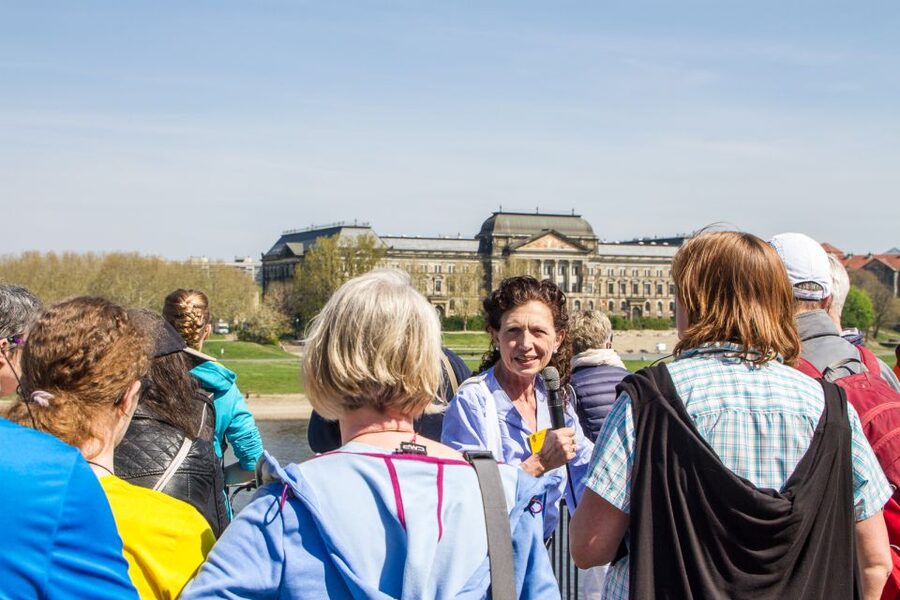
The live guide and audio support are in German. That makes this tour a natural choice for German speakers who want a detailed local explanation. If you do not understand German, this is not the right booking, since the headsets do not turn the tour into a multilingual experience.
Dagmar Renger is one guide associated with the experience, and her approach has been praised for being competent, funny, engaged, and ready to answer questions. The strongest feedback centers on her enthusiasm for Dresden and her ability to make the walk informative without making it dull.
That personal energy matters on a city tour. The route contains many formal buildings, so a dry recitation of dates would quickly lose its appeal. The guide instead connects past court life, current events, and the character of modern Dresden.
The rating is 4.8 from about 700 reviews, which supports the idea that the format works for many people. Still, no guide can control every part of the experience. Church access can change, weather may affect the open-air portions, and the compact schedule means some stops receive only a short explanation.
Practical fit, access, and cancellation
The tour lasts two hours and is listed as wheelchair accessible. Since it takes place in the central old town, you should still expect a walking-focused experience across public squares and historic areas. The supplied information does not give a detailed surface or route assessment, so anyone needing specific access details should confirm them before booking.
You can cancel up to 24 hours in advance for a full refund. The reserve-now, pay-later option also gives you flexibility when your Dresden schedule is still taking shape.
Starting at 10:30 AM makes this a useful first activity of the day. You can follow it with a museum visit, lunch in the center, or a return to the Frauenkirche, Zwinger, or palace areas for more time indoors.
Is this $16 Dresden tour worth booking?
I would book this tour if you want a strong first orientation to Dresden and you understand that it is a German-language walking tour. The route covers an impressive number of central sights, and the Frauenkirche interior, when open, adds real value.
It suits you best if you enjoy local stories, want a small group, and prefer a guide who can explain why the buildings matter. The price is especially appealing for a focused two-hour introduction that includes headsets and a postcard.
I would choose something else if you need English commentary, want long interior visits, or prefer to explore museums in depth. For everyone else, this is a sensible, well-priced way to see Dresden’s royal center, riverfront, and Baroque showpieces before deciding where to spend the rest of your time.
FAQ
How long does the Dresden walking tour last?
The tour lasts two hours.
What language is the tour offered in?
The live tour guide and audio support are in German.
Where does the tour meet?
Meet at Neumarkt 2, 01067 Dresden, in front of the tourist information office on the sub-level floor of the QF Passage. The guide holds a sign marked Glanzlichter Dresdens.
Is entry to the Frauenkirche included?
A visit inside the Frauenkirche is part of the tour when access is possible. Church preparations or other events can prevent entry on a particular day.
Are museum and opera tickets included?
No. Entry to the museums in the Royal Palace and Zwinger, as well as the Semper Opera, is not included.
What is included in the price?
The price includes a personal guide, headsets for clear listening, and a postcard souvenir.
Just added around Germany
- Hamburg: Guided Port Walk for Families★ 4.6 · 191 reviews
- East Berlin and the Wall: Walking Tour★ 4.9 · 407 reviews
- Dresden: Shared Small Group Walking Tour in English★ 4.8 · 172 reviews
- Dresden: Taste of Dresden Food Walk★ 4.6 · 397 reviews
- Dresden: Private Guided Walking Tour★ 4.5 · 81 reviews
- Dresden: Guided City Walk and Panometer Entrance Ticket★ 4.5 · 176 reviews
- Dresden Old Town – Guided Walking Tour in English★ 4.8 · 135 reviews
- Dresden: Neustadt District Street Art Guided Walking Tour★ 4.3 · 333 reviews
Walking Tours, compared.

Magical London: Harry Potter Guided Walking Tour
Read our review →
Reykjavik Food Walk – Local Foodie Adventure in Iceland
Read our review →
History and Hauntings of Salem Guided Walking Tour
Read our review →
New Orleans Premier Ghost, Voodoo and Vampire Walking Tour
Read our review →
Amsterdam Anne Frank: Small-Group Walking Tour & Local Guide
Read our review →

Edinburgh Castle: Guided Walking Tour with Entry Ticket
Read our review →
Anne Frank’s Story – Guided Walking Tour through Amsterdam
Read our review →Browse the lists this tour appears in