
REVIEW · CROATIA
Zagreb: City & History Walking Tour & WW2 Tunnels
The most unusual part of this Zagreb walk is the WWII-era Grič Tunnel, an underground passage beneath the Upper Town that adds a darker, more recent chapter to a tour otherwise filled with markets, churches, cafés, and medieval streets. You also get the city’s main sights in one steady 2.5-hour walk.
I like the small-group feel, which makes it easy to ask questions, and I like the guides’ mix of history, local customs, humor, and practical restaurant tips. The main drawback is that the route includes slopes, stairs, and uneven old-town surfaces, so it is not suitable for wheelchair users. The funicular is also closed for renovation until March 2026.
Key points to know before you book
- Grič Tunnel adds a wartime layer: Walk through Zagreb’s former shelter and learn about the city’s more recent past.
- Petra, Tomislav, Tomas, and Maja lead the walk: Guides are praised for clear English, humor, patience, and useful local advice.
- Small groups improve the experience: Groups of around eight can hear easily and ask questions without shouting over a crowd.
- Dolac Market is best in the morning: The market closes in the afternoon and on public holidays.
- Upper Town delivers the best views: Strossmayer Promenade, Lotrščak Tower, St. Mark’s Church, and Stone Gate form the tour’s most memorable stretch.
- The $11 price is hard to beat: For 150 minutes with a licensed local guide, this is one of the more useful low-cost introductions to Zagreb.
Starting beneath the plane trees of Zrinjevac
The tour begins at Zrinjevac Park, formally Nikola Šubić Zrinski Square, beside the small meteorological station on the north side of the park. Look for the display showing temperature and barometric pressure. That is the meeting point, not simply the park entrance.
Zrinjevac gives you a graceful start. The park belongs to Zagreb’s Lower Town, where broad streets, formal squares, and handsome public buildings create a calmer setting than the narrow lanes above. Your guide begins connecting the modern city to its older roots before leading you toward the center.
I like this opening because it avoids dropping you straight into a list of monuments. You first get a sense of Zagreb as a planned city, then move toward the places where daily life and old legends meet.
More History Walking Tours in Croatia
- Dubrovnik Old Town History Walking Tour
★ 5.0 · 1,684 reviews - Dubrovnik: Ancient City Walls & Wars Walking Tour
★ 5.0 · 1,270 reviews - Zagreb: City and WWII Tunnels Walking Tour
★ 4.9 · 1,230 reviews
Ban Jelačić Square and the story of Zagreb
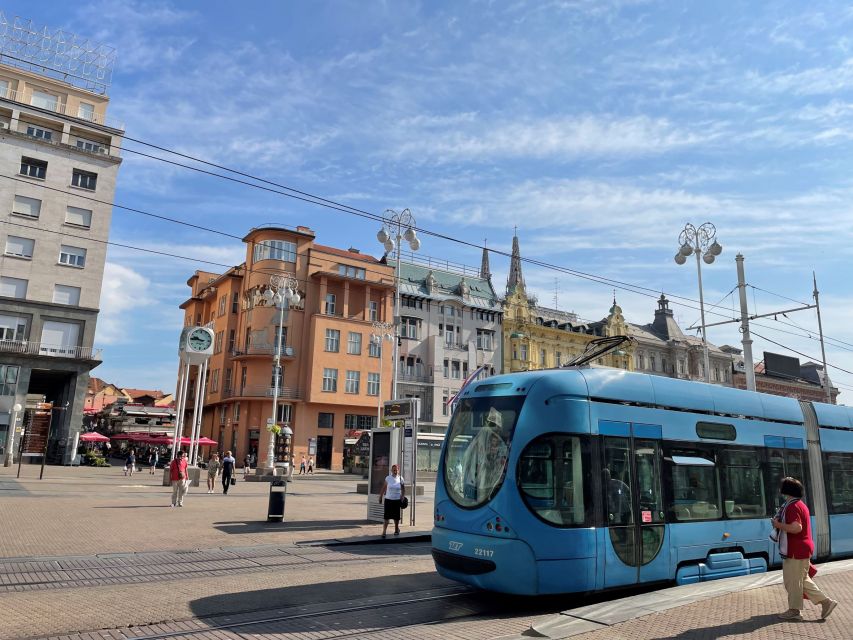
From Zrinjevac, the route reaches Ban Josip Jelačić Square, Zagreb’s central meeting place. This is the point where the city’s transport, shopping streets, cafés, and historic districts come together.
Here, your guide explains how Zagreb got its name and shares legends about the city’s founding. That kind of introduction is useful because it gives you a story to carry through the rest of the walk. Instead of seeing separate sights, you begin to understand how the lower and upper parts of Zagreb developed.
The square can feel busy, especially at peak times, so stay close to the guide. The small-group format helps. A group of eight is easy to keep together, and you can usually hear the explanation without standing at the edge of a large crowd.
The tour ends back here, which is practical. You can ask for food, museum, or evening suggestions while the route is still fresh in your mind. Several guides also give restaurant recommendations during the walk.
Zagreb Cathedral and a city shaped by repair
The next stop is the Cathedral of the Assumption of the Blessed Virgin Mary, usually called Zagreb Cathedral. Its tall twin towers make it one of the city’s most recognizable landmarks.
Your guide covers the cathedral’s origins, its difficult past, and the restorations that have followed damage over the centuries. That context matters. You are not simply being shown a large church for a photograph. You are hearing how Zagreb’s buildings have been altered, repaired, and preserved as the city changed.
The stop is mainly outdoors, with time for photographs and an explanation from the guide. The tour does not promise an extended interior visit, so you should not book it expecting a cathedral tour. If entering the cathedral is important to you, ask your guide about the best time to return independently.
Dolac Market, Zagreb’s daily kitchen
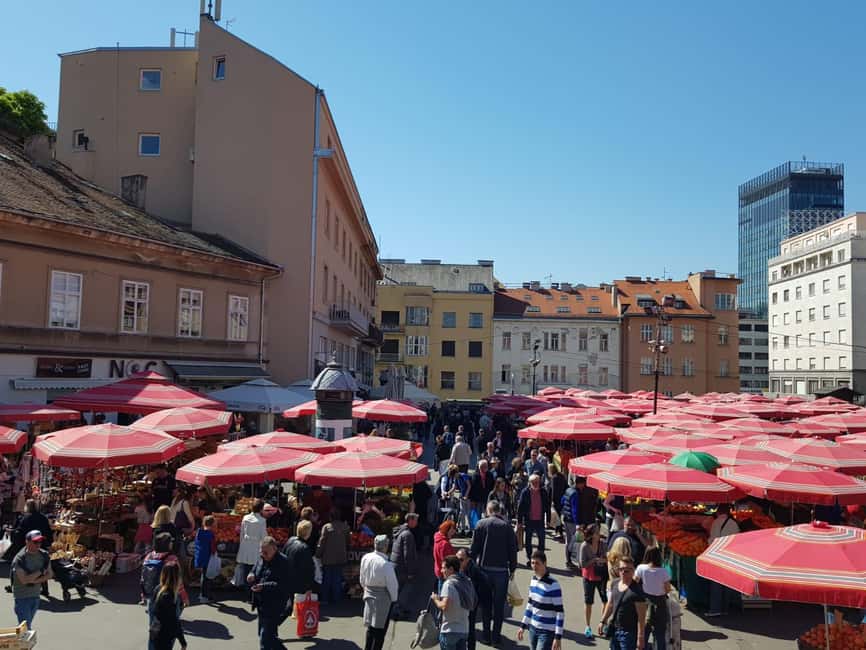
Dolac Market is one of the most useful stops on the route. Locals come here for fresh produce, and the market gives you a quick look at ordinary Zagreb life beyond monuments and museums.
Your guide explains why Dolac is often called the belly of Zagreb. You will see the market as a working place, not just a sightseeing stop. That makes it a good setting for learning about food habits, shopping routines, and the city’s social rhythm.
Timing matters here. Dolac Market is closed in the afternoon and on public holidays, so a later tour may pass through a quieter area rather than an active market. If the market is high on your list, choose a morning departure when possible.
The walk does not include food or drinks. You can ask your guide what to try or where to eat later, but any purchases are your responsibility. I like that the stop leaves room for you to return on your own, when you can take your time rather than hold up the group.
Same streets, a different route:
- Dubrovnik: Old Town Walking Tour
★ 4.8 · 5,174 reviews - Dubrovnik: The Original Game of Thrones Tour & Lokrum Option
★ 4.8 · 5,064 reviews - Split: Old Town and Diocletian Palace Walking Tour
★ 4.9 · 4,727 reviews - Dubrovnik Discovery Old Town Walking Tour
★ 5.0 · 4,458 reviews
Tkalčićeva Street and the art of sitting around
From Dolac, the route continues along Tkalčićeva Street, one of Zagreb’s best-known café streets. Your guide uses the area to explain the local habit of lingering over coffee and conversation.
This is less a formal sightseeing stop than a lesson in how Zagreb feels. You see cafés, street life, and a social style built around taking your time. The guide’s personal stories are especially useful here. Petra, Tomislav, Tomas, and Maja are repeatedly praised for mixing facts with humor and everyday observations.
That human touch is one reason this tour works well for a first day. You get practical clues about where to pause later, how locals use the center, and which streets deserve a second walk after the tour ends.
Inside the Grič Tunnel
The Grič Tunnel is the tour’s most distinctive stop. This WWII-era passage runs beneath Zagreb’s Upper Town and once served as a wartime shelter. Walking through it changes the mood of the tour, taking you away from café terraces and church façades and into a more enclosed reminder of the city’s recent past.
The visit usually lasts about 20 minutes. Your guide explains the tunnel’s purpose and place in Zagreb’s story, giving you a sharper sense of how war affected the city.
There is one important condition: the tunnel can close when an exhibition, theater production, or another event is taking place inside. If that happens, the tunnel cannot be visited as part of this tour. That is worth accepting before you book, since the tunnel is a featured part of the experience but not a guaranteed entry.
Even with that limitation, the route remains worthwhile because the main walk continues through Zagreb’s historic center and Upper Town.
The closed funicular and the climb to Gradec
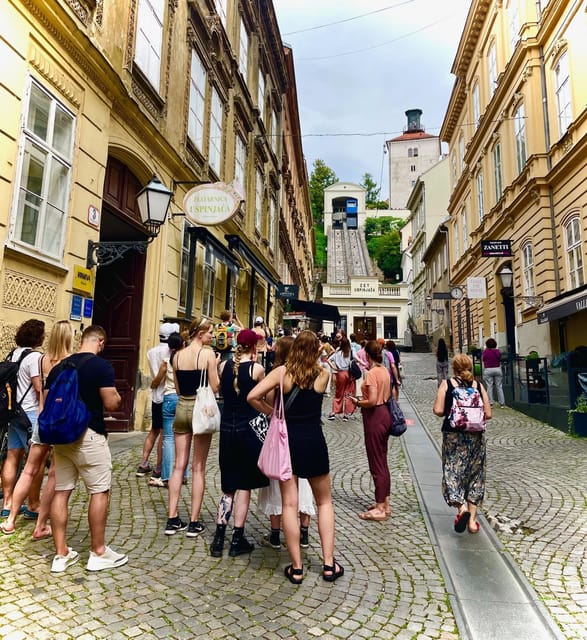
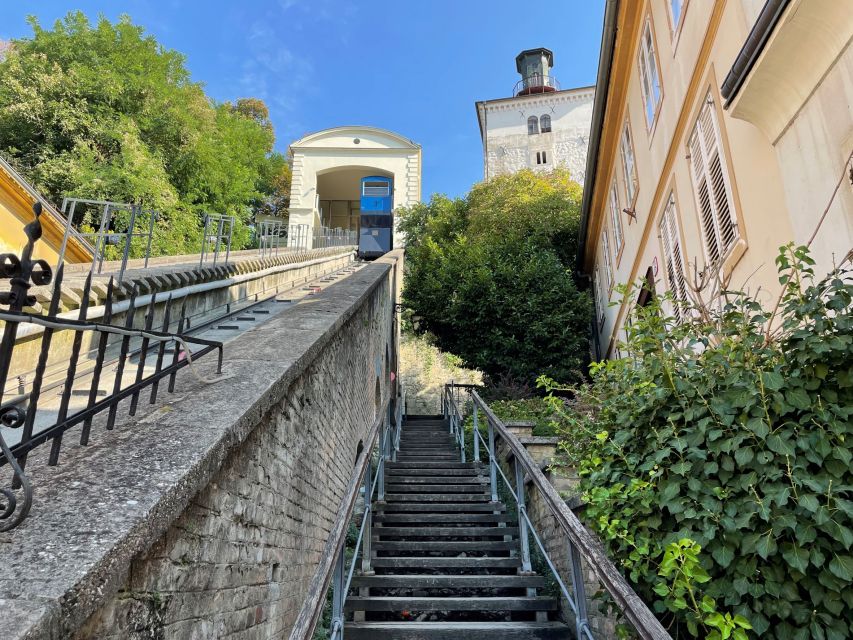
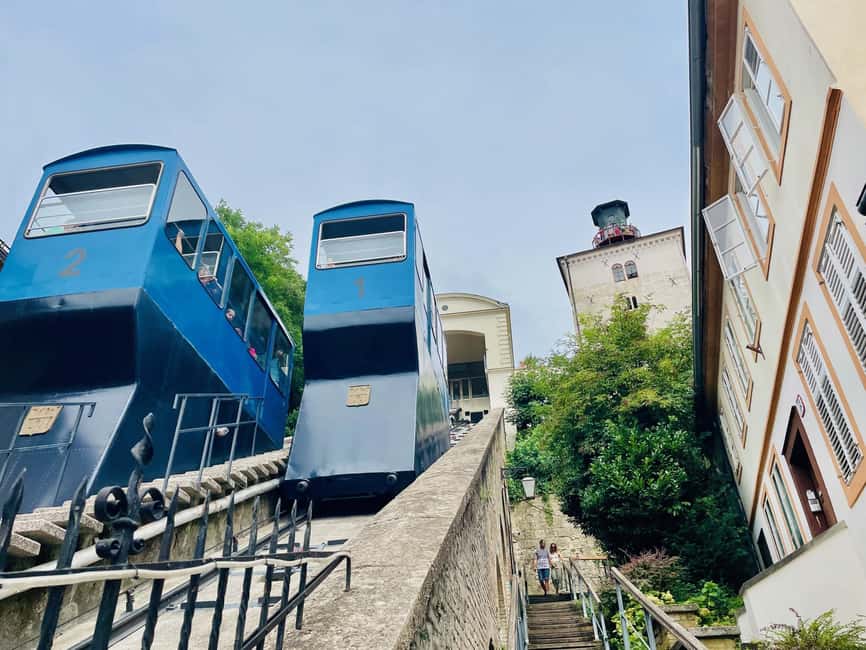
The itinerary includes Zagreb’s funicular, the oldest public transport system in the city. Under normal conditions, it offers a quick ride and rooftop views while connecting the Lower Town with Gradec.
At present, the funicular is closed for renovation until March 2026. You should therefore expect to walk uphill rather than ride it. The change does not remove the Upper Town from the tour, but it may matter if you were hoping for a short transport ride or have difficulty with inclines.
Once you reach Gradec, the atmosphere shifts. Zagreb’s Upper Town is one of the city’s original medieval settlements, with narrower streets, older buildings, and a slower pace than the central square below.
The route is not an all-day hike. One reviewer described it as not too much walking, and the group generally moves at a relaxed pace. Still, wear comfortable shoes. You will be walking for 150 minutes, with time spent standing at several sights.
Strossmayer Promenade and Lotrščak Tower
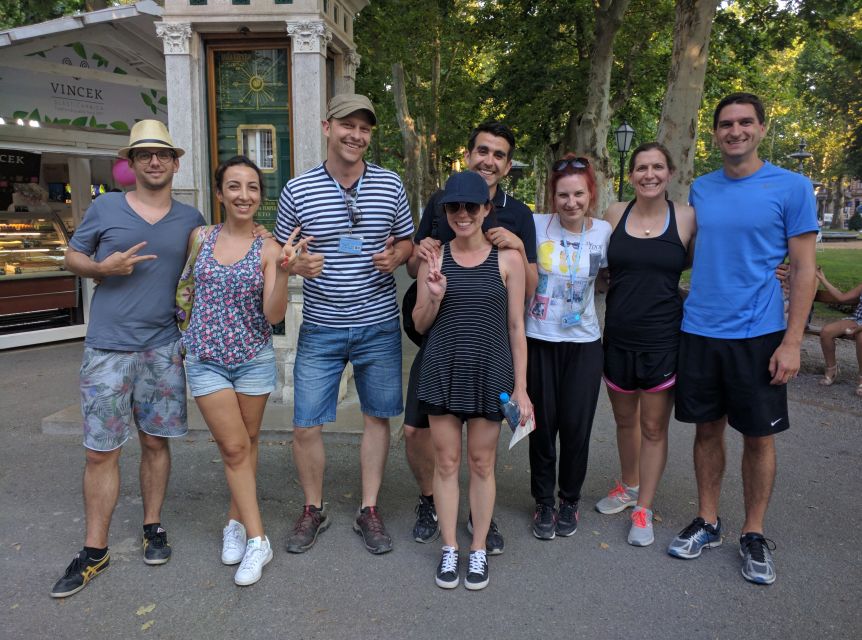
Strossmayer Promenade is one of the loveliest parts of the route. This leafy terrace looks across the city and gives you a chance to pause after the climb.
The view helps you understand Zagreb’s shape. You can look back toward the Lower Town and see how the older hilltop settlement relates to the more ordered streets below. Your guide also points out details that are easy to miss when you walk alone.
Lotrščak Tower follows, with a longer explanation and photo stop. The tower is one of Zagreb’s best-known Upper Town landmarks. Guides sometimes time the route to the cannon firing at noon, a detail that several participants particularly enjoyed. The timing cannot be guaranteed, but if your departure lines up, it can become a memorable surprise.
The area can be crowded around popular viewing points. A smaller group gives your guide more control, and you are less likely to lose the explanation while trying to find a place to stand.
The Museum of Broken Relationships and St. Mark’s Square
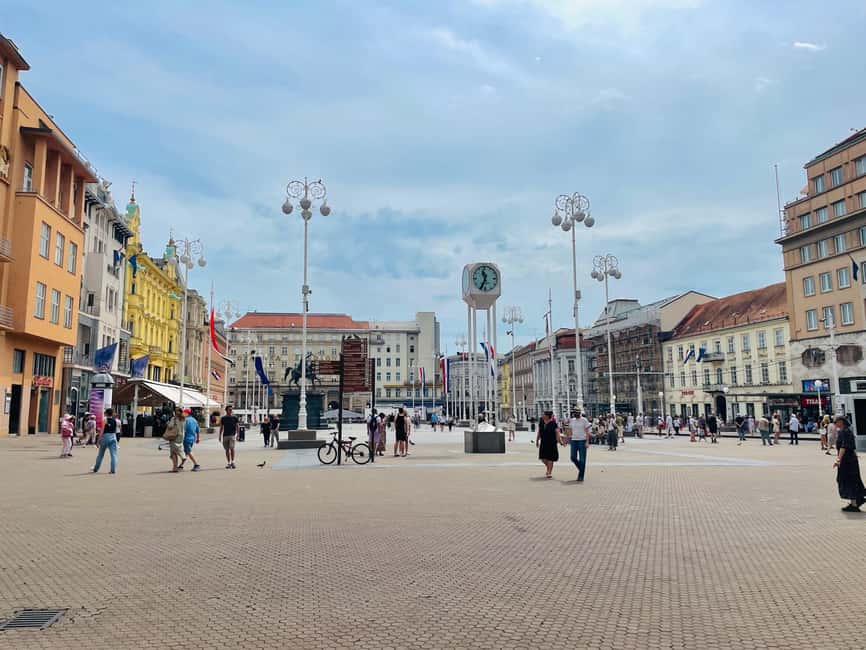
The tour passes by the Museum of Broken Relationships rather than presenting it as a full museum visit. You get a quick introduction to its location and place in Zagreb’s visitor scene, but admission is not part of the walk.
If the museum interests you, make a note to return later. The guided walk is not designed to give you time inside, and trying to combine both activities during the tour would make the schedule too tight.
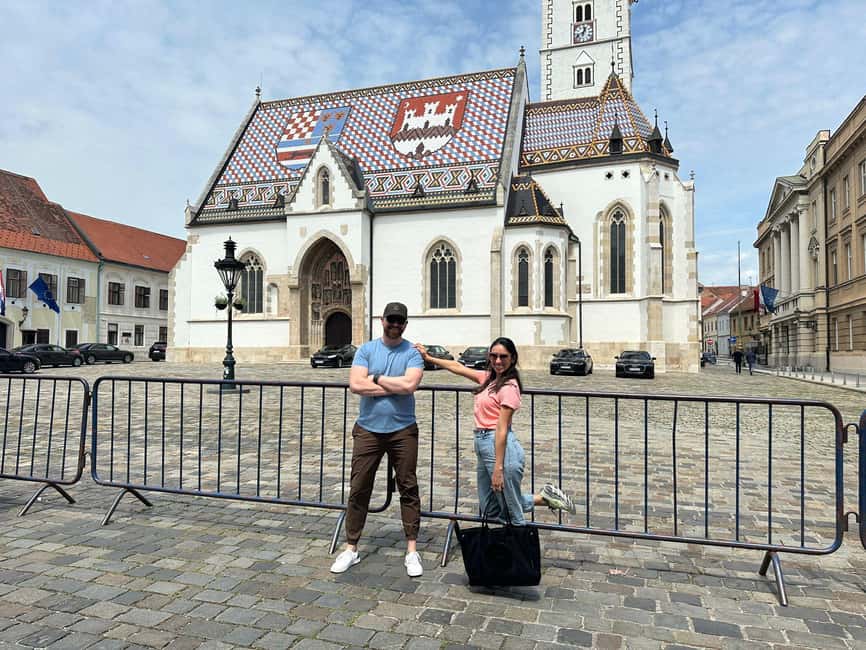
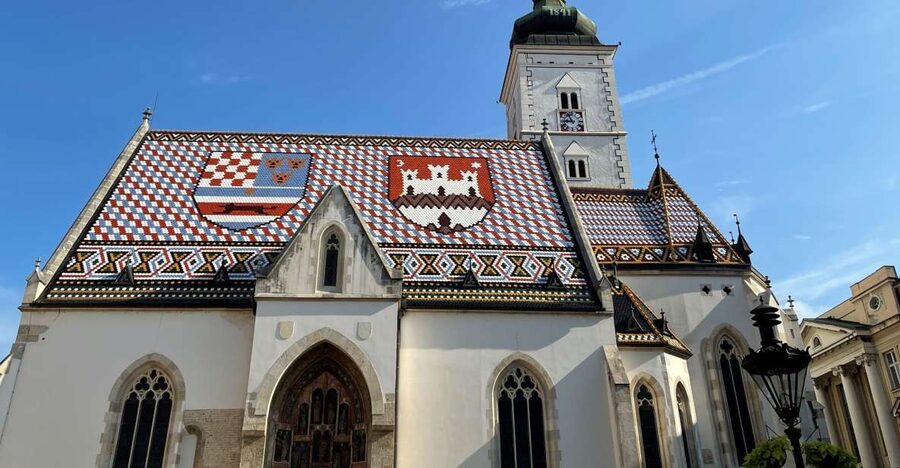
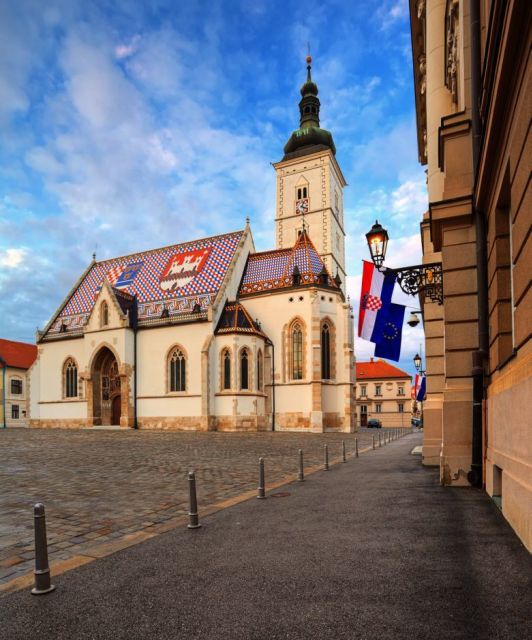
St. Mark’s Square is a major highlight. St. Mark’s Church is easy to recognize by its colorful tiled roof, which creates one of the most photographed views in Zagreb. Your guide explains the square and the church, adding political and local context rather than stopping for only a photograph.
The stop lasts around 15 minutes. That is enough for an introduction and pictures, but not a detailed church visit. You will get more from it if you treat the tour as an orientation and return later to explore places that catch your interest.
Stone Gate and a quiet local shrine
Stone Gate is the only surviving gate from Zagreb’s old fortifications. Passing through it feels different from walking along an ordinary street because the structure still marks the boundary of the medieval town.
Inside is a small chapel with a painting of Our Lady. The image is considered miraculous by many local people and remains an important place of devotion. Your guide explains the meaning of the chapel and why it continues to matter.
This is one of the tour’s best examples of a place you might walk past without understanding. The gate is not a grand square or a towering church. Its importance comes from the story, the surviving structure, and the quiet attention people give the chapel.
Remember that it is a religious space. Keep your voice low and be respectful if people are praying.
Hidden corners and a useful finish
Near the end, your guide takes the group past Zagreb’s oldest pharmacy and includes a few lesser-known stops away from the main tourist route. The exact secret stop is not specified in advance, which is part of the appeal.
This section rewards curiosity more than checklist sightseeing. You are likely to notice small details, local stories, or corners you would not have found by following a basic map. Guides also leave room for questions, which makes the experience feel more like a conversation than a speech.
The walk finishes at Ban Jelačić Square. That location makes the tour easy to use as a first activity in Zagreb. You can continue shopping, find lunch, connect with public transport, or ask your guide where to spend the rest of the day.
What the $11 price really gives you
At $11 per person, this is excellent value if you want history, orientation, and local advice in one sitting. The tour includes a licensed English-speaking guide and the walking experience itself. It does not include food, drinks, museum entry, or any transport fare.
The price is especially strong because the route covers both the Lower Town and Upper Town, adds the Grič Tunnel when it is open, and includes several of Zagreb’s most important sights. A self-guided visit would cost less in cash, but you would lose the explanations, local legends, timing advice, and chance to ask questions.
The main tradeoff is depth. You receive a well-paced overview rather than a long lecture at every monument. That balance suits most first-time visitors, but museum lovers or architecture specialists may want separate visits afterward.
Which guide might you get?
The English-speaking guides named for this experience include Petra, Tomislav, Tomas, and Maja. Petra is praised for funny anecdotes, strong city knowledge, and practical help. Tomislav and Tomas are noted for clear explanations, patience, and a good sense of humor. Maja is particularly attentive to group pace and comfort, including finding shade on hot days.
You cannot assume a particular guide will lead your departure. What you can expect is a local guide who answers questions and brings personal stories into the route. English ability is a stated part of the experience, and the feedback consistently highlights clear communication.
The small group is a major advantage. One group had eight people, while larger groups were visible nearby. That size makes it easier to hear, stay together, and ask something specific without interrupting a long line of people.
Practical fit, weather, and mobility
The tour lasts 150 minutes, so plan for two and a half hours of walking and standing. Wear shoes with good grip, especially because the Upper Town includes slopes and old surfaces.
The route runs outdoors for much of its length. Bring water in hot weather, and expect less comfort during rain or strong sun. One guide was praised for seeking shade when possible, but weather protection is still your responsibility.
This experience is not suitable for wheelchair users. The incline toward Gradec, steps, uneven areas, and the tunnel make accessibility a serious concern. If you have limited mobility but do not use a wheelchair, contact the provider before booking so you can clarify the current route.
Cancellation is flexible: you can cancel up to 24 hours before the start for a full refund. You can also reserve now and pay later, which helps if your Zagreb schedule is still moving around.
Who should book this Zagreb walk?
I would choose this tour for a first morning or afternoon in Zagreb, especially if you want a clear sense of the city before exploring alone. It suits people who enjoy stories, landmarks, local customs, and a little wartime history without spending a full day inside museums.
It is also a good match for a short stay. In 150 minutes, you see the central square, cathedral, market, Tkalčićeva Street, Upper Town, Lotrščak Tower, St. Mark’s Church, Stone Gate, and the Grič Tunnel when open.
I would hesitate if your priority is a long cathedral visit, museum admission, or a guaranteed tunnel entry. The funicular closure until March 2026 is another consideration, especially if you prefer to avoid uphill walking.
Should you book it?
Book this tour if you want a friendly, low-cost introduction to Zagreb with real local explanation rather than a quick monument checklist. The strongest parts are the small groups, the guides’ humor and personal stories, the Dolac Market setting, and the unusual Grič Tunnel stop.
Choose a morning departure if Dolac Market matters to you, and wear comfortable shoes for the climb to Gradec. At $11, the tour gives you a useful map of Zagreb’s history and neighborhoods, then leaves you with enough time to return to the places you want to explore more slowly.
FAQ
How long does the Zagreb walking tour last?
The tour lasts 150 minutes, or two and a half hours.
Where does the tour begin?
It begins at Trg Nikola Šubić Zrinski 2, in Zrinjevac Park, beside the meteorological station on the park’s north side.
Where does the tour finish?
The tour finishes at Ban Josip Jelačić Square in central Zagreb.
Is the tour offered in English?
Yes. The tour has a live English-speaking guide.
Is the Grič Tunnel always open during the tour?
No. The tunnel may be closed if an exhibition, theater show, or similar event is taking place. If it is closed, it cannot be visited during the tour.
Can I ride the Zagreb funicular?
The funicular is currently closed for renovation until March 2026, so you should expect to walk to the Upper Town instead.
Is the tour suitable for wheelchair users?
No. The experience is not suitable for wheelchair users.
Just added around Croatia
- Dubrovnik: Panoramic Ride and Old Town Guided Walking Tour★ 4.7 · 261 reviews
- Dubrovnik: Walls and Wars Walking Tour★ 4.8 · 501 reviews
- Dubrovnik: Cable Car, Walking Tour and City Walls Combo★ 4.6 · 322 reviews
- Dubrovnik: Game of Thrones And Iron Throne Walking Tour★ 4.8 · 505 reviews
- Dubrovnik: Game of Thrones&Lokrum Island Walking Tour★ 4.8 · 245 reviews
- Dubrovnik By Night Walking Tour★ 4.8 · 208 reviews
- Dubrovnik: Early Bird Walking Tour★ 4.9 · 123 reviews
- Dubrovnik: History and Game of Thrones Walking Tour★ 4.7 · 85 reviews
History Walking Tours, compared.

Berlin’s Best: 2 Hour Walking Tour Third Reich and the Cold War
Read our review →
Third Reich Berlin: Hitler and WWII Walking Tour
Read our review →
New Orleans Garden District History Walking Tour
Read our review →
Cartagena: Historic Center and Getsemaní Shared Walking Tour
Read our review →
Imperial Palace and Shogun Historical Walking Tour
Read our review →Browse the lists this tour appears in