
REVIEW · CROATIA
Zagreb: City and WWII Tunnels Walking Tour
Zagreb’s WWII tunnels give this city walk its edge. You move from leafy Zrinjevac Park and grand squares into Dolac Market, then underground into a tunnel later used as a Cold War shelter. After that, the route climbs Grič Hill for old-town views and a look at the city’s famous funicular.
I like two things here: the tour links Zagreb’s postcard sights with its less polished, more surprising corners, and the guides bring plenty of local color. Robert, Marko, Iva, Zrinka, Marin, and Goran are among the guides praised for clear stories, humor, and useful restaurant advice. At $14, the tour gives you a lot of orientation for very little money.
The main consideration is the funicular. It is closed for renovation until March 2026, and both the funicular and tunnels can be unavailable on certain dates. You still get the walking route, but check the operating details before booking if the ride is a major reason for choosing this tour.
Key points at a glance
- WWII tunnels beneath the old town: See a part of Zagreb that is easy to miss from street level, with stories tied to wartime use and the Cold War.
- A useful first-day walk: The route connects the main center, Upper Town, market, viewpoints, and dining streets in 150 minutes.
- The world’s smallest funicular: The short ride takes about two minutes when the service is operating.
- Guides with local personality: Robert, Marko, Iva, Zrinka, Marin, and Goran are noted for humor, history, photography help, and restaurant suggestions.
- Excellent value at $14: You receive a licensed English-speaking guide and, when available, the funicular ticket.
- Flexible but weatherproof: The tour runs in all weather, with free cancellation up to 24 hours before departure.
Why the tunnel changes the usual Zagreb walk
Many first walks through Zagreb stay above ground, moving between Austro-Hungarian buildings, churches, cafés, and squares. This one adds a brief underground chapter, which gives the city’s past a more physical presence.
The Gric Tunnel was linked to wartime protection and was later used as a Cold War bunker. The most striking detail from the tour commentary is the story of an underground hospital that could remain fully functional below the city. You should expect historical explanation rather than a museum-style display, but the setting itself makes the subject easier to picture.
The tunnel is also useful in summer. One guide-led walk described it as a welcome break from the heat, while in cold or wet weather it offers shelter for part of the route. Do not assume it will be open every day, though. The activity notes that the WWII tunnels can close on certain dates.
This stop gives the walk a good rhythm. You begin with parks and public squares, move through the market, then change mood underground before climbing toward Gradec. It is more memorable than a parade of façades alone.
More History Walking Tours in Croatia
- Dubrovnik Old Town History Walking Tour
★ 5.0 · 1,684 reviews - Dubrovnik: Ancient City Walls & Wars Walking Tour
★ 5.0 · 1,270 reviews - Zagreb: City & History Walking Tour & WW2 Tunnels
★ 4.9 · 1,202 reviews
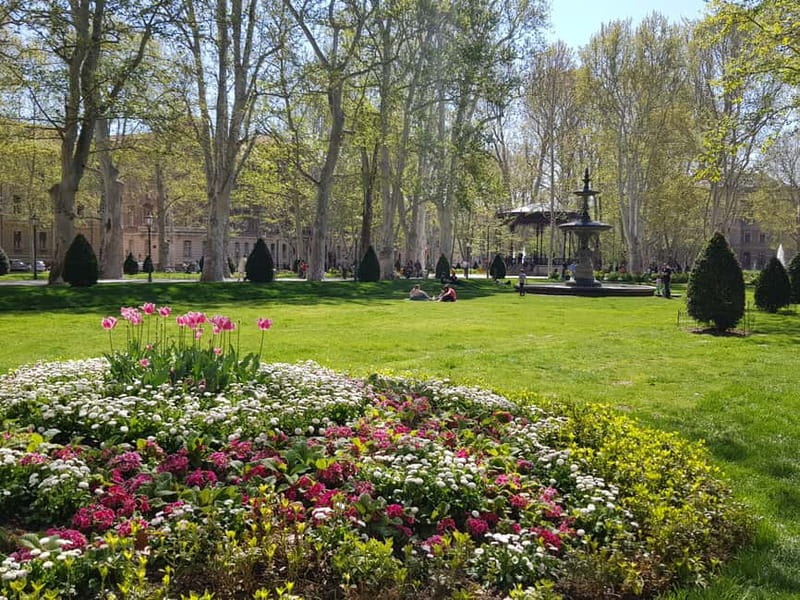
Zrinjevac Park and the first sense of Zagreb
The meeting point is in front of the Meteorological Station at Trg Nikole Zrinskog 2, beside Zrinjevac Park. Arrive with enough time to locate the guide, since the park has several paths and open spaces.
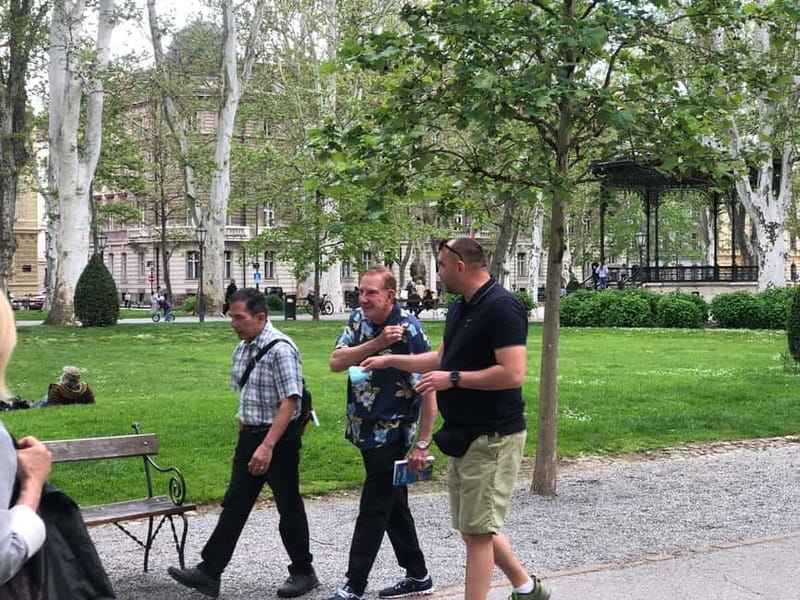
Zrinjevac is a graceful starting point. Its formal greenery, paths, and city-center setting make it an easy place for photographs, but the guide also uses it to help you understand Zagreb’s central layout. This is where the walk begins to feel practical rather than simply scenic.
I like starting here because you get your bearings before the route becomes busier. The guide can point out the direction of the main square and Upper Town, giving you a mental map that helps later when you explore alone.
The early pace is not meant to exhaust you. Guides stop for photographs and explanations, and several people found the walk comfortable rather than intense. Still, you should wear shoes suited to two and a half hours on city streets, steps, and hill roads.
Bogovićeva Street and Ban Jelačić Square
From Zrinjevac, the route continues to Bogovićeva Street, a popular café and restaurant strip. This is not a major historical monument, but it helps you see how Zagreb’s center works today. You can note places for a later coffee, drink, or meal, while the guide adds local context.
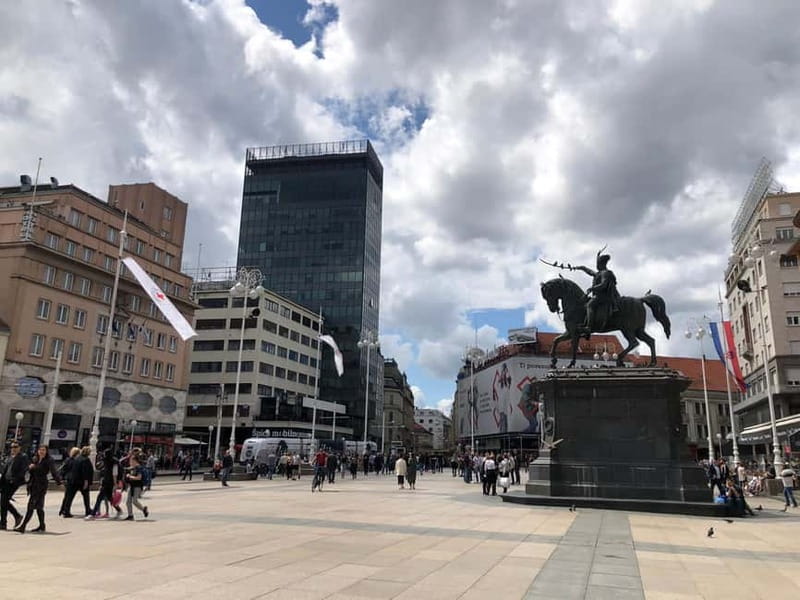
The walk then reaches Ban Josip Jelačić Square, Zagreb’s main meeting place. This is the city’s natural reference point, so it is worth learning how to recognize it early in your stay. The square also makes a good place to pause and look at the mix of architecture, public transport, pedestrians, and nearby streets.
The guide’s role matters here. Several guides, especially Robert and Marko, are praised for making history easy to follow with jokes and current-day observations. That style suits a central square, where a long lecture would quickly become tiring.
You will return to Ban Jelačić Square at the end, so pay attention to the nearby streets and landmarks. The loop structure makes the start and finish simple, even if you later continue to another part of central Zagreb.
Zagreb Cathedral and Dolac Market
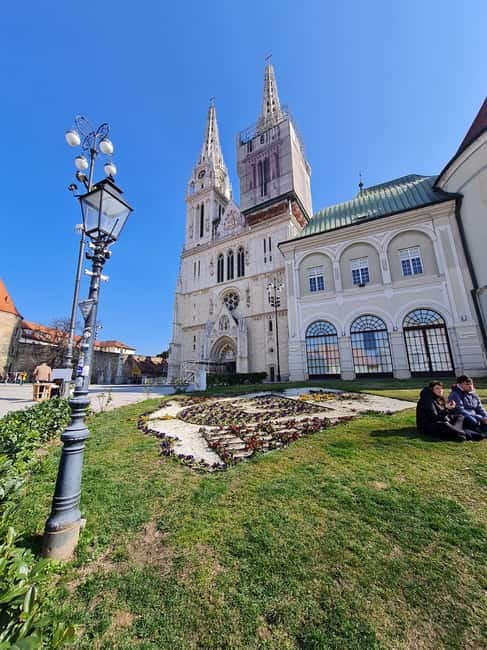
The next major stop is Zagreb Cathedral. You see the exterior and learn about its place in the city, though you should not expect a guaranteed interior visit. One practical point is important: earthquake damage has affected access to several major sites in Zagreb, and parts of the cathedral area may be restricted.
That limitation does not make the stop pointless. The cathedral remains one of the city’s clearest landmarks, and the guide can explain what you are seeing even when entry is not possible. The tour is strongest when it treats the city as it is now, including repairs and closed areas, rather than pretending every building is operating normally.
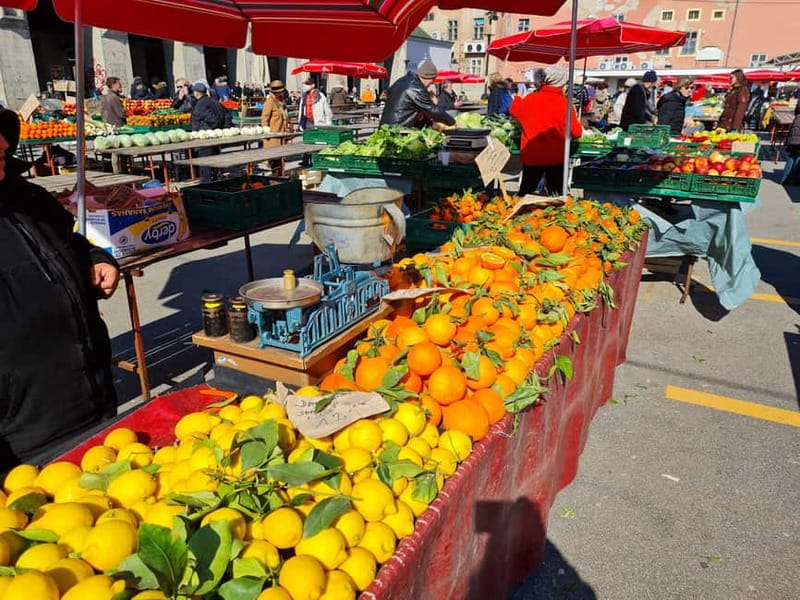
From there, you walk through Dolac Farmers Market. This is one of the most useful sections for daily life. Stalls, produce, and the market setting show you a working city rather than a collection of monuments.
Your guide may point out local food and explain details you might walk past on your own. One small group even sampled homemade cheese and sour cream during the market visit. That is not something you should count on every time, but it shows how the stop can become more personal than a quick photo.
Dolac is also a good place to ask for food advice. Marko, Iva, and other guides are often praised for restaurant and bar suggestions. Ask while the recommendations are fresh, and write down names if you plan to return later.
Same streets, a different route:
- Dubrovnik: Old Town Walking Tour
★ 4.8 · 5,174 reviews - Dubrovnik: The Original Game of Thrones Tour & Lokrum Option
★ 4.8 · 5,064 reviews - Split: Old Town and Diocletian Palace Walking Tour
★ 4.9 · 4,727 reviews - Dubrovnik Discovery Old Town Walking Tour
★ 5.0 · 4,458 reviews
Inside Gric Tunnel and the city’s wartime past
After Dolac, you enter Gric Tunnel. The passage adds a modern and unsettling layer to a tour that has so far focused on public spaces, churches, and markets.
The tunnel was created in the WWII era and later had a Cold War role. Your guide explains how underground spaces were adapted for protection, including the remarkable account of a functioning hospital below the city. The value here is not just seeing a dark passage. It is understanding how Zagreb’s people and authorities responded to air raids, political tension, and the threat of wider conflict.
The tunnel section is not a full museum visit, and the experience can vary if access is limited on your date. It also lacks the polished presentation of a large paid attraction. I see that as part of its appeal, but visitors who want extensive displays or many original objects may find the stop brief.
For most people, the change of setting is enough. You are not simply told that Zagreb has a wartime past. You walk through a space built for danger, then return to the daylight and continue uphill.
The two-minute funicular ride and Grič Hill
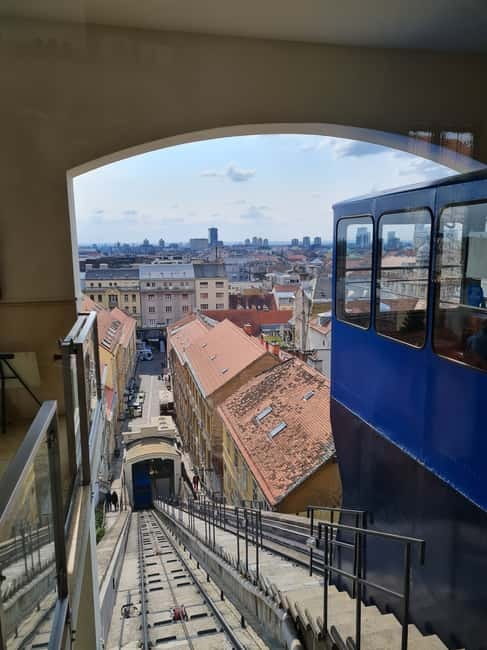
When operating, the funicular carries you uphill in about two minutes. It is billed as the world’s smallest funicular, and the short ride is a charming piece of Zagreb transport history.
The funicular ticket is included, so you do not need to budget extra for the ride. It also saves your legs for the Upper Town, although the rest of the route remains a walking tour.
There is a major timing issue. The funicular is closed for renovation until March 2026, and the activity notes that it may also be unavailable on certain dates. If it is closed, the guide adjusts the route, but you should not book this experience solely for the ride.
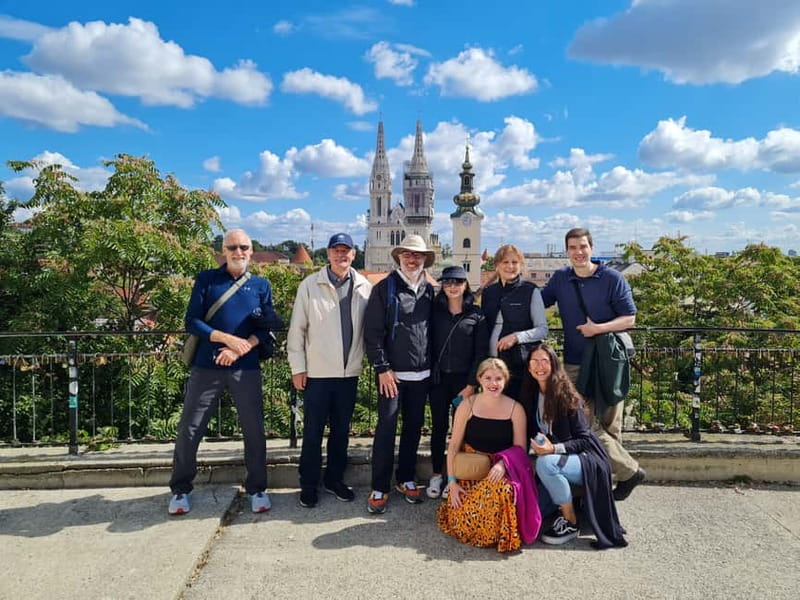
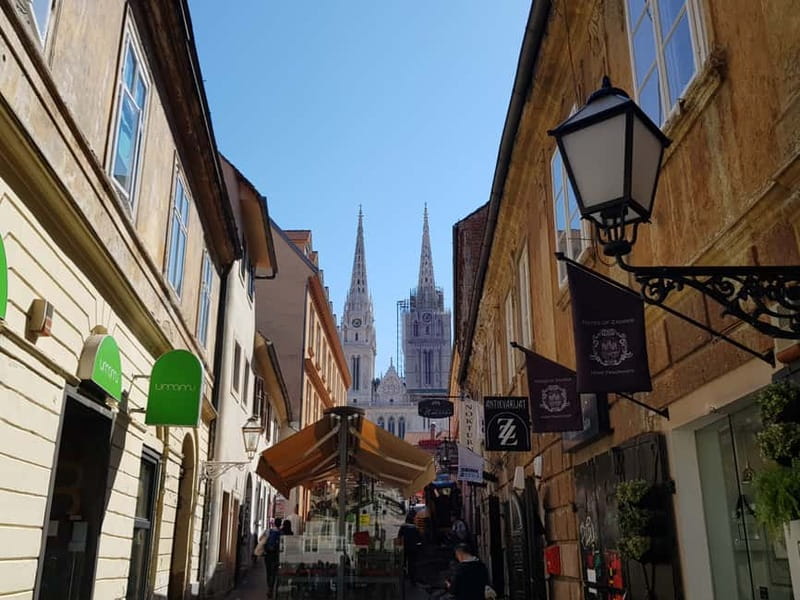
At the top, you reach Grič Hill and Gradec, Zagreb’s Upper Town. The change in atmosphere is clear. The streets feel older and quieter than the central square, and the higher ground gives you broad views across the city.
The panoramic viewpoint is one of the tour’s best rewards. You can place the streets and neighborhoods you have just walked through, which makes the earlier stops easier to understand. Take photographs here, but also listen for the guide’s explanation of how the Upper Town relates to the lower center.
Lotrščak Tower, St. Mark’s Church, and Stone Gate
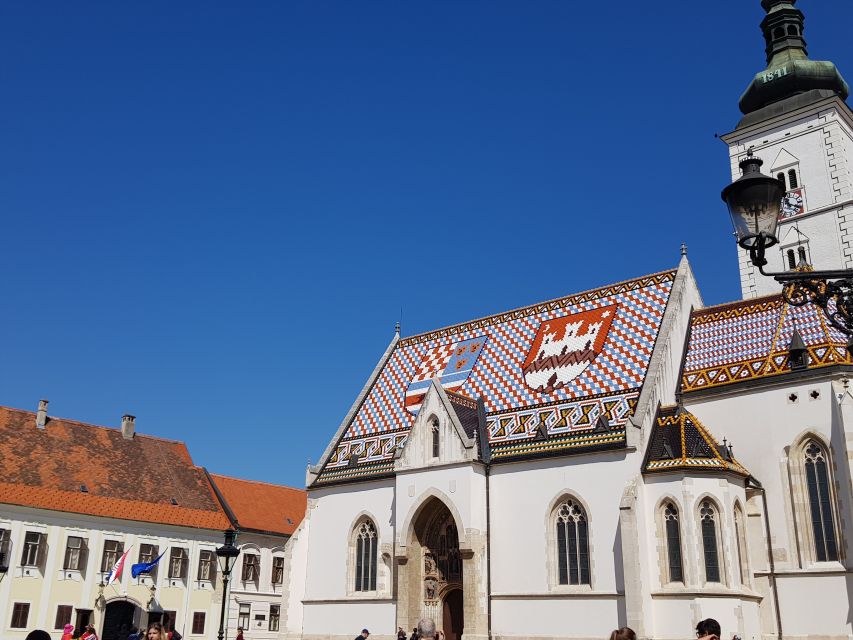
The Upper Town section includes Lotrščak Tower, St. Mark’s Church, and Stone Gate. These are close together, so the tour covers several important sights without wasting time on long transfers.
Lotrščak Tower is associated with Zagreb’s old defenses and is also tied to the daily cannon tradition. One person timed the walk well enough to hear the cannon fire, though you should not treat that as guaranteed unless your start time lines up. The sound adds a memorable jolt to the hilltop visit.
St. Mark’s Church is famous for its colorful tiled roof, which makes it one of Zagreb’s easiest landmarks to recognize. The guide helps you notice architectural details and explains why the church matters within the Upper Town. Access may be restricted, so the focus is generally on the exterior and surrounding square.
Stone Gate is another compact but meaningful stop. It is easy to pass without understanding its purpose, so the guide’s explanation is particularly useful. This is the sort of place where a local story turns a simple doorway into something worth remembering.
One advantage of having a guide here is that the Upper Town can otherwise feel like a series of attractive streets without a clear order. The route supplies that order and leaves you with several places to revisit at your own pace.
Tkalčićeva Street and the final food plan
The walk descends toward Tkalčićeva Street, one of Zagreb’s best-known dining and nightlife areas. Bars and restaurants line the street, making it a practical place to finish rather than simply an endpoint.
You are not paying for food or drinks, so plan to buy anything you want separately. That keeps the tour price low and gives you control over the final stop. You might continue for a snack, return later for dinner, or use the guide’s suggestions to choose another part of town.
The tour finishes in Ban Jelačić Square, bringing you back to the city’s central anchor. This is convenient if you want to continue sightseeing, shop, catch transport, or return to your accommodation.
The route includes a fair amount of walking, but the guides generally keep a steady pace and make regular stops. One guide was specifically praised for waiting for slower walkers, while another kept a larger group together well. If you use a wheelchair, the activity is listed as wheelchair accessible, but check the current arrangements because tunnel access, hill routes, repairs, and funicular renovation can affect the exact experience.
The guides make the difference
The strongest part of this tour is the human delivery. You may be led by Robert, Marko, Iva, Zrinka, Marin, Goran, or another member of the English-speaking team.
Robert is often singled out for humor, clear explanations, photography help, and a warm manner. Marko is praised for lively storytelling and restaurant recommendations. Iva is noted for bringing Croatian and Zagreb history to life while keeping the group engaged. Zrinka is associated with strong storytelling and small-group attention, while Marin received praise for going the extra mile even with only a few people.
That range means the tone can vary by departure. You should expect an English-speaking licensed guide who mixes history with practical advice, but not a scripted performance identical every day.
The guides also help with orientation. Several people used this walk as their first activity in Zagreb, then planned museums, meals, and later sightseeing with a better sense of direction. I think that is the tour’s smartest use.
Is $14 good value?
At $14 per person, this is inexpensive for a 150-minute guided walk. The price includes the licensed English-speaking guide and the funicular ticket when the funicular is operating. Food and drinks cost extra.
The value is especially strong if you want a first look at Zagreb rather than a specialist history tour. You cover Zrinjevac, Bogovićeva, Ban Jelačić Square, the cathedral, Dolac, Gric Tunnel, Grič Hill, the Upper Town, Tkalčićeva, and more in one organized route.
The tradeoff is that no single stop receives unlimited time. You get orientation and explanation, not a long cathedral visit, a full market tour, or an extended tunnel exhibition. That is appropriate for a city overview, but less suitable if you prefer to examine one attraction slowly.
Should you book the Zagreb city and WWII tunnels walk?
I would book it early in a Zagreb stay, especially if you want a clear introduction before exploring alone. The route combines major sights, local streets, wartime history, a hilltop view, and useful food advice without asking you to spend much.
Choose it if you enjoy walking, want stories beyond the usual photo stops, and value a guide who can answer practical questions. It is also a good fit for families and mixed-age groups because the route includes frequent stops, humor, and varied scenery.
Think twice if the funicular is your main reason for booking, since renovation continues until March 2026. Also check tunnel availability for your date. Even without those features, the city walk remains a strong $14 introduction, but the experience is best when the full route is operating.
FAQ
How long does the Zagreb city and WWII tunnels tour last?
The tour lasts 150 minutes, or two and a half hours.
Where does the tour begin?
Meet in front of the Meteorological Station at Trg Nikole Zrinskog 2, beside Zrinjevac Park.
What sights are included?
The route includes Zrinjevac Park, Bogovićeva Street, Ban Josip Jelačić Square, Zagreb Cathedral, Dolac Market, Gric Tunnel, Grič Hill, Lotrščak Tower, St. Mark’s Church, Stone Gate, and Tkalčićeva Street.
Is the funicular ride included?
Yes. The funicular ticket is included when the service is operating. The ride takes about two minutes.
Is the funicular currently operating?
The funicular is closed for renovation until March 2026. The WWII tunnels and funicular can also be unavailable on certain dates, so check before booking.
What happens if the weather is poor?
The tour operates in all weather conditions. Wear suitable clothing and shoes for a city walk, and remember that food and drinks are not included.
Just added around Croatia
- Dubrovnik: Panoramic Ride and Old Town Guided Walking Tour★ 4.7 · 261 reviews
- Dubrovnik: Walls and Wars Walking Tour★ 4.8 · 501 reviews
- Dubrovnik: Cable Car, Walking Tour and City Walls Combo★ 4.6 · 322 reviews
- Dubrovnik: Game of Thrones And Iron Throne Walking Tour★ 4.8 · 505 reviews
- Dubrovnik: Game of Thrones&Lokrum Island Walking Tour★ 4.8 · 245 reviews
- Dubrovnik By Night Walking Tour★ 4.8 · 208 reviews
- Dubrovnik: Early Bird Walking Tour★ 4.9 · 123 reviews
- Dubrovnik: History and Game of Thrones Walking Tour★ 4.7 · 85 reviews
History Walking Tours, compared.

Berlin’s Best: 2 Hour Walking Tour Third Reich and the Cold War
Read our review →
Third Reich Berlin: Hitler and WWII Walking Tour
Read our review →
New Orleans Garden District History Walking Tour
Read our review →
Cartagena: Historic Center and Getsemaní Shared Walking Tour
Read our review →
Imperial Palace and Shogun Historical Walking Tour
Read our review →Browse the lists this tour appears in