
REVIEW · THAILAND
Chiang Mai: Local Food and Markets Guided Walking Tour
Chiang Mai’s best food often hides in plain sight: a small stall, a crowded noodle shop, or a market counter you might walk past without knowing what to order. This 150-minute walking tour takes you from Chansom Memorial Bridge through flower stalls and market lanes to four local food stops, including Hakka-style noodles and mango sticky rice.
I like the easy introduction to unfamiliar dishes, and I like having a local guide explain what you are eating instead of pointing at a menu and hoping for the best. Guides such as Koi, Nom, Patty, and Banana have been praised for their English, patience, and useful food advice. The main caution is that the food is not included in the $48 price, and the late 2:30 pm departure can miss some of the named stops.
Key points at a glance
- Four distinctive tastes: Try khao kriab pak moh, pa thong ko, mango sticky rice, and Hakka-style noodles with tofu, fish sausage, and wontons.
- Markets with a local purpose: Ton Lamyai Flower Market and Warorot Market give you more than food samples, with flowers, herbs, produce, clothing, and everyday shopping.
- A guide makes the difference: Guides including Koi, Nom, Patty, Banana, and Nancy explain local customs, ingredients, and ordering.
- A short but active walk: You may cover about 2.5 miles, so comfortable shoes matter.
- Best timing: Morning departures offer the best chance of following the full food route before shops close.
- Flexible booking: You can choose several start times, cancel up to 24 hours ahead, and reserve without paying immediately.
Starting at Chansom Bridge near Ton Lamyai
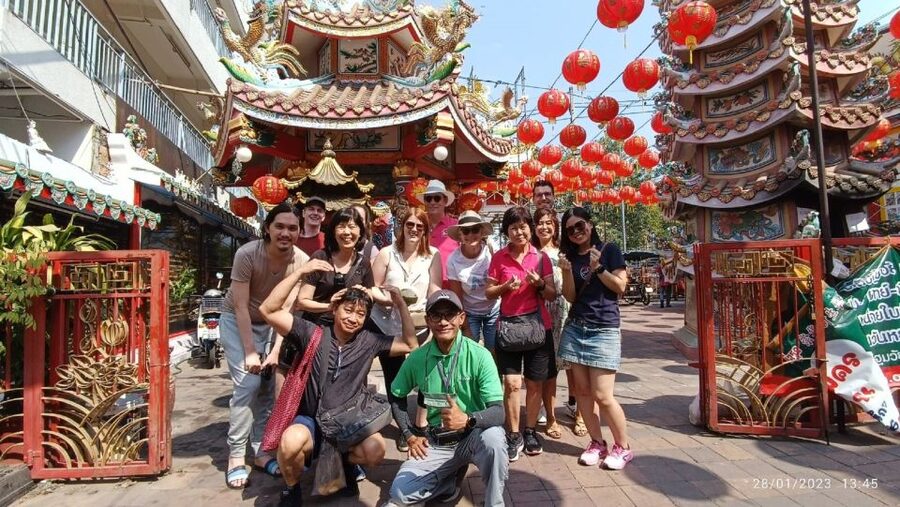
The tour begins at Chansom Memorial Bridge, known locally as Khua Khaek, opposite Ton Lamyai Flower Market. This is a useful meeting point because you are immediately close to the markets that shape the tour.
You meet a TripGuru guide holding a sign. The operator sends the final meeting details and time the evening before, and you should arrive 10 minutes early. The guide can wait only 10 minutes, so allow extra time for Chiang Mai traffic, especially in the morning.
There is no hotel pickup or drop-off. You make your own way to Praisanee Road and the bridge, which keeps the tour focused and helps explain the relatively short format. If you are staying far from the river and old market area, include local transport time when comparing the tour with a longer food outing.
Your guide is the key to the experience. Several guides have been singled out for being friendly, clear, and flexible. Koi has helped families with young children and arranged seating at busy stalls. Nom has been praised for carrying shopping bags and answering questions. Patty, Banana, Nancy, and others have also been praised for mixing food advice with comments about buildings, customs, and nearby places to eat.
That variety matters. This is not a recorded audio walk with fixed commentary. Your experience depends partly on the guide assigned that day, the crowds, and which stalls are open.
More Guided Tours in Thailand:
- Bangkok: Grand Palace and Wat Phra Kaew Guided Walking Tour
★ 4.4 · 2,417 reviews - Bangkok: Wat Pho and Wat Arun Guided Walking Tour
★ 4.6 · 1,720 reviews - Chiang Mai: 3 Hour Old City and Temples Guided Walking Tour
★ 4.6 · 1,568 reviews
Sweet rice dumplings at Lung Khajohn Wat Ket
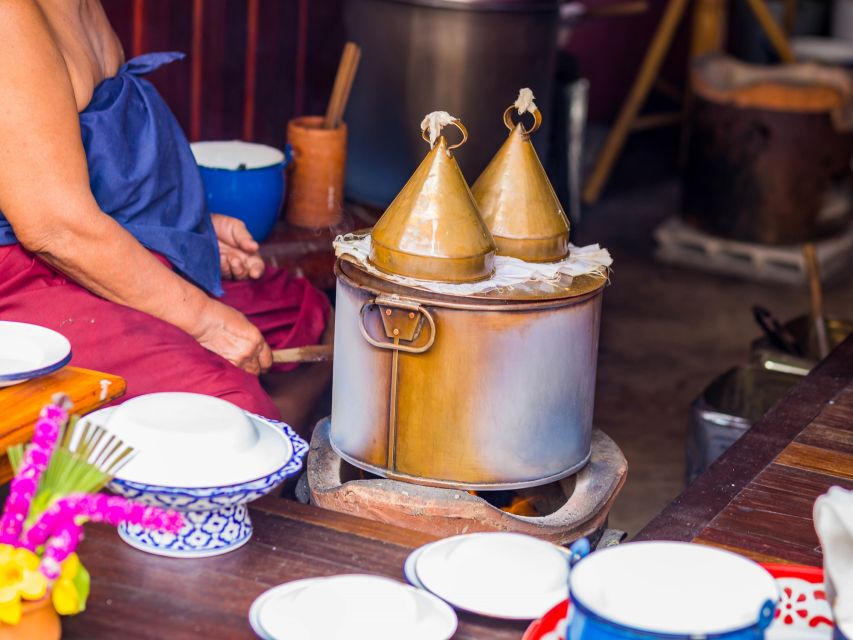
The first food stop is Lung Khajohn Wat Ket, known for khao kriab pak moh. These are thin, steamed rice-skin dumplings, generally filled with peanuts. The texture and preparation make them different from the fried snacks you may already know from Thailand.
This is a good first stop because the dish is small and approachable. You get a taste without filling up before the rest of the walk. Your guide can also explain how locals eat it and help you identify the flavor and texture if the dish is new to you.
The first stop can be busy. One guide even pre-ordered food for a group so they did not spend the opening minutes waiting. That sort of practical help is valuable on a short tour, especially when a popular stall has limited space.
You should keep your expectations realistic. The tour includes tasting portions and several stops, not a private sit-down meal at every location. Still, the dumplings are one of the stronger food moments in the route, particularly if you enjoy trying dishes you would not confidently order alone.
Flowers, herbs, and a quick market lesson
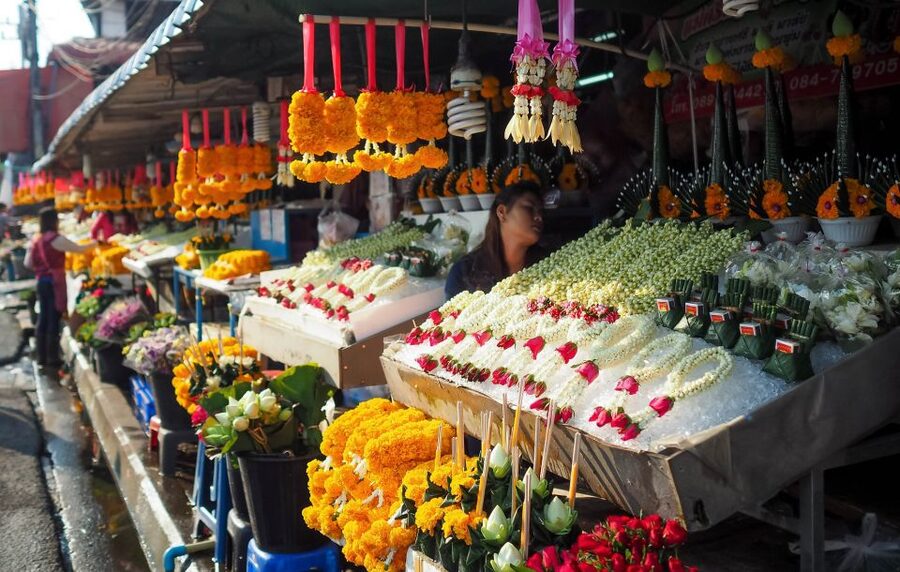
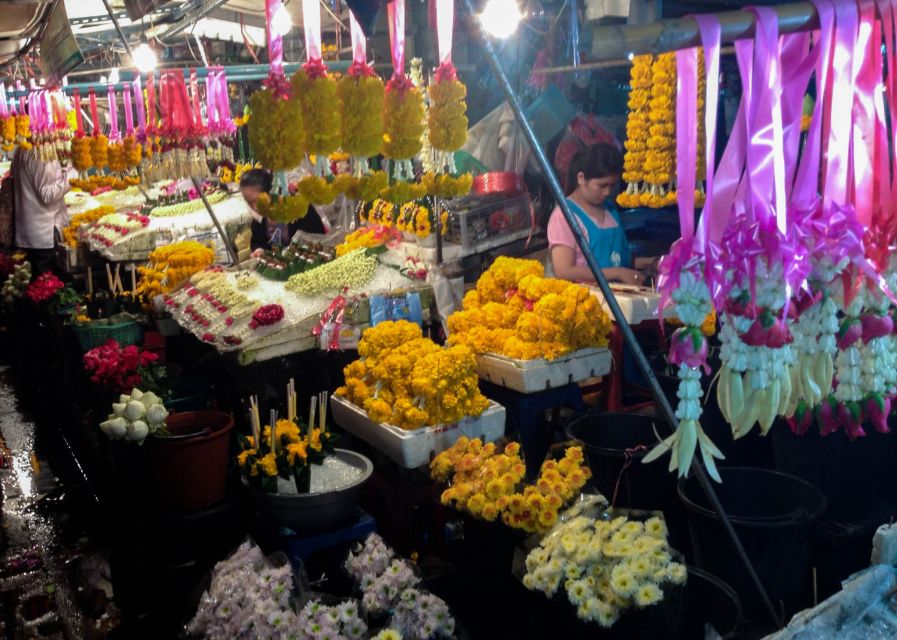
After the dumplings, the route passes through Ton Lamyai Flower Market. This is one of the most appealing non-food parts of the walk. You see cut flowers, herbs, and market activity close to the river, with plenty of color and scent in a compact area.
The stop is not simply a photo break. It helps connect food with daily shopping. Herbs and produce are part of the same market world as the dishes you taste later, and your guide can point out items you might otherwise pass without recognizing.
The market is also a chance to buy something small. The tour description suggests brightening your day with fresh flowers, but any purchases are your responsibility. Bring cash if you want to shop, and remember that you will be walking with what you buy.
The route can feel like a quick city walk as well as a food tour. Some guides have added comments about temples, older buildings, and local customs. Do not expect a full architectural tour, but you may get useful context between bites.
Dinosaur-shaped pa thong ko at Go Neng
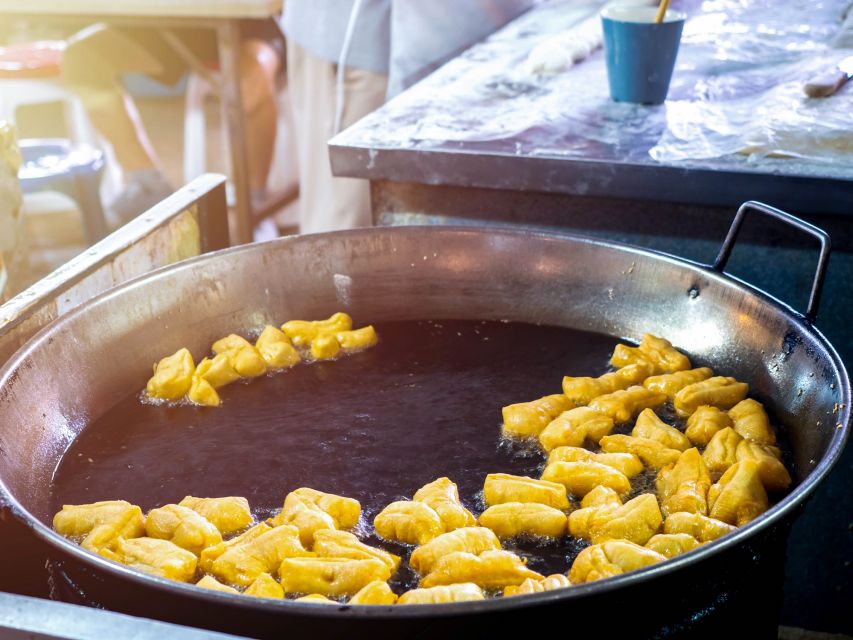
At Go Neng, you try pa thong ko, Chinese-style deep-fried dough sticks. The unusual shapes have been compared to dinosaurs, which gives this stop a playful edge. The food itself is simple: fried dough, crisp outside and soft inside, served as a popular local snack.
This stop shows why a guide is useful. You might recognize fried dough but not know where to find a respected stall or how it fits into local breakfast and snack habits. The guide can manage the order and explain what makes the stop worth your time.
The flavor may not be the highlight for everyone. One person enjoyed the route but cared less for the dough shape itself. That is a fair reminder that food tours work best when you treat each stop as a sample, not a promise that every dish will become a favorite.
The timing affects this stop. Morning visits bring you to the market as activity is opening, and some people have enjoyed the quieter pace. At 2:30 pm, the operator may need to replace planned stalls with alternatives because several restaurants close by early afternoon.
A few more walking tours around Thailand worth a look
- Bangkok: City Highlights Temple and Market Walking Tour
★ 4.5 · 3,990 reviews - Phuket:Beach walk with elephants, rain & care. 2.5 hours
★ 4.9 · 969 reviews - Phuket: Bukit Elephant Park Sanctuary Walk and Feed Tour
★ 4.9 · 926 reviews - Bangkok Authentic Tasting Thai-Chinatown Walking Food Tour
★ 4.9 · 852 reviews
Warorot Market, Chiang Mai’s working food center
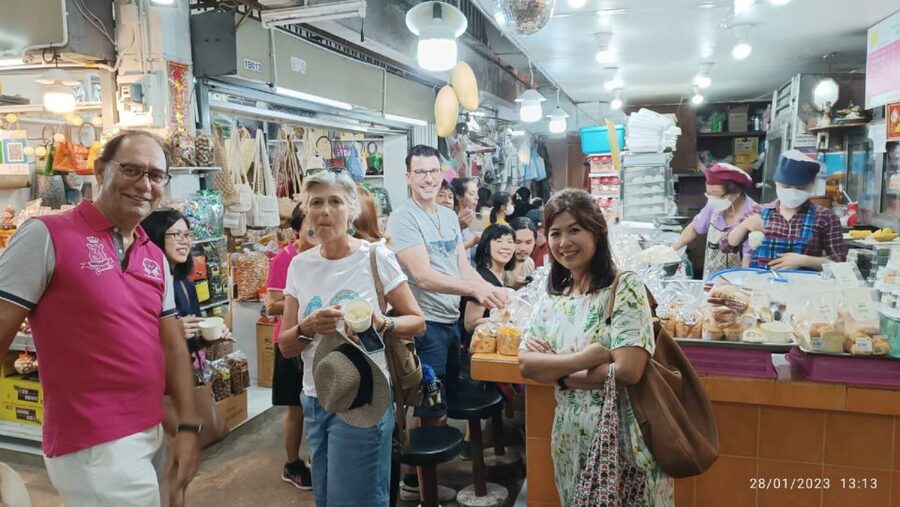
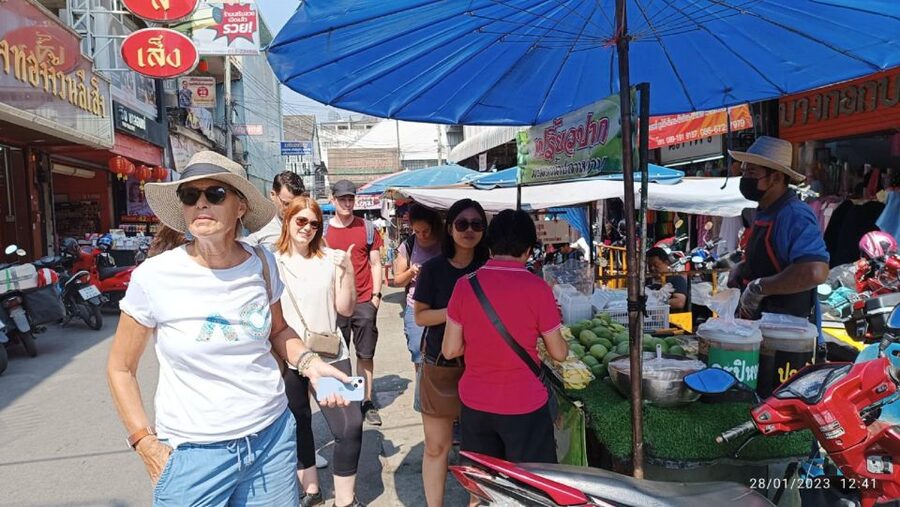
Warorot Market is the largest and most substantial part of the walk. You find food, produce, snacks, clothing, and other goods in a market that serves everyday shopping needs rather than existing only for sightseeing.
This is where the tour becomes useful for the rest of your stay. Your guide can point out foods to buy later, explain unfamiliar ingredients, and help you understand how local shopping differs from a night market visit. Several people have appreciated being taken to stalls they would not have found alone.
Warorot is also where the walk can feel fastest. You move between stops, and the total distance may reach about 2.5 miles. If you want to linger over every counter or photograph every display, the schedule may feel tight.
The guide helps keep the pace practical. Guides have arranged places to sit, ordered food, and changed the route when a stall was closed or too crowded. That flexibility is important in a market setting, where opening hours and available dishes can change without warning.
Mango sticky rice for the sweet course
Inside or around Warorot Market, the guide takes you to a stall selling mango sticky rice. This is the most familiar dish on the route for many people, but a market stall gives you a chance to compare it with versions served in restaurants.
The appeal is simple: sweet mango with sticky rice and coconut-based flavor. It is filling, so do not arrive after a large meal. One useful piece of advice from the route is to skip a heavy breakfast if you are taking the tour around lunchtime.
The order of the food is also worth noting. Dessert appears before the final savory dish, which can feel slightly odd if you expect a conventional meal. The sequence is built around the locations and opening hours of the stalls, not a restaurant-style menu.
This is one reason I prefer taking the tour early. You get a better chance of finding the intended foods, and you can use the afternoon to return to the market for purchases or visit another part of Chiang Mai.
Hakka noodles at Thana Ocha
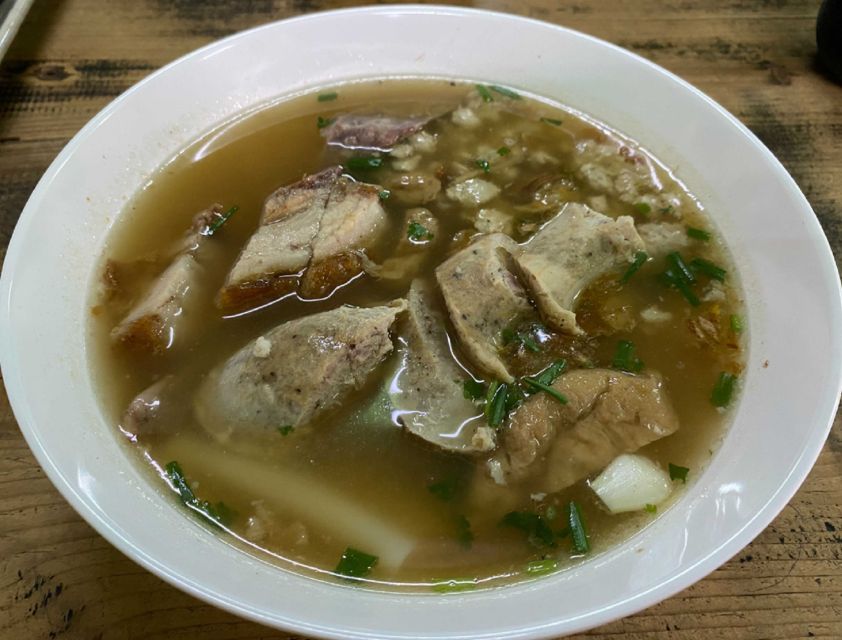
The final named stop is Thana Ocha, where you try Hakka-style noodles with Hakka stuffed tofu, fish sausage, and wontons. This is the most substantial tasting and often the dish that leaves people full.
The bowl also reflects Chiang Mai’s Chinese culinary connections. It is not simply another version of a familiar Thai noodle soup. The combination of noodles, tofu, fish sausage, and wontons gives you several textures and flavors in one serving.
Guides have been praised for explaining ingredients and showing how to use local condiments. That help is useful here because a noodle bowl can arrive with additions that are not obvious to first-time visitors.
The stop is a strong finish, but it also explains why you should pace yourself. Four food stops in two and a half hours can add up quickly, especially with mango sticky rice in the middle. You can tell your guide if you need smaller portions, but food choices and extra purchases remain at your own expense.
What the $48 price really covers
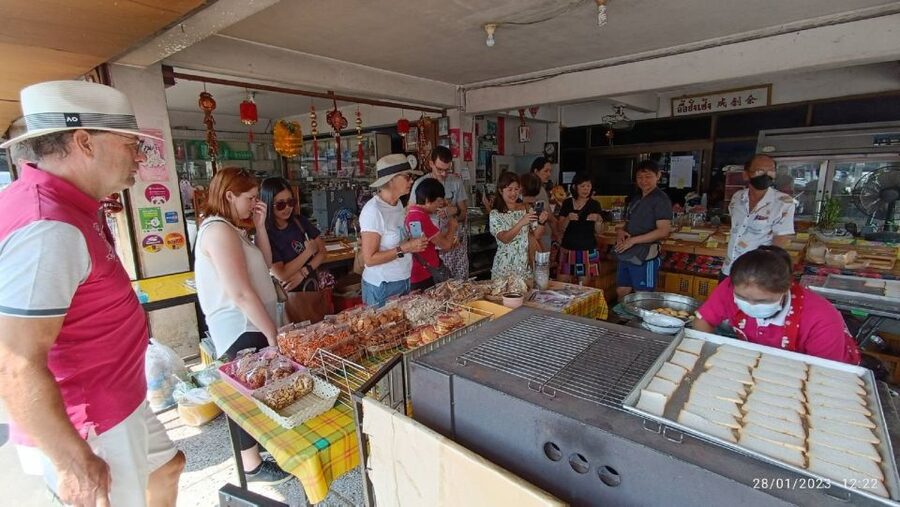
The listed price is $48 per person. It includes the guide, the walking tour, and carbon-emission offset credits. It does not include the food or tasting expenses.
That last point affects the real cost. Each tasting may be inexpensive, but you will need cash and should expect to pay as you go. One practical complaint about the arrangement is having to open your wallet at every stop. If you prefer one all-in price, this setup may feel less convenient.
Still, the value is not only in the amount of food. You are paying for access to stalls that can be hard to identify, help with ordering, explanations of local customs, and a route through two important markets. Guides have also offered restaurant and night-market suggestions, which can make the tour useful early in your Chiang Mai stay.
Compared with eating alone, the price makes most sense if you want guidance and cultural context. If you are comfortable ordering from any stall and already know Chiang Mai’s markets, you may find a self-guided visit cheaper. If you are cautious about unfamiliar food, the guide can save time and remove much of the guesswork.
The tour also follows a low-impact approach with carbon-emission offset credits. It is GSTC-certified, which will matter to you if responsible travel is part of your booking decision. The main transport is your own walking, with no hotel transfer included.
Timing, walking, and food restrictions
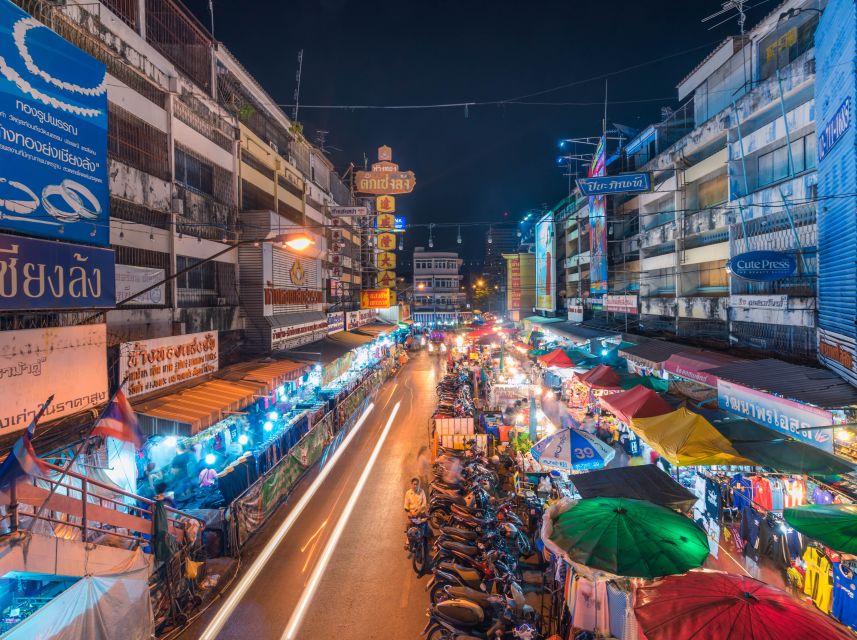
You can choose from several start times, but the morning options are the safest choice for the full route. The named restaurants and stalls may close by early afternoon, and the 2:30 pm departure can use alternative food stops instead.
The advertised duration is 150 minutes. Plan for a steady walk between tastings, and wear comfortable shoes. Sunglasses, a hat, sunscreen, insect repellent, a camera, and cash are sensible items to carry.
This is not a good fit for people with mobility impairments, heart problems, or respiratory issues. It is also not suitable for pregnant women according to the activity information. No vegan option is available, so vegans should choose another experience.
The route may change because of weather, restaurant availability, or closed stalls. I see that as a normal part of a market walk, but you should book it for the general experience rather than one guaranteed dish.
Who should book this Chiang Mai food walk?
I would recommend it to first-time visitors who want an easy introduction to local food without spending a full day on a cooking class or formal restaurant tour. Families can do well with it, especially if the guide is flexible about a child’s preferences.
It also suits curious eaters who want to try Hakka noodles, steamed dumplings, pa thong ko, and mango sticky rice in one outing. The guide may add temple, building, and market context, so you get more than a sequence of food samples.
I would be more cautious if you want long explanations at every stop. The walk is short, and some departures move quickly. It may also disappoint you if you want a large number of tastings, since the route generally centers on four main food moments.
Book it early in your Chiang Mai stay if you want recommendations for later meals. Choose a morning time, arrive hungry, bring cash, and leave room for shopping at Warorot Market.
Should you book it?
Book this tour if you want a guided first taste of Chiang Mai’s markets, especially if unfamiliar dishes make you hesitate. The strongest reasons are the local food stops, the practical help with ordering, and guides such as Koi, Nom, Patty, and Banana who add personal explanations to the walk.
Skip it if you need vegan food, dislike walking several miles, or want every cost included upfront. For most omnivorous visitors who value local stalls over polished tourist restaurants, the $48 price can be fair, as long as you remember to budget separately for the tastings and choose a morning departure.
FAQ
How long does the Chiang Mai food tour last?
The activity lasts 150 minutes, or two and a half hours.
Where does the tour meet?
You meet at Chansom Memorial Bridge, also called Khua Khaek, opposite Ton Lamyai Flower Market on Praisanee Road.
Does the tour include hotel pickup?
No. Hotel pickup and drop-off are not included, so you must make your own way to the meeting point.
Is food included in the $48 price?
No. The guide and walking tour are included, but you pay separately for food and tastings at the stops.
What foods can I try?
Possible tastings include khao kriab pak moh, pa thong ko deep-fried dough, mango sticky rice, and Hakka-style noodles with stuffed tofu, fish sausage, and wontons.
Is there a vegan option?
No vegan option is available for this activity.
Can I take the tour in the afternoon?
Yes, several start times are available, including a 2:30 pm option. However, some named restaurants close early, so the guide may use alternative street food stalls. Morning departures are recommended if you want the planned route.
Just added around Thailand
- Chiang Mai: Temple And City Walking Tour Part I★ 4.7 · 244 reviews
- Chiang Mai Untouched Elephant: Nature Walk & Waterfall Trek★ 4.7 · 77 reviews
- Bangkok: Grand Palace, Wat Pho, & Wat Arun Walking Tour★ 4.6 · 116 reviews
- Bangkok: Grand Palace and Wat Arun Guided Walking Tour★ 4.5 · 118 reviews
- Bangkok: Chinatown by Night Walking Tour★ 4.5 · 162 reviews
- Bangkok: Discover a Taste of Chinatown – 2 Hr Walking Tour★ 4.2 · 152 reviews
- Bangkok: City Highlights and Landmarks Private Walking Tour★ 4.3 · 142 reviews
- Authentic trek only walk in Chiang Rai jungle★ 5.0 · 90 reviews
Walking Tours, compared.

Magical London: Harry Potter Guided Walking Tour
Read our review →
Reykjavik Food Walk – Local Foodie Adventure in Iceland
Read our review →
History and Hauntings of Salem Guided Walking Tour
Read our review →
New Orleans Premier Ghost, Voodoo and Vampire Walking Tour
Read our review →
Amsterdam Anne Frank: Small-Group Walking Tour & Local Guide
Read our review →

Edinburgh Castle: Guided Walking Tour with Entry Ticket
Read our review →
Anne Frank’s Story – Guided Walking Tour through Amsterdam
Read our review →Browse the lists this tour appears in