

REVIEW · WALKING TOURS
Buenos Aires: Local Foodie Adventure with Sherpa Food Tours
Buenos Aires knows how to turn a meal into an event, and this Palermo food tour makes that clear from the first stop. You move from a tiny deli to a modern choripán shop, a classic bodegón, and a parrilla, tasting the food locals actually order along the way.
I like the small group size, capped at 10, and the way the walk ties food to Palermo’s street art, shops, and low-rise streets. I also like the generous spread: eight or more dishes, drinks, wine, and dessert. Come hungry. The main drawback is that this is a serious amount of food, so it may be too much if you prefer light tastings or have mobility limits.
Key points at a glance
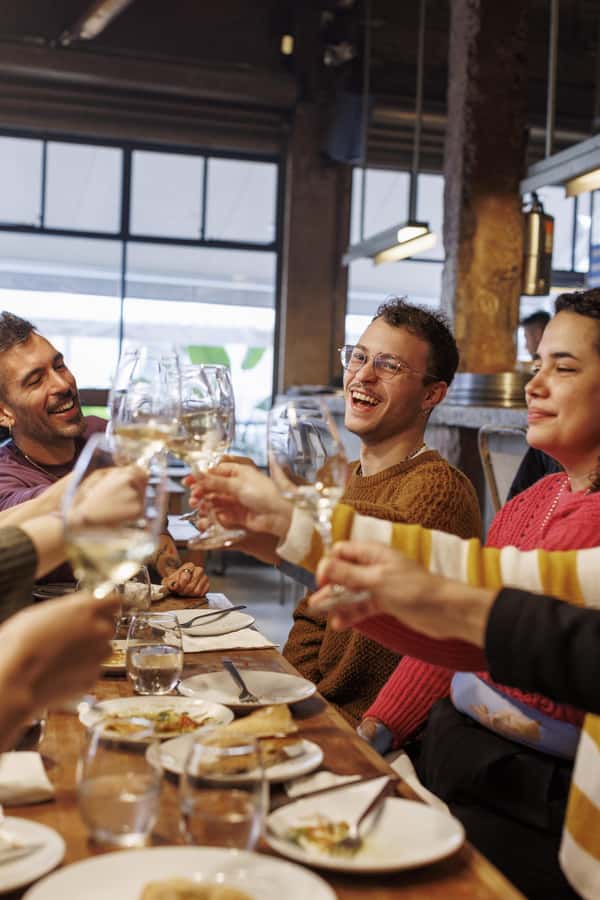
- Four restaurant stops: Eat at a deli, a modern choripán spot, a traditional bodegón, and a parrilla.
- More than eight dishes: Expect empanadas, milanesa, tortilla, fainá, Argentine steak, drinks, wine, and dessert.
- Palermo on foot: The route includes street art, boutiques, colorful façades, and local neighborhood life.
- Groups of up to 10: The size makes it easier to ask questions and chat with the guide and other diners.
- A filling evening: Portions are substantial, so skip a big meal beforehand.
- Practical limits: Children under 13 and people with mobility impairments cannot join, and heavy rain can cancel the outing.
Why this Palermo food tour works
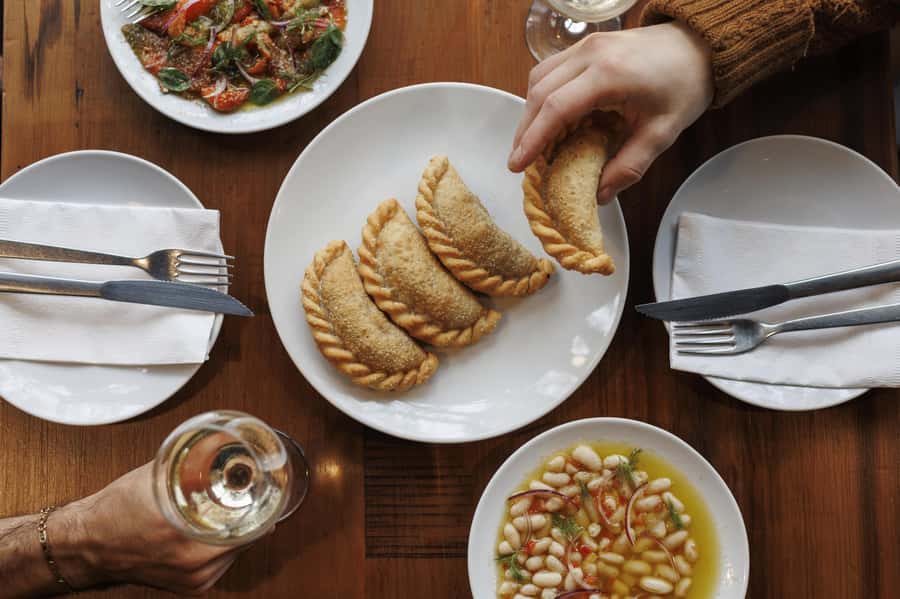
The appeal here is variety. Buenos Aires food can be reduced to steak and Malbec in the minds of first-time visitors, but this outing gives you a broader plate. You get stuffed pastries, sausage in bread, comforting neighborhood dishes, pizza-like fainá, grilled beef, wine, and sweets.
The food is only half of the point. Between stops, your guide gives you a look at Palermo, one of Buenos Aires’ most popular districts. You pass bold street art, compact buildings, independent boutiques, and busy restaurant streets. The walk helps explain why the neighborhood feels different from the grand avenues and historic core elsewhere in the city.
This is also a useful first-night activity. You taste dishes you may want to order later, learn the words for them, and get practical ideas about places to eat in Palermo. Guides such as Paula, Lu, Claudio, Denis, Ezequiel, and Alessandra have been praised for mixing food information with stories about Argentine culture and history. The exact guide depends on the departure.
More Food Walking Tours in the world:
- Reykjavik Food Walk – Local Foodie Adventure in Iceland
★ 5.0 · 18,952 reviews - New Orleans Food Walking Tour of the French Quarter with Small-Group Option
★ 5.0 · 6,118 reviews - Naples: Street Food Walking Tour with Local Guide
★ 4.9 · 4,976 reviews
Starting inside a neighborhood deli
Meet your guide at Picsa Restaurant at Nicaragua 4896. On Mondays, the meeting point is outside rather than inside, so pay attention to the day of your booking.
The first stop is deliberately informal: a small, hole-in-the-wall deli rather than a grand dining room. That choice sets the tone. You begin with empanadas and other local favorites, the sort of food that works as a quick bite, lunch, or late-night snack in Argentina.
Empanadas are a useful introduction to Argentine food because the filling and style can vary from place to place. Here, you get a chance to taste them in a relaxed setting before the larger portions arrive later.
Do not treat this first stop as a token sample. The full outing is designed around proper portions, and the early food adds up quickly. If you eat a large breakfast or lunch before coming, you may find yourself struggling by the steak course.
The modern choripán stop
Next comes a more polished version of choripán, the famous Argentine sausage sandwich. This stop is linked with some of Buenos Aires’ best-known chefs, and the idea is to take a very familiar street food and give it a fresh treatment.
Choripán is simple at heart: grilled chorizo in bread, usually served with sauces or condiments. Its importance is cultural as much as culinary. It appears at casual gatherings, football matches, roadside stands, and neighborhood grills. On this tour, you can try the dish in a version that shows how chefs are updating a classic without losing its casual character.
This is one of the more memorable stops for many people because it bridges two sides of Buenos Aires dining. You get food with a humble, everyday background, but presented with more care than you might expect from a quick sausage sandwich.
If you are not a meat eater, tell the company about your restrictions before booking. The supplied information says vegetarian options are available at all stops, and a pescatarian participant was accommodated. Still, the central menu is strongly tied to Argentine meat culture, so it is worth providing clear details in advance.
A proper Argentine bodegón
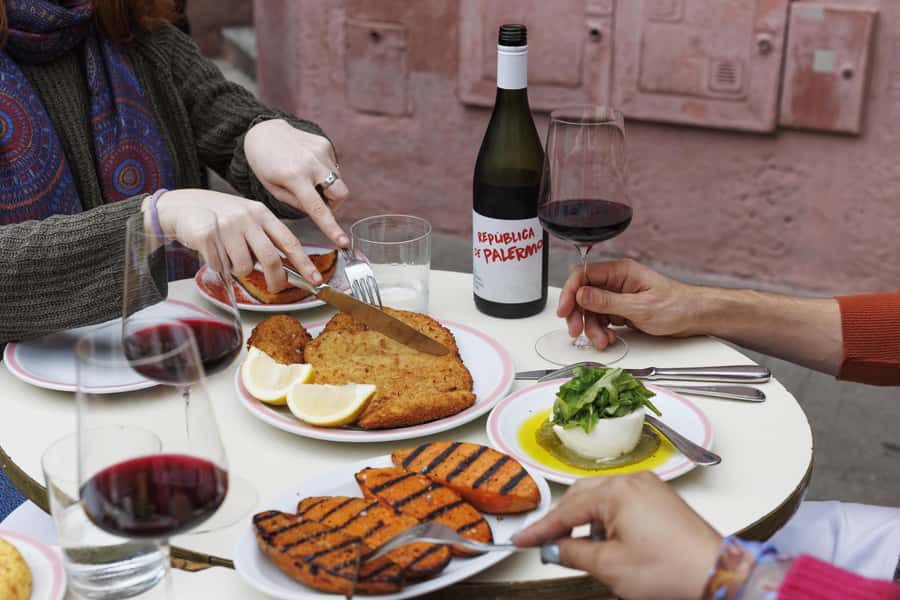
The route then moves into an iconic bodegón. These old-style neighborhood restaurants are known for generous comfort food, broad menus, and an atmosphere that feels less formal than a high-end dining room.
Here you sample several dishes associated with local eating. Milanesa is a breaded cutlet, often compared to schnitzel or chicken-fried preparations depending on the version. Tortilla usually means a thick Spanish-style potato omelet. Fainá is a savory chickpea-flour flatbread, commonly paired with pizza in Buenos Aires.
Together, these dishes show the city’s mix of European influence and local habits. They are not exotic inventions designed only for visitors. They are filling, familiar foods with a place in ordinary Argentine meals.
A glass of Argentine wine comes with this part of the route. The wine adds a welcome pause and gives your guide a chance to explain how drinks fit into the meal. The tour includes drinks, but the information does not specify the exact wine, number of pours, or whether additional drinks can be purchased separately.
This stop may be the best one for people who want context. A well-prepared guide can connect the food to migration, family cooking, and the way Buenos Aires restaurants developed. Guides including Claudio and Denis have been praised for explaining where dishes came from without turning the walk into a lecture.
Same streets, a different route:
- Magical London: Harry Potter Guided Walking Tour
★ 4.7 · 22,044 reviews - History and Hauntings of Salem Guided Walking Tour
★ 5.0 · 14,564 reviews - New Orleans Premier Ghost, Voodoo and Vampire Walking Tour
★ 4.5 · 12,856 reviews - Amsterdam Anne Frank: Small-Group Walking Tour & Local Guide
★ 4.8 · 12,789 reviews
The parrilla and the steak course
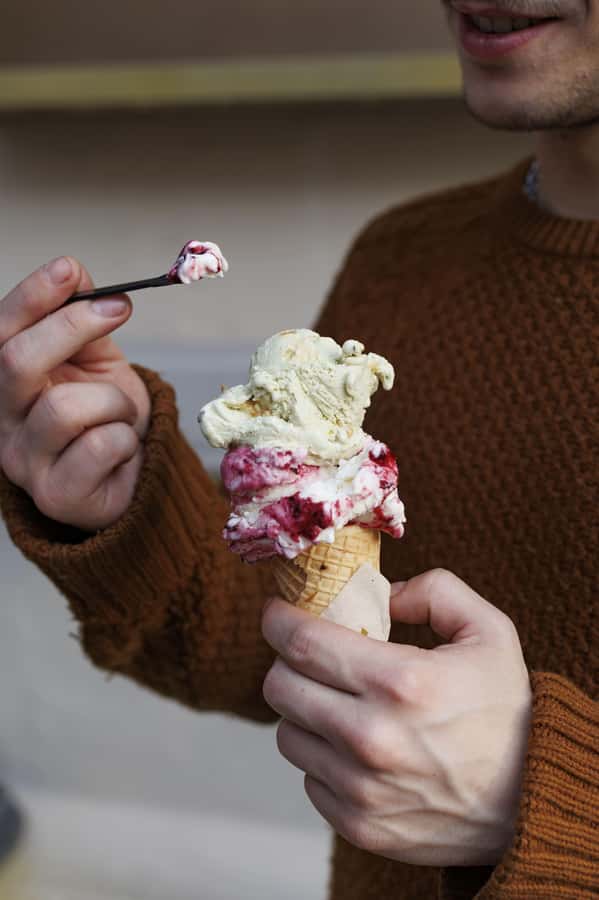
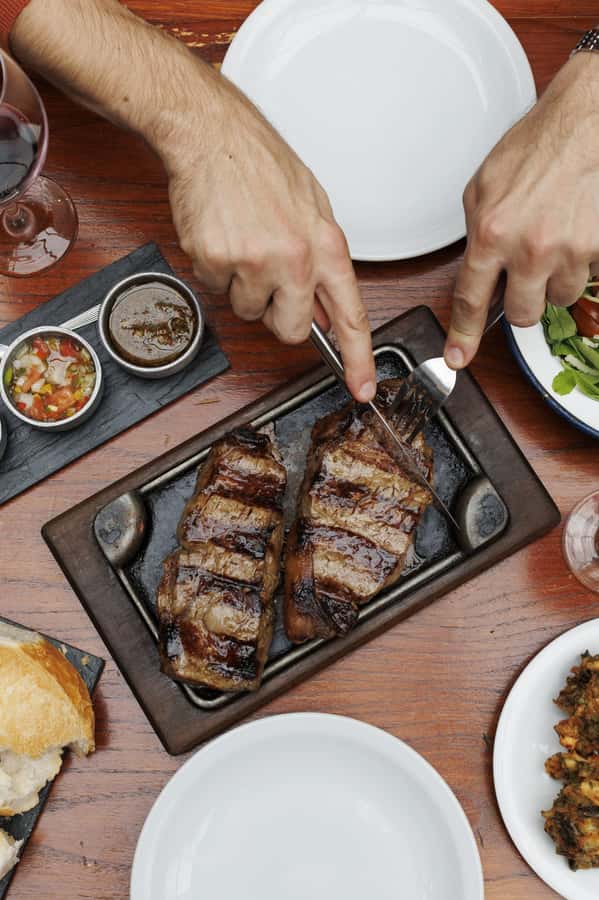
The final major savory stop is a parrilla, the Argentine grill. This is where the famous beef arrives, and it is the course most first-time visitors anticipate.
A parrilla is more than a place that cooks steak. It is a central part of Argentine dining culture, built around live-fire grilling and a serious approach to beef. The tour promises a proper steak portion, not just a bite-sized sample, which helps explain why so many people advise arriving hungry.
You should also expect the meal to move at a comfortable pace rather than rush from plate to plate. The group walks between venues, and the restaurants are prepared for the scheduled arrivals. That organization matters. You are not left waiting around while a kitchen starts from scratch, yet you also get enough time to eat and talk.
The steak stop is a strength for meat lovers, but it may be the least important part for vegetarians and pescatarians. The company says dietary needs can be handled, but you should not assume the alternative dishes will receive the same emphasis as the grill course. Send your restrictions before the tour, not when you arrive.
Dessert without the usual spoiler
The evening ends with quintessential Argentine desserts. The exact sweets are not disclosed, which preserves a small surprise at the end of a menu that is otherwise clearly described.
This final course matters because Argentine food is not only about grilled meat and savory snacks. Dessert gives you another look at the country’s culinary habits and provides a lighter social finish after the steak and earlier courses.
By this point, you will probably be full. Several people who have taken the outing advise skipping dinner plans afterward, and that is sensible advice. Think of this as dinner, not as a pre-dinner tasting walk.
Palermo between the plates
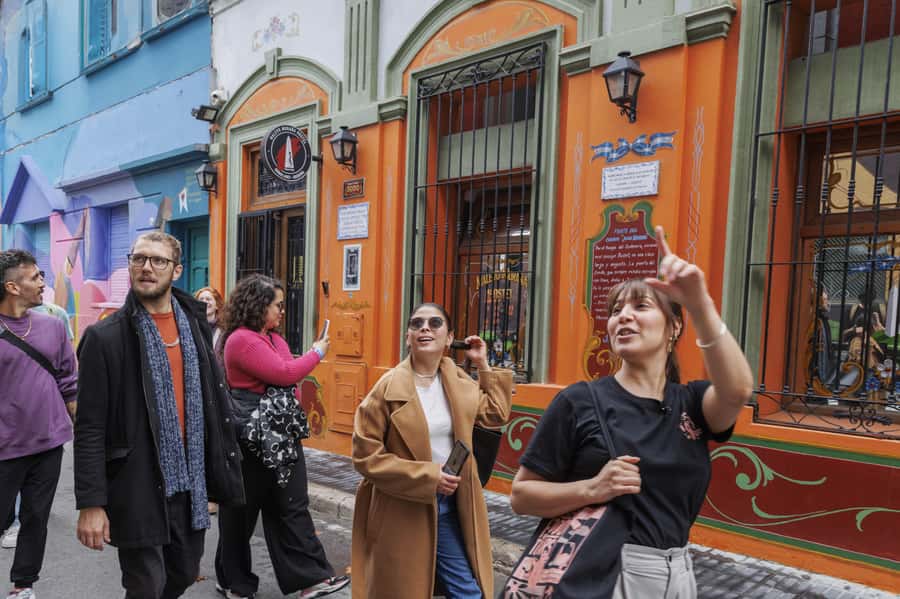
The walking route gives the tour a useful second layer. You are not simply transferred from restaurant to restaurant. You move through Palermo, with time to notice the neighborhood’s street art, low-rise architecture, colorful walls, independent stores, and restaurant culture.
The walk also helps you understand the district’s scale. Palermo is large and divided into areas with different moods, including Palermo Soho. The route finishes at Honduras 4770, so you should be ready to walk between Nicaragua 4896 and the later stops rather than expect a seated meal in one location.
Your guide is central to this part. The strongest guides do more than recite facts. Paula has been described as bringing a clear affection for Buenos Aires to the walk, while Lu has been praised for answering questions and offering useful suggestions for later meals. Ezequiel has been singled out for showing both the neighborhood and its food. These personal touches are valuable because Palermo can feel like a collection of attractive streets unless someone helps you read the place.
The art and architecture are supporting features, not a separate sightseeing tour. If your main goal is museums or major monuments, choose a dedicated city tour instead. If you want to pair a neighborhood walk with a long meal, this format makes good sense.
Small groups and the social side
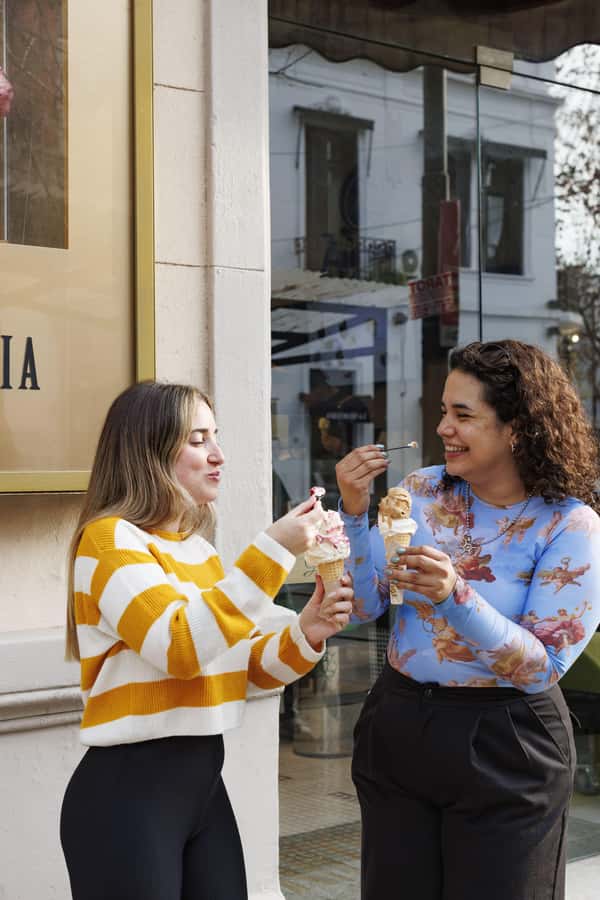
The group limit is 10 people. That is large enough to create a sociable table but small enough for a guide to hear questions and keep the group together.
This format suits solo visitors especially well. The food arrives for everyone, and the shared table setup gives you an easy way to meet people without having to force conversation. Several guides, including Kayte, Gabi, Frankie, and Stan, have been praised for keeping the mood friendly and helping people connect.
The social side can vary with the group on your date. If you want a private meal or a quiet tasting, this may not be the right choice. If you enjoy trading travel stories while eating, the small-group setup is one of the tour’s best features.
The pace also seems designed for conversation. You walk, eat, listen, and move on, rather than spending the entire 210 minutes in a single restaurant. The listed duration is 210 minutes, while the itinerary description refers to about four hours, so allow roughly three and a half to four hours.
Is the $90 price good value?
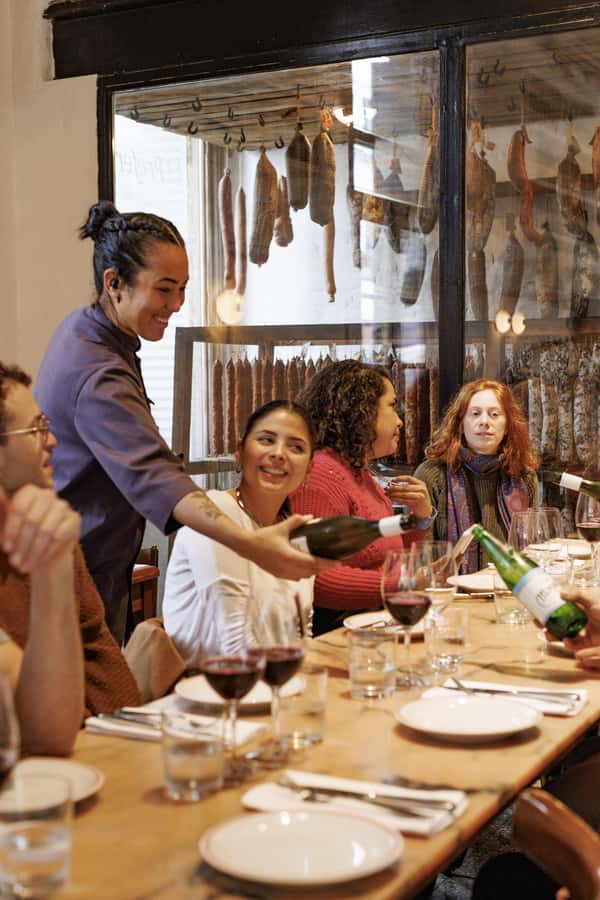
At $90 per person, this is not a cheap snack crawl. It can still be good value if you count the full package: a guide, four restaurant visits, at least eight dishes, drinks, wine, a neighborhood walk, and a full meal’s worth of food.
The biggest value comes from access and planning. You do not have to choose four restaurants, work out what to order, explain dietary needs in Spanish, or guess how much food is enough. The guide also gives you a framework for dishes you may otherwise pass over on a menu.
The price makes less sense if you already know Palermo well and prefer to order one meal at a time. It is also less appealing if you do not drink wine or cannot eat most of the meat-based menu. In that case, confirm the available alternatives before paying.
For a first visit, I think the cost is easier to justify. You receive a broad introduction in one evening, and the lessons can help you spend the rest of your stay more confidently.
Who should book, and who should skip it
I would choose this for first-time visitors to Buenos Aires, solo visitors, couples who want a social evening, and anyone who likes sampling several dishes instead of committing to one restaurant. It is also a good choice if you want Palermo orientation without booking a separate neighborhood walk.
You should be comfortable walking between venues and eating a substantial amount. The experience is not suitable for children under 13 or people with mobility impairments. Heavy rain can also lead to cancellation.
Give the company advance notice of dietary restrictions. Vegetarian and pescatarian options have been available, but the tour’s identity remains closely tied to Argentine meat, especially choripán and steak.
The practical details that matter
Book for a day when you can keep the evening open. The finish is at Honduras 4770, not back at the starting point, and hotel pickup and drop-off are not included.
English and Spanish tours are offered. Cancellation is free up to 24 hours before the start, and you can reserve now and pay later, which helps if your Buenos Aires schedule is still changing.
The meeting point is inside Picsa Restaurant except on Mondays, when it is outside. Check availability for the departure time, and arrive ready to walk and eat rather than expecting a quick tasting.
Should you book this Sherpa food tour?
Book it if you want a generous introduction to Argentine food with a neighborhood walk attached. The combination of empanadas, choripán, bodegón classics, wine, steak, and dessert gives you a wider picture than a steakhouse dinner alone.
Skip it if you want a short, quiet meal, avoid meat, have limited mobility, or dislike group dining. For most curious eaters, though, the $90 price buys a well-planned evening, useful local guidance, and enough food to replace dinner. Just do not make dinner plans afterward.
FAQ
Where does the Buenos Aires food tour begin?
The tour begins at Nicaragua 4896, with the guide meeting you inside Picsa Restaurant. On Mondays, the meeting point is outside instead.
Where does the tour finish?
The experience finishes at Honduras 4770 in Palermo. Hotel pickup and drop-off are not included.
How long does the tour last?
The activity duration is listed as 210 minutes. The itinerary also describes the Palermo experience as about four hours, so allow roughly three and a half to four hours.
How many people are in the group?
The group is limited to 10 participants. This small format allows time for questions and conversation with the guide.
What food is included?
You receive more than eight Argentine dishes. The food includes empanadas, a modern choripán, milanesa, tortilla, fainá, Argentine steak, and dessert, with the exact dessert kept as a surprise.
Are drinks and wine included?
Yes. Drinks are included, and the experience includes Argentine wine. The supplied details do not specify the exact wine or number of servings.
Are vegetarian or pescatarian options available?
Vegetarian options are available at all stops, and pescatarian dietary needs can be accommodated. You should provide your dietary restrictions before the tour.
Is the tour offered in English?
Yes. Live guiding is available in English and Spanish.
Can children or people with mobility impairments join?
Children under 13 are not permitted. The tour is also not suitable for people with mobility impairments because it involves walking between venues.
What happens if it rains?
The tour may be canceled in cases of heavy rain. Free cancellation is available up to 24 hours in advance for a full refund.
Just added around the world
- Fira: Guided Foodie Walking Tour with Tastings★ 4.9 · 474 reviews
- Fez: Guided Walking Tour of the Historic Medina★ 5.0 · 359 reviews
- Fez: Walking Tour in the Ancient City of Fez★ 4.8 · 73 reviews
- Faro: Old Town Guided Walking Food Tour★ 4.9 · 94 reviews
- Feel like a local – Walking Tour in Mykonos Town 2hours★ 4.4 · 77 reviews
- Fanal / Assobiadores – Levada Walk★ 4.6 · 93 reviews
- Fes: A Guided Walking Tour Through the Historic Medina★ 4.4 · 97 reviews
- Fez: Half-Day City Private Walking Tour with a Guide★ 4.6 · 114 reviews
Food Walking Tours, compared.
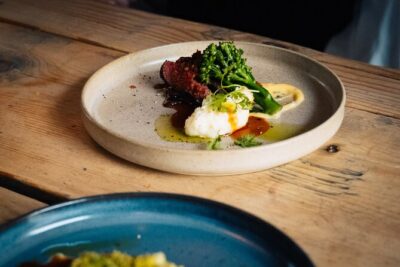
Reykjavik Food Walk – Local Foodie Adventure in Iceland
Read our review →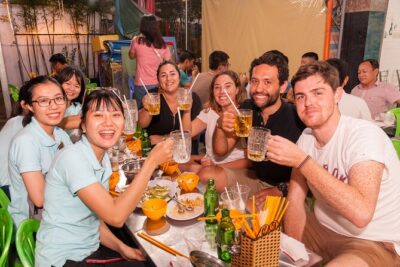
Ho Chi Minh City Street Food Tour & Sightseeing By Motorbike
Read our review →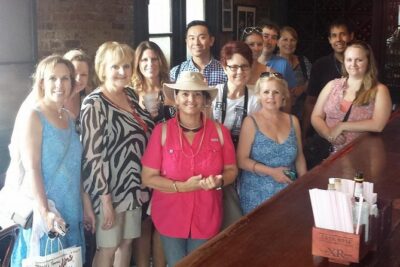
New Orleans Food Walking Tour of the French Quarter with Small-Group Option
Read our review →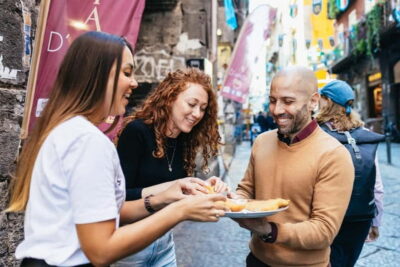
Authentic Parisian Gourmet Food Tour with 10 Local Dishes & Wines
Read our review →
Savannah First Squares Culinary & Cultural Walking Food Tour
Read our review →Browse the lists this tour appears in