

REVIEW · BOSTON
Boston’s Freedom Trail: A Revolutionary Walking Tour
Boston’s Freedom Trail works best when the red-brick path becomes more than a string of old buildings. This 2.5-hour tour ties the Boston Massacre, the midnight lantern signal, Paul Revere’s ride, and the fight for independence into one walk through the city.
I like the way the tour covers all 16 official sites in one outing, and I like that the storytelling reaches beyond famous men to include women, African Americans, and immigrant patriots. Guides such as Rob, Kenneth, Charlie R, Matthew, Alissa, and Stewart are praised for humor, energy, and clear answers.
The main consideration is pace. You cover a lot of ground in 2.5 hours, and some guides speak quickly. You will need comfortable shoes, water, and enough focus to follow the story while walking through busy city streets.
Key points to know before you book
- All 16 Freedom Trail sites in one tour: See Park Street Church, the burying grounds, meeting houses, Faneuil Hall, Paul Revere’s home, Old North Church, the USS Constitution, and Bunker Hill Monument.
- Stories beyond the standard heroes: The tour adds women, African Americans, immigrant communities, abolition, education, and immigration to the familiar Revolution story.
- Strong guide-led experience: Rob, Kenneth, Charlie R, Matthew, Alissa, Stewart, Julia, Noah, Sam, and others are praised for humor, energy, and personal answers.
- A full city walk, not a museum visit: Entry tickets are not included, so the value comes from orientation, storytelling, and seeing the sites from the route.
- Plan for a brisk 2.5 hours: Wear comfortable shoes and bring water. English is the only listed language.
- Easy cancellation and flexible payment: You can cancel up to 24 hours ahead for a full refund and reserve without paying immediately.
Starting at The Embrace on Boston Common
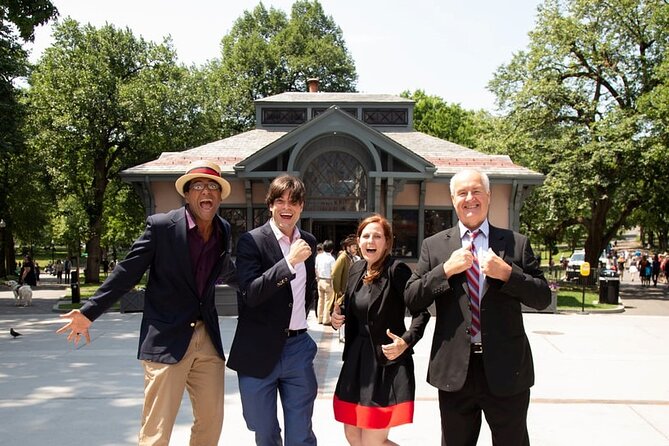
The tour begins at The Embrace statue, next to the Visitor’s Center on Boston Common at 139 Tremont Street. This is a useful meeting point because Boston Common is central, easy to locate, and a sensible place to begin a first look at the city.
Your guide will not be in period costume. Instead, look for a flag with the Boston History Company name. That small detail matters in a crowded public square, especially if several groups are gathering nearby.
The opening sets up Boston’s role in the American Revolution and gives you a framework for the walk. You are not simply checking off monuments. You are following the city’s shift from colonial protest to rebellion, then into wider debates about abolition, education, and immigration.
The format is conversational rather than theatrical. Expect historical stories, questions, and a few inexpensive dad jokes. The humor helps keep the pace lively, but the tour remains centered on the places themselves.
A few more walking tours around Boston worth a look
- Boston: Freedom Trail History Small Group Walking Tour
★ 5.0 · 6,450 reviews - Harvard University Campus Guided Walking Tour
★ 4.5 · 3,632 reviews - Boston Freedom Trail Walking Tour with Costumed Guide
★ 4.5 · 2,531 reviews
Park Street Church and the Granary Burying Ground
The first part of the route brings you to Park Street Church and the Granary Burying Ground. The church is one of Boston’s best-known landmarks, while the burying ground gives the Revolution a more personal scale.
At Granary Burying Ground, you can see the final resting places of John Hancock, Paul Revere, and Samuel Adams. These names are familiar from schoolbooks, but standing among their graves changes the feel of the story. The Revolution stops being a distant chain of dates and becomes connected to specific people who lived, argued, organized, and took risks in this small city.
This stop is also a reminder that Boston’s central district is compact but layered. Modern streets, offices, shops, churches, and graveyards sit close together. A guide helps you notice how much of the city’s early story is concentrated within a short walk.
Do not expect a long cemetery visit or a quiet period for personal study. The group has a full route ahead, so the guide needs to keep things moving. If a particular grave or figure interests you, note it and return later on your own.
King’s Chapel and Benjamin Franklin’s Boston
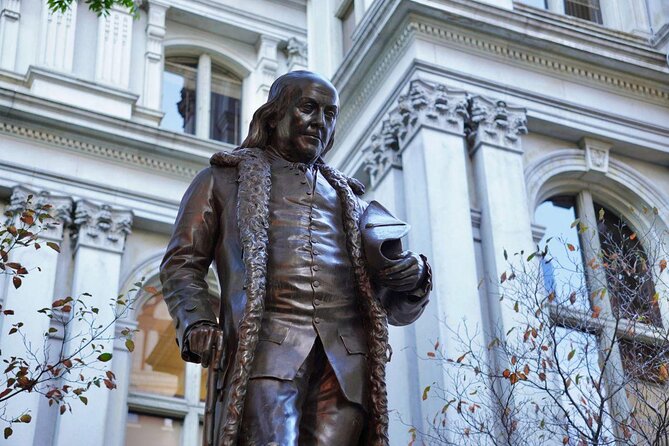
King’s Chapel and the Benjamin Franklin Statue continue the early-city story. These stops broaden the focus beyond the battlefield narrative and show how religion, public life, print, education, and civic debate shaped Boston.
The Benjamin Franklin Statue is especially useful for connecting Boston to the wider American story. Franklin was born in Boston and became one of the best-known figures of the colonial era, yet his path reached far beyond Massachusetts. A good guide can use this one statue to explain how local events fed into national politics.
You will also pass the Old Corner Bookstore. Its name is a reminder that Boston’s historic center was a place of printing, publishing, and public argument as much as a place of protest. This is one reason a guided walk is useful. A building that looks ordinary at street level can carry a large part of the city’s story.
At this stage, the tour starts to show its range. It is not only about the night of the Boston Massacre or the ride of Paul Revere. You are also seeing the civic institutions and public spaces that helped ideas circulate.
Old South Meeting House and the Boston Tea Party
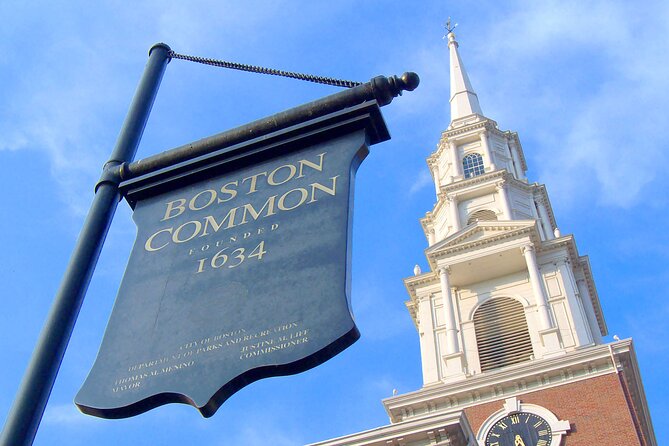
The Old South Meeting House brings you to one of the clearest links between a building and a revolutionary crisis. It is connected with the meetings that helped lead to the Boston Tea Party, when colonial opposition to British taxation reached a dramatic point.
The important thing here is the role of public gathering. The American Revolution did not begin only with weapons and soldiers. It grew through meetings, speeches, boycotts, pamphlets, and organized resistance. The guide’s job is to make that process clear without turning the stop into a list of names.
You will learn how Boston’s protest culture gathered force inside places such as this. The building also helps explain why control of public opinion mattered so much. A crowd could make a political decision, pressure merchants, and turn local frustration into a movement.
There is a practical limit. The tour price covers the guided walk, not admission to the interiors of attractions. You should think of this experience as a narrated route through Boston’s historic core, not as a package of museum visits. If you want to go inside the Old South Meeting House or another site, plan for separate entry.
Same streets, a different route:
- The Full Revolutionary Story Epic Small Group Boston Walking Tour
★ 5.0 · 2,356 reviews - Boston: Freedom Trail History Small Group Walking Tour
★ 4.9 · 1,590 reviews - Boston North End Food Tour of 6+ Tastings, Cannoli, Lobster Roll
★ 5.0 · 1,404 reviews - Boston’s Freedom Trail: A Revolutionary Walking Tour
★ 5.0 · 1,343 reviews
Old State House and the Boston Massacre Site
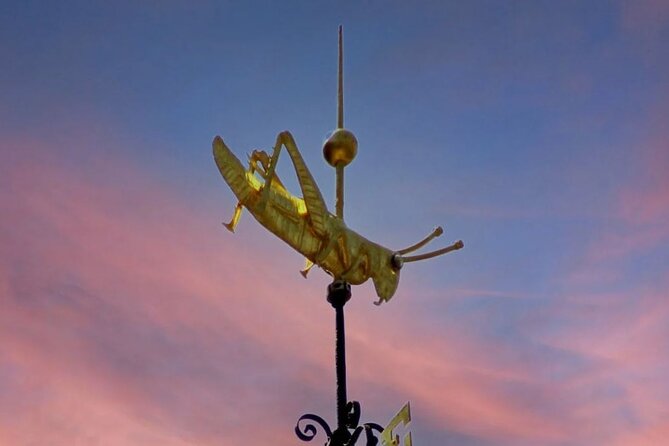
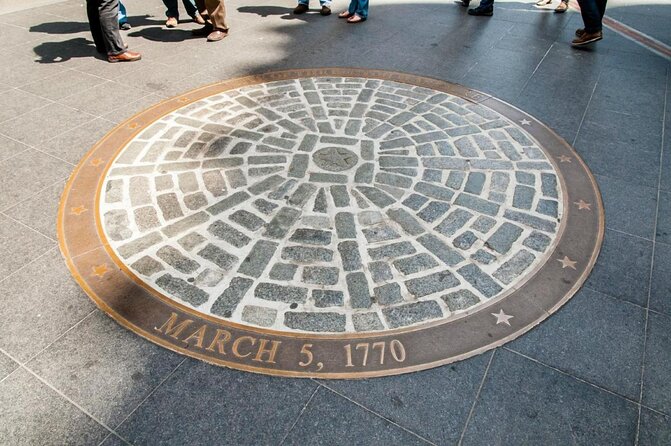
The Old State House and Boston Massacre Site are among the most important stops on the walk. Here, the guide explains the shooting that became a powerful piece of revolutionary propaganda and memory.
The phrase Boston Massacre can sound simple when encountered in a textbook. At the site itself, you can better understand why the event inflamed colonial anger, even though the facts, language, and legal arguments surrounding it were contested. This is where careful storytelling matters.
The tour presents the place where the shooting occurred and explains its role in the growing conflict between Boston residents and British soldiers. You are encouraged to see the event in context, including the pressure already building in the city.
The Old State House adds another layer. Its golden lion and unicorn, historic facade, and position in the modern city make it one of Boston’s most striking landmarks. This is also where the famous Golden Dome of the Massachusetts State House becomes part of the wider city view. The dome is not one of the 16 Freedom Trail stops listed for the walking route, but seeing it helps you orient yourself within Boston’s political center.
Faneuil Hall and the city’s public voice
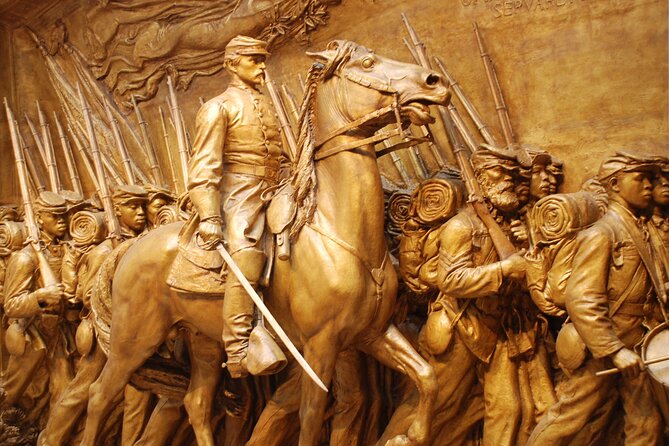
Faneuil Hall is often called the Cradle of Liberty, and the tour uses it to explore Boston’s tradition of public debate. The building has hosted speeches, meetings, and arguments about the direction of the city and the country.
This stop is valuable because it moves the story from a single revolutionary crisis to a longer civic tradition. Boston’s public life did not end when independence was won. Questions about slavery, abolition, immigration, education, and political rights continued to shape the city.
The tour’s broader social focus is one of its strongest features. You hear about famous patriots, but also about people whose names are less familiar. That makes the walk more useful for anyone who already knows the basic Paul Revere story and wants a fuller picture of Boston.
Faneuil Hall can be crowded, and the surrounding area is active. Stay close to the guide and expect some street noise. The guide’s flag helps, but you will still need to pay attention at crossings and busy corners.
Paul Revere House and the Midnight Ride
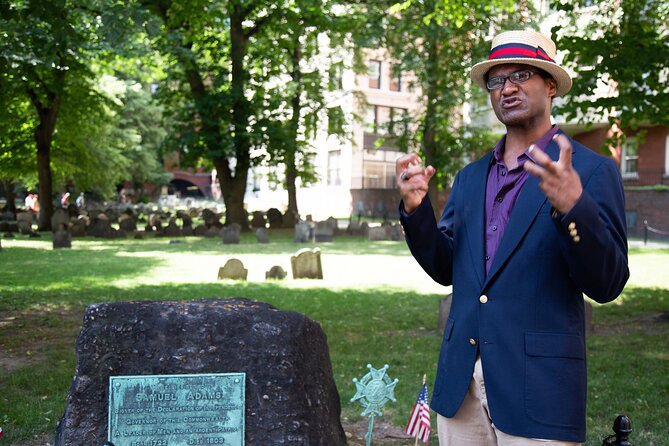
The Paul Revere House is one of the tour’s most anticipated stops. Revere’s home helps put a human face on the famous midnight ride, while the surrounding North End links the Revolution to Boston’s immigrant neighborhoods and changing population.
The guide also points out the Old North Church, where two lanterns were hung as a signal. The familiar phrase about one lantern or two refers to the route British troops were expected to take. From the church and its steeple, the story becomes easier to picture than it is in a written paragraph.
This part of the tour often works well for first-time visitors because the landmarks are so closely tied to stories many people already know. A strong guide can add the details that school lessons often leave out, including the roles of other riders, messengers, families, and local communities.
The Paul Revere House and Old North Church may offer interior access at other times, but entry tickets are not included in this tour. The walk gives you the setting and the explanation. You can decide later if you want to pay for a separate visit inside.
Copp’s Hill, USS Constitution, and Bunker Hill
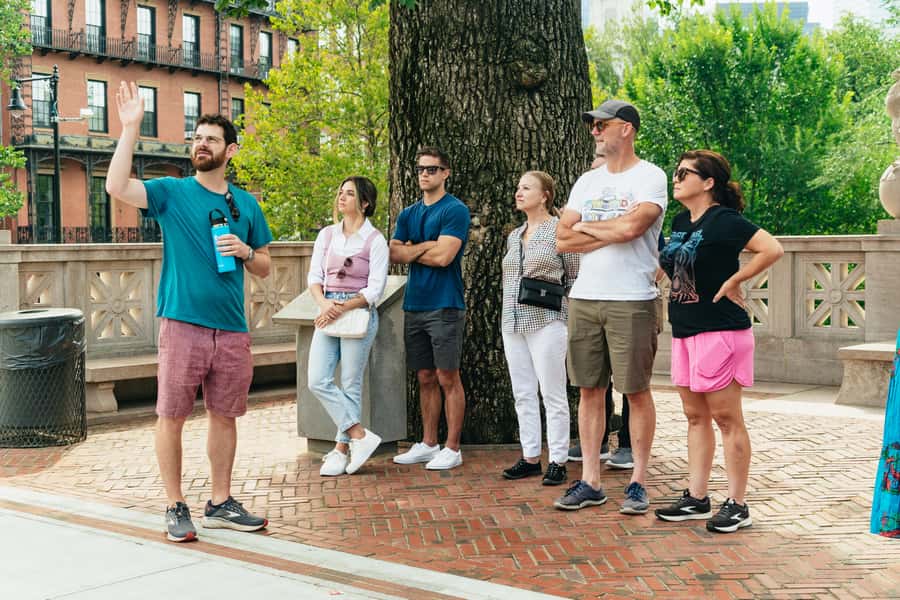
The route continues to Copp’s Hill Burying Ground, then toward the USS Constitution and Bunker Hill Monument. This is where the walk feels most like a city-wide tour rather than a short downtown loop.
Copp’s Hill adds another cemetery to the route, but it serves a different purpose from Granary Burying Ground. Together, the two sites show how burial grounds preserve names, occupations, and social patterns from Boston’s early years.
The USS Constitution connects the city to the maritime side of the Revolution and the early United States. The ship is one of the best-known historic objects in Boston, and seeing it from the route gives the walk a strong finish. The Bunker Hill Monument then brings the story back to armed conflict and the early battles of the Revolution.
The listing says you see all 16 official sites, but entry tickets are not part of the $31 price. One practical point is worth making: the 2.5-hour schedule is tight for a route covering Boston Common, the downtown sites, the North End, Charlestown, the USS Constitution, and Bunker Hill. You should expect to view some places from outside or from the route rather than spend extended time inside each one.
The activity information says the tour ends back at the starting point. That is useful if you want to continue sightseeing from Boston Common or need to return to your original location. At the same time, the distance and pace can feel demanding, so keep your plans after the tour flexible.
Guides who make the history work

This tour depends heavily on the guide. The strongest guide experiences come from people who can tell a story clearly, answer questions, and keep a group moving without sounding as if they are reading a script.
Rob is praised for deep subject knowledge, humor, and an engaging manner. Kenneth is described as friendly, personable, and willing to discuss restaurants, bars, and other parts of Boston along with the history. Charlie R is singled out for detailed stories and strong presentation.
Matthew is praised for weaving stories into the places you visit, though one practical warning is that he can speak quickly. That matters if English is not your first language. Alissa is described as entertaining and good at holding attention for the full 2.5 hours, while Stewart is praised for energy and historical passion.
Other named guides include Julia, Noah, Malcolm, Sam, Jules, Megan, and Jim. The consistent pattern is clear: the guide is the heart of the experience. A large group can still work well when the guide manages questions and keeps everyone together, but the experience may feel less personal than a very small group.
Is $31 a good value?
At $31 per person, this is a fair price for a live, full-route introduction to Boston. You are paying for a guide, a planned route, historical context, and help connecting 16 separate places into one story.
The value is strongest if you are visiting Boston for the first time, have only a few hours, or want a clear orientation before exploring on your own. It can also work well during a long layover, provided you have enough time to reach the meeting point and continue afterward. One person used a Boston layover for the tour and found the format fit that limited window well.
The value is lower if you want long interior visits, extensive time for photographs, or a slow, private walk. Admission to attractions is extra, and the route covers a lot of ground. You may end the tour with a good understanding of the city but still want to return to the Old State House, Old North Church, USS Constitution, or another site for a closer look.
Free cancellation up to 24 hours before the start protects you if your schedule changes. You can also reserve now and pay later, which helps if you are still arranging a Boston itinerary.
Walking comfort and accessibility
Bring comfortable shoes, water, and comfortable clothing. The route lasts 2.5 hours and includes a good deal of walking, with stops in public streets and historic areas.
The activity is listed as wheelchair accessible, but it is also marked as not suitable for people with mobility impairments. Those notes do not fully answer every access question, so you should confirm your specific needs before booking. The distance, street crossings, crowds, and historic surfaces may affect how comfortable the route feels.
Video recording is not allowed. You can still take photographs if permitted in the moment, but the stated rule means you should not plan to record the guide’s full presentation.
Who should book this Freedom Trail walk?
I would choose this tour for a first visit to Boston, especially if you want the city’s main revolutionary sites explained in a single outing. It is also a good choice for families with older children, history-minded visitors, and people who prefer stories and conversation to reading plaques alone.
It suits you less if you dislike walking, need a slow pace, want a private guide, or hope to tour every building interior. Non-native English speakers should pay attention to the guide’s speaking speed and feel free to ask for clarification.
Should you book it?
Book it if your priority is a well-told overview of Boston’s Freedom Trail, with all 16 official sites connected by one guide and one historical narrative. The strongest reason to choose it is the quality of the guide, and the named guides have a strong record for humor, energy, clear explanations, and thoughtful answers.
Skip it if you want a flexible self-guided route or a series of long museum visits. For $31, though, the tour gives you a practical foundation. You can use the walk to decide which sites deserve your return visit, then explore those interiors at your own pace.
FAQ
Where does the Freedom Trail tour begin?
The tour begins at The Embrace statue beside the Visitor’s Center on Boston Common at 139 Tremont Street.
How long does the tour last?
The walking tour lasts 2.5 hours. Starting times depend on availability.
What sites are included?
The tour covers all 16 official Freedom Trail sites, including Park Street Church, Granary Burying Ground, King’s Chapel, the Benjamin Franklin Statue, Old Corner Bookstore, Old South Meeting House, Old State House, Boston Massacre Site, Faneuil Hall, Paul Revere House, Old North Church, Copp’s Hill Burying Ground, the USS Constitution, and Bunker Hill Monument.
Are attraction entry tickets included?
No. The $31 price includes the live guide and walking tour, but entry tickets to attractions are not included.
What language is the tour offered in?
The live tour is offered in English.
Can I cancel or pay later?
You can cancel up to 24 hours in advance for a full refund. You can also reserve your place and pay later.
Just added around Boston
- Boston: North End Pizza Walking Tour with 3 Slices & Cannoli★ 4.8 · 162 reviews
- Boston: Freedom Trail Guided Walking Tour in French★ 4.9 · 106 reviews
- Boston: Salem by Boat – Witch Trials & Walking Tour★ 4.3 · 263 reviews
- Boston: Full Revolution Story Epic Small Group Walking Tour★ 4.9 · 132 reviews
- Boston: 2-Hour Historic Walking Tour★ 4.7 · 88 reviews
- Self Guided Classic Freedom Trail Location Aware (GPS) Walking Audio Tour★ 4.5 · 258 reviews
- Boston History Tour: Scenic Walk Through Time & Landmarks★ 5.0 · 627 reviews
- Entire Freedom Trail Walking Tour: Includes Bunker Hill and USS Constitution★ 5.0 · 732 reviews
Walking Tours, compared.

Magical London: Harry Potter Guided Walking Tour
Read our review →
Reykjavik Food Walk – Local Foodie Adventure in Iceland
Read our review →
History and Hauntings of Salem Guided Walking Tour
Read our review →
New Orleans Premier Ghost, Voodoo and Vampire Walking Tour
Read our review →
Amsterdam Anne Frank: Small-Group Walking Tour & Local Guide
Read our review →

Edinburgh Castle: Guided Walking Tour with Entry Ticket
Read our review →
Anne Frank’s Story – Guided Walking Tour through Amsterdam
Read our review →Browse the lists this tour appears in