
REVIEW · DRESDEN
Walking Through Dresden’s Past with Dr. Fraser Macdonald
Dresden’s story is written in its churches, rebuilt squares, royal palace, and the gaps left by war. This walk connects both sides of the Elbe, beginning in Neustadt and ending in the historic Altstadt, so you get a useful sense of how Dresden grew from a small settlement into Saxony’s grand capital.
I like the clear east-to-west route, which gives you a better feel for the city than a quick loop around the postcard sights. I also like Dr. Fraser Macdonald’s human approach to history, shaped by his background in anthropology and his interest in language, culture, religion, war, and daily life. The main drawback is that the tour does not include the interiors of the churches, museums, or Dresden Castle, so you will need extra time and admission money if you want to go inside.
Key points to know before you book
- Starts beside the Elbe at the Golden Rider: The meeting point is easy to find at Neustädter Markt, near Dresden’s famous equestrian statue.
- Links Neustadt and Altstadt: You cross Augustus Bridge and see how two sides of the city developed in different ways.
- Covers more than the postcard view: The walk includes medieval monasteries, Reformation-era change, Baroque rebuilding, wartime destruction, and the GDR period.
- Dr. Fraser Macdonald leads in English: His style combines dates and buildings with questions about people, culture, and political change.
- About two hours and roughly a mile: The pace is manageable, with time afterward for the Zwinger, Semperoper, Dresden Castle, or museums.
- Plan for separate entry fees: Tower access, the royal palace, and the folk-art museum are not included in the tour price.
Starting beside the Elbe at the Golden Rider
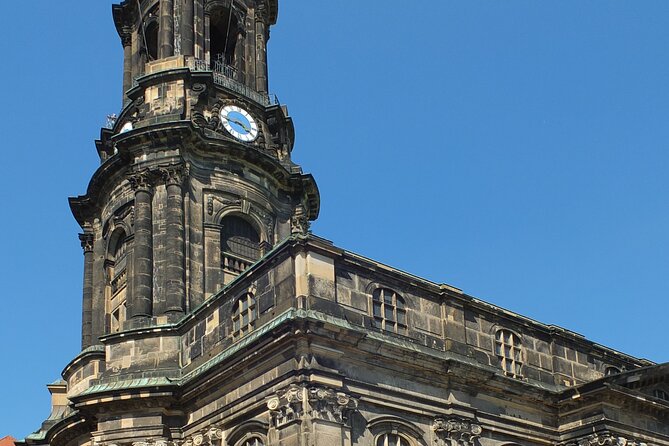
The walk begins at Köpckestraße, near the Golden Rider and Neustädter Markt. This is a smart starting point because the Elbe is not just scenery here. It helps explain why people settled in this area and how the river shaped Dresden’s growth.
The opening discussion looks at the first permanent settlement in Dresden and the people who lived here before the city became a royal center. You will hear about culture, language, and the eventual displacement of earlier communities. That gives the tour a useful human frame from the start. Dresden is not presented only as a collection of palaces and churches. You are asked to think about who lived here, who held power, and who was pushed aside.
This first stop takes about 15 minutes and costs nothing. It is also a good place to orient yourself. You can see the relationship between the river, Neustadt, and the old city across the water.
The guide’s anthropology background is especially useful here. Instead of treating history as a list of rulers and construction dates, Dr. Macdonald links buildings to identity and social change. If you like history that asks why people behaved as they did, rather than only when something happened, this opening should suit you.
A few more walking tours around Dresden worth a look
- Dresden: City & Semperoper Guided Walking Tour
★ 4.8 · 2,397 reviews - Dresden: Guided City Walk
★ 4.6 · 2,075 reviews - Dresden: Complete Walking Tour with Frauenkirche Visit
★ 4.8 · 700 reviews
From a monastery to royal hunting grounds
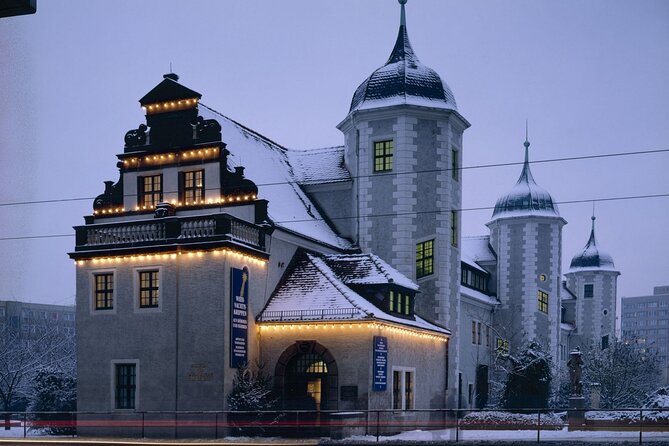
The next stop is the Museum für Sächsische Volkskunst mit Puppentheatersammlung. The tour does not enter the building, but the site itself gives you a compact lesson in Dresden’s religious and political shifts.
The story begins in the 15th century, when the area was a wealthy Augustinian monastery. After Luther’s Reformation changed the religious order of Saxony, the monastery was demolished and transformed into a royal hunting lodge in the 16th century.
That change says a great deal about the period. A religious institution gave way to royal use, reflecting how the Reformation altered property, authority, and public life. You do not need to visit the museum to understand the basic importance of the site, but you may want to return later if folk art or puppetry interests you.
Admission is not included. The stated museum entry is €5. The practical advantage of discussing it from outside is that you avoid spending the group’s limited walking time indoors. The tradeoff is simple: you get the setting and the story, but not the collections.
Dreikönigskirche and the former Altendresden
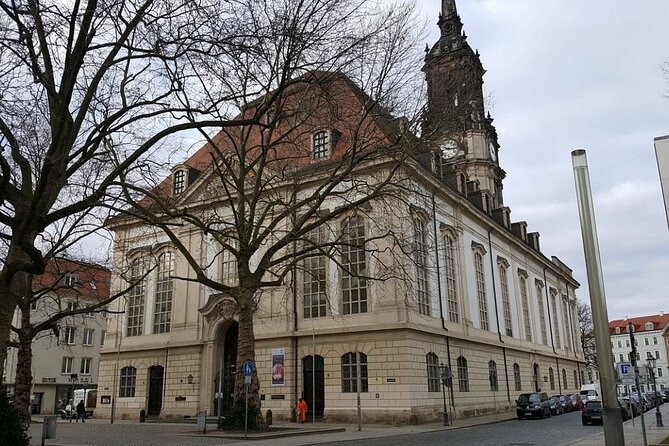
The walk continues to Haus der Kirche, also called Dreikönigskirche. This church sits in the former Altendresden, and its story reaches back to the early 15th century.
The building you see today is beautiful and Baroque, but the important point is that the site has seen repeated changes in Dresden’s religious and civic life. Dr. Macdonald uses it to explain the history of this part of town, which can otherwise feel like a short stop on the way to the better-known sights.
You will not enter the church or climb the tower as part of the tour. If you want the tower view, the listed fee is €5. That can be a worthwhile add-on if you have clear weather and want a higher look over Dresden, but it is best treated as a separate activity after the walk.
The tour allows about 15 minutes here. That is enough for a focused explanation, not enough for a full architectural study. I see this as one of the walk’s strengths: you receive a reason to notice the building, then you can decide later if it deserves more of your time.
Crossing Augustus Bridge into the Altstadt
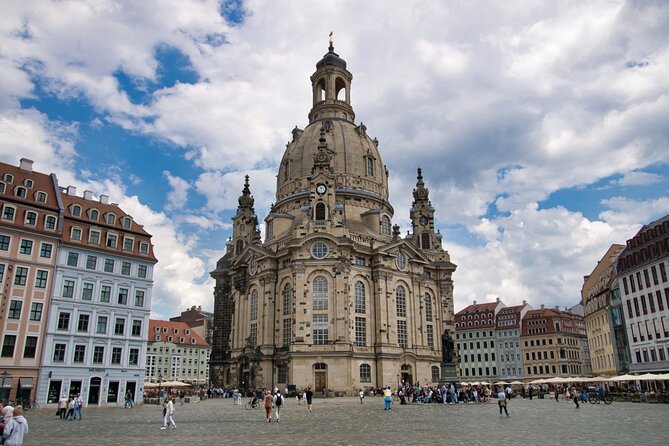
From Altendresden, you cross Augustus Bridge. This is the natural hinge of the walk. You leave the Neustadt side and enter Dresden’s famous Altstadt, where the great churches, palace, opera house, and museums are packed close together.
The crossing also helps you read the city as two connected but distinct areas. The tour does not simply march from one famous façade to another. It shows how Dresden’s growth unfolded across the river and how the royal center came to dominate the city’s image.
The walk is roughly a mile overall, though the exact distance may vary with the route and pace. Wear comfortable shoes, but this is not a strenuous hike. The route is mainly an urban walk with regular stops, and the tour is designed to move at a moderate pace.
Same streets, a different route:
- Dresden: Walking Tour with a Night Watchman including a Meal
★ 4.5 · 535 reviews - Dresden: Guided Walking Tour and Chocolate Museum Ticket
★ 4.5 · 479 reviews - Dresden: Taste of Dresden Food Walk
★ 4.6 · 397 reviews - Dresden: Neustadt District Street Art Guided Walking Tour
★ 4.3 · 333 reviews
Frauenkirche and seven centuries of change
The Frauenkirche is the best-known stop, but the tour treats it as more than a beautiful Baroque church. The discussion covers roughly 700 years of history before the Baroque building took shape, including the religious and structural changes that affected the site.
This matters because the Frauenkirche is often reduced to a simple story of destruction and rebuilding. That story is important, but it is only one chapter. The church also reflects Dresden’s religious shifts, the city’s ambitions under Saxon rulers, wartime devastation, and the effort to restore a major symbol after German reunification.
The tour allows about 20 minutes here. Entry is free, but the guided experience does not include the interior or museum areas. You can return later to explore inside at your own pace.
I like this arrangement. A short outdoor explanation keeps the group moving and leaves you free to decide how much time to spend inside. If the Frauenkirche is high on your list, do not assume this walk replaces a visit. It gives you context, then points you toward a separate stop.
Holy Cross Church and the Reformation
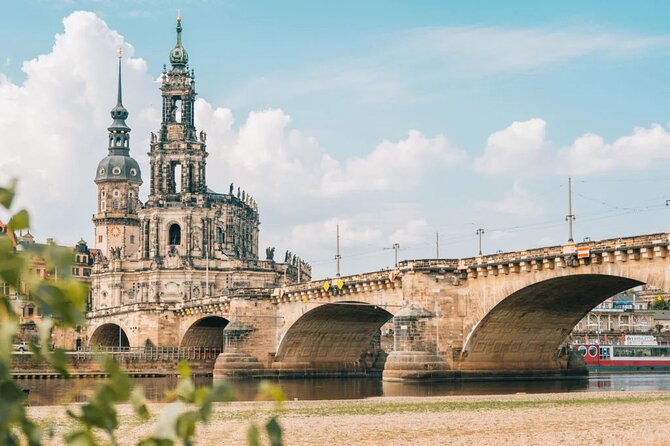
Holy Cross Church offers a different angle on Dresden’s religious past. Its original construction dates to the 13th century, and the building has been destroyed more than once.
That repeated damage makes the church a useful place to discuss how Dresden’s history was not a smooth line from medieval town to royal capital. Fire, war, political conflict, and religious change all left their mark. The church also witnessed important moments in the Reformation, adding another layer to the story of how Saxony responded to Luther’s movement.
The stop takes about 15 minutes. You can enter for free, but the tour’s value is mainly in helping you notice what the building represents. Without that context, it is easy to see another attractive church and keep walking. With it, the church becomes evidence of the city’s ability to lose, rebuild, and change its public meaning.
Remembering the lost Sophienkirche
The Denkraum Sophienkirche is one of the more unusual stops. It recalls Dresden’s first Franciscan monastery, constructed in the 13th century, and the later Sophienkirche that eventually occupied the site.
The church’s story reaches into the religious and political changes that shaped Dresden. It was not simply an old building that disappeared. Its fate reflects changing priorities, shifting forms of government, and the way a city decides what to preserve or remove.
This stop is especially useful if you want to understand Dresden beyond its restored monuments. The city’s identity includes buildings that survive, buildings that were rebuilt, and buildings that exist only through memory and interpretation.
The tour gives about 20 minutes to this subject. That is enough time for a serious explanation without turning the walk into a lecture. Dr. Macdonald’s style, as described by the tour details, includes humor, personal conversation, and room for questions. That balance is important at a site like this, where the subject can become heavy if presented only as a sequence of losses.
Dresden Castle and the rise of Saxon power
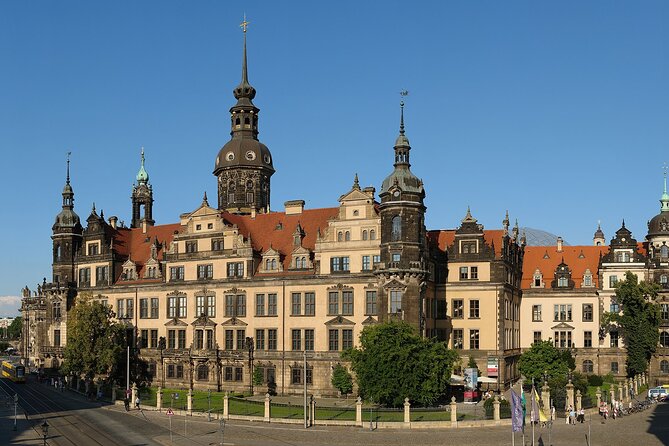
The final stop is Dresden Castle, or Residenzschloss. Here the story shifts from religious institutions to royal power.
Dresden began as a relatively small and less important city. The castle helps explain how it became one of the leading centers in the Holy Roman Empire. It housed the Electors and Kings of Saxony, and its changes show the growing wealth and political reach of the ruling family.
The tour spends about 20 minutes at the castle. You will not enter the building or its museums, but the exterior provides a strong finish because it gathers many of the walk’s main themes: power, wealth, religion, art, destruction, rebuilding, and political identity.
Admission to the royal palace is listed at €14. If you have only one day in Dresden, this is one of the places where a separate visit can pay off, especially if you want museum collections rather than only architecture. The walk helps you understand why the building matters before you decide how much time to give it.
The tour ends on Theaterplatz, close to the Zwinger, Semperoper, and the rest of the Altstadt. That is convenient. You can continue sightseeing on foot, stop for a meal, visit a museum, or catch a tram to another part of the city.
What Dr. Fraser Macdonald adds
The strongest feature of this walk is its guide. Dr. Fraser Macdonald brings an academic background in anthropology, but the tour is not presented as a classroom session. The best descriptions of his approach point to strong storytelling, a friendly manner, good humor, and an ability to answer questions about difficult subjects.
Those subjects include the Dresden bombing, the years of Soviet influence, the GDR period, reunification, and the visible differences between prewar, postwar, GDR, and modern architecture. That range is valuable because Dresden can look polished and Baroque while still carrying clear signs of its 20th-century past.
The tour also includes time outside the main tourist core. You see parts of Neustadt and sites that are easy to miss if you search only for Dresden’s most famous attractions. That gives the walk a more useful sense of place.
Some people also appreciate the personal touch. Dr. Macdonald has been noted for taking photos, chatting with participants individually, and offering ideas for the rest of a Dresden visit. Those details cannot be guaranteed on every departure, but they fit the friendly, conversational style described for the experience.
Price, group size, and what you actually receive
The price is $60.34 per person. That is not a bargain-priced orientation walk, so value depends on how much you want from the guide.
You are paying for about two hours with a professional English-language guide, a route that crosses both Neustadt and Altstadt, and historical interpretation that reaches well beyond the usual headline dates. For a first visit, the walk can save you time by showing how the city fits together and by identifying which places deserve a return visit.
The group can include up to 30 people. That is large enough that you should not expect a private tour, though the experience may be smaller on a particular date. If you want a custom route or long conversations at every stop, this is not the right format.
The tour is recommended by 99 percent of participants and carries a rating of 5 from 73 ratings. Those figures suggest strong satisfaction, especially with the guide’s delivery and the balance between major sights and less obvious places. Still, the fixed route and short stop times mean you should see it as an introduction, not a full museum tour.
Separate costs matter. The folk-art museum is listed at €5, Dreikönigskirche tower access is €5, and Dresden Castle admission is €14. You do not need to pay for any of them to join the walk, but budget for them if you plan to return indoors afterward.
Who should book this Dresden walk
I would choose this tour early in a Dresden stay. It gives you a physical map of the city and helps you decide how to spend the rest of your day.
It suits:
- First-time visitors who want the main historical framework quickly
- People with only a short stay in Dresden
- History and architecture fans
- Anyone interested in the Reformation, World War II, the GDR, or reunification
- Visitors who prefer stories and conversation to a purely fact-based audio guide
- People who want to see both Neustadt and Altstadt
It may be less suitable if you want extensive interior visits, a private experience, or a tour focused only on art museums. You will also get more from it if you are comfortable walking outdoors for about two hours.
The activity requires good weather and a minimum number of participants. If poor weather or low enrollment cancels the walk, you are offered another date or a full refund. You can cancel for a full refund up to 24 hours before the start time. Service animals are allowed, and the meeting point is near public transportation.
Should you book it?
Book this walk if you want Dresden explained as a living city rather than a row of impressive façades. The route covers the important center, but it also makes room for earlier settlements, lost buildings, religious change, war, and the GDR period.
The best reason to choose it is Dr. Fraser Macdonald’s blend of cultural history and approachable storytelling. The main limitation is that you will need to return on your own for the church interiors, tower, museums, and palace collections.
For a first visit, I think the two-hour format is a sensible use of time. Take the walk early, note the places you want to enter, then finish at Theaterplatz and continue exploring Dresden with a much clearer sense of what you are seeing.
FAQ
How long does the walking tour last?
The tour lasts approximately two hours.
Where does the tour begin?
It begins at the Golden Rider, Neustädter Markt 14, 01097 Dresden, Germany.
Where does the tour end?
The tour ends at Theaterplatz, 01067 Dresden, near the Zwinger, Semperoper, and other Altstadt sights.
Is the tour offered in English?
Yes. The experience is offered in English and led by Dr. Fraser Macdonald.
Are museum and church entrance fees included?
No. The tour includes the professional guided walk, but entry to Dreikönigskirche, the folk-art museum, and Dresden Castle is separate.
What happens if the weather is poor?
The experience requires good weather. If it is canceled because of poor weather, you will be offered another date or a full refund.
Just added around Dresden
- Historic Dresden Small-Group Walking Tour in English★ 5.0 · 160 reviews
- Dresden: Shared Small Group Walking Tour in English★ 4.8 · 172 reviews
- Dresden: Taste of Dresden Food Walk★ 4.6 · 397 reviews
- Dresden: Private Guided Walking Tour★ 4.5 · 81 reviews
- Dresden: Guided City Walk and Panometer Entrance Ticket★ 4.5 · 176 reviews
- Dresden Old Town – Guided Walking Tour in English★ 4.8 · 135 reviews
- Dresden: Neustadt District Street Art Guided Walking Tour★ 4.3 · 333 reviews
- Dresden: Guided Walking Tour and Chocolate Museum Ticket★ 4.5 · 479 reviews
Walking Tours, compared.

Magical London: Harry Potter Guided Walking Tour
Read our review →
Reykjavik Food Walk – Local Foodie Adventure in Iceland
Read our review →
History and Hauntings of Salem Guided Walking Tour
Read our review →
New Orleans Premier Ghost, Voodoo and Vampire Walking Tour
Read our review →
Amsterdam Anne Frank: Small-Group Walking Tour & Local Guide
Read our review →

Edinburgh Castle: Guided Walking Tour with Entry Ticket
Read our review →
Anne Frank’s Story – Guided Walking Tour through Amsterdam
Read our review →Browse the lists this tour appears in