
REVIEW · CHARLESTON
Lost Stories of Black Charleston Walking Tour
Charleston’s grand houses tell only part of the story. This two-hour walk with Damon Fordham, a writer, historian, educator, and licensed guide, puts Black Charlestonians back at the center of the city’s past, linking slavery, Reconstruction, civil rights, and the present day.
I like the way the tour uses ordinary streets as its classroom, and I like that Fordham brings both careful research and family connections to his storytelling. His occasional music on a melodica adds an unexpected human touch. The main consideration is delivery: most people find him engaging and witty, but his direct style and dramatic presentation may feel intense to some.
Key points to know before you book
- Damon Fordham leads the walk: Expect a guide who is also a published author, adjunct professor, musician, and active interpreter of Charleston’s Black past.
- The route connects major landmarks: You’ll pass the City Market, Jehu Jones Hotel site, Catfish Row, Heyward-Washington House, Waterfront Park, and the Old Slave Mart Museum.
- The stories reach beyond famous buildings: The tour focuses on people and events often left out of standard Charleston sightseeing.
- Plan for a full two hours on foot: You will walk through historic streets and also spend time standing while Fordham tells longer stories.
- The tone is serious but not dry: Personal anecdotes, humor, questions, theatrical voices, and music shape the presentation.
- The price is $39 per person: For a small-group history walk led by a specialist, that is fair value if you want context rather than a quick list of dates.
Why this walk changes the way you see Charleston
Charleston is easy to admire at street level. Its architecture is handsome, its harbor pleasant, and its historic center compact enough to explore without a car. But a standard stroll can leave you looking at grand houses while missing the people whose work, resistance, faith, and businesses made the city possible.
This tour corrects that imbalance. Fordham does not simply point at buildings and recite dates. He uses each place as a doorway into a larger story. You may hear about people whose names rarely appear in the usual city narrative, along with stories tied to Mother Emanuel A.M.E. Church, local families, and the long path from slavery through Reconstruction and civil rights.
I appreciate the tour’s full-spectrum approach. It does not treat Black history as a separate footnote to Charleston history. Instead, it asks you to see the city’s past through Black lives and experiences. That makes the walk useful even if you already know the basic story of South Carolina.
The public rating is 4.9 out of 5 from 412 ratings, with 98 percent recommending the experience. Those numbers fit the tour’s strongest qualities: Fordham’s command of the subject, his ability to answer questions, and his talent for turning research into memorable stories. Still, this is not a polished, neutral-sounding audio guide. Fordham’s tone can be firm, and one lower rating found his corrections and theatrical delivery awkward. I would choose this tour for candor and substance, not for a soft, scripted performance.
A few more walking tours around Charleston worth a look
- Historic Charleston Guided Sightseeing Walking Tour
★ 5.0 · 6,216 reviews - Ghosts of Charleston Night-Time Walking Tour with Unitarian Church Graveyard
★ 4.5 · 2,835 reviews - Hidden Alleyways and Historic Sites Small-Group Walking Tour
★ 5.0 · 2,335 reviews
Starting at Buxton Books and the City Market
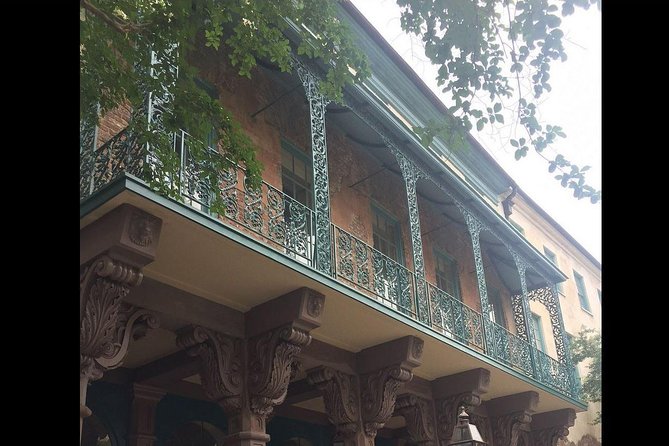
Meet at Buxton Books, 160 King Street, at 3:30 p.m. The tour begins near the Charleston City Market, a practical starting point because the area puts commerce, labor, race, and public life close together.
You’ll spend about 30 minutes around the market and nearby sites. Admission to the market portion is free, and the value comes from the interpretation rather than from entering a paid attraction. Listen for the people behind the marketplace story, not just the market’s familiar architecture.
From here, the route continues to the site of the Jehu Jones Hotel. That stop gives the tour a chance to move beyond a general discussion of enslavement and into the lives of Black entrepreneurs and community builders. The focus is on what happened in these streets and who was able to claim space in them.
You will also hear about Catfish Row, the setting associated with the opera Porgy and Bess. This is an especially useful stop because popular culture has given the place a strong identity, while the real social and historical context can be less familiar. Fordham’s job here is to help you separate theatrical legend from the people and neighborhoods that inspired it.
The route is compact, but do not mistake compact for shallow. Fordham may remain in one spot for some time while he develops a story. That is where the tour gets much of its value, but it also means you should be ready to stand rather than expect constant movement.
The Heyward-Washington House and the missing half of the address
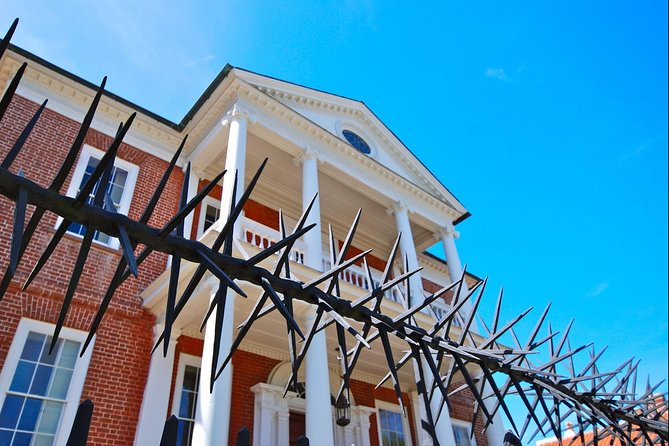
The walk passes the Heyward-Washington House, associated with Thomas Heyward Jr., a signer of the Declaration of Independence. The house itself requires a separate admission ticket, and this experience does not include entry.
That detail matters. You are not booking a house museum tour, and you should not expect to go inside every building mentioned along the way. Instead, the house serves as a visible reminder of the version of Charleston most commonly presented to visitors: patriots, wealthy families, elegant homes, and national political history.
Fordham’s approach adds the other side of that address. Who worked in such homes? Who lived nearby? Who was denied political power while helping build the city’s economy? The point is not to ignore the house, but to stop treating it as the entire story.
I find this kind of comparison useful because it changes how you look at Charleston after the tour ends. A doorway or facade is no longer just an architectural object. It becomes a prompt to ask whose labor supported the household, whose voice was preserved, and whose was pushed aside.
The Old Slave Mart Museum in a larger context
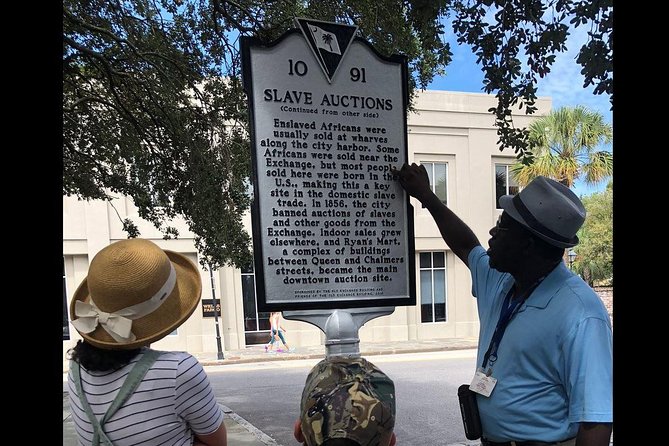
The tour ends its central historical sequence near the Old Slave Mart Museum, the building associated with slave auction galleries in downtown Charleston. The stop lasts about 15 minutes, and admission is not included.
That short time is best understood as an introduction rather than a full museum visit. If you want to go inside, you will need to purchase your own admission separately. The walking tour provides context around the site, helping you approach it with more than a passing awareness of its purpose.
This is an emotionally difficult part of the route, and it should be. Fordham’s storytelling connects the building to the systems and people around it rather than treating the site as a solitary relic. The experience asks you to consider how slavery shaped Charleston’s wealth, streets, institutions, and social order.
I would not schedule this as a lighthearted pre-dinner activity if you want only easy sightseeing. The subject is painful, and the guide’s direct manner keeps the moral weight in view. For many people, that honesty is the reason to book. For others, a gentler presentation may be more comfortable.
Same streets, a different route:
- Highlights of Charleston Guided Walking Tour
★ 5.0 · 2,206 reviews - Charleston French Quarter or Brunch Food Tour with 7+ Tastings
★ 5.0 · 1,853 reviews - Charleston Haunted Booze and Boos Ghost Walking Tour
★ 5.0 · 1,569 reviews - Charleston’s Pleasing Terrors Night-Time Walking Ghost Tour
★ 5.0 · 1,345 reviews
Waterfront Park and the walk toward the harbor
The final section brings you through Waterfront Park and along Charleston Harbor. This gives the tour a welcome change of pace after the denser historical stops. You get open views, fresh air, and a chance to think about the stories you have just heard.
The park section takes about 30 minutes. Fordham uses the route to trace a broad movement from slavery through Reconstruction and civil rights. He also points to lesser-known places where Black men and women shaped Charleston but did not receive the recognition given to more famous figures.
This is where the tour’s connection between past and present becomes clearest. The harbor may look calm, but the waterfront represents trade, wealth, movement, labor, and power. Looking across it while hearing about the people excluded from official accounts can make the city’s beauty feel more complicated, and more truthful.
The walk returns to the original meeting point. Since the experience is outdoors and requires good weather, Charleston’s heat deserves attention. One person specifically found the tour worth the effort despite hot conditions, but you should still bring water, wear comfortable shoes, and dress for a two-hour afternoon walk. The tour is limited to 20 people, which should make it easier to hear Fordham than on a large coach-style outing.
A guide who teaches through story, music, and personal ties
Fordham’s credentials matter here, but they are not the whole experience. He is a published author and adjunct professor, and he has spent years researching Charleston and South Carolina history. He also brings family connections and personal perspective into the stories.
That combination is one of the tour’s strongest features. A purely academic talk can feel distant. A purely personal talk can lack context. Fordham appears to work between those two poles, using documented history while explaining how it connects to his own family and community.
You may hear humor alongside difficult facts. You may also hear him use two voices for dramatic effect or play a melodica. These touches will appeal to people who like a live storyteller rather than a formal lecture. If you prefer a quiet, highly restrained guide, they may feel theatrical.
His willingness to answer questions is another practical strength. You are not simply being moved from one stop to the next. The format allows for discussion, and several comments about the tour praise Fordham’s ability to respond beyond the prepared material.
His directness is worth noting. Most of the available feedback describes him as warm, witty, passionate, and entertaining. One account found his corrections too sharp and his delivery less welcoming than expected. I would take that as a fair warning rather than a reason to avoid the tour. Come ready for an outspoken teacher, not a bland narrator.
What the $39 price gets you
At $39 per person, this is not the cheapest way to spend two hours in Charleston, but the price is reasonable for a specialist-led small-group walk. You are paying for Fordham’s preparation, interpretation, and ability to connect several locations into one coherent story.
The tour includes the full two-hour walk and narration by Fordham. It does not include admission to the Heyward-Washington House or the Old Slave Mart Museum. Those are passed by or discussed from the outside unless you arrange separate entry.
I see the best value here for someone who wants meaning, not just movement. A general city walk may cover more buildings, while this experience gives less attention to architecture and more attention to people, power, and memory. If you want a quick overview of Charleston’s prettiest streets, another tour may suit you better.
The tour is usually booked about 13 days ahead, so I would not leave it until the final day of a Charleston visit. Booking earlier also lets you place it near other historic sites while the subject is fresh.
Who should take this Charleston walk
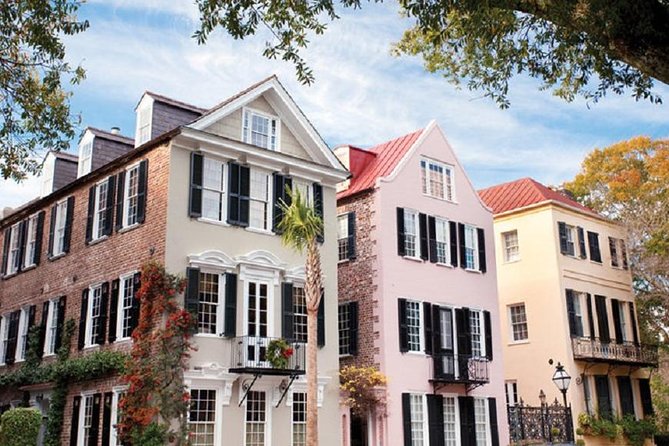
I would recommend the tour to anyone who wants to understand how Black history shapes Charleston rather than treating it as a separate theme. It suits couples, families with older children, solo visitors, and friends who enjoy asking questions and thinking about what they see.
It is also a good choice for people who already know the city’s standard landmarks. The City Market, waterfront, and historic houses will be familiar sights, but Fordham gives you reasons to look at them differently.
Families should remember that children must be accompanied by an adult. Most people can participate, and service animals are allowed. The supplied details do not promise a fully accessible route, so if you have specific mobility needs, contact the provider before booking rather than guessing.
You should also be comfortable walking and standing. One part of the experience may involve staying in one place for an extended story. That can be rewarding, but it is different from a tour that moves constantly.
Booking, weather, and timing
The tour begins at 3:30 p.m. at Buxton Books and ends back at the same point. It is offered in English, uses a mobile ticket, and has a maximum group size of 20 people.
Free cancellation is available if you cancel at least 24 hours before the start time. Cancellations inside that window are not refunded, and late changes are not accepted. The activity depends on good weather. If poor weather causes a cancellation, you can choose another date or receive a full refund.
Those rules are simple, but the weather point is important in Charleston. Check the forecast, bring water, and leave enough time to reach King Street without rushing. You will enjoy the storytelling more if you are not worrying about heat, rain, or a tight dinner reservation.
Should you book the Lost Stories of Black Charleston tour?
Book it if you want Charleston presented through overlooked Black stories, personal perspective, and serious historical context. Damon Fordham’s strongest qualities are his research, his memory for detail, his willingness to answer questions, and his ability to make streets and buildings feel connected to real lives.
Skip it if you want a purely architectural walk, a gentle scripted performance, or a tour with little standing and no difficult subject matter. The presentation is direct, sometimes theatrical, and not designed to smooth over painful parts of Charleston’s past.
For me, the $39 price is justified by the focus and the guide. The walk will not replace a museum visit, but it can give that visit, and the rest of your time in Charleston, a sharper frame. If you have room for only one history-focused outing, this is a strong choice for learning what the city’s usual postcard view leaves out.
FAQ
Where does the Lost Stories of Black Charleston tour begin?
The tour begins at Buxton Books, located at 160 King Street in Charleston, South Carolina.
What time does the tour start?
The meeting time is 3:30 p.m.
How long does the walking tour last?
The experience lasts approximately two hours and ends back at the meeting point.
Who leads the tour?
The tour is led by Damon Fordham, a writer, historian, educator, published author, adjunct professor, and licensed tour guide.
Are museum admissions included?
No. Admission to the Heyward-Washington House and Old Slave Mart Museum is not included. The tour passes by or discusses these sites as part of the walking route.
What happens if the weather is bad?
The experience requires good weather. If it is canceled because of poor weather, you can select another date or receive a full refund. You can also cancel for a full refund if you do so at least 24 hours before the start time.
Just added around Charleston
- Charleston Ghosts of Liberty Guided Walking Tour★ 4.5 · 473 reviews
- Private Charleston Walking Food Tour at the French Quarter★ 5.0 · 201 reviews
- Charleston Chicora 2 Hours Walking Tour★ 5.0 · 264 reviews
- Behind the Scenes of Shem Creek Shrimp Walking Tour★ 5.0 · 171 reviews
- Small-Group Tour: Charleston Old Walled City Historical Walking Tour★ 4.5 · 283 reviews
- Charleston’s Savor the Flavors of Upper King Street Walking Food Tour★ 4.5 · 130 reviews
- Charleston Haunted Jail Night-Time Walking Tour with Admission to Old City Jail★ 4.5 · 570 reviews
- Charleston History, Homes, and Architecture Guided Walking Tour★ 5.0 · 267 reviews
Walking Tours, compared.

Magical London: Harry Potter Guided Walking Tour
Read our review →
Reykjavik Food Walk – Local Foodie Adventure in Iceland
Read our review →
History and Hauntings of Salem Guided Walking Tour
Read our review →
New Orleans Premier Ghost, Voodoo and Vampire Walking Tour
Read our review →
Amsterdam Anne Frank: Small-Group Walking Tour & Local Guide
Read our review →

Edinburgh Castle: Guided Walking Tour with Entry Ticket
Read our review →
Anne Frank’s Story – Guided Walking Tour through Amsterdam
Read our review →Browse the lists this tour appears in