

REVIEW · BERLIN
Berlin: walking tour about Charité
Berlin’s Charité began as an 18th-century plague house and grew into one of Europe’s major university hospitals. This two-hour walk follows that change through the lives of Rudolf Virchow, Robert Koch, Emil von Behring, and Ferdinand Sauerbruch, with plenty of room for the darker side of medical history.
I like the way the tour connects medical breakthroughs with Berlin’s political past, instead of treating doctors as isolated geniuses. I also like the visit inside the Animal Anatomical Theatre, Berlin’s oldest surviving teaching building, which gives the walk a rare indoor finish.
The main drawback is clear: you view the Charité Bed House from outside, and group tours cannot enter the hospital grounds. The tour is also conducted in German, so you’ll need strong German skills or a companion who can translate.
Key points at a glance

- Three centuries of medicine: Follow Charité’s path from an 18th-century plague house to a leading university hospital.
- Four major medical figures: Learn about Rudolf Virchow, Emil von Behring, Robert Koch, and Ferdinand Sauerbruch.
- A look at medical ethics: The tour addresses the period when doctors at the institution worked with the Nazi regime.
- Berlin’s oldest teaching building: Enter the Animal Anatomical Theatre, also called the TAT, at the end of the walk.
- A mostly outdoor route: See the Bed House from outside, walk along Luisenstraße, and cross the university campus.
- German-language guiding: The guide speaks German, and the tour lasts about two hours.
Why Charité makes an unusual Berlin walking tour
Berlin has plenty of tours about kings, walls, war, and political power. This one takes a different route through the city’s past by looking at how people understood illness, the human body, and scientific progress.
The Charité offers a useful setting because its story is not only about hospital care. It also touches public health, research, university teaching, military medicine, social reform, and moral failure. You hear how an institution founded in response to plague could become a center for modern medical science.
That long timeline gives the walk a strong sense of direction. You are not simply stopping at plaques and old facades. You are following an institution as its purpose changes, from emergency shelter to hospital, teaching center, and research institution.
The tour is especially useful if you like history with a human scale. Names such as Robert Koch and Emil von Behring can sound distant in a textbook, but a walk around the places connected to the Charité gives those names a setting. You also hear about the less comfortable parts of the institution’s past, including cooperation with the Nazi regime.
That balance matters. A tour about medicine can easily become a parade of discoveries and Nobel Prizes. This one also asks what happens when scientific skill is placed in the service of an abusive government.
A few more walking tours around Berlin worth a look
- Discover Berlin Half-Day Walking Tour
★ 5.0 · 9,624 reviews - Berlin City walk Government District and Places of Democracy
★ 4.7 · 8,467 reviews - Berlin: Third Reich & Cold War Guided Walking Tour
★ 4.9 · 8,378 reviews
Meeting at the Charité Tower
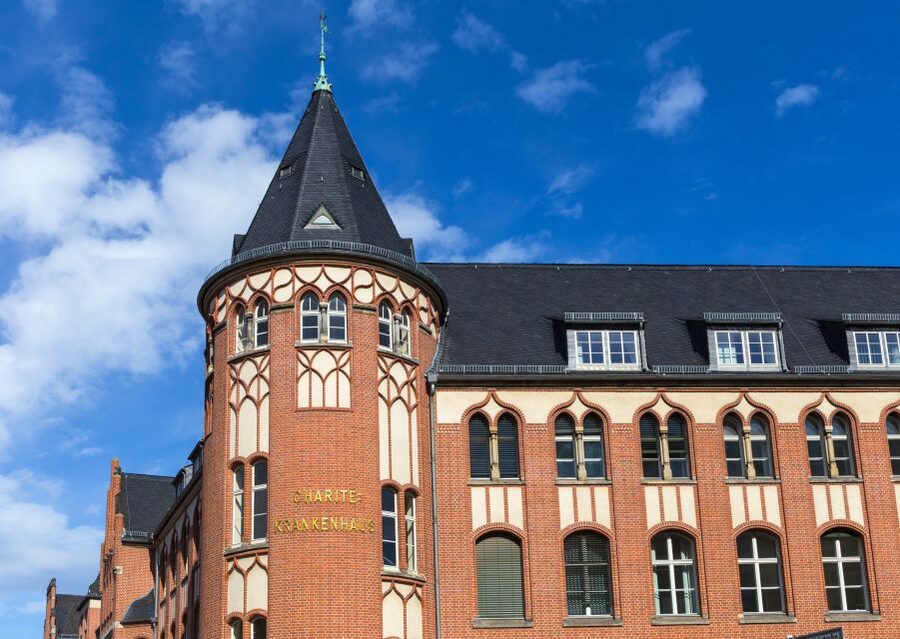
The tour begins in front of the Charité Tower at the crossroads of Schumannstraße, Charitéplatz, and Charitéstraße. Check your confirmation carefully and arrive early, because the tour starts on time.
This is a practical meeting point for a walking tour centered on the Charité. You do not need to enter the hospital to begin. The first view is from outside, which immediately sets expectations for the rest of the route.
You will not go inside the Charité Bed House. It is an active hospital facility, so protection and hygiene rules apply. The hospital grounds at Charité Campus Mitte are also closed to group tours.
That restriction may disappoint you if you expect an inside look at hospital wards or historic interiors. I see it as an important distinction when comparing this experience with a museum visit. You are taking a guided walk around the institution and its related buildings, not touring a working hospital.
The outside view still gives the guide a starting point for the Charité story. From there, the tour can explain how the hospital developed and place its famous doctors within Berlin’s wider medical world.
From plague house to university hospital

The Charité’s beginnings are tied to an 18th-century plague house. That origin gives the tour an immediate sense of urgency: the institution was created in response to disease, not as a grand academic project.
Over the next 300 years, its role changed. The Charité became linked with teaching and research, and its name became associated with some of Berlin’s most important physicians and scientists.
I like this part of the tour because it gives you a way to understand institutional change through one place. You see how a hospital can grow along with a city’s needs. Public health concerns, university science, and clinical treatment all begin to overlap.
The story also shows why Berlin became important in medical history. Doctors were not working only in private practices. They were connected to hospitals, teaching rooms, research, and the state.
You should expect the guide to tell this story while moving through streets and campus areas rather than presenting it as a formal lecture. The pace keeps the subject connected to the city, though anyone hoping for a full museum-style display should know that this is mainly an outdoor walking tour.
The doctors behind Berlin’s medical reputation
The names Rudolf Virchow, Emil von Behring, Robert Koch, and Ferdinand Sauerbruch form the central cast of the tour.
Rudolf Virchow is presented as one of the major figures in Berlin medicine. The tour uses people such as Virchow to explain not only individual achievement but also the development of medical thinking and teaching.
Robert Koch brings the story toward the study of infectious disease. Emil von Behring represents another important chapter in the rise of modern medical science. Ferdinand Sauerbruch adds the story of surgical medicine and the practical treatment of patients.
You do not need a specialist background to follow this section. The value lies in seeing how the Charité became connected with doctors whose work affected medicine well beyond Berlin.
The tour also highlights Nobel Prize winners connected with Berlin medicine. That focus will appeal to anyone interested in science, but the guide does not treat the prizes as the whole story. The more useful question is how research, hospital work, and teaching supported one another.
If you enjoy biographies, this is likely the strongest part of the walk. You hear about people, choices, and working lives rather than only dates and construction details.
Same streets, a different route:
- Berlin: Discover Berlin Walking Tour
★ 4.9 · 5,998 reviews - Berlin’s Best: 2 Hour Walking Tour Third Reich and the Cold War
★ 5.0 · 5,486 reviews - Berlin: Hidden Backyards Guided Walking Tour
★ 4.8 · 5,360 reviews - Explore Berlin: See All The Iconic Sights & Some Hidden Gems
★ 5.0 · 4,429 reviews
Walking along Luisenstraße and across the campus
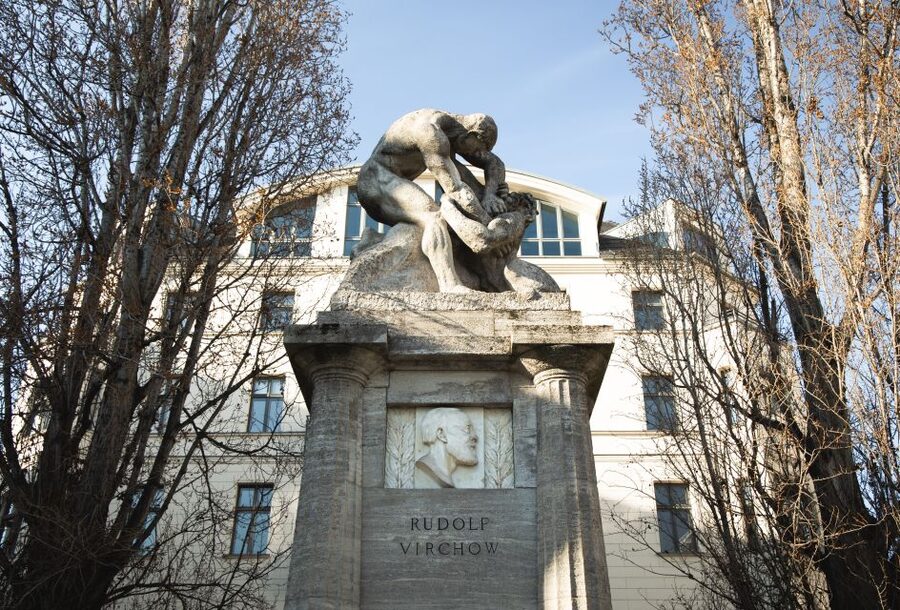
After the opening at the Charité Tower, the route continues along Luisenstraße and across the university campus. These stretches help connect the hospital to the surrounding academic district.
You will spend much of the experience outdoors, so comfortable shoes are sensible. The tour lasts about two hours, which is long enough for a serious introduction but short enough to fit into a full day of sightseeing.
The campus section also reinforces the link between medicine and education. The Charité was not only a place where patients received treatment. It was a place where future doctors learned, researchers worked, and medical ideas were passed on.
The hospital grounds themselves are not open to group tours. That means you should not expect to wander through the central campus as if it were a public museum. The guide instead uses accessible streets and nearby university spaces to tell the story.
This arrangement has both limits and advantages. You miss some interior access, but you also avoid turning an active medical facility into a sightseeing attraction. The walk remains focused on history and architecture while respecting the hospital’s current purpose.
The Animal Anatomical Theatre
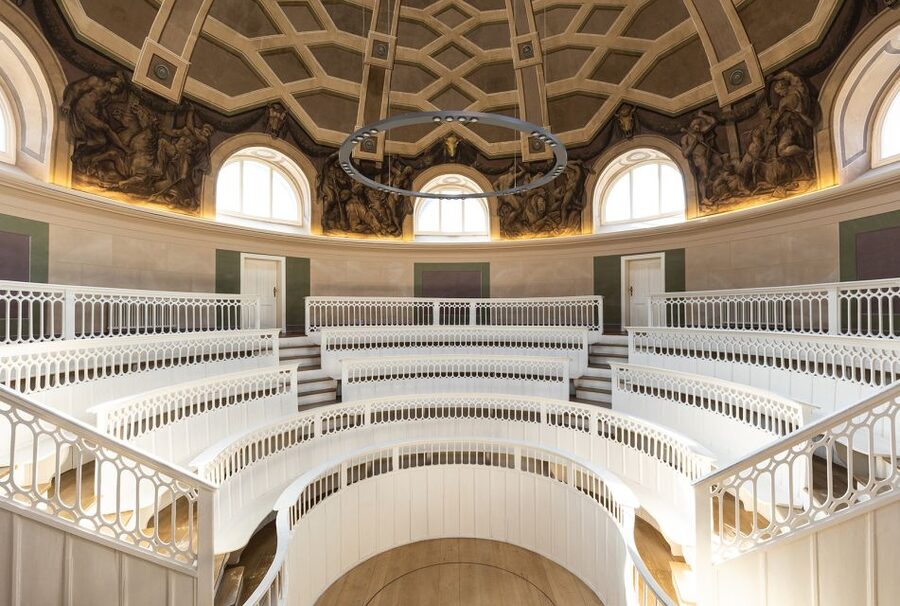
The most distinctive stop is the Animal Anatomical Theatre, known as the TAT. It is described as Berlin’s oldest surviving teaching building, and the tour visits it from the inside.
This is the part that gives the experience a strong finish. After hearing about medical research, teaching, and the rise of modern medicine, you enter a building directly connected with instruction in anatomy.
The setting is also described as a mysterious medicine temple. That phrase captures the building’s unusual character without turning the visit into a standard old-building tour. Its importance comes from what took place there: medical teaching, observation, and the attempt to understand bodies through science.
The TAT’s opening hours can change at short notice because of closed events. It is also closed on public holidays. That makes this a point worth checking before booking, especially if your Berlin schedule includes a holiday or a tightly planned day.
If the building cannot open, the indoor part of the experience may need to change. The supplied information does not specify what happens in that case, so I would confirm the arrangement if entering the TAT is your main reason for booking.
The darker chapter of Charité history
The tour does not stop with medical achievement. It also addresses the years when doctors collaborated with the Nazi regime.
That subject is essential to any honest account of the Charité. Hospitals and universities are not automatically good simply because they produce important research. Doctors can make major scientific advances and still take part in systems that harm people.
This section adds weight to the tour’s focus on life and death. It asks you to consider professional responsibility, obedience, and the danger of separating medical skill from human judgment.
The darker material may not suit everyone looking for a light sightseeing walk. Still, it is a strong reason to choose this experience over a simple tour of famous names. You get a more serious picture of medicine in Berlin, including the point where institutional power and science were used badly.
The tour’s two-hour length also helps here. It can raise difficult questions without trying to cover every detail of German medical history. If you want a full study of medicine under National Socialism, you will need additional reading or a museum visit. If you want a thoughtful introduction tied to a real institution, this walk gives you a useful beginning.
What $27 buys you
At $27 per person, the cost is reasonable if you value a specialist guide and a focused subject. You are paying for two hours of live interpretation, a route through a major Berlin institution, and entry to the Animal Anatomical Theatre when it is open.
The value is less obvious if you judge the tour by the number of interiors you enter. You do not enter the Charité Bed House, and the hospital campus is off-limits to group tours. Much of the route takes place on public streets and around the university area.
For me, the price makes sense because the subject is hard to reconstruct on your own. You could walk around the Charité, read a few signs, and recognize the hospital’s importance. You would miss the connections between the plague house, the physicians, Nobel Prize winners, teaching traditions, and the Nazi period.
The experience is also more specialized than a general city walk. If medicine, science, or the history of universities interests you, $27 is a fair price for a concentrated introduction. If your main goal is to see grand interiors, take photographs, or enter the active hospital, the value is weaker.
Free cancellation up to 24 hours before the tour and the option to reserve now and pay later make the booking less rigid. Those policies are useful when you are arranging several Berlin activities, though the TAT’s changing opening hours remain the point to verify.
Who should book this walk
I would choose this tour if you enjoy medical history, university history, or serious stories about institutions. It suits people who want something beyond Berlin’s usual political and military subjects.
It also works well for visitors who like guided interpretation. The Charité is a large institution with a complicated past, and a German-speaking guide can connect details that are not obvious from the outside.
The tour is less suitable for anyone who needs an English guide. The stated tour language is German, and no English option is provided in the activity details.
You should also think about the balance between outdoor walking and indoor access. The route includes the Charité Tower meeting point, the exterior of the Bed House, Luisenstraße, university campus areas, and the TAT. It does not include the inside of the Bed House or the hospital grounds.
Families with older children may find the subject interesting, especially if they enjoy science. The Nazi-era material and the focus on illness and death may be too serious for younger children, but the available information does not specify an age restriction.
A practical two-hour plan
Allow the full two hours and arrive before the scheduled start. Since the tour begins on time, arriving at the Charité Tower crossroads with a few spare minutes is better than trying to find the meeting point at the last second.
Wear shoes suitable for city walking. The route moves along Luisenstraße and across the campus, with the exact balance of walking and stopping depending on the guide.
Do not plan on entering the Bed House. Think of the building as an outside stop that anchors the story, not as a hospital tour.
If the Animal Anatomical Theatre matters most to you, check whether your date falls on a public holiday and allow for possible short-notice closures. The TAT reserves the right to adjust its opening hours for closed events.
Finally, confirm that German works for you. The subject is detailed, and translating a two-hour historical explanation on the move can be tiring.
Should you book the Charité tour?
Book it if you want a focused, German-language walk through 300 years of medicine, with famous doctors, Nobel Prize winners, ethical questions, and a rare visit inside the Animal Anatomical Theatre.
Skip it if you expect to tour the hospital interior or walk freely through the Charité campus. At $27, the tour is best value for curious visitors who care about the stories behind medical institutions, not for anyone looking only for architecture or general sightseeing.
FAQ
Where does the Charité walking tour begin?
It begins in front of the Charité Tower at the crossroads of Schumannstraße, Charitéplatz, and Charitéstraße.
Where does the tour end?
The activity ends back at the meeting point in front of the Charité Tower.
How long does the tour last?
The tour lasts two hours. Starting times vary, so check availability for your chosen date.
Is the tour conducted in English?
No. The stated live tour language is German.
Can I enter the Charité Bed House?
No. The Bed House is viewed from outside because it is an active hospital facility with protection and hygiene regulations.
Is the Animal Anatomical Theatre always open?
No. The TAT is closed on public holidays and can adjust its opening hours at short notice for closed events.
Just added around Berlin
- East Berlin and the Wall: Walking Tour★ 4.9 · 407 reviews
- Cold War, Berlin Wall, Spies and the East Side Gallery★ 4.8 · 254 reviews
- Berlin: Walking Tour of the Top 10 Sightseeing Attractions★ 4.7 · 150 reviews
- Berlin: Sightseeing Walking Tour of the Top 20 Attractions★ 4.5 · 196 reviews
- Berlin: The Time of National Socialism Walking Tour★ 5.0 · 220 reviews
- Berlin: Kreuzberg Guided Walking Evening Tour★ 4.7 · 555 reviews
- Berlin : Must-see attractions Walking Tour★ 4.8 · 83 reviews
- Berlin: Hitler’s Berlin The Rise & Fall Guided Walking Tour★ 4.9 · 239 reviews
Walking Tours, compared.

Magical London: Harry Potter Guided Walking Tour
Read our review →
Reykjavik Food Walk – Local Foodie Adventure in Iceland
Read our review →
History and Hauntings of Salem Guided Walking Tour
Read our review →
New Orleans Premier Ghost, Voodoo and Vampire Walking Tour
Read our review →
Amsterdam Anne Frank: Small-Group Walking Tour & Local Guide
Read our review →

Edinburgh Castle: Guided Walking Tour with Entry Ticket
Read our review →
Anne Frank’s Story – Guided Walking Tour through Amsterdam
Read our review →Browse the lists this tour appears in