
REVIEW · BERLIN
Berlin: The Time of National Socialism Walking Tour
Berlin’s Nazi past is not tucked away in one museum. It is written into the streets around Brandenburg Gate, the Reichstag, the Tiergarten, and the former government quarter. This tour links those places on foot, showing you how propaganda, power, resistance, and war shaped the city.
I like the small group limit of 10, which gives a guide room to answer questions. I also like the route’s clear finish at the Topography of Terror, where the walk connects directly with one of Berlin’s strongest exhibitions on Nazi rule. The main drawback is that two hours goes quickly, and the tour is listed as German-language only.
Key points to know before booking
- Brandenburg Gate begins the story: Learn how Berlin’s famous landmark was used for Nazi propaganda marches.
- The route covers major power sites: Walk past the Reichstag, the former Reich Chancellery area, and the wartime government district.
- War remains are still visible: See Soviet T-34 tanks and artillery at the Soviet War Memorial in the Tiergarten.
- The tone is serious and direct: The walk covers dictatorship, persecution, genocide, war, and resistance.
- Carlo receives special praise: Recent bookings describe him as lively, attentive, and generous with extra Berlin advice.
- Weather matters: The tour runs in rain, cold, and on public holidays, so good shoes and suitable clothing are essential.
Why this route helps explain Nazi Berlin
A museum can give you documents, photographs, and timelines. A walking tour gives you distance and scale. You begin at a ceremonial gateway, pass the seat of parliament, cross a park used by the wartime government, and finish near the former headquarters of the Nazi security machine.
That order matters. You see how public symbols, government offices, military power, and police control fitted together. The tour does not treat National Socialism as an abstract chapter in a textbook. It places the story on streets you can still walk today.
The route also deals with the physical problem of Nazi Berlin. Many major buildings were destroyed, rebuilt, or replaced. Your guide helps you understand what once occupied today’s open spaces and modern offices. At times, the most important sight is not a preserved building but the location where one once stood.
This is a history tour, not a general introduction to Berlin. You will not get a broad survey of Prussian kings, the Cold War, or the city’s art scene. The focus stays on the Nazi period, World War II, the German resistance, and the traces left behind.
A few more walking tours around Berlin worth a look
- Discover Berlin Half-Day Walking Tour
★ 5.0 · 9,624 reviews - Berlin City walk Government District and Places of Democracy
★ 4.7 · 8,467 reviews - Berlin: Third Reich & Cold War Guided Walking Tour
★ 4.9 · 8,378 reviews
Starting at Pariser Platz and Brandenburg Gate
Meet your guide at the exit of S+U Brandenburger Tor station, exit B, in the direction of Pariser Platz and Straße des 17. Juni. Look for the Get Your Guide, You in Berlin flag. This is a practical meeting point, since the station puts you right beside the opening stop.
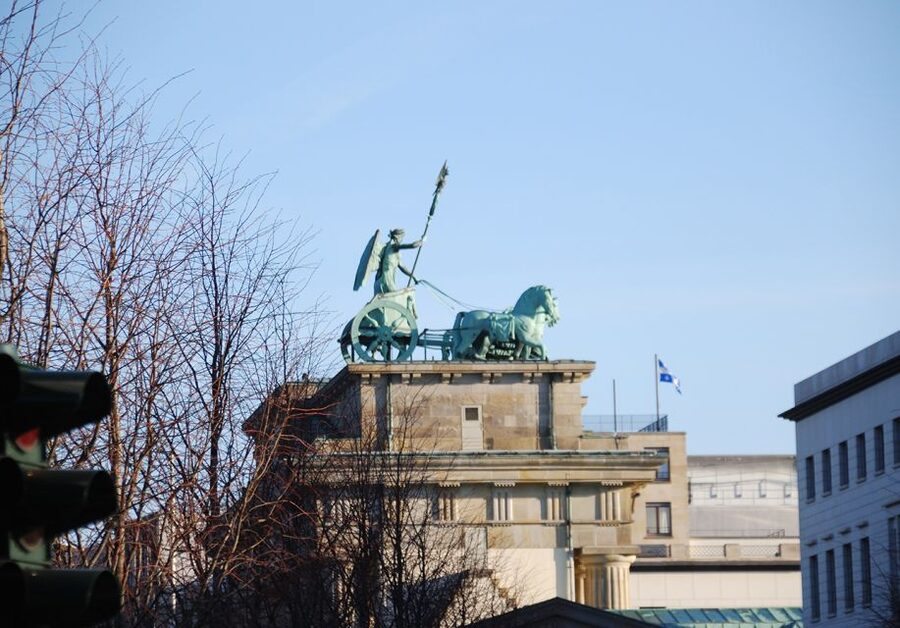
Pariser Platz gives you a quick sense of Berlin’s political theater. The square leads to Brandenburg Gate, perhaps the city’s most recognizable landmark. Your guide explains how the gate was used for propaganda marches during the Nazi period, shifting your view of a familiar postcard image.
I appreciate this beginning because it starts with a place many people visit anyway. Instead of treating Brandenburg Gate as a pretty monument with a simple story, the tour shows how symbols can be used by a dictatorship. Architecture, ceremony, and mass politics come together here.
Expect the guide to speak for a while at this early stop. If you are hoping to begin with a fast photo and move on, the opening discussion may feel slow. If you want to understand how the regime presented itself to the public, it gives the rest of the walk a useful frame.
The Reichstag and the rise of the NSDAP
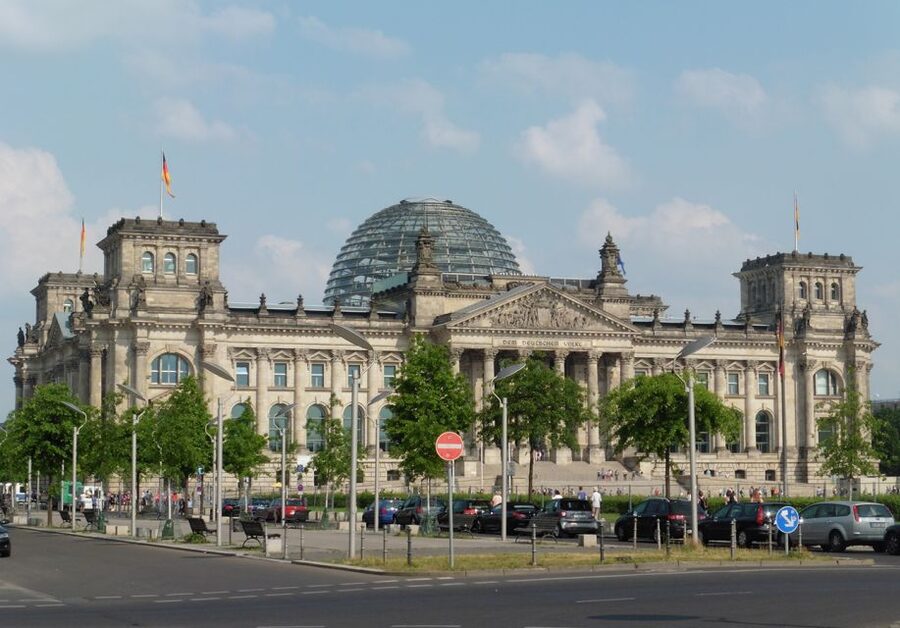
From Brandenburg Gate, you walk toward the Reichstag, now the home of Germany’s parliament. The building is one of the clearest links between modern democratic Germany and the political crisis of 1933.
The tour explains how the Nazi Party, the NSDAP, and Adolf Hitler came to power in that year. The Reichstag itself is not presented as an isolated monument. It becomes part of a larger story about the collapse of democracy and the establishment of dictatorship.
You should keep your eyes on the surroundings here. The experience is about the location and the guide’s explanation rather than entering the parliament building. The itinerary lists sightseeing and walking at the Reichstag, not an interior visit or dome admission.
That distinction matters when you compare this tour with a standard Reichstag visit. You are paying for historical interpretation on the street, not access to the parliament interior. For a first visit to Berlin, the location also helps connect modern government with the events that changed Germany in 1933.
Soviet tanks in the Tiergarten
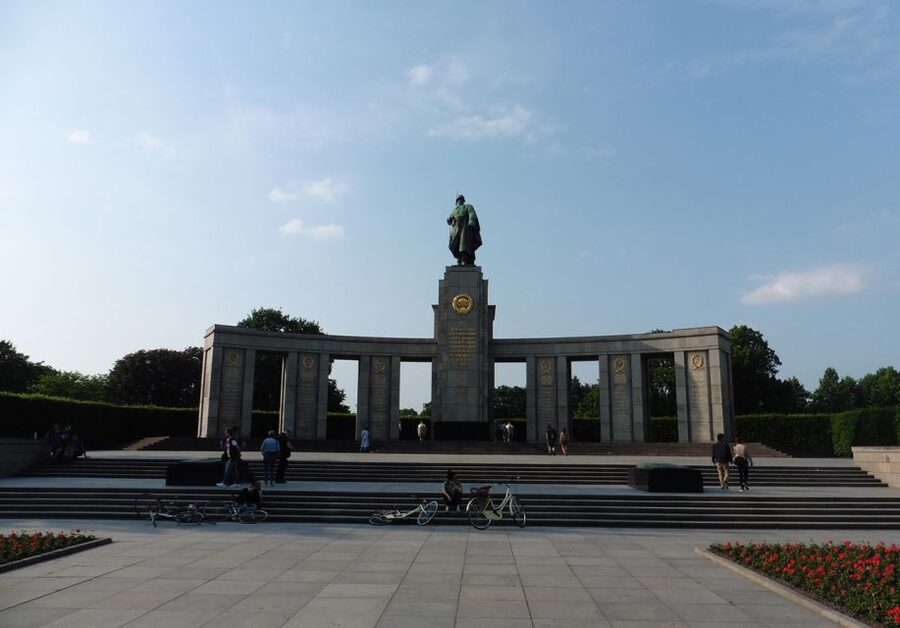
The walk continues into the Tiergarten to the Soviet War Memorial. Here you see Soviet T-34 tanks and artillery from World War II. These are tangible wartime objects, and they change the pace of the tour after the political discussion around the Reichstag.
The memorial is useful because it shows how the end of the war is remembered in Berlin. The tanks are not merely military hardware. They point to the Soviet role in the defeat of Nazi Germany and to the fighting that reached the city itself.
This stop may appeal to anyone who wants visible traces of the war rather than only stories about offices and politicians. You can look directly at the equipment while the guide places it in the setting of the 1945 battle and the city’s later memory.
The tour gives you only two hours, so do not expect a long military-history talk at every piece of artillery. The strength here is the contrast between the open park, the memorial, and the earlier discussion of Nazi political power.
Same streets, a different route:
- Berlin: Discover Berlin Walking Tour
★ 4.9 · 5,998 reviews - Berlin’s Best: 2 Hour Walking Tour Third Reich and the Cold War
★ 5.0 · 5,486 reviews - Berlin: Hidden Backyards Guided Walking Tour
★ 4.8 · 5,360 reviews - Explore Berlin: See All The Iconic Sights & Some Hidden Gems
★ 5.0 · 4,429 reviews
The Holocaust Memorial and the human cost
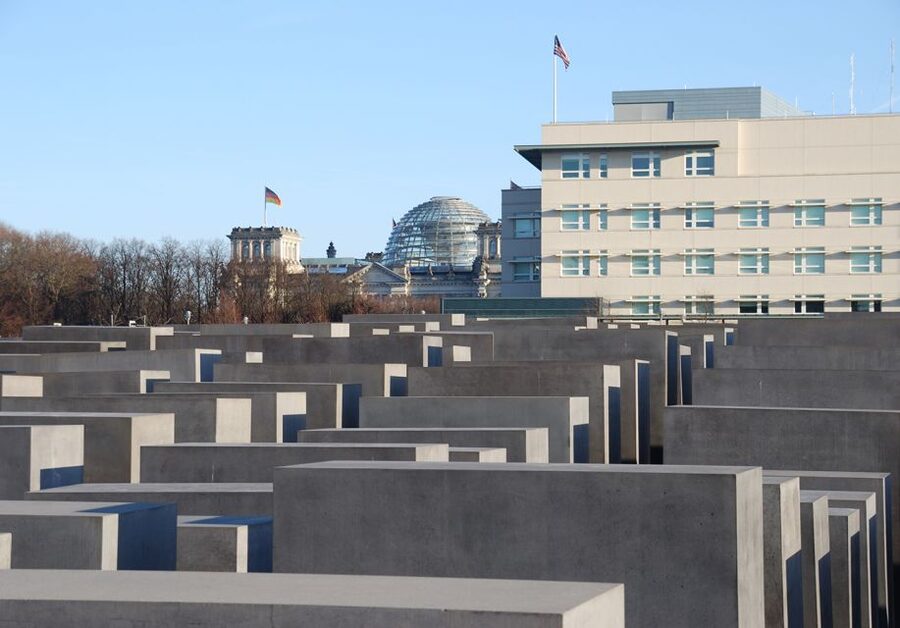
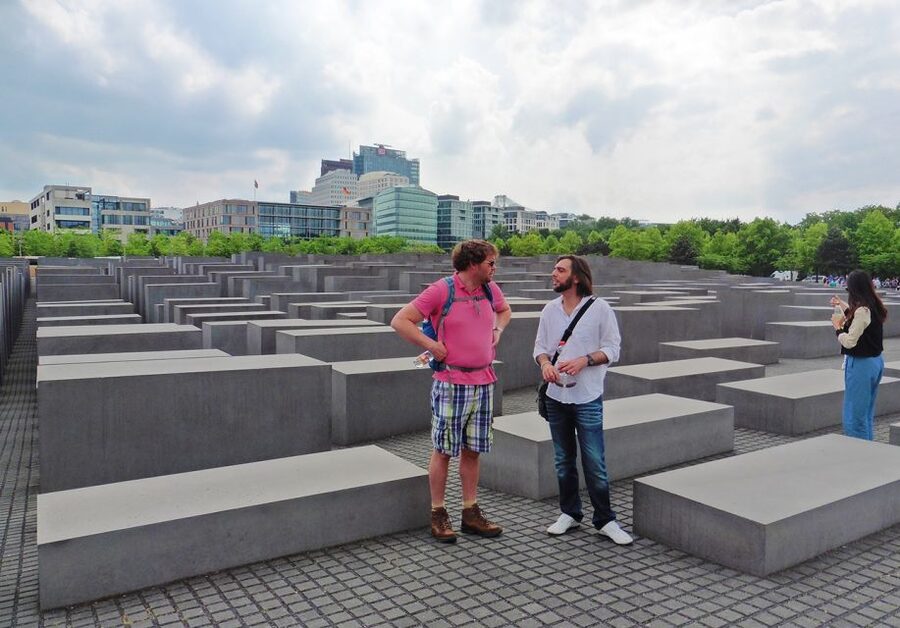
The next major stop is the Memorial to the Murdered Jews of Europe, commonly called the Holocaust Memorial. This is one of Berlin’s most important places for confronting the murder of Europe’s Jews under the Nazi regime.
The memorial’s concrete blocks create a powerful physical setting, but the guide’s role is important. You can learn how this site relates to the wider history of persecution, deportation, and mass murder. The stop also prevents the tour from becoming only a study of buildings, leaders, and military operations.
I value the inclusion of this memorial because any tour of Nazi Berlin needs to keep the victims at the center. The route moves from state power to the consequences of that power. That shift gives the walk moral weight without turning it into a simple parade of famous Nazi sites.
Allow yourself a quiet moment here. The tour is guided, so the group will continue according to the schedule, but this is not a stop to rush through. The site can feel exposed in bad weather, another reason to dress for the conditions.
Hitler’s bunker site and the missing buildings
The route then reaches the former location of Adolf Hitler’s bunker and the New Reich Chancellery. Much of what you see today is not a preserved Nazi building. The point is to learn what occupied the area and how the site fits into the final stage of the regime.
This is one of the tour’s most useful ideas: important history does not always come with a dramatic ruin. The former bunker and Chancellery area asks you to imagine a destroyed political center in an ordinary modern setting. A guide can explain the location far better than a quick photograph or a vague map.
You also discover the government district of Berlin during the Nazi period. The walk shows how authority was organized across the central city, and how ministries and government offices helped support dictatorship.
Some people may find this part less visually satisfying because the original buildings are largely gone. I would treat that as the point rather than a flaw. You are learning to read absence, reconstruction, and surviving traces instead of expecting a preserved monument at every stop.
Johann Georg Elser and the German resistance
The Johann Georg Elser Memorial brings the story of resistance into the tour. Elser attempted to kill Hitler in 1939, and the memorial honors his opposition to the dictatorship.
The stop broadens the story beyond the regime’s leaders and victims. Your guide also tells stories of German resistance throughout the walk, showing that opposition existed even under a system built on fear and control.
This section is especially useful for younger people and students. It avoids the misleading idea that all Germans simply accepted Nazi rule. At the same time, the tour can place resistance in its proper context, without suggesting that it was large enough to stop the dictatorship before the war and genocide unfolded.
The memorial is a quieter site than Brandenburg Gate or the Holocaust Memorial. That makes the guide’s explanation especially important. Listen for the personal details, since a single individual’s attempt to act can make the wider subject easier to understand.
Detlev-Rohwedder-Haus and the wartime government
The route includes the Detlev-Rohwedder-Haus, a major building associated with the wartime government district. The stop helps you picture how the Nazi state used central Berlin for administration, planning, and control.
The building is a reminder that dictatorship depends on paperwork and offices as well as speeches and uniforms. Government ministries made policy real. They turned ideology into regulations, persecution, military decisions, and daily orders.
Because the tour is limited to two hours, some stops are sightseeing points rather than long visits. That is helpful if you like a brisk route, but you should not expect detailed interior access or extended time inside each building.
I would pay close attention to the connections your guide makes between this building, the Reichstag, the Chancellery area, and the final stop. The value is in seeing these places as one political district rather than unrelated sights.
Finishing at the Topography of Terror
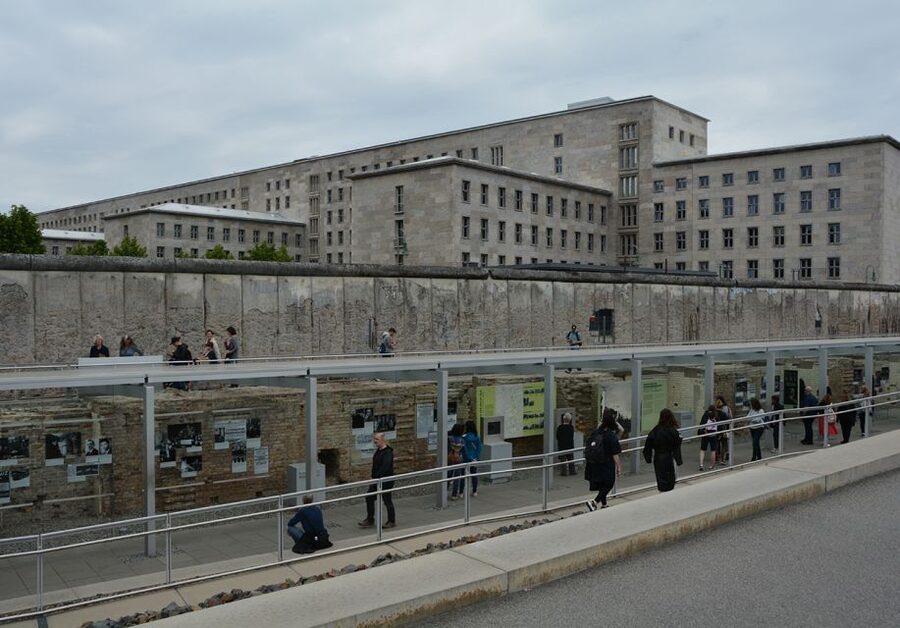
The walk ends at the Topography of Terror Documentation Center. This is a strong finishing point because the center occupies the former area of the SS, the Secret State Police, the Reich Security Main Office, and the Reich Aviation Ministry during World War II.
You hear about the institutions that enforced Nazi rule, organized repression, and helped direct the war. The tour therefore ends with the machinery behind the ideology. You move from public propaganda and political power to the agencies that made terror systematic.
The center also gives you a natural place to continue studying after the guide says goodbye. The tour itself lasts two hours, and the documentation center is the endpoint rather than a stated guided museum visit. If you want more detail, plan to explore the center separately, but the supplied tour information does not promise an included indoor tour.
Finishing here makes the route feel purposeful. It does not simply end at another landmark. It leaves you beside a place where you can keep thinking about the people and institutions discussed during the walk.
Guide quality and group size
The tour is led by a professional city guide and presented as a small group of no more than 10 people. That size is a real advantage on a serious history walk. You can usually hear the explanation more clearly, ask questions, and stay connected with the group while crossing central streets.
Carlo is the guide name that appears most often in the recent feedback, sometimes written as Carlos. He is described as lively, enthusiastic, attentive, and able to answer questions. One small private booking took place in icy weather, and Carlo adjusted his pace to help the two participants manage the conditions.
That detail tells you something useful about the format. A small group can sometimes feel nearly private, especially if few people book that departure. You should not count on a private tour, but a group of up to 10 gives you a better chance of personal attention than a large coach walk.
The listed live-tour language is German. The highlights refer to a certified, multilingual guide, but the additional activity information specifies German. If you need English or another language, confirm availability before booking rather than assuming multilingual service is guaranteed.
Price, pace, and practical comfort
At $43 per person for two hours, the tour is not the cheapest way to stroll through central Berlin. Its value depends on how much structure and explanation you want. You are paying for a focused route, a professional guide, and access to a connected story across several major sites.
I think the price is fair for a small group, particularly if Carlo or another guide can answer questions and add practical Berlin suggestions. The cost is harder to justify if you only want to see the exteriors and are comfortable reading the history yourself.
The walk runs in all weather and on public holidays. Wear shoes suitable for city walking and bring clothing for rain, cold, or heat. A winter booking was completed despite icy streets, with the guide taking care over the route, but poor weather can still make a serious two-hour walk tiring.
The tour is wheelchair accessible, according to the activity details. The route includes public streets, parks, memorial areas, and outdoor sights. If you need precise information about street conditions or access at a particular stop, confirm those details when booking.
Free cancellation is available up to 24 hours in advance, and you can reserve now and pay later. Those policies are useful if your Berlin schedule is still shifting, but the bigger decision is the subject matter and German-language format.
Who should book this Berlin walk
I would recommend this tour to you if you want a clear introduction to Nazi Berlin and prefer places to be explained in person. It suits history-minded visitors, older children and teenagers, students, and anyone who wants to understand why central Berlin looks the way it does.
It also works well for a return visit. You may already know Brandenburg Gate and the Holocaust Memorial, but the guide can connect them to less obvious locations such as the bunker site, the wartime government district, and the former security offices.
You should choose another option if you want a broad Berlin overview, a museum interior tour, or an English-language experience that is guaranteed in advance. You should also think twice if you dislike walking outdoors in poor weather.
FAQ
Where does the tour begin?
Meet at the exit of S+U Brandenburger Tor station, exit B, in the direction of Pariser Platz and Straße des 17. Juni.
How do I identify the guide?
Look for the guide holding the Get Your Guide, You in Berlin flag.
Where does the tour finish?
The walk finishes at the Topography of Terror Documentation Center.
How long does the walking tour last?
The tour lasts two hours.
What language is the tour conducted in?
The listed live-tour language is German.
How many people can join the group?
The group is limited to 10 participants.
Is the tour wheelchair accessible?
Yes, the activity information lists the tour as wheelchair accessible.
Does the tour run in bad weather?
Yes. The tour takes place in all weather conditions and on public holidays.
What should I wear?
Wear suitable clothing and comfortable shoes for a walking tour. Conditions can be cold, wet, or icy.
Can I cancel for a refund?
You can cancel up to 24 hours in advance for a full refund. You can also reserve now and pay later.
Should you book it?
Book this walk if you want Berlin’s Nazi-era history explained as a connected story rather than a list of isolated sights. The route covers propaganda at Brandenburg Gate, the collapse of democracy near the Reichstag, wartime traces in the Tiergarten, the Holocaust Memorial, resistance, Hitler’s former bunker area, and the institutions of terror at the Topography of Terror.
The strongest reasons to choose it are the small group, the focused route, and the chance to learn from a local guide such as Carlo. Just confirm the German-language format, prepare for outdoor weather, and understand that the tour offers locations and interpretation rather than interior access to every building.
Just added around Berlin
- East Berlin and the Wall: Walking Tour★ 4.9 · 407 reviews
- Cold War, Berlin Wall, Spies and the East Side Gallery★ 4.8 · 254 reviews
- Berlin: walking tour about Charité★ 4.4 · 537 reviews
- Berlin: Walking Tour of the Top 10 Sightseeing Attractions★ 4.7 · 150 reviews
- Berlin: Sightseeing Walking Tour of the Top 20 Attractions★ 4.5 · 196 reviews
- Berlin: Kreuzberg Guided Walking Evening Tour★ 4.7 · 555 reviews
- Berlin : Must-see attractions Walking Tour★ 4.8 · 83 reviews
- Berlin: Hitler’s Berlin The Rise & Fall Guided Walking Tour★ 4.9 · 239 reviews
Walking Tours, compared.

Magical London: Harry Potter Guided Walking Tour
Read our review →
Reykjavik Food Walk – Local Foodie Adventure in Iceland
Read our review →
History and Hauntings of Salem Guided Walking Tour
Read our review →
New Orleans Premier Ghost, Voodoo and Vampire Walking Tour
Read our review →
Amsterdam Anne Frank: Small-Group Walking Tour & Local Guide
Read our review →
Edinburgh Castle: Guided Walking Tour with Entry Ticket
Read our review →
Anne Frank’s Story – Guided Walking Tour through Amsterdam
Read our review →Browse the lists this tour appears in