
REVIEW · BERLIN
Berlin: Charité Hospital Walking Tour of Medical History
The most striking part of this tour is how quickly Charité moves from a plague house built in 1710 to one of Europe’s major medical institutions. You’ll hear about bloodletting, mercury, and amputations before meeting the doctors who helped shape modern medicine. I especially like the visit to the old Veterinary Anatomy Theatre and the frank treatment of the hospital’s Nazi-era crimes.
I also like the focus on people who are not always given equal space in medical history, including Rachel Hirsch, the first woman to hold a medical professorship in Prussia. The main drawback is practical: most of the two hours takes place outdoors, so cold or wet weather can affect your comfort. The tour is best for adults and teenagers who enjoy serious historical subjects, not for young children.
Key points to know before you book

- The Veterinary Anatomy Theatre is the tour’s rare indoor highlight: This 18th-century building is Berlin’s oldest surviving academic building.
- Charité’s story includes both progress and abuse: Medical breakthroughs sit alongside Nazi racial hygiene and the killing of psychiatric patients.
- You follow the campus from Robert Koch to East Germany: The route connects famous scientists, social change, dictatorship, and divided Berlin.
- Rachel Hirsch adds an important women’s history angle: Her 1913 appointment marked a major change in Prussian medicine.
- The tour costs $29 for two hours: That is fair value if you want guided context, though admission to active hospital and university buildings is not included.
- Prepare for an outdoor walk: Wear comfortable shoes, bring water, and dress warmly in cold weather.
Why Charité makes such a good history walk

Berlin has no shortage of tours about kings, spies, walls, and war. This one takes a different route. Charité gives you a close look at how medicine changed, but it also asks harder questions about power, class, gender, and ethics.
The hospital began in 1710 as a simple plague house. Its purpose was basic and urgent: protect Berlin from an approaching epidemic. Early treatment could be harsh by modern standards. Bloodletting was common. Mercury was prescribed. Amputation could be the accepted answer to severe disease or injury.
That opening matters because it keeps medical progress in perspective. The tour does not treat famous doctors as perfect heroes. Instead, it shows how knowledge developed through trial, error, ambition, and sometimes terrible judgment. I find that approach far more useful than a parade of names and dates.
The Charité campus also gives the subject a strong sense of place. You are not hearing about medical history in a generic lecture room. You are walking around the institution where many of these changes took place, with the neo-Gothic buildings providing an atmospheric backdrop.
A few more walking tours around Berlin worth a look
- Discover Berlin Half-Day Walking Tour
★ 5.0 · 9,624 reviews - Berlin City walk Government District and Places of Democracy
★ 4.7 · 8,467 reviews - Berlin: Third Reich & Cold War Guided Walking Tour
★ 4.9 · 8,378 reviews
Meeting at Robert-Koch-Platz
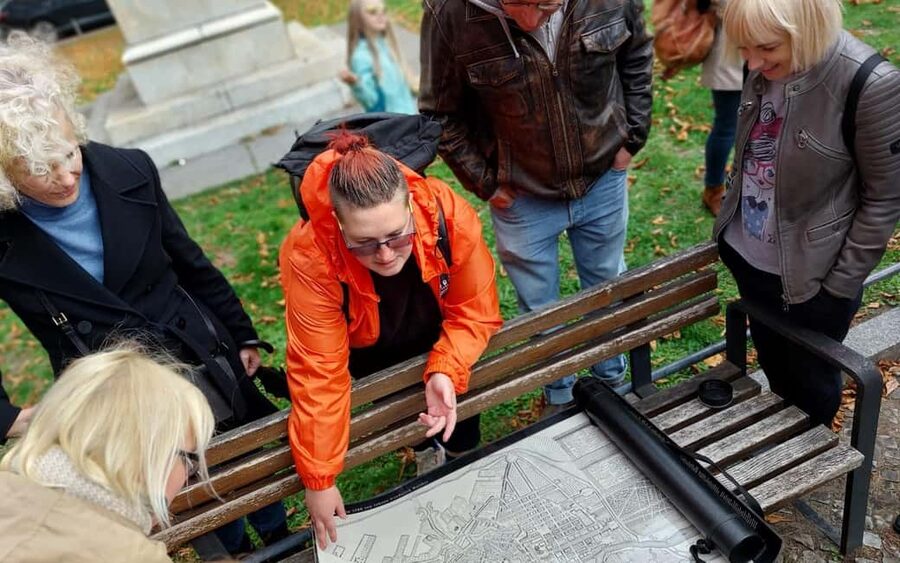
The tour begins at Robert-Koch-Platz, beside the statue of Robert Koch. Look for the guide holding an orange umbrella. That clear meeting point is useful in a busy city, and the connection to Koch sets the tone immediately.
Koch was one of the major figures in modern bacteriology. His work helped change how doctors understood infectious disease, moving away from vague theories toward the study of specific organisms. On this tour, his name is part of a larger story about the shift from traditional treatment to scientific medicine.
The starting area also gives your guide a chance to explain how the hospital grew from a plague facility into a major center for research and teaching. The exact balance between architecture, medicine, and politics will depend on the guide, but the strongest guides make those threads easy to follow.
The tour is offered in English or German. The supplied information names Martina as one guide, and one especially praised feature of her approach is the ability to keep a two-hour outdoor walk lively in cold, damp weather while still treating the material seriously. If you are booking in English, check the available departure language and guide details for your date.
Inside the Veterinary Anatomy Theatre
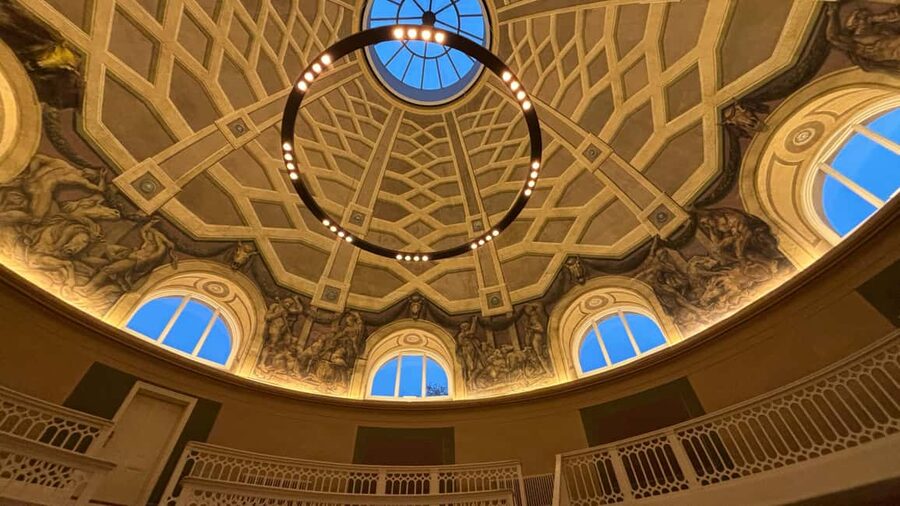
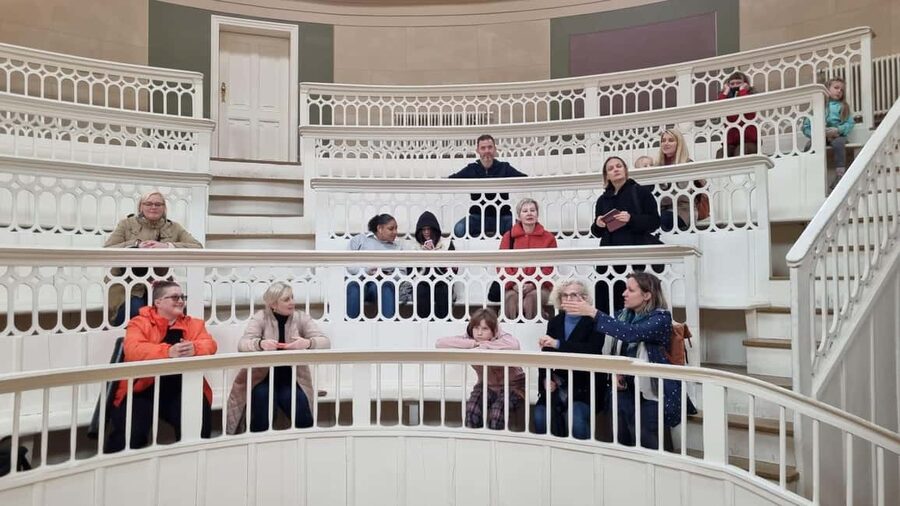
The Veterinary Anatomy Theatre is the most distinctive stop. You spend about 15 minutes visiting this old academic building, which dates to the 18th century and is described as the oldest academic building still in existence in Berlin.
Its purpose was practical. Doctors and students examined the ailments of livestock and cavalry horses, animals that mattered greatly to the city’s food supply, transport, and military system. This gives you a useful reminder that medical education was not limited to human patients. Veterinary knowledge was tied to the survival and strength of the entire city.
The building also takes you back to a period when observation of the body was central to medical training. The theatre was designed for teaching anatomy, not for decoration. You can think of it as an early classroom where students tried to understand disease by examining physical evidence.
Admission is included in the tour price, which makes this stop a real part of the experience rather than an optional extra. Still, the theatre can occasionally close for internal events or public holidays. If entering the building is essential to your plans, check availability before booking.
Walking the neo-Gothic Charité campus
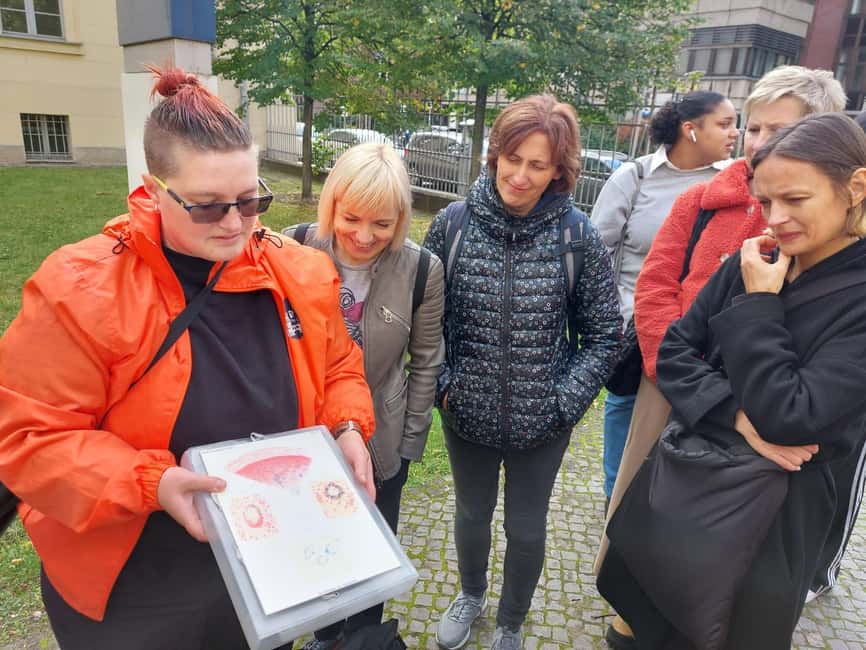
After the theatre, the tour continues around the historic Charité campus. The route includes several guided sections, each lasting about 15 minutes, and the whole experience runs for two hours.
The architecture matters here. The neo-Gothic campus gives the walk a strong visual identity, with old institutional buildings that reflect the seriousness and scale of 19th-century medical education. You are not simply moving between attractions. You are seeing how a hospital campus developed over time and how the buildings became part of Berlin’s scientific life.
Do not expect to enter every building. Hospital and university facilities remain active workplaces, and entry to those areas is not included. Some sections of the campus are restricted for guided groups, though you can explore certain areas independently after the tour.
That limitation is worth understanding before you go. This is an outdoor history walk with one included interior visit, not a tour of hospital wards or research laboratories. I think that is a reasonable arrangement, since active medical facilities need privacy and security, but anyone expecting a full indoor campus tour may be disappointed.
Same streets, a different route:
- Berlin: Discover Berlin Walking Tour
★ 4.9 · 5,998 reviews - Berlin’s Best: 2 Hour Walking Tour Third Reich and the Cold War
★ 5.0 · 5,486 reviews - Berlin: Hidden Backyards Guided Walking Tour
★ 4.8 · 5,360 reviews - Explore Berlin: See All The Iconic Sights & Some Hidden Gems
★ 5.0 · 4,429 reviews
Robert Koch, Rudolf Virchow, and the making of modern medicine
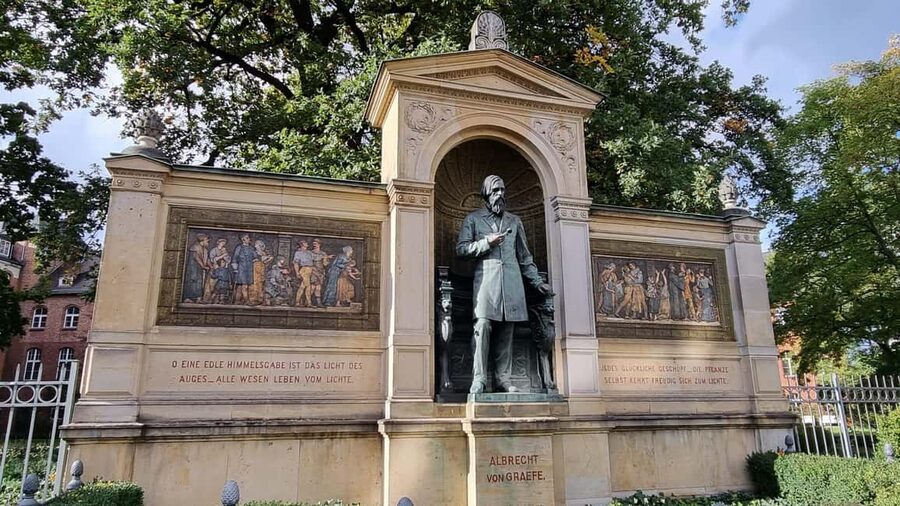
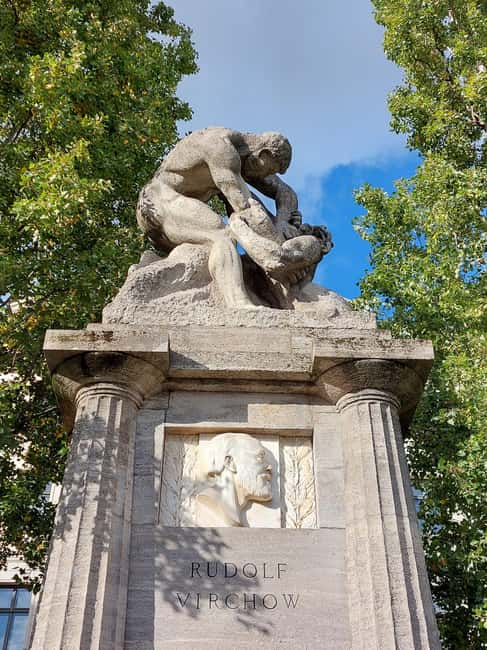
The tour introduces two of Charité’s best-known medical names, Robert Koch and Rudolf Virchow. Their work represents different but connected parts of the move toward modern medicine.
Koch is linked with the study of infectious disease and the identification of disease-causing organisms. Virchow helped develop the idea that disease could be understood through changes in the body’s cells and tissues. Together, these stories show how medicine began to rely more heavily on laboratory work and careful scientific investigation.
You do not need a medical background to follow the tour. The subject is technical at times, but the guide’s job is to connect discoveries with ordinary human consequences. A better understanding of bacteria, cells, and disease did not just improve academic theory. It changed diagnosis, public health, and the treatment of patients.
The strongest moments come when the guide links a person’s scientific achievement to the political and social world around them. The tour does not isolate medical history from Berlin history. It shows how institutions are shaped by the values of their time.
Rachel Hirsch and the fight for women in medicine
Rachel Hirsch gives the tour one of its most important social history stories. In 1913, she became the first woman to hold a medical professorship in Prussia.
That appointment marked progress, but the story is not presented as a simple victory. Hirsch faced resistance within the institution, which helps you understand how formal recognition and real equality are not the same thing. A woman could reach a prestigious academic position and still work within a system that questioned her right to be there.
I appreciate this part of the tour because it widens the subject beyond famous male scientists. Charité was a place of major discoveries, but it was also a workplace where access and status were contested. Hirsch’s career makes that conflict personal and concrete.
If you are interested in women’s history, education, or changing social attitudes in the early 20th century, this may be one of the most memorable sections. It also keeps the tour from becoming only a story of institutions and laboratories.
The Nazi period and the loss of medical ethics
The most difficult section concerns Charité during the Nazi regime. Medical ethics were pushed aside, and racial hygiene was imposed with deadly force.
The tour explains that some doctors stayed silent while others actively helped organize the extermination of psychiatric patients. This is not a comfortable subject, but it is essential. A hospital with a record of scientific achievement can also become part of a system that abuses patients and turns medicine into an instrument of persecution.
That contrast is one reason the tour is more than a celebration of medical progress. It asks you to consider what happens when doctors stop treating individual patients as human beings and begin serving an ideology instead.
The subject matter makes the recommended age of 14 and older sensible. The tour does not suit children under 14, and parents should decide if older teenagers are ready for discussion of medical crimes and patient killings. The tone is serious but not needlessly sensational. The value lies in understanding how professional institutions can fail morally.
Charité under East German rule
The story continues after the Nazi period, into the decades when East Germany took pride in Charité’s achievements. The hospital remained a major symbol of medical accomplishment, but political division shaped the campus and its public image.
One memorable detail concerns the windows facing the capitalist West. Some were bricked up. That small physical change says a great deal about life in divided Berlin. A hospital could be a center of research and national pride while also being affected by surveillance, ideology, and the hard border between political systems.
This section adds needed balance. Charité was not simply a Nazi-era institution followed by a clean return to normal life. It continued to operate under another political order, with its own pressures and official stories.
The route finishes at Alexanderufer, close to Berlin Central Station. That makes the ending practical. You can continue toward the station, explore nearby areas, or use the walk as a starting point for more of central Berlin.
What $29 gets you

At $29 per person, the tour offers a fair deal for a focused two-hour experience. Your fee covers a local guide and admission to the Veterinary Anatomy Theatre. The real value is the interpretation: a guide connects the buildings, scientists, patients, and political periods in a way that would be hard to assemble from a casual walk around the campus.
The price is less compelling if you only want to admire the architecture. You can see parts of the campus independently, and access to hospital or university buildings is not included. You are paying for the organized route and the historical explanation.
I would consider it good value for anyone with a serious interest in medicine, Berlin’s institutions, or the history of science. It is also useful for repeat visitors who have already seen the main sights and want a more specialized subject.
The booking terms add flexibility. You can cancel up to 24 hours before the tour for a full refund, and you can reserve now and pay later. Those details matter if your Berlin schedule is still shifting.
Weather, walking, and accessibility
Plan this as an outdoor walk. You will be walking and standing for roughly two hours, so comfortable shoes are essential. Bring water, and wear warm layers in cold weather. A damp Berlin day can make the route feel much longer than it does on paper.
The tour is listed as wheelchair accessible, but the outdoor format and the possibility of restricted campus areas are still worth keeping in mind. If you use a wheelchair or have difficulty standing for long periods, confirm the practical route details when booking.
The group may include people with very different levels of medical knowledge. You do not need specialist training, but you should enjoy listening and following a sustained historical explanation. This is not a quick sightseeing loop with a few entertaining facts.
Who should book this Charité tour?
I would recommend it to you if you like:
- Medical history explained through real institutions and people
- Berlin history beyond the usual wall and palace stories
- Serious discussion of the Nazi period and medical ethics
- Architecture with a clear historical purpose
- Small, specialized walking tours rather than broad city overviews
- Thoughtful stories about women’s access to academic careers
I would choose another activity if you want to spend most of your time indoors, enter working hospital facilities, or keep the mood light. The tour covers disease, medical mistakes, racial persecution, psychiatric killings, and political repression. Those topics are handled as part of the historical record, but they still require attention.
It is a particularly good choice for mature teenagers, university students, medical professionals, and anyone curious about how science operates inside society. The recommended age is 14 and older, and all minors must be accompanied by an adult.
Should you book the Charité Hospital walking tour?
Book this tour if you want a carefully guided look at Berlin’s medical past and you are comfortable spending most of two hours outside. The Veterinary Anatomy Theatre, the neo-Gothic campus, and the stories of Koch, Virchow, and Hirsch give it plenty of substance.
The tour is also unusually honest about institutional failure. It does not stop at scientific achievement. You will hear how Charité faced the Nazi regime, how doctors participated in crimes, and how East German politics shaped the hospital afterward.
Skip it if you want a broad introduction to Berlin or a fully indoor attraction. For everyone else, $29 buys a focused walk with strong historical content, a memorable old theatre, and an ending near Central Station that fits neatly into a day of sightseeing.
FAQ
How long does the Charité Hospital walking tour last?
The tour lasts two hours and includes walking and standing for approximately that amount of time.
Where does the tour begin?
It begins at Robert-Koch-Platz, by the Robert Koch statue. Look for the guide holding an orange umbrella.
Where does the tour finish?
The tour ends at Alexanderufer, near Berlin Central Station.
Is the Veterinary Anatomy Theatre included?
Yes. Admission to the Veterinary Anatomy Theatre is included in the tour price.
Can the Veterinary Anatomy Theatre be closed?
Yes. It can occasionally close because of internal events or public holidays.
Can I enter the hospital and university buildings?
Entry to buildings where hospital or university activities take place is not included. Some campus areas are also restricted for guided tours.
What languages are available?
The tour is offered in English and German.
Is the tour suitable for children?
It is recommended for ages 14 and up because of the serious historical material. Children under 14 are not considered suitable, and all minors must be accompanied by an adult.
Is the tour wheelchair accessible?
Yes, the activity is listed as wheelchair accessible. Since most of the tour takes place outdoors, it is still sensible to confirm route details if you have specific mobility needs.
Just added around Berlin
- East Berlin and the Wall: Walking Tour★ 4.9 · 407 reviews
- Cold War, Berlin Wall, Spies and the East Side Gallery★ 4.8 · 254 reviews
- Berlin: walking tour about Charité★ 4.4 · 537 reviews
- Berlin: Walking Tour of the Top 10 Sightseeing Attractions★ 4.7 · 150 reviews
- Berlin: The Time of National Socialism Walking Tour★ 5.0 · 220 reviews
- Berlin: Sightseeing Walking Tour of the Top 20 Attractions★ 4.5 · 196 reviews
- Berlin: Kreuzberg Guided Walking Evening Tour★ 4.7 · 555 reviews
- Berlin : Must-see attractions Walking Tour★ 4.8 · 83 reviews
Walking Tours, compared.

Magical London: Harry Potter Guided Walking Tour
Read our review →
Reykjavik Food Walk – Local Foodie Adventure in Iceland
Read our review →
History and Hauntings of Salem Guided Walking Tour
Read our review →
New Orleans Premier Ghost, Voodoo and Vampire Walking Tour
Read our review →
Amsterdam Anne Frank: Small-Group Walking Tour & Local Guide
Read our review →

Edinburgh Castle: Guided Walking Tour with Entry Ticket
Read our review →
Anne Frank’s Story – Guided Walking Tour through Amsterdam
Read our review →Browse the lists this tour appears in