
REVIEW · BERLIN
Berlin Street Art Walking Tour – Off The Grid
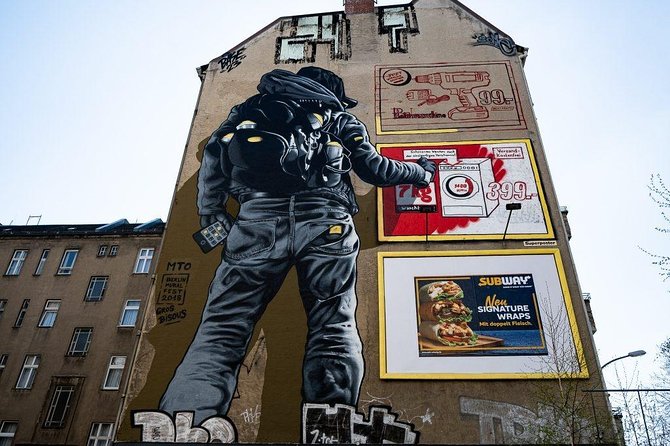
Berlin’s street art makes more sense once you know what you’re looking at. This three-hour walk through Friedrichshain and Kreuzberg moves beyond the famous postcard walls and explains the artists, techniques, rules, risks, and political messages behind the city’s painted surfaces.
I like the chance to see creative neighborhoods away from the main tourist routes, and I like that the guides are active artists or deeply involved in Berlin’s graffiti scene. The café stop is a welcome touch, too. Plan for public transport, stairs, and a fair amount of walking, and bring a ticket before you arrive.
Key points to know before you book
- Artist-led storytelling: Guides including Rob, Ben, and Antonio explain the work through personal experience, not just memorized dates.
- Friedrichshain to Kreuzberg route: You explore two of Berlin’s best-known street-art districts and finish close to the U1 line.
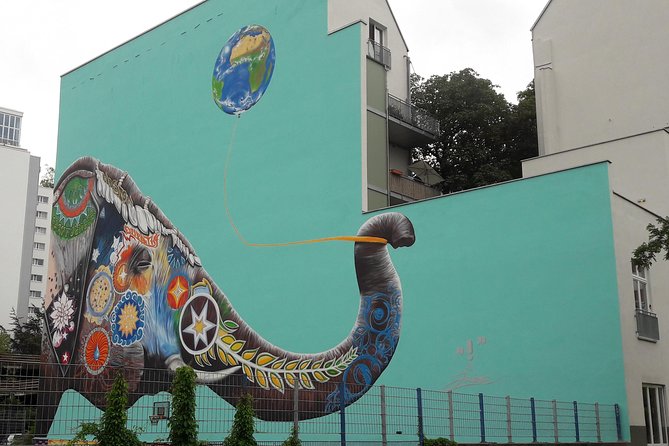
- More than giant murals: The walk covers graffiti styles, small neighborhood pieces, political messages, legal issues, and commissioned art.
- Public transport is part of the plan: Have an AB-zone ticket ready, since the route uses the metro or train during the afternoon.
- A relaxed three-hour pace: You stop often to talk, take photos, and look closely rather than marching from wall to wall.
- Best for curious minds: Art fans, teenagers, first-time Berlin visitors, and anyone who wants context will get the most from it.
Why Berlin street art deserves a closer look
Berlin is famous for graffiti, but it is easy to reduce the scene to colorful walls and oversized faces. This tour gives you a better way to read the city. You learn the difference between graffiti and street art, how artists work, what techniques they use, and why some pieces are legal while others are not.
The political side matters as well. Berlin’s walls often carry arguments about power, housing, identity, commerce, and social change. A guide can point out details you would probably walk past, then explain the local personalities and subculture behind them.
I especially like that the tour does not focus only on the East Side Gallery. That famous stretch is worth seeing, but it can feel like a fixed outdoor monument. This route takes you into Friedrichshain and Kreuzberg, where art appears in changing, less predictable settings. The work may be commissioned, improvised, temporary, or painted over later.
That changing quality is part of the point. You are not simply visiting a gallery with a roof. You are looking at art that shares space with shops, apartments, courtyards, train lines, traffic, and everyday neighborhood life.
More Street Art Walks in Berlin:
- Berlin: City Street Art Guided Walking Tour
★ 4.8 · 1,051 reviews - East Meets West: Berlin Food Culture & Street Art
★ 5.0 · 157 reviews - Berlin Street Art & Graffiti Walking Tour
★ 5.0 · 109 reviews
Starting at Warschauer Strasse
The meeting point is at Warschauer Strasse 53, with a 1:00 pm start. This puts you near one of the busiest transport areas in Friedrichshain, a useful location for reaching the first part of the route.
From here, expect the guide to lead you through the surrounding streets and explain how to look at the art rather than simply photograph it. The tour is designed around stops and discussion, so you are not walking continuously for three hours. You pause at pieces, hear the background, and have time to take pictures.
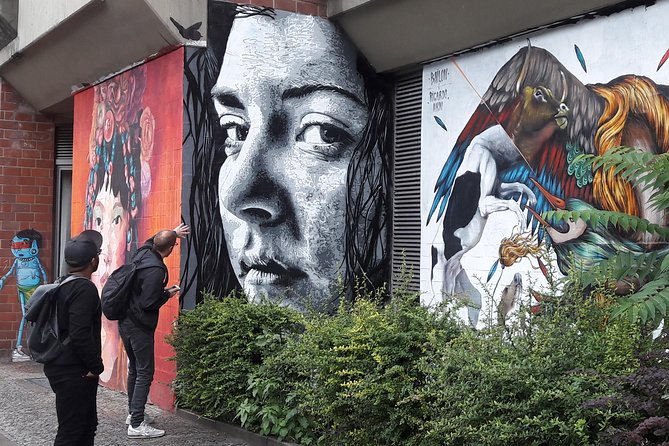
That slower rhythm helps. Street art can be visually loud, but it is often full of small marks, layers, tags, lettering, and technical choices. A guide can show you where to focus your eyes. You may learn how a mural was planned, how a piece was put up, or why a particular style matters to local artists.
The guides vary by date. Rob is frequently mentioned for his humor, energy, and personal grasp of the scene. Ben is also an artist and is known for explaining the culture and practical side of graffiti. Antonio Castello brings his own experience as an artist and discusses local artists, politics, and legal questions. The exact guide is not guaranteed, but the common thread is direct contact with people who understand the subject from inside the scene.
Reading the walls in Friedrichshain
Friedrichshain gives the tour a strong opening because street art is woven into the look of the district. You see more than one kind of work. Large commissioned murals sit beside smaller pieces, tags, stickers, and less polished marks that tell you how broad the local culture really is.
The tour also helps you avoid a common mistake: treating every painted wall as the same thing. Graffiti has its own codes, styles, and social rules. Street art can be made for a wider public, sometimes with permission and sometimes without it. The guide explains those differences in plain terms.
You will also hear about technique. The discussion may cover lettering, stencils, paste-ups, spray work, and the way artists build large images. The useful part is not memorizing every term. It is learning to notice how the work was made and what kind of planning, speed, or risk it demanded.
This is where the tour can change the way you see Berlin for the rest of your stay. After learning a few artists and visual signatures, you may start recognizing their work on your own. A walk back to your hotel can turn into an informal second tour as you notice pieces you would once have ignored.
Crossing into Kreuzberg
Public transport is used during the route, so this is not a single unbroken walk. You should have an AB-zone ticket before the tour begins. If you do not, the guide can help you understand the ticket machine, but buying one in advance is simpler and keeps the group moving.
There are also stairs and at least two train rides according to the route experience described by the operator. That matters if you have trouble with stairs, walking, or quick changes between street level and platforms. The tour is manageable for most people, but it is not a fully step-free outing.
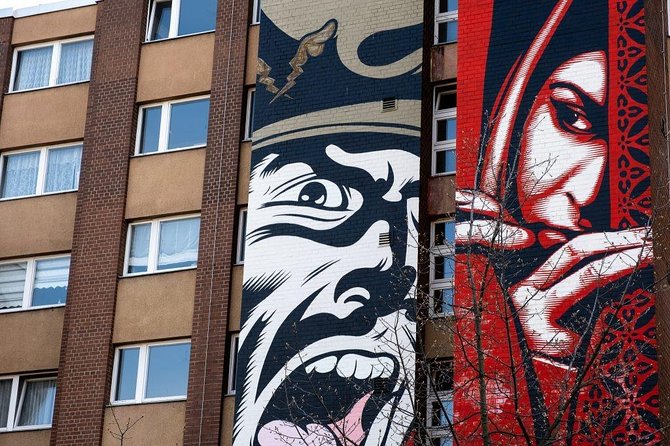
Kreuzberg brings a different feel to the afternoon. Here, the art sits among neighborhood streets and local businesses, and the guide connects the walls to Berlin’s wider social and political life. The point is not simply to find the biggest mural. You look at how artwork occupies public space and how the neighborhood responds.
Some pieces may be legal commissions. Others may be unauthorized work. The guide explains how that distinction affects the artists, property owners, and public response. You also hear how commercial money has entered the scene and how that changes the meaning of street art.
The final area is Wrangelkiez in Kreuzberg, close to the U1 line. That is a practical ending because you can continue exploring Kreuzberg, find food, or take the train back without retracing the entire route.
A few more walking tours around Berlin worth a look
- Discover Berlin Half-Day Walking Tour
★ 5.0 · 9,624 reviews - Berlin City walk Government District and Places of Democracy
★ 4.7 · 8,467 reviews - Berlin: Third Reich & Cold War Guided Walking Tour
★ 4.9 · 8,378 reviews - Berlin: Discover Berlin Walking Tour
★ 4.9 · 5,998 reviews
The gallery visit and commissioned work
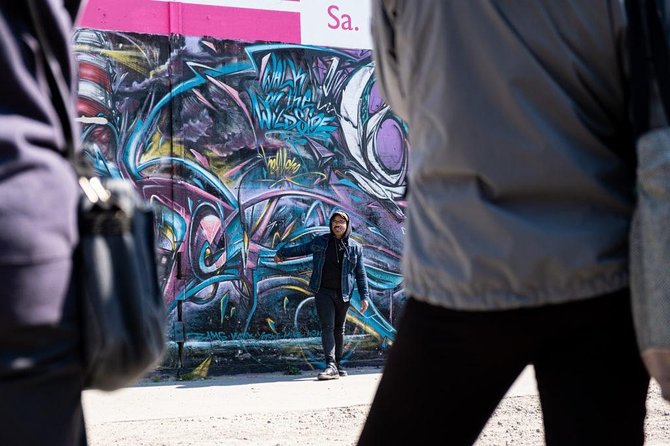
One highlight is a visit to a street art gallery showing commissioned urban artwork. This gives you a useful comparison with what you have seen outside.
In the street, a piece has to deal with weather, property, passing crowds, and the possibility of being painted over. In a gallery, the work can be presented more carefully and viewed at close range. Seeing both settings helps you think about how the location changes the art.
The gallery stop also breaks up the walking. You get another place to look closely, ask questions, and take a short rest. The tour includes a café stop as well, where you can buy coffee or hot chocolate, get a snack, and use the restroom.
That pause is especially helpful in cold or wet weather. The tour runs in changing conditions, and an umbrella is recommended if rain is expected. Good walking shoes are essential, since the route includes streets, stations, stairs, and frequent standing.
What the three-hour pace feels like
Three hours sounds long when you imagine walking through a city, but the pace is not a forced march. You spend much of the time stopping to discuss artwork. There is also time to wander a little and take photographs.
The group can have up to 20 people. That is large enough to provide some social energy but small enough for a guide to speak to the group in normal street settings. Still, you should stay close when crossing roads or boarding trains. One criticism of the experience is that the guide may not always be attentive enough during those transitions, so keep an eye on the group and do not rush onto a platform alone.
The tour suits a wide age range. Teenagers who love art can connect with the creative side, while older visitors can enjoy the history, social questions, and humor. You do not need a background in art. The guide starts with the basics and builds from there.
The tone is educational without becoming a classroom lecture. Rob, in particular, is praised for keeping the energy up in cold weather and for using jokes and personal stories. Ben and Antonio are also described as warm, engaging guides who make the subject easy to approach.
The value of $24.20
At $24.20 per person, this is a fair price for a three-hour guided experience in central Berlin. You are paying for a local guide, an organized route, interpretation of the art, a gallery visit, and help understanding a scene that can be hard to decode alone.
The value is strongest if you would otherwise walk through Friedrichshain and Kreuzberg without knowing what you were seeing. Berlin has no shortage of painted walls, but a self-guided stroll will not necessarily explain the artists, the techniques, or the legal and political background.
You should budget separately for public transport, coffee, snacks, and any gallery purchases. The metro ticket is not included, and the exact need may depend on the route used that day. Having your ticket ready is the safest choice.
The tour is often booked about 22 days ahead, so I would not leave it until the last afternoon of a short Berlin visit. Its 1:00 pm start also works well with a morning museum visit or a relaxed lunch.
What this tour does especially well
The strongest part is the guide’s personal connection to the subject. A practiced script can tell you when a mural was painted, but an artist guide can explain the scene’s unwritten rules and why one technique is respected by other artists.
The second strength is variety. You are not shown only polished murals. You see large commissioned pieces, small neighborhood works, graffiti, and examples of how the scene changes over time. That gives you a more honest picture of Berlin’s street art.
The third strength is the political and legal context. The guide does not ask you to like every piece. Instead, you learn why the work exists, who controls public space, and where the line between art and property damage becomes contested.
There are small comforts, too. The café break gives you time for a warm drink and restroom, while the repeated stops keep the walking from feeling tiring. Those details matter more than they might on a mild summer afternoon.
Where the experience could be better
The route is not ideal for anyone who needs a fully accessible outing. Public transport, stairs, and changing city streets are part of the experience. If you have limited mobility, ask the operator about the current route before booking.
The weather is another factor. This is an outdoor tour and requires good conditions. If poor weather causes cancellation, you will be offered another date or a full refund, but a sudden shower during the walk can still make the afternoon less comfortable. Bring an umbrella and wear suitable shoes.
The guide’s delivery may also feel familiar if you have already taken several Berlin street-art walks. One participant found the jokes and explanations somewhat rehearsed. That is a fair possibility with a tour offered several times each week, though the personal stories and questions can keep it from feeling flat.
Finally, do not book this expecting the East Side Gallery. The route visits Friedrichshain and Kreuzberg and focuses on the wider street-art culture. That is a strength for anyone seeking local context, but it may disappoint you if your main goal is to photograph the famous remaining sections of the Berlin Wall.
Who should book it
I would choose this tour if you want to understand Berlin’s street art rather than simply collect photographs. It is a strong pick for first-time visitors, art students, families with older children, teenagers, and anyone curious about political expression in public space.
You will get the most from it if you are willing to listen, ask questions, and keep looking after the tour ends. The best souvenir may be a new habit of spotting tags, techniques, and artists on ordinary city walks.
I would skip it if you dislike walking in changing weather, have difficulty with stairs, or want a quiet gallery experience. I would also choose another plan if you are specifically seeking the East Side Gallery.
For $24.20, the tour offers a well-priced introduction to a complicated part of Berlin. Bring an AB-zone ticket, good shoes, an umbrella if needed, and an open mind. If Rob, Ben, or Antonio leads your walk, expect a lively afternoon that puts the city’s painted walls into sharper focus.
FAQ
How long is the Berlin Street Art Walking Tour?
The tour lasts approximately three hours.
Where does the tour begin?
It begins at Warschauer Strasse 53, 10243 Berlin, Germany.
What time does the tour start?
The scheduled start time is 1:00 pm.
Where does the tour finish?
The tour finishes in Wrangelkiez in Kreuzberg, close to the U1 line.
Is public transport used during the tour?
Yes. Public transport is used throughout the route, so you should have an AB-zone transport ticket.
Is the transport ticket included in the price?
No. Depending on the route, you may need to buy an AB-zone ticket separately.
Is the tour offered in English?
Yes. The experience is offered in English.
How many people can join the tour?
The maximum group size is 20 people.
What happens if the tour is canceled because of bad weather?
You will be offered a different date or a full refund if poor weather causes the tour to be canceled. You can also cancel up to 24 hours before the start time for a full refund.
Just added around Berlin
- Berlin Walking Tour★ 4.5 · 378 reviews
- East Meets West: Berlin Food Culture & Street Art★ 5.0 · 157 reviews
- Small Group Walking Tour of East Berlin with a French Guide★ 5.0 · 176 reviews
- Berlin Highlights Private Guided Walking Tour★ 4.5 · 89 reviews
- Gruseltour Berlin Haunted Ghost Walk 90-minute at Berlin Mitte city center★ 5.0 · 75 reviews
- Berlin Private Complete History All Day Walking Tour★ 5.0 · 474 reviews
- Private Berlin: Iconic Sights and Hidden Gems Walking Tour★ 5.0 · 292 reviews
- Berlin Private Walking Food Tour With Locals: the 10 Tastings★ 4.5 · 139 reviews
Street Art Walking Tours, compared.
Naples Spanish Quarters Walking Tour Street Art, Folklore & Sweet
Read our review →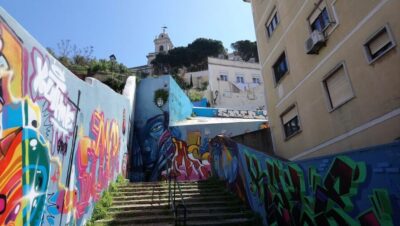
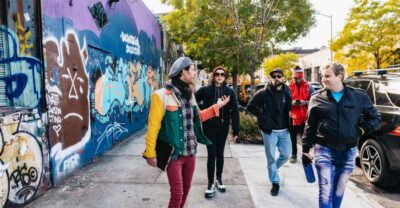
NYC: Brooklyn Graffiti & Street Art Walking Tour in Bushwick
Read our review →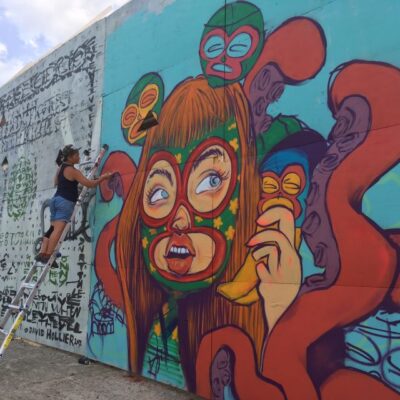
Browse the lists this tour appears in