
REVIEW · BERLIN
David Bowie in Berlin Walking Tour
David Bowie’s Berlin was not just a backdrop. It was a divided, scarred city that helped him reset his music and his life. This three-hour tour follows that connection from the Berliner Ensemble and Cold War-era streets to Hansa Studios, where Heroes and parts of Low were recorded.
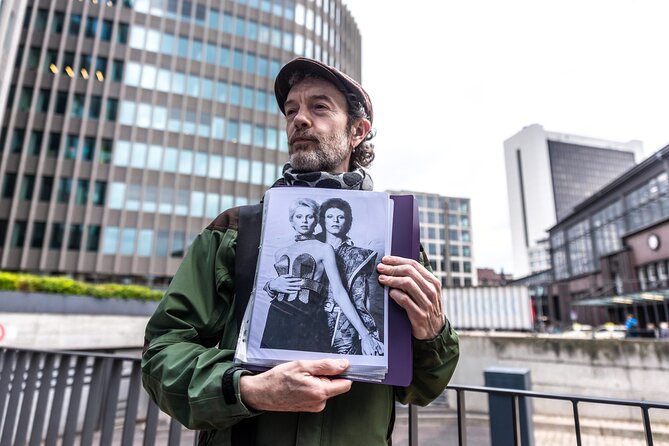
I like two things right away. The group stays small, with no more than eight people listed for the current operation, so you can ask questions without shouting across a crowd. I also like that the guides do not treat Bowie as an isolated pop star. Dan, Lee, Rachel, Klaus, Ronen, Rohen, and other guides have connected his work with Berlin’s art, politics, postwar buildings, and divided streets.
The main consideration is distance. This is not a three-hour stroll in one neighborhood. You will use the U-Bahn, S-Bahn, or bus several times, and you need a Berlin transit ticket unless your guide helps you buy one at the first station. Meeting instructions also deserve care, since the starting location is given as Schiffbauerdamm 8 near the Berliner Ensemble and Bertolt Brecht statue, and one review noted confusion at the start.
Key points for your Bowie in Berlin day
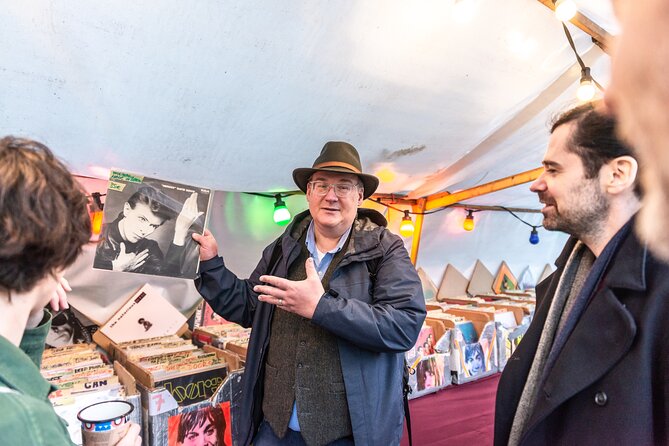
- Hansa Studios gives the tour its musical center: Hear about the recording of Heroes and parts of Low at one of Bowie’s most important Berlin workplaces.
- The Berlin Wall is more than scenery: The route uses wall sections, bullet-marked buildings, and former East and West Berlin to explain the pressure behind the music.
- The final address is personal: At 155 Hauptstrasse in Schöneberg, you see the apartment building where Bowie and Iggy Pop lived.
- Guides bring different strengths: Dan is praised for music, photos, and trivia; Lee for firsthand knowledge of Berlin since the 1980s; Rachel and others for linking Bowie to the city’s past.
- Public transport is part of the experience: The route covers too much ground to walk entirely, so plan for several short rides.
- The small group changes the feel: With a maximum of eight listed, the tour can function more like a guided conversation than a standard city excursion.
Why Bowie’s Berlin years still matter
Bowie arrived in Berlin in the late 1970s during a period of personal and creative change. The city offered distance from his previous routine, but it was hardly a calm retreat. Berlin was divided by a heavily guarded border, with the Cold War visible in walls, checkpoints, empty spaces, and damaged buildings.
That tension matters because this tour is not simply a list of addresses. You use Bowie as a way to understand Berlin in the late 1970s, and Berlin as a way to hear his music differently. The guides explain how the city’s isolation and unease fed the atmosphere around Low, “Heroes”, and Lodger, the three records commonly called the Berlin Trilogy.
You do not need to be an expert fan. Several parts of the tour are aimed at anyone interested in Berlin’s cultural life, postwar changes, or music history. If you know only the major songs, the Cold War setting gives you a useful frame. If you have followed Bowie for years, the value comes from the links between places, lyrics, collaborators, recording sessions, and the people around him.
A few more walking tours around Berlin worth a look
- Discover Berlin Half-Day Walking Tour
★ 5.0 · 9,624 reviews - Berlin City walk Government District and Places of Democracy
★ 4.7 · 8,467 reviews - Berlin: Third Reich & Cold War Guided Walking Tour
★ 4.9 · 8,378 reviews
Starting beside Bertolt Brecht at the Berliner Ensemble
The meeting point is listed as Schiffbauerdamm 8, near Friedrichstraße station and the Berliner Ensemble. The guide meets you by the statue of Bertolt Brecht, an apt beginning for a walk about Bowie, theater, music, and Berlin’s artistic circles.
Brecht also connects directly to Bowie. The BBC adapted Brecht’s play Baal in 1982, with Bowie in the title role. That detail sets the tone for the tour: the focus is not only on apartments and recording rooms, but also on the artistic influences and German cultural figures that surrounded Bowie’s Berlin period.
Give yourself enough time to locate the statue. One outing began late because of confusion about the meeting point, so I would check the exact confirmation details before leaving your hotel. The operator lists a morning and an afternoon departure, and your confirmation should be your final guide for the time and location.
This opening stop may feel less instantly exciting than Hansa Studios, but it gives the tour a useful frame. You begin with Berlin’s theater world, then move through the city’s divided past toward Bowie’s own addresses.
Moving between East and West Berlin
The tour covers several parts of Berlin, and public transport is essential. You may walk between nearby stops, but the full route cannot reasonably be completed on foot in three hours. If you already have a Berlin visitor transit pass, you can use it. Otherwise, the operator suggests a day metro pass, with help available at the first station if you need to buy one.
The transport is not just a practical nuisance. Crossing the city by train or bus helps you grasp its scale and the former separation between East and West. The guides use the movement between areas to explain how the city functioned before the Wall fell.
Expect a mix of walking, station time, short rides, and stops for photos or discussion. A review described seeing much of the route by foot, metro, and bus, while another praised the way the guide handled changing train schedules and late arrivals. That flexibility matters on a city tour that depends on public transport.
Wear comfortable shoes and allow room for changing weather. The route is outdoors for much of the time, and one group continued through temperatures of minus four degrees and snow. The tour can still work in poor weather, but you will enjoy it more with a warm coat, sensible footwear, and a willingness to keep moving.
Wall remains, bullet holes, and the city Bowie saw
Berlin’s Cold War setting is strongest when the guide points out physical traces rather than simply describing them. You pass remaining sections of the Berlin Wall and buildings marked by bullet holes. These details show a city shaped by war and division, not a polished stage built for a rock star.
The guides also use older photographs to explain what has disappeared. Lee, who has lived in Berlin since the 1980s, has used images from the Wall era and even photographs reaching back to the 1920s. Another guide brought photographs of buildings destroyed during the Second World War. These visual aids can make the changing city easier to understand, especially when modern streets hide what once stood there.
This part will appeal to you even if Bowie is not your main reason for booking. The tour gives you a different route through Berlin, away from a simple checklist of major attractions. You still encounter culturally important places, but the emphasis is on how the city felt and functioned during Bowie’s stay.
The drawback is that the Berlin Wall material may receive less time than it would on a dedicated Cold War tour. Bowie remains the thread holding the route together. If your main goal is a detailed political history of divided Berlin, choose a specialized Wall tour instead.
Same streets, a different route:
- Berlin: Discover Berlin Walking Tour
★ 4.9 · 5,998 reviews - Berlin’s Best: 2 Hour Walking Tour Third Reich and the Cold War
★ 5.0 · 5,486 reviews - Berlin: Hidden Backyards Guided Walking Tour
★ 4.8 · 5,360 reviews - Explore Berlin: See All The Iconic Sights & Some Hidden Gems
★ 5.0 · 4,429 reviews
Hansa Studios and the making of Heroes
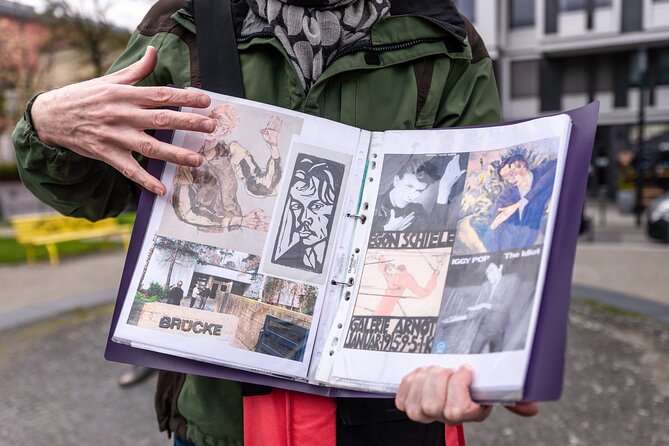
Hansa Studios is the key stop for most Bowie fans. Here, Bowie recorded Heroes and some of Low, two of the three albums associated with his Berlin period. The building carries unusual weight because it links a real location with music that has outlasted the city’s division.
The tour helps explain why the studio mattered. The guides place the recording sessions within the nearby Cold War setting, including the Wall and the atmosphere of West Berlin. Lee has played Bowie’s music at locations connected to the songs, and one particularly effective moment involved listening to Heroes while hearing the story of Bowie looking toward the Wall from the Hansa rooftops.
You should understand the limits of the stop. This is a visit to the area around the studio, not a recording session or a guaranteed interior tour. The attraction is the story, the setting, and the connection between the building and the music.
For me, this is where the tour earns much of its price. You are not merely told that an album was recorded in Berlin. You are shown the place and given the political and personal context that makes the record feel less abstract.
Zoo Station, Potsdamer Platz, and Berlin’s changing identity
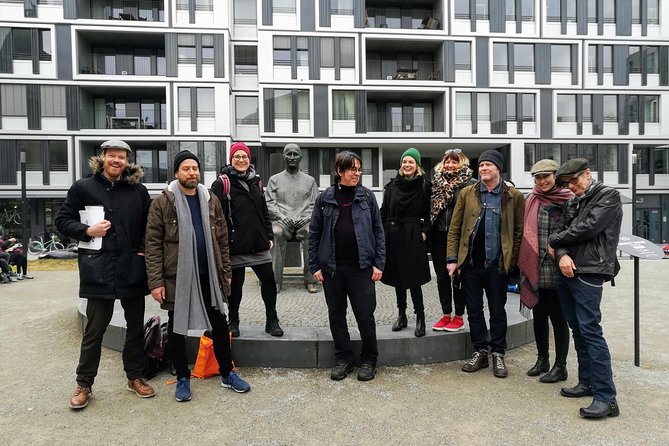
Zoo Station and Potsdamer Platz add wider city context. Both are tied to Berlin’s cultural and geographic shifts, and the route uses them to show how Bowie’s Berlin sat between old destruction, Cold War division, and later redevelopment.
Potsdamer Platz is especially useful for understanding how much Berlin has changed. The tour does not present the city as frozen in Bowie’s time. Instead, it points to the contrast between the divided city he knew and the modern capital you see now.
Zoo Station brings the route into another part of West Berlin’s story. It helps connect Bowie’s working life, Berlin’s music culture, and the everyday city beyond the studio. The exact emphasis may depend on your guide. Dan has been praised for using music, photographs, facts, and trivia at different stops, while other guides bring more attention to historical context.
That variation is worth noting. The operator assigns guides with backgrounds as historians, professors, doctoral students, journalists, or published authors, but each person will tell the story in a different voice. You may get a stronger focus on Bowie, Iggy Pop, theater, architecture, wartime Berlin, or the Wall depending on who leads your group.
155 Hauptstrasse and the Bowie and Iggy Pop connection
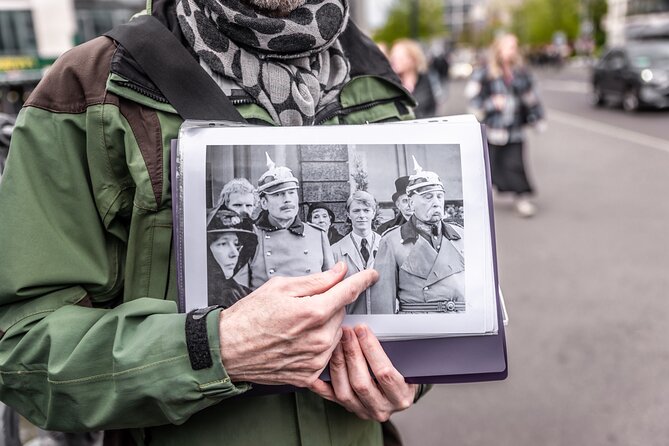
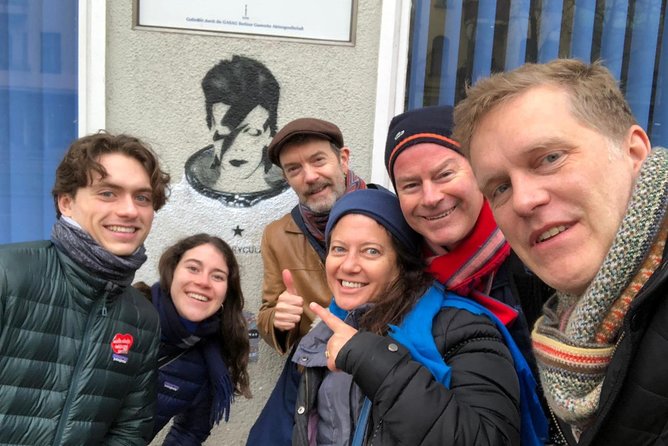
The final main stop is 155 Hauptstrasse in Schöneberg, the apartment building where Bowie and Iggy Pop lived. A plaque dedicated to Bowie marks the connection, giving the tour a clear and personal ending after the larger political and musical stops.
This is also where the Iggy Pop story becomes most visible. Bowie and Iggy were closely linked during the Berlin years, and the apartment helps move the story beyond Bowie alone. One useful point to keep in mind is that the tour may give more time to Bowie than to Iggy. If you especially love the Iggy Berlin albums, ask about that part when you book or meet your guide.
Nearby, you might finish at Neues Ufer, a café once frequented by Bowie. Drinks are not included, and the café stop is not presented as a formal part of the tour, but it offers a natural place to continue the conversation at your own expense.
The neighborhood ending feels more human than finishing at a large monument. You see where Bowie lived, rather than only where he worked. It also leaves you in Schöneberg with the option of extending the afternoon on your own.
How the guides shape the experience
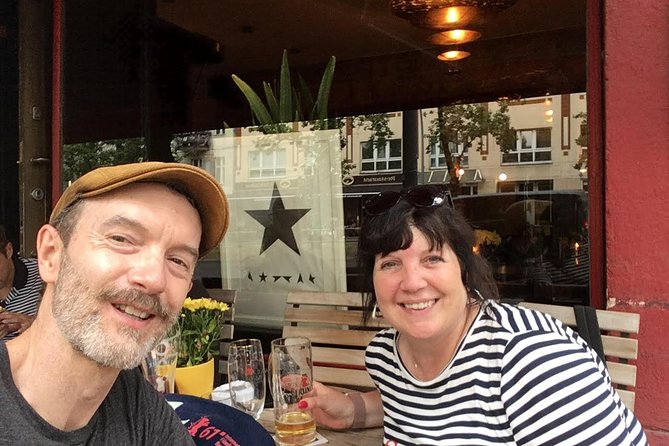
The strongest element across the tour is the guide. Dan has been praised for answering difficult questions, adding trivia, using music and photos, and making the three hours pass quickly. Lee brings personal familiarity with Berlin from before the Wall came down and has a strong command of both city history and Bowie.
Rachel has been described as clear, friendly, and effective at linking Bowie’s life with Berlin’s past. Klaus is known for a warm manner and strong local knowledge, while Ronen and Rohen have also led tours praised for enthusiasm and detail. These names matter because the tour is built around storytelling rather than a fixed museum display.
You may hear music during the walk, and guides can use images to show what Berlin looked like in earlier decades. That makes the experience more vivid, but it also means the quality depends on the person leading your group. The consistently high rating and 99 percent recommendation suggest a strong track record, though no guide can tell the story in exactly the same way.
The small group helps. With up to eight people listed in the additional information, you can ask about a lyric, a recording detail, or a particular Berlin neighborhood. The general tour summary mentions a limit of 10, so check the current booking details if group size matters to you.
Price, time, and practical value
At $139.13 per person, this is not a cheap walking tour. You also pay for your own food, drinks, and public transport. The fair question is what you receive for the money.
You get about three hours with a specialist guide, a route across several parts of Berlin, Cold War context, Bowie locations, music, photographs, and a small group. A basic city walk can cost less, but it will not usually connect Hansa Studios, Bowie’s former home, Brecht, the Wall, and Berlin’s music culture in one focused outing.
The value is best for a committed Bowie fan or a visitor who wants a tightly focused cultural tour. If you are only mildly curious about Bowie, the Berlin history may still make the experience worthwhile, but the price requires real interest in the subject.
The tour is offered in English and is generally suitable for most people. Since you walk outdoors and use public transport, plan for a moderate amount of movement. Food and drinks are not included, so carry water and consider eating before the start, especially for an afternoon departure.
Free cancellation is available if you cancel at least 24 hours before the local start time. Changes or cancellations inside that window are not refunded, so keep the cutoff in mind when arranging your Berlin schedule.
Should you book the Bowie in Berlin tour?
Book it if you want Bowie’s Berlin years explained in place, not just recited from a biography. The best parts are Hansa Studios, the Wall and Cold War setting, the music played along the route, and 155 Hauptstrasse, where the story ends on a personal note.
I would also recommend it to anyone who wants an unusual introduction to Berlin’s divided past. You will not get a full political tour or a formal studio interior visit, but you will see the city through a strong cultural lens.
Skip it if you dislike public transport, outdoor walking, or music-focused storytelling. For everyone else, the small group, expert-led approach, and links between Bowie, Iggy Pop, Brecht, Hansa Studios, and the Wall make this one of the more distinctive ways to spend three hours in Berlin.
FAQ
How long is the David Bowie in Berlin Walking Tour?
The tour lasts approximately three hours.
What language is the tour offered in?
The tour is offered in English.
How much does the tour cost?
The listed price is $139.13 per person.
How large is the group?
The additional information lists a maximum of eight people, while the tour summary mentions a limit of 10 participants. Check the current booking details if the exact group size is important to you.
Where does the tour start?
The meeting point is listed as Schiffbauerdamm 8, 10117 Berlin, near the Berliner Ensemble and Friedrichstraße station. The guide meets participants by the Bertolt Brecht statue.
Where does the tour finish?
The tour ends in Berlin, with the final featured stop at 155 Hauptstrasse in Schöneberg.
Will I visit Hansa Studios?
You will stop by Hansa Studios, where Heroes and parts of Low were recorded. The information provided does not state that the tour includes entry inside the studio.
Does the tour include public transportation?
No. Transportation costs are not included, and you will need to use public transport several times. Your guide can help you purchase a day metro pass at the first station if needed.
Are food and drinks included?
No. Food and drinks are not included. You might choose to have a drink at Neues Ufer near 155 Hauptstrasse after the tour, at your own expense.
Can I cancel for a full refund?
Yes, if you cancel at least 24 hours before the experience start time. Cancellations or changes made less than 24 hours before the start are not refunded.
Just added around Berlin
- Berlin Walking Tour★ 4.5 · 378 reviews
- East Meets West: Berlin Food Culture & Street Art★ 5.0 · 157 reviews
- Berlin Street Art Walking Tour – Off The Grid★ 5.0 · 270 reviews
- Berlin Highlights Private Guided Walking Tour★ 4.5 · 89 reviews
- Small Group Walking Tour of East Berlin with a French Guide★ 5.0 · 176 reviews
- Gruseltour Berlin Haunted Ghost Walk 90-minute at Berlin Mitte city center★ 5.0 · 75 reviews
- Berlin Private Complete History All Day Walking Tour★ 5.0 · 474 reviews
- Private Berlin: Iconic Sights and Hidden Gems Walking Tour★ 5.0 · 292 reviews
Walking Tours, compared.

Magical London: Harry Potter Guided Walking Tour
Read our review →
Reykjavik Food Walk – Local Foodie Adventure in Iceland
Read our review →
History and Hauntings of Salem Guided Walking Tour
Read our review →
New Orleans Premier Ghost, Voodoo and Vampire Walking Tour
Read our review →
Amsterdam Anne Frank: Small-Group Walking Tour & Local Guide
Read our review →

Edinburgh Castle: Guided Walking Tour with Entry Ticket
Read our review →
Anne Frank’s Story – Guided Walking Tour through Amsterdam
Read our review →Browse the lists this tour appears in