
REVIEW · BERLIN
Berlin Off-the-Beaten-Path Walking Tour: Kreuzberg, Mitte and Friedrichshain
Berlin’s story is not only found at the Brandenburg Gate or the remnants of the Wall. This four-and-a-half-hour walk follows the city’s rougher, stranger, more creative side, from Turkish food stalls and Jewish landmarks to punk history, street art, squatted buildings, and the reggae scene at Yaam Beach.
I like the personal guide commentary, especially when guides such as Reese, Jake, Jason, Lee, and Arnie bring their own feel for Berlin to the walk. I also like the mix of walking and public transport, which lets you cover several districts without turning the afternoon into a marching contest.
The main catch is simple: you spend most of the afternoon outside, and Berlin weather can be unforgiving. You also pay for food and AB transport tickets separately, so the $30.25 price is not the full cost of the outing.
Key Points About This Berlin Walking Tour
- Counterculture takes center stage: Learn how student protests, punk, electronic music, street art, and political resistance shaped modern Berlin.
- Kreuzberg offers the strongest local flavor: Explore Turkish Berlin, Jewish history, guerrilla gardens, alternative art, and organic markets.
- You see more than you could on foot alone: Tram, train, or U-Bahn sections connect neighborhoods across former East and West Berlin.
- Food is part of the story: Hear how currywurst and döner became Berlin staples, with time for lunch at your own expense.
- Guides make or break the experience: Reese, Jake, Jason, Lee, Arnie, and others have led this tour, with a style that ranges from warm and chatty to energetic and rebellious.
- The tour ends at Yaam Beach: You finish near one of Berlin’s reggae, hip-hop, and rasta gathering spots, with easy inspiration for further exploring.
Starting Near Alexanderplatz at Noon
The walk begins at Vapiano am Alex on Rathausstraße at 12 p.m. That puts you in central Berlin, close to Alexanderplatz and convenient public transport. You are not starting in a remote neighborhood, so the meeting point is fairly easy to reach.
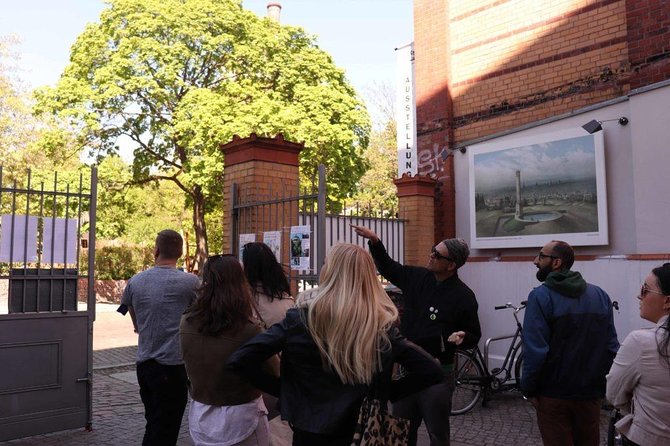
The opening section gives your guide room to set the tone. This is not a greatest-hits tour of Berlin landmarks. Instead, you start moving toward districts where the city’s identity was shaped by immigration, political protest, artistic experimentation, and the freedom to do things differently.
The group can include up to 20 people. That is large enough to provide company but still manageable in a city walk, though you should stay close when crossing streets or moving between transport stops. Guides have been praised for keeping the mood relaxed and making it easy to ask questions.
You will want comfortable walking shoes. The pace is generally described as relaxed, but four and a half hours is still a long afternoon on your feet. The public transport sections help, and the tour includes a lunch pause, yet this is not a light stroll around one compact square.
A few more walking tours around Berlin worth a look
- Discover Berlin Half-Day Walking Tour
★ 5.0 · 9,624 reviews - Berlin City walk Government District and Places of Democracy
★ 4.7 · 8,467 reviews - Berlin: Third Reich & Cold War Guided Walking Tour
★ 4.9 · 8,378 reviews
Kreuzberg’s Turkish and Jewish Stories
Kreuzberg is one of the most rewarding parts of the route because it shows Berlin as a lived-in city rather than a museum. The tour brings you through the Turkish community that has become central to the district’s food, shops, streets, and daily life.
This is where the food talk becomes especially useful. You hear how döner, a Turkish-style grilled meat sandwich, became one of Berlin’s defining quick meals. You can also try currywurst at your own cost, the city’s famous sausage covered with curry-seasoned ketchup.
Neither dish is fancy, and that is the point. They tell you something about postwar Berlin, immigration, working life, and the city’s habit of absorbing outside influences and making them its own. If you have time and appetite, the lunch stop gives you a chance to eat rather than simply listen.
Kreuzberg also brings Berlin’s Jewish past into the route. The tour connects the district’s current street life with earlier chapters of the city, including the Jewish quarter and the damage done by war and persecution. The value here is the connection between past and present. You are not only hearing about what disappeared, but also seeing how different communities have continued to shape the area.
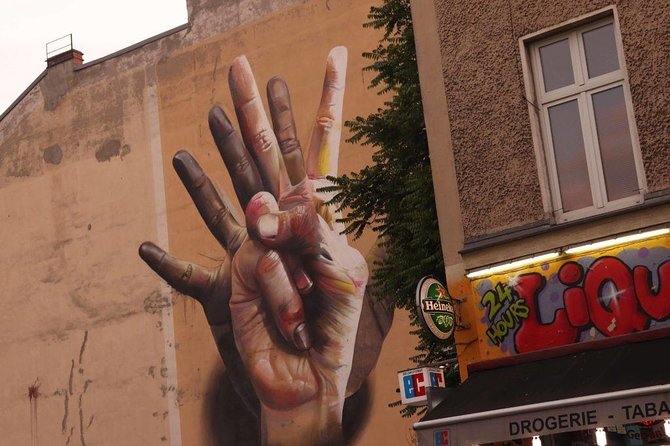
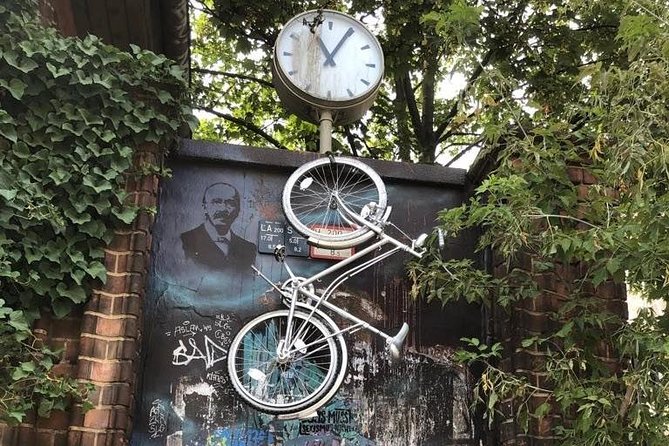
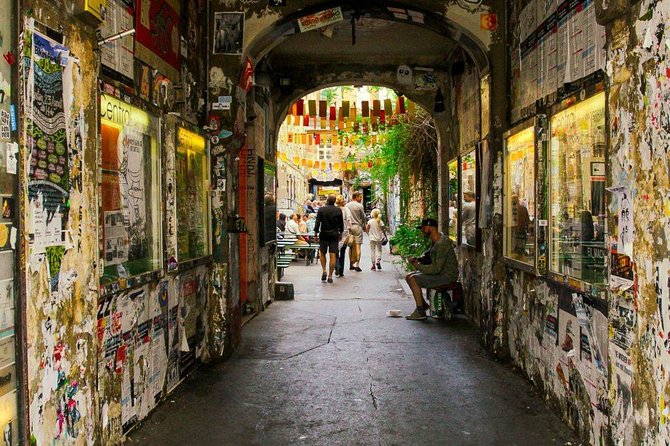
Expect a less polished side of Berlin. You may pass urban farms, guerrilla gardens, small art spaces, organic markets, and walls covered in changing graffiti. Some sights are informal and can look ordinary at first glance. Your guide’s explanation is what gives them meaning.
Street Art, Gardens, and Berlin’s Alternative Side
The route is particularly good for anyone curious about how people use the city outside official institutions. Alternative galleries, improvised gardens, and public art all appear as part of the neighborhood rather than as separate attractions.
Street art is not treated as simple decoration. Guides explain the artists, social movements, and political ideas tied to particular walls and alleys. Berlin’s painted surfaces change constantly, so the exact works you see can vary, but the wider subject remains: who gets to use public space, who pays for it, and how art can challenge authority.
One especially memorable part described by the tour’s past participants is a children’s playground built largely by children aged six to 16, without the usual adult control. A section is burned each year to make room for new construction. It is an unusual example of Berlin’s willingness to let young people experiment, take risks, and leave a visible mark on their surroundings.
That kind of stop explains why this experience works better than a standard neighborhood walk. You are not simply ticking off Kreuzberg, Friedrichshain, or Mitte. You are being shown how local customs and informal projects reflect Berlin’s political personality.
From Student Protest to Punk and May 1
The historical focus shifts in the middle of the walk. Instead of repeating the usual Second World War and Cold War script, the guide discusses the city’s postwar counterculture.
You hear about the student protest movement of the 1960s and the Baader-Meinhof group in the 1970s. The subject matter is serious, and the tour does not reduce these movements to colorful anecdotes. It places them within the wider story of a divided city, political frustration, and resistance to established power.
The 1980s bring punk, street confrontation, and the May 1 riots. These stories help explain why districts such as Kreuzberg and Friedrichshain became associated with rebellion and alternative living. Berlin’s identity was shaped not only by governments and monuments, but also by people who occupied empty buildings, organized protests, made loud music, and challenged the police and political system.
This is one of the tour’s strongest features for anyone who has already visited Berlin’s major memorials. If you have spent a day on Nazi and Cold War history, this walk gives you another angle. You learn about the people who resisted, created, squatted, performed, and organized in the spaces left behind by war and division.
The subject can be politically charged. Guides may use dark humor and strong opinions, especially when discussing anarchy, socialism, police action, or protest. That can make the walk lively, but it may not suit you if you want a neutral, carefully sanitized account of Berlin.
Same streets, a different route:
- Berlin: Discover Berlin Walking Tour
★ 4.9 · 5,998 reviews - Berlin’s Best: 2 Hour Walking Tour Third Reich and the Cold War
★ 5.0 · 5,486 reviews - Berlin: Hidden Backyards Guided Walking Tour
★ 4.8 · 5,360 reviews - Explore Berlin: See All The Iconic Sights & Some Hidden Gems
★ 5.0 · 4,429 reviews
Prater Garten and the Culture of a Berlin Afternoon
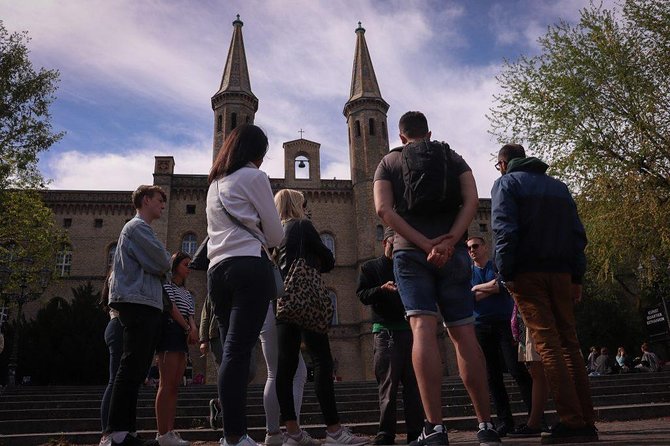
A stop at Prater Garten adds a more relaxed note to the route. It is known as Berlin’s oldest beer garden, and its inclusion gives you a chance to think over the stories while enjoying a setting tied to local social life.
Food and drinks are not included. That keeps the base cost low, but you should budget for a snack, lunch, or beer if you want one. The break is useful because the full tour is long, and a short pause makes the second half easier.
The tour’s food focus is practical rather than restaurant-based. You are introduced to currywurst and döner as part of Berlin’s culture, not sent on an expensive tasting menu. If you want a serious meal, ask your guide early about the timing and choose your food carefully so you can rejoin the group promptly.
Friedrichshain, Mitte, and Former East and West Berlin
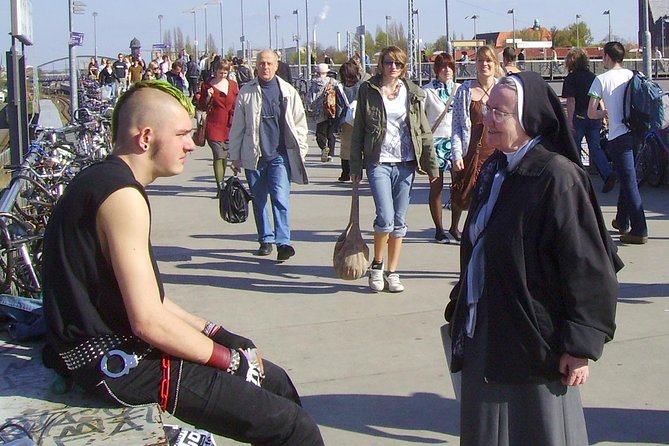
The route reaches beyond Kreuzberg into Friedrichshain, Mitte, Prenzlauer Berg, and nearby areas. The exact balance can vary, and the published description does not always match every turn of the walk, but the purpose is consistent: connect different parts of Berlin and compare areas shaped by the former East and West.
The public transport sections are important. You need an AB ticket, and a day pass is recommended. The ride may involve tram, train, or U-Bahn travel, with two or three legs helping the group cover more ground.
This makes the $30.25 price more useful than a short two-hour neighborhood walk. You are paying for a guide, context, and a route that would take more planning to reproduce alone. You are also getting a quick orientation to districts you may want to revisit.
The trade-off is that public transport adds a little waiting and movement. If you prefer a continuous walk with no train or tram sections, this may feel broken up. I see the transport as a benefit, though, because Berlin is too spread out to understand through one small patch of pavement.
Prenzlauer Berg may receive attention as part of the wider route, while Mitte supplies the central starting point and historical frame. Friedrichshain helps carry the story toward music, street art, nightlife, and the changing character of former East Berlin.
Love Parade, Yaam Beach, and Modern Berlin
Music becomes a major subject toward the end. You hear about the Love Parade, once a huge electronic dance event, and about reggae, hip-hop, and rasta culture at Yaam Beach.
These details matter because they show Berlin’s counterculture changing over time. The city’s rebellious spirit did not stop with punk. It moved through clubs, outdoor parties, electronic music, sound systems, graffiti, and multicultural arts spaces.
The tour concludes at Yaam Beach on Stralauer Allee. It is a fitting finish because Yaam represents the city’s mix of music, migration, alternative culture, and social space. You leave with a useful idea for what to do next, rather than ending at a generic downtown landmark.
One practical note: the final drop-off point has not always matched the published endpoint exactly, and the tour may finish a little farther into Kreuzberg. That should not matter if you have no appointment afterward, but allow extra time before your next booking.
Guides With Personality, Not Just Facts
The guide is the heart of this experience. The strongest guide names associated with the tour include Reese, Jake, Jason, Lee, and Arnie. Their styles differ, but the best ones make Berlin feel like a city they care about personally.
Reese is known for energetic storytelling, sharp humor, and a rebellious edge. Jake brings fast patter and a large supply of stories about artists, politics, and the city he has adopted. Jason has been praised for combining jokes with personal anecdotes, while Lee is especially connected with Kreuzberg and its alternative arts scene.
Arnie’s approach is slower and more reflective, with attention to Berlin’s early history, the Weimar period, the Nazi era, postwar division, and the squatting that followed the Wall’s fall. This range is worth keeping in mind. Your experience depends partly on who leads the group that day.
The common strength is the human angle. You are not simply memorizing dates. You hear about people who fought oppression, made art, formed bands, occupied buildings, or helped shape local communities. That makes the tour memorable, but it also means the commentary may be more personal and interpretive than an academic lecture.
How Much Walking and What to Bring
The tour lasts about four hours and 30 minutes, including public transport and a lunch pause. You cover substantial ground, but it is not four and a half hours of nonstop walking.
Wear good shoes and bring water. Prepare for changing weather, especially on colder or wet days. The route is outdoors for much of the afternoon, and there is no promise of comfortable indoor shelter between stops.
Bring an AB public transport ticket. A day pass is recommended because the tour uses local transport, and the ticket is not included. Also bring money for food and drinks, since currywurst, döner, lunch, beer, and other refreshments come at your own expense.
The tour is offered in English and accepts service animals. Most people can take part, but the length, outdoor setting, and amount of walking still favor anyone comfortable being on their feet for several hours.
Is $30.25 Good Value?
At $30.25 per person, this is a fair price for a long, guide-led introduction to several Berlin neighborhoods. The value is strongest if you want context and local interpretation rather than a list of famous sights.
You also need to add an AB ticket and food. Even so, the tour covers more ground than you could efficiently manage alone, and it may save you hours of research into Berlin’s protest movements, food culture, street art, and music history.
The price is less attractive if you only want major landmarks or prefer a short, highly structured tour. This experience is built around stories, side streets, informal spaces, and neighborhoods that may not look important until someone explains them.
Who Should Book This Tour?
You should book it if you have already seen Berlin’s main memorials and want to understand how the city developed after the war and the Wall. It is also a strong choice for anyone interested in street art, punk, electronic music, migration, food culture, or alternative politics.
It suits curious adults, repeat visitors, and first-time visitors who want a different opening view of Berlin. The guide-led format is helpful if you like asking questions and prefer stories to a silent walk with a map.
I would think twice if you dislike long outdoor activities, need a fixed end time, or want a polished sightseeing route. The weather matters, the route can shift, and some of the material deals with protest, violence, drugs, politics, and social conflict.
Should You Book It?
Book this tour if you want the Berlin behind the postcard. You will see Turkish Kreuzberg, Jewish history, street art, gardens, beer culture, punk, protest, public transport, and Yaam Beach in one long afternoon.
The best reason to go is the guide. Reese, Jake, Jason, Lee, Arnie, and other guides have brought different personalities to the route, so expect lively interpretation rather than a fixed script. Just bring good shoes, an AB ticket, money for lunch, and a rainproof layer.
Skip it if your Berlin schedule is tight or if you want only famous monuments. For everyone else, this is a smart way to understand why Berlin feels so different from a conventional European capital.
FAQ
Where does the Berlin Off-the-Beaten-Path Walking Tour start?
The tour starts at Vapiano am Alex, Rathausstraße 6, 10178 Berlin, near central Berlin and Alexanderplatz.
What time does the tour begin?
The stated start time is 12 p.m.
Where does the tour finish?
The published endpoint is Yaam Beach at Stralauer Allee 34, Berlin. The tour may sometimes finish a little farther into Kreuzberg, so allow extra time if you have plans afterward.
Is public transport included?
No. You need an AB public transport ticket, and a day pass is recommended. The route includes several tram, train, or U-Bahn sections.
Are food and drinks included?
No. Food and drinks are at your own expense. The tour discusses currywurst and döner and includes time for a lunch break.
Is the tour offered in English?
Yes. The experience is offered in English with an English-speaking local guide.
Just added around Berlin
- Berlin Walking Tour★ 4.5 · 378 reviews
- East Meets West: Berlin Food Culture & Street Art★ 5.0 · 157 reviews
- Small Group Walking Tour of East Berlin with a French Guide★ 5.0 · 176 reviews
- Berlin Street Art Walking Tour – Off The Grid★ 5.0 · 270 reviews
- Berlin Highlights Private Guided Walking Tour★ 4.5 · 89 reviews
- Gruseltour Berlin Haunted Ghost Walk 90-minute at Berlin Mitte city center★ 5.0 · 75 reviews
- Berlin Private Complete History All Day Walking Tour★ 5.0 · 474 reviews
- Private Berlin: Iconic Sights and Hidden Gems Walking Tour★ 5.0 · 292 reviews
Walking Tours, compared.

Magical London: Harry Potter Guided Walking Tour
Read our review →
Reykjavik Food Walk – Local Foodie Adventure in Iceland
Read our review →
History and Hauntings of Salem Guided Walking Tour
Read our review →
New Orleans Premier Ghost, Voodoo and Vampire Walking Tour
Read our review →
Amsterdam Anne Frank: Small-Group Walking Tour & Local Guide
Read our review →

Edinburgh Castle: Guided Walking Tour with Entry Ticket
Read our review →
Anne Frank’s Story – Guided Walking Tour through Amsterdam
Read our review →Browse the lists this tour appears in