
REVIEW · WALKING TOURS
Belgrade: 3-Hour Serbian History Walking Tour
Belgrade’s story is written in layers, and this 3-hour walking tour lets you read many of them in one compact route. You move from grand state buildings and busy squares to Skadarlija’s old street, then up to Kalemegdan, where the Sava and Danube meet beneath the fortress walls.
I like the way the tour links history with present-day Serbia, rather than treating the past as a list of dates. I also like the route itself: it covers several major sights without requiring a bus or taxi. The main thing to consider is the pace. Four kilometers on foot, with frequent stops and a lot of information, can feel full, especially in hot weather or on uneven ground.
Key points at a glance
- A four-kilometer route through central Belgrade: Start at Terazije Square and finish near Rajićeva Shopping Center.
- History that reaches beyond monuments: Guides explain Serbia, Yugoslavia, religion, regional politics, and modern life.
- Kalemegdan is the grand finale: The park and Belgrade Fortress bring together river views, military history, and centuries of conflict.
- Several guides receive strong praise: Marija, Pedja, Jovana, Aleksandar, Tibor, Predrag, and Andjelka are noted for clear explanations, humor, and patience.
- Useful for a first visit: You get an early sense of the city center, major sights, museums, churches, and places to explore later.
- Good value at $35: The price covers a live English-speaking guide for three hours, with no admission fees listed as included.
Why this walk is a smart first look at Belgrade
Belgrade sits where the Sava meets the Danube, at a meeting point that has long carried military and political weight. Celts, Romans, Byzantines, Ottomans, Austro-Hungarians, Germans, and Russians all left marks here, often after fighting over the same strategic ground.
That long sequence can be hard to follow on your own. Names, borders, religions, empires, and changing states overlap. A good guide gives you a working map of the story, then connects it to the buildings in front of you.
That is the real value here. You are not simply checking off Republic Square and the fortress. You are learning why Belgrade developed as a border city, why Serbian identity is tied so closely to religion and politics, and why the Balkans still require careful explanation.
The guides are the strongest part of the experience. Marija is praised for presenting difficult subjects in clear language and for separating facts from personal views. Aleksandar is noted for explaining Serbia and Yugoslavia in a way that is easy to follow. Pedja brings warmth and local advice, while Jovana and Tibor are praised for their patience and ability to answer questions.
You may also hear from guides such as Predrag, Andjelka, or Tibi, depending on the departure. The exact personality will vary, but the pattern is clear: the tour is designed around conversation, questions, and context rather than a memorized speech.
More History Walking Tours in the world:
- Berlin: Third Reich & Cold War Guided Walking Tour
★ 4.9 · 8,378 reviews - Munich: Third Reich & WWII Walking Tour
★ 4.6 · 6,181 reviews - Berlin’s Best: 2 Hour Walking Tour Third Reich and the Cold War
★ 5.0 · 5,486 reviews
Terazije Square and the National Assembly
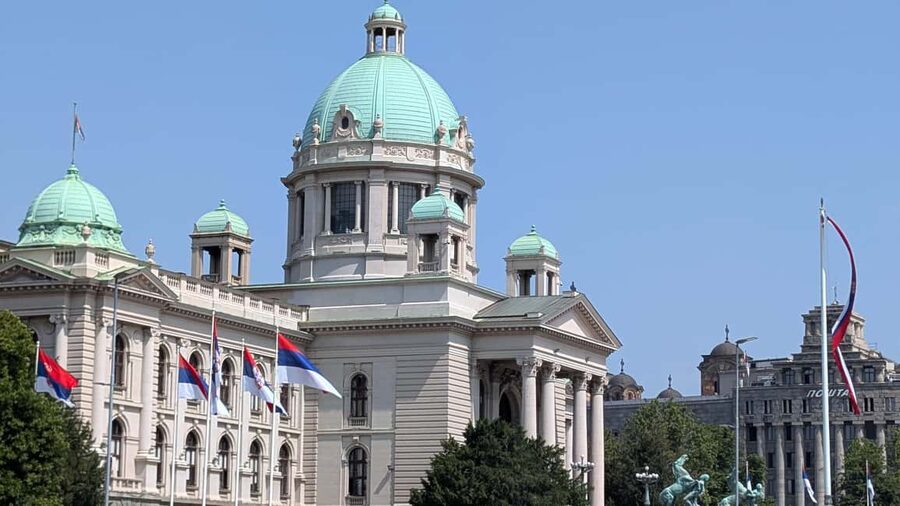
The meeting point is next to the fountain at Terazije Square, a central spot that is easy to use as the start of a city walk. From here, the route heads toward the National Assembly of the Republic of Serbia.
The assembly building gives the guide an early chance to explain Serbia as a modern state, not only as a former battlefield. You can expect a guided look and some free time for sightseeing, with about 20 minutes assigned to this part of the route.
This opening stop is useful because it sets up the political side of Belgrade. The tour is not limited to medieval rulers and old churches. It also addresses more recent events, power struggles, and the way national politics shaped everyday life.
If you arrive early, use the time to get comfortable before the walk begins. There is no need to bring special equipment, but comfortable shoes are essential.
Kneza Mihaila and Republic Square
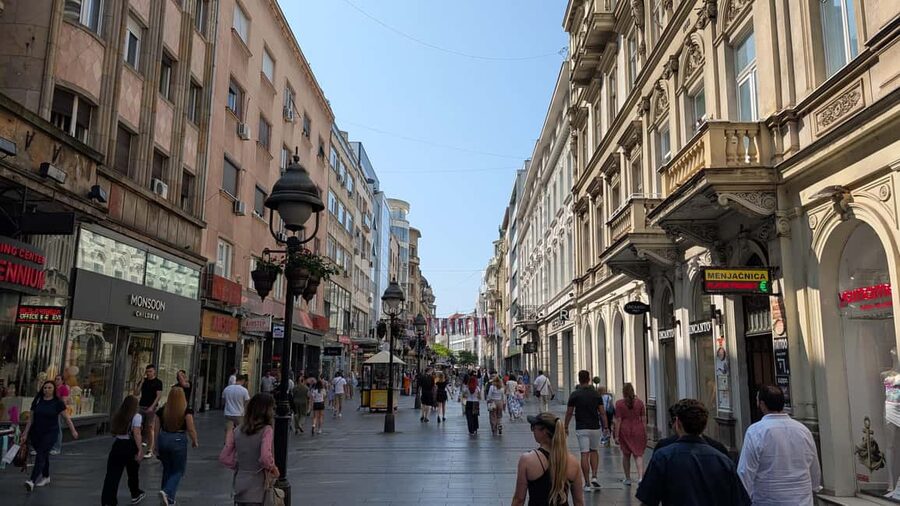
Kneza Mihaila is Belgrade’s best-known pedestrian street and one of the clearest links between the city’s public life and its past. The route gives you around 20 minutes here for guided sightseeing.
Expect a central urban setting, historic facades, shops, and a steady flow of people. This is a good place to watch how Belgrade uses old architecture as part of ordinary city life. You are not being taken to an isolated monument. You are walking through a place where people meet, shop, pass through, and spend time.
The next major stop is Republic Square, also allotted about 20 minutes. This is one of the city’s main gathering points and a useful reference point for finding your way around later.
I like this portion because it gives you practical orientation. After the tour, you can return to Kneza Mihaila, Republic Square, or the surrounding center without feeling lost. The guide also has room to explain how Belgrade changed from an imperial frontier town into the Serbian capital.
Skadarlija, Belgrade’s old bohemian street
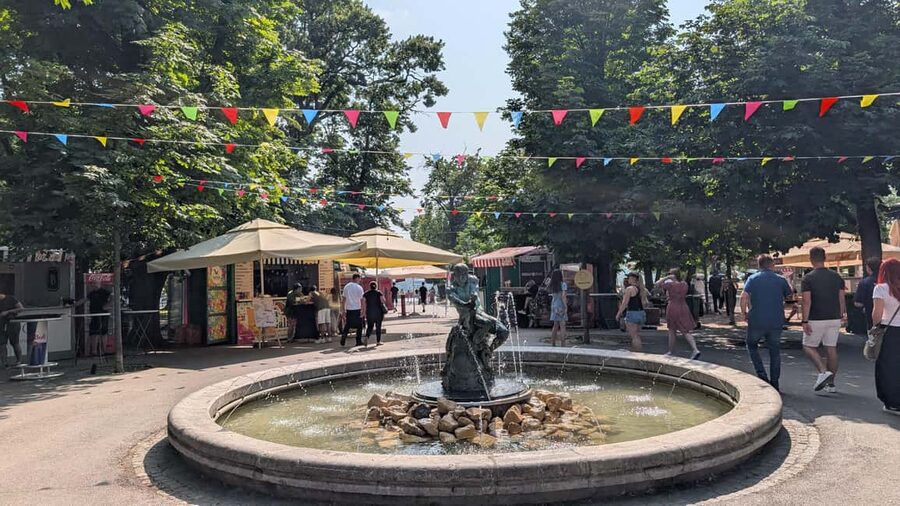
Skadarlija brings a different mood. The route includes a photo stop and guided sightseeing for roughly 20 minutes.
This old street is associated with poets, artists, restaurants, and Belgrade’s bohemian culture. It is one of the most atmospheric parts of the walk, but you should not expect a perfectly preserved open-air museum. Skadarlija is a living city street, with a tourist side and a local social life.
The guide can help separate the real cultural background from the polished image. You may hear stories about Serbian customs, habits, writers, and the city’s sense of humor. Andjelka, in particular, has been praised for bringing historical figures and local stories to life with wit and a slightly unfiltered Balkan tone.
The stop is short, so it works best as an introduction. If you like the restaurants and old-style atmosphere, return later with more time. The walking tour gives you the setting, not a full evening there.
More Three-Hour Tours in the world:
- Prague: 3-Hour Walking Tour of Old Town & Prague Castle
★ 4.7 · 5,696 reviews - Experience Porto’s Charm: 3-Hour Guided Walking Tour
★ 5.0 · 2,432 reviews - Valletta: 3-Hour Walking Tour
★ 4.7 · 2,219 reviews - Belfast: Political Conflict 3-Hour Walking Tour
★ 4.6 · 2,215 reviews
Student Park and the Holy Archangel Michael
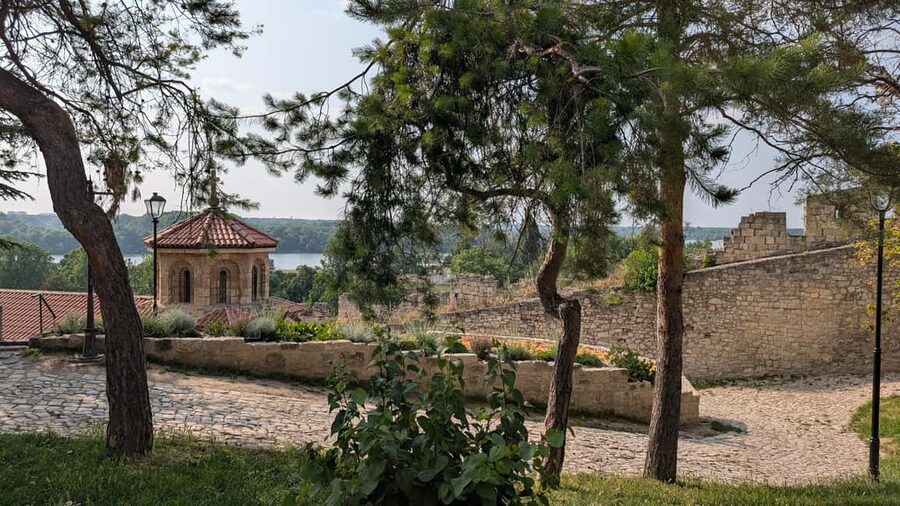
From Skadarlija, the route continues through Student Park, with around 10 minutes for sightseeing. This is a brief stop, but it helps break up the larger historical themes and gives you another look at central Belgrade.
The tour then reaches the Holy Archangel Michael, with about 15 minutes for a visit and explanation. Religious buildings matter in Serbia because faith, national identity, art, and political history are closely connected.
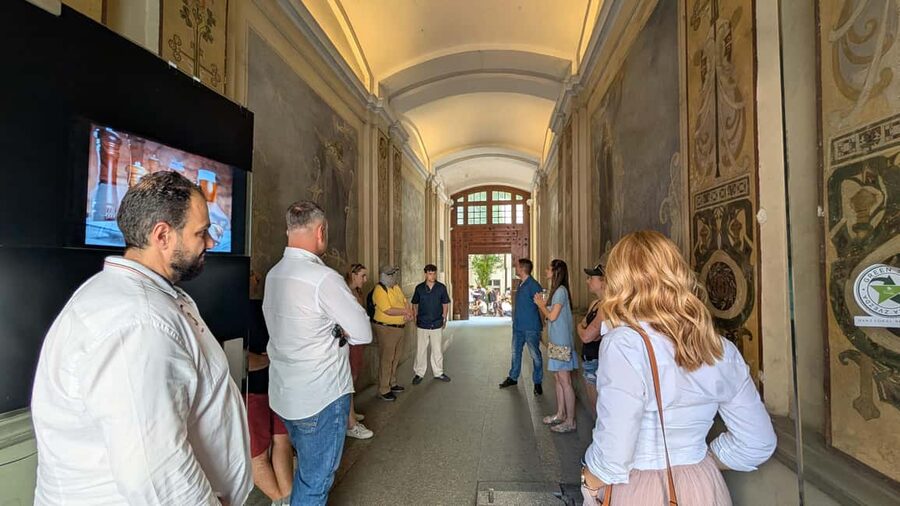
This is one point where a guide adds real value. A quick look inside or outside a church can leave you with little more than a photograph. The explanation helps you understand why Serbian Orthodox sites matter and how religion fits into the country’s past and present.
Do not expect a long service or a museum visit here. It is a focused stop within a wider city walk. The benefit is the connection between architecture and the larger story of Serbia.
Kalemegdan Park and the meeting of the rivers
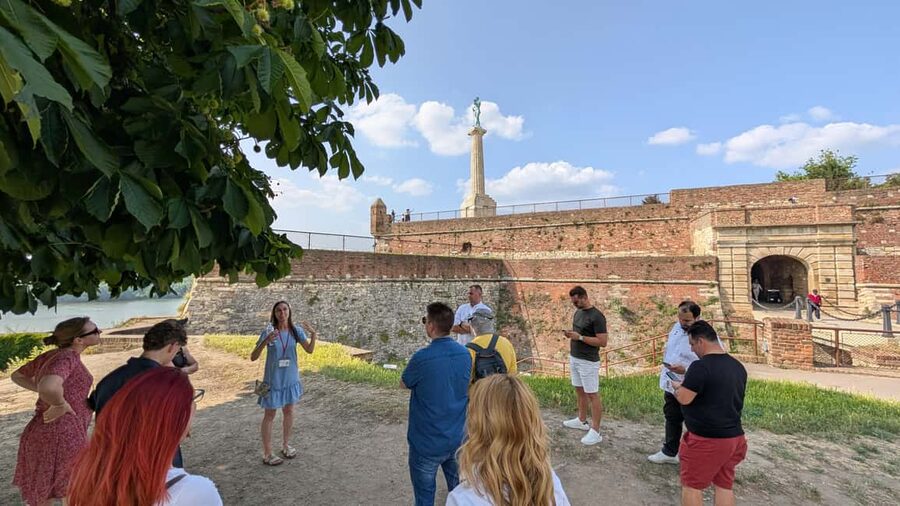
Kalemegdan Park is the route’s major open-air section. The tour allows about 20 minutes for the park, followed by another 20 minutes around Belgrade Fortress.
The park is more than a green break in the city. It leads you toward the strategic high ground above the Sava and Danube, where the city’s location becomes easy to understand. From this elevated area, you can see why armies fought over Belgrade for centuries.
The guide may explain the city’s role between eastern and western powers, as well as the repeated changes in control. This is where the tour’s central idea becomes physical: Belgrade was never just one thing. It was a border, a prize, a capital, and a place where different cultures met under pressure.
The park section includes walking, sightseeing, and passing by some points rather than stopping at every one. That keeps the tour moving, but it also means you will not examine every corner in detail.
Belgrade Fortress and the Military Museum
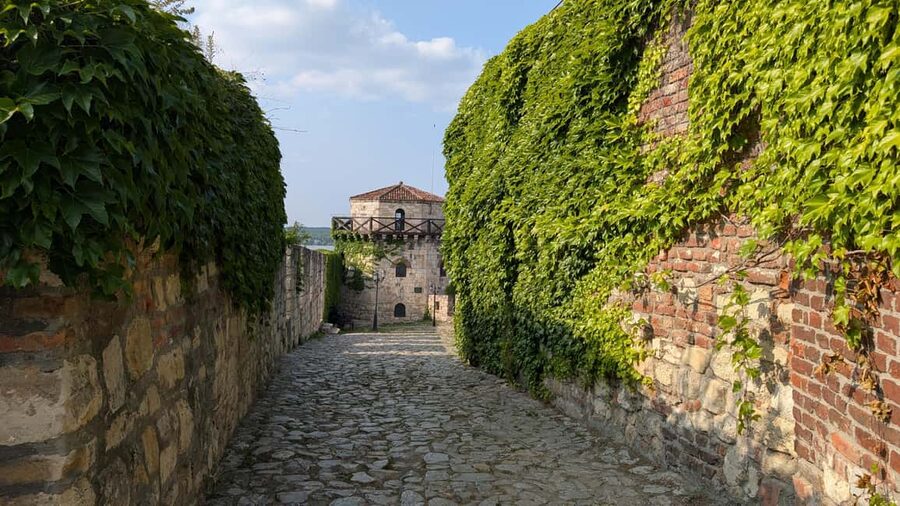
Belgrade Fortress is the most important historical stop on the route. It includes a visit, a photo stop, scenic views, and guided walking.
The fortress area contains layers from different periods, and the guide uses those remains to explain the city’s military role. This is a strong setting for stories about Romans, Byzantines, Ottomans, Austro-Hungarians, and later conflicts.
The Military Museum is also part of the fortress experience and is highlighted as a place to encounter Serbia’s military past. The tour information does not promise a full museum admission or extended indoor visit, so treat it as part of the guided fortress area rather than a separate museum tour.
That distinction matters. If military collections are a major interest, you may want to return on your own and allow more time. During this walk, the museum and fortress help provide context, but the guide must keep the group moving.
The views are a major reward. You can see the rivers and the wider city from a position that explains Belgrade’s geography better than a map can. This is also a good place for photographs, although the tour is not designed as a dedicated photography outing.
Ružica Church and the Monument of Gratitude to France
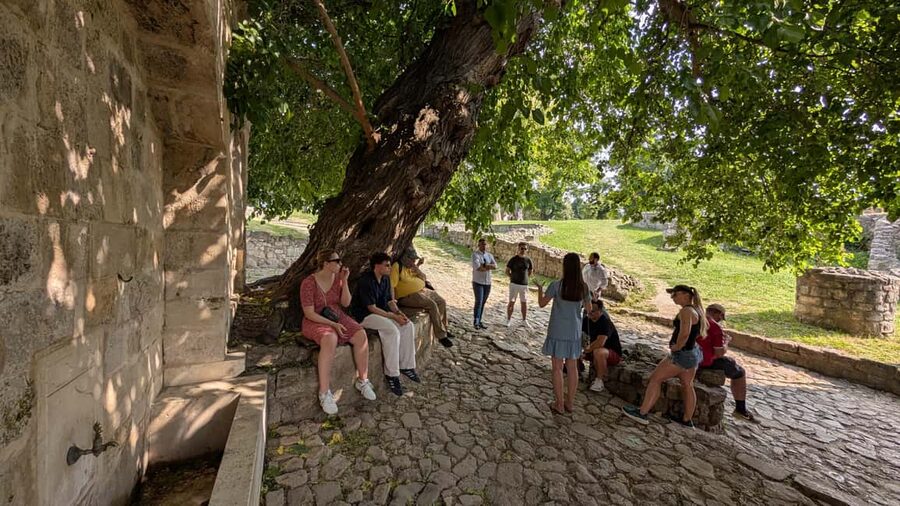
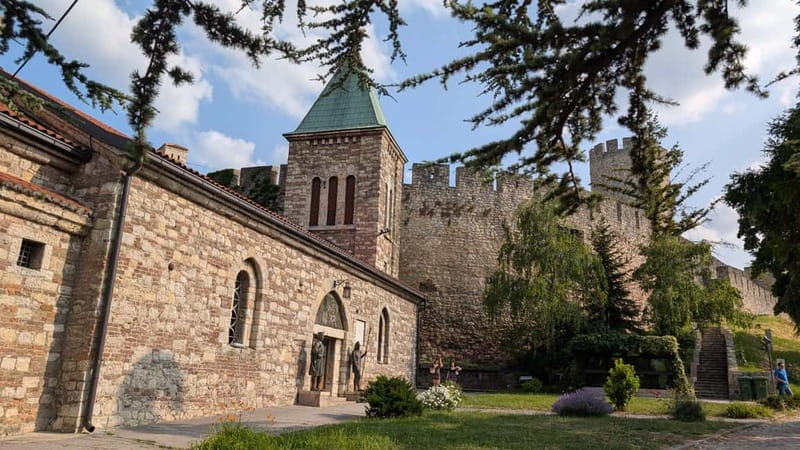
Ružica Church is one of the more unusual stops. The church was built in the 15th century and sits within the fortress area. The route allows about 15 minutes for a visit, guided explanation, and photographs.
Its age gives the tour another time layer. After hearing about modern Serbia and the Ottoman and Austro-Hungarian periods, you are looking at a place that reaches much further back. The guide can tie the church to the fortress and explain how religious sites survived within a military setting.
The final named sight is the Monument of Gratitude to France. It receives about 15 minutes of sightseeing before the walk ends at Rajićeva Shopping Center.
This closing stop adds an international note to the route. It also reminds you that Serbian history cannot be understood only within today’s borders. Alliances, wars, and foreign influence shaped the country in ways that still affect public memory.
Finishing near Rajićeva is practical. You are back in the central city, close to shops and the pedestrian area, with an easy starting point for your next activity.
The guide makes the difficult history manageable
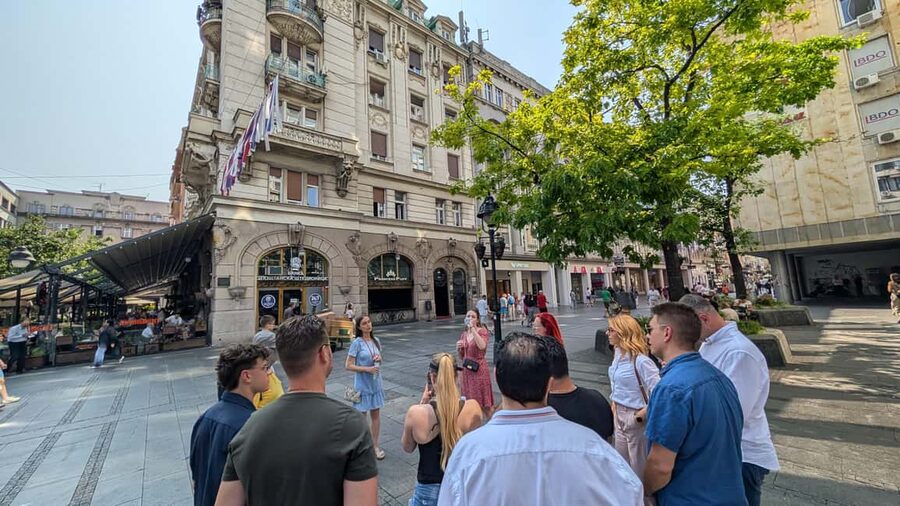
Serbian and Balkan history can become confusing fast. A short tour cannot explain every dynasty, war, border change, and political movement, but it can give you a useful framework.
The best guides on this experience appear to do three things well. They explain complicated subjects in plain language, connect past events to current Serbia, and leave room for questions.
That last point matters. The route touches on religion, the 1990s, Yugoslavia, current politics, social issues, and regional relations. These topics can be sensitive. Marija is praised for keeping her explanations factual while still allowing discussion. Other guides are described as open, funny, and willing to share personal insight.
You should still remember that any guide brings a point of view. A good tour does not mean every interpretation is universally accepted. The benefit is hearing a local explanation and having the chance to ask direct questions.
The guide’s attitude also seems helpful for families. Pedja has been especially accommodating with a two-year-old, allowing extra time and keeping the experience friendly. That does not make the route a child-focused tour, but it suggests a patient approach.
How much walking is involved?
The route covers around four kilometers over three hours. That is manageable for many people, but it is not a sit-down sightseeing tour.
You will walk through central streets, parks, and fortress grounds. Some surfaces may be uneven, and the day can feel demanding in hot weather. One guide has been praised for finding shaded spots during a very hot day, but you should still bring water and dress for the forecast.
The walking pace includes stops for explanations, photos, and visits. Still, wear shoes you can use comfortably for several hours. Wheelchair access is listed, but the historic fortress area may require you to ask the guide about the easiest route on the day.
Is $35 a fair price?
At $35 per person, the tour offers three hours with a live English-speaking guide. That is a fair price if you want a clear introduction to Belgrade and prefer asking questions rather than reading signs on your own.
The value is strongest for a first visit. You see the main center, Skadarlija, an important church, Kalemegdan, Belgrade Fortress, Ružica Church, and a monument tied to Serbia’s international past.
The price does not list entrance fees, food, drinks, or transportation as included. The experience is built around walking and guiding, so you are paying for explanation, local context, and route planning.
I would not choose this tour if you want a slow museum visit or a private deep examination of the fortress. I would choose it if you want to understand Belgrade quickly, find your bearings, and decide which places deserve a longer return visit.
You can reserve now and pay later, and cancellation is available up to 24 hours before the start for a full refund. Those terms are useful if your schedule is still changing.
Who should book this Belgrade walking tour?
This tour suits first-time visitors, history fans, and anyone who wants more context for Serbia’s complicated past. It is also a good choice if you have only one day in Belgrade and want to cover the central sights without organizing several separate visits.
You will get the most from it if you enjoy asking questions. The guides are praised for handling subjects ranging from architecture and Serbian traditions to Yugoslavia, current politics, and regional affairs.
Families can consider it, especially if you have a flexible approach to the pace. The route is not presented as a children’s tour, and three hours may be long for very young children, but the guides appear willing to be patient.
I would skip it if you strongly dislike walking, want guaranteed extended museum access, or prefer a tour focused only on food, nightlife, or architecture. For everyone else, it is a practical first chapter in your Belgrade visit.
Should you book it?
I would book this tour early in a Belgrade stay. It gives you a clear route through the center, explains why the fortress matters, and helps you place later visits to museums, restaurants, churches, and neighborhoods.
The strongest reason to go is the guide. Marija, Pedja, Jovana, Aleksandar, Tibor, Predrag, Tibi, and Andjelka are all associated with different strengths, including clarity, humor, patience, local advice, and careful handling of difficult subjects.
At $35, the tour is a good buy for three hours of guided walking. Bring comfortable shoes, expect about four kilometers, and arrive ready for history that reaches from the ancient past to modern Serbia.
FAQ
How long is the tour?
The walking tour lasts three hours.
How much does the tour cost?
The price is $35 per person.
Where does the tour begin?
It begins at Terazije Square, next to the fountain.
Where does the tour finish?
The tour finishes at Rajićeva Shopping Center.
What language is the tour conducted in?
The live tour guide speaks English.
How far do you walk?
The route covers around four kilometers.
What sights are included?
The route includes the National Assembly, Kneza Mihaila, Republic Square, Skadarlija, Student Park, the Holy Archangel Michael, Kalemegdan Park, Belgrade Fortress, Ružica Church, and the Monument of Gratitude to France.
Is the Military Museum part of the experience?
The Military Museum is encountered during the fortress section of the route. The tour information does not list a separate museum admission as included.
Is the tour wheelchair accessible?
Yes, the activity is listed as wheelchair accessible.
What should you bring?
Bring comfortable shoes suitable for around four kilometers of walking.
Can I cancel for a full refund?
Yes. You can cancel up to 24 hours in advance for a full refund.
Do I have to pay when I book?
No. The reserve now and pay later option allows you to hold your place without paying immediately.
Just added around the world
- Fez: Walking Tour in the Ancient City of Fez★ 4.8 · 73 reviews
- Fira: Guided Foodie Walking Tour with Tastings★ 4.9 · 474 reviews
- Fez: Guided Walking Tour of the Historic Medina★ 5.0 · 359 reviews
- Faro: Old Town Guided Walking Food Tour★ 4.9 · 94 reviews
- Feel like a local – Walking Tour in Mykonos Town 2hours★ 4.4 · 77 reviews
- Fes: A Guided Walking Tour Through the Historic Medina★ 4.4 · 97 reviews
- Fez: Half-Day City Private Walking Tour with a Guide★ 4.6 · 114 reviews
- Fanal / Assobiadores – Levada Walk★ 4.6 · 93 reviews
History Walking Tours, compared.

Berlin’s Best: 2 Hour Walking Tour Third Reich and the Cold War
Read our review →
Third Reich Berlin: Hitler and WWII Walking Tour
Read our review →
New Orleans Garden District History Walking Tour
Read our review →
Cartagena: Historic Center and Getsemaní Shared Walking Tour
Read our review →
Imperial Palace and Shogun Historical Walking Tour
Read our review →Browse the lists this tour appears in