
REVIEW · WALKING TOURS
Bariloche: German Immigration and History Walking Tour
Bariloche’s German connection is more complicated than its chalet roofs and Alpine-style buildings suggest. This 90-minute walk moves from early immigration to the postwar arrival of Nazi fugitives, using places such as the German School and Erich Priebke’s former home to separate documented history from Patagonia’s more sensational stories.
I like the clear three-wave structure and the way the tour keeps moving between real locations instead of turning into a lecture in one square. I also like the guide Diego’s approach: he is an engaging storyteller, speaks English and Spanish well, and uses old photographs and cliffhangers to keep the story moving. The main consideration is the uphill route, plus the possibility that a bilingual group can leave less time for questions.
Key points to know before booking
- Three immigration waves: Follow German settlement from the mid-19th century through the postwar period, including the Nazi arrivals.
- A short but active route: The tour covers about 1 kilometer, though parts of the walk are uphill.
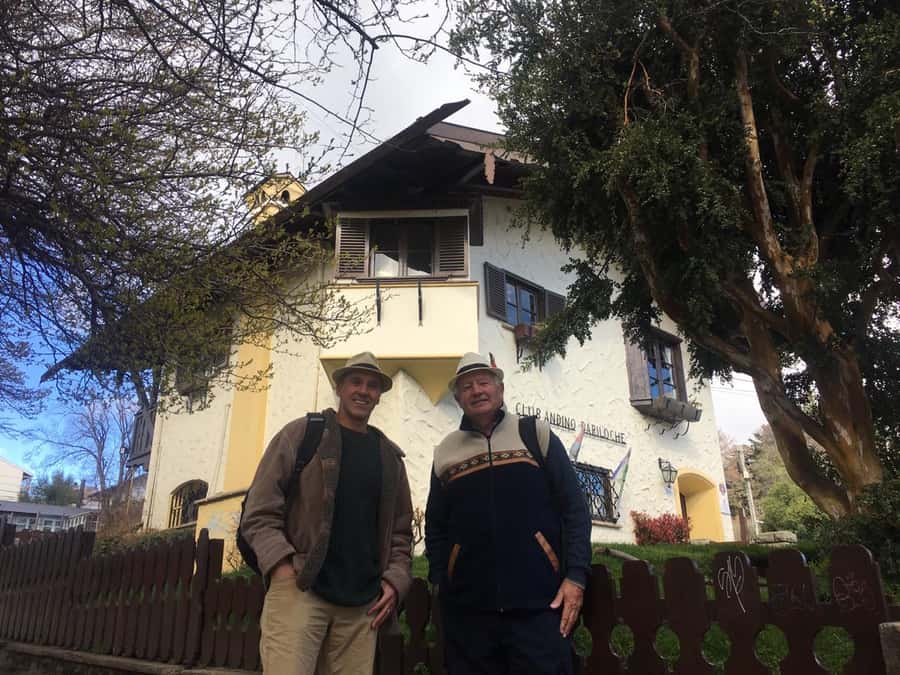
- Important sites: Visit the Civic Center, Andean Club, National Park administration, German School, Belgrano Square, and Priebke’s former house.
- History and myth together: The final discussion looks at claims about German activity in Patagonia and what can actually be supported.
- Strong English service: Diego is repeatedly praised for clear English, good pacing, and his ability to handle questions.
- Good use of time: At $41 per person, the tour makes the most sense for visitors who want context for Bariloche’s architecture and past, not just a sightseeing stroll.
Why Bariloche’s German story deserves a closer look
Bariloche is often presented through chocolate shops, mountain scenery, wooden buildings, and German-inspired architecture. That surface impression is real, but it leaves out the harder questions. Who came here, when did they arrive, and how did different groups shape the town?
This walk gives you a useful framework: three main waves of German immigration. The first reaches back to the 19th century. Later arrivals added new institutions and social connections. The final wave, after the Second World War, brings the most troubling part of the story, including Nazi officers who escaped to Argentina.
That structure matters because it stops the subject from becoming one long tale about Nazis in hiding. You see that German influence in Bariloche began long before the war. You also learn why the later Nazi presence became so closely tied to the town’s identity, even though it was only one part of a much longer story.
I appreciate that the experience deals with both facts and local theories. Patagonia has attracted plenty of dramatic stories about German activity, secret networks, and hidden plans. The tour closes with a discussion of these ideas, giving you a chance to ask where history ends and speculation begins.
More History Walking Tours in the world:
- Berlin: Third Reich & Cold War Guided Walking Tour
★ 4.9 · 8,378 reviews - Munich: Third Reich & WWII Walking Tour
★ 4.6 · 6,181 reviews - Berlin’s Best: 2 Hour Walking Tour Third Reich and the Cold War
★ 5.0 · 5,486 reviews
Starting at the Civic Center
Meet by the tourist information office in the Bariloche Civic Center square. This is a practical starting point because the Civic Center is one of the town’s most recognizable places, and it provides the first setting for discussing Bariloche’s public identity and German influence.
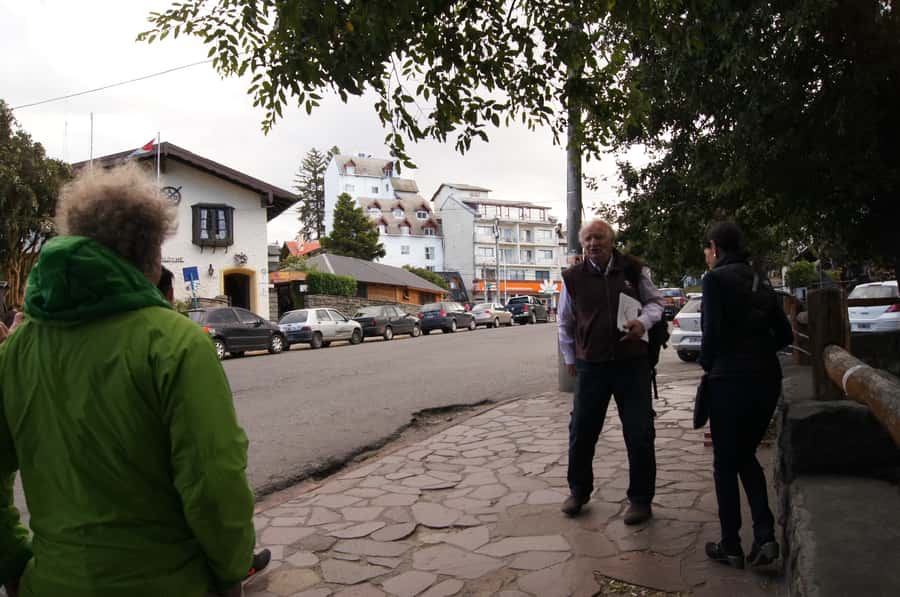
From here, you set off on foot toward the German neighborhood. The route is only about 1 kilometer, so this is not a long city hike. Still, the walk includes uphill sections, and one person specifically found the incline worth noting. Comfortable shoes will make the afternoon easier.
The changing locations are one of the tour’s strengths. Instead of listening to a long speech while standing in one place, you stop, hear the next piece of the story, and then walk to a site that adds something visual or practical. That rhythm helps the material stick.
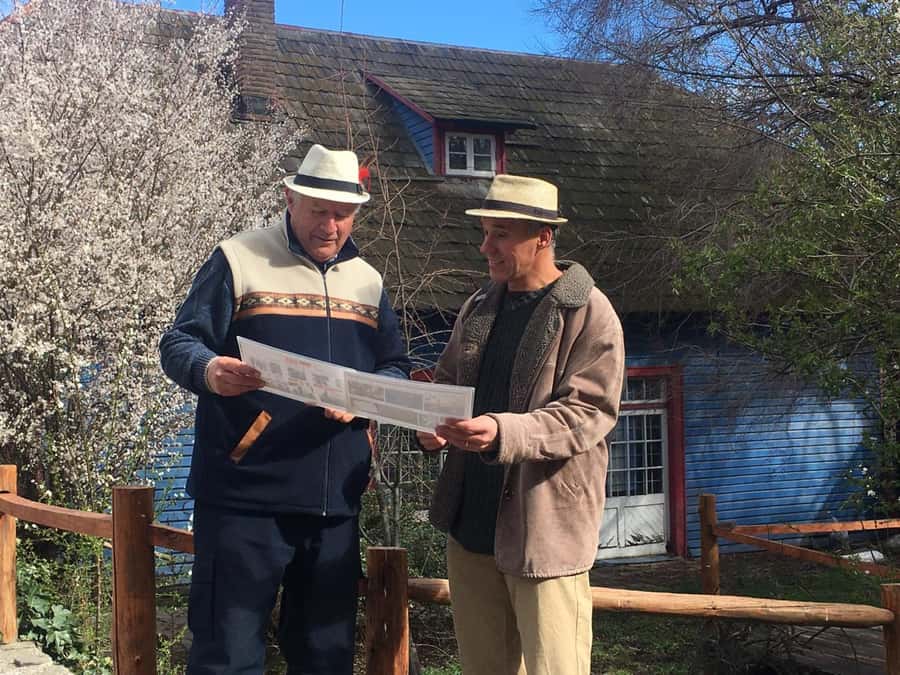
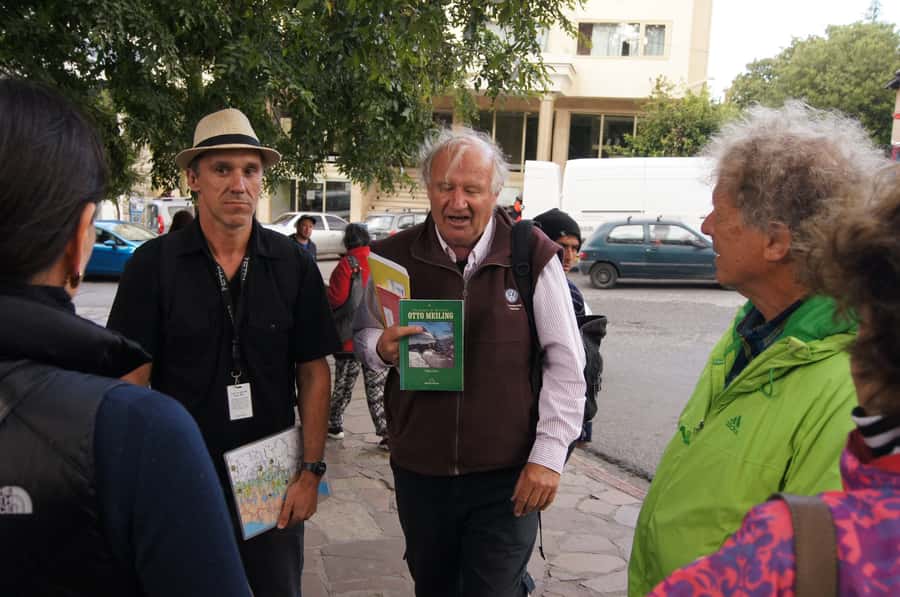
Diego is the guide most often associated with this experience. His style is part historian, part storyteller. He has been praised for answering questions as the group moves along, keeping the pace under control, and using small suspenseful pauses before the next stop. One useful detail is his use of old photographs to show how Bariloche looked in earlier periods.
The Civic Center, Andean Club, and National Park offices
The route includes the Bariloche Andean Club and the administration of Nahuel Huapi National Park. These stops broaden the story beyond private homes and schools.
The Andean Club represents the town’s relationship with mountaineering and the surrounding region. The National Park administration points to the organized development of Nahuel Huapi and the institutions that helped give Bariloche its public shape. Together, these sites help you see that the German connection was not limited to families living in chalet-style houses.
You should not expect access to private interiors or a museum-style display at every stop. The value comes from hearing how each location fits into the town’s development. The guide connects buildings, organizations, and immigration patterns, so the route becomes a walking map of ideas rather than a checklist of façades.
This is also where the tour may appeal to people who have already seen Bariloche’s main sights. If you have visited the Civic Center before, the guide gives you another way to read it. You begin to look at its institutions and architectural choices as evidence of the town’s social story, not only as attractive scenery.
The German School and the Priebke story
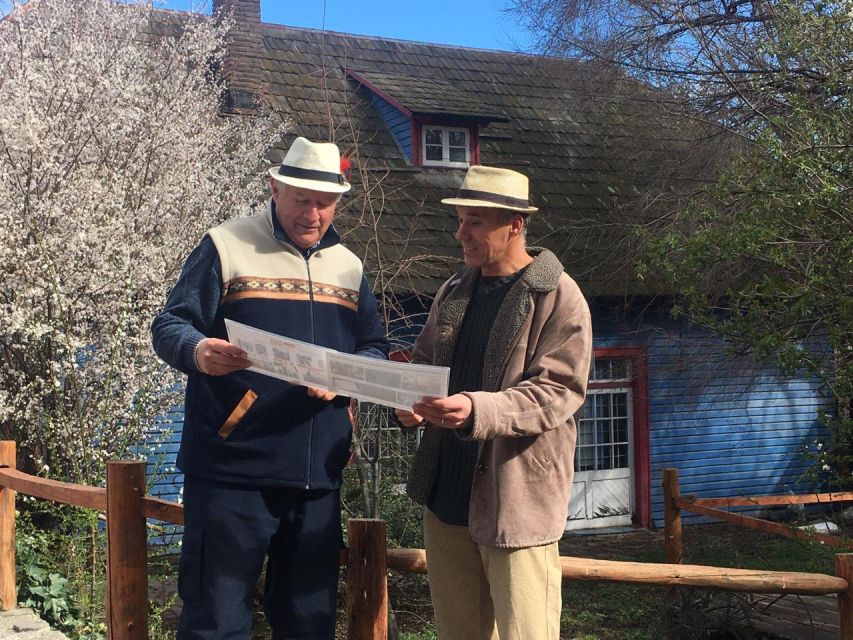
The German School is one of the most important stops because it gives the subject a concrete local setting. You hear about the school’s place in the German community and how institutions helped maintain cultural links in Bariloche.
The tour also examines the school’s connection to the discovery of Erich Priebke. He was found in Bariloche after American journalist Sam Donaldson intercepted him there. The story is one of the tour’s most striking episodes because it connects a familiar local building with an international investigation.
You then see the house where Priebke lived before he was extradited in 1994. It is a simple but powerful kind of historical site: not a grand monument, but an ordinary home connected to a very serious chapter in postwar history.
The guide’s job here is especially important. It would be easy to turn Priebke’s story into a sensational mystery. Instead, the tour places it within the broader pattern of postwar German arrivals. That context helps you understand why the case mattered without letting it swallow the entire history of German immigration to Bariloche.
A few more walking tours around the world worth a look
- Magical London: Harry Potter Guided Walking Tour
★ 4.7 · 22,044 reviews - Reykjavik Food Walk – Local Foodie Adventure in Iceland
★ 5.0 · 18,952 reviews - History and Hauntings of Salem Guided Walking Tour
★ 5.0 · 14,564 reviews - New Orleans Premier Ghost, Voodoo and Vampire Walking Tour
★ 4.5 · 12,856 reviews
Belgrano Square and the German neighborhood
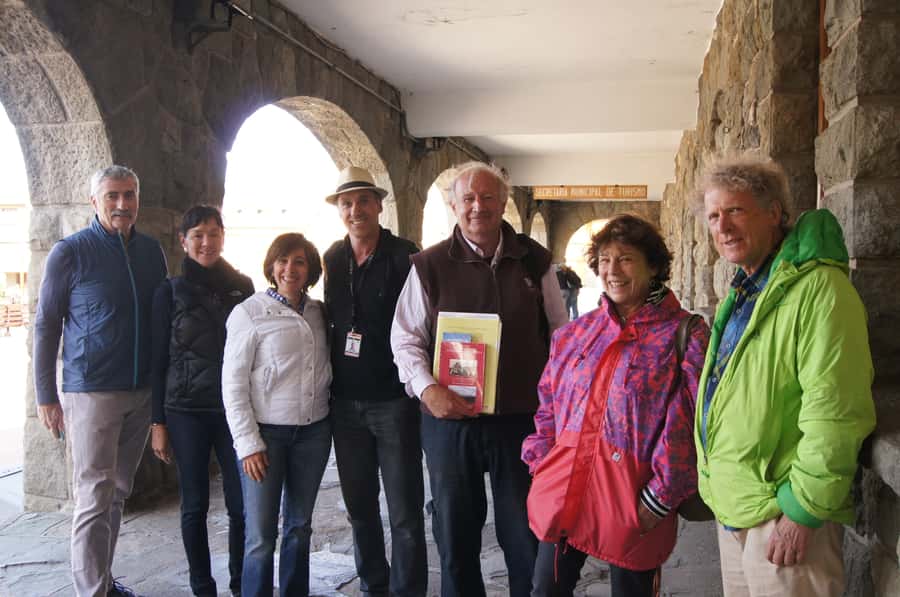
Belgrano Square is another point on the route, and the surrounding streets provide a chance to see different house styles with German origins. You are not simply told that Bariloche has German influence. You are shown how that influence appears in the built environment.
The architecture is useful evidence, but it needs context. A chalet-style roof alone does not prove who built a house or why it was designed that way. The guide explains the broader cultural links behind these forms, helping you avoid the common mistake of treating every Alpine-looking building as proof of a Nazi connection.
This is one of the tour’s more enjoyable sections because the history stays visible as you walk. You can compare the older photographs with the town around you and notice how Bariloche has changed. The walk also gives you a better sense of the center beyond the usual chocolate-and-souvenir circuit.
The route is short enough for most people who are comfortable walking around town, but it is not entirely flat. If steep streets are difficult for you, keep the uphill sections in mind before booking. The tour does not require a full day, yet it is more physical than a seated talk.
The three waves of German immigration
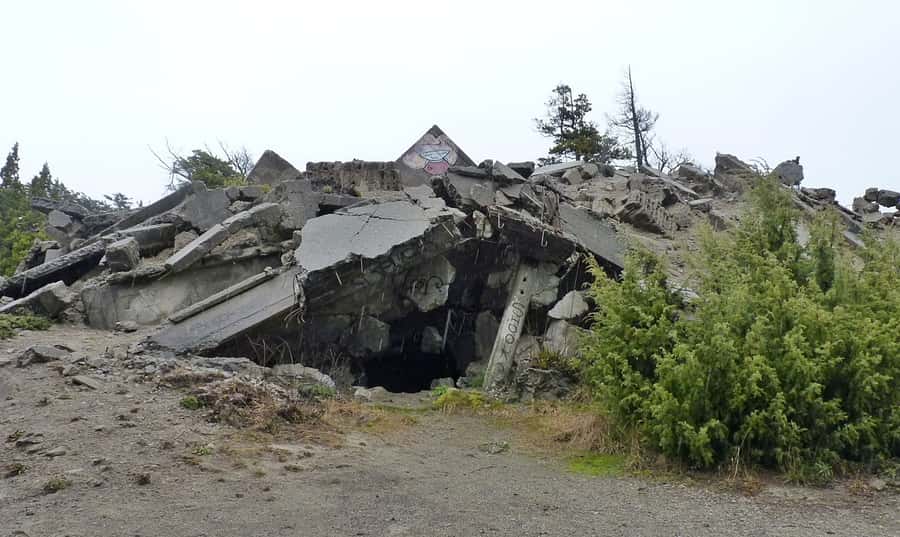
The central lesson is the distinction between the three waves. The first began in the mid-19th century, long before the Second World War. This helps explain why German culture, language, schools, clubs, and building styles became part of Bariloche’s identity in the first place.
The second wave continued those links and added to the German community in Argentina and the Lake District. The precise stories vary from one family and institution to another, but the tour uses representative places to show how these communities took root.
The third wave is the most controversial. It came after the war and included Nazi officers who had escaped to Argentina. This is the part most people expect to hear about, but it makes more sense once you understand the earlier immigration.
I like this order because it gives you proportion. Bariloche’s German history is not just a Nazi story, and the Nazi presence cannot be ignored. You get both parts, placed next to each other rather than blurred together.
The guide also addresses the myths that have grown around German presence in Patagonia. Some theories are linked to real people and documented events. Others have become exaggerated through retelling. The final discussion gives you room to consider the difference.
How the bilingual format affects the experience
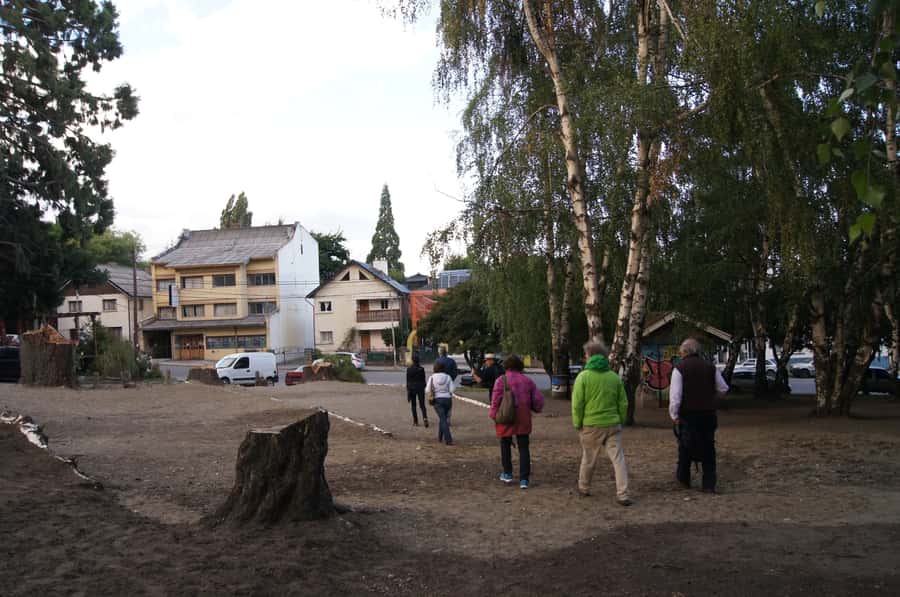
The tour is offered in English and Spanish, and Diego is praised for speaking both languages clearly. This is useful for mixed groups, especially in a place where international and Argentine visitors often share the same tour.
A bilingual presentation can also affect the timing. If Diego explains each point in both languages, the same stop takes longer, and there may be less space for questions. One earlier participant specifically noted that an English tour became bilingual and left less time for questions, although the guide’s ability made the format work well.
You should expect pauses at each location, followed by walking and another explanation. The pace is generally described as well managed, but the experience depends partly on group size. A larger group may make it harder to hear or ask extended questions, even when the guide works hard to include everyone.
If questions matter a lot to you, arrive with two or three specific ones in mind and ask them as the tour progresses. Do not save every question for the final minutes. The guide is happy to respond during the walk, and that is the best way to make use of the time.
Is $41 a fair price?
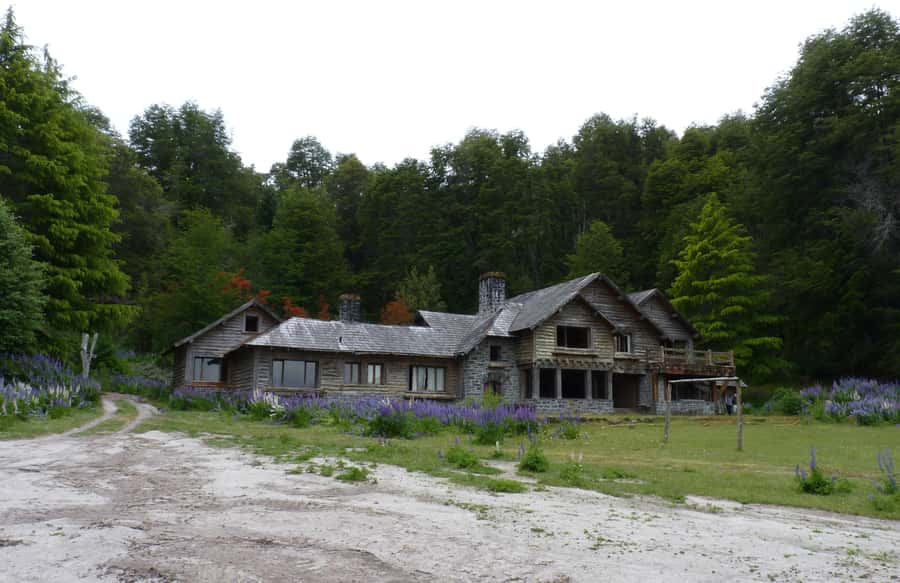
At $41 per person, this is not the cheapest way to spend 90 minutes in Bariloche. You can walk through the Civic Center and the central streets without paying anything. The difference is the interpretation, the route into the German neighborhood, and the chance to connect several sites into one story.
I think the price is fair if you care about local history, architecture, immigration, or the postwar Nazi presence in Argentina. You are paying for a live guide who can answer questions and adjust the explanation as the group moves along. That is more useful than reading a few plaques or searching for isolated facts online.
The value is weaker if you mainly want a general introduction to Bariloche or a relaxed architectural stroll. The tour has a clear subject and does not try to cover every part of the town. Its best audience is someone who wants to understand why German influence became so visible and why the subject remains sensitive.
The 90-minute length helps the value. You can fit it between outdoor activities, a museum visit, or an afternoon in the center. One practical advantage is that it gives you historical context without taking an entire day away from Bariloche’s mountain and lake activities.
Who will enjoy this walk most?
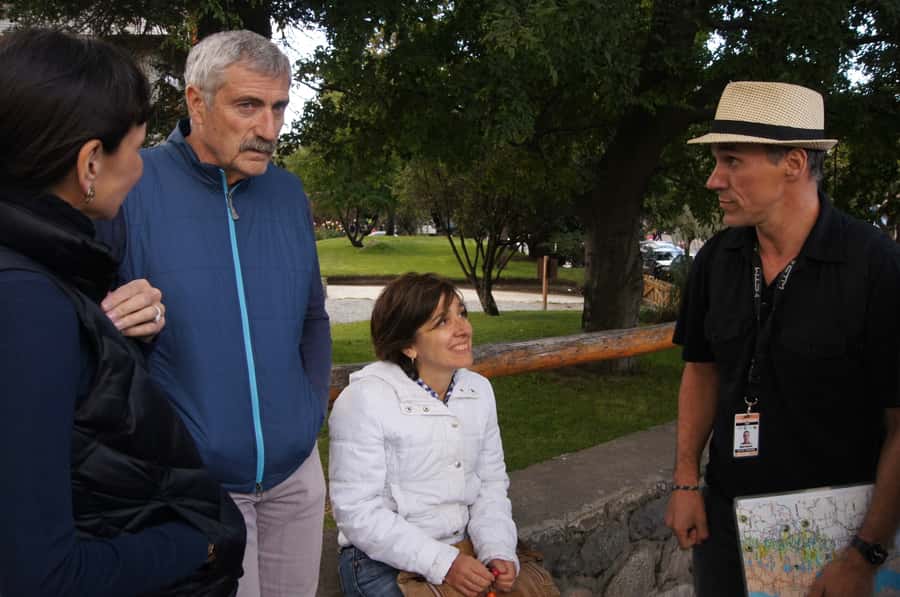
I would choose this tour if you enjoy history that includes uncomfortable questions. It suits people interested in immigration, Argentina after the Second World War, local architecture, journalism, or the way myths grow around real events.
It is also a good choice for repeat visitors. If you have already photographed the Civic Center and walked the main shopping streets, this gives familiar places a new meaning. Families with older children may find the Priebke story and the idea of three immigration waves useful, though the subject is serious.
You do not need prior knowledge of Bariloche or German history. The guide builds the story from the beginning and explains the key points as you move. The tour is also a practical option for English speakers because the guide’s English has been praised repeatedly for clarity and fluency.
I would think twice if you dislike uphill walking, want a fully private experience, or expect a museum with extensive indoor exhibits. This is a short outdoor route, with explanations delivered at streets, squares, and representative buildings.
Booking details and simple preparation
The meeting point is the Bariloche Civic Center square, by the door of the tourist information office. Allow enough time to find that exact spot, since the square can be busy and the tour begins on foot.
The activity lasts 90 minutes and includes the guide and walking tour. Spanish and English are available. You can cancel up to 24 hours before the start for a full refund, and the reserve-now, pay-later option lets you hold a place without paying immediately.
Wear shoes suited to pavement and inclines. Bring water, and consider the weather because the experience takes place outdoors. The route is short, but the uphill sections and repeated stops mean you will be standing and walking throughout.
Should you book the German Immigration and History Walking Tour?
Book it if you want the story behind Bariloche’s German-looking buildings, schools, clubs, and postwar controversies. The three-wave structure is the strongest reason to go, while the German School and Priebke’s former home give the subject a direct connection to the town around you.
Diego’s storytelling is another major advantage. He keeps the group moving, answers questions, uses photographs, and handles difficult material without reducing it to a sensational tale.
Skip it if your time in Bariloche is extremely limited or if you want only scenery and outdoor activities. For everyone else, this is a focused, well-paced way to spend an afternoon, especially early in your stay when you want a better sense of what shaped the city.
FAQ
Where does the tour begin?
It begins in Bariloche Civic Center square, by the door of the tourist information office.
How long is the walking route?
The route covers about 1 kilometer and lasts 90 minutes.
Which languages are available?
The tour is available in Spanish and English.
Which places are included on the route?
The walk includes the Civic Center, the Bariloche Andean Club, the Nahuel Huapi National Park administration, the German School, Belgrano Square, and the house where Erich Priebke lived.
Does the tour discuss Erich Priebke?
Yes. It explains how Priebke was discovered after American journalist Sam Donaldson intercepted him, and it visits the house where Priebke lived before his extradition in 1994.
Can I cancel the booking?
Yes. You can cancel up to 24 hours in advance for a full refund. A reserve-now, pay-later option is also available.
Just added around the world
- Fira: Guided Foodie Walking Tour with Tastings★ 4.9 · 474 reviews
- Fez: Guided Walking Tour of the Historic Medina★ 5.0 · 359 reviews
- Fez: Walking Tour in the Ancient City of Fez★ 4.8 · 73 reviews
- Faro: Old Town Guided Walking Food Tour★ 4.9 · 94 reviews
- Feel like a local – Walking Tour in Mykonos Town 2hours★ 4.4 · 77 reviews
- Fes: A Guided Walking Tour Through the Historic Medina★ 4.4 · 97 reviews
- Fez: Half-Day City Private Walking Tour with a Guide★ 4.6 · 114 reviews
- Fanal / Assobiadores – Levada Walk★ 4.6 · 93 reviews
History Walking Tours, compared.
Berlin’s Best: 2 Hour Walking Tour Third Reich and the Cold War
Read our review →
Third Reich Berlin: Hitler and WWII Walking Tour
Read our review →
New Orleans Garden District History Walking Tour
Read our review →
Cartagena: Historic Center and Getsemaní Shared Walking Tour
Read our review →
Imperial Palace and Shogun Historical Walking Tour
Read our review →Browse the lists this tour appears in