
REVIEW · ITALY
Syracuse: Ortigia Classic Walking Tour
Ortigia packs Greek ruins, a Christian cathedral, a myth-filled spring, and quiet old lanes into a small island at Syracuse’s heart. This two-hour walking tour gives you a useful first look without asking you to spend half a day on your feet.
I like the route’s variety, especially the way it links the Temple of Apollo with Piazza Duomo and the Aretusa Spring. I also like the small-group format, usually around 10 people and never more than 25, plus the audio headsets used when groups are larger. The main drawback is that Ortigia can be crowded, with other tours, school groups, and traffic squeezing into narrow streets.
Key points to know
- Greek beginnings: Start at the Temple of Apollo, one of the earliest large stone Greek temples in the western colonies.
- Cathedral built on a temple: Visit Piazza Duomo and learn how Syracuse’s cathedral incorporates an ancient Greek temple.
- Myth and papyrus: See the Aretusa Spring, tied to Greek mythology and known for its papyrus plants.
- Several layers of Ortigia: The route includes the old Jewish quarter, Christian sites, Greek remains, and local traditions.
- A practical first walk: The tour covers major sights in two hours and ends near Piazza Archimede.
- Optional cathedral entry: The church visit costs €2 extra, and the guide joins you when access is available.
Why this two-hour walk works well in Ortigia
Ortigia is compact, but it is not simple. A short walk can carry you from a Greek temple to a Baroque square, from a Christian church to a Jewish neighborhood, and from a busy pedestrian street to the open sea. Without context, you may see beautiful buildings without understanding how many different eras are stacked together here.
This tour gives you that framework. You begin at the eastern entrance to Ortigia and work through the old center on foot. The route is not built around long museum visits. Instead, it uses streets, squares, façades, ruins, and views to explain how Syracuse developed.
That makes it a good choice for your first morning or afternoon in the city. You can learn the layout, hear about the main monuments, and ask the guide for ideas for the rest of your visit. Guides speak English or Italian, and Eva is one of the guides who has received especially strong praise for her clear explanations, friendly manner, and steady pace.
The group size matters here. A large tour can easily lose people in Ortigia’s tight lanes. This experience caps the group at 25, though it often runs with about 10 people. You get a better chance to hear the guide and ask questions. For larger groups, free headsets let you listen without requiring the guide to shout.
A few more walking tours around Italy worth a look
- Venice: Doge’s Palace and St Mark’s Basilica Walking Tour
★ 4.4 · 6,291 reviews - Milan: Guided Walking Tour & Last Supper Visit with Ticket
★ 4.7 · 5,409 reviews - Naples: Street Food Walking Tour with Local Guide
★ 4.9 · 4,976 reviews
Starting beside the Temple of Apollo
The walk begins near Largo XXV Luglio, at the entrance to Ortigia. Confirm the exact meeting point and booking option before setting out, since the meeting details can vary. Several walking tours may gather in the same area, so look for the Hermes Sicily Tours guide rather than simply joining the first group with a flag or sign.
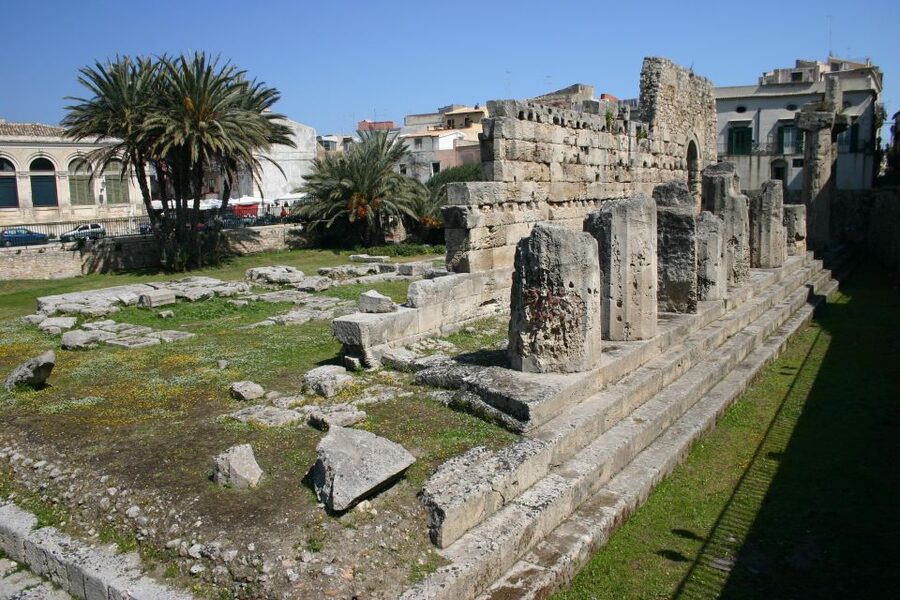
The first major stop is the Temple of Apollo, a powerful introduction to Syracuse’s Greek past. The remains are not a complete temple, but the surviving stonework gives you a sense of its scale and age. The site is described as the first large stone temple built by ancient Greeks in the western colonies, which helps explain why it matters beyond its appearance.
Your guide uses the temple to explain the origins of Syracuse and its importance among Greek settlements. This is one of the tour’s best teaching moments because you start with a physical piece of the city’s earliest story rather than a general talk in a modern square.
Do not expect a long archaeological visit here. The tour is a walking overview, not a specialist excavation tour. The value comes from the explanation and the way the temple sets up the rest of the route.
Piazza Archimede and the Fountain of Diana
From the temple, you walk into Piazza Archimede, one of Ortigia’s central gathering points. The square is named for Archimedes, the famous mathematician associated with Syracuse, and it gives the tour a natural pause between the ancient entrance and the baroque center.
At the middle of the square is the Fountain of Diana. It is an attractive landmark and an easy meeting reference if you return to Ortigia later on. Your guide explains the imagery and the square’s place in the town, while you get time to look around and take photographs.
The pace is one of the tour’s strengths. Guides such as Eva have been praised for allowing enough time for pictures while still keeping the group together. That sounds like a small detail, but it makes a difference on a short walk. A guide who rushes through every stop can leave you with facts but no feel for the place.
The square can also be busy. Ortigia attracts several walking groups, and the narrow streets can feel crowded when tours, school groups, and local traffic meet. Keep that in mind if you want a quiet photographic experience. This is a social introduction to the city, not a solitary stroll.
Piazza Duomo and a cathedral with Greek columns
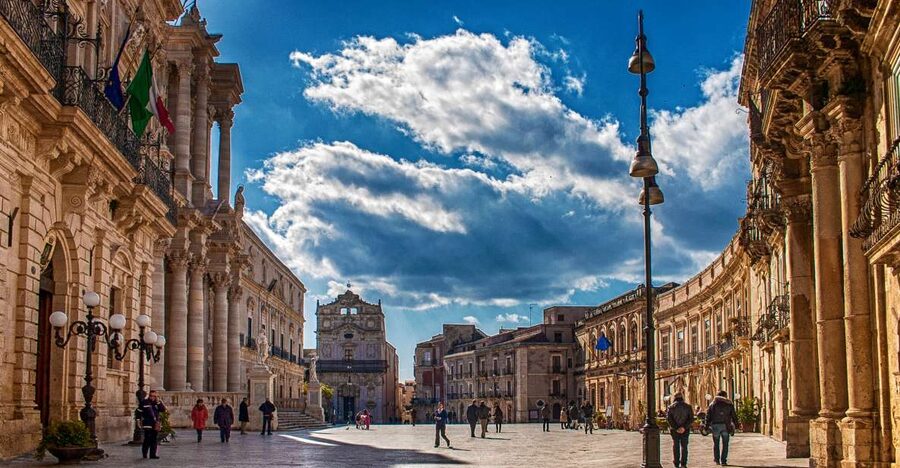
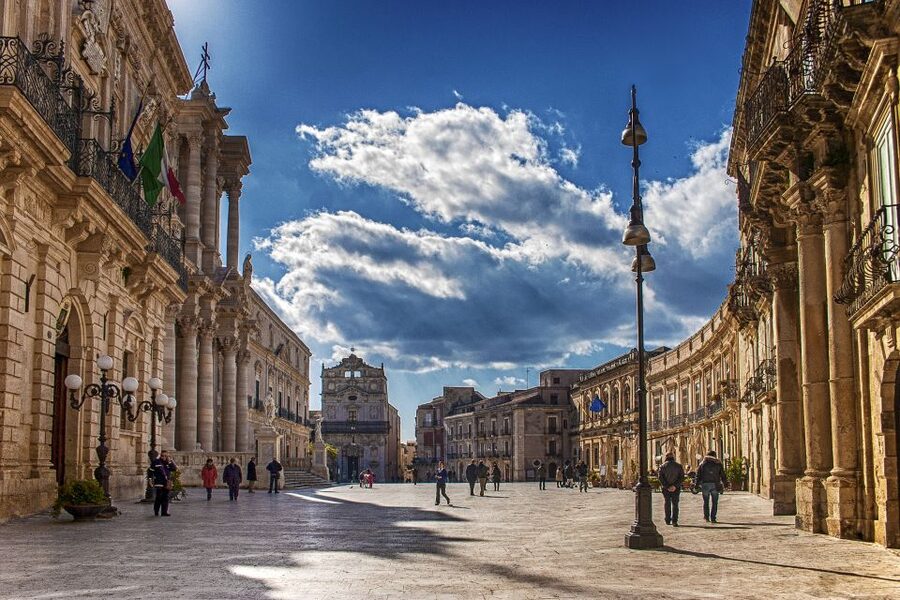
Piazza Duomo is the visual centerpiece of the route. The square gathers grand palazzi, churches, and public buildings in one broad space, making it a welcome change after the tighter streets. Here you learn about Palazzo Vermexio, Palazzo Beneventano del Bosco, the Church of Saint Lucy, and Syracuse Cathedral.
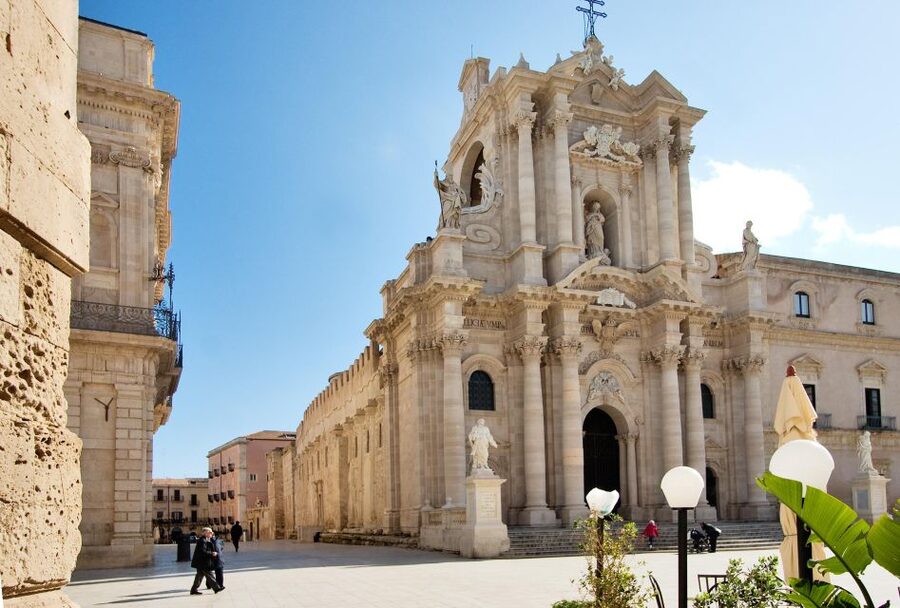
The cathedral is the most unusual stop. It was built into an ancient Greek temple, so its structure carries visible traces of different periods. Inside and outside, you are not looking at a single clean architectural style. Greek columns, Christian worship, and later decoration all occupy the same building.
The guide explains the cathedral’s religious role and its place in local life. It is also frequently used for weddings, which helps you see it as an active church rather than only an old monument.
When access is available, you can enter with the guide for an additional €2. The visit is optional, and the entry charge is not included in the tour price. If the church cannot be visited, the group may instead take a short coffee break. That flexibility is useful, especially if your schedule is tight or you prefer to keep the tour focused on the streets.
For a first visit, I would consider paying the small extra fee if the cathedral is open. The unusual combination of Greek temple remains and Christian architecture is one of the clearest examples of Syracuse’s layered past. If you plan to return later, you may prefer to use this stop for photographs and save the interior for a quieter visit.
Same streets, a different route:
- Florence: Highlights Walking Tour with Expert Guide
★ 4.6 · 4,662 reviews - Venice: San Marco to Rialto Walk & Spritz Like a Local
★ 4.2 · 3,651 reviews - Venice Walking Tour and Gondola Ride
★ 3.5 · 3,630 reviews - Uffizi & Accademia Timed Entry: Small Group Duomo Walking Tour
★ 4.5 · 3,630 reviews
The Aretusa Spring and the seafront
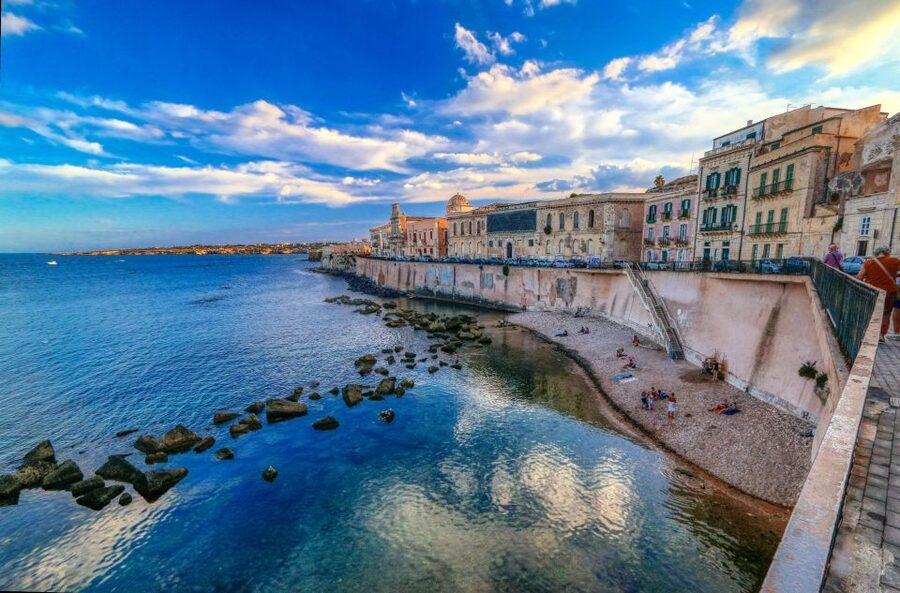
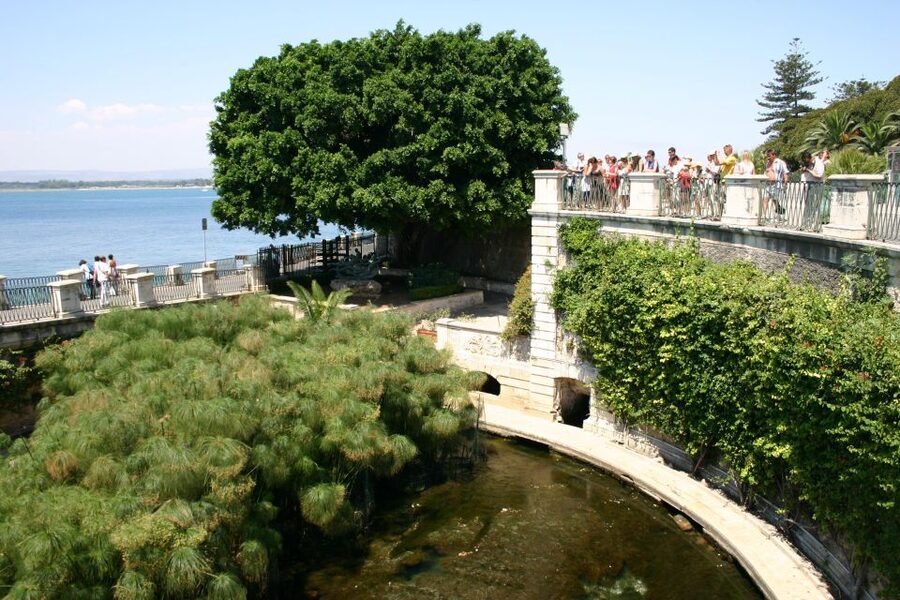
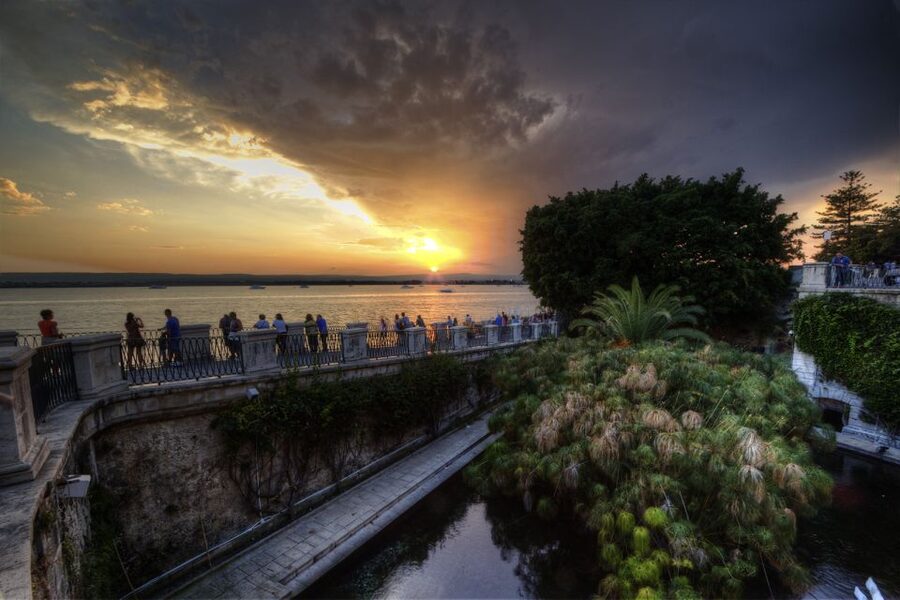
The route continues to the Aretusa Spring, one of Ortigia’s most atmospheric sights. The spring is linked to Greek mythology and is known for its papyrus plants. That combination gives the stop more depth than a simple scenic viewpoint: you get a natural feature, an ancient story, and a plant associated with the area.
This is a good place to slow down. The open setting and water provide a break from the city streets, and the guide explains why the spring became such an important part of Syracuse’s identity. You also get time to enjoy the view and take photographs.
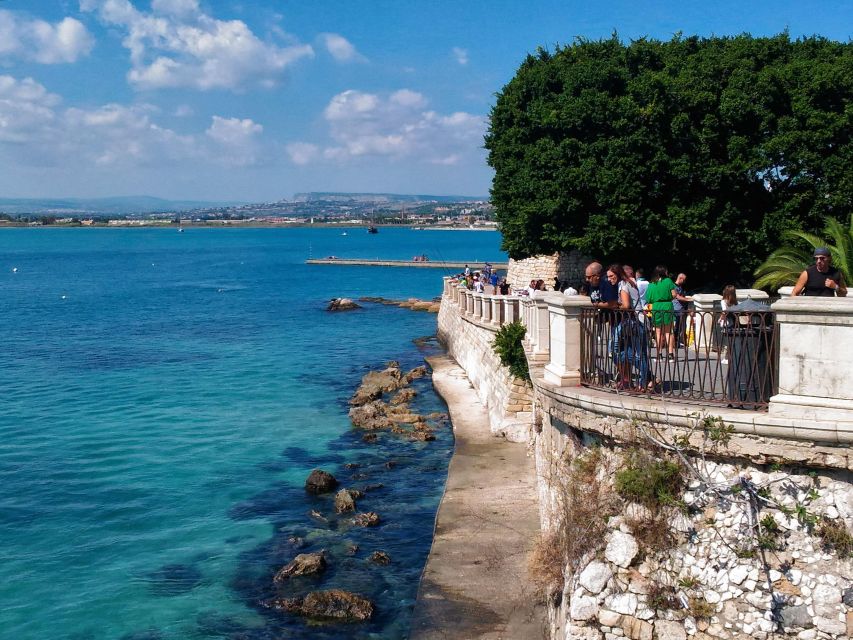
From the spring, the route follows the seafront promenade toward Castello Maniace. The castle itself is listed as a scenic view along the way rather than a full interior visit, so do not book this walk expecting castle entry. You see it as part of the coastal setting and learn how it fits into the city’s defenses and waterfront.
This section adds breathing room to the tour. After the close lanes and busy squares, the sea opens up the view. I like that the route does not stay only among churches and ruins. It gives you a sense of Ortigia’s position as an island and shows how the waterfront connects the old center.
Via della Giudecca and the Church of Saint John Baptist
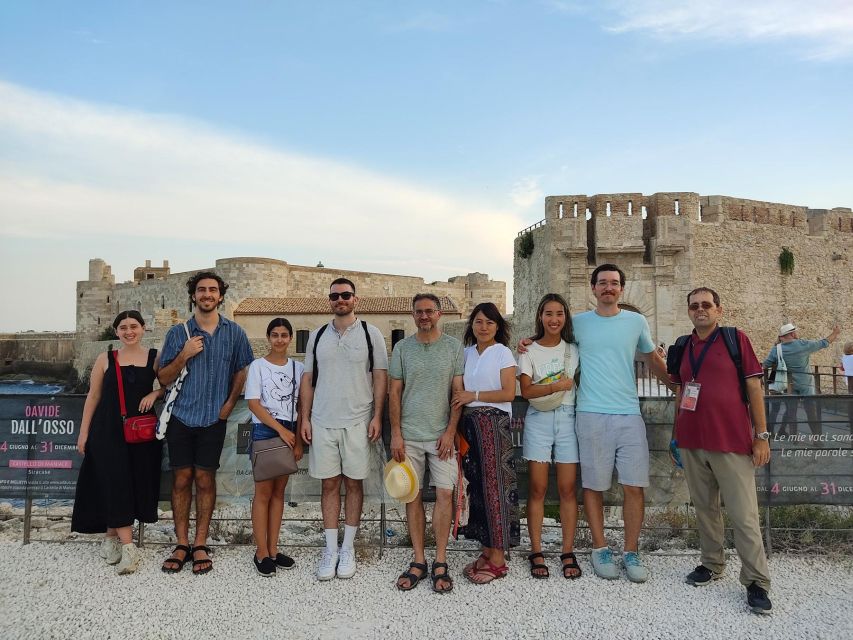
The walk then turns through Via della Giudecca, the former Jewish district. This is one of the more meaningful parts of the itinerary because it broadens the story beyond Greek and Christian Syracuse.
Your guide discusses the area’s past and the people who once lived here. The streets offer a different atmosphere from Piazza Duomo, with a more local, residential feel. The route does not treat the quarter as a decorative backdrop. It places the neighborhood within the wider story of religious communities and changing life in Ortigia.
The Church of Saint John Baptist is another stop on this section. You receive a guided explanation of the church and its role in the old town. As with the cathedral, the point is not simply to tick off another building. The guide connects architecture and worship with the daily life of Syracuse.
The tour also covers local celebrations, especially the feast of Saint Lucy and its grand procession. These details help you understand how the city’s traditions continue beyond its archaeological sites. If you are interested in festivals, religious customs, or how Sicilian communities mark important days, this part will add more than another list of dates and building names.
What the guide adds to the streets
A good guide is especially important in Ortigia because many of the best details are easy to miss. A column reused in a church, a square named for an important local figure, or a neighborhood shaped by an earlier community can look like background scenery without explanation.
The strongest guide reports point to clear English, a pleasant style, and thoughtful answers to questions. Eva is repeatedly singled out for explaining history, architecture, and culture in an accessible way. She is also noted for maintaining a comfortable pace and giving people room to look around.
The tour includes stories about both ancient and recent Syracuse. That balance matters. You hear about the Greek colony, but you also learn about religious celebrations, local customs, and everyday Sicilian life. The result is more useful than a tour that treats Ortigia as an outdoor museum.
Headsets are provided free when the group is larger. In practice, this means you can hear the guide without standing shoulder to shoulder or waiting for the street to become quiet. That is valuable in Ortigia, where the combination of narrow lanes and competing tours can make live commentary difficult.
Price, timing, and practical comfort
At $22 per person, this is a reasonably priced introduction to Ortigia. You are paying for two hours with a live English or Italian guide, not for monument admissions. The cathedral’s €2 entry fee is extra, but the main route itself focuses on public streets, views, and exterior explanations.
I see the value in booking this early in your stay. You get the basic map of the old town, learn which sights deserve a return visit, and can ask the guide for suggestions about restaurants, nearby towns, monuments, or other activities. That advice can help you use the rest of your time more wisely.
Wear comfortable shoes. The tour covers narrow historic streets and includes a steady walk between the temple, squares, spring, seafront, and former Jewish quarter. The stated duration is two hours, so the pace needs to keep moving, though the guide still allows time for photographs.
The tour operates rain or shine. Bring suitable clothing for the forecast, since much of the experience takes place outdoors. It is listed as wheelchair accessible, and the route is designed as a walking visit through the old center. If you require specific access arrangements, confirm the meeting details and route when booking.
Cancellation is free up to 24 hours before the start, and you can reserve now and pay later. Those policies are useful if your Syracuse plans depend on weather or changing transport times.
Who should choose this Ortigia walk?
I would recommend it most to first-time visitors who want a clear introduction before exploring alone. It is also a good fit if you have only a short stay in Syracuse, since the route touches the city’s main historic themes without requiring a full day.
The tour suits you if you enjoy:
- Greek archaeology explained in a citywide context
- Churches and architecture with layers from different periods
- Local religious traditions and neighborhood history
- Scenic waterfront stops and time for photographs
- Small-group walks with a chance to ask questions
It may be less suitable if you want extended access to every monument. The cathedral visit is optional and costs extra, Castello Maniace is viewed from the route, and the tour does not replace a full archaeological visit elsewhere in Syracuse.
You should also expect some urban friction. Other tour groups, schoolchildren, and vehicles can make parts of Ortigia noisy and crowded. That is not a fault unique to this walk, but it can affect the mood. The headset system helps, and an experienced guide can keep the group organized, but the old center remains a busy public place.
Should you book the Syracuse Ortigia Classic Walking Tour?
Book it if you want an affordable, well-paced first look at Syracuse’s old town. The route gives you Greek origins, Piazza Duomo, the unusual cathedral, Aretusa Spring, the waterfront, Giudecca, and Saint Lucy traditions in a single two-hour walk.
I especially like the balance between major sights and local context. You are not shown only the postcard views. You hear how ancient, Christian, Jewish, and modern Sicilian life overlap in the same small area. Guides such as Eva add real value through clear explanations and practical suggestions.
Skip it if you prefer exploring entirely alone or need long, quiet visits inside monuments. For most visitors, though, $22 is a fair price for a strong orientation to Ortigia. Take it near the beginning of your stay, keep the cathedral’s €2 entry option in mind, and use the final minutes near Piazza Archimede to ask the guide where to go next.
FAQ
How long is the Ortigia Classic Walking Tour?
The tour lasts two hours.
What languages are available?
The tour is offered in English or Italian. In rare cases, particularly with very small groups, explanations may be given in both languages.
Where does the tour start?
The walk starts at the entrance to Ortigia near Largo XXV Luglio, with the exact meeting point depending on the option booked.
Where does the tour end?
The route finishes near Piazza Archimede. The stated drop-off points are the Fountain of Diana and Piazza Archimede.
Is cathedral entry included?
No. Cathedral entry is optional and costs €2. When access is available, the guide can accompany the group inside.
Is the tour wheelchair accessible?
Yes, the activity is listed as wheelchair accessible.
What should I bring?
Bring comfortable shoes. The tour takes place outdoors and runs rain or shine.
Just added around Italy
- Genoa Food, Wine Tasting & History Walking Tour★ 5.0 · 212 reviews
- Genoa Walking Tour: Explore Top Sights & Hidden Gems★ 4.0 · 138 reviews
- Taste Genoa: A Full Meal Walking Food Tour by Do Eat Better★ 5.0 · 509 reviews
- Genoa Walking Tour: Discover Hidden Treasures and Street Food★ 5.0 · 80 reviews
- Tasty Florence Street Food with Guided Walking of the City★ 5.0 · 174 reviews
- Medici Legends & Renaissance Wonders: Florence Small Group Tour★ 5.0 · 205 reviews
- Florence Food Tour of 10+ Authentic Tastings with Cheeses & Wines★ 5.0 · 155 reviews
- Florence Private Walking tour with Skip-the-line to Accademia★ 4.5 · 236 reviews
Walking Tours, compared.

Magical London: Harry Potter Guided Walking Tour
Read our review →
Reykjavik Food Walk – Local Foodie Adventure in Iceland
Read our review →
History and Hauntings of Salem Guided Walking Tour
Read our review →
New Orleans Premier Ghost, Voodoo and Vampire Walking Tour
Read our review →
Amsterdam Anne Frank: Small-Group Walking Tour & Local Guide
Read our review →

Edinburgh Castle: Guided Walking Tour with Entry Ticket
Read our review →
Anne Frank’s Story – Guided Walking Tour through Amsterdam
Read our review →Browse the lists this tour appears in