
REVIEW · BERLIN
Sachsenhausen Memorial: Walking Tour from Berlin
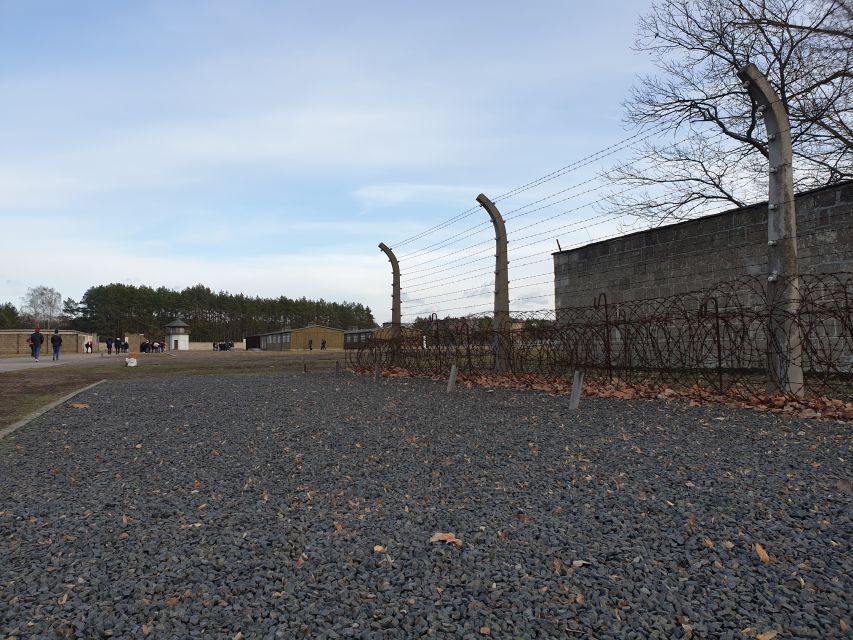
Sachsenhausen is not a casual sightseeing stop. Built in 1936 as a model concentration camp near the Nazi capital, it was designed to show how architecture, forced labor, punishment, and fear could serve a dictatorship. The three-hour visit moves through the roll-call square, prison barracks, medical rooms, former kitchen, and Station Z, where the crematoriums and gas chamber once stood.
I like the careful historical focus, especially the attention to Nazi propaganda, private industry, prisoner resistance, and the camp’s later use under Soviet occupation. I also like the practical train journey from Berlin, which puts the memorial in its real geographic setting rather than treating it as an isolated museum. The main drawback is the pace: six hours, much of it on foot, can feel demanding, and there is no meal stop.
Key points to know before booking
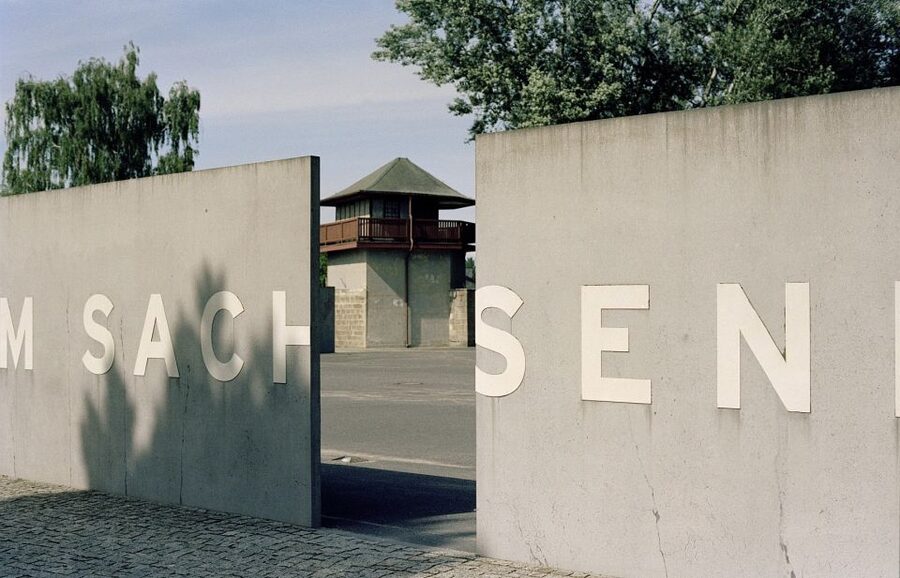
- A model for the camp system: Sachsenhausen was designed by the SS as a pattern for later concentration camps and a training center for guards.
- Three hours inside the memorial: You visit Tower A, the roll-call square, prison barracks, medical rooms, the former kitchen museum, and Station Z.
- Train travel is part of the day: The journey from Berlin to Oranienburg takes about 40 minutes each way, with an ABC public transport ticket required.
- Guides make a major difference: Fabio, Soleil, Lorenzo, and Andrea are among the guides praised for clear explanations, empathy, and strong storytelling.
- Bring food, but do not eat at the memorial: Pack lunch for the train journey because there is no meal stop and eating is not allowed on the site.
- The price works best for a full group: The $511 rate covers up to six people, but public transport and the required €3 memorial donation are extra.
Why Sachsenhausen matters beyond Berlin’s usual sights
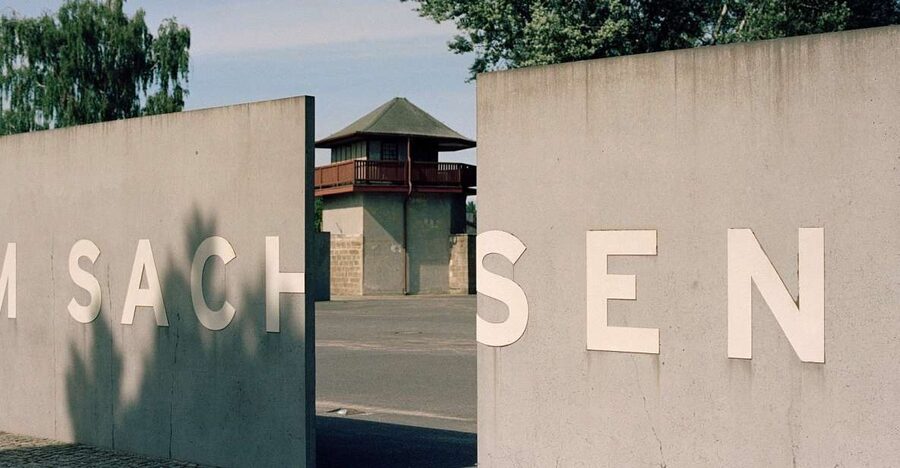
Sachsenhausen lies roughly 35 kilometers north of Berlin, near Oranienburg. That short distance is part of the lesson. The camp was close enough to the Nazi capital to be shaped by its institutions, businesses, propaganda, and SS leadership.
The site opened in 1936, during the Nazi regime’s preparation for the Berlin Olympics. It first held political opponents, then Sinti and Roma, Jews, prisoners of war, Jehovah’s Witnesses, and others targeted by Nazi persecution. More than 40,000 people died there under starvation, disease, violence, forced labor, and systematic murder.
I find the site especially useful for understanding how a camp worked as a system, not only as a collection of terrible incidents. The camp’s layout, guard towers, barracks, fences, punishment areas, and work structures all served one purpose: to make total control feel permanent.
The guide also explains what happened after 1945. Under Soviet occupation, Sachsenhausen became a special camp where former Nazis, political opponents, and civilians were detained. Thousands died from hunger and disease. That second chapter matters because it prevents an overly simple account of the site and shows how the same place carried different forms of political imprisonment.
A few more walking tours around Berlin worth a look
- Discover Berlin Half-Day Walking Tour
★ 5.0 · 9,624 reviews - Berlin City walk Government District and Places of Democracy
★ 4.7 · 8,467 reviews - Berlin: Third Reich & Cold War Guided Walking Tour
★ 4.9 · 8,378 reviews
Meeting in Berlin and taking the train to Oranienburg
The day begins at a meeting point in Berlin that depends on the option you book. Arrive at least 15 minutes before the scheduled start. The group will most likely take a train departing about five minutes after the official start time, and late arrivals cannot be accommodated.
The S-Bahn journey to Oranienburg takes about 40 minutes. You need an ABC public transport ticket, and that ticket is not included in the tour price. A 24-hour ABC ticket is recommended, so handle this before meeting the guide rather than trying to sort it out at the last moment.
The train ride gives the day a useful sense of place. You are not simply being driven to a historical attraction and dropped at the entrance. You travel from Berlin toward the former camp’s location, then continue to the memorial on foot. The walk from the station takes about 20 minutes.
This part requires a little self-management. The tour does not include food, and the memorial does not allow eating. Bring a sandwich or another simple lunch for the train journey, along with water. Comfortable shoes are essential, since the day combines train stations, the walk to the memorial, and several hours on foot across a large outdoor site.
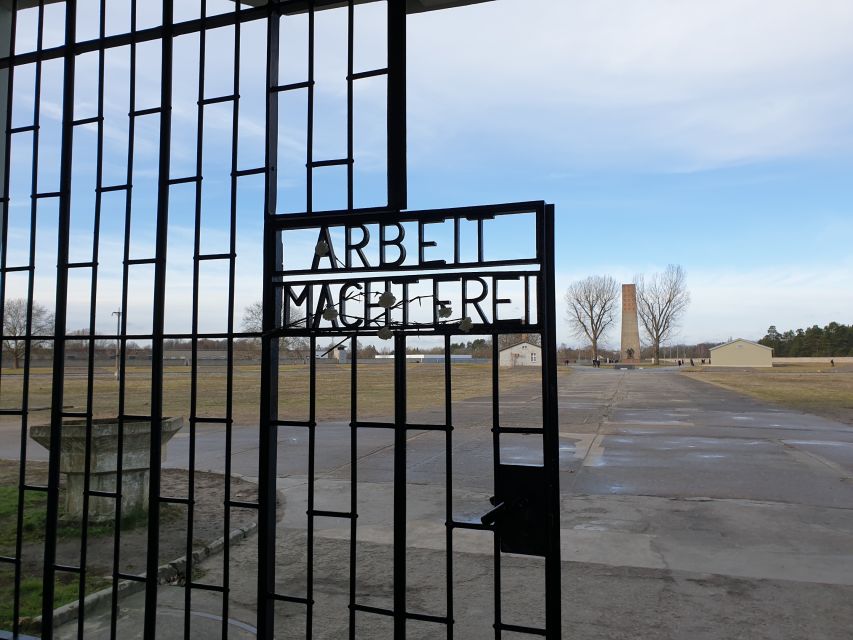
Entering through Tower A and the roll-call square
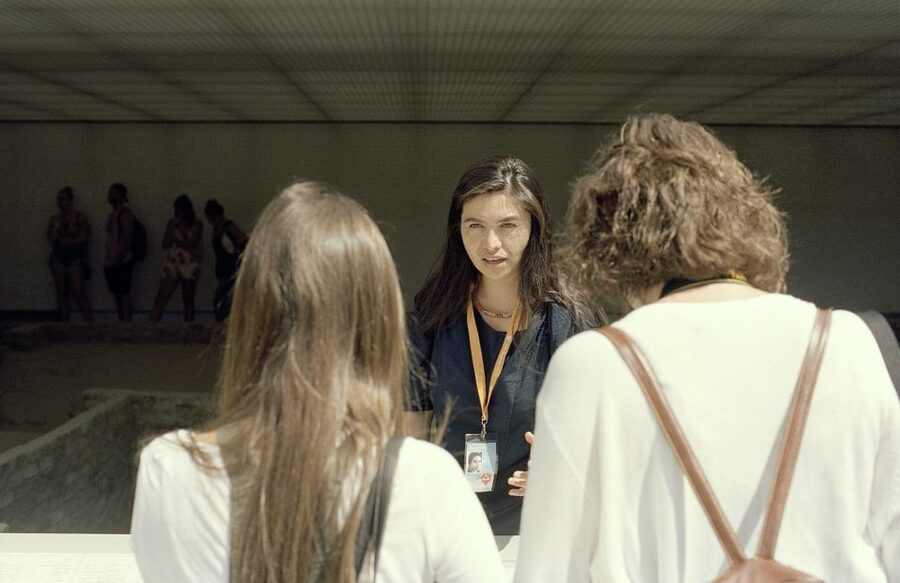
The guided visit inside Sachsenhausen lasts about three hours. It begins with the main entrance, Tower A, and the roll-call square.
The camp was planned with geometric precision. From the central area, guards could monitor large sections of the compound. The arrangement was not just practical. It used space to make prisoners feel watched, exposed, and powerless.
At the roll-call square, the guide explains the daily routine of counting prisoners and the punishment built into that routine. Prisoners could be forced to stand for long periods, sometimes in severe weather, while the SS checked the camp population.
This is where good guiding matters most. The strongest explanations connect the physical remains with survivor testimony and documented history without turning the visit into a theatrical performance. Fabio has been praised for drawing people into the subject with passion, while Soleil has been singled out for empathy and a calm way of handling such difficult material. Lorenzo is noted for dates, detail, and broader context, and Andrea for an engaging presentation.
Guide assignments can change, and the listed tour languages include French, Italian, and English. The activity information also refers to Italian or Spanish-speaking options, so check the language shown for your selected departure before paying.
Forced labor, punishment, and the prison barracks
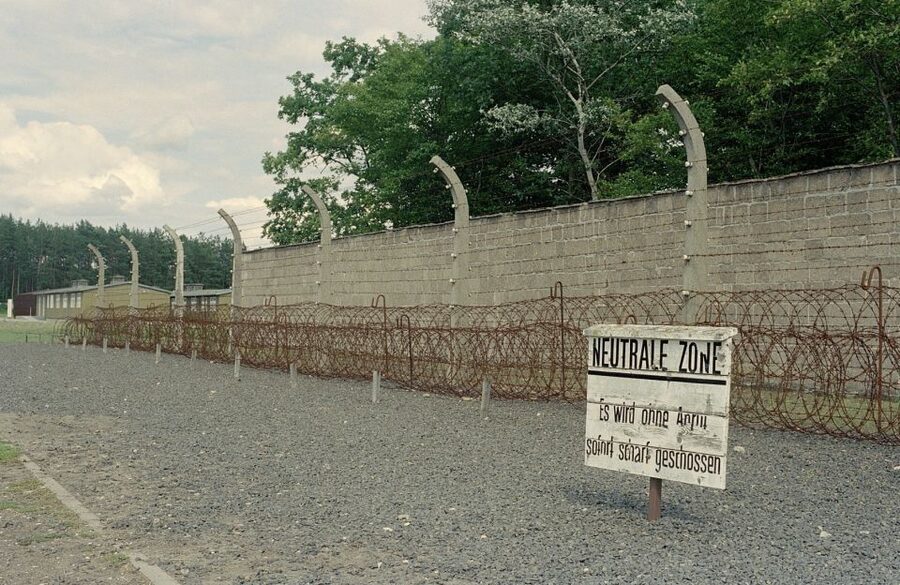
Sachsenhausen was a place of imprisonment, but it was also part of a large labor system. The guide discusses how prisoners were exploited by the SS and by private companies. That detail is important because it shows that the camp was connected to the wider economy, not sealed off from ordinary institutions.
You learn about punishment and the way the camp’s rules were used to strip prisoners of control over their bodies, time, work, and movement. The site’s design made obedience visible and resistance dangerous.
The prison barracks and medical experimentation rooms add another layer. Here, the subject moves beyond mass organization and into the treatment of individual prisoners. The guide uses survivor accounts and historical research to explain daily life, medical abuse, illness, and attempts at resistance.
The material is upsetting, but the tour is not built around shock for its own sake. Its value comes from connecting personal suffering to the machinery that produced it. You are asked to think about who made decisions, who enforced them, who profited, and how propaganda helped make the system possible.
Same streets, a different route:
- Berlin: Discover Berlin Walking Tour
★ 4.9 · 5,998 reviews - Berlin’s Best: 2 Hour Walking Tour Third Reich and the Cold War
★ 5.0 · 5,486 reviews - Berlin: Hidden Backyards Guided Walking Tour
★ 4.8 · 5,360 reviews - Explore Berlin: See All The Iconic Sights & Some Hidden Gems
★ 5.0 · 4,429 reviews
The former kitchen museum and Station Z
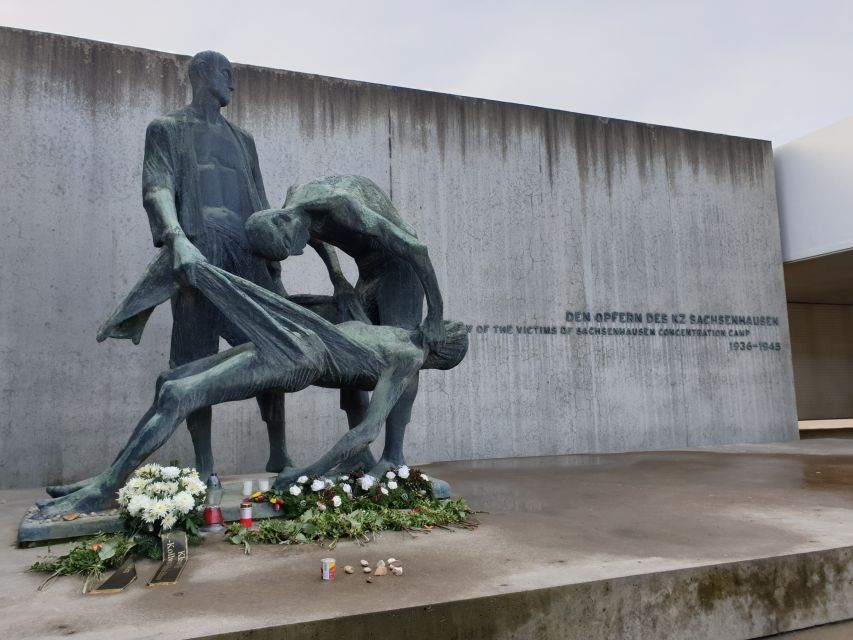
The former kitchen now houses a museum. It helps explain the camp’s administration and daily operation, while also showing how objects and spaces can preserve evidence that written summaries cannot.
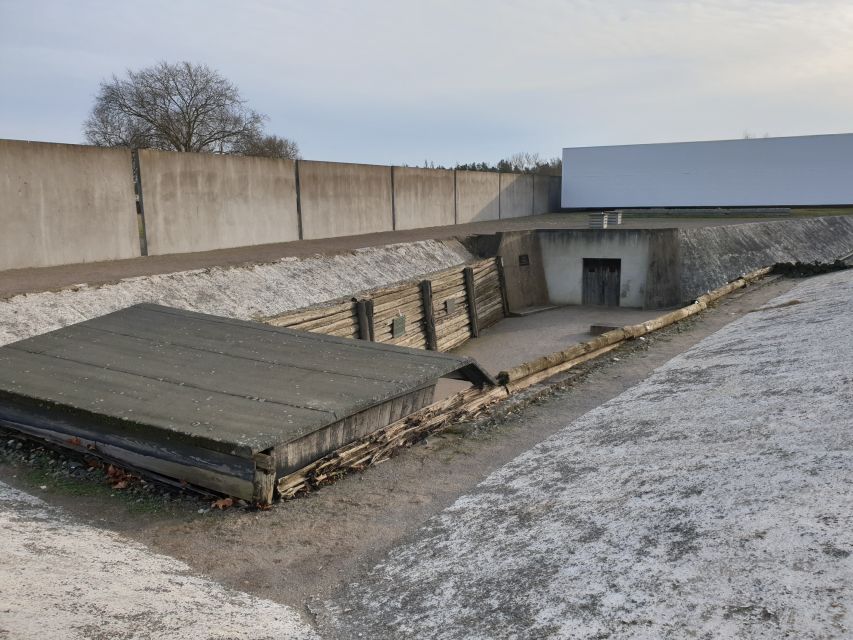
The final major stop is Station Z, the area where the crematoriums and gas chamber once stood. The name itself was a grim reference to the final letter of the alphabet, meaning the prisoner’s journey ended there. The guide explains the site’s role within the Nazi system of murder and the destruction of evidence.
This is a serious place, and the presentation benefits from a measured guide. The strongest parts of the tour are not the most graphic ones. They are the moments when you understand how bureaucracy, architecture, labor, punishment, and murder operated together.
You should expect the memorial to feel quieter and more exposed than Berlin’s indoor museums. Much of the visit happens outdoors, and some original structures are missing or represented by foundations and reconstructed elements. That can frustrate anyone hoping to see a fully preserved camp, but it also raises an important question: what does it mean to visit a place where the perpetrators tried to erase evidence?
Resistance, death marches, and the camp’s final days
The tour does not stop at the camp’s daily routines. It also covers prisoner resistance and the death marches at the end of the Second World War.
As the war turned against Nazi Germany, prisoners were forced out of camps in marches that killed many people through exhaustion, hunger, violence, and exposure. Learning about this final period prevents the visit from ending with a tidy liberation scene. The camp’s story continued through evacuation, survival, testimony, and memory.
The guide also discusses how Sachsenhausen functioned as an SS training center. Guards trained there before being sent elsewhere, making the site important to the wider concentration camp network. It was not only a place where prisoners suffered. It was also an institution that helped spread the methods of control and terror across Nazi-occupied Europe.
That wider setting is one of the tour’s strongest features. You leave with more than a list of buildings. You gain a clearer sense of how a local site served a continent-wide system.
The Soviet special camp after 1945
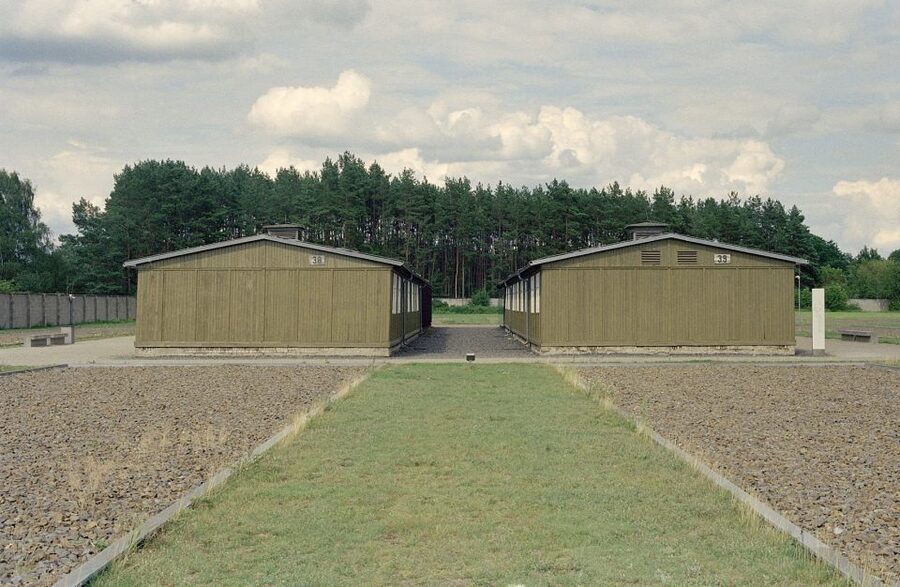
Sachsenhausen’s postwar chapter is easy to miss if you focus only on Nazi crimes. After the war, Soviet authorities used the site as a special camp. Former Nazis, political opponents, and civilians were detained there, and thousands died from hunger and disease.
The guide includes this period in the visit, which gives the memorial a more complete account of its history. It does not blur the differences between the Nazi concentration camp and the Soviet special camp. Instead, it shows how the site remained connected to political detention after the Nazi regime fell.
For me, this part is valuable because it encourages careful historical thinking. A place can carry several layers of memory, and acknowledging one period should not erase another.
What the $511 group price really buys you
The advertised price is $511 for a private group of up to six people. If six people share the cost, that works out to about $85 per person before transport and the mandatory €3 memorial donation per participant.
That is not a cheap day out, but the price becomes more reasonable for a family or group of friends who want a private arrangement. You are paying for a six-hour experience, a guide, the Berlin to Oranienburg journey, the walk to the memorial, and about three hours of focused interpretation at the site.
The value depends heavily on group size. For six people, the per-person cost is relatively manageable. For one or two people, it is a much larger expense, so compare the private option with other Sachsenhausen visits before booking.
The guide is the main reason to pay for an organized tour. The memorial can be visited independently, but a skilled guide helps you understand why the camp was designed as it was, how its parts fit together, and how the site relates to Nazi Germany’s broader system.
Remember that the price does not include the ABC public transport ticket or the €3 cash donation required at the memorial. Carry the donation in cash, and allow extra room in your budget for transport.
Group size, language, and the tone of the visit
The activity is described as a small-group walking tour, with groups of up to 25 people, while private groups are also available. A smaller group generally makes it easier to hear the guide and ask questions, though the exact feel depends on the departure you choose.
The guide languages listed for the activity are French, Italian, and English. Another part of the information refers to Italian or Spanish-speaking guides, so language availability is something to confirm for your chosen option.
The tone is serious, but it need not be cold. The strongest guide feedback centers on empathy, preparation, and the ability to explain a painful subject without losing its human meaning. Fabio, Soleil, Lorenzo, and Andrea have each been praised for different strengths, including passion, warmth, detail, and clear storytelling.
You should not expect entertainment in the usual tour sense. The goal is understanding, remembrance, and honest context. If you prefer to process difficult history quietly, tell the guide or take time on your own after the formal walk.
Practical details that can make the day easier
Wear shoes you can walk in for several hours. The route includes the station walk and a large memorial site, and the activity operates in all weather.
Pack food and drinks for the train. Eating is not allowed at the memorial, and there is no lunch stop during the full activity. A simple meal before arrival will help you stay focused during the three-hour visit.
Arrive early. The group is expected to leave on a train shortly after the official start, and the tour cannot wait for late arrivals.
After the guided portion, you may stay longer at the memorial to explore independently. The group then returns to Berlin by train, with drop-off points listed at Potsdamer Platz and Friedrichstraße. If you want more time inside the memorial, ask the guide how staying behind affects your return arrangements.
The tour runs in all weather, so check the forecast and dress in layers. Bring the €3 cash donation, your transport ticket, water, and a small lunch for the journey.
Who should book this Sachsenhausen tour?
I would choose this experience if you want a structured visit with historical explanation rather than a quick look around. It suits people interested in Nazi Germany, political repression, prisoner resistance, memorial work, and the links between government policy and private industry.
It is also a good fit for families or friends who can share the private group price. The six-hour length gives the subject room to breathe, though it may be too long for anyone who wants a short museum visit.
I would think twice if you dislike extended walking, outdoor visits in poor weather, or difficult material involving mass murder and medical abuse. The tour is not designed to be light or flexible, and there is no meal break.
The rating of 4.7 from 132 bookings reflects a strong overall response, with particular praise for the guides. The weaker point is transport organization, which can feel a little unclear at the start. Arriving early and buying the ABC ticket in advance removes much of that stress.
Should you book it?
Book this tour if you want Sachsenhausen explained as a working part of the Nazi camp system, not simply presented as a set of ruins. The attention to architecture, forced labor, SS training, propaganda, resistance, death marches, and the Soviet special camp gives the visit real substance.
The best value comes with a full group of six and a guide language that suits everyone. Bring lunch, wear sturdy shoes, pay the cash donation, and prepare for a serious six-hour day. For a first visit to a concentration camp memorial near Berlin, this is a thoughtful and well-supported choice.
FAQ
How long does the Sachsenhausen tour take?
The full activity lasts about six hours, including travel from Berlin, the walk from Oranienburg station, the guided memorial visit, and the return journey.
How long is the guided visit inside Sachsenhausen Memorial?
The guided walking tour inside the memorial lasts about three hours.
How do I reach Sachsenhausen from Berlin?
The group travels by S-Bahn from Berlin to Oranienburg, a journey of about 40 minutes. From Oranienburg station, the memorial is about a 20-minute walk.
Is public transport included in the price?
No. You need to buy your own ABC public transport ticket. A 24-hour ticket for Berlin’s ABC zones is recommended.
Is there an entrance fee or donation at the memorial?
Each participant must pay a mandatory €3 donation in cash at the meeting point. The full amount is donated to the memorial.
What languages are available?
The activity information lists live guides in French, Italian, and English. It also refers to Italian or Spanish-speaking options, so check the language for your selected booking option.
Can I eat during the tour?
Eating is not permitted at the memorial, and there is no lunch stop during the activity. Bring food for the train journey and carry drinks for the day.
Can I stay at the memorial after the guided tour?
Yes. You are welcome to remain longer and explore the memorial independently, although you should check the return arrangements with the guide.
Just added around Berlin
- Berlin Walking Tour★ 4.5 · 378 reviews
- East Meets West: Berlin Food Culture & Street Art★ 5.0 · 157 reviews
- Berlin Highlights Private Guided Walking Tour★ 4.5 · 89 reviews
- Small Group Walking Tour of East Berlin with a French Guide★ 5.0 · 176 reviews
- Berlin Street Art Walking Tour – Off The Grid★ 5.0 · 270 reviews
- Gruseltour Berlin Haunted Ghost Walk 90-minute at Berlin Mitte city center★ 5.0 · 75 reviews
- Berlin Private Complete History All Day Walking Tour★ 5.0 · 474 reviews
- Private Berlin: Iconic Sights and Hidden Gems Walking Tour★ 5.0 · 292 reviews
Walking Tours, compared.

Magical London: Harry Potter Guided Walking Tour
Read our review →
Reykjavik Food Walk – Local Foodie Adventure in Iceland
Read our review →
History and Hauntings of Salem Guided Walking Tour
Read our review →
New Orleans Premier Ghost, Voodoo and Vampire Walking Tour
Read our review →
Amsterdam Anne Frank: Small-Group Walking Tour & Local Guide
Read our review →

Edinburgh Castle: Guided Walking Tour with Entry Ticket
Read our review →
Anne Frank’s Story – Guided Walking Tour through Amsterdam
Read our review →Browse the lists this tour appears in