
REVIEW · ROME
Rome: Trastevere and Roman Ghetto Guided Walking Tour
Trastevere’s cobbled lanes and Rome’s Jewish Ghetto make a fine pair: one feels easygoing and local, while the other asks you to pause and reckon with centuries of hardship. This walking tour links both with Campo de’ Fiori and the ancient Theater of Marcellus along the way.
I like the small-group feel, which can mean a relaxed pace and real conversation with your guide. I also like the mix of major sights and ordinary Roman spaces, from Santa Maria’s mosaics to a quick coffee or juice stop near the market.
The main drawback is the route itself. You walk for two to two and a half hours with no scheduled restroom break, and the tour is not suitable for wheelchair users or people with mobility impairments.
Key points to know before you book

- A cross-town walk with a clear historical arc: Start in Trastevere, pass through Campo de’ Fiori, enter the Jewish Ghetto, and finish at the Theater of Marcellus.
- Guides make the difference: Estefi, Celia, Sarah, Giuseppe, Gabriella, and others have been praised for clear explanations, humor, patience, and useful food advice.
- Usually a small group: Some departures have had only two or three people, while groups are capped at nine per guide according to one recent booking experience.
- About $41 per person: That is fair if you want context, stories, and orientation rather than simply a stroll past famous buildings.
- Plan for steady walking: Bring water and a reusable bottle. Wear shoes you trust on uneven streets.
- Languages and flexibility: Tours run in English, French, or Spanish, with free cancellation up to 24 hours before departure.
Why this route works so well in Rome
Rome can feel like a jumbled pile of centuries. You turn a corner and meet an ancient wall, a Baroque church, a market square, or a busy café. That is part of the city’s charm, but without context, the pieces can blur together.
This route gives you a useful story line. You begin in Trastevere, where the streets feel informal and lived in. You then move toward Campo de’ Fiori, a central square with a strong market identity. From there, the walk turns more serious in the Jewish Ghetto before ending beside one of Rome’s ancient theaters.
I like that the tour does not focus only on the most famous sights. You see an important basilica and the Great Synagogue, but you also spend time in public squares and neighborhood streets. The guide’s commentary helps you notice the layers between the headline attractions.
The tour lasts two to two and a half hours. That is long enough to get a real sense of these districts, but short enough to fit around a museum visit or an evening meal. It is still a walking tour, not a sightseeing ride, so you need to be comfortable on your feet.
More Jewish Heritage Walks in Rome:
- Rome: Jewish Ghetto Walking Tour
★ 4.7 · 274 reviews - Highlights of Jewish Ghetto And Trastevere Walking Tour
★ 4.8 · 233 reviews - Amsterdam Anne Frank: Small-Group Walking Tour & Local Guide
★ 4.8 · 12,789 reviews
Starting at Piazza Mastai in Trastevere
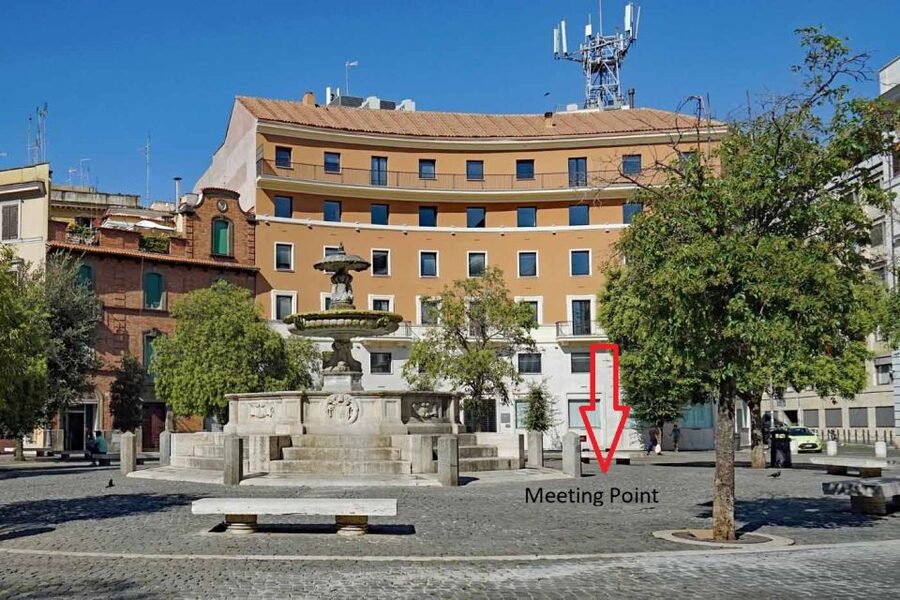
Your meeting point is around the main fountain in Piazza Mastai. The guide waits there 15 minutes before the start with a sign showing the tour name, so arrive with enough time to find the square and settle in.
Piazza Mastai is a sensible place to begin. It puts you in Trastevere quickly, away from the grand avenues and into a district known for narrow streets, informal restaurants, and a more relaxed Roman mood. The opening talk helps explain why this area matters before you start moving.
If your group is larger than 10 people, headsets are provided so you can hear the guide. Smaller groups may not need them. One of the pleasant surprises of this tour is that some departures have been very small, including private-feeling groups of two or three.
That smaller setting matters. You can ask about a church detail, a food specialty, or a street name without waiting for a formal question period. Guides such as Estefi and Gabriella have been especially good at answering questions and adjusting the pace to the people in front of them.
Santa Maria in Trastevere and its mosaics
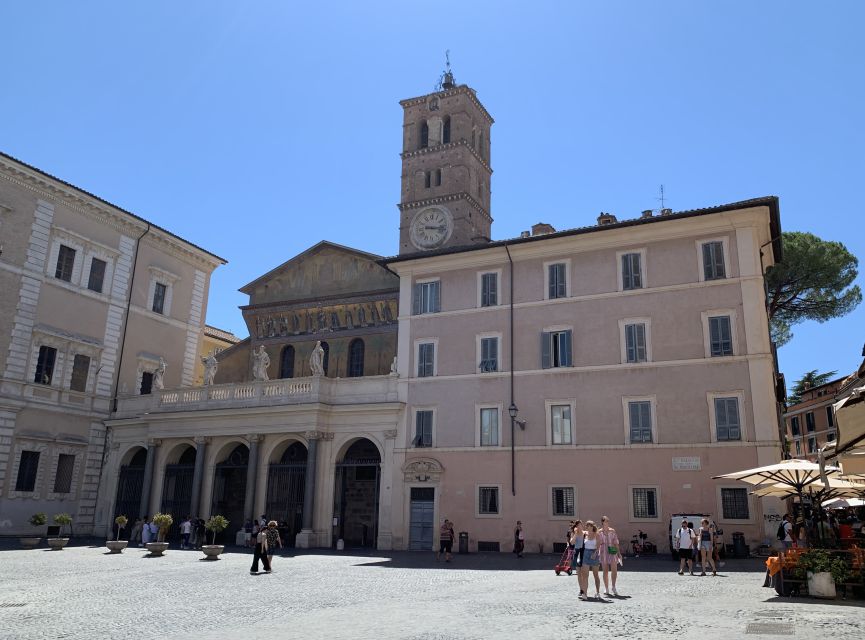
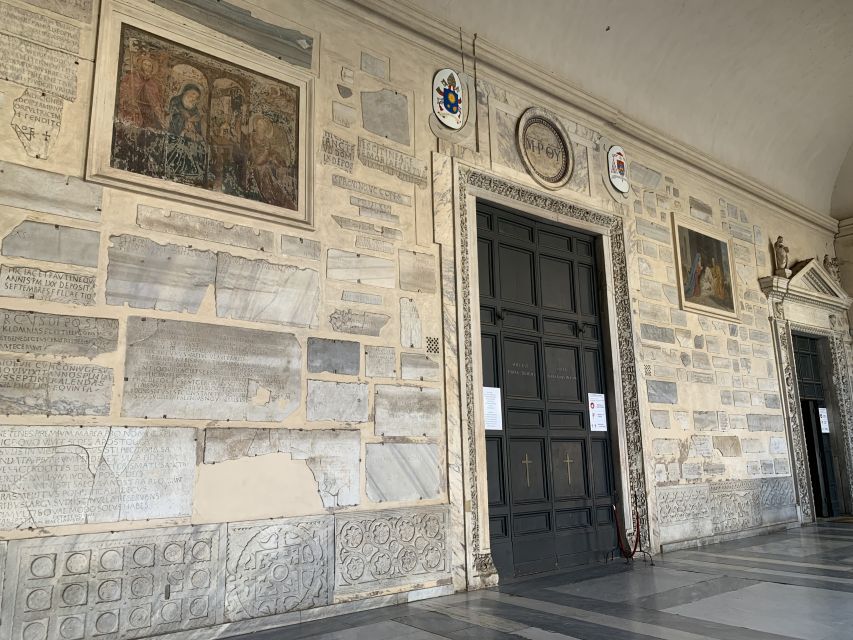
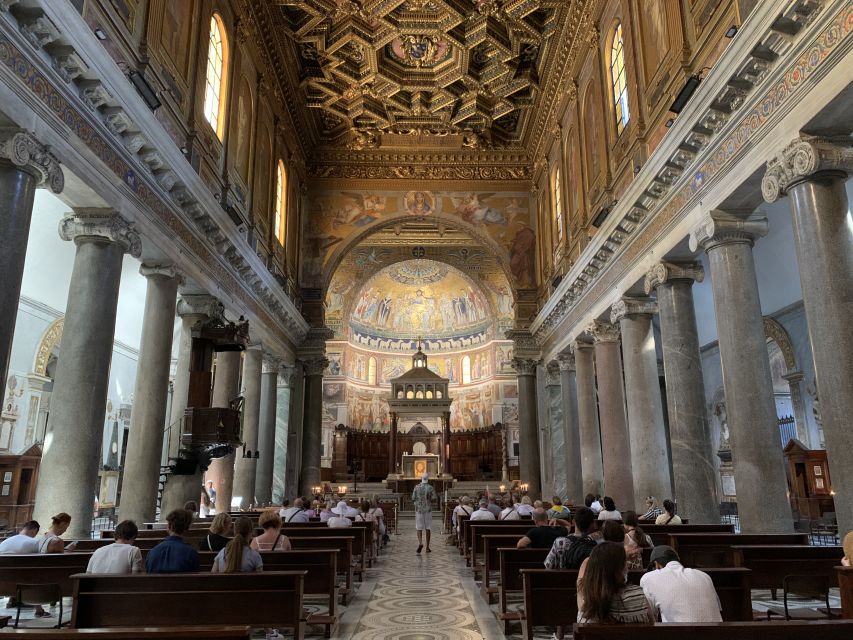
The first major stop is Piazza di Santa Maria in Trastevere, home to the Basilica of Santa Maria in Trastevere. The church dates to the 12th century and is known for its mosaics, which give the square a sense of ceremony even when daily Roman life is carrying on around it.
The fountain in the center of the piazza gives you a natural place to pause. Your guide can point out the relationship between the church, the square, and the neighborhood around them. This is a good early stop because you get both architecture and a feel for how a Roman piazza functions.
Do not expect a long interior visit with a separate museum-style lecture. The tour is built around walking and explanation, so the church is part of a wider neighborhood story. If you want to study every mosaic at length, you may need to return on your own.
That is not a flaw so much as a matter of expectation. This tour gives you a framework. Later, you can choose which places deserve more of your time.
Piazza Trilussa and the everyday Roman scene
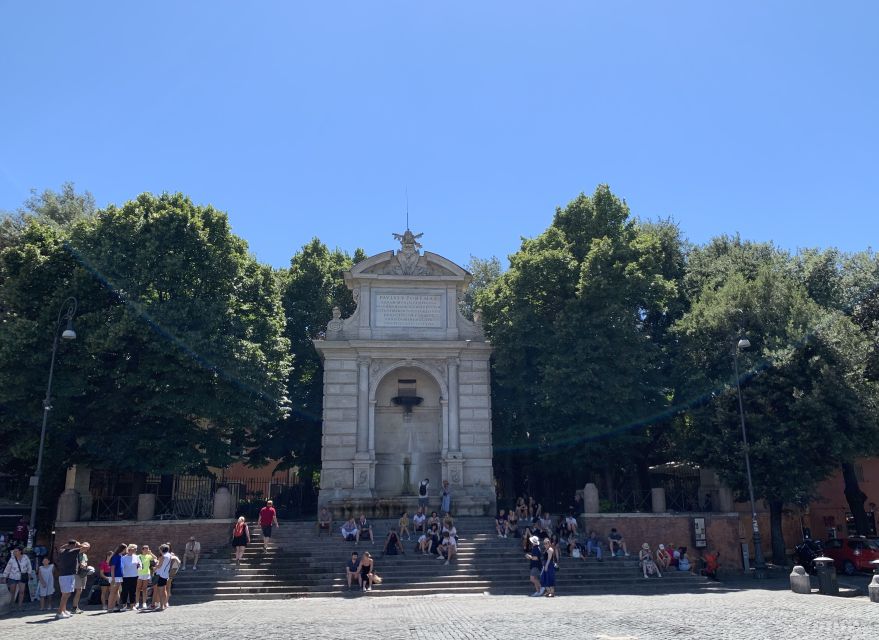
From Santa Maria, you walk to Piazza Trilussa. The square takes its name from Carlo Alberto Salustri, the Roman satirical poet known by his pen name, Trilussa.
The piazza is a good place to see Rome at play. Street performers and local activity give it an easygoing feel, and the square works as a small lesson in how public space is used here. You are not just looking at a monument. You are watching people gather, pass through, and make the city their own.
This part of the walk also helps break up the heavier historical material. The route is not a nonstop march through dates and names. Your guide may connect the poet, the square, and Roman humor, giving you a little cultural background before the tour moves toward more difficult subjects.
The pace is generally described as leisurely. That helps in hot weather, when shade becomes valuable. Giuseppe, for example, was praised for finding shade whenever possible, while other guides have made time for photos and questions.
Still, Rome’s weather can be demanding. Bring water, use a reusable bottle, and do not count on the tour itself to provide drinks. A guide may point out a place to stop for coffee or juice, but that informal pause is not guaranteed as a formal part of every departure.
More Guided Tours in Rome:
- Rome: Guided Food Walking Tour with Wine in Trastevere
★ 4.9 · 3,105 reviews - Rome: Small-Group Guided Day or Night Walking Tour
★ 4.8 · 1,009 reviews - Rome: Guided City Center Evening Sightseeing Walking Tour
★ 4.4 · 953 reviews - Rome: Guided Small Group Walking Tour of City Highlights
★ 5.0 · 682 reviews
Campo de’ Fiori between market and memory
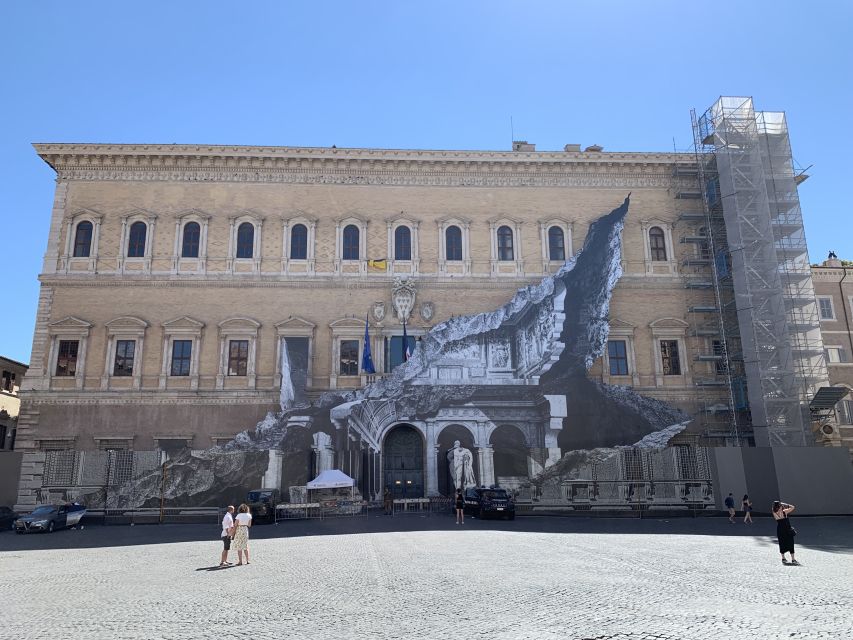
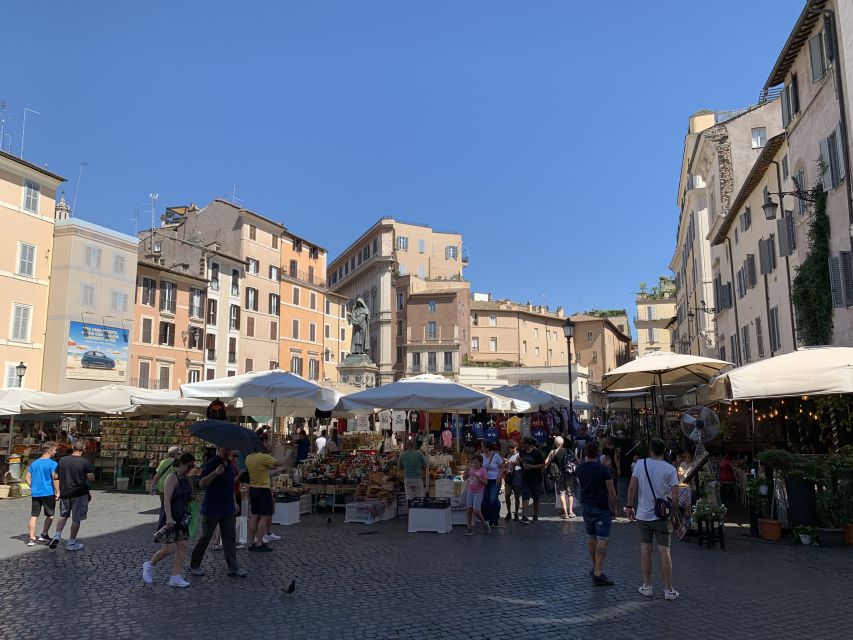
The route continues to Campo de’ Fiori, one of Rome’s best-known public squares. It is a natural bridge between Trastevere and the Jewish Ghetto, both geographically and in the way the city’s past remains visible in ordinary surroundings.
You get a market atmosphere here, along with a square that has played an important role in Roman public life. A guide can make the difference between simply seeing stalls and stone buildings and understanding why this place has a darker, more complicated character than its daytime activity suggests.
One recent tour included time to pick up a coffee and juice near the market. Treat that as a possible bonus rather than a promised stop. The tour needs to keep moving, and the group may have a different pace or schedule.
Campo de’ Fiori can also be crowded and noisy. That may appeal to you if you want a lively slice of central Rome, but it can make long explanations harder to hear. If your group exceeds 10 people, the provided headsets should help.
Entering Rome’s Jewish Ghetto
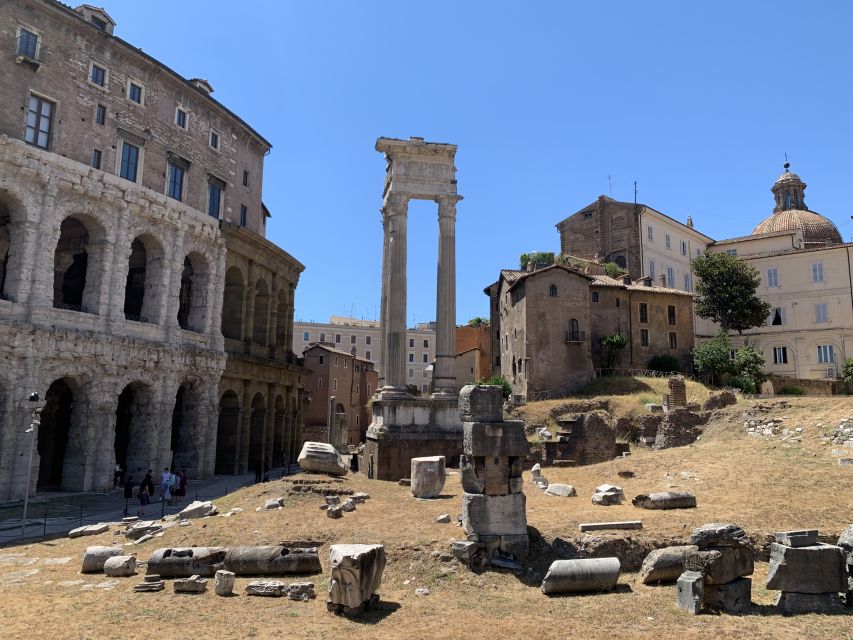
The most serious section begins when you enter the Jewish Ghetto. This is where the tour shifts from general neighborhood history to the long and difficult story of Rome’s Jewish community.
Your guide explains how the community endured restrictions and hardship while maintaining its identity across generations. The value here is not just a list of dates. It is the chance to understand how streets, religious buildings, and local traditions carry memories that are easy to miss if you walk through alone.
I would give this section your full attention. Trastevere may invite casual wandering, but the Jewish Ghetto asks for a more thoughtful pace. The guide’s stories and legends help connect the architecture to the people who lived through these events.
The route includes the Great Synagogue of Rome, an important symbol of Jewish life and endurance in the city. The synagogue is presented as part of the district’s cultural story rather than as a separate, extended visit. Do not assume that the tour includes a full interior tour or admission.
This is also the point where a good guide matters most. Several guides have been praised for making difficult material understandable without losing its seriousness. Estefi, Celia, Sarah, and Fabiano have all been singled out for clear explanations, warmth, and strong knowledge of local architecture or history.
Ending beside the Theater of Marcellus
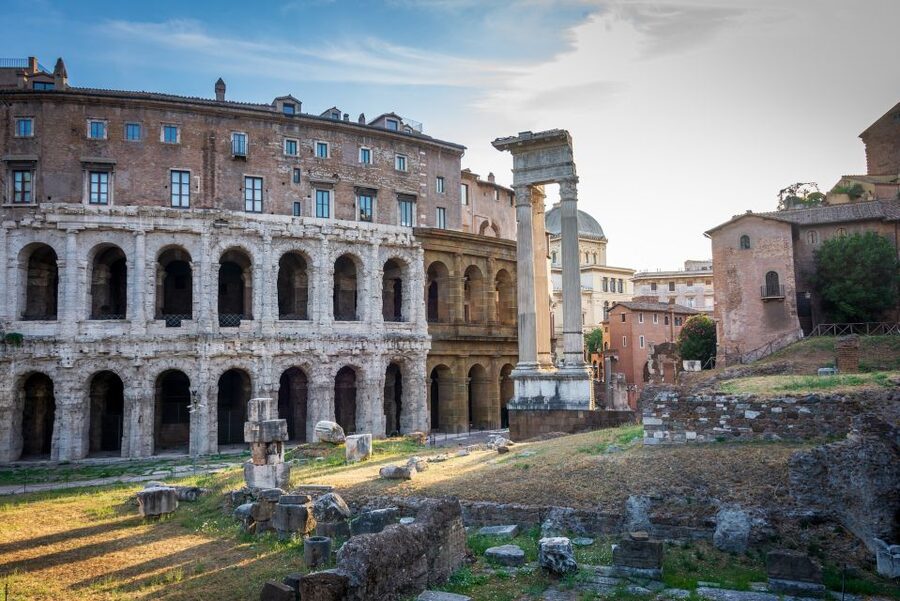
The final stop is the Theater of Marcellus, an ancient Roman amphitheater dating to 13 BC. It gives the walk a dramatic finish and reminds you how many different eras sit close together in Rome.
The theater is a particularly useful endpoint because it does not feel like an isolated ancient ruin. It sits within the modern city, showing how Roman life has grown around old structures rather than replacing them entirely.
Your guide can explain the building’s original purpose and place it within the wider story of ancient Rome. The stop also gives you a chance to take stock of the route: you have moved from a medieval basilica and neighborhood squares to the Jewish Ghetto and then back to the ancient world.
The tour ends here rather than returning you to Piazza Mastai. Hotel pickup and drop-off are not included, so plan your next move after the final explanation. The supplied information does not specify onward transport from the theater, so check a map before booking if you need to reach a timed reservation immediately afterward.
The guides are the heart of the experience
The strongest part of this tour is the guide’s ability to turn a walk into a conversation. That is especially useful in Rome, where the buildings can be impressive but their meaning is not always obvious.
Past guides have included Estefi, Estefania, Celia, Cecilia, Sarah, Giuseppe, Gabriella, Fabiano, and Francesco. The names vary by departure, so you cannot choose a particular person when booking, but the pattern is clear: expect a live guide rather than a recorded script.
The best guides on this route do more than recite facts. They answer questions, offer restaurant advice, take photos when appropriate, and adjust for heat or group interest. One guide helped visitors find shade, while another made time for food suggestions and photographs.
The tour also appears well suited to families with older children and teenagers. Sarah’s tour was especially successful with two teenagers because the explanations remained engaging rather than dry. Younger children may find the two-hour-plus walk tiring, particularly without a planned restroom break.
Is $41 a fair price?
At about $41 per person, this is not the cheapest way to see Trastevere. You can walk through these areas for free with a map or phone. The question is what you want from the outing.
I think the price is fair if you value context, questions, and a carefully linked route. You are paying for a guide who explains why the places matter, not for entry to a major museum or a long interior visit. That distinction is important.
Small groups improve the value. If you are one of only two or three people, the tour can feel close to a private walk at a much lower price. If the group is larger, headsets help keep the guide audible, though you may have less freedom to stop for every photo.
The tour is also useful early in a Rome visit. It gives you orientation in several central districts and can help you decide where to return for dinner, a longer church visit, or a more focused exploration of Jewish Roman culture.
Practical advice for a smoother walk
Wear comfortable shoes with good grip. The route includes repeated walking between squares and streets, and old Roman paving can be uneven. The activity is not suitable for wheelchair users or people with mobility impairments.
Bring water and a reusable bottle. This is especially important in warm weather. Guides may seek shade and may allow time for a coffee or juice, but you should not rely on an included refreshment stop.
Use the restroom before meeting at Piazza Mastai. One person specifically wished for a planned break in the middle, and the tour description does not include one. That small bit of preparation can make the difference between a relaxed walk and an uncomfortable one.
The languages offered are English, French, and Spanish. Check the available starting times when you book. You can cancel up to 24 hours in advance for a full refund, and the reserve-now, pay-later option allows you to hold a place without paying at once.
Who should book this Rome walking tour?
I would choose this tour if you want a guided introduction to neighborhoods that are easy to walk through but hard to fully understand alone. It suits first-time visitors, couples, families with older children, and anyone who enjoys stories more than a checklist of monuments.
It is particularly useful if you want to combine art, local life, Jewish Roman history, and ancient architecture in one outing. The route gives you several different faces of Rome without requiring a full day.
I would think twice if you have limited mobility, dislike walking on uneven streets, or need frequent restroom stops. I would also skip it if you want long, detailed visits inside each church or monument. This is a neighborhood walk with strong interpretation, not a series of formal site admissions.
Should you book it?
Book this tour if you want Rome explained as you walk, with a good chance of a small group and a guide who can answer questions. The combination of Trastevere, Campo de’ Fiori, the Jewish Ghetto, and the Theater of Marcellus gives you more variety than a standard neighborhood stroll.
For the best experience, go early in your Rome stay, wear proper shoes, bring water, and arrive ready to listen. At $41, the value rests almost entirely on the guide, and the strong guide feedback from people who toured with Estefi, Celia, Sarah, Giuseppe, Gabriella, and others suggests that this is where the outing earns its price.
FAQ
Where does the tour begin?
The tour begins at Piazza Mastai in Trastevere. Your guide waits around the main fountain, holding a sign with the tour name, about 15 minutes before the start.
Where does the tour end?
The final stop is the Theater of Marcellus. Hotel pickup and drop-off are not included.
How long does the walking tour last?
The tour lasts about two to two and a half hours. Starting times vary, so check availability when booking.
Which languages are available?
The live tour guide can conduct the tour in English, French, or Spanish.
Is the tour suitable for wheelchair users?
No. The activity is not suitable for wheelchair users or people with mobility impairments.
Are headsets provided?
Headsets are provided when the group has more than 10 people, allowing you to hear the guide clearly.
What should I bring?
Bring water and a reusable water bottle. Comfortable walking shoes are also a sensible choice for this route.
Can I cancel the booking?
Yes. You can cancel up to 24 hours before the tour for a full refund. A reserve-now, pay-later option is also available.
Just added around Rome
- Rome: Colosseum and Ancient Rome Guided Walking Tour★ 4.5 · 95 reviews
- Rome Walking Tour: Pantheon, Trevi, Navona & Hidden Gems★ 4.8 · 501 reviews
- Rome: Underground Trastevere Guided Walking Tour★ 4.8 · 87 reviews
- Rome: Guided Walking Tour and Pantheon Priority Entry Ticket★ 4.3 · 317 reviews
- Rome: Trevi Fountain, Spanish Steps & Pantheon Walking Tour★ 4.6 · 336 reviews
- Rome Night Mysteries Guided Walking Tour★ 4.9 · 119 reviews
- Rome: Relics from the Passion of the Christ Walking Tour★ 4.9 · 84 reviews
- Rome Trastevere Walking Food Tour★ 4.8 · 97 reviews
Jewish Heritage Walking Tours, compared.

Amsterdam Anne Frank: Small-Group Walking Tour & Local Guide
Read our review →
Anne Frank’s Story – Guided Walking Tour through Amsterdam
Read our review →
Jewish Quarter Walking Tour with Admission Tickets
Read our review →
Anne Frank Guided Walking Tour in DE/EN/IT/ES
Read our review →
Old Town and Jewish Quarter Guided Walking Tour
Read our review →

Anne Frank Walking Tour Amsterdam Including Jewish Cultural Quarter
Read our review →
Anne Frank’s Last Walk & See Anne Frank House in Virtual Reality
Read our review →Browse the lists this tour appears in