
REVIEW · ROME
Highlights of Jewish Ghetto And Trastevere Walking Tour
Rome’s Jewish Ghetto and Trastevere make a fine pair: one tells a serious story of survival and religious identity, while the other brings medieval lanes, Roman gossip, nightlife, and food into the picture. This tour connects them on foot, crossing Tiber Island along the way.
I like the clear historical focus and the practical restaurant advice, which can save you from a mediocre meal later. I also like the guides’ lively style. Ivan, Iris, and Max are often singled out for strong storytelling, humor, and answers to questions. The main drawback is the tip-based format: the booking price is tiny, but you should budget for a meaningful tip if the guide delivers a good tour.
I also recommend checking your pace before booking. One departure may finish close to the advertised 87 minutes, while another can last two hours or more. The route is not described as strenuous, but it is a city walk on crowded streets, and one person found the pace too quick.
Key points at a glance
- Rome’s Jewish Ghetto: Learn how an ancient and once-prestigious quarter became a restricted district under papal rule.
- The Great Synagogue area: See the center of Rome’s Jewish life and hear how tradition survived through difficult centuries.
- Tiber Island crossing: Follow a route tied to healing and refuge since antiquity.
- Trastevere stories: Explore medieval streets, Santa Maria in Trastevere, Ponte Sisto, and Piazza Trilussa.
- Roman food advice: Get suggestions for places to eat in both the Jewish Ghetto and Trastevere.
- A guide-led history lesson: Expect English narration, dark humor, direct opinions, and a tip-based payment model.
Why this walk works so well in Rome
Rome can feel like a stack of separate cities. Ancient ruins sit beside churches, a medieval alley opens onto a busy square, and a restaurant may serve food shaped by a community that has lived here for centuries. This walking tour helps connect those layers.
I like that the route does not stop at famous monuments. It uses them as doorways into ordinary life. The Jewish Ghetto is not treated as just a photo stop, and Trastevere is not reduced to pretty lanes and aperitivo bars. You hear about restriction, faith, food, art, romance, and resistance in one compact walk.
The tour is also useful early in a Rome stay. The restaurant suggestions can guide dinner plans, while the route introduces two neighborhoods you can return to at a slower pace. If you already know the major sights around the Colosseum and Vatican, this offers a different view of the city.
The tone is not solemn from start to finish. Guides use dark humor and politically incorrect jokes, along with serious discussion of persecution and the Second World War. That mix will suit you if you prefer a direct, informal presentation. If you want a quiet, academic lecture, the style may feel too loose.
More Jewish Heritage Walks in Rome:
- Rome: Jewish Ghetto Walking Tour
★ 4.7 · 274 reviews - Rome: Trastevere and Roman Ghetto Guided Walking Tour
★ 4.7 · 79 reviews - Amsterdam Anne Frank: Small-Group Walking Tour & Local Guide
★ 4.8 · 12,789 reviews
Starting at the Turtle Fountain
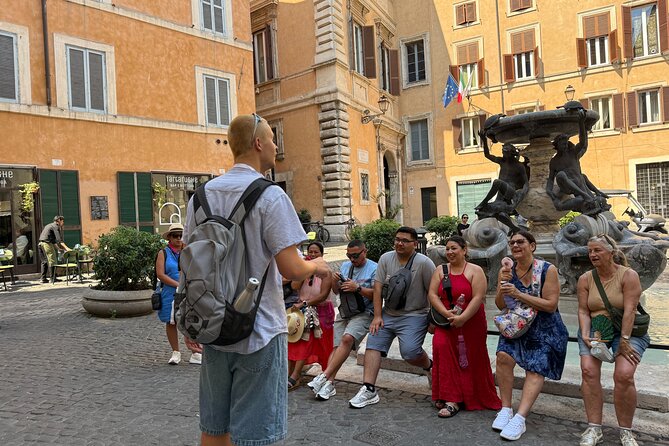
Meet by the Fontana delle Tartarughe, or Turtle Fountain. It is a useful opening point because the fountain itself gives the guide a chance to place you in central Rome before turning to the Jewish quarter.
The fountain is scheduled for about 10 minutes, including a photo stop and guided explanation. Do not expect a long monument visit. This is a starting lesson and a way for the group to gather around the guide’s sign.
The meeting instructions are simple: look for the guide holding a sign with the tour name. Since Rome’s lanes can be confusing, arrive with enough time to locate the fountain rather than cutting it close.
The Jewish Ghetto and a story of survival
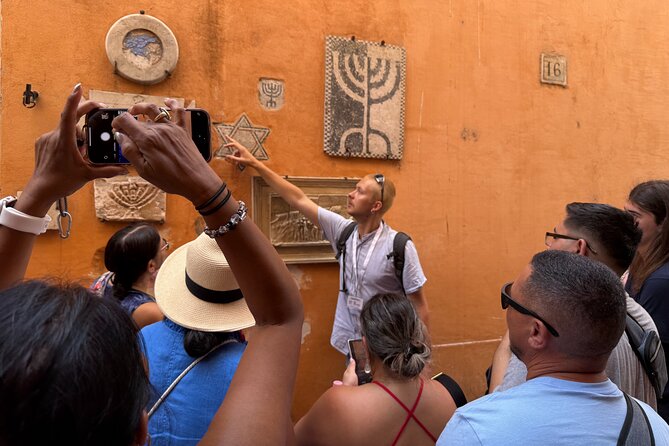
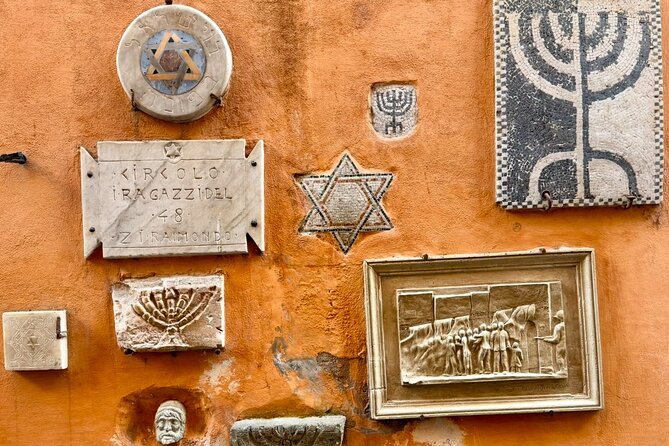
The first major section covers the Jewish Ghetto, the center of Western Europe’s oldest Jewish community. Here, the tour explains how an area that had once held high status in ancient Rome became a restricted district under papal authority.
That change is important. You are not simply hearing dates and names. You are shown how political power affected where people could live, how they moved through the city, and how daily routines unfolded behind the ghetto walls.
The guide also covers the ways the community preserved its identity. Faith, culture, family life, and quiet resistance all form part of the story. The subject is difficult, but the tour aims to make it understandable through streets and places rather than a string of abstract facts.
The scheduled visit to the Jewish Ghetto lasts about 10 minutes, though the broader explanation continues around nearby stops. I would give this part your full attention. It is the emotional center of the walk, and the later stories in Trastevere make more sense once you understand the weight of this first neighborhood.
The Great Synagogue and Jewish life in Rome
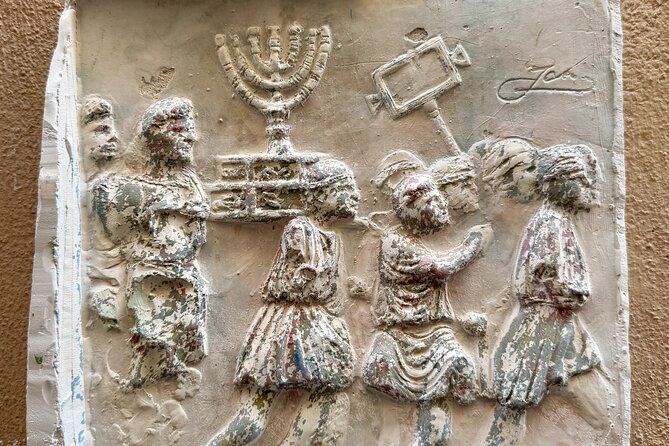
The route then reaches the Great Synagogue of Rome. You receive a photo stop, a guided visit, and further sightseeing in the area, with about 10 minutes listed for this section.
The synagogue helps move the story from restriction to continuity. You hear more about Jewish life in Rome over the centuries, including the community’s values and traditions. The guide also connects the neighborhood to the events of the Second World War, giving the walk a modern historical edge.
This is not presented as a museum tour inside a major collection. The value comes from the explanation around the building and the surrounding streets. If you want an extended interior visit or detailed architectural study, you will need another experience. Here, the focus stays on the community and its place in Rome.
Ivan has been especially praised for making this difficult subject feel immediate without losing its seriousness. Iris is also known for explaining the religious, political, and social sides of the area with warmth and clarity. Guide assignments can change, so book this for the route and format rather than for one guaranteed individual.
A few more walking tours around Rome worth a look
- Rome: Guided Food Walking Tour with Wine in Trastevere
★ 4.9 · 3,105 reviews - Rome: Trastevere & Campo de Fiori Street Food Walking Tour
★ 4.9 · 2,768 reviews - Rome: Paranormal Night Walking Tour & Secret Backstreets
★ 4.9 · 1,921 reviews - Rome: Trastevere Street Food Walking Tour with Local Expert
★ 4.8 · 1,784 reviews
Crossing Tiber Island
From the Jewish quarter, you cross to Tiber Island. The listed stop is short, about five minutes, but it adds a useful bridge between the two halves of the walk.
The island has been linked with healing and refuge since antiquity. The tour explains how ancient myth and medicine came together here, long before modern hospitals. That gives you a different way to look at the river and the island: not just as a scenic crossing, but as a place shaped by people seeking care.
The short stop also keeps the walk moving. You will not spend a long period examining one monument. Instead, Tiber Island acts as a change of setting before the route enters Trastevere.
Take care around the crossing and the small streets. Rome is an active city, and the group must keep together near traffic. One guide, Ivan, has been praised for watching the group carefully and making sure people moved safely through narrow lanes.
Entering Trastevere through medieval streets
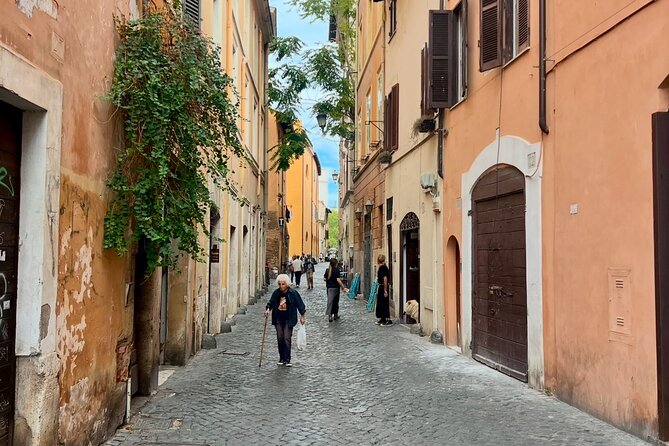
Trastevere is the more relaxed and playful half of the tour. The name refers to the area across the Tiber, and its streets offer a strong contrast with the formal monuments elsewhere in Rome.
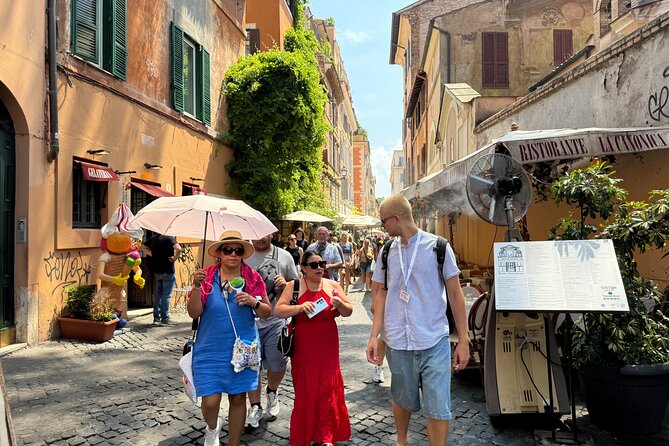
You can expect medieval lanes, ivy-covered buildings, local legends, and stories about the neighborhood’s long connection with rebellion, romance, and nightlife. The route is not just a stroll for photographs. Your guide explains why the area developed its particular character and how its past still shapes the way people see it.
The itinerary gives about 10 minutes to the main Trastevere section, but the neighborhood continues through the next stops. The compact timing means you get an overview rather than a detailed survey of every street.
This is where the guide’s personality matters most. Max is often described as funny, inclusive, and easy to listen to. Iris is known for drawing teenagers and mixed-age groups into the story. Ivan brings a quicker, energetic style, with a large store of facts and anecdotes. If you have children or older relatives with you, tell yourself that the pace may vary by guide and group.
Santa Maria in Trastevere and Renaissance gossip
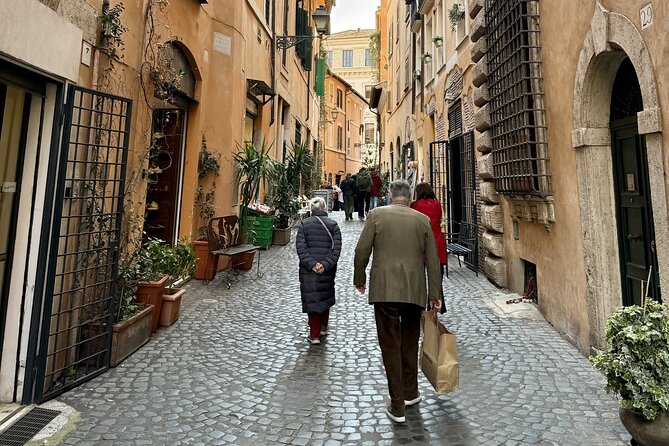
Santa Maria in Trastevere receives about five minutes of guided sightseeing. It is a short stop, but it adds a church-centered view of the neighborhood after the Jewish Ghetto’s focus on community and faith.
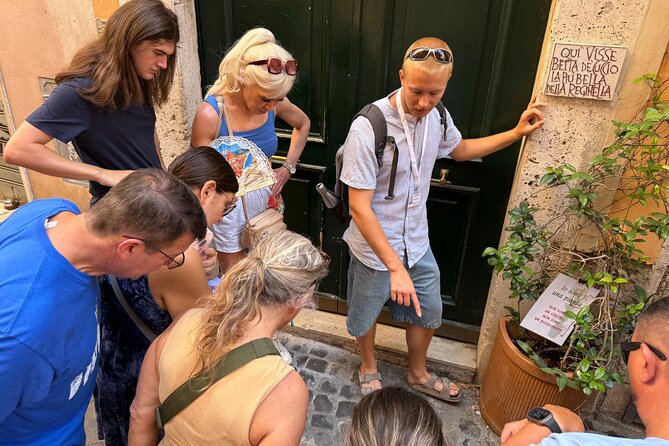
The storytelling then takes an unexpected turn toward Raphael. You learn the location connected with the house of Raphael’s lover and hear clues about the artist’s private life. This is the kind of detail that helps the walk feel local rather than like a standard monument checklist.
I enjoy this shift in tone. Rome’s history is not only emperors, popes, and battles. It includes artists, relationships, rumors, and the private lives that sit behind public fame. The tour uses that material to keep the group alert after the more serious opening.
Do not expect a long church interior visit or a close study of Renaissance art. The stop works best as part of the wider story. If you want detailed art history, choose a museum or church tour with more time at each work.
Ponte Sisto and the walk to Piazza Trilussa
Ponte Sisto provides another short sightseeing stop, listed at about five minutes. The bridge offers a change of view and a chance to look back toward the Tiber before the tour ends.
The final point is Piazza Trilussa, a social square at the edge of Trastevere. It is a practical finish because you are already near restaurants and evening activity. The guide’s food recommendations can be especially useful here, with suggestions for places in both Trastevere and the Jewish Ghetto.
Several guides, including Ivan, Iris, and Max, are praised for giving restaurant and bakery advice. One longer family outing also received praise for food suggestions and for pointing out gluten-free choices at many stops. This tour itself does not include food tastings, so use the advice as a starting point for your own meal rather than expecting snacks along the route.
The timing also makes a difference. A late afternoon start can take you from daylight into the evening, giving you changing views of the streets and river. In hot weather, that timing may be more comfortable than a midday walk. The exact start time depends on availability.
The guide style: facts, jokes, and direct answers
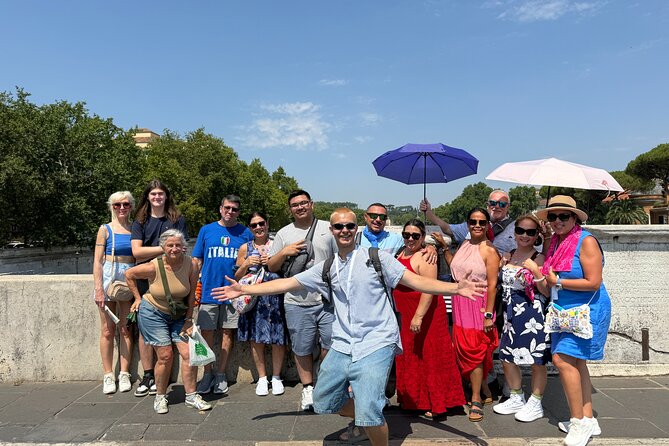
The strongest part of this experience is the live guide. You are not listening to a recording or simply following a map. The guide explains the setting, watches the group, answers questions, and changes the emphasis when people show interest.
Ivan is repeatedly praised for storytelling, clear delivery, humor, and a strong grasp of Jewish and Roman history. Iris is described as warm, energetic, and particularly good at making a mixed group feel included. Max is known for enthusiasm, humor, and a friendly way of drawing people into the discussion. Martina and Skylar are also named as engaging guides.
That does not mean every departure will feel identical. A guide’s pace and sense of humor shape the experience. The advertised length is 87 minutes, but some walks have run for more than two hours when the group and guide kept going. Ask yourself how much time you want to spend on your feet before you set out.
The humor deserves a clear warning. The tour advertises dark humor and politically incorrect jokes. That can make painful history easier to discuss, but it can also land differently depending on your taste. If you prefer carefully formal language, this is probably not the right presentation.
Price, tipping, and what you really pay
The listed price is $3.77 per person, which makes this an unusually inexpensive way to get a guided introduction to two important neighborhoods. But the price is only the reservation cost. The guide works for tips, and the usual suggested amount is around 15 euros to $50, depending on the value you place on the experience.
I would treat the tip as the real cost of the tour. The low booking charge gets you into the group, while your payment at the end supports the guide. This model can offer excellent value if you want an engaging overview without committing to a high fixed fee.
It also creates uncertainty. You may prefer knowing the full price before you book. Here, it helps to decide in advance what the tour is worth to you, then carry enough cash or another accepted form of payment if needed. The information provided gives a range, not a fixed required amount.
The tour includes the English-speaking local guide, the walking route, and food recommendations. It does not include food tastings, museum admission, or a formal meal.
Who should book this Rome walk?
I would recommend it to first-time Rome visitors who want context before exploring Trastevere on their own. It also suits repeat visitors who have already seen the major ancient sites and want a more personal look at the city.
History-minded couples, solo visitors, and families with older children can all get a lot from it. The stories are varied enough to hold attention: Jewish life, papal restrictions, ancient healing, medieval streets, Raphael, restaurants, and modern Rome.
You should be comfortable walking for at least the advertised 87 minutes, with the possibility of a longer outing. Wear supportive shoes and expect uneven city streets, although the supplied information does not give a specific accessibility assessment.
I would skip it if you want a food tour with included tastings, a slow architectural walk, or a tightly fixed finish time. I would also think twice if dark jokes about serious history are not your style.
Booking and cancellation details
You can cancel up to 24 hours before the experience for a full refund. A reserve-now, pay-later option is available, so you do not have to pay the booking amount immediately.
The tour is offered in English with a live guide. Starting times vary, so check the available schedule before choosing a date.
Should you book it?
Yes, if you want a lively historical introduction to the Jewish Ghetto and Trastevere at a very low upfront price. The best reasons are the route, the range of subjects, and the chance to get useful dining advice before dinner.
Go in with the right expectations. This is an overview, not a museum seminar or a food tasting. The final cost depends on your tip, the humor is frank, and the walk may last longer than 87 minutes. If those points work for you, this is a smart way to see two sides of Rome that are easy to miss when you stay on the standard sightseeing path.
FAQ
How long is the Jewish Ghetto and Trastevere walking tour?
The listed duration is 87 minutes. Some departures may run longer, with one reported outing lasting more than two hours.
What language is the tour offered in?
The tour is offered in English with a live guide.
Where does the tour begin?
It begins at the Fontana delle Tartarughe, also called the Turtle Fountain. The guide holds a sign with the tour name.
Where does the tour finish?
The tour finishes at Piazza Trilussa in Trastevere.
What places does the route visit?
The route includes the Jewish Ghetto, the Great Synagogue of Rome, Tiber Island, Trastevere, Santa Maria in Trastevere, and Ponte Sisto.
Does the tour include food?
It includes food recommendations, but no food tastings or meal is specified.
How much does the tour cost?
The listed booking price is $3.77 per person. It is tip-based, and the usual tip is given as approximately 15 euros to $50.
Do I have to pay the full price when booking?
No. A reserve-now, pay-later option is available.
Can I cancel the booking?
Yes. You can cancel up to 24 hours in advance for a full refund.
Which guides may lead the tour?
Named guides associated with departures include Ivan, Iris, Max, Martina, and Skylar. The guide for your specific departure may vary.
Just added around Rome
- Rome: Colosseum and Ancient Rome Guided Walking Tour★ 4.5 · 95 reviews
- Rome Walking Tour: Pantheon, Trevi, Navona & Hidden Gems★ 4.8 · 501 reviews
- Rome: Underground Trastevere Guided Walking Tour★ 4.8 · 87 reviews
- Rome: Trastevere and Roman Ghetto Guided Walking Tour★ 4.7 · 79 reviews
- Rome: Guided Walking Tour and Pantheon Priority Entry Ticket★ 4.3 · 317 reviews
- Rome: Trevi Fountain, Spanish Steps & Pantheon Walking Tour★ 4.6 · 336 reviews
- Rome Trastevere Walking Food Tour★ 4.8 · 97 reviews
- Rome Night Mysteries Guided Walking Tour★ 4.9 · 119 reviews
Jewish Heritage Walking Tours, compared.

Amsterdam Anne Frank: Small-Group Walking Tour & Local Guide
Read our review →
Anne Frank’s Story – Guided Walking Tour through Amsterdam
Read our review →
Jewish Quarter Walking Tour with Admission Tickets
Read our review →
Anne Frank Guided Walking Tour in DE/EN/IT/ES
Read our review →
Old Town and Jewish Quarter Guided Walking Tour
Read our review →

Anne Frank Walking Tour Amsterdam Including Jewish Cultural Quarter
Read our review →
Anne Frank’s Last Walk & See Anne Frank House in Virtual Reality
Read our review →Browse the lists this tour appears in