
REVIEW · ITALY
Ravenna: Exclusive Private Walking Tour with a Local Expert
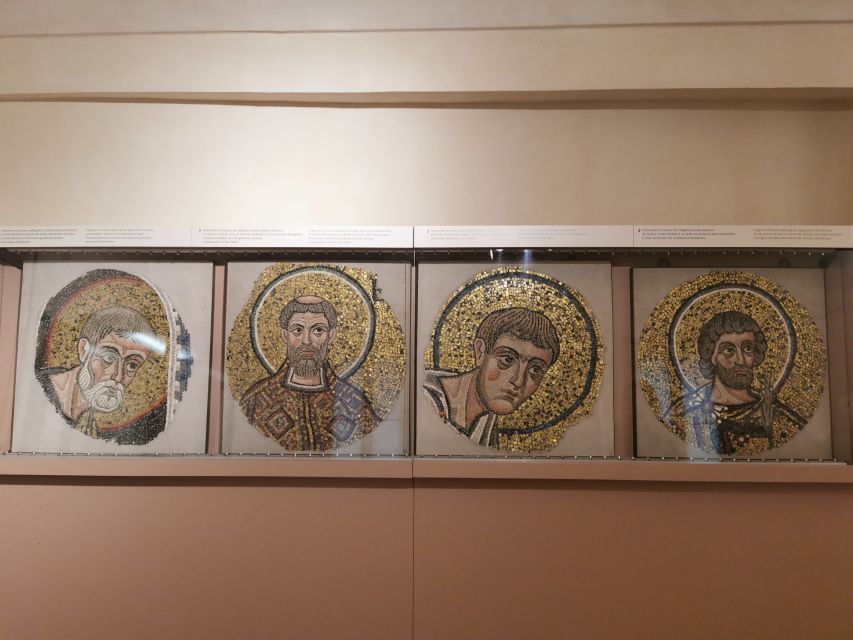
Ravenna saves its biggest surprise for indoors: plain streets lead to churches glowing with ancient gold, deep blue, and tiny glass tiles. This private walk takes you to four of the city’s essential monuments, with an expert guide explaining the people, politics, symbols, and craft behind the pictures. Marta, Chiara, and Giuseppe are among the guides who have led this experience.
I like the small scale and the sensible route. You walk between sites rather than spend time on transport, and a private guide can slow down when a mosaic catches your eye. I also like the clear interpretation. Guides such as Marta, an art historian, have helped visitors notice details they would likely miss alone, from iconography to the meaning of imperial portraits.
The main drawback is cost: $141 per person is a serious outlay, and the €12.50 admission fee is extra. Three hours is enough for Ravenna’s major Byzantine sights, but not enough for every important church, museum, or mosaic workshop in town.
Key points to know before booking
- Four major monuments in three hours: Sant’Apollinare Nuovo, Galla Placidia, San Vitale, and the Neonian Baptistery form a strong first visit to Ravenna.
- A private guide changes the experience: You can ask questions, set the pace, and spend longer on the mosaics that interest you most.
- Marta, Chiara, Giuseppe, and Sabrina have guided this route: Expect the guide assigned to your booking to vary, with Italian and English available.
- The route is easy to follow on foot: The longest walk is about 15 minutes, followed by shorter five-minute walks between the central monuments.
- Admission costs extra: Allow €12.50 per person for entry, with the guide helping you buy the tickets.
- Good for a Bologna day trip: One visitor made the journey by train from Bologna, and the tour fits neatly into a focused day in Ravenna.
Why Ravenna’s mosaics deserve a guided visit
Ravenna is not a city where you simply glance at a pretty ceiling and move on. The mosaics carry political messages, religious symbols, and clues about the changing rulers of the Roman world. Without context, you will still see beauty. With a good guide, you begin to understand why a particular emperor holds a gift, why a procession moves in one direction, or why a small blue starry room feels so powerful.
I find the private format especially useful here because the art sits high above you and the details are easy to miss. A guide can point out small figures, gestures, animals, and symbols while you keep your eyes on the walls rather than on a page in a guidebook.
The experience lasts three hours and uses a compact walking route. It begins at Sant’Apollinare Nuovo on Via di Roma, then moves about 15 minutes on foot to the Mausoleum of Galla Placidia. San Vitale is about five minutes farther, and the Neonian Baptistery is another five-minute walk away.
That layout keeps the day focused. You will not waste time crossing the city, although you should still wear comfortable shoes and expect to spend much of the visit standing inside historic buildings.
More Private Walking Tours in Italy
- Venice: Private Walking Tour with a Local
★ 4.6 · 761 reviews - Palermo: Private Custom Walking Tour with Local Guide
★ 4.7 · 661 reviews - Palermo: Private Walking Tour with a Local
★ 4.6 · 393 reviews
Sant’Apollinare Nuovo and the Procession of the Magi
Sant’Apollinare Nuovo is the first stop, and it gives you an immediate lesson in Ravenna’s scale and ambition. The basilica was first built as a Palatine Chapel before becoming a church. Inside, long mosaic panels line the nave and carry biblical scenes from the Old and New Testaments.
The famous Procession of the Magi is one of the details to watch for. The three wise men move toward the infant Jesus, and their procession is not just a charming Christmas image. It is part of a larger visual program, where movement, rank, clothing, and gesture carry meaning.
This is the kind of place where a guide earns the fee quickly. The panels can look like one continuous band of decoration when you first enter. An informed explanation helps you separate the scenes and understand how the building changed over time.
Allow yourself a moment to look before listening. First take in the scale, color, and repetition. Then let the guide explain the stories and symbols. That order helps you avoid treating the basilica like a picture gallery where you rush from one image to the next.
The stop is also a useful introduction to the tour’s rhythm. You receive historical background, then time to look around and ask questions. Several guides on this route are praised for keeping the balance right, offering plenty of information without making the visit feel hurried.
Galla Placidia’s small room of blue and gold
The Mausoleum of Galla Placidia is physically smaller than San Vitale, but its atmosphere can be more immediate. You enter a compact fifth-century monument covered with mosaics, including a ceiling that creates the feeling of looking into a dark, star-filled sky.
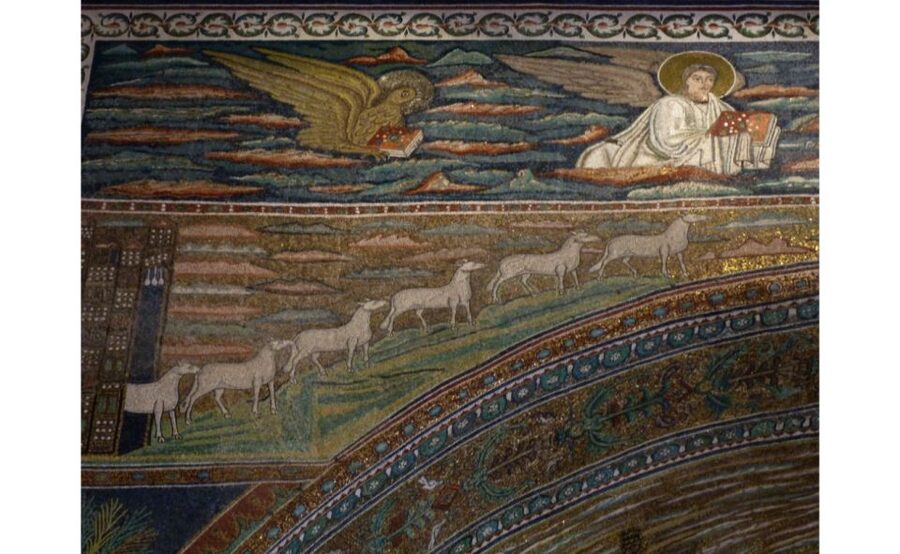
The deep blue tones are the first thing most people notice. Then the smaller details begin to appear: decorative patterns, symbolic animals, and the Good Shepherd image. Your guide can help connect these pictures to early Christian belief rather than leaving them as attractive decoration.
I would pay close attention to the change in mood from Sant’Apollinare Nuovo. The basilica feels public and ceremonial. Galla Placidia feels enclosed and personal. A private guide can make that contrast part of the story, giving you time to sit with the room instead of treating it as a quick stop between larger churches.
Because the mausoleum is compact, it may feel crowded at busy times. The private format does not give you exclusive use of the building, but it does let you ask questions directly and hear the explanation without a large group competing for attention.
This is also one of the places where pacing matters. You do not need a long lecture. You need a few clear ideas, a chance to look up, and help identifying what your eyes are seeing. The strongest guides on this route appear to understand that balance.
San Vitale, Justinian, and Theodora
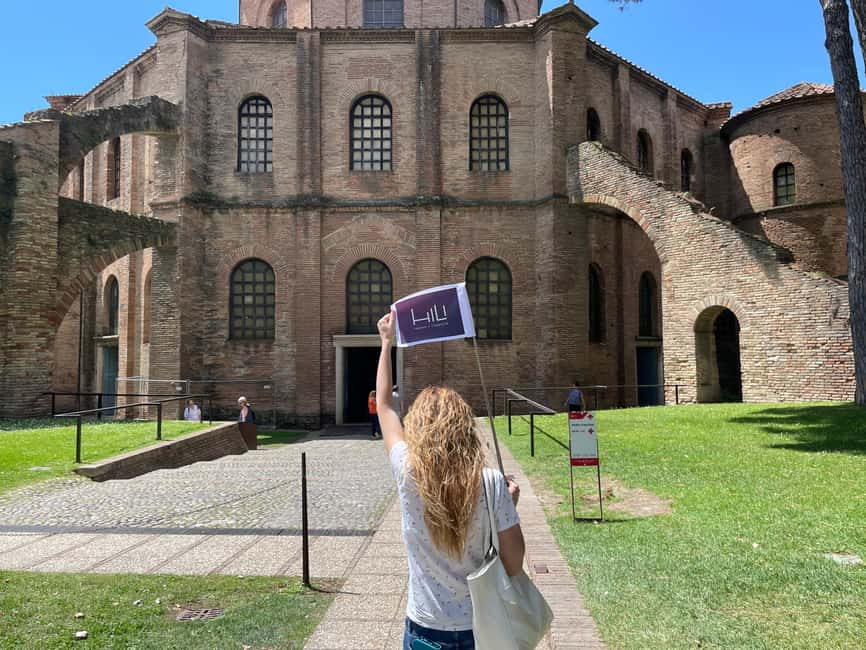
San Vitale is the grand centerpiece of the walk. Its octagonal plan, high dome, and sweeping interior give it a different feel from the basilica and mausoleum you have just visited. Here the mosaics are part of a larger architectural experience, not simply panels attached to walls.
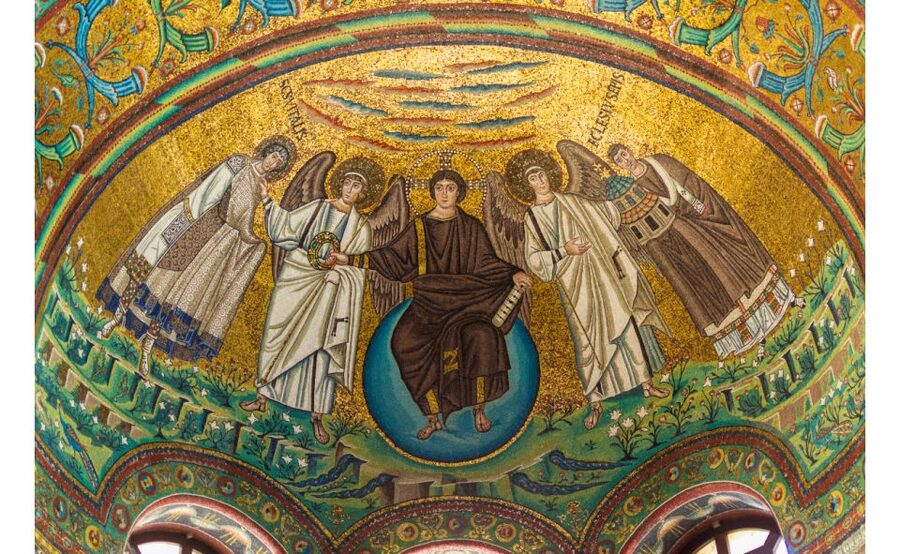
The apse mosaics showing Emperor Justinian and Empress Theodora deserve your full attention. Their processions communicate rank and power through clothing, placement, attendants, and carefully chosen objects. A guide can explain the religious and political ideas at work without reducing the scene to a simple portrait.
This is where art history becomes especially useful. The mosaics tell you about faith, but they also tell you about authority. Justinian and Theodora appear in a sacred setting even though they are political rulers. That combination helps explain how the church and imperial government presented themselves in the sixth century.
You will probably spend more time here than at the Neonian Baptistery because there is more space and more to examine. The tour’s private structure is valuable at this point. You can ask why the figures look so frontal, how the materials create the shimmer, or what details in the clothing might signify.
Guides named Marta and Giuseppe have been singled out for bringing the people and events behind the mosaics to life. Marta is described as an art historian with a strong command of iconography and Ravenna’s past. Giuseppe is praised for his enthusiasm for old Ravenna, early Christianity, Byzantine politics, and mosaic art.
The building can be a lot to take in. If you try to memorize every date and name, you may lose the visual pleasure. I would focus on three things: the building’s shape, the imperial processions, and the way the mosaics turn a religious interior into a statement of power.
Same streets, a different route:
- Venice: Doge’s Palace and St Mark’s Basilica Walking Tour
★ 4.4 · 6,291 reviews - Milan: Guided Walking Tour & Last Supper Visit with Ticket
★ 4.7 · 5,409 reviews - Naples: Street Food Walking Tour with Local Guide
★ 4.9 · 4,976 reviews - Florence: Highlights Walking Tour with Expert Guide
★ 4.6 · 4,662 reviews
The Neonian Baptistery and the baptism scene
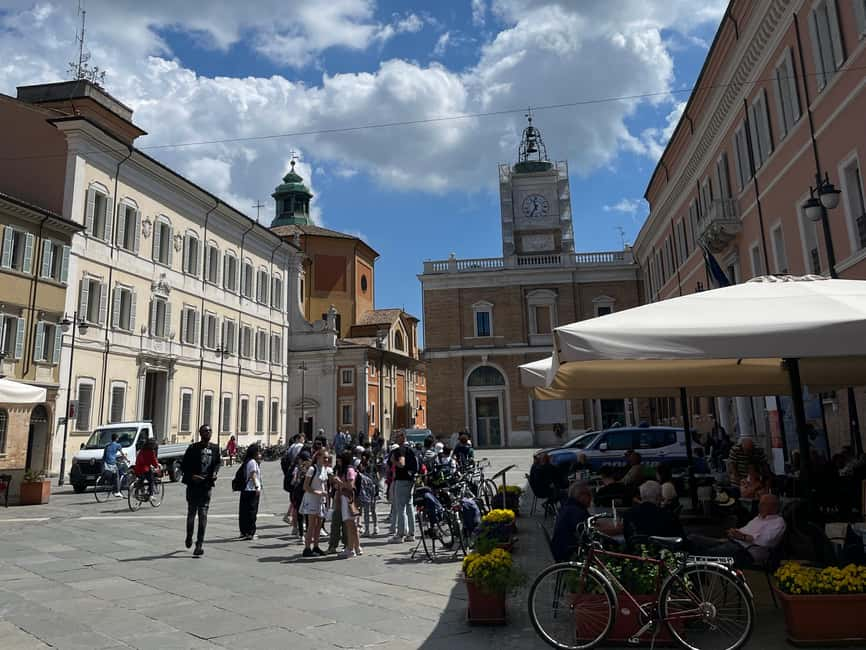
The final stop is the Battistero Neoniano, also called the Baptistery of the Orthodox. The visit lasts about 20 minutes, which is enough for a focused explanation of its best-known feature: the ceiling mosaic showing the baptism of Christ.
Look up at the central scene, then follow the surrounding figures and decoration outward. The baptism image gives the building its main subject, while the circular arrangement creates a sense of movement above the baptismal font.
Compared with San Vitale, this is a more contained final stop. That works well after several large interiors. You can finish with one clear subject rather than trying to add another sprawling church to an already full morning or afternoon.
The tour ends at the baptistery, so you are not required to walk back to the original meeting point. Meeting arrangements can vary with the option booked, so check the exact start point before setting off.
How the private format affects the day
Private does not mean the sites belong only to your group. Other people may be inside the monuments, and entry is still subject to normal opening arrangements. What you gain is direct conversation with your own guide and the freedom to ask for clarification without holding up a large group.
That difference matters in Ravenna. Mosaics invite questions, and the questions can become quite specific. You may want to know why a figure is holding a certain object, how the glass tiles were set, or how the city’s rulers changed the artwork. With a private guide, you can follow that thread.
The guides also appear to vary in style. Marta is often described as an art historian who connects political history, iconography, and personal stories. Chiara is praised for clear explanations and local anecdotes. Giuseppe brings enthusiasm for Ravenna’s older buildings and historical setting. Sabrina is described as well informed and able to make the visit fascinating.
That range is worth keeping in mind. You cannot necessarily request a particular guide unless the operator confirms it, so book this experience for the quality and structure of the format, not on the assumption that you will receive one named person.
A private tour can also be adjusted to your needs. One guide accommodated a delayed arrival after a train cancellation and met the group at the station. Another added a mosaic atelier, where the group met an artist and saw how mosaics are made. These additions are not guaranteed, but they show the sort of flexibility that can be possible when your guide is not managing a large crowd.
Walking, timing, and practical comfort
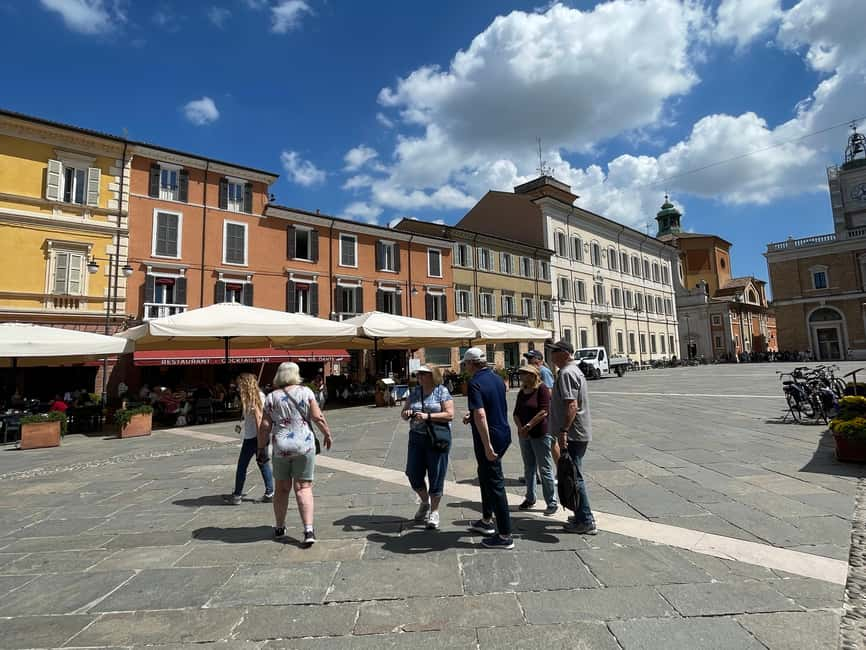
The route is compact, but this remains a walking tour. The longest stretch is about 15 minutes from Sant’Apollinare Nuovo to Galla Placidia. The next walks are about five minutes each.
You should plan for a steady three hours, including the guided visits and time between buildings. The route works in rain, and the tour operates in wet weather, but comfortable shoes and a light waterproof layer will make the day easier.
The experience is listed as wheelchair accessible. Because the tour takes place in historic religious buildings, it is sensible to confirm any particular access needs when booking, especially if you need details about entrances or movement between sites.
The price is $141 per person, and admission tickets cost another €12.50 per person. That makes this a premium walking tour, not a budget orientation. For one or two people who want serious art and history explained clearly, the price can be reasonable because a private guide is doing the work of a specialist museum educator.
For a larger family or group, the value improves if the price is charged per person but the attention remains shared only among your party. For a solo visitor, the cost is harder to justify unless you place a high value on asking questions and getting expert interpretation.
The tour offers free cancellation up to 24 hours before the start, and you can reserve now and pay later. Those terms help if your Ravenna visit depends on a train connection or a changeable Italian itinerary.
How Ravenna fits into a day from Bologna
Ravenna makes a practical day trip from Bologna, and this tour gives you a strong structure for the main sights. One visitor reached the city by train from Bologna and found the excursion easy to manage.
I would not treat the guided walk as the entire Ravenna experience. Three hours covers the four headline monuments, but the city has more to offer. If you have time, use the rest of the day for a meal, a market stroll, or additional mosaic-related sights at your own pace.
The guides may also offer local suggestions. One visitor received tips about regional pasta, local specialties, and a good gelato shop. Another enjoyed food stops during the walk. These extras are not part of the fixed promise, so see them as possible local help rather than guaranteed inclusions.
The practical advantage is that you finish at the Neonian Baptistery in the historic center. From there, you can continue exploring rather than retracing the entire route.
Who will get the most from this tour
I would choose this tour if you care about art, architecture, early Christianity, or the political story of the late Roman and Byzantine worlds. It is also a good choice if you normally find religious art difficult to read. The guide supplies the visual vocabulary.
It suits couples, families with older children, and small groups who want to move at their own pace. It is particularly helpful for first-time visitors who want the four major mosaic sites explained in a logical order.
You may prefer to explore alone if you already have a strong background in Byzantine art, dislike scheduled visits, or want to spend a very long time at one building. The three-hour plan has a clear rhythm, and a private guide can adjust it somewhat, but it is still a planned route.
The tour also works well for people who have only one day in Ravenna. You get the essentials without spending your limited time figuring out ticketing, symbolism, and the connections between buildings.
Should you book it?
Book this Ravenna walking tour if you want more than attractive photographs and you value direct access to an art-focused local guide. The strongest part is the interpretation: guides such as Marta, Chiara, and Giuseppe connect the mosaics to religion, imperial power, local stories, and the craft of making images from tiny pieces of glass.
The price is high, and the €12.50 entry fee is extra. Still, for a private group that wants a clear, well-paced introduction to Ravenna’s four main monuments, the cost can be justified.
I would especially recommend it for a first visit, a day trip from Bologna, or anyone who has stood beneath a Byzantine mosaic and wondered what all the figures mean. If your priority is the lowest possible price or complete freedom to linger, explore independently. If you want the city’s mosaics to make sense, book the guide.
FAQ
How long does the Ravenna private walking tour last?
The tour lasts three hours, including guided visits and the walks between the four sites.
Which monuments are included?
The route includes Sant’Apollinare Nuovo, the Mausoleum of Galla Placidia, the Basilica of San Vitale, and the Neonian Baptistery.
Where does the tour begin?
One listed starting point is the Basilica of Sant’Apollinare Nuovo at Via di Roma, 53. The meeting point can vary depending on the option booked.
Where does the tour finish?
The tour finishes at the Battistero Neoniano, also called the Baptistery of the Orthodox.
Are admission tickets included?
No. Admission costs €12.50 per person, and the guide assists with buying the tickets.
What languages are available?
The live tour is available in Italian and English.
Does the tour operate in rain?
Yes. The tour takes place even in rainy weather.
Just added around Italy
- Genoa Walking Tour: Explore Top Sights & Hidden Gems★ 4.0 · 138 reviews
- Genoa Food, Wine Tasting & History Walking Tour★ 5.0 · 212 reviews
- Taste Genoa: A Full Meal Walking Food Tour by Do Eat Better★ 5.0 · 509 reviews
- Genoa Walking Tour: Discover Hidden Treasures and Street Food★ 5.0 · 80 reviews
- Tasty Florence Street Food with Guided Walking of the City★ 5.0 · 174 reviews
- Medici Legends & Renaissance Wonders: Florence Small Group Tour★ 5.0 · 205 reviews
- Florence Food Tour of 10+ Authentic Tastings with Cheeses & Wines★ 5.0 · 155 reviews
- Florence Private Walking tour with Skip-the-line to Accademia★ 4.5 · 236 reviews
Private Walking Tours, compared.
Barcelona Helicopter, Sailboat & Old Town Private Walking Tour
Read our review →
Lyon: Private Walking Tour of “Traboules” in the Old Town
Read our review →
Browse the lists this tour appears in