
REVIEW · THAILAND
Phuket:Beach walk with elephants, rain & care. 2.5 hours
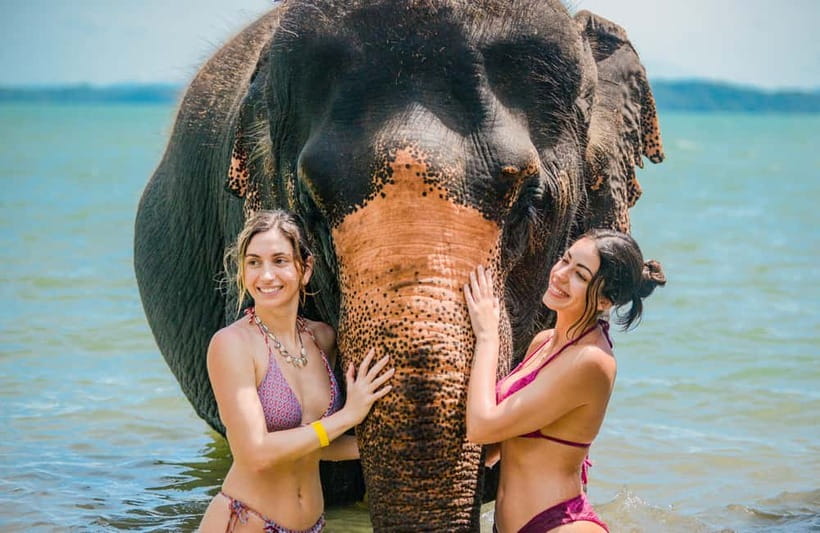
The unusual hook here is simple: you walk with elephants from their natural habitat to a secluded beach, then help bathe and brush them in the sea. You also prepare herb-based vitamin balls and feed the elephants, so the visit feels more like a care session than a quick photo stop.
I like the generous hands-on time with the animals, and I like the short conservation briefing before the activities begin. Guides such as Kim are praised for being funny, kind, and well informed. The main thing to consider is the beach footing. Sharp rocks and sea urchins have caused trouble for at least one participant, so listen carefully to safety instructions and protect your feet.
Key points to know before booking
- The beach visit is the star: Walk with the elephants for 15 to 20 minutes before bathing and brushing them by the sea.
- The program lasts about 2.5 hours: Feeding, a nature walk, sea bathing, showering, and vitamin-ball preparation are all included.
- The camp presents a no-riding model: The elephants are described as free from chains, riding, and torture, with care led by mahouts and camp staff.
- The guides add real value: Kim is singled out for his humor, patience, and clear explanations about elephant care.
- Transport affects the total day: Transfers from several Phuket areas are available, but pickup routes can take much longer than the activity itself.
- Bring swim gear and foot protection: You need swimwear, a change of clothes, a towel, sunscreen, and sensible footwear for the beach.
A coastal elephant camp in Yamu
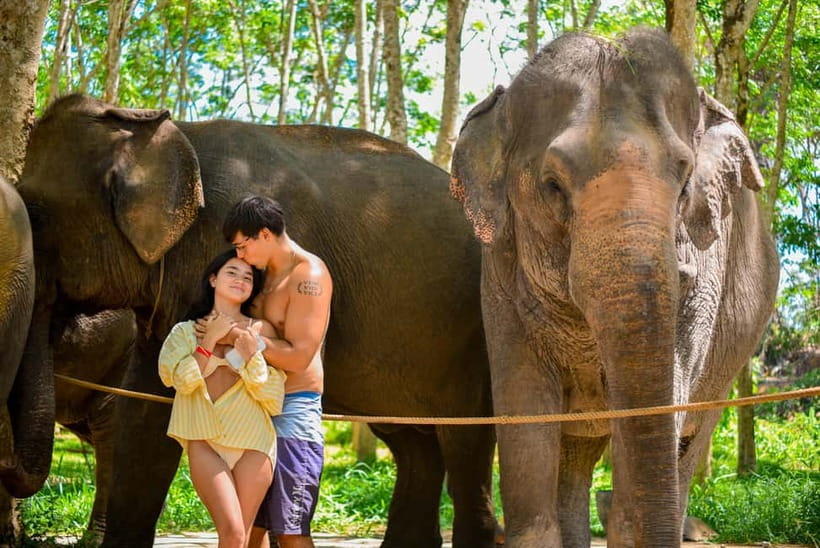
Lily Elephant Camp is in Yamu, Paklok, on Phuket’s northeast side. The camp began in 2023 and was previously known as Elephant Care Camp at Siray Phuket before moving to its current 20-acre setting.
That location matters. This is not an elephant visit squeezed beside a busy road or placed in the middle of Phuket’s main resort strip. The program takes place around a large natural area and a private beach, giving the experience a more open feel than a basic feeding platform.
The camp describes its work as conservation and education. You receive an introduction to elephants in Thailand, their working past, and the care needed by animals that were raised around people. That context is useful because most rescued elephants in Thailand cannot simply be released into the wild. They need food, medical care, familiar human handling, and a safe setting.
Still, I would keep your expectations realistic. This is an interactive elephant encounter, not a wildlife safari. You will feed, touch, brush, shower, and bathe the elephants with staff nearby. If you want to observe elephants without direct contact, this program is not the right fit.
A few more walking tours around Thailand worth a look
- Bangkok: City Highlights Temple and Market Walking Tour
★ 4.5 · 3,990 reviews - Bangkok: Grand Palace and Wat Phra Kaew Guided Walking Tour
★ 4.4 · 2,417 reviews - Bangkok: Wat Pho and Wat Arun Guided Walking Tour
★ 4.6 · 1,720 reviews
What happens during the 150-minute visit
The visit begins with an introduction to the camp and its elephants. Staff explain the activity, basic behavior, and the camp’s approach to care. This briefing is more than a formality. It helps you understand why you should approach calmly, follow the mahout’s directions, and avoid treating the animals like oversized pets.
You then receive elephant food and begin feeding. This is one of the best moments for getting comfortable around the animals. Elephants are large, powerful, and surprisingly expressive, but feeding gives you a clear task and lets you watch how they use their trunks and mouths.
The camp’s elephants are described as social and calm, with names including Lady, Happy, and Lucky mentioned by the staff. You may have time to feed them individually and take photographs, though the exact flow depends on the group and the animals’ mood.
Next comes the walk through nature. The walk with elephants lasts about 15 to 20 minutes and leads toward the private beach. That may sound brief, but it is enough time to see the animals move at their own pace rather than simply stand in one place for photographs.
This is also where the program feels different from a standard sanctuary visit. You are not only watching an elephant eat from a basket. You are moving alongside the animal as staff guide the group toward the shore.
Bathing elephants beside the sea
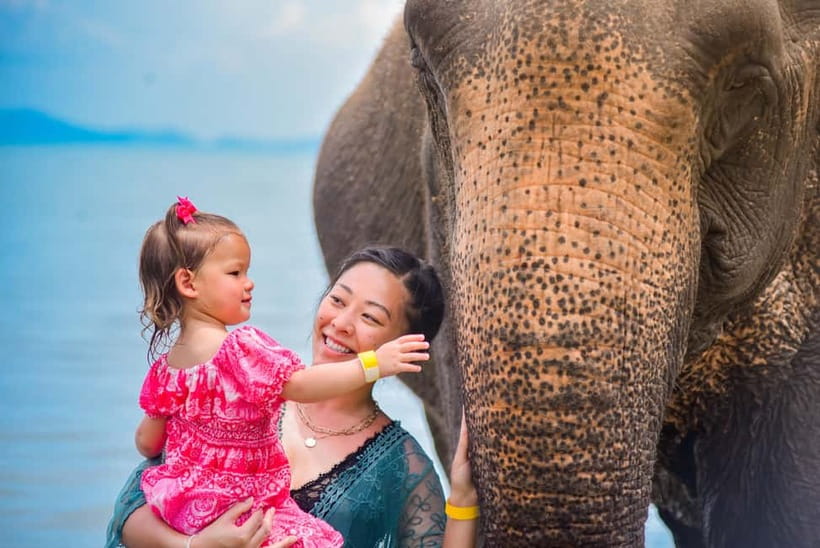
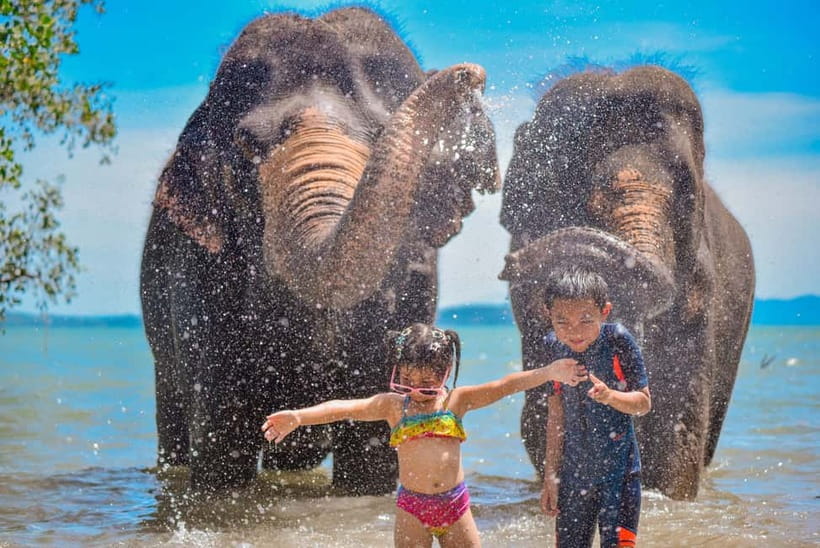
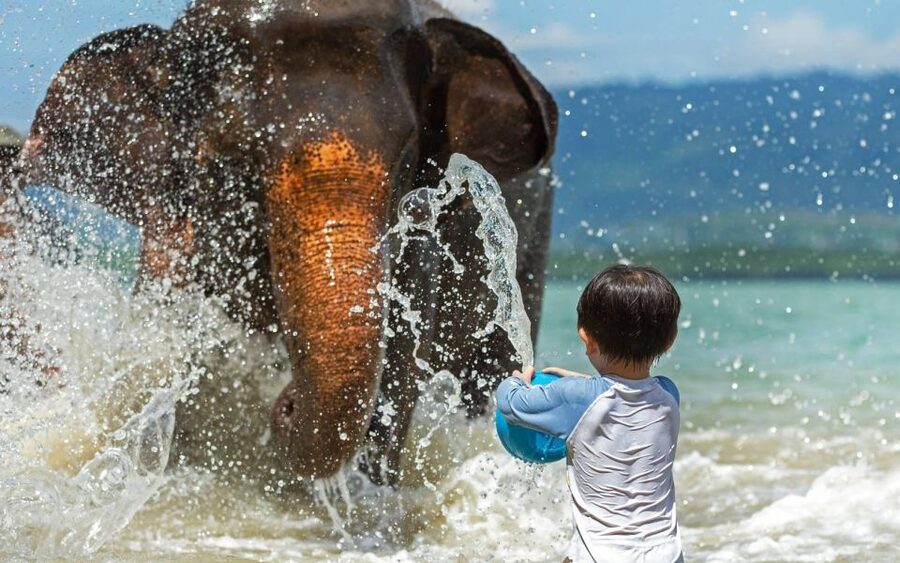
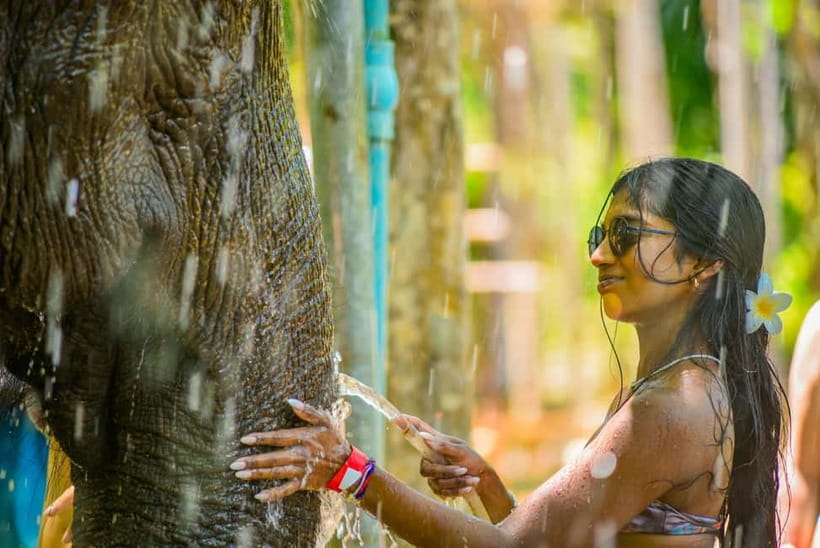
The beach session is the big draw. You help wash and brush the elephants in shallow seawater, then use showers afterward to rinse them and yourselves.
The setting gives the activity a memorable backdrop, but the appeal is not just the photographs. Brushing and rinsing are part of the elephants’ daily care, and you can see how much they enjoy water. The animals may spray themselves and the people around them, so keep your phone protected and expect to get thoroughly wet.
You should pay close attention to the staff when entering the water. One account describes a communication problem over footwear, followed by a cut from sharp rocks and a sea urchin. The details are important: the beach may not have a smooth, sandy bottom, and rubber shoes may or may not be suitable depending on the staff’s instructions and the conditions that day.
Ask for clarification if you do not understand a direction. English is offered, but not every staff member working directly in the water will necessarily speak it fluently. A guide may need to demonstrate what to do rather than explain every point in detail.
The bathing session is also the part most likely to feel crowded if several groups arrive together. The camp has been praised for allowing plenty of one-on-one time, but the total experience can include many people around several elephants. Your patience helps. Let the mahouts manage the animals, and wait your turn rather than pressing in for a photograph.
Making vitamin balls for the elephants
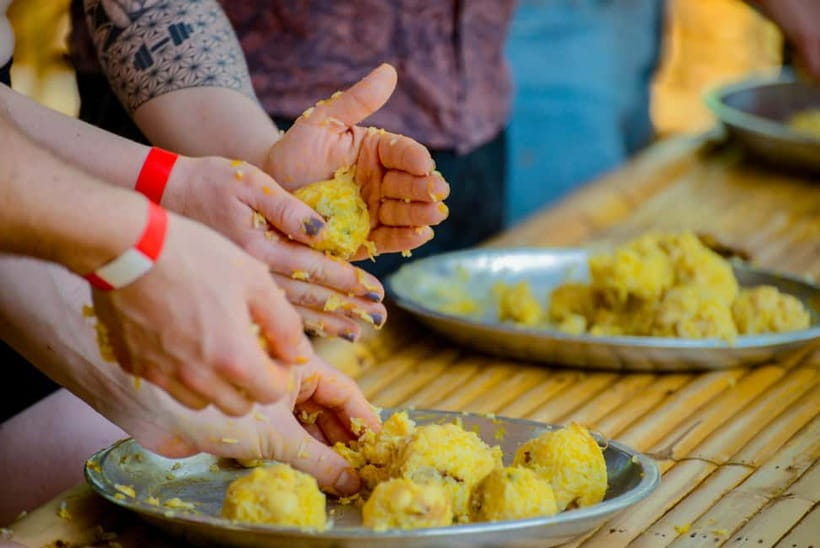
After the beach activities, you prepare natural supplement food, often described as herb or vitamin balls. This gives the program a useful change of pace after the energetic water session.
The activity helps you understand that elephant care is not only feeding fruit and taking pictures. Elephants need a substantial diet and regular attention, and preparing supplements shows one small part of that routine.
It is also a good family activity. Younger children may find the preparation easier to follow than a long conservation talk, while adults get a clearer picture of the work that goes on behind the scenes. Families should still keep children close and follow instructions around the elephants. These are gentle animals, but they remain large and unpredictable.
The final feeding session brings the program back to the animals. You give the elephants the food you have prepared, watch them eat, and have another chance for photographs before changing and leaving.
Same streets, a different route:
- Chiang Mai: 3 Hour Old City and Temples Guided Walking Tour
★ 4.6 · 1,568 reviews - Phuket: Bukit Elephant Park Sanctuary Walk and Feed Tour
★ 4.9 · 926 reviews - Bangkok Authentic Tasting Thai-Chinatown Walking Food Tour
★ 4.9 · 852 reviews - Chiang Mai: Historic Temples and City Guided Walking Tour
★ 4.7 · 650 reviews
How ethical is this elephant experience?
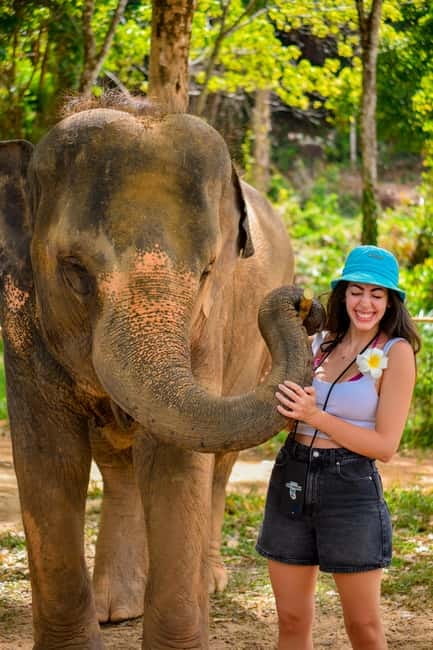
Lily Elephant Camp says its elephants are free from riding, chains, and abusive treatment. The program also presents the animals as rescued or retired elephants that were previously used for labor or other human activities.
That is a better starting point than any attraction offering elephant rides, performances, painting, or forced tricks. The activities here focus on feeding, walking, bathing, brushing, and education. The staff also appear to place the animals’ comfort before a strict visitor timetable, which is essential in a responsible setting.
But you should still make your own judgment. Direct bathing and brushing involve close human contact, and not every animal-care expert agrees that tourists should handle elephants at all. The ethical question is not solved simply by calling a place a sanctuary.
I would look for practical signs during your visit. Are the elephants calm? Can they move away from people? Are mahouts using force? Are staff limiting contact when an animal seems tired or unwilling? The available information presents Lily as a camp where the elephants are cared for and not chained or ridden, but responsible behavior from visitors remains important.
The education briefing is one of the strongest parts of the program because it gives you a better understanding of Thailand’s elephant problem. Many captive elephants cannot be released into the wild after years around people. A sanctuary can offer safer care, but it still has to balance animal welfare with income from visitors.
The guides, facilities, and photographs
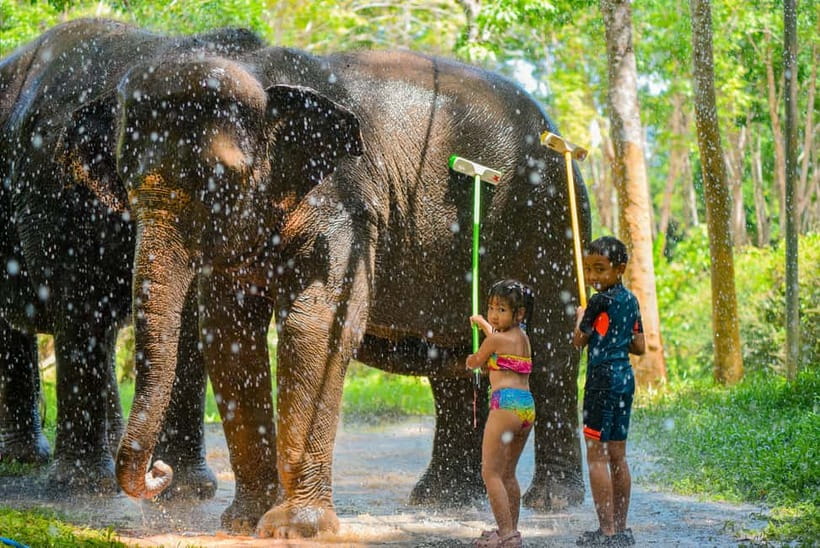
The guides are a major part of the experience. Kim is repeatedly praised for his friendly approach, clear explanations, and willingness to help with photographs. A good guide matters here because the program involves large animals, slippery water, a moving group, and several activities in a short period.
English and Thai are the listed tour languages. You can expect the main briefing to be available in English, but ask questions early if you have concerns about allergies, medical conditions, mobility, or water safety.
The camp has clean toilets and showers, along with coffee and juice before or after the activity. Those are small comforts, but they matter when you finish a wet beach session covered in saltwater, sand, and elephant spray.
Professional photography is available at an extra charge. The listed price begins at 300 baht, but several people refer to a package of about 1,500 baht for 10 digital photographs. The images may be excellent, yet that cost is a serious add-on for a short set of files.
You do not need to buy the photos to enjoy the visit. Guides may help you take pictures with your own phone, and some participants appreciated that they were not pressured to purchase the professional package. Bring a waterproof phone case or leave your phone with someone on dry land during the most active water moments.
Is $59 good value?
At $59 per person, this is not the cheapest elephant activity in Phuket. The value depends on what you want from the visit.
You receive about 150 minutes of structured time, elephant food, feeding, a nature walk, beach bathing, brushing, showering, a conservation introduction, English or Thai guiding, and accident insurance. The program also includes hotel pickup and drop-off when you select a transport option for the listed Phuket areas.
That is a fair package if you want a close, active experience rather than a short viewing stop. The beach setting is unusual, and the program includes several different activities rather than repeating one feeding session.
Transport can change the value. Pickup is included only when you choose an option with transfers. Standard transfer fees of 300 baht per person apply to Panwa, Chalong, Rawai, Surin Beach, Mai Khao, Nai Yang, Nai Thon, Nai Harn, and Siray. If you initially book the program without transport and later request the shuttle, the fee is 750 baht per person.
Pickup routes can also take time. One person reported spending nearly eight hours away from the hotel because their group was collected first and dropped off last, even though the camp program itself lasted longer than advertised. Contact the driver about the approximate pickup time, and do not place a tight afternoon booking immediately afterward.
If you stay near Phuket City, Old Town, Kata, Karon, or Patong, compare the transfer option carefully. A cheaper program-only booking may stop being cheap once you add a taxi or later shuttle.
What to bring and what to expect on the day
Pack swimwear, a towel, dry clothes, sunglasses, a sun hat, sunscreen, and a camera. Biodegradable sunscreen and insect repellent are requested, which is sensible around animals and a coastal natural area.
Cash is useful for optional expenses, including photographs and any transport charges not already included in your booking. Drones are not allowed.
Tell the operator about food allergies or medical conditions in the booking remarks. That matters because you will be handling elephant food and spending time in the sea.
The activity is listed as wheelchair accessible, but the beach and water portions may still require advance discussion. Ask the operator what level of assistance is available for the specific date and transfer option.
Free cancellation is available up to 24 hours before the start time, and you can reserve now and pay later. Starting times vary, so check the available schedule before planning the rest of your Phuket day.
Who should book Lily Elephant Camp?

I would choose this experience if you want close contact with elephants, enjoy getting wet, and value a program that explains the animals’ past and daily care. It suits couples, families, and first-time visitors who want more than a quick photograph beside an elephant.
It is especially appealing if the idea of bathing elephants in the sea is your main reason for booking. The combination of a nature walk and coastal setting makes it different from an inland feeding-only program.
I would hesitate if you dislike animal handling, have difficulty walking on uneven ground, or want a quiet observation experience. I would also plan carefully if you are staying far from Yamu, since the drive and shared pickup route may take much of the day.
Should you book it?
For most visitors seeking an interactive elephant experience in Phuket, Lily Elephant Camp is a strong choice at $59, provided you understand what you are buying. The best features are the beach walk, generous contact time, conservation briefing, and the chance to take part in real care tasks such as feeding and preparing supplements.
Book it if you can accept hands-on contact and will follow the mahouts’ instructions. Bring proper sun and water gear, be cautious on the beach, check the transfer price, and treat the professional photos as optional rather than expected.
Skip it if you want elephants observed from a distance or if you are uncomfortable with bathing and brushing captive animals. For everyone else, this is a memorable half-day outing with a clear practical advantage: the sea session gives the program a setting and rhythm you will not get from a standard elephant camp.
FAQ
Where is Lily Elephant Camp located?
Lily Elephant Camp is in Yamu, Paklok, Phuket, on the Gulf of Thailand. The camp previously operated from Siray Island under the name Elephant Care Camp at Siray Phuket.
How long does the elephant experience last?
The scheduled program lasts 150 minutes, or about 2.5 hours. The listed program time is approximately two to two and a half hours.
What activities are included?
You can feed the elephants, walk with them in nature for about 15 to 20 minutes, bathe and brush them at the private beach, shower them afterward, and prepare natural vitamin supplements.
Can I bathe with the elephants in the sea?
Yes. Sea bathing with the elephants is included in the program, along with brushing and showering them afterward.
Is hotel pickup available?
Yes, pickup and drop-off are available when you select a transport option during booking. Included pickup areas are Phuket City, Old Town, Kata, Karon, and Patong.
Are transfers available from other Phuket areas?
Yes, transfers are offered for an additional 300 baht per person from Panwa, Chalong, Rawai, Surin Beach, Mai Khao, Nai Yang, Nai Thon, Nai Harn, and Siray. A later shuttle request after booking the program without transport costs 750 baht per person.
What should I bring?
Bring swimwear, a towel, a change of clothes, sunglasses, a sun hat, sunscreen, biodegradable sunscreen, a camera, cash, and biodegradable insect repellent.
Are professional photographs included?
No. Professional photography is an optional extra. Prices start at 300 baht, and a 10-photo digital package is described as costing about 1,500 baht.
Can I cancel or pay later?
You can cancel up to 24 hours before the activity for a full refund. Reserve now and pay later is also available.
Just added around Thailand
- Chiang Mai: Temple And City Walking Tour Part I★ 4.7 · 244 reviews
- Chiang Mai Untouched Elephant: Nature Walk & Waterfall Trek★ 4.7 · 77 reviews
- Chiang Mai: Local Food and Markets Guided Walking Tour★ 4.3 · 175 reviews
- Bangkok: Grand Palace, Wat Pho, & Wat Arun Walking Tour★ 4.6 · 116 reviews
- Bangkok: Grand Palace and Wat Arun Guided Walking Tour★ 4.5 · 118 reviews
- Bangkok: Chinatown by Night Walking Tour★ 4.5 · 162 reviews
- Bangkok: Discover a Taste of Chinatown – 2 Hr Walking Tour★ 4.2 · 152 reviews
- Bangkok: City Highlights and Landmarks Private Walking Tour★ 4.3 · 142 reviews
Walking Tours, compared.

Magical London: Harry Potter Guided Walking Tour
Read our review →
Reykjavik Food Walk – Local Foodie Adventure in Iceland
Read our review →
History and Hauntings of Salem Guided Walking Tour
Read our review →
New Orleans Premier Ghost, Voodoo and Vampire Walking Tour
Read our review →
Amsterdam Anne Frank: Small-Group Walking Tour & Local Guide
Read our review →

Edinburgh Castle: Guided Walking Tour with Entry Ticket
Read our review →
Anne Frank’s Story – Guided Walking Tour through Amsterdam
Read our review →Browse the lists this tour appears in