
REVIEW · INDIA
Old Goa: Walking Tour of Heritage Churches
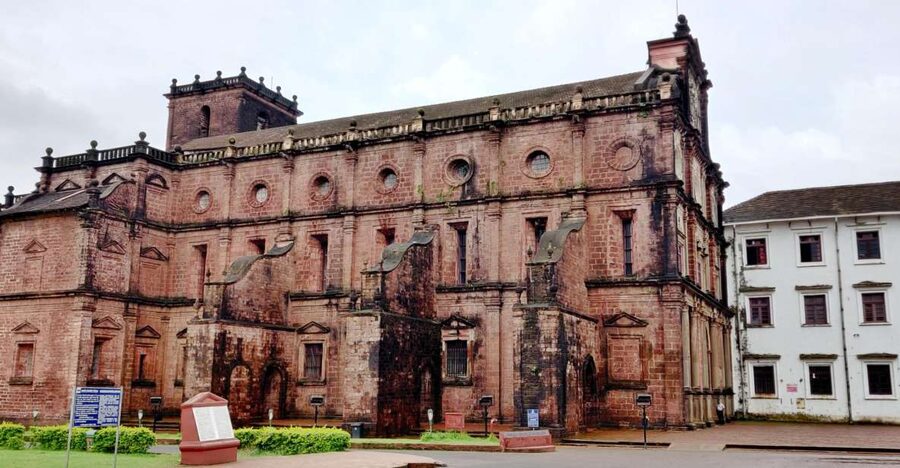
Old Goa’s churches tell the story of a former capital more clearly than any museum label can. On this 2.5-hour heritage walk, you move from the Viceroy’s Arch through grand churches, ruined foundations, painted interiors, and the Basilica of Bom Jesus, where the remains of St. Francis Xavier are kept.
I like two things here. First, the small group, limited to 10 people, gives you room to ask questions. Second, the guides bring local detail to the monuments. Yashasvi, Vimala De Souza, Pawan, Santoshi, Trancy, Sejal, and others have led this walk, and the strongest praise goes to their storytelling and clear explanations. The main consideration is the weather: heavy rain interrupted one walk, and hot conditions can make the open sections tiring.
Key points to know before you book
- Start at the Viceroy’s Arch: Meet in Old Goa, arrive 10 minutes early, and use a taxi to reach the meeting point.
- See four major church landmarks: The route includes St. Catherine’s Church, Se Cathedral, St. Francis of Assisi, and the Basilica of Bom Jesus.
- Hear local stories, not just dates: Guides explain Portuguese rule, Old Goa’s former role as a capital, and the meaning behind the church art.
- Keep the group personal: The tour is limited to 10 participants, making it easier to ask questions and hear the guide.
- Get a useful refreshment break: A healthy non-alcoholic drink, often coconut water or fresh lime soda, is included.
- Dress for both walking and worship: Cover your knees and shoulders, and wear comfortable shoes and clothes.
Why Old Goa is best understood on foot
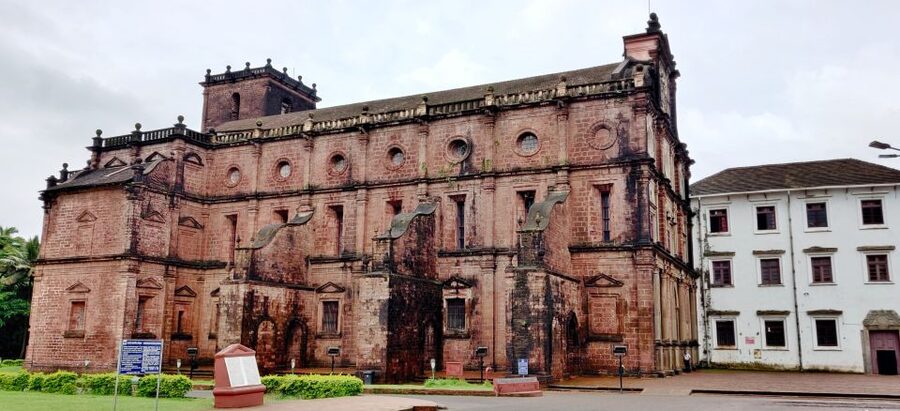
Old Goa is not a single monument that you visit, photograph, and leave. It is a spread of churches, arches, ruins, and open spaces that make more sense when someone explains how they fit together.
The walking format helps you notice the change from a grand colonial center to a quieter historic site. Your guide begins at the Viceroy’s Arch, then leads you through the old capital while explaining Goa’s connection with Portuguese rule in India. You are not simply looking at pale walls and carved doorways. You are learning why these buildings were placed here and why Old Goa was once called the Rome of the East.
I find this useful because the architecture can otherwise blur together. A guide gives each church a role in the story. One stop helps explain the arrival of the Portuguese. Another shows the scale of church building in Old Goa. Another focuses on painted scenes and religious art. By the time you reach the Basilica of Bom Jesus, the site has context rather than just visual grandeur.
The tour lasts around two and a half hours, so expect a steady walk rather than a rushed church checklist. You will spend time outdoors moving between buildings, with interiors and explanations breaking up the route.
A few more walking tours around India worth a look
- Fontainhas Heritage Walk by Make It Happen
★ 5.0 · 2,834 reviews - The Great Indian Food Tour: Old Delhi Food and Heritage Walk
★ 5.0 · 1,698 reviews - Group Guided Walking Tour in Fort and Colaba
★ 5.0 · 1,073 reviews
Starting beneath the Viceroy’s Arch
The meeting point is the Viceroy’s Arch in Velha Goa. You should arrive about 10 minutes before the scheduled start. The arch is easy to reach by taxi, which is the practical choice if you are coming from elsewhere in Goa.
This is a sensible starting place. The arch immediately puts you in the political world of Portuguese Goa, and it gives the guide a natural place to explain Old Goa’s earlier importance. Listen closely during this opening section because it frames the rest of the walk: the churches were not isolated religious buildings, but part of a former capital shaped by Portuguese power and Catholic institutions.
The tour is conducted in English. The small-group limit of 10 is important here. A large group would make it harder to hear personal stories or ask about details on the buildings. With fewer people, you have a better chance of following the guide’s explanation without being pushed along by a crowd.
Different guides bring different personalities. Yashasvi has been praised for a relaxed style and personal anecdotes. Vimala De Souza is especially strong at storytelling and making the subject easy to follow. Pawan has been singled out for detailed explanations and useful local suggestions, while Santoshi has been described as friendly, professional, and attentive to questions.
That range matters because this is a guide-led experience. The buildings are impressive on their own, but the quality of the walk depends on how clearly the guide connects them.
St. Catherine’s Church and the arrival of the Portuguese
The next major stop is the Church of St. Catherine. This is where the tour traces the arrival of the Portuguese in India and begins to explain the political and religious changes that followed.
You can expect your guide to give this part more meaning than a quick date-filled lecture. The story is tied to the old capital and to the Portuguese idea of Goa as the Rome of the East. That phrase helps explain the scale of the churches that follow, but it should also encourage you to look critically at the power behind the architecture.
This is one of the places where a local guide adds real value. You can ask about Portuguese influence, colonial rule, and the way the buildings fit into Goan history. The guides have also been praised for answering side questions, so this is a good point to raise anything you want to understand better.
The stop is not only about the church interior. As you walk through the surrounding area, the route brings you past ruins and remnants of Old Goa. These fragments can be easy to miss if you visit alone. A guide can point out what you are seeing and explain why the area looks more open and scattered than a functioning city center.
Se Cathedral and the scale of Old Goa
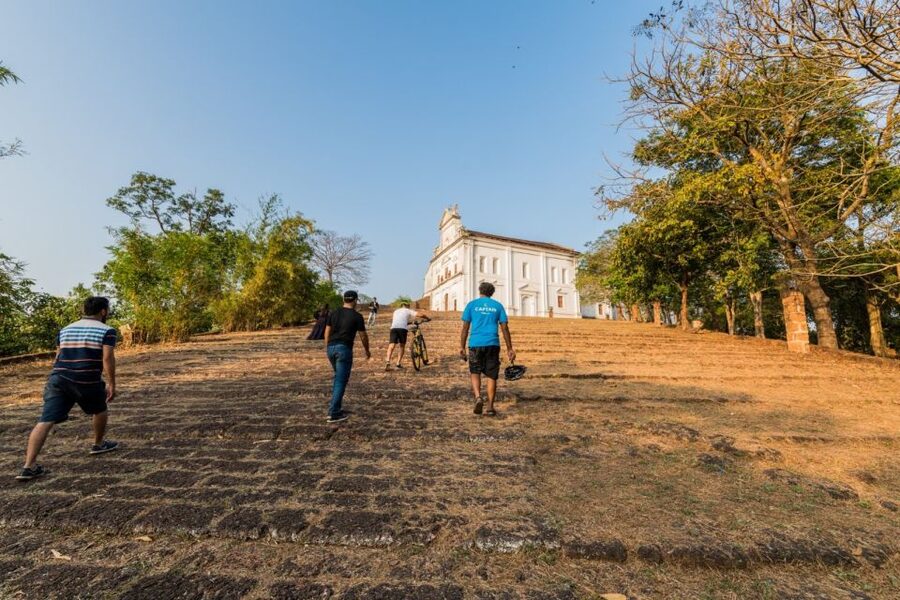
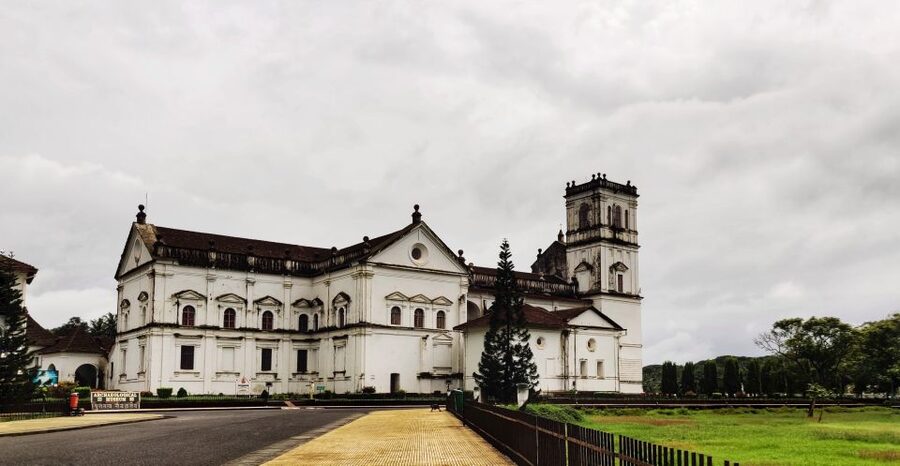
The walk continues to Se Cathedral, described as the largest church in Asia. Even if you are not especially interested in church architecture, the scale is hard to ignore.
Here, I would resist the temptation to focus only on size. The useful question is why such a large church was built in Old Goa. Your guide connects the building to the former capital and the Portuguese presence, helping you see the church as part of a wider program of power, worship, and public display.
Give yourself time to look upward and across the interior. The scale works best when you stand back and take in the proportions. Your guide may also point out details that you would miss while taking photographs, including features connected with the building’s religious purpose and decoration.
This is also a stop where practical behavior matters. These are active religious sites, not simply monuments. Cover your shoulders and knees, speak quietly, and follow any instructions from the guide or church staff. Photography may be restricted inside churches and museums, so ask before taking pictures.
Same streets, a different route:
- Spiritual City Walking Tour-THE Pushkar Route
★ 5.0 · 907 reviews - Private Guided Walking Tour in Fort & Colaba
★ 5.0 · 895 reviews - Old Goa Heritage Walk by Make It Happen
★ 5.0 · 797 reviews - Old Delhi Food, Heritage&Cultural Walk with Rickshaw ride to Masterji Kee Haveli
★ 5.0 · 742 reviews
Frescoes inside St. Francis of Assisi
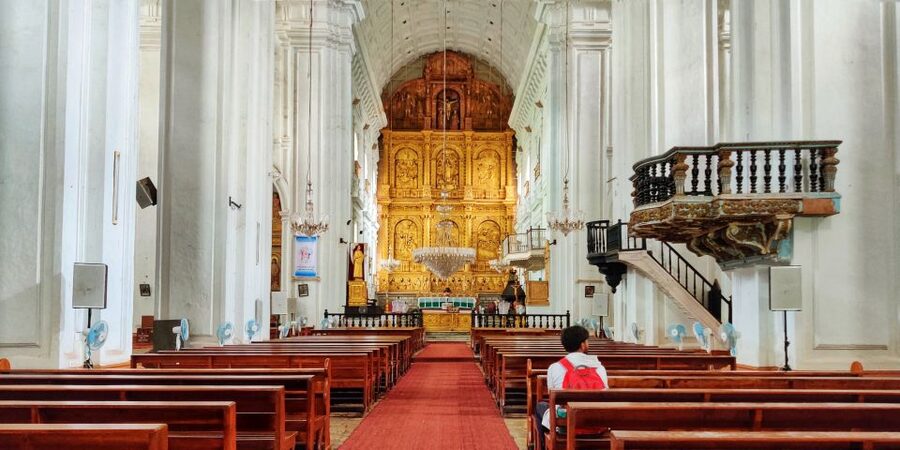
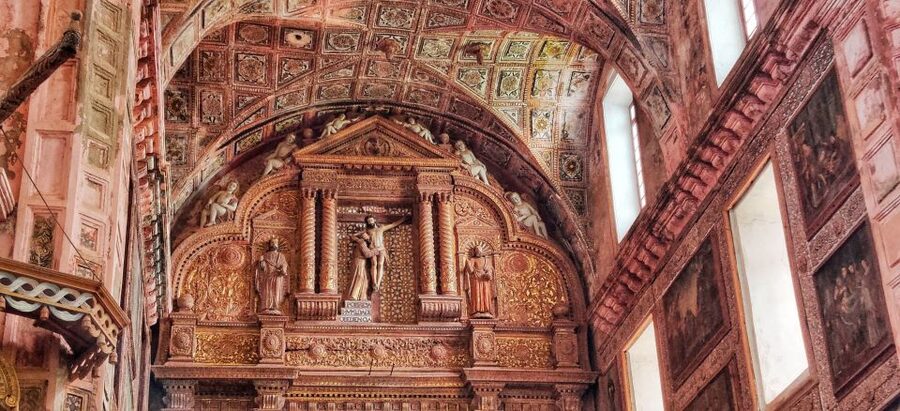
The Church of St. Francis of Assisi brings the tour closer to its artistic side. The decorative frescoes depict the life of the patron saint, giving you something specific to study rather than simply admiring the building as a whole.
This is a good example of why the walking tour works better with interpretation. The frescoes are visual storytelling. Once your guide explains what the scenes represent, you can read the walls with more purpose. You are no longer just looking at decoration. You are following episodes from the saint’s life and considering how art helped communicate religious stories.
The guides have been praised for linking what you see to what you hear. That is especially useful here because the images can be easy to overlook when you are moving through a historic church with several other sights still ahead.
The experience is not designed as a specialist art tour, so do not expect a long technical lecture about pigments, restoration, or individual artists. Instead, you get a clear introduction to the frescoes within the wider story of Old Goa.
The Basilica of Bom Jesus and St. Francis Xavier
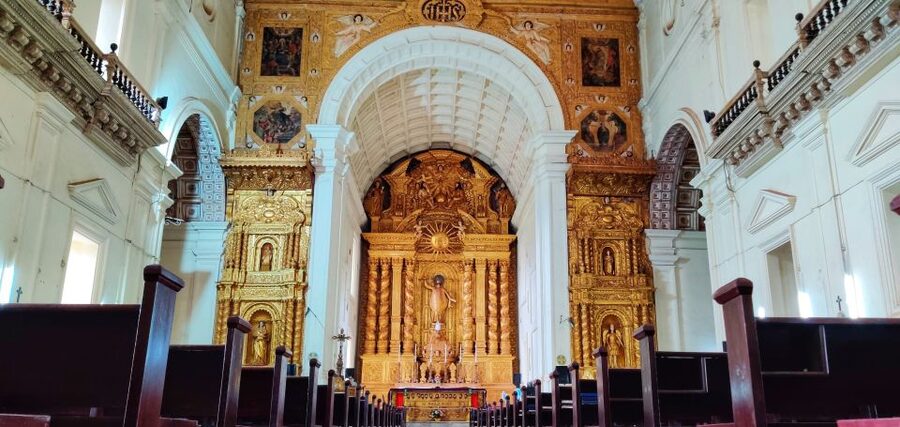
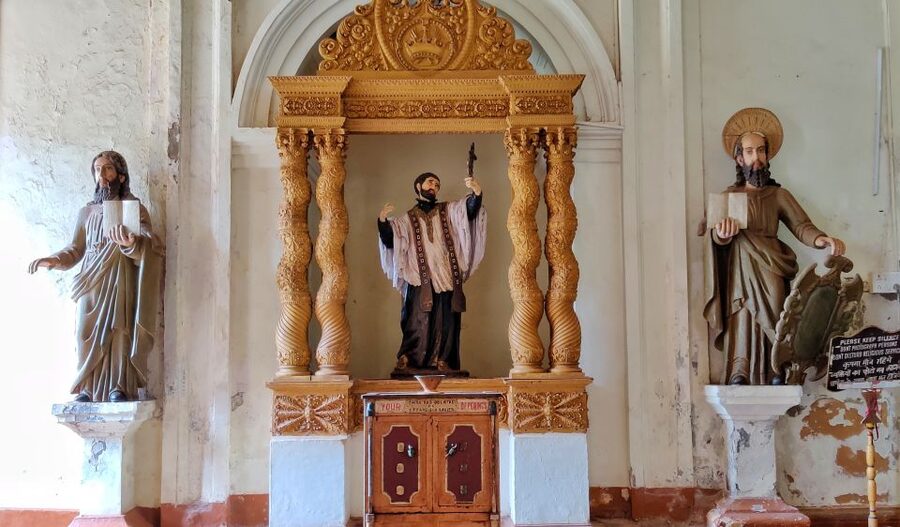
The Basilica of Bom Jesus is one of the emotional high points of the route. It houses the remains of St. Francis Xavier, making it an important pilgrimage site as well as a major historical building.
Your guide explains the significance of the basilica and helps you understand why it draws such attention. The stop can feel more solemn than the earlier architectural viewpoints, so allow yourself a little quiet time rather than treating it as just another photo opportunity.
Photography rules can vary inside religious buildings and museums. Ask your guide before using your camera. This small courtesy matters, particularly around sacred objects and the remains of St. Francis Xavier.
One useful detail comes from the timing of your visit. A special exposition connected with St. Francis Xavier was taking place during one tour, and the guide helped a participant find the way to see the relics afterward. That does not mean an exposition will be happening during your visit, but it shows the value of having a local guide who can explain what is taking place on the day.
The stories make the churches easier to remember
The strongest part of this experience is not simply the number of stops. It is the human delivery.
Guides such as Yashasvi, Vimala, Pawan, Santoshi, Trancy, Priyankaa, Sejal, and Amreen have been praised for making the walk easy to follow and personal. Guests have especially valued anecdotes that do not appear in a standard guidebook. That matters in Old Goa, where a list of construction dates would quickly become tiring.
I also like the way the guides seem to adjust to the group. Some explanations are described as relaxed and witty, while others focus on careful detail. Several guides have helped with practical questions, including onward taxi arrangements and nearby places to visit. The experience is still structured, but it does not sound like a fixed script delivered without room for conversation.
The small group helps. If you are curious about Portuguese influence, church art, local customs, or the ruins, you can ask. If you prefer simply to listen, the walk remains manageable and organized.
A cool drink in the middle of the walk
A refreshing non-alcoholic drink is included. The exact drink can vary, but the experience has included coconut water and fresh lime soda.
This is a modest detail, yet it is well judged. The route includes outdoor walking in Goa, and a cold drink gives you a useful pause before the final churches. Do not treat it as a meal replacement. Food and other drinks are not included, so eat beforehand or plan your next stop separately.
The break also gives you a moment to ask the guide about the remaining itinerary. It is a small touch, but it makes the pace more comfortable.
Heat, rain, clothing, and walking comfort

Wear comfortable shoes. Old Goa’s route includes walking between monuments and through open areas, so this is not the place for footwear chosen only for appearance.
Comfortable clothes are equally important, but remember the church dress code. Your knees and shoulders should be covered. This applies to all travelers in the group, and it is best to dress appropriately before you arrive rather than try to improvise at the entrance.
Weather is the main practical risk. One tour was interrupted by torrential rain after about 45 minutes. The group continued when the rain eased, but the full route could not be completed because of the participant’s scheduled ride. That is a useful warning: leave some flexibility around the end of the walk, especially during wet weather.
The activity is not recommended for infants and toddlers. The duration, walking, church rules, and need to listen to explanations make it better suited to older children, teenagers, and adults.
Is $12 good value?
At $12 per person, this is strong value if you want context rather than a self-guided look at the churches.
You are paying for an English-speaking guide, a small group, approximately two and a half hours of explanation, and a refreshing drink. Hotel pickup, food, insurance, souvenirs, and other drinks are not included. You will need to arrange your own transport to and from the Viceroy’s Arch.
The value improves if you are new to Goa or unfamiliar with Portuguese colonial history. A guide helps you connect the buildings and saves you from reading separate information panels at each stop. It is also useful if you want to ask questions about local life rather than only hear formal heritage facts.
If you already have strong knowledge of Old Goa and prefer to explore at your own pace, you may find the fixed route less necessary. The walk is also less appealing if you dislike religious sites, warm-weather walking, or restrictions on photography.
Still, the low price and small group make it an easy choice for most first-time visitors to Old Goa.
Who should book this Old Goa walk?
I would choose this tour if you want to see the main churches in one organized visit and understand how they relate to Goa’s Portuguese past.
It suits:
- First-time visitors to Old Goa
- People interested in architecture, religious art, and colonial history
- Solo travelers who want a small social group
- Couples and families with older children
- Anyone who values local anecdotes over a purely self-guided visit
- Visitors who want an English-speaking guide without paying for a private tour
I would think twice if you need a completely flexible schedule, cannot walk comfortably for two and a half hours, or are visiting during a period of heavy rain. You should also make sure your clothing meets the church requirements.
The free cancellation policy allows you to cancel up to 24 hours before the tour for a full refund, and reserve-now, pay-later booking keeps your plans flexible.
Should you book it?
Book it if you want Old Goa explained, not just photographed. The churches are the main attraction, but the guide’s personal stories, clear accounts of Portuguese rule, and comments on local culture give the walk its value.
For the best experience, arrive early, wear covered and comfortable clothing, bring shoes suited to walking, and leave a little time after the tour in case rain slows the route. If you have another ride booked, allow breathing room.
At $12, this is a practical, low-cost introduction to Old Goa. You may leave with a longer list of questions than you arrived with, which is usually a good sign on a heritage walk.
FAQ
How long does the Old Goa walking tour last?
The tour lasts approximately 2.5 hours.
How much does the tour cost?
The price is $12 per person.
Where does the tour begin?
The meeting point is the Viceroy’s Arch in Velha Goa, Goa 403110, India.
How early should I arrive?
You should arrive at the meeting point 10 minutes before the tour starts.
What language is the tour conducted in?
The tour is conducted in English with a live English-speaking guide.
How many people are in the group?
The group is limited to 10 participants.
Which churches are visited?
The route includes the Church of St. Catherine, Se Cathedral, the Church of St. Francis of Assisi, and the Basilica of Bom Jesus.
Is a drink included?
Yes. A healthy, refreshing, non-alcoholic drink is included. Past tours have included coconut water and fresh lime soda.
What should I wear?
Wear comfortable clothes and shoes. Your knees and shoulders must be covered because the churches have dress codes.
Can I take photographs inside the churches?
Photography may be restricted inside churches and museums. Ask your guide before taking photographs if you are unsure.
Is hotel pickup included?
No. Hotel pickup and drop-off are not included. You should arrange your own transport to the Viceroy’s Arch.
Can I cancel for a refund?
Yes. You can cancel up to 24 hours in advance for a full refund. You can also reserve now and pay later.
Just added around India
- Wine Tasting Experience At 150 Years Old Indo-Portuguese House★ 5.0 · 269 reviews
- Fontainhas Heritage Walk At Latin Quarters of Goa★ 5.0 · 531 reviews
- The Goan Hinterland Experience in South Goa★ 5.0 · 112 reviews
- Food And Drink Walking Tour In Panjim★ 5.0 · 286 reviews
- Private Aguada Jail Heritage Walk Tour★ 5.0 · 102 reviews
- Georgetown heritage walking tour in Chennai about the founding of Chennai★ 5.0 · 144 reviews
- Gods of Mylapore walking tour- tourism ministry approved company★ 5.0 · 267 reviews
- Mahabalipuram walking tour by tourism ministry approved company★ 5.0 · 102 reviews
Walking Tours, compared.

Magical London: Harry Potter Guided Walking Tour
Read our review →
Reykjavik Food Walk – Local Foodie Adventure in Iceland
Read our review →
History and Hauntings of Salem Guided Walking Tour
Read our review →
New Orleans Premier Ghost, Voodoo and Vampire Walking Tour
Read our review →
Amsterdam Anne Frank: Small-Group Walking Tour & Local Guide
Read our review →

Edinburgh Castle: Guided Walking Tour with Entry Ticket
Read our review →
Anne Frank’s Story – Guided Walking Tour through Amsterdam
Read our review →Browse the lists this tour appears in