
REVIEW · THAILAND
Authentic trek only walk in Chiang Rai jungle
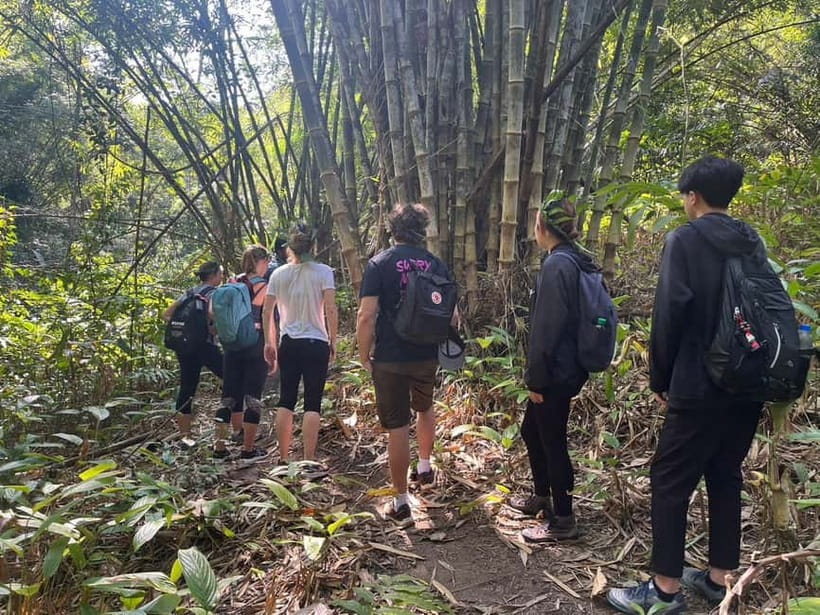
The best part of this Chiang Rai day is the proper jungle hike, not a short stroll dressed up as an adventure. You walk steep slopes, duck under fallen bamboo, pass tea fields and hill villages, and reach a waterfall where a swim feels well earned. The bamboo cooking session gives the day a useful cultural twist: you help prepare a real meal instead of simply being handed one.
I like the mix of local villages and wild trails, and I like that the guides, including James and Wat, bring humor as well as practical help. The main caution is simple: this is more strenuous than the phrase moderate fitness suggests. Steep climbs, rocky ground, and some clambering make it a poor match for anyone with mobility limits or shaky footing.
Key points to know before you book
- A serious jungle walk: Expect steep ascents, uneven trails, fallen bamboo, and a few technical sections.
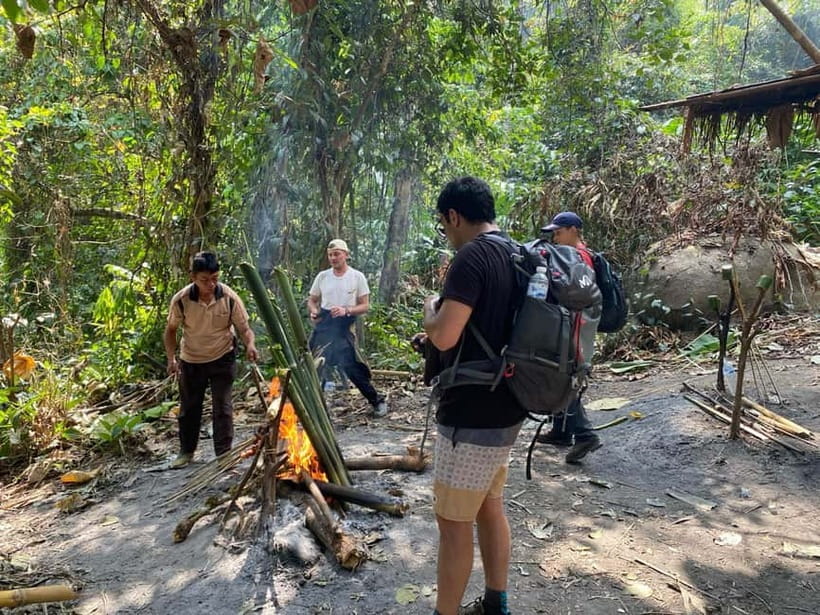
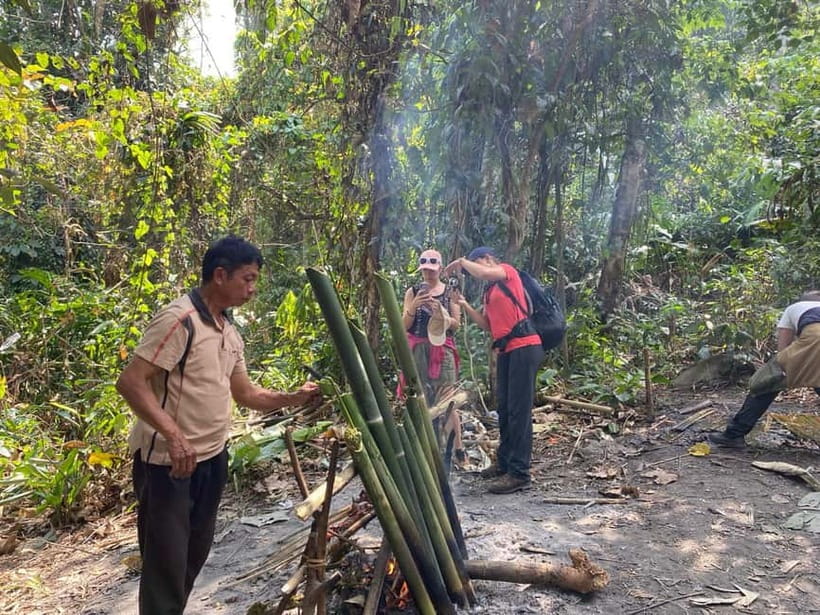
- Bamboo-cooked Thai lunch: You help prepare food using bamboo and banana leaves, then eat it in the forest.
- Four hill-community stops: The route includes Lisu, Chinese, Akha, and Lahu communities.
- Waterfall swim included: Bring swimwear and a towel for a cool break after the harder walking.
- Strong guiding team: James, Wat, Sammy, and Tee are praised for their humor, clear explanations, and care with the group.
- Good value at $57: Hotel transport, lunch, guiding, and a full nine-hour day are included, though drinks beyond water cost extra.
A nine-hour Chiang Rai day with real walking
This experience is best understood as a full day outdoors, not a sightseeing circuit with a few photo stops. Pickup is from your Chiang Rai hotel at 9:00 a.m., followed by a day that combines cultural visits, jungle hiking, food, and time at a waterfall.
The route does not rely on a single headline attraction. Its appeal comes from the way the parts fit together. You move from village life to tea plantations, from forest trails to a waterfall, then back through more hill communities. That variety keeps the day moving, but it also means you should expect changing ground and a fair amount of effort.
The tour is called an Only Walk trek, and that name matters. You are not signing up for a gentle forest stroll. Past participants describe steep slopes, rocky stretches, low branches, and fallen bamboo that you may need to step over or duck beneath. Good balance and sturdy shoes will make a bigger difference than fancy outdoor gear.
More Hikes and Treks in Thailand:
- 1 Day Trekking in Chiang Rai forest (walk only)
★ 4.9 · 95 reviews - Chiang Mai Untouched Elephant: Nature Walk & Waterfall Trek
★ 4.7 · 77 reviews - Sólheimajökull Glacier Hike – Adventure in a Small Group
★ 5.0 · 799 reviews
Starting with Lisu and Chinese village life
The first cultural part of the day brings you to a Lisu village, where the focus is on local traditions and daily life. This is more useful than a quick roadside photo stop because it gives the walk a human setting before you head farther into the forest.
You then visit a Chinese village, adding another layer to Chiang Rai Province’s mix of communities. The value here is the contrast between places, customs, and village settings. Your guide helps explain what you are seeing, so do not be shy about asking questions.
The exact shopping element is not spelled out in detail, so you should not book this expecting a major market or a long buying session. Treat the village visits as cultural encounters within a wider walking day. Be polite with photography and follow your guide’s lead around homes and community spaces.
James and Wat are frequently singled out for keeping the mood light while still explaining the area. That matters on a demanding day. A funny guide cannot flatten a steep hill, but a good one can make the climb feel less grim and keep an eye on how the group is managing.
Tea plantations and changing views
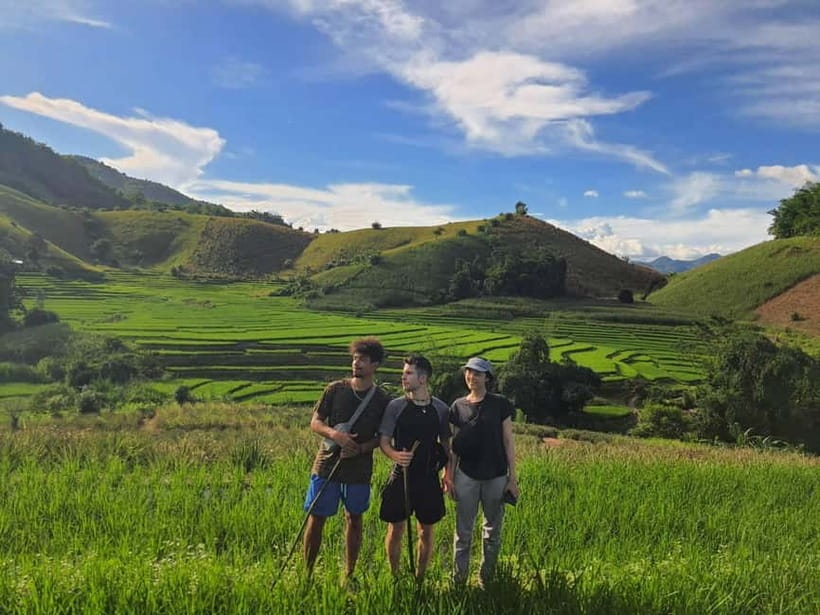
After the village visits, the route passes through tea plantations. This is one of the more distinctive parts of the day because it changes the scenery from thick jungle to ordered rows of cultivated plants.
You will have time for photos and scenic views along the way, but this is still a walking tour rather than a plantation tasting experience. The supplied details do not promise a formal tea lesson or tasting, so keep your expectations focused on the setting and the route.
The combination of plantations and forest also gives you a better sense of how people use the land around Chiang Rai. You are not simply looking at scenery from a road. You are walking through working countryside and then moving into more rugged ground.
The route can be hot, particularly outside the cooler months. One person described the day as hot but still enjoyable, while others found the effort worthwhile despite the sweat. Carry water, use sunscreen, and wear a hat. Water is included, but other drinks are not.
Learning to cook lunch in bamboo
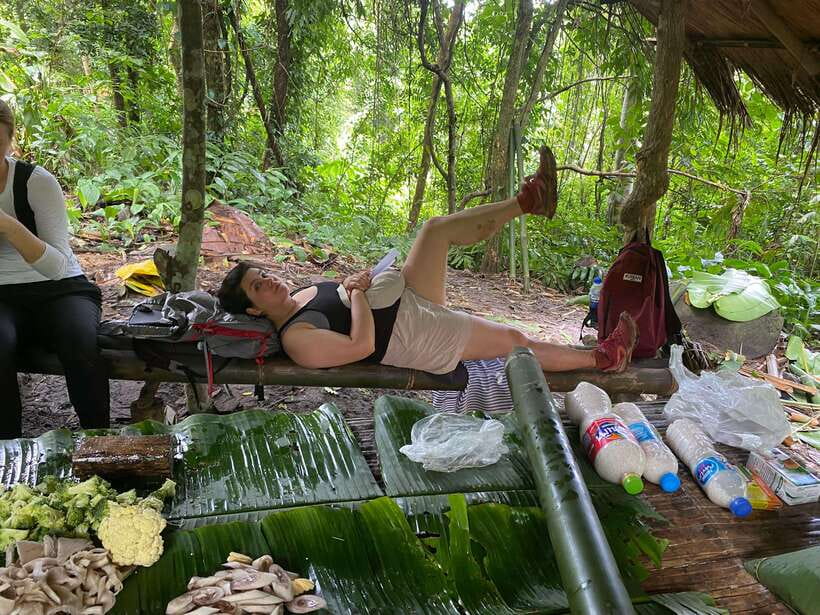
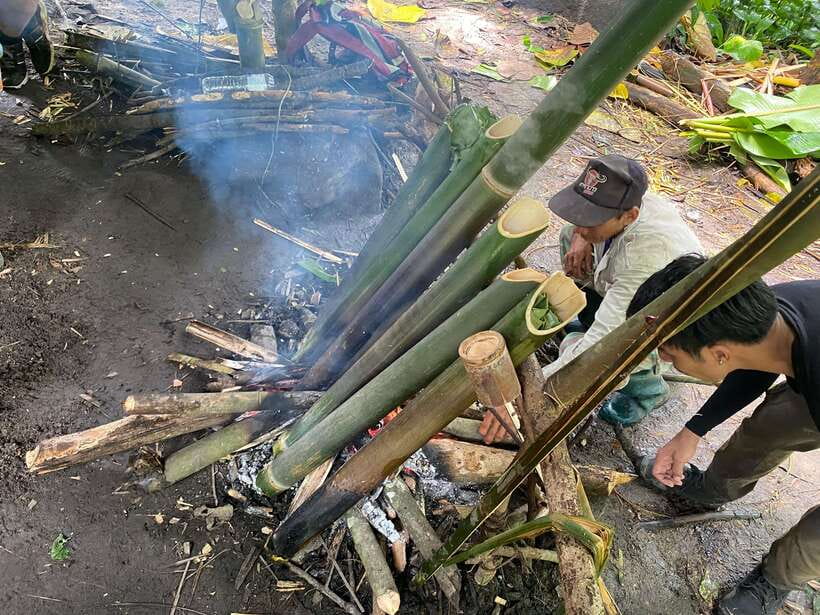
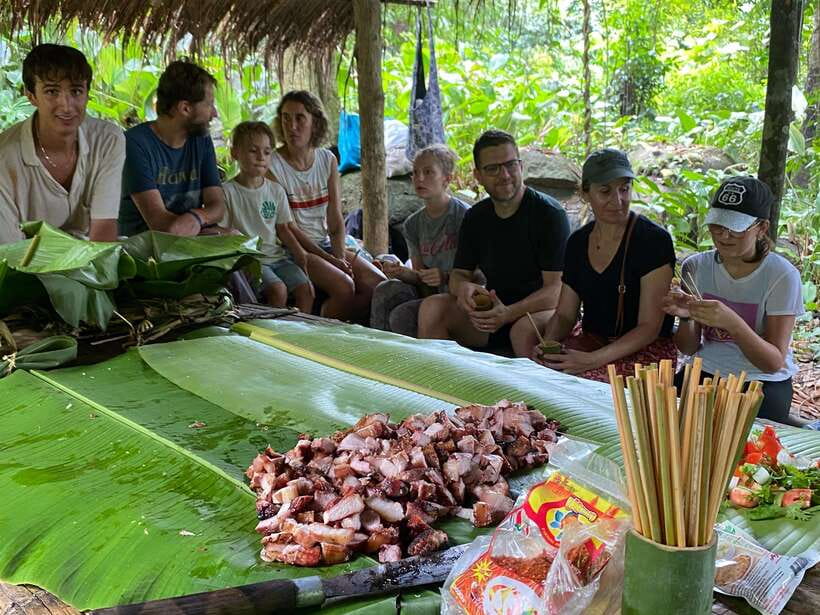
The bamboo cooking session is the heart of the experience for many people. Rather than stopping at a restaurant, you help prepare a traditional Thai meal with materials gathered from the jungle, including bamboo and banana leaves.
This gives the lunch real purpose. You see how bamboo can serve as a cooking vessel, take part in the preparation, and eat the result in a forest setting. The food is repeatedly praised as a highlight, with several people calling it one of the best meals of their Thailand trip.
Do not expect a polished cooking school with individual workstations and a long menu. This is an outdoor activity tied to the trek. The guides do the main cooking work, while you take part and learn the basic method. Wat is often mentioned as the cook, and his food gets particularly strong praise.
Dietary restrictions should be shared before booking. The provider asks you to mention food needs and medical conditions in advance, which is especially sensible when lunch is prepared in a remote outdoor setting.
The meal also breaks up the hardest part of the day. You get time to sit, eat, and recover before heading back onto the trail. That pause can be important if you are not used to several hours of uneven walking.
A few more walking tours around Thailand worth a look
- Bangkok: City Highlights Temple and Market Walking Tour
★ 4.5 · 3,990 reviews - Bangkok: Grand Palace and Wat Phra Kaew Guided Walking Tour
★ 4.4 · 2,417 reviews - Bangkok: Wat Pho and Wat Arun Guided Walking Tour
★ 4.6 · 1,720 reviews - Chiang Mai: 3 Hour Old City and Temples Guided Walking Tour
★ 4.6 · 1,568 reviews
The waterfall reward
After lunch, the trail continues through dense forest toward a waterfall. This is the point when the route shifts from cultural and food-focused to pure outdoor pleasure.
The water offers a chance to cool off after the climbs. Bring swimwear and a towel because swimming is part of the appeal, not just something you might do if conditions happen to suit. You should also bring a dry change of clothes if you dislike sitting in damp gear during the rest of the walk.
The waterfall is described as especially rewarding because reaching it requires effort. The route is not designed to deliver you beside the water with a short, easy approach. By the time you arrive, the cool water has practical value as well as scenic appeal.
Conditions in the jungle can change the feel of the trail. During rainy periods, the ground may become more difficult, and the trek can feel more technical. One wet-season outing was described as a private-feeling experience, but the same weather can make footing less secure. Grippy hiking shoes are a smart choice.
Akha and Lahu communities on the return route
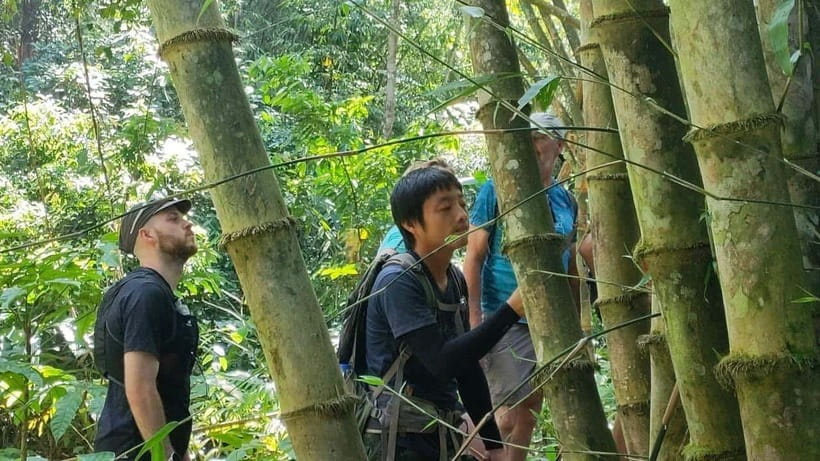
The day continues to Akha and Lahu villages before returning to Chiang Rai. These stops help show that the region is home to several distinct communities, not one generic hill-tribe culture.
Your guide can provide context about customs and daily life, but approach these villages with respect. This is not a staged cultural show based on the supplied details. It is better to listen, observe, and ask before taking close-up photographs.
The later village visits also keep the return leg from becoming a simple march back to the vehicle. You continue seeing how communities and jungle areas connect. That makes the day feel more complete than a trek that offers only a forest trail and a waterfall.
A few trips have included friendly local dogs along the route. That may not happen every time, so consider it a pleasant possibility rather than a promised feature.
How hard is the hiking?
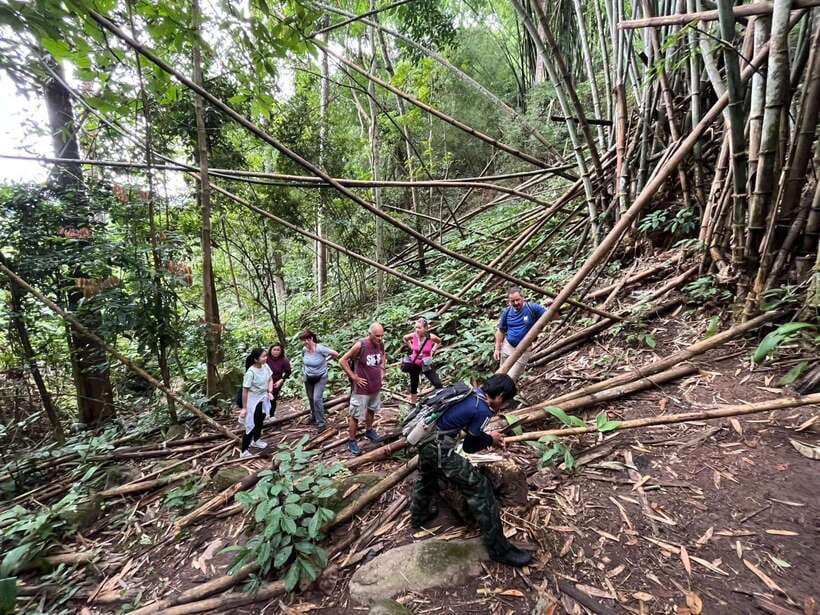
This is the most important booking question. The advertised fitness level is moderate, but the actual walk sounds strenuous at points. Several sections involve steep climbs and descents, and some parts require you to use your hands or move carefully around fallen bamboo.
You should be comfortable walking for hours on uneven ground. You do not need to be an athlete, but you should have reasonable strength, balance, and stamina. If you have knee problems, poor mobility, or difficulty with steep slopes, choose a gentler activity.
One group included an older participant who had to leave near the beginning of the hike. That is a useful warning, not a criticism. The operator should know about medical conditions in advance, but you are responsible for judging if this kind of terrain suits you.
Wear hiking shoes with reliable grip. Keep your hands free where possible, since you may need them for balance or to negotiate awkward sections. A small day bag is more practical than a large backpack.
Pack:
- Sun hat and sunscreen
- Insect repellent
- Hiking shoes
- Swimwear and towel
- Camera
- Water, if you want more than the supplied amount
The guides make a major difference
A long jungle day depends heavily on the guide team. James, Wat, Sammy, and Tee are described as funny, personable, professional, and attentive to group safety.
James is known for handing out small handmade bamboo souvenirs, and the guides may carve simple ornaments for you to take home. These are modest keepsakes, but they suit the experience better than a generic shop purchase.
The guiding style seems to blend information with jokes. That works well here because the walk has hard sections and quiet stretches. A guide who explains the forest, points out plants, and keeps the group together adds real value to the $57 cost.
English and Thai are available. The guide’s ability to explain the route and check on people is particularly useful when the trail becomes steep or confusing.
Is $57 good value?
At $57 per person, the price is fair for a nine-hour day that includes hotel pickup and drop-off, an English or Thai-speaking guide, lunch, village visits, the waterfall, and a substantial jungle walk.
The value is strongest if you want a full day with several kinds of activity. You are paying for transport, local guiding, food preparation, and access to a route that would be difficult to manage on your own. The bamboo lunch and handmade souvenir add character rather than simply padding the schedule.
The value is less clear if you mainly want a comfortable cultural tour. You may spend much of the day sweating, climbing, and negotiating uneven ground. One piece of feedback also raised concern about a strong diesel smell in the transport vehicle, which made some people feel sick. That may not affect every departure, but it is worth knowing if you are sensitive to vehicle fumes.
Drinks other than water are not included. Bring extra cash if you want anything beyond the supplied water, and ask about dietary needs before the day begins.
Timing, cancellation, and practical planning
The standard pickup is daily at 9:00 a.m. Wait in your hotel lobby 10 minutes before pickup. The total duration is nine hours, so keep the evening fairly open. After a strenuous walk, you may prefer a quiet dinner rather than another scheduled activity.
Free cancellation is available up to 24 hours before departure for a full refund. You can also reserve now and pay later, which helps if your Chiang Rai plans are still shifting.
The exact group size is not provided. Some departures may feel small, especially in quieter periods, but you should not assume a private tour unless your booking says so.
Who should book this Chiang Rai trek?
You should consider booking if you want:
- A genuine full-day walk instead of a quick forest visit
- A mix of village life, plantations, jungle, and waterfall scenery
- A hands-on food experience
- An active day with English-speaking local guides
- A chance to see several communities around Chiang Rai
- A tour where the guides add humor and personal attention
You should think twice if you want flat paths, air-conditioned sightseeing, or a carefully controlled cooking class. The trek is not suitable for people with mobility difficulties, and even fit walkers should expect steep sections.
Should you book it?
Book this trek if the phrase proper jungle hike sounds appealing. The strongest reasons are the bamboo-cooked lunch, the waterfall swim, the varied village visits, and guides such as James and Wat who bring energy to a demanding day.
Skip it if you are unsure about steep climbs, unstable ground, or several hours of walking. For the right person, $57 buys a memorable and active day around Chiang Rai. For the wrong person, the same terrain could turn a promising cultural outing into a long struggle.
FAQ
What time does the tour start?
Hotel pickup is scheduled daily at 9:00 a.m. You should wait in your hotel lobby 10 minutes before the scheduled pickup time.
How long does the experience last?
The full experience lasts nine hours, including pickup, village visits, hiking, lunch, and the return to Chiang Rai.
Is hotel pickup included?
Yes. Hotel pickup and drop-off in Chiang Rai are included.
What languages does the guide speak?
Live guiding is available in English and Thai.
Is lunch included?
Yes. Lunch is included, and you take part in preparing a Thai meal using bamboo and banana leaves.
Are drinks included?
Water is included, but drinks other than water are not included.
How difficult is the trek?
The trek requires a moderate level of physical fitness, but several sections are steep and uneven. You may need to step over fallen bamboo, duck under branches, and manage rocky or technical ground.
Can I swim at the waterfall?
Yes. Swimming at the waterfall is part of the experience. Bring swimwear and a towel.
What should I bring?
Bring a sun hat, swimwear, towel, camera, hiking shoes, sunscreen, and insect repellent. You should also tell the provider about dietary restrictions or medical conditions before the tour.
Just added around Thailand
- Chiang Mai: Temple And City Walking Tour Part I★ 4.7 · 244 reviews
- Chiang Mai Untouched Elephant: Nature Walk & Waterfall Trek★ 4.7 · 77 reviews
- Chiang Mai: Local Food and Markets Guided Walking Tour★ 4.3 · 175 reviews
- Bangkok: Grand Palace, Wat Pho, & Wat Arun Walking Tour★ 4.6 · 116 reviews
- Bangkok: Grand Palace and Wat Arun Guided Walking Tour★ 4.5 · 118 reviews
- Bangkok: Chinatown by Night Walking Tour★ 4.5 · 162 reviews
- Bangkok: Discover a Taste of Chinatown – 2 Hr Walking Tour★ 4.2 · 152 reviews
- Bangkok: City Highlights and Landmarks Private Walking Tour★ 4.3 · 142 reviews
Walking Tours, compared.

Magical London: Harry Potter Guided Walking Tour
Read our review →
Reykjavik Food Walk – Local Foodie Adventure in Iceland
Read our review →
History and Hauntings of Salem Guided Walking Tour
Read our review →
New Orleans Premier Ghost, Voodoo and Vampire Walking Tour
Read our review →
Amsterdam Anne Frank: Small-Group Walking Tour & Local Guide
Read our review →

Edinburgh Castle: Guided Walking Tour with Entry Ticket
Read our review →
Anne Frank’s Story – Guided Walking Tour through Amsterdam
Read our review →Browse the lists this tour appears in