
REVIEW · ITALY
Matera walking tour in English
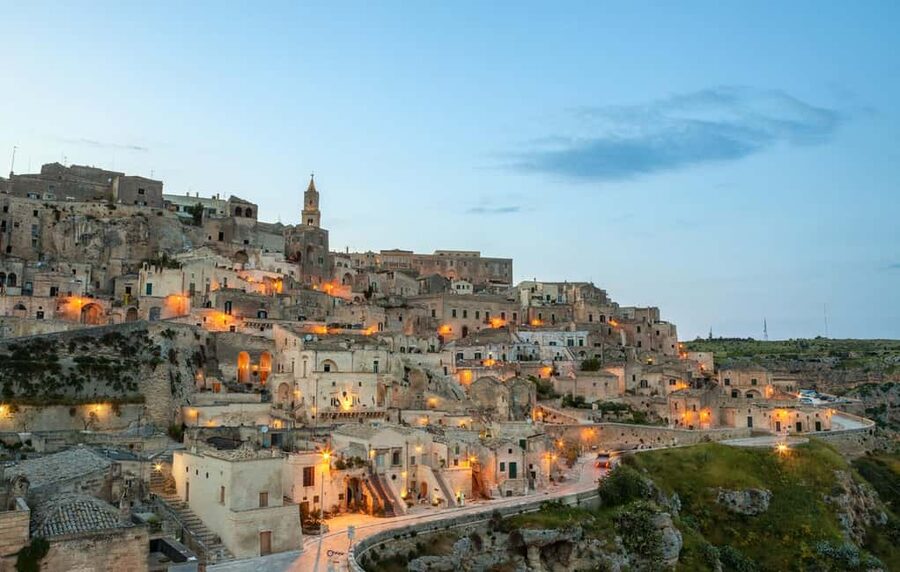
Matera’s Sassi are easy to admire and surprisingly hard to understand without context. This two-hour English walking tour takes you into the cave districts, a former family home, and the huge palombaro cistern that stored rainwater. I like the focus on ordinary life, not just pretty views, and I like that guide Gaetano Campanile connects the stones to people who actually grew up in Matera. The one catch: the hill town means stairs, and this tour does not include church visits.
The pace is deliberately easy, with time for photographs and questions. Small groups, headsets, and Gaetano’s humor help make the history clear rather than dusty. At $29 per person, it is a strong value if you want the story behind Matera, though anyone hoping to cover every corner of both Sassi districts will need extra time afterward.
Key points
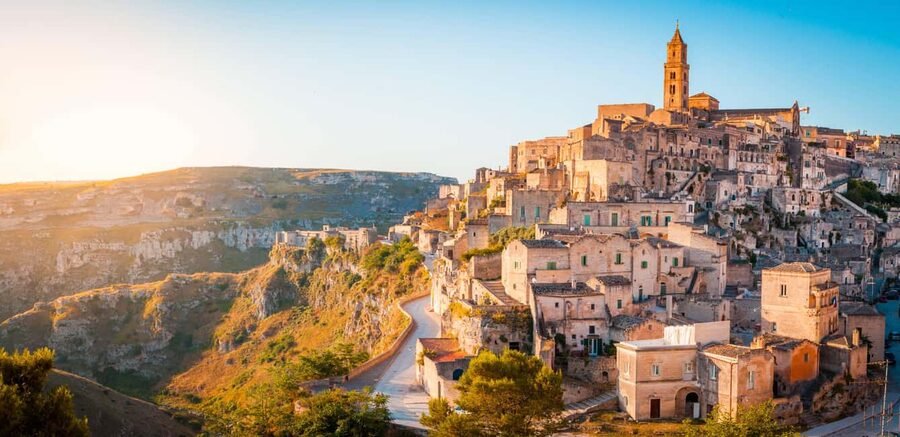
- See how families lived in the caves: Enter a cave dwelling and learn how rooms, animals, work, and family life once fit into the rock.
- Visit Matera’s palombaro: Step into the large underground cistern that collected rainwater, a vital part of survival in the Sassi.
- Hear the social story of Matera: Learn how the city went from being called the shame of Italy to becoming a UNESCO-listed cultural landmark.
- Meet the tour at Piazza S. Pietro Caveoso: The guide waits outside the church with a badge, making the starting point easy to find.
- Walk at a manageable pace: You will climb stairs, but the route is designed for steady walking, photographs, and questions.
- Expect strong local storytelling: Gaetano Campanile is praised for clear English, humor, and personal connections to Matera’s past.
Why a guided walk helps in Matera
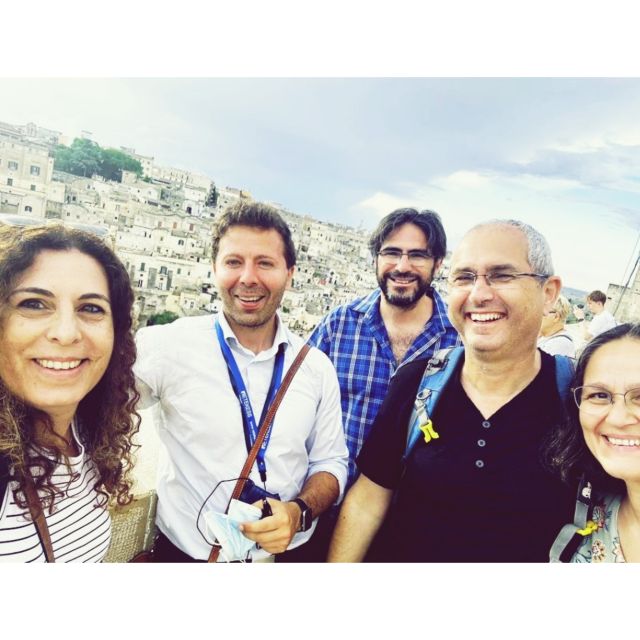
Matera can look simple at first: pale stone, cave openings, steps, balconies, and dramatic views across the ravine. Walk alone, though, and you may miss the difference between a home, a stable, a cistern, a workshop, and a place of worship. You may also see the Sassi as an extraordinary backdrop without grasping how difficult daily life once was.
That is where this tour earns its keep. The guide explains how people used the rock, gathered water, shared space, and built a close social world in conditions that later came to be seen as unacceptable. The focus is not only on architecture. It is on families, poverty, practical solutions, forced relocation, and the long change in Matera’s reputation.
I particularly like that the tour gives you a framework for the rest of your visit. After two hours, you can walk through the Sassi on your own and recognize details that would otherwise blend together. A doorway or small opening becomes part of a household system. A large hollow in the rock becomes a piece of city infrastructure rather than just another atmospheric corner.
The experience has earned a perfect 5 rating from 276 bookings, and the praise is unusually consistent about the guide’s delivery. People repeatedly point to Gaetano’s clear English, lively humor, local knowledge, and ability to explain difficult history without making the walk feel like a lecture.
A few more walking tours around Italy worth a look
- Venice: Doge’s Palace and St Mark’s Basilica Walking Tour
★ 4.4 · 6,291 reviews - Milan: Guided Walking Tour & Last Supper Visit with Ticket
★ 4.7 · 5,409 reviews - Naples: Street Food Walking Tour with Local Guide
★ 4.9 · 4,976 reviews
Starting at Piazza S. Pietro Caveoso
The meeting point is in front of the church of S. Pietro Caveoso. Look for the guide wearing a badge. This is a practical location in the Sasso Caveoso area, one of the two famous cave districts, and it puts you close to some of Matera’s best-known views from the start.
You should arrive ready to walk rather than expecting a vehicle or a bus between stops. Matera is a hill town, and stairways are part of the experience. The pace is described as leisurely, but leisurely does not mean flat. Wear shoes with a firm grip, especially if the stone is damp or polished by years of foot traffic.
If you are arriving by car, the supplied directions point to garages on Via Vena and Via Scotellaro. Parking directly beside the old districts is not the sensible plan, so allow time to leave the car and reach Piazza S. Pietro Caveoso. The exact starting time depends on availability when you book.
Walking through the Sassi and its viewpoints
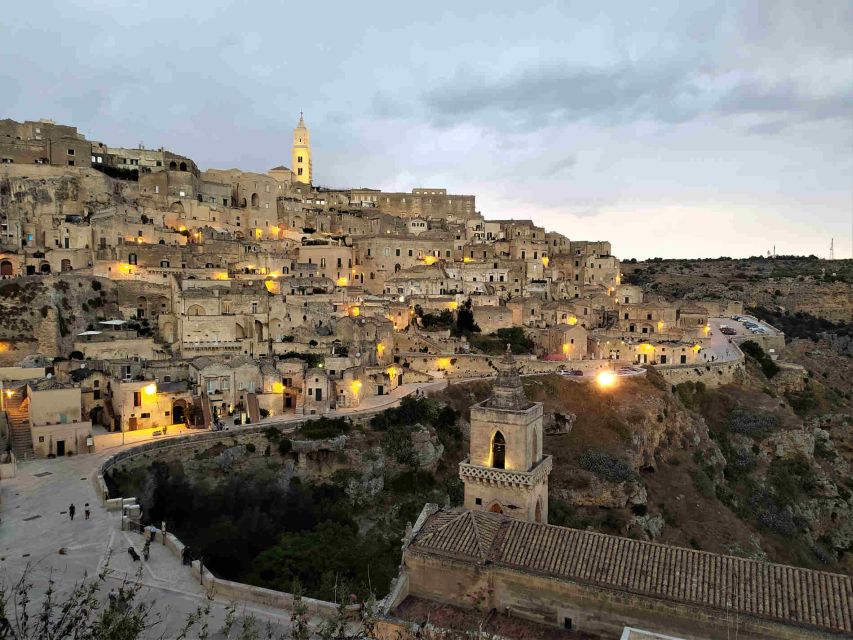
The first part of the route introduces the Sassi, Matera’s old cave districts. You will move between open viewpoints and tighter passages, seeing how the town is arranged across the hillside. This is where the tour gives you a sense of scale. From one overlook, the Sassi look almost theatrical. From within them, the steps and close-set dwellings show how practical and compact the old town really was.
The viewpoints are not simply photo stops. They help explain how the city developed and why the rock was so useful. Matera’s builders shaped homes and public spaces directly into the stone, making use of the natural slope and underground cavities. Your guide points out features that are easy to miss when you are busy taking pictures.
The walk is centered mainly on the Caveoso side, according to the route details provided by the operator and the experience of past groups. That is a sensible choice for a two-hour tour. Trying to cover every part of both Sassi would mean rushing through the details that make the place meaningful.
I like this approach for a first visit. You receive a concentrated look at one area, with enough time to ask questions and take photographs. The drawback is simple: if you want a full survey of Matera, you should reserve extra time before or after the tour for independent walking.
Inside a Matera cave house
The cave house is the emotional center of the experience. Instead of only looking at the facades, you go inside and see the cramped setting where families once lived. The guide explains how a household used its limited space and how work, storage, animals, and family life could overlap.
This stop matters because Matera’s beauty can easily soften the reality of the old Sassi. The stone walls are striking, but life inside them was not a romantic escape. Families dealt with poor conditions and limited resources, while still creating strong networks among neighbors.
The best explanations connect the physical space with social customs. You learn how people managed daily needs, how the community held together, and why the cave houses were not simply abandoned by choice. Several tours of Matera focus on visual drama. This one puts more weight on the people who made the place function.
Gaetano’s personal connection adds useful depth. He grew up in Matera and has spoken with older residents whose families lived in the caves before relocation. That gives his account a human scale. You are not only hearing dates and labels. You are hearing how the old way of life is remembered by people connected to it.
Same streets, a different route:
- Florence: Highlights Walking Tour with Expert Guide
★ 4.6 · 4,662 reviews - Venice: San Marco to Rialto Walk & Spritz Like a Local
★ 4.2 · 3,651 reviews - Venice Walking Tour and Gondola Ride
★ 3.5 · 3,630 reviews - Uffizi & Accademia Timed Entry: Small Group Duomo Walking Tour
★ 4.5 · 3,630 reviews
The palombaro and Matera’s water system
The visit to the palombaro is another reason to choose this tour. This large cistern collected rainwater, which was essential to the survival of the Sassi population. The stop shows how much planning went into making life possible in a place where water could not simply be turned on from a tap.
The cistern also corrects a common misunderstanding. Matera’s cave homes were not isolated holes in the ground. The old city had systems for collecting, storing, and managing vital supplies. The palombaro is a practical piece of engineering, and it helps you see the Sassi as a working urban area.
You will learn how rainwater was gathered and why storage mattered. This makes the cistern more than an underground attraction. It explains one of the basic problems that residents had to solve every day.
The palombaro is included in the $29 price, along with the cave house and the licensed guide. That combination gives the tour solid value. You get access to two places that are difficult to interpret from the street, plus the explanation that links them together.
Matera’s change from shame to UNESCO site
The most important story here is the change in Matera’s public image. For years, the Sassi were associated with poverty and severe living conditions. The phrase shame of Italy captured the embarrassment felt by a country that saw its own citizens living in such hardship.
The story did not end with the evacuation of the cave districts. Families were moved out, and the old neighborhoods later took on a new role as historic and cultural sites. Matera eventually became a UNESCO-listed part of Italy’s cultural heritage, attracting visitors from around the world.
A good guide needs to explain both sides of this change. The Sassi are not simply a success story about restoration. They are also a place shaped by displacement, hardship, and the loss of a way of life. This tour’s emphasis on social history helps you hold those ideas together.
I like that the walk does not treat Matera as a stage set. The stones are beautiful, but the guide keeps returning to the people who lived there, the reasons conditions became unacceptable, and the complicated process of turning an old residential district into a place of cultural importance.
Gaetano’s guiding style and group experience
The provider is Gaetano Campanile, and he is the guide most closely associated with this experience. His strengths are clear English, a lively delivery, and an ability to mix history with humor. You will hear plenty of information, but the tone is relaxed and conversational.
The group size can be small, with reports of groups ranging from private-style walks to around 11 people. The listed maximum is 13. That matters in Matera, where narrow passages and uneven steps make a large crowd awkward. A smaller group also gives you more room to ask questions and hear the guide.
Headsets have been used on the walk and are particularly helpful around open viewpoints or when the group spreads out on steps. You do not need to crowd around the guide to catch every word. This is a small detail, but it can make a real difference on a walking tour.
The pace suits people who prefer information over mileage. You will not race across both Sassi districts. Instead, the route spends time on selected places and explains them carefully. Several participants have appreciated the way the guide adjusts for mixed ages and different walking abilities.
That said, the tour is not entirely effortless. There are stairs, uneven surfaces, and a hill. If you have mobility concerns, contact the provider before booking so you can discuss the route. The available information supports a relaxed pace, but it does not promise a step-free visit.
Who will get the most from this tour
This is a good choice if you are visiting Matera for the first time and want a clear introduction before exploring alone. It also suits people who normally skip guided walks but know that Matera’s history is too layered to understand from photographs and signs.
Families can use the two-hour length well. One booking specifically notes that young children stayed engaged, and Gaetano’s humor should help keep the material approachable. Still, children need to manage stairs and a steady walking route.
The tour also works well for older adults who can handle steps at a calm pace. The guide has been praised for being patient with mixed ages and for choosing routes that avoid some slippery sections when possible. Bring water, especially in warm weather. One person became dehydrated by the end and noted that there are not many chances to get water along the route.
You may want a different plan if your main aim is to visit churches. The tour description clearly says churches are not included. It is built around the Sassi, cave life, viewpoints, and palombaro, so check the plan carefully if rock churches are high on your list.
Is $29 a fair price?
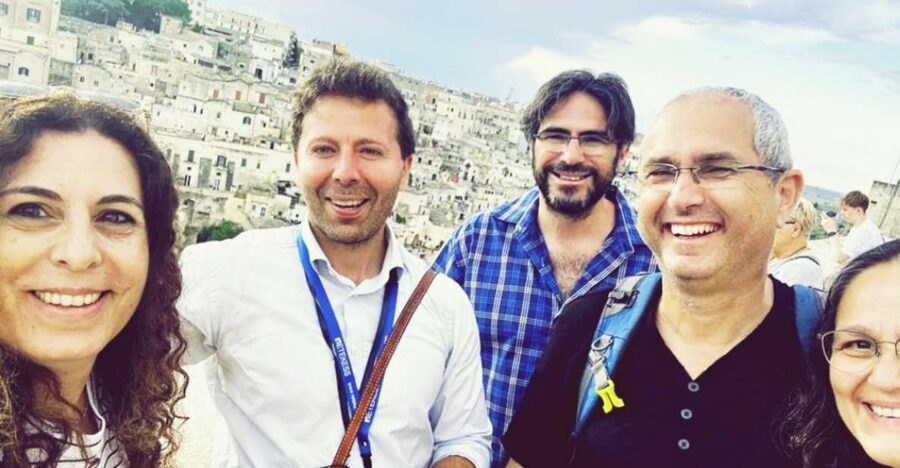
At $29 per person, the value is good for a two-hour walk that includes a licensed guide, entry to a cave house, and admission to the palombaro. You are paying for interpretation as much as admission. That matters in Matera because the most important details are often not obvious from the street.
The price also makes sense for a small-group format with headsets and a guide who can answer questions. A cheaper self-guided visit may show you the same alleys, but it will not necessarily explain the water system, the forced relocation, or the social structure of the cave districts.
The limitation is duration. Two hours gives you a strong introduction, not a complete visit to Matera. I would use this walk early in your stay if possible, then return to the Sassi independently for photographs, meals, and any sites not covered by the route.
Free cancellation up to 24 hours before the start and the option to reserve without paying immediately add useful flexibility. Those terms are helpful if your plans around Basilicata are still moving, but the main value remains the quality of the local explanation.
Should you book it?
Book this tour if you want to understand Matera rather than simply photograph it. The cave house and palombaro provide concrete stops, while Gaetano’s storytelling connects them to family life, water, poverty, relocation, and the city’s remarkable change in fortune.
I would especially choose it for a first visit, a small group, or a short stay in Matera. Wear comfortable shoes, carry water, and accept that stairs are part of the old city. Skip it only if you want to spend your two hours visiting churches or covering every street at a fast pace.
For most people, this is a sensible first step into the Sassi. It gives you the human story first, then lets you explore the stone streets with better eyes.
FAQ
Where does the Matera walking tour meet?
The guide waits in front of the church of S. Pietro Caveoso. Look for a guide wearing a badge.
How long does the tour last?
The scheduled duration is two hours. Starting times depend on availability when you book.
What language is the tour conducted in?
The tour is conducted in English with a live guide.
What is included in the ticket price?
The price includes the walking tour with a licensed guide, entry to a cave house, and entry to the palombaro, the large rainwater cistern.
Does the tour visit churches?
No. The tour description specifically says that church visits are not included.
Are there stairs on the route?
Yes. Matera’s old city lies on a hill, so you should expect stairways. The walk proceeds at a leisurely pace.
What should I bring?
Wear comfortable shoes. Bring water as well, especially in warm weather, since there may not be many places to refill along the route.
Is cancellation available?
You can cancel up to 24 hours in advance for a full refund. You can also reserve now and pay later.
Just added around Italy
- Genoa Walking Tour: Explore Top Sights & Hidden Gems★ 4.0 · 138 reviews
- Genoa Food, Wine Tasting & History Walking Tour★ 5.0 · 212 reviews
- Taste Genoa: A Full Meal Walking Food Tour by Do Eat Better★ 5.0 · 509 reviews
- Genoa Walking Tour: Discover Hidden Treasures and Street Food★ 5.0 · 80 reviews
- Tasty Florence Street Food with Guided Walking of the City★ 5.0 · 174 reviews
- Medici Legends & Renaissance Wonders: Florence Small Group Tour★ 5.0 · 205 reviews
- Florence Food Tour of 10+ Authentic Tastings with Cheeses & Wines★ 5.0 · 155 reviews
- Florence Private Walking tour with Skip-the-line to Accademia★ 4.5 · 236 reviews
Walking Tours, compared.

Magical London: Harry Potter Guided Walking Tour
Read our review →
Reykjavik Food Walk – Local Foodie Adventure in Iceland
Read our review →
History and Hauntings of Salem Guided Walking Tour
Read our review →
New Orleans Premier Ghost, Voodoo and Vampire Walking Tour
Read our review →
Amsterdam Anne Frank: Small-Group Walking Tour & Local Guide
Read our review →

Edinburgh Castle: Guided Walking Tour with Entry Ticket
Read our review →
Anne Frank’s Story – Guided Walking Tour through Amsterdam
Read our review →Browse the lists this tour appears in