
REVIEW · ITALY
Matera: Classic Guided Walking Tour
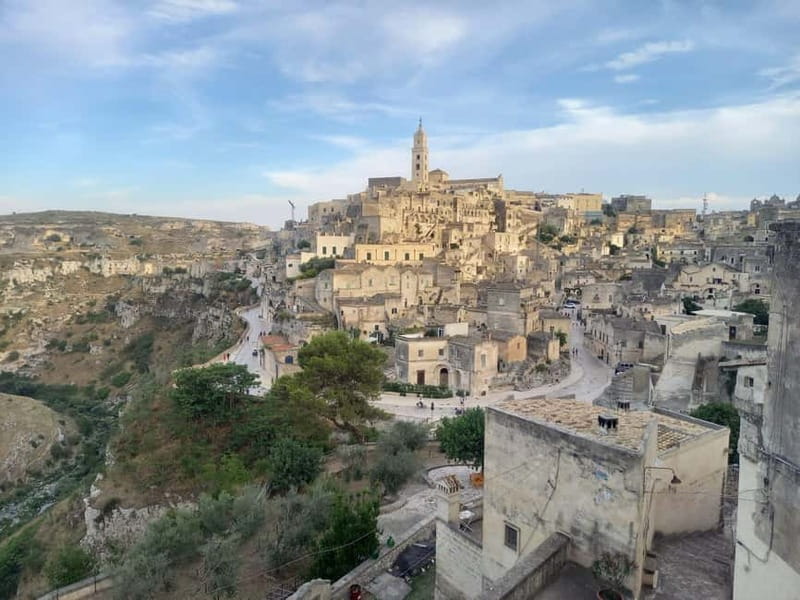
Matera’s most memorable sights are not all above ground. This two-hour walking tour takes you from the polished streets of the historic center into the Sassi, where churches, oil mills, cellars, and homes were cut straight from the rock. The best part is seeing how ordinary work and worship once fitted into these unusual spaces.
I like two things right away: the entrance fees are included, so you see more than just the streets, and the route combines grand viewpoints with working spaces such as an underground oil mill and cellar. The guide’s passion and expertise are also central to the experience, which helps turn Matera’s stone corridors into a human story.
The main consideration is the pace and footing. You’ll walk on stairs and uneven surfaces, and the tour is not suitable for people with mobility or respiratory problems. It is conducted in Italian, so you should be comfortable following a live Italian-speaking guide.
Key points at a glance
- A 13th-century rock church: See luminous frescoes inside a church carved rather than built.
- An underground oil mill: Examine the stone millstone and dolii once used to process and store olive oil.
- A cellar on three levels: Visit original stone tanks and rooms that held wine at a steady temperature.
- A useful two-hour route: Begin on Via del Corso and finish near Via San Biagio, 15, after visiting the Sassi.
- A guide-led group walk: Get context about daily life, old customs, and Matera’s unusual rock architecture.
- A low-cost way to see key interiors: At $14 per person, the included entrances add real value to the walk.
Why Matera’s Sassi need a guide
Matera can look simple at first: pale stone, steep lanes, churches, and wide views across the ravine. But the Sassi are not just a photogenic old quarter. They are a complicated system of homes, chapels, workshops, storage rooms, and passageways carved from the rock over many centuries.
That is where a guide earns the modest price of admission. Without explanation, a dark opening in the stone can seem like another doorway. With context, it becomes an oil mill, cellar, cistern, or place of worship. The guide explains daily life and old traditions as you move through the neighborhoods, giving meaning to spaces that are easy to overlook on your own.
This is also a useful introduction if Matera is your first stop in Basilicata. You get the broad story quickly, without spending half a day trying to identify each church or underground room. The route links the historic center to the Sassi, so you see how the city changes as you descend.
The guide speaks Italian, and the tour is designed as a group experience. If you understand Italian well, the live narration should add much more than a printed description. If you do not, you may still appreciate the interiors and views, but the storytelling will be harder to follow.
More Guided Tours in Italy:
- Milan: Guided Walking Tour & Last Supper Visit with Ticket
★ 4.7 · 5,409 reviews - Naples: Street Food Walking Tour with Local Guide
★ 4.9 · 4,976 reviews - Florence: Highlights Walking Tour with Expert Guide
★ 4.6 · 4,662 reviews
Starting on Via del Corso
The meeting point is the entrance to the BPER Bank on Via del Corso. Arrive 10 minutes before the scheduled start, since this is a walking tour and the group will set off into the historic center at a fixed time.
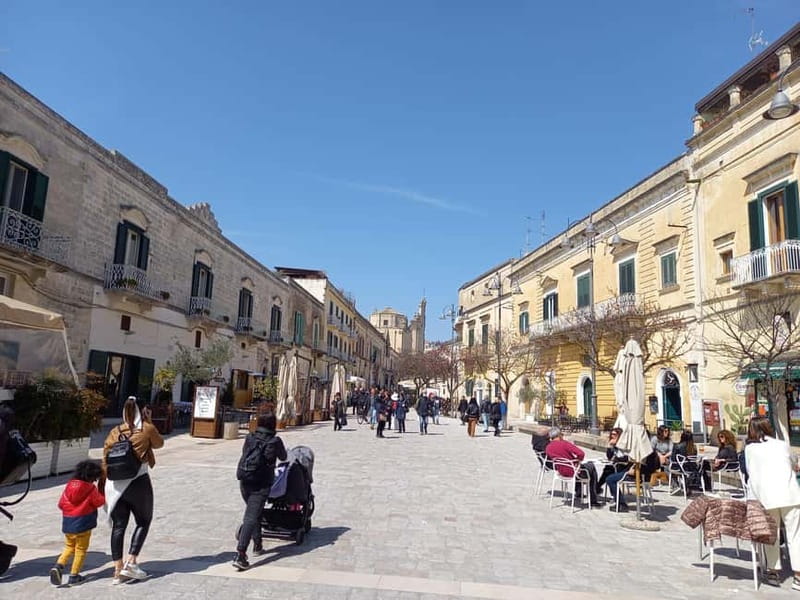
Via del Corso gives you a practical starting point. You begin among Matera’s historic streets, baroque churches, noble palaces, and small squares before heading toward the rock-cut districts. That gradual change matters. You first see the formal face of the city, then move into the older, rougher spaces below.
The route does not use a bus or private transfer. You walk the entire way, which keeps the experience focused but also means your shoes matter. Choose footwear with a firm sole and good grip. Comfortable clothing is recommended, and loose or unsuitable shoes will make the stairs less pleasant.
The exact start time depends on availability, so check the calendar when booking. The tour lasts two hours, a useful length for fitting into a day that also includes independent sightseeing, lunch, or a second visit to a church or viewpoint.
Descending into the Sassi
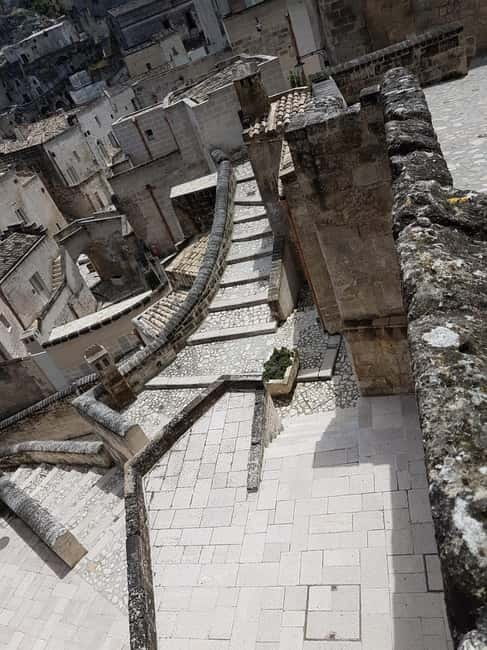
The Sassi di Matera are the center of the experience. As you walk down from the historic center, the city opens into layers of stone streets, stairways, terraces, and rooms cut into the rock. The guide stops at scenic points along the way, giving you time for photographs and explaining what you are seeing.
The value here is not simply the view. Matera’s rock-cut neighborhoods make more sense when you understand their former use. A wall may have been part of a home, a shelter, a storage room, or a religious site. The guide connects those details to the people who lived and worked here.
Expect a walking route rather than a string of formal museum rooms. You will cross old lanes, use stairways, and pause at viewpoints. That gives the tour a more physical feel than a standard city walk, but it also calls for a little patience. The Sassi are not laid out like a flat modern grid.
The group format keeps the $14 price low and gives you a clear route through the area. The tradeoff is that the pace and stops are shared with other people. If you want to linger at every view or photograph each doorway in silence, an independent walk may suit you better. If you want orientation and access to several interiors in a short time, the group format is sensible.
Inside the 13th-century rock church
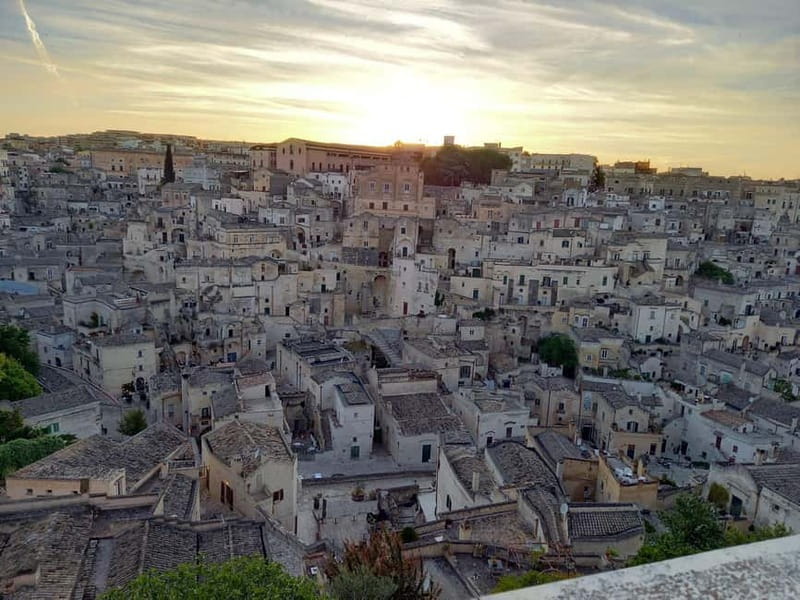
The rock church is one of the tour’s strongest stops. It dates from the 13th century and illustrates what might be called negative architecture: instead of adding stone to create a building, workers removed stone to make one.
That idea is easy to understand once you are inside. The church is part of the rock itself, and its frescoes bring color and light to the carved interior. The paintings also help explain the religious life that once shaped Matera. More than 150 places of worship were created in the city’s rock, making these churches an important part of its identity.
The church is valuable because it combines architecture, art, and local history in one compact stop. You are not looking at a bare cave. You are seeing a place shaped for worship, then decorated with care.
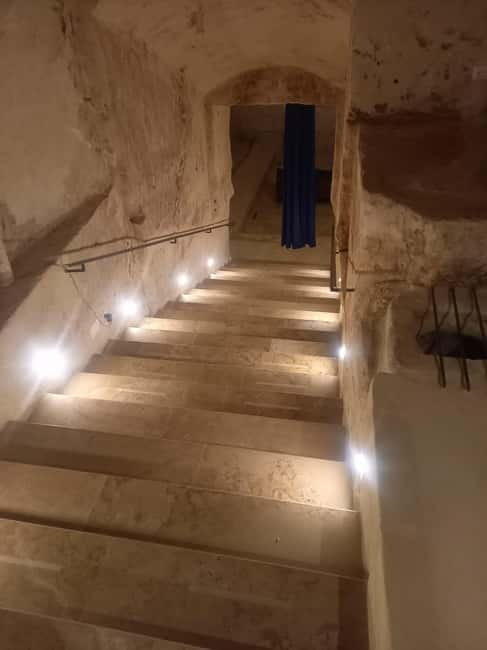
The interior may feel dark or enclosed, especially compared with the open views outside. That contrast is part of the appeal, but it is also why visitors with respiratory problems are advised not to take this tour. The activity is also specifically listed as unsuitable for people with motion sickness, so consider your comfort in confined, uneven underground spaces before booking.
A few more walking tours around Italy worth a look
- Venice: Doge’s Palace and St Mark’s Basilica Walking Tour
★ 4.4 · 6,291 reviews - Venice: San Marco to Rialto Walk & Spritz Like a Local
★ 4.2 · 3,651 reviews - Uffizi & Accademia Timed Entry: Small Group Duomo Walking Tour
★ 4.5 · 3,630 reviews - Venice Walking Tour and Gondola Ride
★ 3.5 · 3,630 reviews
The underground oil mill and olive work
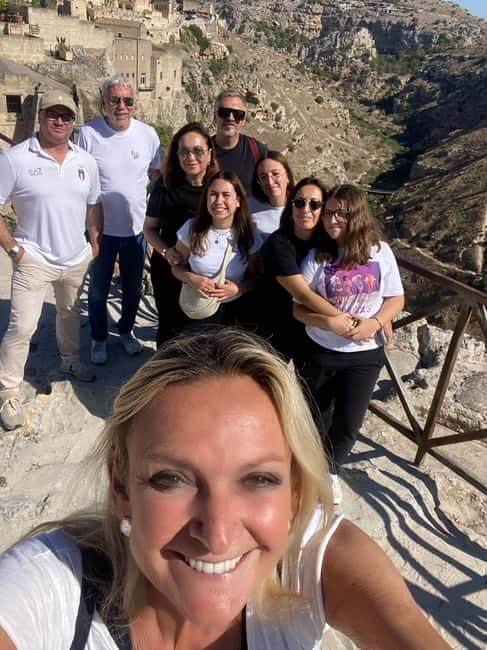
The old underground oil mill shows the practical side of life in the Sassi. Here you can see the stone millstone used to press olives and the dolii, large storage vessels used for oil.
This stop adds something that a church alone cannot. It shows how food production fitted into the same rock-cut world as homes and religious sites. The stone was not merely a backdrop. It provided cool, sheltered rooms for work and storage.
I find this kind of stop especially useful because it turns an abstract idea into a physical one. You can look at the millstone and understand the labor involved in producing olive oil. The dolii help you picture how the finished product was kept for later use.
Do not expect a modern museum with extensive displays. The interest comes from the original setting and the guide’s explanation. Pay attention to the shape of the room, the position of the millstone, and the way the rock creates a naturally protected environment.
The oil mill also gives the tour a more balanced story. Matera is often presented through churches and scenic views, but people also had to press olives, store food, and manage daily work. This room brings that practical history into view.
A cellar cut across three levels
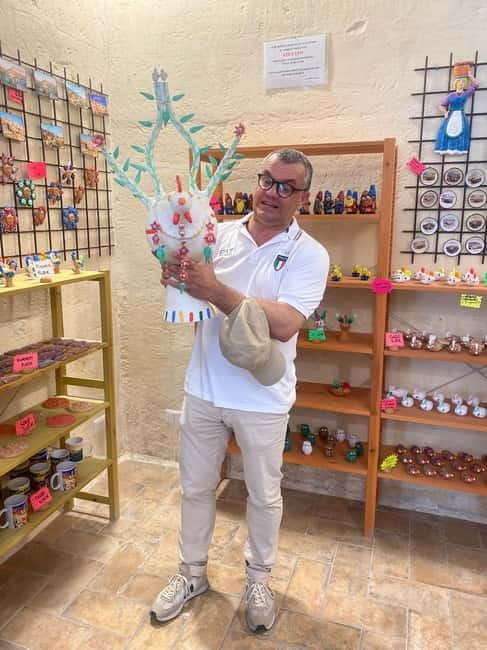
The historic cellar is another distinctive interior. It was excavated across three levels and contains original stone tanks used for pressing olives, along with underground rooms for storing wine at a constant temperature.
The three-level arrangement gives you a sense of how carefully these spaces were organized. The cellar was not simply a hole in the ground. Its rooms had different purposes, and the steady underground temperature helped with storage.
This is also where a short guide-led visit beats a quick look from a street entrance. The details are easy to miss without an explanation. The guide can point out the tanks, the levels, and the way the rooms supported food and wine production.
A food tasting is listed as part of the sightseeing experience, but the supplied details do not specify the exact food or drink served. Treat it as a possible small addition rather than the main reason to book. The real value of this stop is the preserved cellar and the chance to see how the rock was put to work.
For some people, the cellar may be the most memorable interior after the church. It has a strong connection to everyday life, and it helps you see the Sassi as a place where people produced, stored, and shared food rather than simply a historic backdrop.
What the two-hour timing gives you
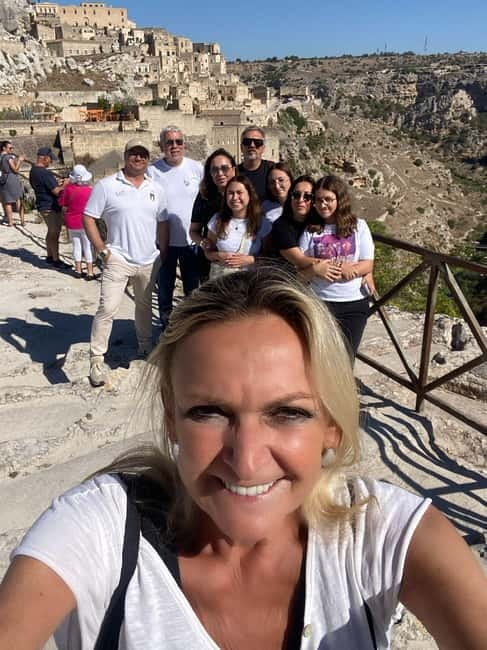
Two hours is enough to cover the main character of Matera without turning the visit into a long march. You see the historic center, enter several carved spaces, hear about traditions, and stop at scenic points.
The timing also keeps the price attractive. At $14 per person, the tour costs little more than a single paid attraction in many Italian cities, yet it includes an official guide and entrance to the rock church, oil mill, cellar, and cistern. The included interiors are the key value. A free walk through the Sassi would give you streets and views, but not necessarily access to these spaces or an explanation of their original use.
The short duration does mean you will not explore every corner of Matera. The city has far more churches, lanes, and viewpoints than one two-hour route can cover. Think of this as a strong orientation, not a complete city visit.
I would use the tour early in a stay if possible. It gives you a clear sense of the layout and the main themes, then you can return later to the places that caught your attention. If your schedule allows only a brief visit to Matera, the tour is an efficient way to see several important features at once.
Practical comfort and access
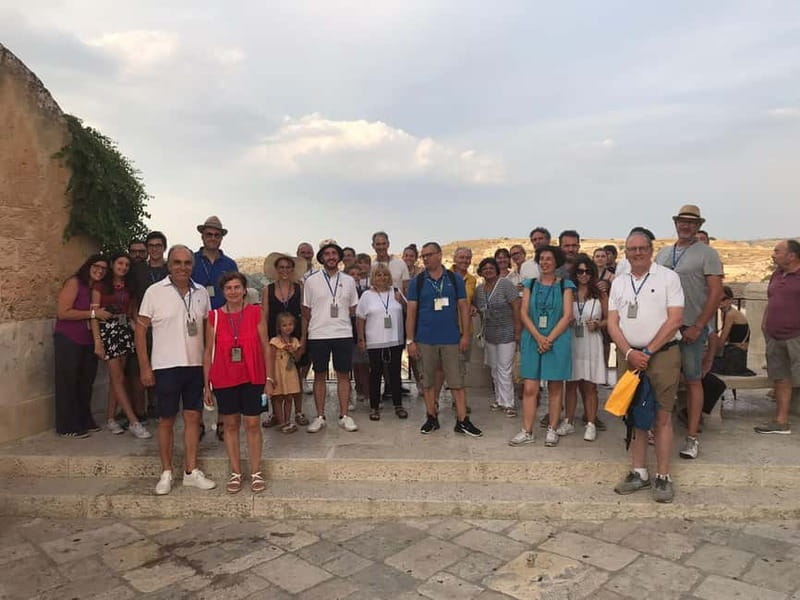
Wear comfortable shoes. This is not a suggestion to ignore. The route includes stairs, slopes, old streets, and rock-cut interiors. Comfortable clothes will also help, particularly if the weather is warm or you are moving between open viewpoints and enclosed rooms.
Baby strollers and baby carriages are not allowed. The tour is not suitable for people with mobility impairments, respiratory issues, or motion sickness. Those limits are tied to the physical setting, not a minor booking rule. The Sassi require walking, and some stops are underground or enclosed.
The tour is in Italian. No other language is listed, so confirm that Italian suits your needs before reserving. A guide can still point out architectural details and scenic views, but much of the tour’s value comes from the spoken account of local customs and daily life.
The stated finish is Via San Biagio, 15, while the meeting information also says the activity ends back at the meeting point. Because those details do not match perfectly, confirm the exact end location when you book. Either way, plan to remain in central Matera after the walk rather than expecting transport back to a hotel.
Cancellation is flexible: you can cancel up to 24 hours before the start for a full refund. You can also reserve now and pay later, which helps if your Basilicata plans are still shifting.
Who will get the most from this tour
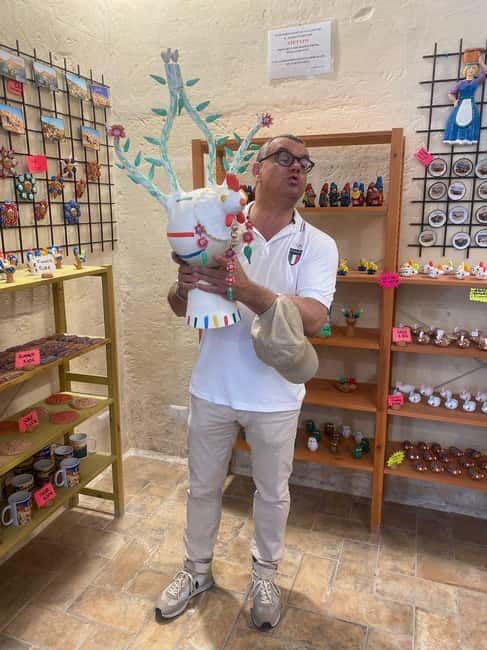
I would recommend this walk to you if you want a clear first look at Matera’s Sassi and prefer explanation over wandering without a plan. It suits couples, solo visitors, and families with older children who can manage stairs and a two-hour walking route.
It is especially good for anyone interested in how people used the rock itself. The church covers worship and art, the oil mill covers olive production, and the cellar covers storage and wine. Together, these stops create a more useful picture than a viewpoint alone.
The tour is less suitable if you need a flat route, use a stroller, dislike enclosed rooms, or want a private and highly flexible visit. It is also not the right pick if you need English or another language, since the listed live guide language is Italian.
The strongest reason to choose it is the combination of access and price. You get several interiors that deepen the visit, an official guide, and a route through the city’s most unusual district for $14. The strongest reason to skip it is the physical and language limits.
Should you book the Matera Classic Guided Walking Tour?
Book it if you want an affordable, focused introduction to Matera, especially if this is your first time in the Sassi. The frescoed rock church, underground oil mill, three-level cellar, and cistern give the two-hour walk real substance, while the guide adds the local stories that stone walls cannot explain on their own.
Skip it if you need step-free access, cannot comfortably visit underground spaces, or do not understand Italian well enough to follow the guide. For everyone else, the price is hard to argue with. This is a practical way to see the best-known features of Matera while also learning how the city’s rock spaces supported worship, work, food, and wine.
FAQ
How long does the Matera Classic Guided Walking Tour last?
The tour lasts two hours. Starting times vary, so check availability when booking.
Where does the tour begin?
Meet at the entrance of the BPER Bank on Via del Corso in Matera. Arrive 10 minutes before the scheduled start.
Where does the tour end?
The stated finish is Via San Biagio, 15. The meeting information also says the activity ends back at the meeting point, so confirm the exact end location when booking.
What language is the guided tour in?
The live tour guide speaks Italian.
What is included in the tour price?
The price includes the guide and entrance tickets to the frescoed rock church, underground oil mill, historic cellar, and cistern.
What should I bring?
Bring comfortable shoes and comfortable clothes. The route involves walking through the Sassi and visiting rock-cut interiors.
Are strollers allowed?
No. Baby strollers and baby carriages are not allowed.
Can I cancel the booking?
Yes. You can cancel up to 24 hours before the start time for a full refund. You can also reserve now and pay later.
Just added around Italy
- Genoa Walking Tour: Explore Top Sights & Hidden Gems★ 4.0 · 138 reviews
- Genoa Food, Wine Tasting & History Walking Tour★ 5.0 · 212 reviews
- Taste Genoa: A Full Meal Walking Food Tour by Do Eat Better★ 5.0 · 509 reviews
- Genoa Walking Tour: Discover Hidden Treasures and Street Food★ 5.0 · 80 reviews
- Tasty Florence Street Food with Guided Walking of the City★ 5.0 · 174 reviews
- Medici Legends & Renaissance Wonders: Florence Small Group Tour★ 5.0 · 205 reviews
- Florence Food Tour of 10+ Authentic Tastings with Cheeses & Wines★ 5.0 · 155 reviews
- Florence Private Walking tour with Skip-the-line to Accademia★ 4.5 · 236 reviews
Walking Tours, compared.

Magical London: Harry Potter Guided Walking Tour
Read our review →
Reykjavik Food Walk – Local Foodie Adventure in Iceland
Read our review →
History and Hauntings of Salem Guided Walking Tour
Read our review →
New Orleans Premier Ghost, Voodoo and Vampire Walking Tour
Read our review →
Amsterdam Anne Frank: Small-Group Walking Tour & Local Guide
Read our review →

Edinburgh Castle: Guided Walking Tour with Entry Ticket
Read our review →
Anne Frank’s Story – Guided Walking Tour through Amsterdam
Read our review →Browse the lists this tour appears in