
REVIEW · ITALY
Lecce: Baroque Architecture and Underground Walking Tour
Lecce’s Baroque stonework is the star here, but the underground Jewish Museum gives the tour a useful second layer. In 90 minutes, you move from carved church façades and Roman ruins to the story of a Jewish community that once lived beneath today’s city streets.
I like two things right away: the route covers Lecce’s main historic sights without wasting time on transport, and the guides, including Max, Massimiliano, Fabrizio, and others, are known for clear explanations, good English, and the occasional joke. The main drawback is simple: this is an exterior-focused walk. If you want to see inside Santa Croce or several churches, you will need extra tickets and more time.
Key points to know
- Santa Croce begins the story: See Lecce’s most ornate Baroque church from outside and learn how local stone made its decoration possible.
- Roman and Baroque Lecce share the route: Piazza Sant’Oronzo brings together the Roman amphitheater, Roman Column, Old Town Hall, and later city buildings.
- The underground Jewish Museum adds a different perspective: This is not only a religious visit, but an introduction to Lecce’s Jewish past and the layers beneath the modern city.
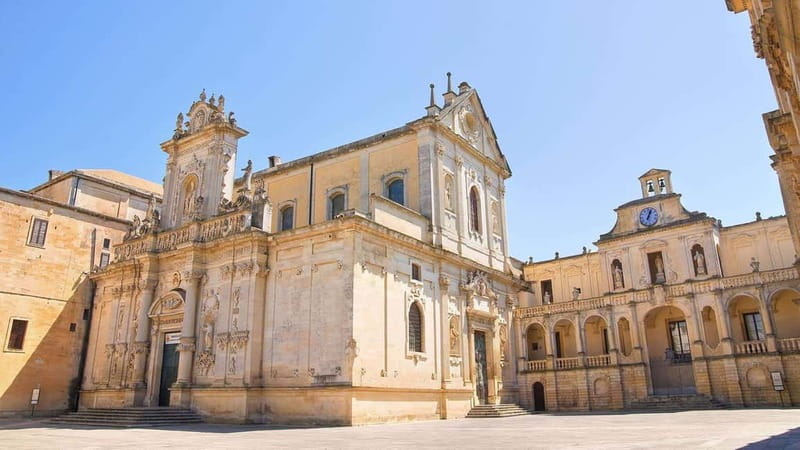
- Piazza Duomo is the visual finale: The cathedral, bell tower, Seminary, and Archbishop’s Residence form one of Italy’s finest enclosed architectural settings.
- The guide makes the difference: Max, Massimiliano, Fabrizio, Mario, Alex, and other guides have led tours praised for strong English, humor, patience, and local insight.
- At $29, the value is strongest for first-time visitors: You get a guide and museum admission, but church interiors and food or drinks are not included.
Why Lecce works so well on foot
Lecce is unusually rewarding for a walking tour because its major sights sit close together in the old center. You are not being shuttled from one monument to another. Instead, the city unfolds in a compact sequence: church, square, Roman remains, palace-lined street, cathedral square, and underground museum.
That order helps you understand Lecce as more than a pretty collection of façades. The city carries Roman, medieval, Jewish, religious, and modern layers, often within a few minutes of one another. A good guide connects those layers instead of treating each monument as an isolated photo stop.
The pace is designed for a short introduction rather than a full archaeological study. At around 90 minutes, you can see the main points and still have most of the day available for churches, cafés, shopping, or a longer look at the Roman amphitheater.
You can choose a shared group or private version, depending on the option available when you book. The meeting point can vary, so check the exact instructions for your chosen option rather than assuming every departure begins at the same place.
A few more walking tours around Italy worth a look
- Venice: Doge’s Palace and St Mark’s Basilica Walking Tour
★ 4.4 · 6,291 reviews - Milan: Guided Walking Tour & Last Supper Visit with Ticket
★ 4.7 · 5,409 reviews - Naples: Street Food Walking Tour with Local Guide
★ 4.9 · 4,976 reviews
Santa Croce and the language of Lecce Baroque
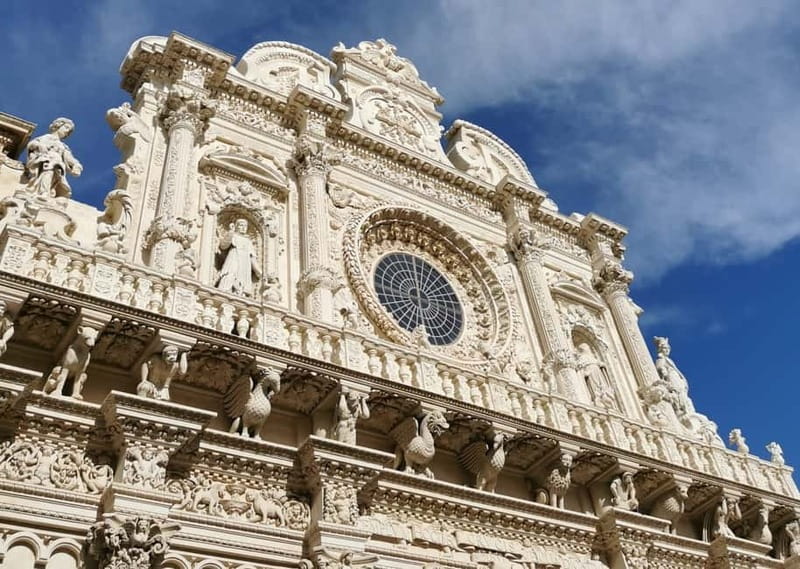
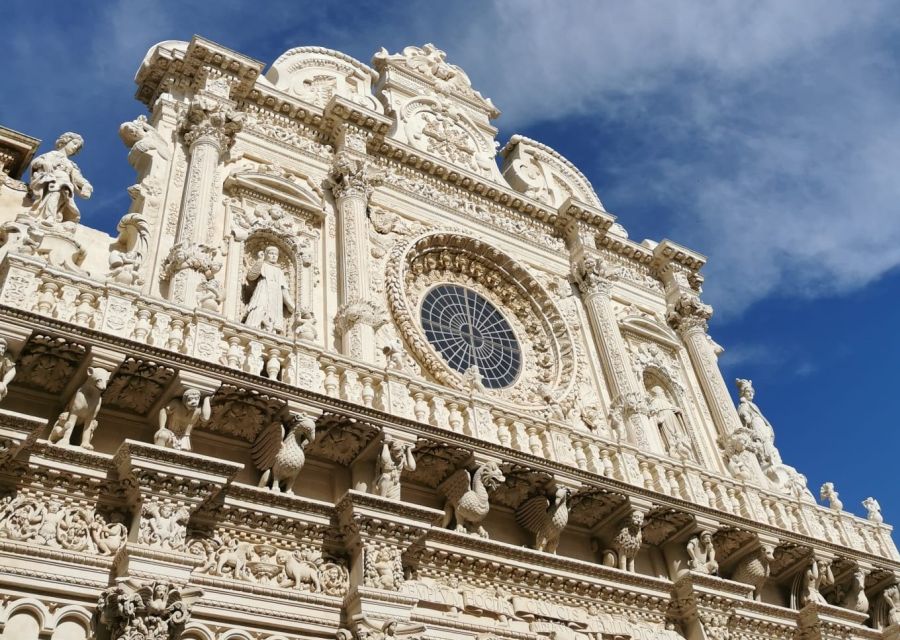
The tour starts with an exterior visit to Basilica di Santa Croce, the most famous example of Lecce’s Baroque style. Even from the street, the façade gives you plenty to study: dense carving, figures, decorative details, and a surface that seems to compete with itself for attention.
This is where a guide earns the fee. Without context, Santa Croce can look like a giant stone ornament. With an explanation of the local building tradition, the decoration becomes easier to read. You begin to notice how the pale local limestone allowed sculptors to work with unusual detail.
The important limitation is that the scheduled visit is outside the church. You should not book this tour expecting an interior visit to Santa Croce. One useful option is to return later with a separate church pass, such as the LecceEcclesiae tickets mentioned by one participant, which can include churches and the bell tower.
I like this opening because it gets straight to the feature that makes Lecce distinctive. You see the city’s signature style before moving into its Roman and civic history.
Piazza Sant’Oronzo puts Roman Lecce under your feet
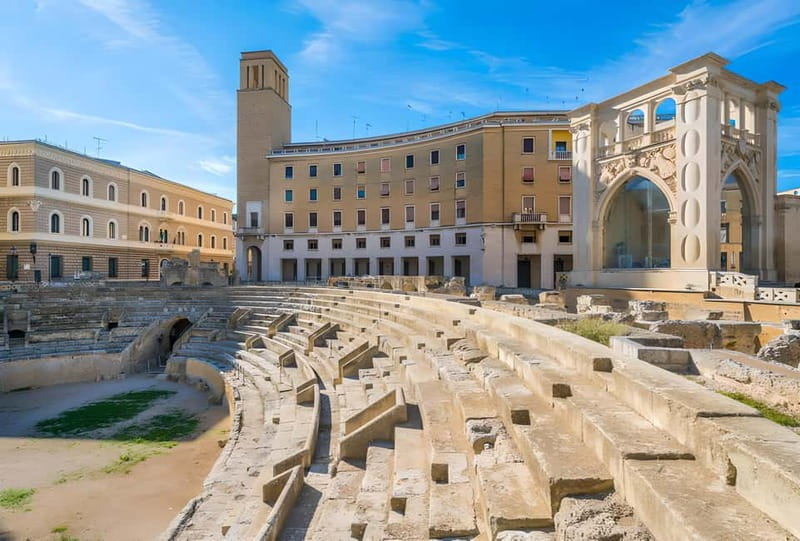
From Santa Croce, the route continues to Piazza Sant’Oronzo, the former market square and one of the main gathering places in the old town. Here you see the Old Town Hall, the Roman Column, and the remains of a large Roman amphitheater.
The amphitheater is the key stop. It is not presented as a complete monument, and parts of the site remain affected by restoration and ongoing archaeological work. Still, the visible remains make an important point: Roman Lecce was a substantial city long before the Baroque churches appeared.
The Roman Column helps connect the square to the wider Roman world. Your guide can explain why such a marker mattered and how the remains fit into the city’s long development. This is one of the places where a short stop becomes much more useful with interpretation. On your own, you might see stones and partial walls. With a guide, you get a sense of how the ancient city sits beneath the modern one.
Work around the amphitheater and Palazzo INA may affect what you can see on a particular day. That is not a reason to skip the tour, but it is worth keeping expectations sensible. You are seeing an active historic site, not a perfectly finished museum display.
Corso Vittorio Emanuele brings in the palaces
The walk along Corso Vittorio Emanuele shifts the mood from ancient ruins to the grand civic and religious buildings of later Lecce. The street is lined with Baroque palaces, so you get another chance to examine the local style in a less concentrated setting.
This part of the route is useful because it shows how Baroque design shaped everyday urban space. The style is not limited to one famous façade. It appears in doorways, balconies, window frames, corners, and the broad fronts of palaces.
You also pass the recently restored Church of Sant’Irene. As with Santa Croce, the tour focuses on the exterior rather than promising a full interior visit. That distinction matters if your main goal is church art. The walk can point you toward the interiors worth visiting later, but it does not replace a church-by-church sightseeing plan.
The route is generally described as well paced. Guides such as Max have been singled out for keeping groups moving without rushing the explanations, while other guides have adjusted their commentary to hot weather by finding shade when stopping. That is a small practical detail, but it matters in Lecce’s warm months.
Same streets, a different route:
- Florence: Highlights Walking Tour with Expert Guide
★ 4.6 · 4,662 reviews - Venice: San Marco to Rialto Walk & Spritz Like a Local
★ 4.2 · 3,651 reviews - Uffizi & Accademia Timed Entry: Small Group Duomo Walking Tour
★ 4.5 · 3,630 reviews - Venice Walking Tour and Gondola Ride
★ 3.5 · 3,630 reviews
Piazza Duomo is the architectural high point
Piazza Duomo is the visual high point of the tour. The square is enclosed by the Cathedral, Bell Tower, Seminary, and Archbishop’s Residence, creating an architectural setting that feels more like a carefully framed room than an ordinary open plaza.
Take a moment here to look at the whole composition before focusing on details. The bell tower gives the square vertical force, while the surrounding buildings create a controlled sense of space. Your guide can explain how the buildings relate to one another and why this square is considered one of Italy’s finest Baroque ensembles.
This stop rewards travelers who like architecture but do not yet know how to read it. You do not need a background in art history. Listen for the practical explanations: what the builders wanted you to notice, how the façades create movement, and why Lecce’s pale stone takes decoration so well.
Several people have wished for more time inside the churches or a longer treatment of the Baroque style. That is a fair criticism. The tour gives you a strong introduction, but the 90-minute format forces choices. If you are especially interested in sculpture, religious painting, or church interiors, use this walk as your orientation and schedule a second visit.
The underground Jewish Museum adds a quieter layer
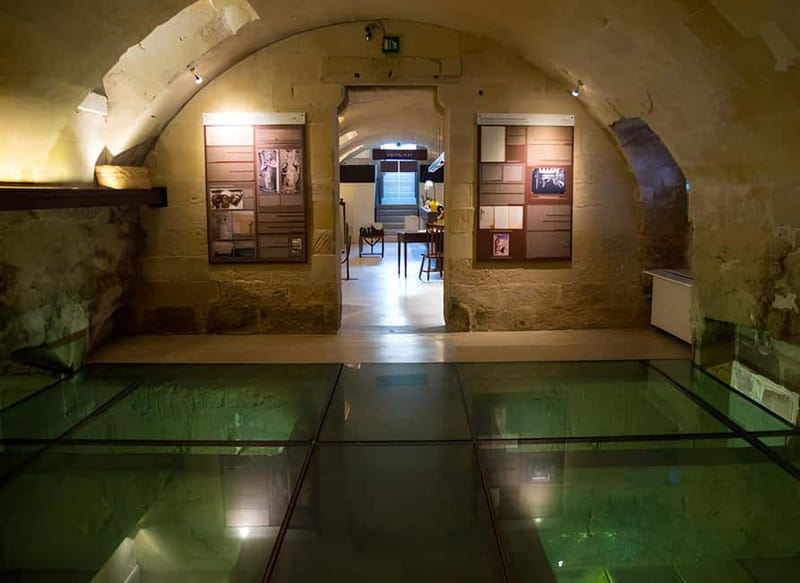
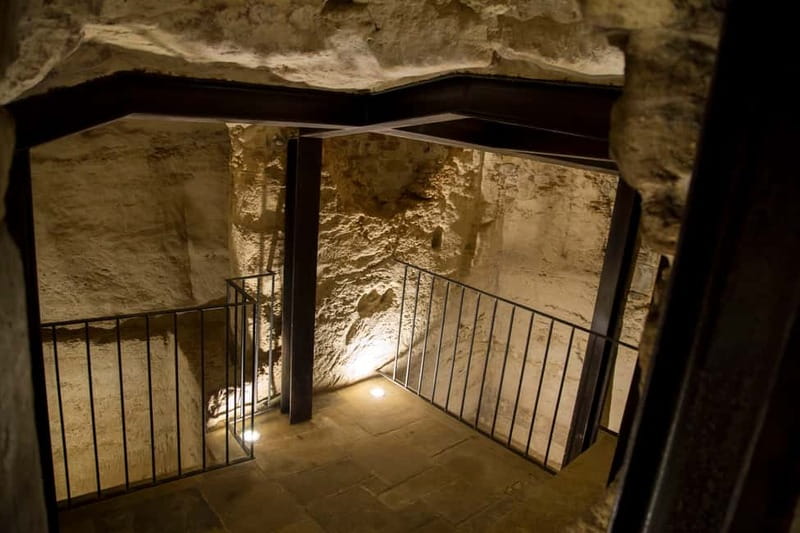
The final stop is the underground Jewish Museum, located beneath the modern city. The visit shifts away from grand façades and public squares to Lecce’s Jewish past and the physical layers below street level.
This part is valuable because it broadens the story of Lecce. The tour is not only about Catholic churches and Roman remains. It also asks you to consider the communities, buildings, and traditions that existed before the city took its present form.
The museum should not be understood as a long, separate museum visit. It is one portion of a short walking route. Some people find the underground section less impressive than the outdoor monuments, especially if they expected a large museum or extensive excavations. Others appreciate the change of pace and the chance to learn about a part of Lecce that is easy to miss.
One useful point is that the museum section is not limited to religious teaching. The focus is on the town’s Jewish history, so it can appeal even if your main interests are archaeology, urban history, or architecture.
The order can vary. Some departures begin at the museum and then walk through the city, while the stated route describes the museum as the final stop. Confirm the meeting instructions and route order for your selected departure.
What the guides add to the experience
The strongest feature of this tour is the guide. The named guides who appear in the experience information include Max, Massimiliano, Fabrizio, Mario, Alex, Angela, Antonio, Ilena, and others. You should not assume you will get a particular person unless your booking confirms it, but the pattern is clear: the tour depends heavily on a live guide rather than an audio script.
Max is often associated with humor and clear explanations. Massimiliano has been praised for making the walk interesting through both historical facts and observations about life in Lecce today. Fabrizio has been described as offering an authentic and sympathetic explanation of the city’s architecture.
Other guides have been valued for patience, strong English, and an ability to answer questions. That matters because a short tour can easily become a lecture. Here, the better guides keep the walk conversational and connect monuments to ordinary city life.
You may also get small extras, though they should not be treated as guaranteed inclusions. Some departures have ended with olive oil, wine, or another local tasting. The official inclusions are the walk, guide, and Jewish Museum entry, not food or drinks. If you happen to receive a tasting, consider it a bonus rather than part of the contract.
How much can you really see in 90 minutes?
The stated duration is 1.5 hours, and that is what you should plan for. One participant expected two hours and found the tour ended after 90 minutes, while another specifically noted that it lasted almost exactly as planned.
That timing works well for a first look at Lecce. You cover the main squares and landmarks, hear the broad story, and learn where to return. It is less suitable if you want long photographic pauses, interior visits, or detailed archaeological discussion.
The walk includes several stops, but it is not described as physically demanding. The activity is listed as wheelchair accessible, which is useful for many visitors, though an individual traveler should still confirm the exact route and access arrangements for the selected departure.
Wear comfortable shoes and bring water in warm weather. The tour includes outdoor streets and squares, and even a well-paced route can feel hot in summer. A guide may find shaded stopping points, but shade is not the same as air conditioning.
Is $29 a fair price?
At $29 per person, the price is reasonable if you want a local explanation and the museum visit in one compact outing. The ticket includes the walking tour, a live guide, and admission to the underground Jewish Museum. It does not include hotel pickup, food, drinks, or entry to the churches.
The value depends on your alternative. If you plan to wander without a guide and are happy to read signs on your own, you could see many exterior sights for free. But you would lose the connections between Roman Lecce, the Jewish community, and the Baroque rebuilding of the city.
The comparison becomes less favorable if you mainly want church interiors. In that case, you will pay $29 and still need separate church tickets. Several people found additional church visits worthwhile, so budget for them if religious art is your main interest.
A shared tour usually gives you the best price. The private option makes more sense if you want to ask many questions, move at your own pace, or shape the discussion around architecture, archaeology, or Jewish history.
Who should book this Lecce walk?
I would choose this tour during a first visit to Lecce, especially if you have only a day or two in the city. It quickly gives you a mental map and helps you decide which churches, museums, and Roman sites deserve a second look.
It suits you if you like:
- Architectural detail and Baroque decoration
- Roman archaeology explained in plain language
- Jewish history as part of a wider city story
- Short guided walks with several major stops
- Local recommendations and room for questions
- A mix of outdoor sightseeing and one underground visit
You may want another plan if you dislike group tours, want long periods inside churches, or prefer a specialist archaeology tour. The guide can provide strong historical context, but the route is broad rather than deeply academic.
The tour is also a good choice for families with older children or teenagers who need a clear route and varied sights. The amphitheater, underground museum, ornate façades, and stories about the city’s past offer more variety than a walk devoted only to churches.
Practical details before you book
The tour is offered in English, Italian, and French. Live commentary is included, and the activity is listed as wheelchair accessible.
You can cancel up to 24 hours before the start for a full refund. A reserve-now, pay-later option is also available, allowing you to hold a place without paying at the time of booking.
The meeting point may change according to the option you select. Check the exact location carefully, since one person had trouble with incorrect directions and needed help changing to an afternoon departure.
No hotel pickup or drop-off is provided. Food and drinks are also not included, although an occasional olive oil or wine tasting may appear as an extra at the end of some departures.
Should you book it?
Book this Lecce tour if you want a well-organized introduction to the old center, with a guide who can explain why the architecture matters rather than simply point at it. The mix of Santa Croce, Roman remains, Piazza Duomo, Baroque palaces, and the underground Jewish Museum gives you a broad picture in very little time.
Skip it if your priority is entering every major church or spending an hour at the amphitheater. For most first-time visitors, though, $29 is a fair trade for a local guide, museum admission, and a clear route through Lecce’s main historic layers. Use the walk to get oriented, then return independently to the interiors and sites that catch your eye.
FAQ
How long does the Lecce Baroque Architecture and Underground Walking Tour last?
The tour lasts 1.5 hours, or approximately 90 minutes.
What is included in the price?
The price includes the walking tour, a local guide, and entry to the underground Jewish Museum.
How much does the tour cost?
The listed price is $29 per person.
Which languages are available?
The live tour guide service is available in English, Italian, and French.
Does the tour visit Santa Croce Church?
The tour includes an external visit to Santa Croce Church. Entry inside the church is not listed as included.
Does the tour include church tickets?
No. Church entry is not included in the stated inclusions. Some participants have bought separate church tickets after the walk.
What Roman sights are included?
The route includes the Roman Column and the remains of a large Roman amphitheater in Piazza Sant’Oronzo.
Does the tour include the Jewish Museum?
Yes. Entry to the underground Jewish Museum is included.
Is the tour wheelchair accessible?
The activity is listed as wheelchair accessible.
Is hotel pickup provided?
No. Hotel pickup and drop-off are not included. The meeting point can vary depending on the option booked.
Can I cancel for a refund?
Yes. You can cancel up to 24 hours in advance for a full refund.
Can I reserve now and pay later?
Yes. A reserve-now, pay-later option is available for this activity.
Just added around Italy
- Ferrara: City Highlights Walking Tour with Local Guide★ 4.6 · 219 reviews
- Verona: Romeo and Juliet Guided Walking Tour★ 4.6 · 82 reviews
- Discover Pompeii: French Walking Tour of the Buried City★ 4.8 · 253 reviews
- Naples: Maradona Stadium Guided Exterior Walking Tour★ 4.3 · 113 reviews
- Dark Heart of Rome – Facts, Legend & Mystery Walking Tour★ 4.5 · 329 reviews
- Catania: Street Food Guided Walking Tour★ 4.9 · 326 reviews
- Cefalù: History and Legends Guided Walking Tour★ 4.8 · 132 reviews
- Catania: Guided Street Food Walking Tour★ 4.7 · 300 reviews
Walking Tours, compared.

Magical London: Harry Potter Guided Walking Tour
Read our review →
Reykjavik Food Walk – Local Foodie Adventure in Iceland
Read our review →
History and Hauntings of Salem Guided Walking Tour
Read our review →
New Orleans Premier Ghost, Voodoo and Vampire Walking Tour
Read our review →
Amsterdam Anne Frank: Small-Group Walking Tour & Local Guide
Read our review →
Edinburgh Castle: Guided Walking Tour with Entry Ticket
Read our review →
Anne Frank’s Story – Guided Walking Tour through Amsterdam
Read our review →Browse the lists this tour appears in