
REVIEW · ITALY
Assisi: Walking Tour with St. Francis Basilica Visit
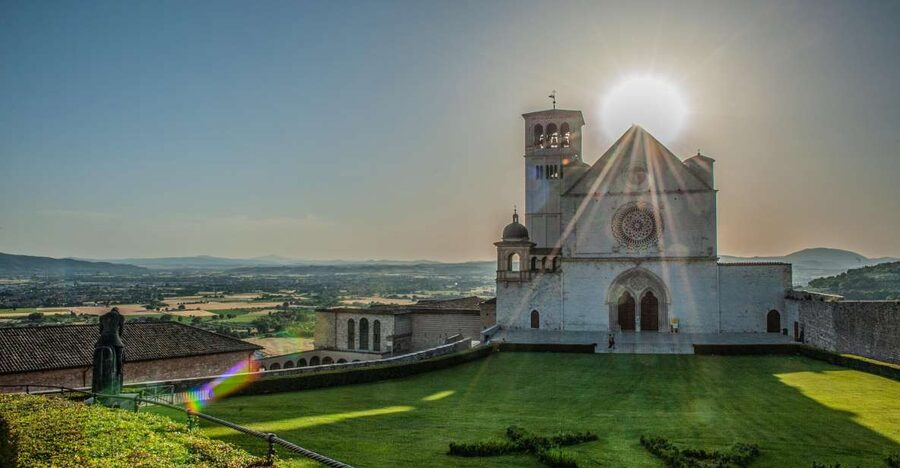
Assisi makes sense when you walk it slowly, one stone lane at a time. This tour connects Roman ruins, medieval squares, St. Clare’s Basilica, and the great Basilica of St. Francis, where 13th- and 14th-century frescoes by Italian masters, including Giotto, turn a church visit into an art lesson.
I like the local perspective, especially when guides such as Alessandra, Michele, and Werner explain the town through its people, legends, faith, and daily life. I also like the route’s useful range: you see major churches, a Roman temple, the castle view, and less obvious places linked to St. Francis.
The main consideration is pace. Two and a half hours gives you a strong introduction, but not much time to linger at every church. The guide may also point out more places than you can visit that day, which is helpful if you have time, but frustrating if Assisi is only a quick stop.
Key points at a glance
- Roman ruins to medieval streets: Begin near the remains of Assisi’s ancient amphitheater, later quarried for house stone and eventually turned into a private neighborhood.
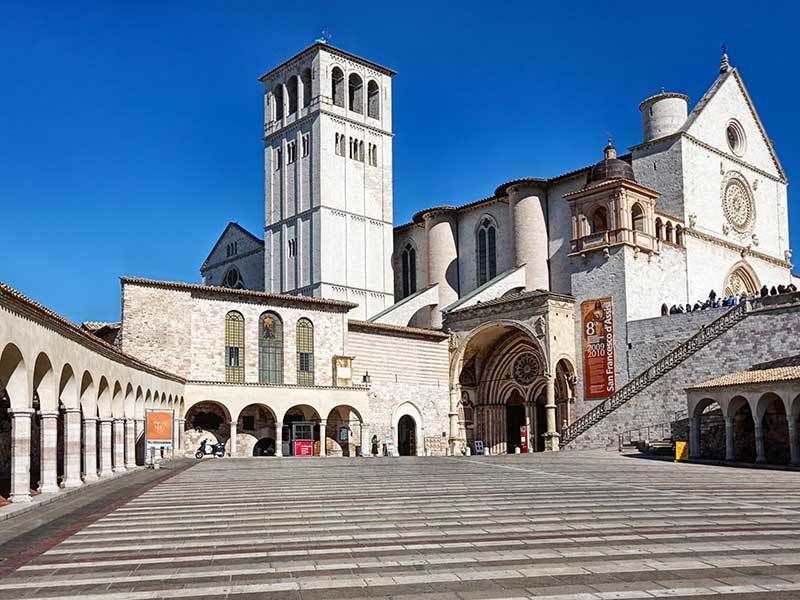
- Three major churches: See San Rufino Cathedral, Santa Chiara, and the Basilica of St. Francis, with the longest stop at St. Francis’s basilica.
- St. Francis’s everyday world: The route includes Santuario di San Francesco Piccolino, linked to the saint’s early life.
- A rare Roman survivor: The Temple of Minerva in Piazza del Comune is one of Italy’s best-preserved Roman temples.
- Guides who add local color: Alessandra, Michele, Werner, Francesca, and others are praised for clear English, warmth, patience, and practical food and sightseeing tips.
- Plan around church rules: Guided access inside St. Francis’s Basilica is forbidden on Sundays and major religious or national holidays, and the basilica is closed on October 4.
Why this Assisi walk works
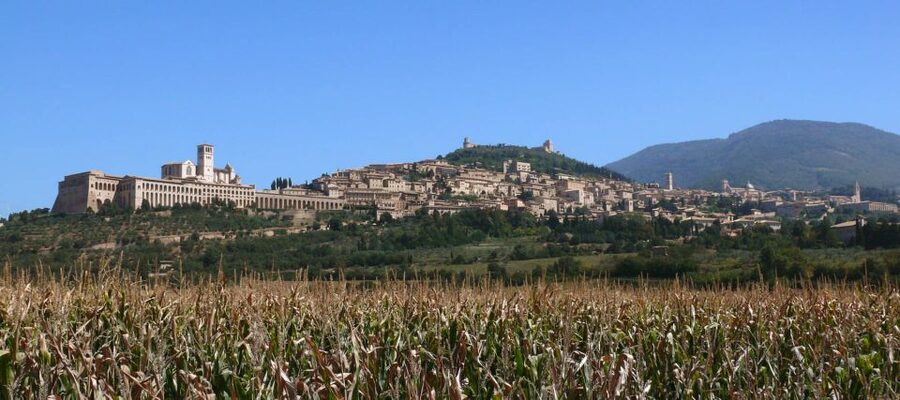
Assisi is not a place where a quick photo stop tells you much. Its churches, Roman remains, medieval buildings, and Franciscan sites are packed into a hill town that can feel confusing at first. A guide helps you connect the pieces instead of treating each one as a separate sight.
The route is especially good for a first visit. You get the broad story of Assisi, from ancient Roman building to medieval civic power and the lives of St. Francis and St. Clare. You also get enough free time afterward to decide which places deserve a closer look.
The tour lasts 2.5 hours and costs $71 per person. That is a fair price if you want an English-speaking guide who can explain the art and religious setting inside St. Francis’s Basilica. It is less compelling if you mainly want to enter churches quietly and browse at your own speed.
A major strength is the human context. Guides have explained where St. Francis lived and worked, where St. Clare was baptized, and how the town developed around its saints and churches. Those details help you see Assisi as a lived-in place, not just a collection of pilgrimage stops.
A few more walking tours around Italy worth a look
- Venice: Doge’s Palace and St Mark’s Basilica Walking Tour
★ 4.4 · 6,291 reviews - Milan: Guided Walking Tour & Last Supper Visit with Ticket
★ 4.7 · 5,409 reviews - Naples: Street Food Walking Tour with Local Guide
★ 4.9 · 4,976 reviews
Starting near the old amphitheater
The meeting point is at Matteotti parking, in front of the ticket office, described as the last parking area at the top of Assisi. There is an important current warning: the Matteotti parking lot is closed for renovation, and parking is not possible, but the meeting point remains listed there.
You should check your arrival plan carefully before setting out. The tour finishes at Piazza Inferiore di San Francesco, down by the Basilica of St. Francis, so the start and finish are not the same place.
The opening stop is the remains of an ancient Roman amphitheater. In the Middle Ages, much of the stone was reused to build local homes. Later, the old structure became a private neighborhood, an excellent example of how Assisi kept adapting older buildings to new needs.
This is a useful first lesson in the town. Assisi is not a museum frozen in one period. Roman, medieval, religious, and modern life overlap in plain sight. From here, you also get one of the best views toward Rocca Maggiore, the medieval castle above the town.
San Rufino and Santa Chiara
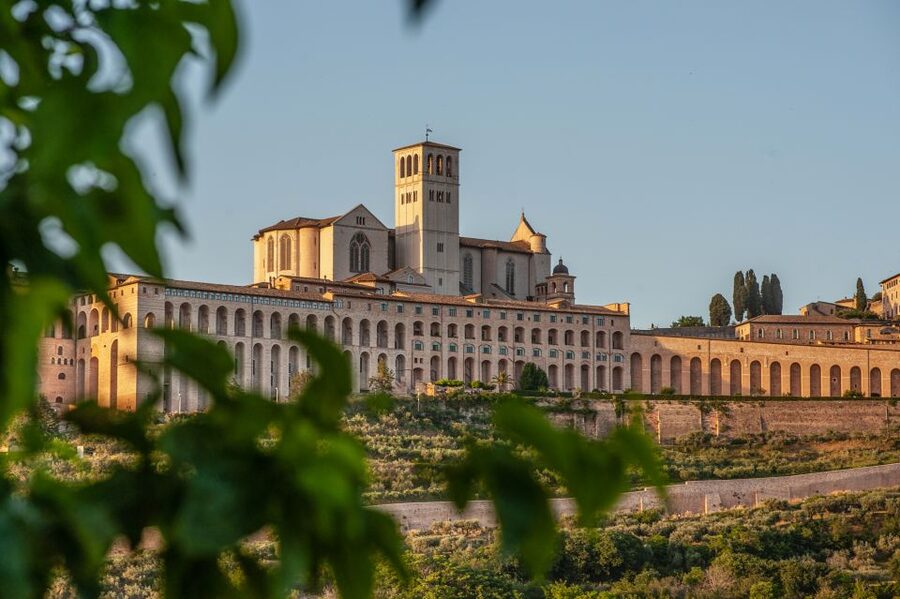
The route continues through narrow alleys and medieval squares toward the Cathedral of San Rufino. The tour plan allows about ten minutes to pass by the cathedral, so you should not expect an extended interior visit here.
San Rufino matters because it anchors the religious story of Assisi before you reach the basilicas tied directly to Francis and Clare. Your guide places the cathedral within the town’s wider history, rather than presenting it as one more ornate church on a long list.
Next comes the Basilica of Santa Chiara, with about twenty minutes for a guided visit. Santa Chiara was a close follower of St. Francis and founded the Order of Poor Ladies, later known as the Poor Clares. The church gives the tour a needed second voice, since Assisi’s story is not only about Francis.
This stop may appeal to you if you want to understand how the two saints’ lives connect. The time is short, though, so you will need to listen closely and avoid expecting a slow, private examination of every chapel or artwork.
The walking route itself is part of the experience. Assisi’s lanes can be tight and uneven, and the town’s slopes make comfortable shoes a sensible choice. The guides generally keep the pace manageable. One guide was praised for noticing when older members of the group needed a rest and steering everyone toward a pastry shop break, though you should not assume a food stop is included in every departure.
St. Francis’s early life in the town
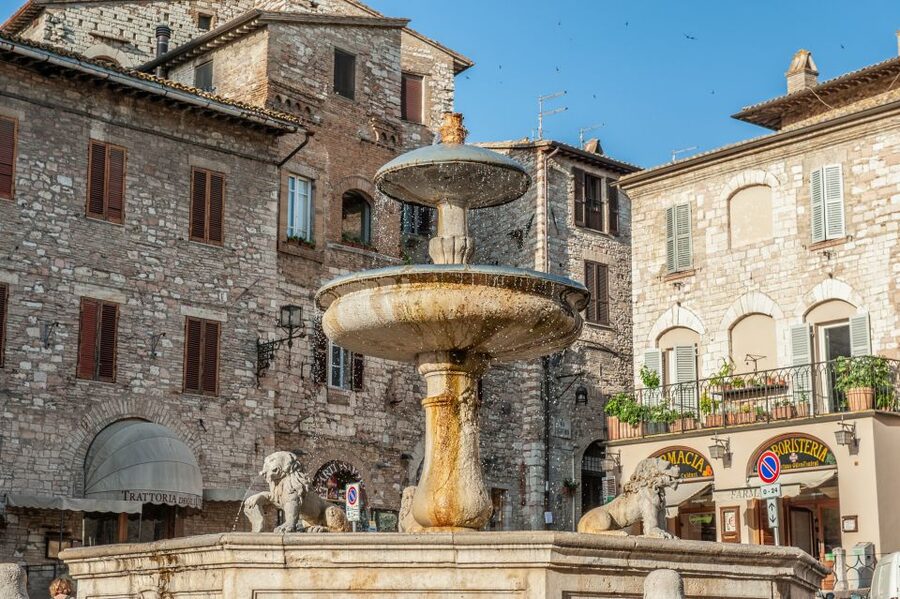
The Santuario di San Francesco Piccolino receives about ten minutes of guided attention. This small sanctuary is associated with St. Francis’s early life and gives the saint a more personal setting before the tour reaches the monumental basilica built in his honor.
I find this kind of stop valuable because it keeps Francis from becoming only a painted figure or a name on a church facade. The guide can place him within the streets and homes of Assisi, explaining the local traditions tied to his life.
Several guides have added details beyond the basic route. Alessandra, in particular, has been praised for pointing out St. Francis’s home and workplace, along with the place connected to St. Clare’s baptism. These additions can vary with the day, crowd levels, and the guide, so treat them as possible bonuses rather than promised stops.
That flexibility is one reason a local guide helps. On a crowded day, a guide can adjust the order or use back streets. One guide led the group through quieter lanes toward St. Francis’s Basilica when the main street was full of pilgrims, while still pointing out relevant sights along the way.
Same streets, a different route:
- Florence: Highlights Walking Tour with Expert Guide
★ 4.6 · 4,662 reviews - Venice: San Marco to Rialto Walk & Spritz Like a Local
★ 4.2 · 3,651 reviews - Uffizi & Accademia Timed Entry: Small Group Duomo Walking Tour
★ 4.5 · 3,630 reviews - Venice Walking Tour and Gondola Ride
★ 3.5 · 3,630 reviews
Piazza del Comune and the Temple of Minerva
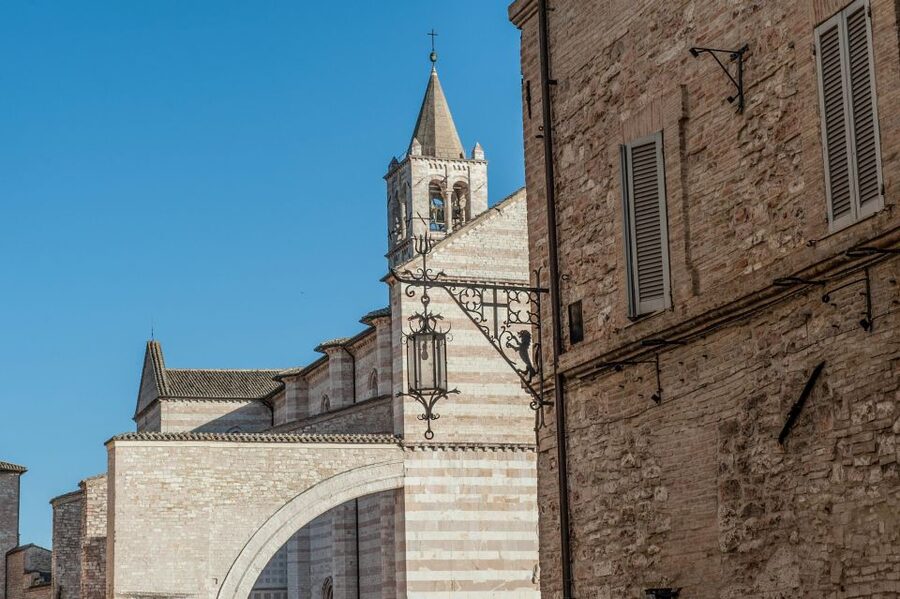
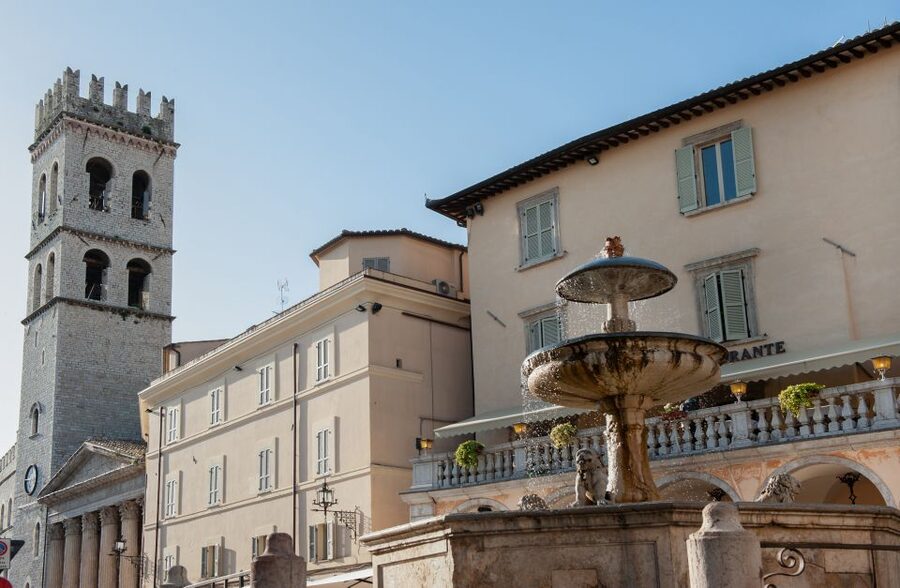
Piazza del Comune is Assisi’s main city square. It is a good place to see how civic and religious life share the same compact center, with medieval government buildings surrounding an older Roman monument.
The highlight here is the Temple of Minerva, which is one of the best-preserved Roman temples in Italy. Its tall columns are striking, but the bigger lesson is the way Assisi reused the ancient structure within its medieval town.
The tour allows roughly ten minutes for the temple and about ten minutes to pass through the square. That is enough for an explanation and photographs, but not a long museum-style visit. If Roman architecture is your main interest, you may want to return later and study the setting at your own pace.
The square also helps you understand Assisi’s scale. Major periods of history sit close together, and the walk between them is short enough to make the connections clear. Your guide can explain not only what you are looking at, but why it survived and how it fits into the town’s political story.
Entering the Basilica of St. Francis
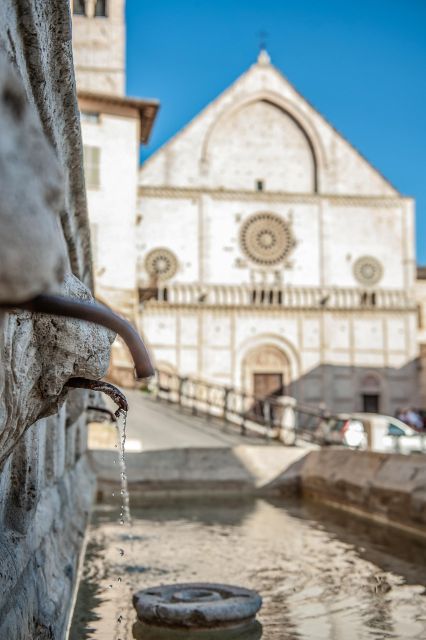
The final major stop is the Basilica of St. Francis, with about forty-five minutes of guided attention. The entrance ticket is included, which matters here because the basilica is the tour’s artistic centerpiece.
The church is famous for its 13th- and 14th-century frescoes by Italian masters, including Giotto. A guide gives you a better chance of understanding what you are seeing: the scenes, the artists, the religious purpose, and the way the basilica’s decoration helped tell the story of St. Francis.
Forty-five minutes is enough for a focused introduction, but you may wish for more time. One participant specifically wished for a longer visit inside. That is not a flaw unique to this tour. The basilica contains more art and detail than any short walking tour can cover.
The guide will explain the basilica from the outside before you enter. On Sundays, major Catholic holidays, and national holidays, guided tours inside are forbidden. In that case, the guide shows you the church from outside, and you enter alone in silence.
The basilica is closed on October 4. Access is also suspended from February 15 through April 6, 2026, because relics of St. Francis are being displayed. During that period, the explanation takes place outside the basilica.
You need to follow the dress code. Cover your knees and shoulders, and avoid shorts or sleeveless tops. Entry can be refused if you do not meet the rules.
There may also be a small extra charge for a radio rental at the basilica. One visitor paid €2 per person and felt this had not been made clear in advance. Bring a little cash so this does not catch you off guard, but treat the charge as subject to current arrangements.
The guides make the difference
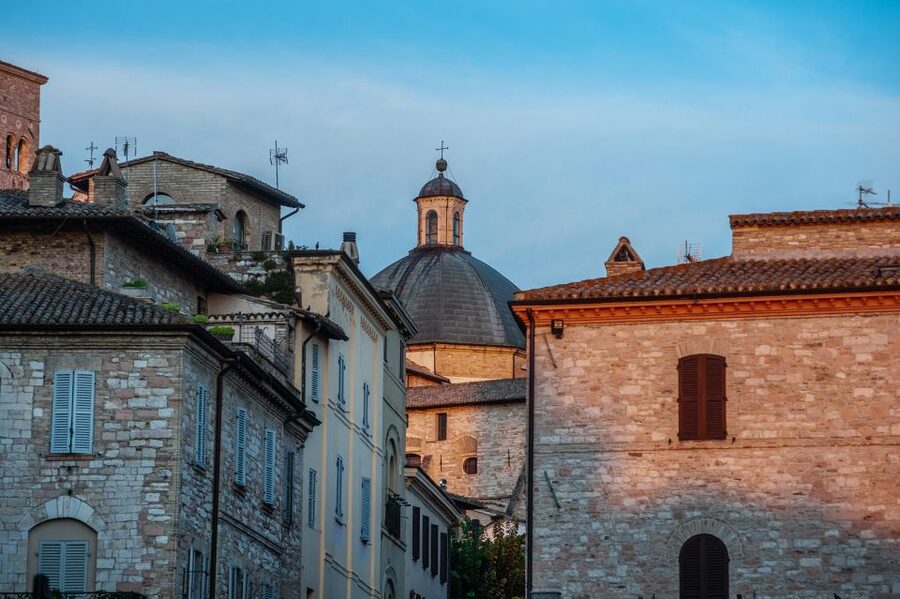
The experience depends heavily on the person leading your group. The guide roster has included Alessandra, Michele, Werner, Francesca, Antonella, Barbara, Andrea, Marike, Valentina, and others.
The strongest pattern is clear spoken English paired with a personal connection to Assisi. Alessandra has been praised for combining art, theology, politics, and Italian history with stories from growing up in the town. Michele has helped visitors arrange taxis for the Hermitage and San Damiano after the tour. Werner has been described as warm, funny, patient, and able to handle a difficult group member calmly.
That matters because Assisi can be crowded and emotionally important to many people. A guide who keeps the group together, adjusts the route, and welcomes questions adds real value. Several guides have also shared advice on restaurants, food shops, gelato, monasteries, and places worth visiting later in the day.
The tour can work particularly well for a small group. Some departures have had only two, four, or six participants, making it easy to hear and ask questions. Group size may change, so do not book solely expecting a private experience.
Who should book this tour
I would choose this tour if you have one day in Assisi and want a useful introduction before exploring alone. It suits first-time visitors, art lovers who want help reading the frescoes, and anyone interested in St. Francis and St. Clare beyond the most familiar names.
It is also a good fit for people who appreciate practical advice. The guides may help you decide where to eat, which churches deserve extra time, and how to arrange later visits to places such as the Hermitage or San Damiano.
You should think twice if you dislike guided visits, need long stretches for photography, or want to study every church at length. The tour gives you a strong framework, not an exhaustive examination of Assisi.
The walk is not described as a strenuous hike, and the pace has worked well for people who cannot move quickly. Still, you are walking through a hill town with narrow streets and church steps, so comfortable shoes and modest clothing are wise.
Booking details that matter
The tour is offered in English and includes an official English-speaking guide plus admission to the Basilica of St. Francis. You can cancel up to 24 hours before the start for a full refund, and the reserve-now, pay-later option keeps your plans flexible.
Starting times vary, so you need to check availability for your date. Since the meeting point remains at Matteotti despite the parking closure, allow time to locate the correct spot and do not assume you can leave a car there.
The tour finishes at Piazza Inferiore di San Francesco. That makes it easy to continue visiting the basilica area afterward, but you will need to plan your return to the upper town or onward transport.
Should you book it?
Book this tour if you want Assisi to make sense quickly. For $71, the value comes from the guide’s interpretation, the included basilica entry, and the way the route links Roman Assisi with the world of Francis and Clare.
I would be especially inclined to book when Alessandra, Michele, Werner, or another guide with strong local experience is scheduled, though guide assignments can change. Check the church calendar, avoid October 4, note the 2026 relic-display closure, dress properly, and be ready for a focused rather than leisurely visit.
If you have only one day, this is a smart starting point. Afterward, you can return to the places that caught your attention, armed with enough context to see more than stone, paint, and church doors.
FAQ
How long does the Assisi walking tour last?
The tour lasts 2.5 hours.
What language is the tour conducted in?
The tour is conducted in English with a live English-speaking guide.
What is included in the price?
The price includes an official English-speaking guide and an entrance ticket to the Basilica of St. Francis.
Where does the tour meet?
The meeting point is at Matteotti parking, in front of the ticket office, at the top of Assisi. The parking lot is closed for renovation, so parking is not possible, but the meeting point remains confirmed there.
Where does the tour finish?
The tour finishes at Piazza Inferiore di San Francesco, near the Basilica of St. Francis.
Can I enter the Basilica of St. Francis with the guide?
On Sundays, major Catholic holidays, and national holidays, guided tours inside the basilica are forbidden. The guide explains the church from outside, and you enter alone in silence.
Is the Basilica of St. Francis always open during the tour?
No. The basilica is closed on October 4. Access is also suspended from February 15 through April 6, 2026, due to the public display of St. Francis’s relics. During that period, the guide explains the basilica from outside.
What should I wear?
You must cover your knees and shoulders in places of worship and selected museums. Shorts and sleeveless tops are not allowed, and entry may be refused if you do not follow the dress code.
Just added around Italy
- Ferrara: City Highlights Walking Tour with Local Guide★ 4.6 · 219 reviews
- Verona: Romeo and Juliet Guided Walking Tour★ 4.6 · 82 reviews
- Discover Pompeii: French Walking Tour of the Buried City★ 4.8 · 253 reviews
- Naples: Maradona Stadium Guided Exterior Walking Tour★ 4.3 · 113 reviews
- Dark Heart of Rome – Facts, Legend & Mystery Walking Tour★ 4.5 · 329 reviews
- Catania: Street Food Guided Walking Tour★ 4.9 · 326 reviews
- Cefalù: History and Legends Guided Walking Tour★ 4.8 · 132 reviews
- Catania: Guided Street Food Walking Tour★ 4.7 · 300 reviews
Walking Tours, compared.

Magical London: Harry Potter Guided Walking Tour
Read our review →
Reykjavik Food Walk – Local Foodie Adventure in Iceland
Read our review →
History and Hauntings of Salem Guided Walking Tour
Read our review →
New Orleans Premier Ghost, Voodoo and Vampire Walking Tour
Read our review →
Amsterdam Anne Frank: Small-Group Walking Tour & Local Guide
Read our review →

Edinburgh Castle: Guided Walking Tour with Entry Ticket
Read our review →
Anne Frank’s Story – Guided Walking Tour through Amsterdam
Read our review →Browse the lists this tour appears in