
REVIEW · INDIA
Evening Walking Tour with Fire Rituals-The Pushkar Route
Pushkar becomes something else after sunset. Temple bells carry across the lake, ghats glow with lamps, and the evening MahaAarti at Brahma Ghat gives this three-hour walk its strongest moment. I like the clear explanations from guides such as Manish, and I like that the route is shopping-free, with no pressure to buy carpets, jewelry, or souvenirs. The included malpua, masala tea, water, and hotel pickup add real value.
The main drawback is simple: three hours on foot can feel long, especially since you will remove your shoes several times at temples. Bring comfortable footwear that slips on and off easily. The tour is spiritual and cultural rather than a sightseeing checklist, so it suits you best if you want context, calm streets, and local customs more than nightlife.
Key points to know before you book
- The MahaAarti at Brahma Ghat is the emotional center: Fire, bells, chanting, and the lake create a memorable evening ritual.
- The Brahma Temple gives the walk a rare focus: Pushkar is associated with the world’s only temple dedicated to Brahma.
- Manish is the main guide named for this experience: His clear English, history background, and patient answers help make Hindu customs easier to understand.
- The route avoids shopping pressure: You can focus on temples, ghats, streets, stories, tea, and sweets.
- You walk for about three hours: Expect temple footwear rules, uneven streets, pauses at the lake, and a steady but manageable pace.
- The price is unusually low: At $6 per person, the included refreshments, entry tickets, and nearby hotel pickup make this strong value.
Why Pushkar feels different after dark
Pushkar is a holy town built around a sacred lake, and the evening changes its mood. In daylight, the streets can feel busy and practical. Later, the focus shifts toward lamps, prayer, bells, and people gathering at the water.
That change is the reason I would choose this walk over a quick daytime pass through town. You are not simply moving from one monument to another. You are being shown how the lake, temples, ghats, rituals, and daily life fit together.
The sound matters. Bells from many temples ring across the town, sometimes one at a time and sometimes in overlapping waves. You may also hear prayer and ceremony around the ghats. The effect is less about spectacle than atmosphere, and the guide helps you understand what you are seeing rather than leaving you to guess.
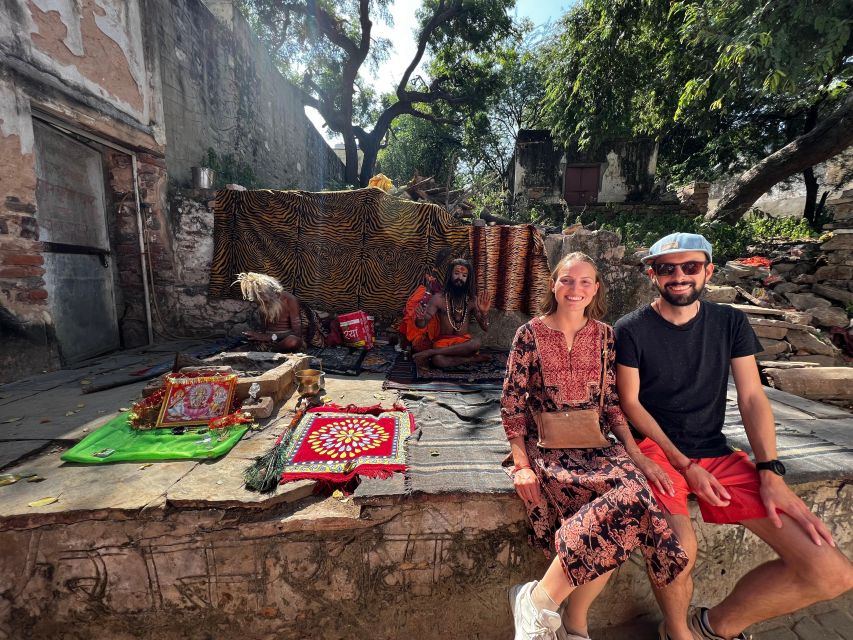
The walk is led in English. Manish is the guide most closely associated with the experience, while some departures may be led by another member of the same family, including Manish’s uncle or brother. The strongest part of the guiding is the way religious subjects are explained in plain language. You can ask questions about Hindu beliefs, Sikh traditions, temple customs, and the meaning of the ceremonies without needing prior knowledge.
More Night Walking Tours in India:
- Private Street Food Evening Walking Tour in Ho Chi Minh City
★ 5.0 · 3,175 reviews - Granada: Albaicín and Sacromonte Guided Sunset Walking Tour
★ 4.9 · 2,962 reviews - Savannah’s Ghost City “Dead of Night” Walking Night Tour
★ 4.5 · 2,482 reviews
Beginning at the Brahma Temple
The Brahma Temple is an important first stop because it gives Pushkar a religious identity unlike most towns in India. It is described as the only Brahma temple in the world, making it one of the most distinctive places on the route.
The temple visit is not just a quick photo stop. Your guide explains why Brahma is linked with Pushkar and how the site fits into Hindu belief. The setting also introduces you to the practical side of temple visits. You must remove your shoes, and you may need to use the provided locker facilities.
This is where easy footwear pays off. Sandals or shoes that come off quickly will save time and fuss during the evening. You should also expect some standing and walking without shoes, so this may not be the most comfortable part of the route for anyone with foot problems.
The Brahma Temple can feel intense and crowded at moments. One guide described it as a rather crazy place, and that is fair warning that this is not a quiet museum visit. The reward is direct contact with an active place of worship. You are seeing a religious site in use, not a preserved building emptied of its purpose.
Walking the ghats around Pushkar Lake
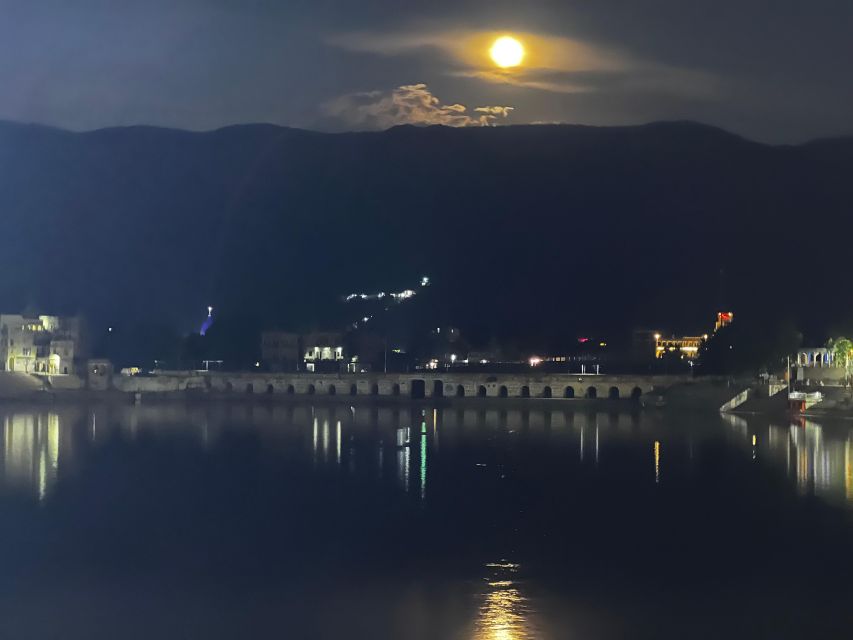
From the temple area, the route moves toward Pushkar Lake and several of its ghats. Gandhi Ghat and Queen Mary Ghat are specifically included, along with other points around the water.
The ghats are steps and platforms leading to the lake. They are used for prayer, offerings, ceremonies, and quiet reflection. Your guide explains the spiritual importance of the water and the role the lake plays in Pushkar’s identity.
This section gives the tour breathing room. After the temple visit, you have time to look across the water, listen to the bells, and take in the changing light. Some parts of the walk may feel slow, but that is part of the point. The route is designed around Pushkar’s evening mood, not around rushing through as many sights as possible.
You should respect the religious setting. Stay alert to instructions about where to walk and what you may photograph. The supplied information does not promise a private ceremony or exclusive access, so treat the ghats as public sacred places rather than a staged performance for visitors.
Gandhi Ghat and Queen Mary Ghat give the walk useful variety. You see different parts of the lakeside rather than spending the entire evening at one ceremony point. If you only have one day in Pushkar, this helps you get a basic sense of the town’s layout before exploring independently.
The MahaAarti at Brahma Ghat
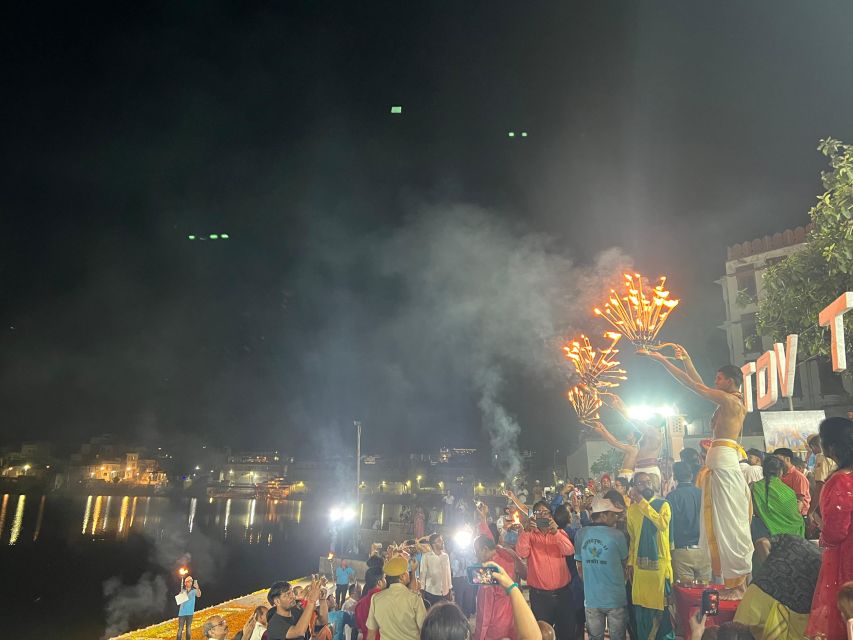
The main event is the MahaAarti, or fire ceremony, at Brahma Ghat. This is the point around which the whole evening seems to build.
Aarti uses flame as part of Hindu worship. At Pushkar Lake, the ritual is accompanied by bells and prayer, with the water and surrounding temples forming the setting. The guide explains what is happening and why the fire matters, which makes a major difference if you are seeing the ceremony for the first time.
I would not describe this as a performance in the usual tourist sense. It is a religious ceremony, and the value comes from watching respectfully while understanding its purpose. The fire, sounds, and gathering around the lake can feel powerful, but the moment works best when you avoid treating it like a photo opportunity.
Several people who booked this walk singled out the fire ritual as the highlight. That makes sense. The ceremony ties together the sights you have already seen: the temples, the lake, the bells, and the spiritual importance of Pushkar. It is also the part most difficult to appreciate on your own, since a guide can explain the gestures, objects, and sequence as they happen.
Timing matters here. The exact start time varies, so you should check availability when booking. The walk is listed as three hours, with the evening ceremony forming the main focus rather than a quick add-on.
A few more walking tours around India worth a look
- Fontainhas Heritage Walk by Make It Happen
★ 5.0 · 2,834 reviews - The Great Indian Food Tour: Old Delhi Food and Heritage Walk
★ 5.0 · 1,698 reviews - Group Guided Walking Tour in Fort and Colaba
★ 5.0 · 1,073 reviews - Spiritual City Walking Tour-THE Pushkar Route
★ 5.0 · 907 reviews
Pushkar’s old streets and Halwai Gali
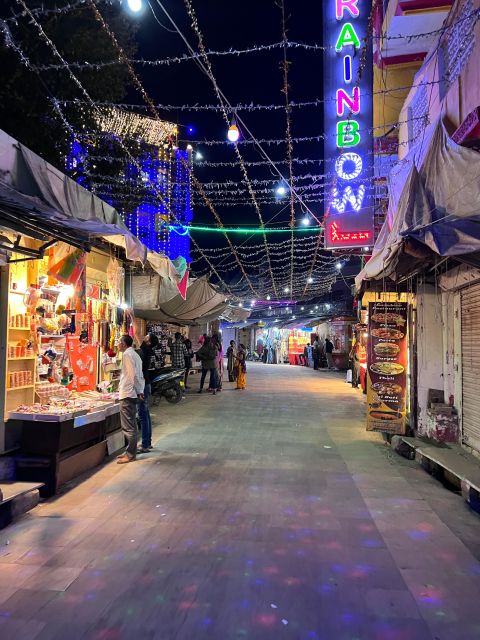
The route also takes you through Pushkar’s streets after dark, when the town can feel calmer and more atmospheric. This is a useful contrast to the formal temple stops.
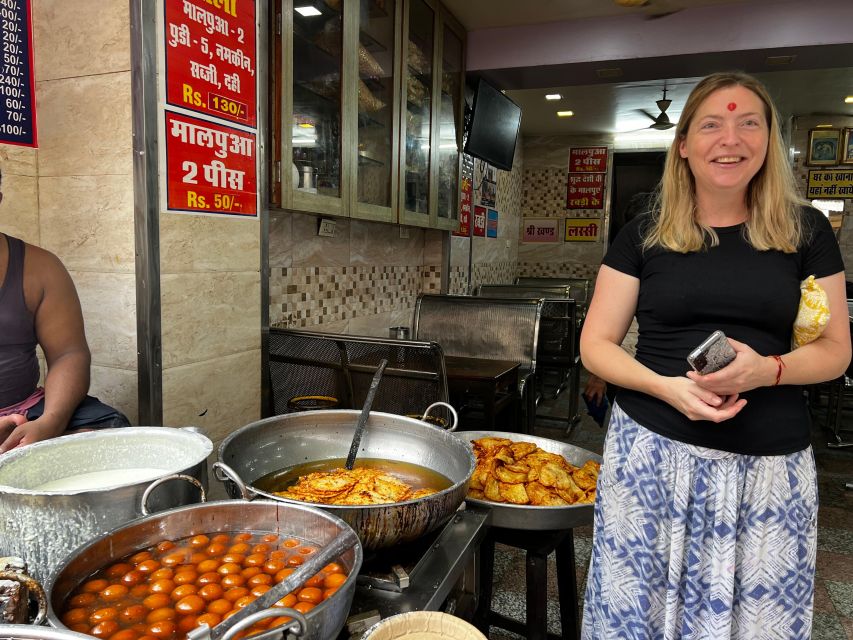
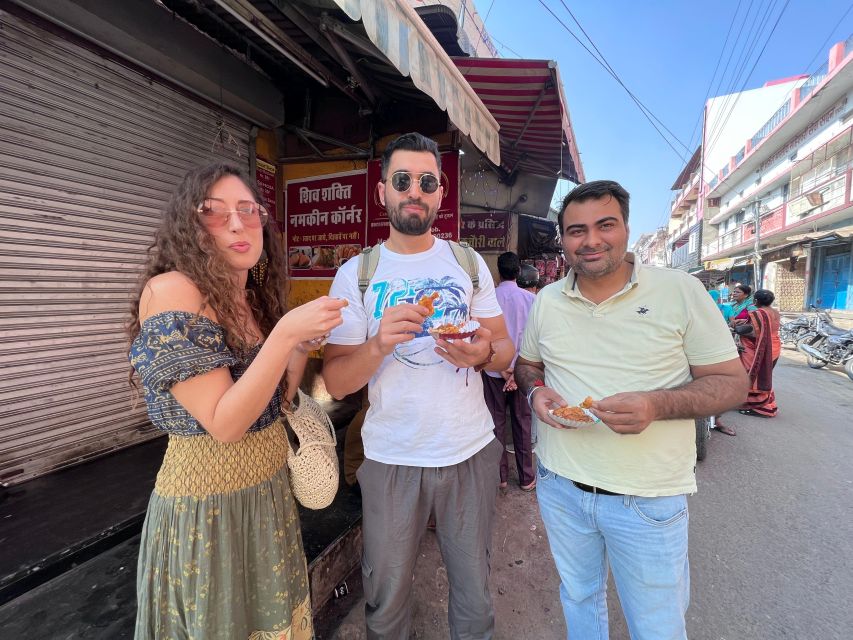
You will pass through the old town area and Halwai Gali, a street associated with local sweets. The included Pushkar malpua gives you a chance to taste one of the town’s better-known treats without turning the walk into a food tour.
Malpua is a sweet, soft dessert often served as a local specialty. The small tasting is valuable because it connects the tour to ordinary street life. After hearing about temples and rituals, you get something simple and familiar: a local snack and a pause to enjoy it.
Masala tea is also included, along with a bottle of water. These are modest extras, but at a $6 price they matter. You are not being asked to pay for every drink or taste along the way, and the stop provides a natural break during a long walk.
The streets may not be quiet all the time. Pushkar remains a working town, and the route passes through public areas. Still, the evening setting gives you a better chance to notice shopfronts, temple entrances, bells, and daily activity without the sharper heat and glare of the day.
What makes the guide valuable
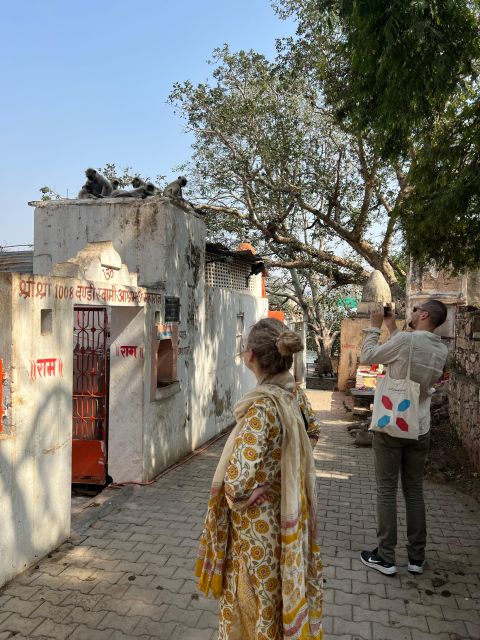
The guide is the main reason to choose this walk instead of tracing the same route alone. Pushkar’s religious sights are easy enough to find, but their meaning is not always obvious.
Manish is described as holding a master’s degree in history, and his approach combines local knowledge with wider explanations of Hinduism and Sikhism. He is also praised for speaking clear English and answering questions patiently. That matters when a subject includes unfamiliar names, stories, customs, and symbols.
You can expect the guide to explain the spiritual significance of Pushkar, the purpose of the fire ritual, and the role of the temples around the lake. The best use of your time is to ask questions as they come up. This is not a lecture where you need to remain silent for three hours.
The tone also seems flexible. Guides are described as friendly, thoughtful, humorous, and willing to give people time to enjoy views and temples. One guide even offered to walk a customer back to a hotel after the tour. That is not listed as a standard promise, so do not book expecting it, but it suggests a personal style rather than a rigid group routine.
Some departures may be led by Manish’s uncle or brother. If having Manish specifically is important to you, ask when booking. The experience is provided by The Pushkar Routes, and English is the stated tour language.
The value of a $6 walking tour
At $6 per person, this is one of those experiences where the inclusions make a large difference. You get a three-hour guided walk, entry tickets to the listed points, locker facilities at the Brahma Temple, masala tea, Pushkar malpua, and bottled water.
Hotel pickup and drop-off are included if your hotel is within a 2 km radius of Pushkar. Pickup can also be arranged from parking areas and ghats around Pushkar Lake. That makes the start easier, especially if you are not sure where the old town route begins.
The no-shopping policy is another important value point. Many sightseeing outings in India include stops at shops where you are encouraged to browse or buy. This route specifically avoids that pressure, leaving more time for the town and its religious places.
The price does not mean you should expect a private tour or a polished luxury experience. Group size is not specified, and the walk takes place in public streets and active temples. Think of it as an affordable local introduction, with a guide who adds the meaning you would likely miss alone.
Free cancellation up to 24 hours before the activity and reserve-now, pay-later booking give you some flexibility. Starting times vary, so check the available evening departure before you commit.
Who will enjoy this walk most
I would recommend it strongly if Pushkar is your first stop in town. The route gives you a useful introduction, and several people found that it made them more confident exploring on their own afterward.
It also suits you if you are interested in religion, history, local customs, or the atmosphere of an old town after dark. You do not need to know anything about Hinduism in advance. The guide’s explanations are meant to make complex ideas easier to follow.
This is a good choice for solo visitors and pairs who want a structured first evening. It can also work for families with older children, provided everyone is comfortable walking for three hours and removing shoes at temples.
I would think twice if you dislike walking, have difficulty with uneven streets, or want a fast tour with a long list of monuments. The route includes pauses, but it is still a substantial walk. You should also choose another activity if shopping, nightlife, or restaurant dining is your main interest.
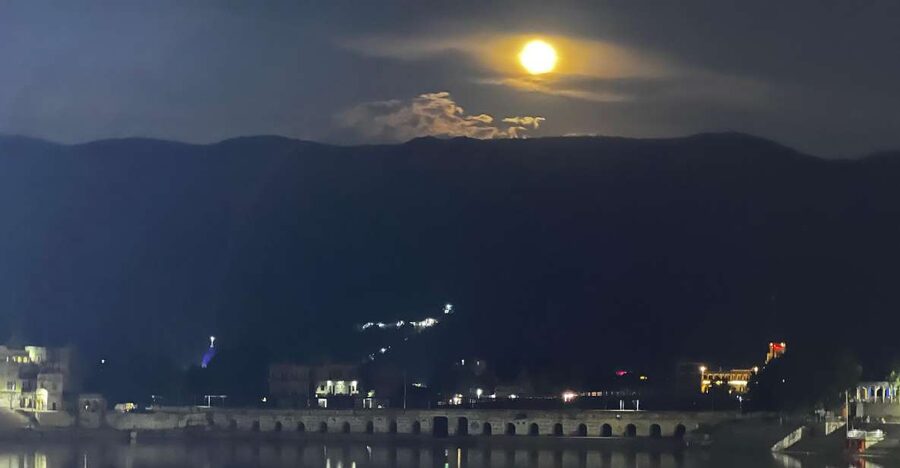
The ceremony can be especially meaningful around religious festivals, new moon, or full moon, but the supplied details do not guarantee a special festival program on every date. Ask about the evening schedule if a particular ritual is important to you.
Practical advice for a smoother evening
Wear shoes that are comfortable and easy to remove. You will need to take them off at temples, and this small detail came up more than once in the practical feedback about the walk.
Carry as little as possible inside the Brahma Temple because locker facilities are available. Keep your belongings organized so you can move through the temple visit without delay.
Bring an open attitude and a few questions. The tour is at its best when you use the guide to understand what you are seeing, rather than simply following the group from one stop to the next.
Allow some flexibility around the schedule. The ceremony and temple visits happen in active religious spaces, so the pace may depend on what is taking place that evening. The tour is listed as three hours, but the experience is not built around rushing.
Should you book The Pushkar Route?
Yes, if you want to understand why Pushkar matters rather than simply photograph its lake and temples. The combination of Brahma Temple, the ghats, the evening bells, the MahaAarti, local sweets, and a no-shopping policy gives you a lot for $6.
The strongest reasons to book are the fire ceremony and the guide’s explanations. Manish and the other guides associated with The Pushkar Routes bring history and religious customs down to a level that is easy to follow. You also get practical help with the temple visits and a useful first look at the town.
Skip it only if three hours on foot is too much or if religious sites are not part of your travel interests. For most first-time visitors to Pushkar, this is a low-cost, well-focused way to spend an evening and get your bearings in the holy town.
FAQ
How long is the evening walking tour?
The tour lasts three hours. Starting times vary, so you should check the available evening departure when booking.
What places are included?
The route includes the Brahma Temple, Brahma Ghat, parts of Pushkar Lake, Gandhi Ghat, Queen Mary Ghat, the old streets of Pushkar, and Halwai Gali.
Is the MahaAarti included?
Yes. The evening MahaAarti fire ceremony at Brahma Ghat is the main highlight of the tour.
What is included in the $6 price?
The price includes the guided walk, entry tickets to the listed points, locker facilities at the Brahma Temple, masala tea, Pushkar malpua, and a bottle of water. Hotel pickup and drop-off are included for hotels within 2 km of Pushkar.
Is hotel pickup available?
Pickup is available from hotels within a 2 km radius of Pushkar, as well as from parking areas and ghats around Pushkar Lake.
What language is the tour conducted in?
The tour is conducted in English. Manish is the main named guide, though another member of The Pushkar Routes team may lead the walk.
Just added around India
- Chennai Walking Tour ( 2 hours guided tour)★ 3.8 · 85 reviews
- Bangalore: Palace, Temples, Fort & Markets Walking Tour★ 4.9 · 97 reviews
- Agra: Street Food Walking Tour, Spice Market, & Tuk-tuk Ride★ 4.9 · 102 reviews
- Private Guided Walking Tour in Bandra Queen of Suburbs★ 5.0 · 383 reviews
- Breakfast Walk in Old Delhi★ 5.0 · 449 reviews
- The Cultural And Historical Walking Tour in Margao★ 5.0 · 280 reviews
- Private Heritage Walking Tour in Jaisalmer Fort and Old Bazaar★ 5.0 · 306 reviews
- Jodhpur Blue City Heritage Walking Guided Tour★ 5.0 · 240 reviews
Night Walking Tours, compared.

Private Street Food Evening Walking Tour in Ho Chi Minh City
Read our review →
Albaicín and Sacromonte Guided Sunset Walking Tour
Read our review →
Savannah’s Ghost City “Dead of Night” Walking Night Tour
Read our review →
Gion Magical Night Walking Tour with Geisha Trivia
Read our review →

Madrid by Night Small Group Tour: Stories, Sights and Tapas Bites
Read our review →
Paranormal Night Walking Tour & Secret Backstreets
Read our review →
Munich Ghosts and Spirits Evening Walking Tour
Read our review →Browse the lists this tour appears in