

REVIEW · AMSTERDAM
Amsterdam: Cultural Highlights Walking Tour
Amsterdam’s story comes into focus on this compact walk through the city center. You begin at the National Monument on Dam Square and move through royal buildings, old commercial streets, canals, memorials, and the quiet Begijnhof. The guide connects the stones under your feet to Amsterdam’s merchants, artists, wartime experience, colonial past, and present-day multicultural life.
I like the wide historical sweep and the practical advice woven into it. I also like the short walking stretches and frequent stops, which make the two hours manageable for children and for anyone arriving tired after a flight. The main consideration is that this is an orientation tour, not an in-depth visit inside museums or palaces, and the meeting point can be hard to spot among other guides at Dam Square.
Key points at a glance
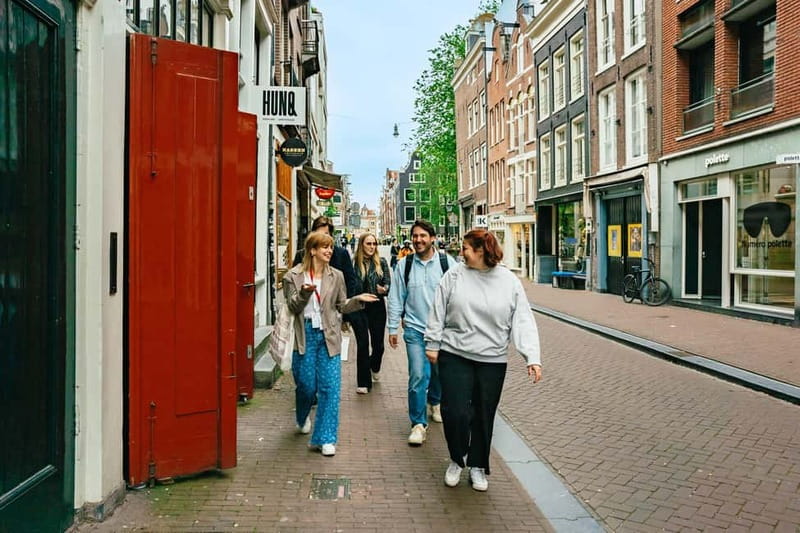
- Dam Square sets the stage: Learn how Amsterdam grew from a settlement beside the Amstel into the city you see today.
- A useful mix of past and present: The walk covers medieval life, the Golden Era, World War II, colonial history, tolerance, food, and local neighborhoods.
- Strong guide-led experience: Guides including Alex, Francesco, Stephanie, Deborah, Lili, Josh, and Santina are praised for clear stories, humor, and useful answers.
- No admission fees: You see the landmarks from outside, so the $30 price pays for explanation, orientation, and local advice rather than entry tickets.
- A gentle two-hour route: Frequent stops keep the pace reasonable, though you still need comfortable shoes and weather protection.
- Good first-day choice: You finish with a better sense of where to eat, cycle, shop, and explore on your own.
Why this two-hour walk works as an Amsterdam introduction
Amsterdam can feel confusing at first. Its streets curve around canals, the center is compact but packed with landmarks, and many important stories are easy to miss if you simply follow the crowds. This walk gives you a basic map in your head.
The route is less about checking off famous buildings and more about understanding how they fit together. You hear how commerce shaped the city, why art flourished during the Dutch Golden Era, how the Second World War affected local life, and how Amsterdam developed its modern reputation for tolerance and cultural variety.
That range is the tour’s main strength. In two hours, you get a sample of politics, architecture, food, religion, memorials, and daily life. I would use it early in a stay, then return to the places that caught your interest.
The cost is $30 per person. That is fair if you want a live guide to explain what you are seeing and help you plan the rest of your visit. Since the route uses public streets and stops outside the sights, you do not receive museum admission or a palace interior visit. You are paying for context, pacing, questions, and recommendations.
The high rating of 4.9 from 2,629 ratings fits the experience described by the many named guides. Alex is repeatedly praised for mixing history with humor and local tips. Francesco is noted for clear delivery and strong knowledge of Amsterdam’s past. Stephanie, Deborah, Lili, Josh, Santina, Prisha, and others are also singled out for warmth, storytelling, and patience with questions.
Guide quality can vary from one departure to another, but the pattern is reassuring. The best guides seem to adapt the walk to the group rather than recite a fixed script. One small group had only three people, while another had four, though the usual group size is not specified.
More City Highlights Walking Tours in the Netherlands
- Amsterdam Highlights Walking Tour: Small Group Experience
★ 5.0 · 1,132 reviews - Amsterdam: City Center Walking Tour in italian
★ 4.8 · 408 reviews - Amsterdam: Historical Highlights Walking Tour with Tasting
★ 4.6 · 381 reviews
Meeting at the National Monument on Dam Square
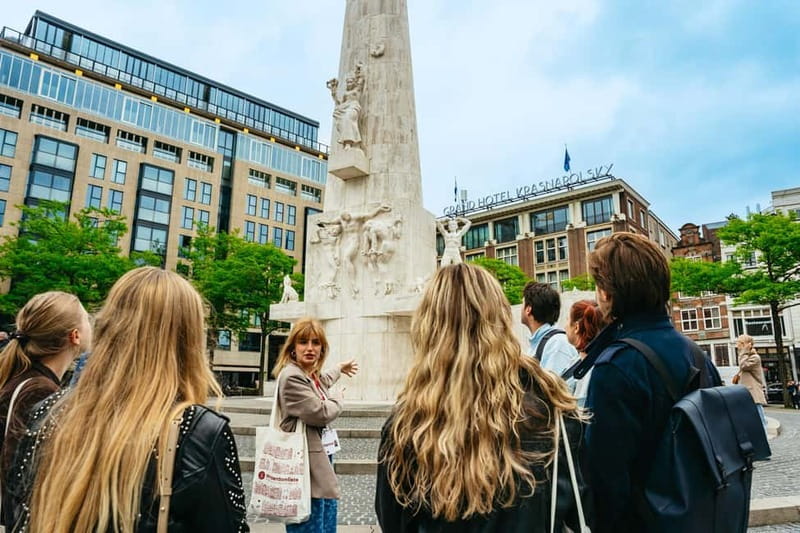
The tour begins on the stairs of the National Monument, the tall white pillar at the center of Dam Square. Look for a guide wearing a red name tag around the neck.
Give yourself a few minutes to locate the right person. One participant found the red lanyard difficult to distinguish from those worn by other guides, so this is one place where better identification would help. If you arrive early, confirm that you are near the large white obelisk rather than waiting beside a different guide or tour group.
Dam Square is an energetic place to begin. It is the point where the city was founded, and it brings together several layers of Amsterdam in one view. The guide explains the square’s role while pointing out the royal palace, Nieuwe Kerk, and surrounding commercial buildings.
The National Monument was first built to remember Dutch victims of World War II. It now serves as a memorial to people who lost their lives in wars around the world. Ending back here gives the route a useful shape: the walk begins and finishes at the same central point, with the monument carrying more meaning by the end.
Royal Palace and Nieuwe Kerk: power in the city center
The Royal Palace of Amsterdam is one of the first major stops. You pause for photographs and hear about the building’s place in the city’s political and architectural story.
This is an exterior visit, so do not book the walk expecting a palace tour. That limitation is also part of what keeps the experience affordable and within two hours. You see the building in its urban setting and gain background before deciding if you want to pay for a separate visit.
Nearby, Nieuwe Kerk adds another layer to Dam Square. Along with the former main post office, it helps show how civic, religious, royal, and commercial functions have long shared this part of Amsterdam. The guide’s explanations are especially useful here because the square can otherwise look like a collection of grand facades without a clear connection.
Beurs van Berlage and Magna Plaza
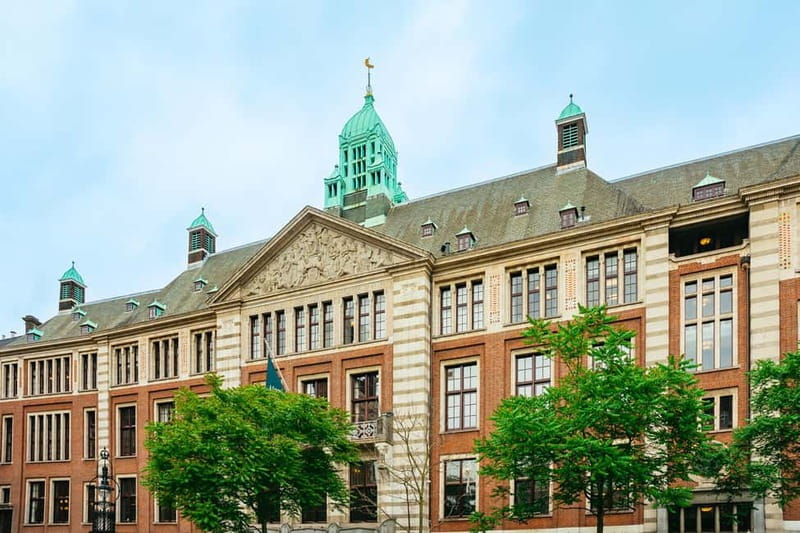
The Beurs van Berlage brings the city’s trading past into the walk. Amsterdam’s success grew from business, shipping, finance, and international trade, and this stop helps explain how commerce affected both the city’s buildings and its social structure.
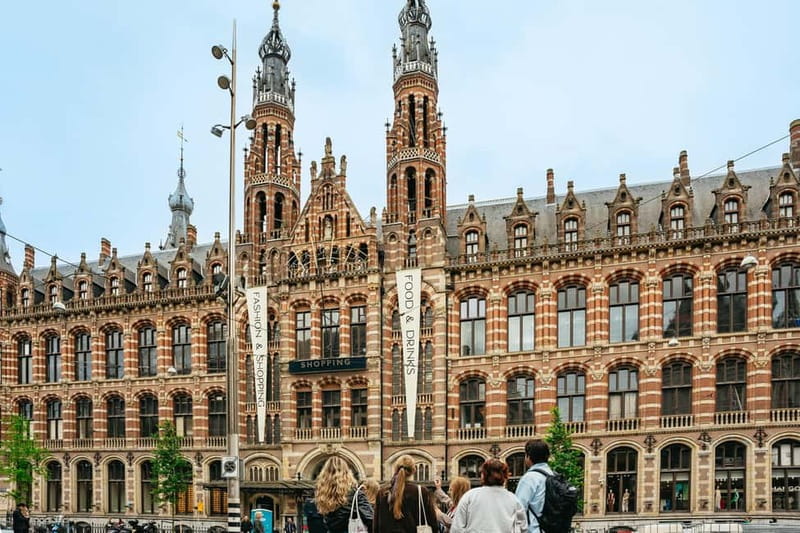
The tour also pauses at Magna Plaza, the former main post office. Its elaborate exterior makes it a worthwhile photo stop, but the greater value is the comparison between older commercial buildings and their modern uses.
This section works well for visitors who want more than a list of dates. You hear about merchants, salesmen, and poor residents in the Middle Ages, and about how different groups occupied the city. The point is not to present Amsterdam as a polished postcard. It is to show a working city shaped by trade and unequal lives.
More City Highlights Walks in Amsterdam:
- Berlin City walk Government District and Places of Democracy
★ 4.7 · 8,467 reviews - Historic Charleston Guided Sightseeing Walking Tour
★ 5.0 · 6,216 reviews - Quebec City Walking Tour
★ 5.0 · 4,716 reviews - Florence: Highlights Walking Tour with Expert Guide
★ 4.6 · 4,662 reviews
Multatuli, colonial history, and the city’s difficult stories
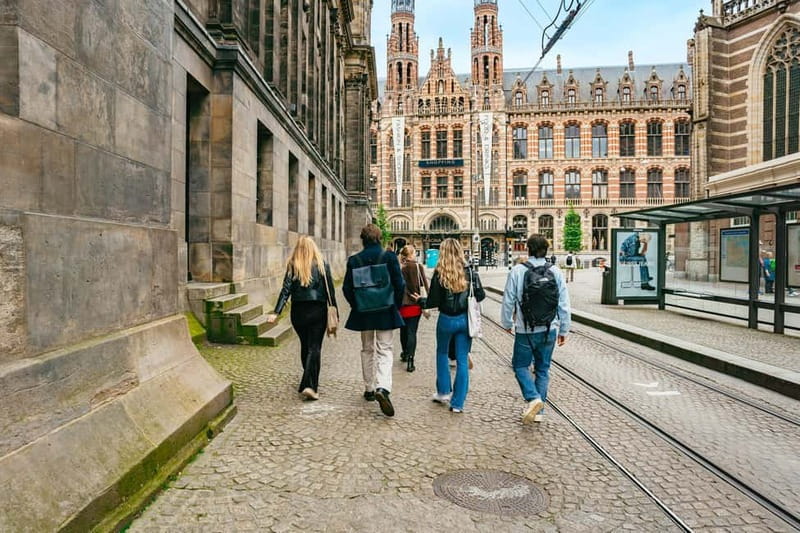
At the Multatuli statue on Torensluis Bridge, the guide discusses the colonial era. This is one of the more useful stops because it moves the tour beyond attractive canals and old houses.
The statue also gives you a reason to pause on one of Amsterdam’s bridges and consider the links between literature, politics, empire, and public memory. You learn about one of the city’s smallest houses too, a detail that adds a bit of fun to a serious section.
I appreciate that the route does not treat history as a string of cheerful anecdotes. Amsterdam’s prosperity came with costs, and the colonial past is part of that story. The quality of this stop will depend heavily on the guide’s approach, but the subject belongs in any honest introduction to the city.
Anne Frank Monument and Westerkerk
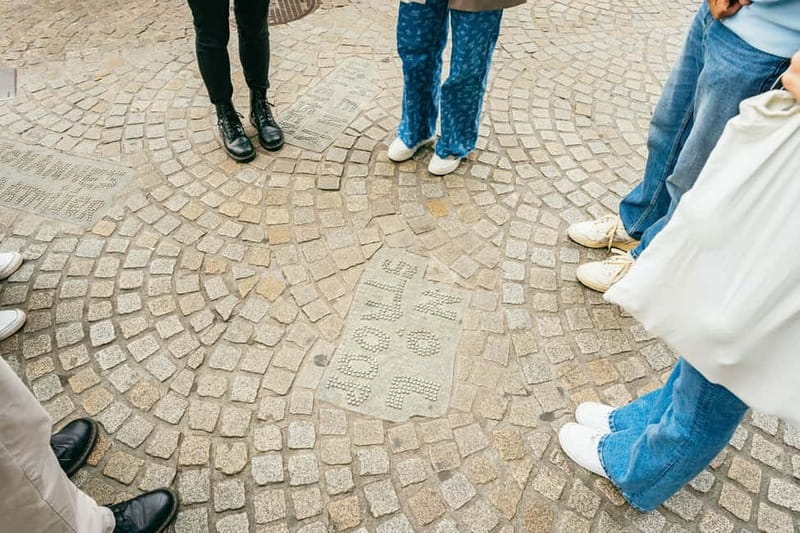
The route continues toward the Anne Frank Monument and Westerkerk. These landmarks sit in a part of central Amsterdam where wartime memory, religion, and canal architecture meet.
The Anne Frank Monument is a brief stop rather than an entrance to the Anne Frank House. If you want to visit the house, you need a separate plan and ticket. This walk gives you context and a chance to reflect, but it does not replace the museum experience.
Westerkerk is another photo and explanation stop. The guide links the church and surrounding area to Amsterdam’s changing society, while keeping the walk moving. Expect short pauses rather than a long church visit.
This section can be emotionally heavier than the opening stops. A good guide needs to handle World War II with care, and several guides are praised for combining sensitivity with clear information. The two-hour format means the discussion cannot cover every detail, but it gives you enough background to understand why these places matter.
Homomonument and modern Amsterdam
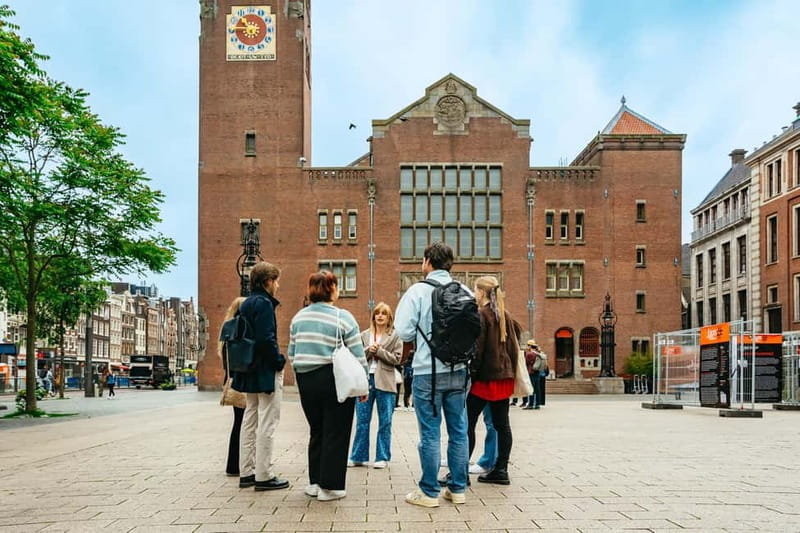
The Homomonument introduces the city’s more recent social history. It helps explain Amsterdam’s public identity as a tolerant, multicultural place, while also reminding you that acceptance has a history and is not simply a marketing slogan.
This is a valuable contrast with the royal buildings and medieval streets earlier in the walk. You move from the city’s old institutions to questions about rights, identity, and daily life today.
The guide also discusses current affairs and what it feels like to live in Amsterdam now. This is where an adaptable guide makes the biggest difference. You can ask about local customs, neighborhoods, food, or how residents use the city, rather than hearing only a prepared account of the past.
De Negen Straatjes and the canal houses

De Negen Straatjes, or the Nine Streets, adds a more everyday and commercial side to the route. The area is known for small streets, canal-side buildings, shops, and places to eat. The stop is short, but it helps you recognize an area worth exploring later.
You also stroll past romantic canal houses and hear about architectural styles that were popular in earlier periods. Amsterdam’s narrow buildings are not simply pretty. Their shapes reflect old property rules, city planning, trade, and the need to build upward on limited plots.
The guide may point out details you would otherwise walk past, including the tiny house mentioned earlier. These observations are part of the walk’s value. You leave better able to read the city’s buildings instead of seeing them as a uniform row of brick facades.
Begijnhof, the quiet change of pace

Begijnhof is the calmest stop on the route. Entering this enclosed courtyard after the central streets gives you a sharp change of mood.
The guide explains the importance of the Begijnhof and points out its distinctive buildings. It is often described as one of Amsterdam’s prized places, but the key thing for you is the contrast: a quiet residential setting hidden close to busy streets.
Please treat the courtyard as a lived-in place rather than a stage set. The tour includes a photo stop, not a long private visit, so keep the pace respectful and listen for the guide’s instructions.
This is also a good point to ask about other districts you can explore by bicycle. The guide offers suggestions about neighborhoods, food, shopping, and independent exploring. Several guides are praised for restaurant advice, including tips for trying bitterballen, a local snack.
The Amstel and the return to the monument
On the way back, the route reaches the river that gives Amsterdam its name, the Amstel. The walk does not promise a long riverside stretch or a boat ride. Think of this as a brief geographical explanation that ties the modern city back to its starting point.
The river helps make the city’s name and origins easier to remember. After hearing about trade, canals, and expansion, you can see why water is central to Amsterdam’s story.
The tour finishes at the National Monument. By now, the white pillar is no longer just a meeting point. Its connection to wartime memory and worldwide remembrance gives the ending a thoughtful tone.
Pace, weather, and accessibility
The advertised duration is two hours, with stops lasting roughly five to fifteen minutes. That structure keeps the walk from becoming a nonstop march. One participant specifically found the route lighter on walking than expected, while another noted that frequent stops made the two hours comfortable.
You still need comfortable shoes. Central Amsterdam has busy streets and hard paving, and the walk takes place outdoors in all weather. Bring water and an umbrella. Bad weather does not automatically ruin the experience, but it can make listening and taking photographs less pleasant. One guide kept a rain-affected group interested, which suggests that strong storytelling helps when conditions turn poor.
The tour is suitable for children and is listed as wheelchair accessible. You should still consider the weather, street conditions, group spacing, and the practical demands of a city-center walk when deciding if it fits your party.
English, German, and Italian are available. A strong accent may affect comprehension for some people, so choose the language in which you can follow a fast-moving outdoor discussion most easily.
Who should book this walk
I would choose this tour for a first day in Amsterdam, especially if you want to learn the city’s basic layout before visiting museums or exploring by bicycle. It suits couples, families, solo visitors, and small groups who prefer conversation over a recorded audio guide.
It is also a good fit if you want balanced subject matter. The route includes architecture and pretty canals, but it also covers war memory, colonial history, social change, and the experiences of different classes.
You may want something else if you prefer long museum visits, a specialized focus on art or World War II, or a tour built around food tastings. There is no food or drink included, and the sights are visited from the outside.
Private groups are available, which may appeal to families or friends who want more control over questions and pacing. For a standard booking, the guide’s personality will shape the experience, so an open attitude helps. Ask questions. The guides are repeatedly praised for answering them and tailoring parts of the walk to the group.
Booking value and final advice
At $30, this is a sensible purchase if you value a clear introduction and practical local advice. You get two hours with a live guide, no extra admission charges during the route, and recommendations for food, shopping, cycling, and neighborhoods to explore later.
The price is less attractive if you only want photographs. You can see the palace, bridges, canals, monuments, and Begijnhof without paying for entry, but the tour’s real product is explanation. It turns a collection of central sights into a connected story.
Free cancellation up to 24 hours before the start and reserve-now, pay-later terms make it easier to fit into an uncertain schedule. Check the available start times before booking, and arrive at the National Monument with comfortable shoes and rain protection.
Should you book Amsterdam Cultural Highlights Walking Tour?
Book it if you want a friendly, broad introduction to Amsterdam with history, culture, current life, and useful tips in one short outing. It is especially valuable at the start of your stay, when you need help deciding what to see next.
Skip it if you already know central Amsterdam well or want extended time inside major attractions. For most first-time visitors, though, the combination of Dam Square, royal Amsterdam, canal houses, memorials, Begijnhof, and practical advice makes $30 a reasonable way to get oriented.
FAQ
Where does the Amsterdam Cultural Highlights Walking Tour begin?
It begins on the stairs of the National Monument in Dam Square. The monument is a large white pillar or obelisk.
How do I identify the guide?
The guide wears a red name tag around their neck. Arrive with enough time to find the correct person, since other guides may use similar lanyards.
How long does the tour last?
The tour lasts two hours. Starting times vary, so check availability when booking.
Which languages are available?
The tour is available in English, German, and Italian.
Is the tour suitable for children?
Yes. The activity is stated to be suitable for children.
Is the tour wheelchair accessible?
Yes. The activity is listed as wheelchair accessible.
Are entrance tickets included?
No entrance tickets are needed during the walk. The sights are visited from public areas, and no admission fees are required.
Are food and drinks included?
No. Food and drinks are not included, though the guide provides advice about foods to try and places to eat.
Can I cancel the booking?
Yes. You can cancel up to 24 hours in advance for a full refund. You can also reserve now and pay later.
Just added around Amsterdam
- Amsterdam: Walking Tour, Jewish Museum & Synagogue Tickets★ 4.3 · 110 reviews
- Amsterdam: Jordaan District Local Food Walking Tour★ 4.8 · 311 reviews
- Amsterdam: Sex, Drugs, and Freedom Walking Tour★ 4.6 · 74 reviews
- Amsterdam: Small-group Guided Walking Tour (French/English)★ 5.0 · 289 reviews
- Amsterdam: Private Walking Tour with a Local★ 4.7 · 102 reviews
- Amsterdam Walking Tour and Canal Cruise★ 4.6 · 117 reviews
- Amsterdam: Ghost Walking Tour and Dark History★ 4.8 · 118 reviews
- Amsterdam: Iconic Canals & Historic Sights Walking Tour★ 4.5 · 90 reviews
City Highlights Walking Tours, compared.

Berlin City walk Government District and Places of Democracy
Read our review →
Historic Charleston Guided Sightseeing Walking Tour
Read our review →

Oxford: University and City Walking Tour with Alumni Guide
Read our review →
City Highlights Temple and Market Walking Tour
Read our review →
A History of Terror – Belfast City Centre Walking Tour
Read our review →Browse the lists this tour appears in