
REVIEW · WALKING TOURS
Santiago: Guided Walking Tour of the Historical Old Town
Santiago’s old center makes the most sense on foot, and this tour gives you a useful sweep from Palacio de la Moneda to Bellavista in three hours. You move from government buildings and grand plazas to hilltop views, art galleries, leafy parkland, and restaurants. It is a strong first look at the capital, especially if your time is short.
I like the route’s variety and the small groups, limited to 10 people. I also like the guides’ practical touch. Eugenio, who leads many departures, is praised for clear English, good pacing, local food advice, and helping visitors arrange a ride afterward. The main drawback is the amount of ground covered: you see many places, but most stops are viewed from outside or treated as short visits rather than full museum tours.
Key points before you book
- A full cross-city route: Walk from La Moneda through the old center, Bellas Artes, Santa Lucia Hill, Lastarria, Forest Park, and Bellavista.
- A strong first-day choice: The route helps you get your bearings and gives you ideas for places to revisit on your own.
- A guide-led history lesson: Expect stories about Chilean politics, architecture, society, culture, and food, not just a list of dates.
- A small group setting: Groups are limited to 10, making it easier to ask questions and stay close to the guide.
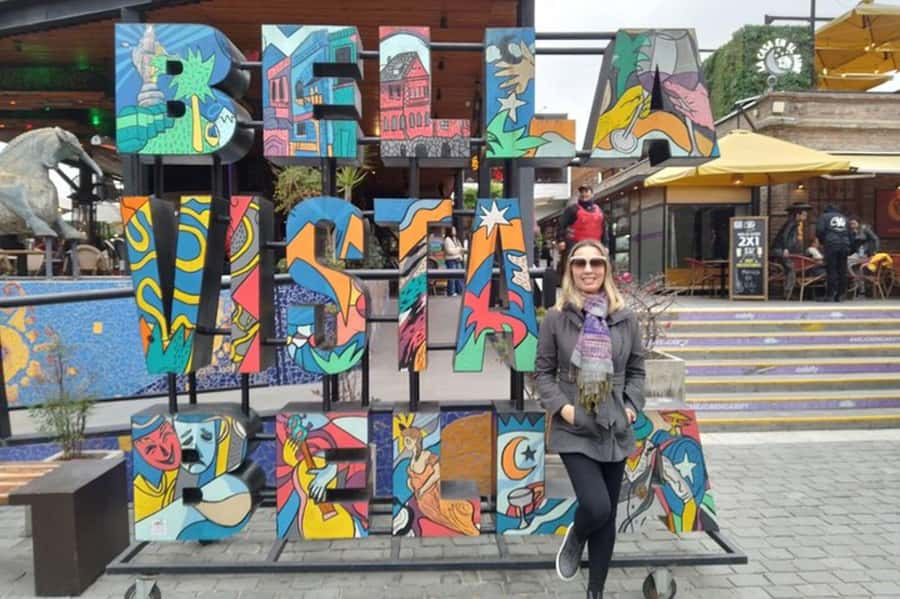
- A scenic finish: The tour ends at Patio Bellavista, a handy spot for lunch, dinner, or more time in the neighborhood.
- Plan for real walking: Comfortable shoes, sun protection, and a reasonable level of fitness will make the three hours easier.
From La Moneda into Santiago’s working center
The walk begins at Palacio de la Moneda, Chile’s seat of government and one of Santiago’s most recognizable buildings. Starting here gives the tour a clear political frame. You are not simply looking at old facades. You are learning how the capital’s public spaces connect to the country’s government and civic life.
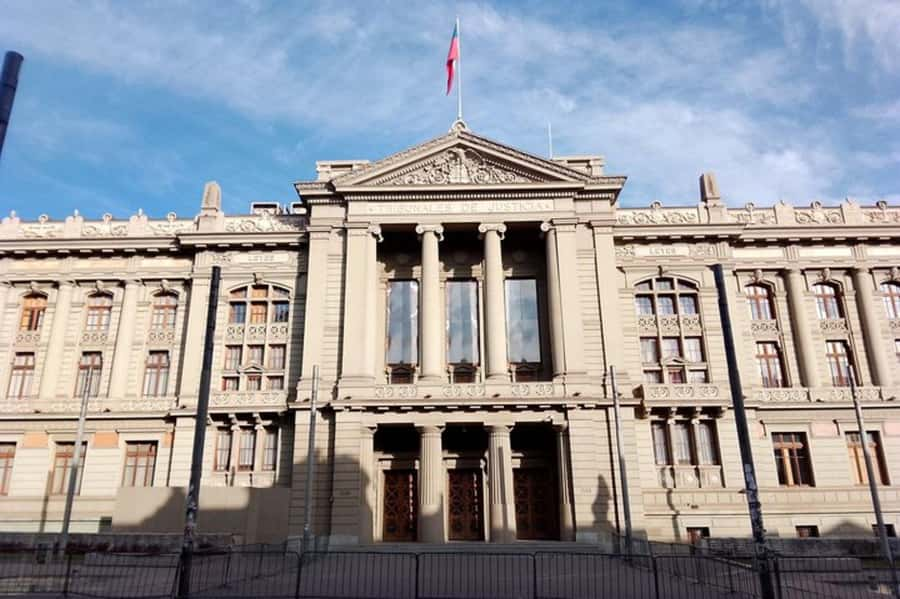
From La Moneda, the route heads toward the Stock Exchange Building, Bandera Avenue, and the Courts of Justice. This section shows Santiago as a living city rather than a preserved historic quarter. Office workers, shoppers, pedestrians, and public institutions share the same streets, so the experience has a useful mix of daily life and major landmarks.
Bandera Avenue is especially helpful for understanding the changing feel of central Santiago. The walk lets you take in the street scene while your guide explains what you are seeing. You will get more from this stretch if you pause to look up at the buildings instead of treating it as a simple walk between attractions.
The Court of Justice adds another layer to the route. Along with the Stock Exchange and government buildings, it helps explain why the center remains important long after the city’s colonial period. Eugenio is often praised for linking each stop to a wider story, which matters here because the buildings can otherwise seem like isolated monuments.
More Old Town Walking Tours in the world:
- Underground Vaults Walking Tour in Edinburgh Old Town
★ 4.5 · 8,506 reviews - Prague: 3-Hour Walking Tour of Old Town & Prague Castle
★ 4.7 · 5,696 reviews - Dubrovnik: Old Town Walking Tour
★ 4.8 · 5,174 reviews
Plaza de Armas and the Cathedral of Santiago
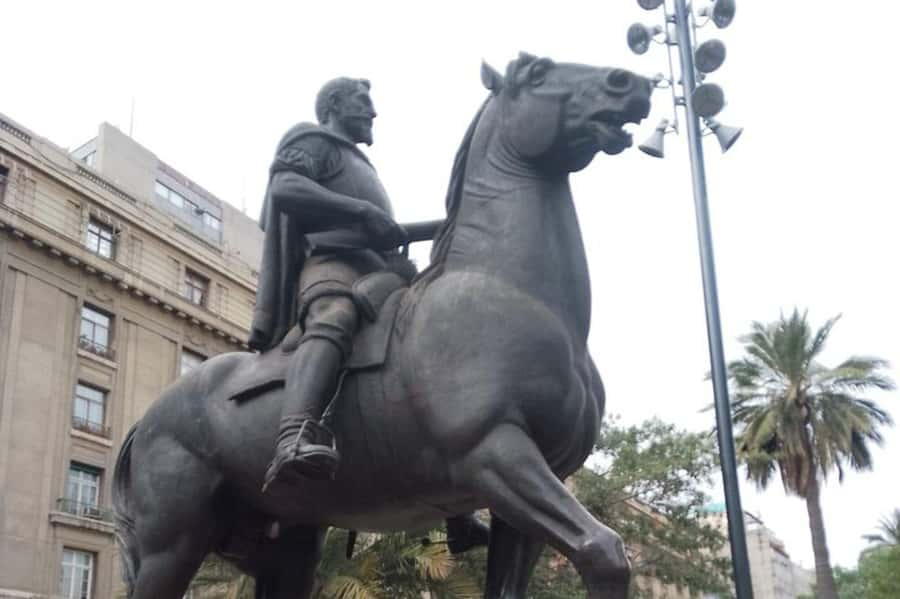
The route continues to the Ex Congress National and then Plaza de Armas, the central square of old Santiago. This is one of the best points on the walk to stop, look around, and understand the city’s structure. The plaza brings together religious, civic, and commercial life in one broad public space.
The Cathedral of Santiago is the main draw. The current cathedral dates to 1748, and its scale gives the square a formal center. You can admire the exterior and, depending on the timing and access that day, take in the church interior with the guide’s explanation. The important value here is context. A church can be easy to photograph and forget, but its age and role in the square make it a key part of Santiago’s story.
The City Hall of Santiago follows as another civic landmark. This part of the route is useful for comparing religious authority, municipal government, and public life within a short walk. I like tours that show these connections instead of presenting each building as a separate photo stop.
Do not expect a long, quiet visit inside every attraction. This is a walking overview, not a series of guided building tours. If the cathedral or the Ex Congress interests you most, make a note and return later with more time.
Bellas Artes, art, and a change of pace
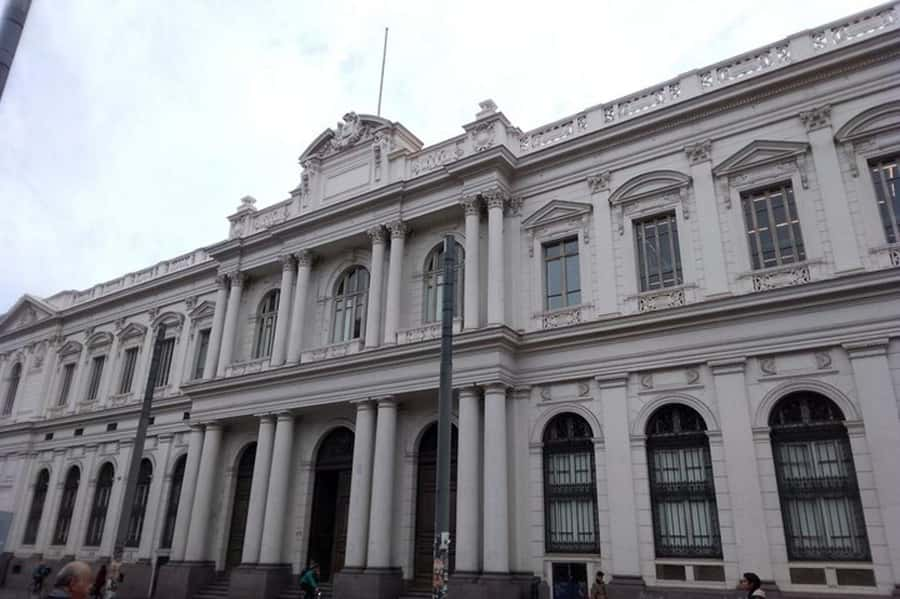
After the central square, the walk heads toward the Bellas Artes neighborhood and the Bellas Artes Museum. The mood shifts here. The streets feel more connected to galleries, design, culture, and restaurants than to government offices and courts.
The museum gives the area a clear cultural focus. The tour introduces you to its setting and place in Santiago’s art scene, but museum admission is not listed as part of the experience. Check the schedule and entry arrangements if you want a full museum visit after the walk.
This neighborhood is one of the reasons the tour works well for first-time visitors. You are not limited to the old colonial core. You also see the parts of central Santiago where art, cafes, and city life meet. The route keeps changing character, which helps three hours pass quickly.
The guide’s role is particularly useful in Bellas Artes. Architecture can be hard to read without some background, and a good explanation helps you notice details you might otherwise miss. Eugenio is often singled out for mixing architecture and political history with present-day advice, so you can use this stop both as a lesson and as a planning tool for later.
Santa Lucia Hill for city views
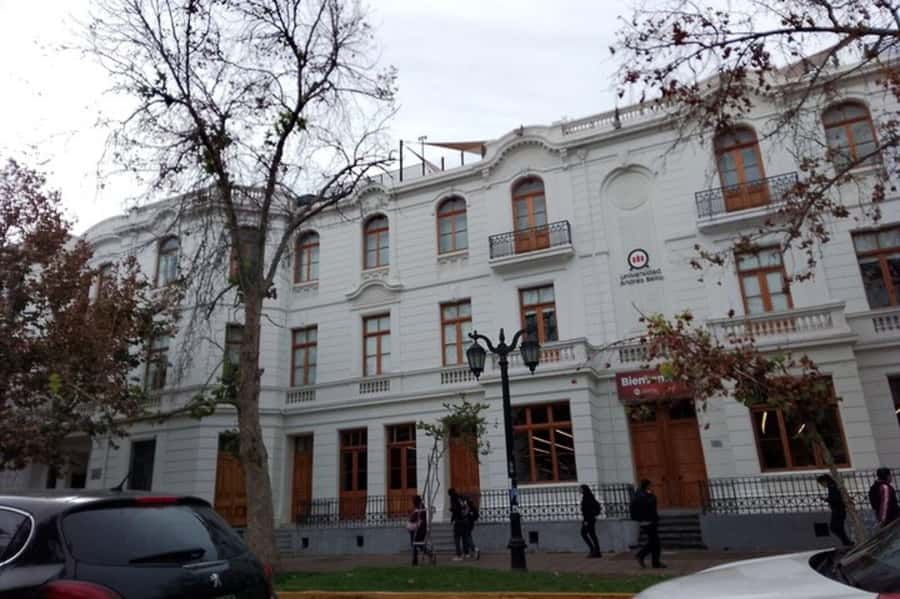
The climb up Santa Lucia Hill is the most physical section of the tour. The hill offers panoramic views over Santiago and a welcome break from the flat streets of the center. It is also a chance to understand the city from above rather than only through individual buildings.
Entrance is free from Tuesday through Sunday, according to the activity information. The wording matters: you should check the day of your tour and the conditions before counting on access. The visit may involve steps and uneven walking, so comfortable shoes are not a minor suggestion.
The view is a highlight because it gives scale to the city. You can see how the central districts fit together, and the guide can point out areas you will visit next or might choose to explore later. This is one of the stops where a short explanation can save you from wandering without a sense of direction.
Weather matters here. The tour can be canceled in poor weather, and even on a suitable day, strong sun or heat can affect the climb. Several departures have been handled thoughtfully in hot conditions, with explanations given in shaded spots and regular pauses. Still, bring water and avoid booking this as a casual stroll if you dislike hills.
More Guided Tours in the world:
- Magical London: Harry Potter Guided Walking Tour
★ 4.7 · 22,044 reviews - History and Hauntings of Salem Guided Walking Tour
★ 5.0 · 14,564 reviews - Amsterdam Anne Frank: Small-Group Walking Tour & Local Guide
★ 4.8 · 12,789 reviews - Edinburgh: Harry Potter Magical Guided Walking Tour
★ 4.8 · 11,944 reviews
Lastarria and Forest Park
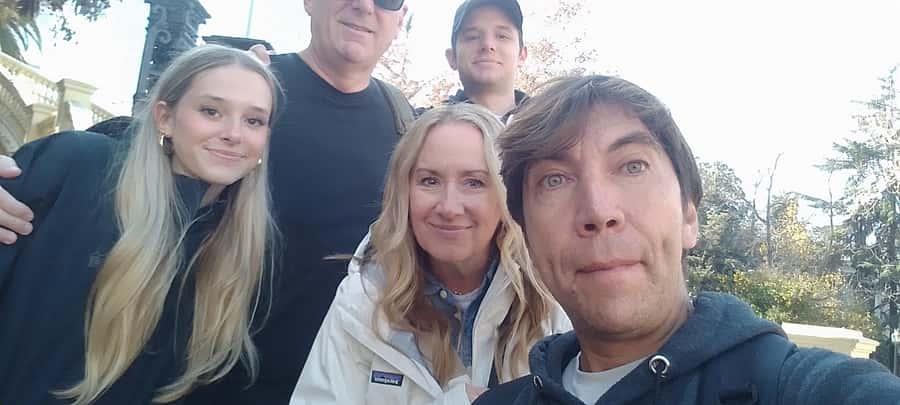
From Santa Lucia Hill, the route continues through Lastarria and Forest Park. Lastarria is a pleasant counterpoint to the formal center, with a more relaxed cultural feel and places to eat or stop for coffee. It is also an area worth marking for a return visit, especially if you want to spend more time near the Bellas Artes district.
Forest Park adds greenery and breathing room. After streets lined with civic buildings and busy central activity, the park gives the walk a calmer stretch. You are still in the heart of Santiago, but the pace feels less crowded.
This middle-to-late section shows why a guided route can be more useful than a map alone. You are covering neighborhoods that might not naturally connect in your own plans. The guide explains how they fit together, while you get a clearer idea of where you would like to return.
Some groups have included a short cafe stop, with coffee, ice cream, and restroom access. This is not presented as a formal included meal, so treat it as a possible break rather than a guaranteed part of the schedule. Lunch is not included, and you should save your appetite for Bellavista.
Ending in Bellavista and Patio Bellavista
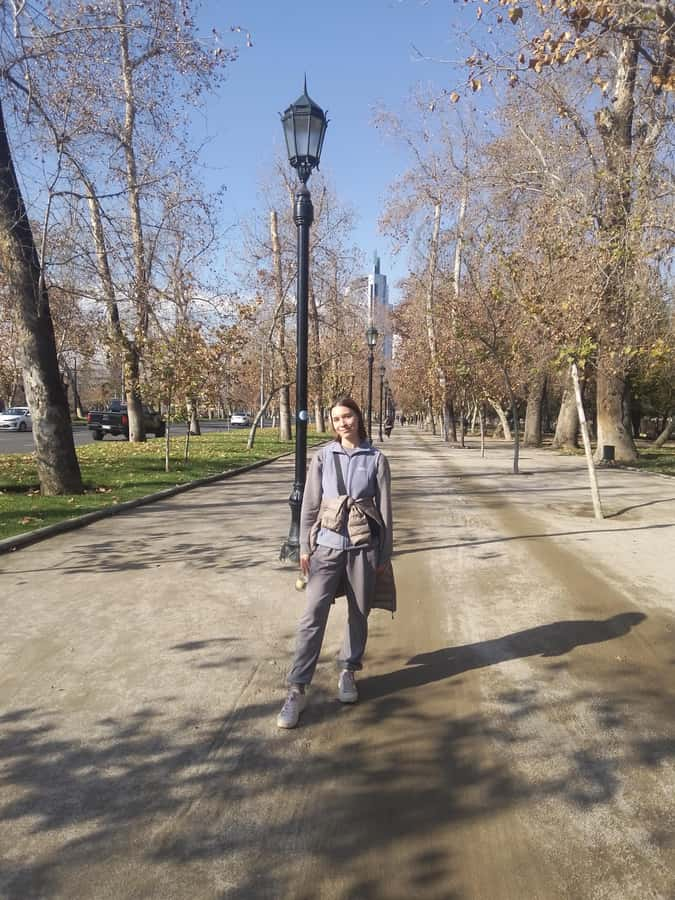
The final neighborhood is Bellavista, a lively part of Santiago known for food, nightlife, and its strong local character. Ending here is practical. You finish near restaurants and cafes instead of being dropped at an isolated meeting point.
Patio Bellavista is the official endpoint. It gives you an easy choice: stop for lunch, arrange dinner, continue exploring, or use the central location to make your own way elsewhere. The tour does not include lunch, so budget separately for a meal.
Bellavista is also where the tour’s food angle becomes most useful. The guide can suggest local flavors, restaurants, and places to continue the evening. This is not a cooking class or a food tour, but the final neighborhood gives you a chance to turn the history walk into a fuller Santiago day.
The route does not include Pablo Neruda’s house or the San Cristobal hills. That is worth noting because both are associated with this part of the city. If either is a priority, plan a separate visit. San Cristobal is not a hidden add-on to this tour, and you should not expect time there.
What the guide adds to the walk
The strongest part of the experience is the guide’s storytelling. Eugenio is repeatedly praised for his command of Santiago and Chilean history, his friendly manner, and his ability to answer questions about politics, culture, food, and everyday life.
He also handles mixed-language groups. Tours are offered in English, Spanish, and Portuguese, and some groups include more than one language. That can make a walking tour drag if explanations become repetitive. Eugenio has been noted for keeping both English and Spanish speakers informed, though one useful caution is that a fast-speaking guide may occasionally require you to ask him to slow down.
The tone appears personal rather than mechanical. Eugenio has taken time to learn people’s interests, helped with an Uber after the tour, recommended museums and restaurants, and even acted as a photographer. Those details matter because the route covers a lot of ground. A guide who watches the group and adjusts the pace can make the difference between an enjoyable walk and a tiring march.
Groups are limited to 10. That is small enough for questions and easier street crossings, while still keeping the price below what you would normally pay for a private guide. Do not expect a private itinerary, but you should have more contact with the guide than on a large coach tour.
Is $25 a fair price?
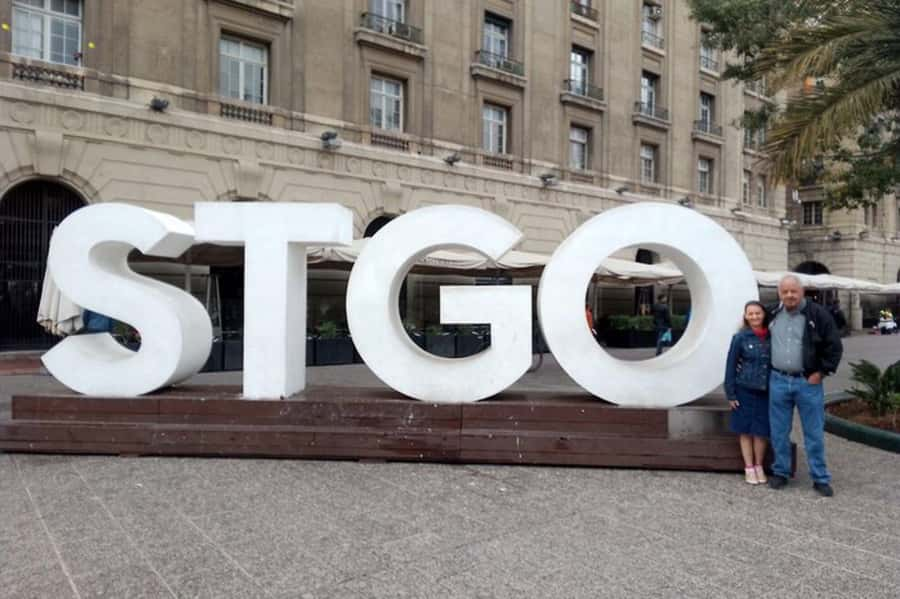
At $25 per person, this is good value if you want a guided introduction to central Santiago. The price includes the walking tour, a guide, and bottled water. It does not include lunch, museum admission, Pablo Neruda’s house, or San Cristobal Hill.
The value comes from the route and the interpretation. In three hours, you cover government buildings, courts, the Stock Exchange, the old center, the cathedral, Bellas Artes, Santa Lucia Hill, Lastarria, Forest Park, and Bellavista. Seeing all of that alone is possible, but connecting it into a sensible route takes planning.
You are paying for orientation as much as sightseeing. If this is your first day in Santiago, the tour can help you decide where to spend the next few days. If you have only a layover, it gives you a useful look at the city without committing to a full-day excursion. One visitor with a one-day layover found the format suited that tight schedule, and I agree with that use case.
The tradeoff is depth. You will not fully explore every museum, church, or neighborhood in three hours. Think of the tour as a well-paced introduction, then return independently to the places that catch your attention.
Pace, weather, and who should book

You need comfortable walking shoes. The route lasts three hours, includes Santa Lucia Hill, and covers several neighborhoods. A bottle of water is included, but sun protection and light clothing are sensible in warm weather.
The experience is not recommended for pregnant people or anyone with heart problems or other serious medical conditions. Children under the stated age limits are not suitable for the activity, and the information gives different lower age limits in different places. If you are booking with very young children, confirm the exact age rule before paying.
Bad weather can cancel the tour. If that happens, you are offered another date or a full refund. The same applies if the minimum number of participants is not reached. You can cancel up to 24 hours before the start for a full refund, and the reserve-now, pay-later option keeps your plans flexible.
I would choose this tour for first-time visitors, short-stay visitors, solo travelers who want company, and anyone who prefers stories to sightseeing without context. It is less suitable if you want a slow museum day, a private tour, or a route with very little walking.
Should you book this Santiago walking tour?
Book it if you want to understand Santiago quickly and prefer a human guide to a phone map. The route gives you the city’s main historic center, cultural neighborhoods, a hilltop view, and a food-focused finish for $25.
I would book it near the start of a Santiago stay, ideally when the weather looks good. Listen for recommendations from Eugenio or your guide, note the places that deserve a second visit, and keep the afternoon open for lunch in Bellavista.
Skip it if your main goals are Pablo Neruda’s house, San Cristobal Hill, or long interior visits. For most first-time visitors, though, this is a practical and good-value way to get your bearings, learn the city’s story, and finish in one of Santiago’s most useful neighborhoods.
FAQ
How long is the Santiago walking tour?
The tour lasts three hours.
Where does the tour start?
It starts at Palacio de la Moneda in Santiago’s historic center.
Where does the tour end?
The tour ends at Patio Bellavista in the Bellavista neighborhood.
Which languages are available?
The guide service is available in Portuguese, English, and Spanish.
Is lunch included?
No. Lunch is not included, though the tour ends in Bellavista, where you can find restaurants and local food.
Does the tour visit Pablo Neruda’s house or San Cristobal Hill?
No. Entry to Pablo Neruda’s house and San Cristobal Hill is not included.
Just added around the world
- Vatnajökull Glacier Walk from Hali★ 5.0 · 479 reviews
- Old Hobart Pub Walking Tour★ 4.5 · 91 reviews
- Ice Cave and Glacier Walk into Blue Glacier Canyon★ 5.0 · 224 reviews
- Southwest Tasmania Wilderness Experience: Fly Cruise and Walk Including Lunch★ 5.0 · 233 reviews
- Saigon’s Hidden Flavors – Private Street Food Walk with Local Students★ 5.0 · 301 reviews
- Hobart History, People & Places – 2 hour city walk★ 5.0 · 224 reviews
- Vegan Walk Not Just Vegan Food★ 5.0 · 266 reviews
- Ho Chi Minh City: Highlights & Hidden Gems – Free Walking Tour★ 5.0 · 194 reviews
Old Town Walking Tours, compared.
Underground Vaults Walking Tour in Edinburgh Old Town
Read our review →
3-Hour Walking Tour of Old Town & Prague Castle
Read our review →
Old Town and Jewish Quarter Guided Walking Tour
Read our review →
Marrakech: Ben Youssef, Secret Garden, & Souks Walking Tour
Read our review →Browse the lists this tour appears in