
REVIEW · NEW ZEALAND
Rotorua: Hell’s Gate Geothermal Walk
Hell’s Gate is Rotorua’s most active geothermal park, and its star attraction is a large active mud volcano surrounded by boiling pools, steaming vents, sulfur deposits, and hot water. The short walk feels more varied than a simple pool-to-pool circuit, with a bush section and the Southern Hemisphere’s largest hot waterfalls adding welcome contrast.
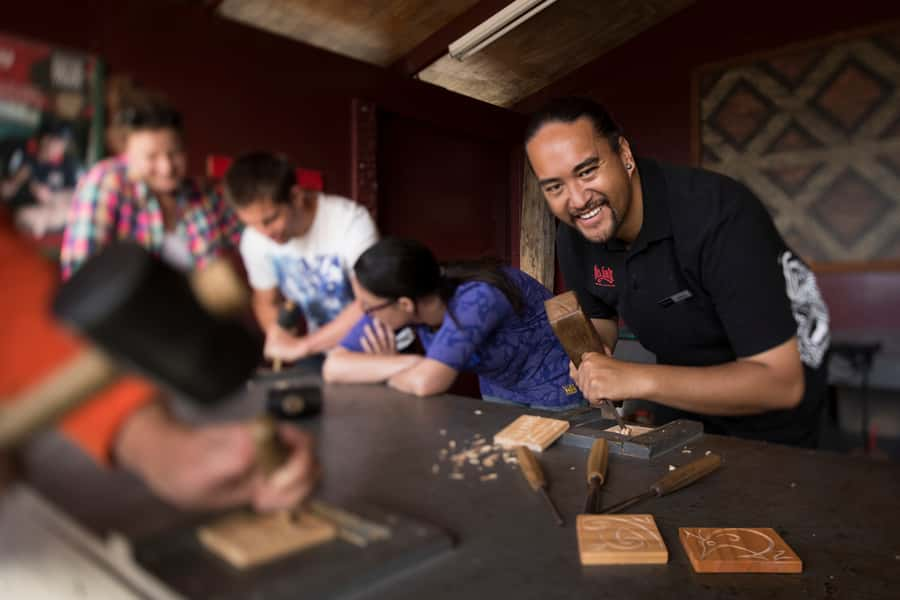
I especially like the choice between a self-guided route and a local guide, plus the Māori carving activity when available. The main drawback is the strong sulfur smell, and the entry-price information needs checking carefully because the advertised $26 price is listed separately from an entry ticket that is marked as not included.
Key points
- New Zealand’s largest active mud volcano: See thick, bubbling mud up close from the marked route.
- A varied 2-kilometre walk: Geothermal pools, fumaroles, sulfur crystals, bush, and hot waterfalls fill the roughly one-hour circuit.
- Guided walks run at 10:30 AM and 2:30 PM: Tours are in English and last about 1.5 hours when available.
- The sulfur smell is real: It can resemble rotten eggs and may tarnish gold or silver jewelry.
- Extra activities may be available: Māori carving and a mud foot pool are included only when operating.
- About 15 minutes from Rotorua: Drive east on SH30, then turn toward Whakatane and continue 3 kilometres.
Entering Rotorua’s most active geothermal field
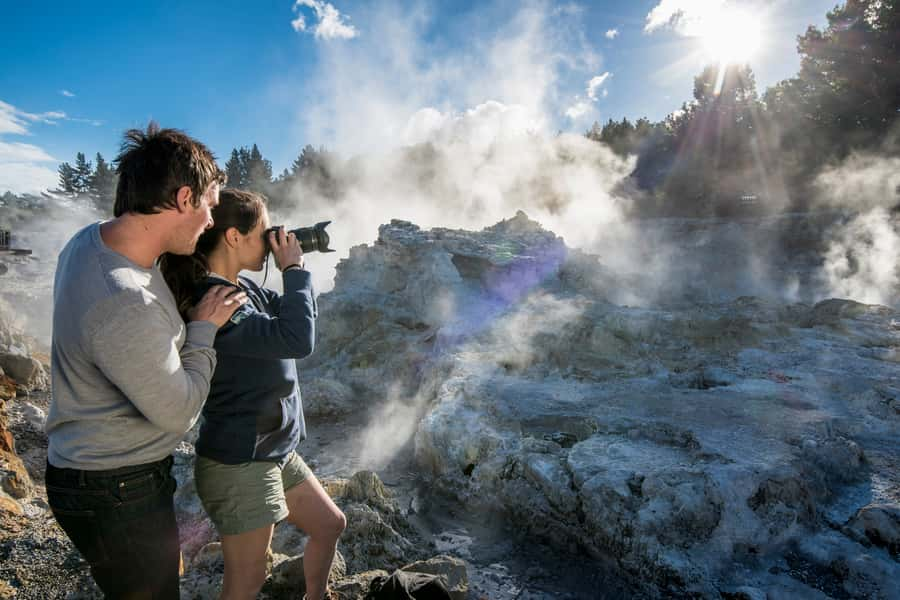
Hell’s Gate, also known as Tikitere, gives you a close look at geothermal activity without requiring a long hike or a full-day excursion. From central Rotorua, the drive takes about 15 minutes. You travel east on State Highway 30, pass the airport, turn toward Whakatane, and continue for roughly 3 kilometres.
At the reserve, you receive a map for the geothermal walk. You can set off on your own or ask about joining the next guided outing. The self-guided route takes about one hour and covers roughly 2 kilometres, though the guided option lasts about 1.5 hours because it includes explanation and stops.
I like this setup for a short Rotorua visit. You can fit Hell’s Gate into a morning or afternoon without giving up an entire day, and the route gives you enough time to look carefully rather than rushing past each pool.
A few more walking tours around New Zealand worth a look
- Hobbiton™ Movie Set Walking Tour from Shires Rest
★ 5.0 · 3,577 reviews - Rotorua’s Ultimate Zipline: 6 ziplines, 400 m Tandem, Cliff Walk
★ 5.0 · 2,557 reviews - Waitomo Caves: Ruakuri Glowworm Cave Guided Walking Tour
★ 4.7 · 1,249 reviews
The mud volcano and boiling pools
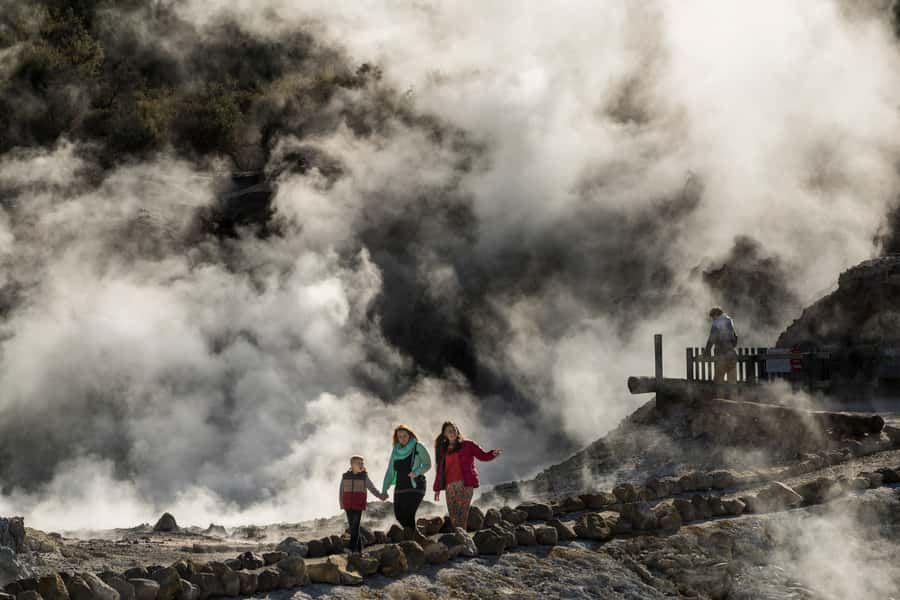
The first major reason to come is the sheer force of the ground here. New Zealand’s largest active mud volcano is not a neat cone or a postcard volcano. It is a working geothermal feature, with mud bubbling and shifting as heat and gas rise beneath it.
The mud has its own character. It is thick, gray, and restless, and it makes the reserve feel very different from Rotorua’s more polished hot-pool attractions. You may also get the chance to feel geothermal mud during the guided experience or at an activity area, but follow staff instructions closely. This is not a place for wandering off the path.
The reserve also has boiling hot pools and erupting waters with temperatures above 100 degrees Celsius. That figure matters: the pools are not merely warm bathing water, and the fences and marked route are essential. Keep children close and do not reach over barriers for a better photograph.
One practical point is easy to miss. Hell’s Gate does not have the classic hot-water geyser some other Rotorua sites offer. If a geyser is the main reason you want to visit a geothermal park, check your expectations before booking. Hell’s Gate focuses more on mud, fumaroles, hot lakes, sulfur, and the raw feel of an active field.
Fumaroles, sulfur crystals, and hot lakes
The route leads through steaming fumaroles, hot water lakes, sulfur crystals, and mineral deposits. Each feature looks different, and the provided map helps you connect the colors and textures with the activity below the ground.
The self-guided walk works best when you read the descriptions as you go. The map identifies the pools and gives you enough background to understand what you are seeing. I would choose this option if you like stopping for photographs, moving at your own pace, or have limited time.
The guided walk adds another layer. Guides explain the geology, the local setting, and the way plants survive around heat and mineral-rich water. The timing is important: the guided walks are scheduled for 10:30 AM and 2:30 PM, subject to availability. If you want a guide, plan your day around one of those times rather than assuming one will leave whenever you arrive.
Several guides have made a strong impression over the years. T was described as entertaining and clear, while Liam was praised for his humor and friendly manner. Luke was also noted for giving an engaging and well-informed tour. Staff change, so you cannot book a particular person, but the guiding style seems to be a real strength when the scheduled walk is running.
A surprising change from hot ground to bush
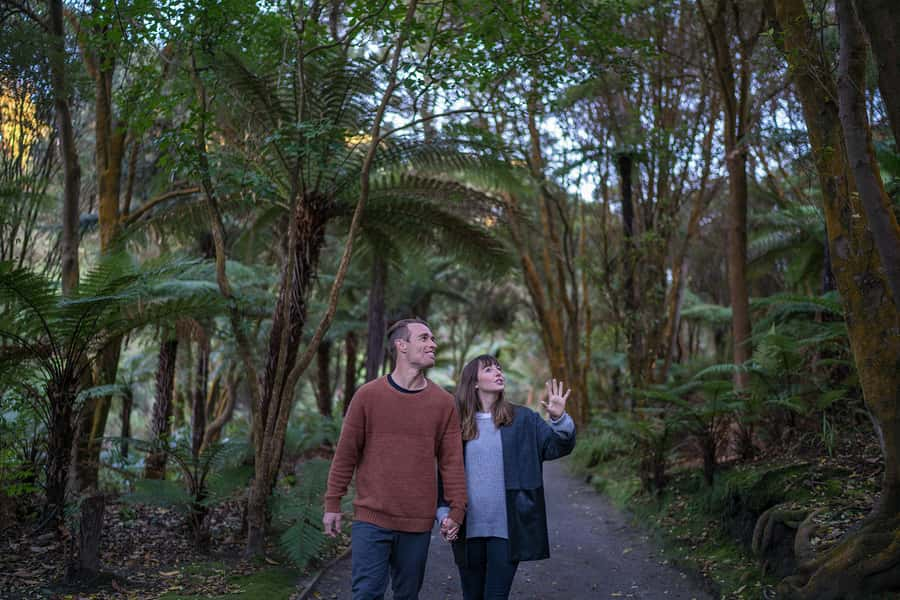
The geothermal features are the obvious draw, but I think the bush section helps make Hell’s Gate more memorable. After the open pools and steaming vents, the route moves through a more vegetated part of the reserve.
That change shows how close harsh geothermal conditions can be to plant life. You get a better sense of the area than you would from a row of viewing platforms beside hot water. One guide also points out vegetation and explains how plants cope with the surrounding conditions.
The transition gives the walk a natural rhythm. First you study the mud and heat, then you move through green growth, then you reach the waterfall area. It is a useful reminder that Rotorua’s geothermal zones are not all bare rock and sulfur.
Same streets, a different route:
- Rotorua: Hell’s Gate Outdoor Mud Spa & Guided Walk
★ 4.7 · 1,140 reviews - From Te Anau: Milford Sound Coach, Cruise, and Walks
★ 4.9 · 845 reviews - Full-Day Milford Sound Tour with Cruise and Walks from Te Anau
★ 5.0 · 712 reviews - Abel Tasman: Sea Shuttle Cruise and Walking Tour Combo
★ 4.6 · 704 reviews
The hot waterfalls and land coral
Hell’s Gate is known for the Southern Hemisphere’s largest hot waterfalls. They are one of the site’s most unusual features, especially after you have been looking at bubbling mud and boiling pools.
The falls add movement to an area otherwise defined by steaming water and still pools. They are also a good example of why you should allow the full hour rather than treating the visit as a quick photo stop.
The reserve also includes examples of land coral, a rare and curious geothermal formation. You do not need a geology background to enjoy it, but the guide or map makes the feature easier to understand. Without some explanation, many of the mineral formations can look like odd-colored rock.
Why the guided walk is worth considering
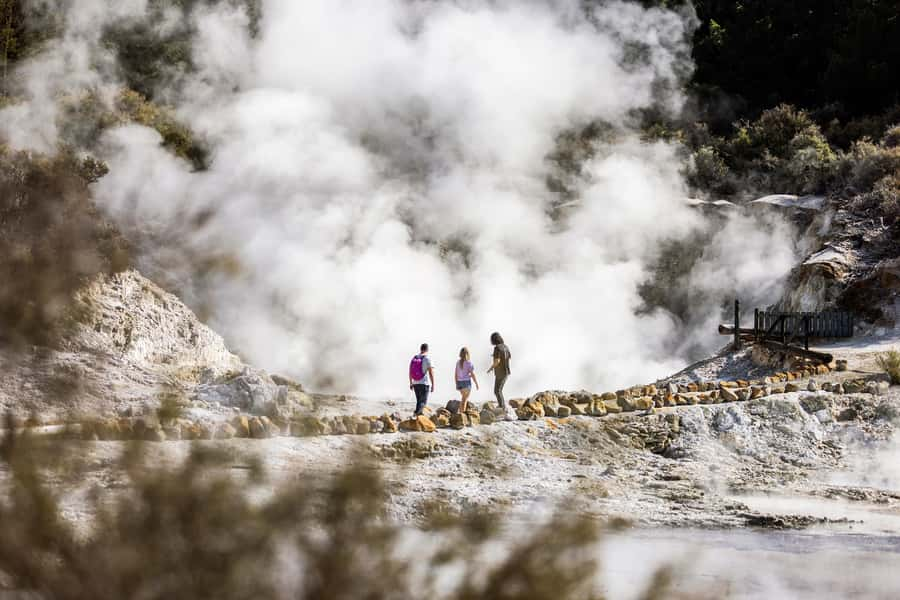
A self-guided visit is perfectly workable. The route is easy to follow, and the map provides descriptions of the pools. If you have already visited other geothermal parks, or if you prefer quiet observation, you may find the independent walk enough.
I would choose the guided tour if this is your first geothermal experience. Looking at a pool tells you only part of the story. A guide can explain why the mud behaves differently from a hot lake, what causes the sulfur smell, and how Māori culture and local geology connect at this site.
The best guides add personality without turning the walk into a lecture. Past tours led by T, Liam, and Luke were described as funny, informative, and engaging. That combination matters here because the route can otherwise become a sequence of similar-looking pools.
The tradeoff is timing. Guided tours are available only at set times, and they may not run every time you visit. If you arrive outside 10:30 AM or 2:30 PM, expect to use the map and explore independently.
Māori carving and the mud foot pool
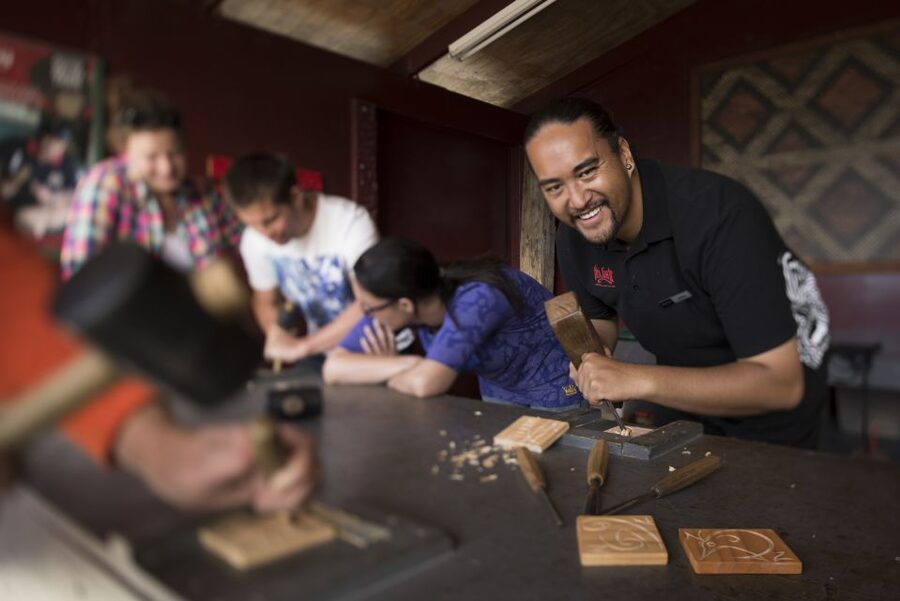
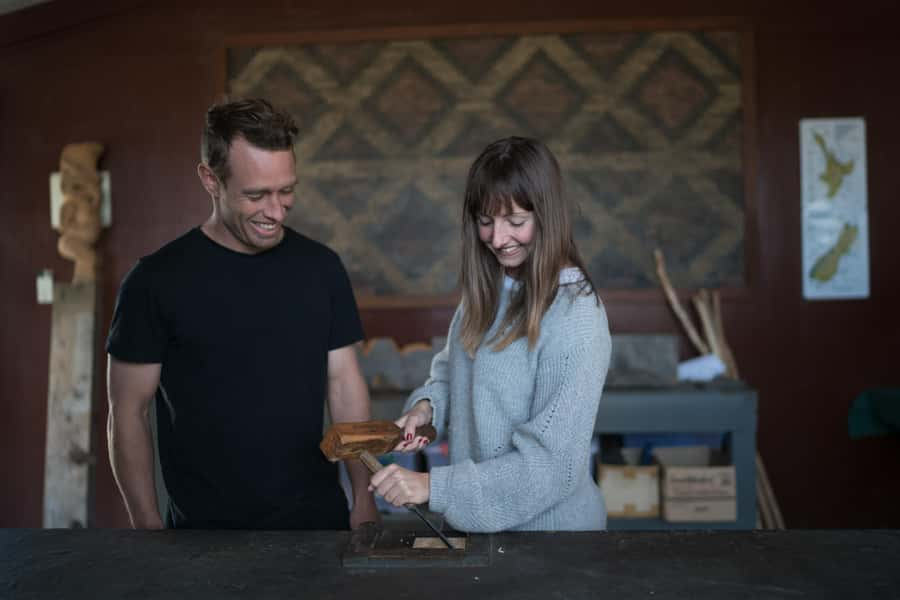
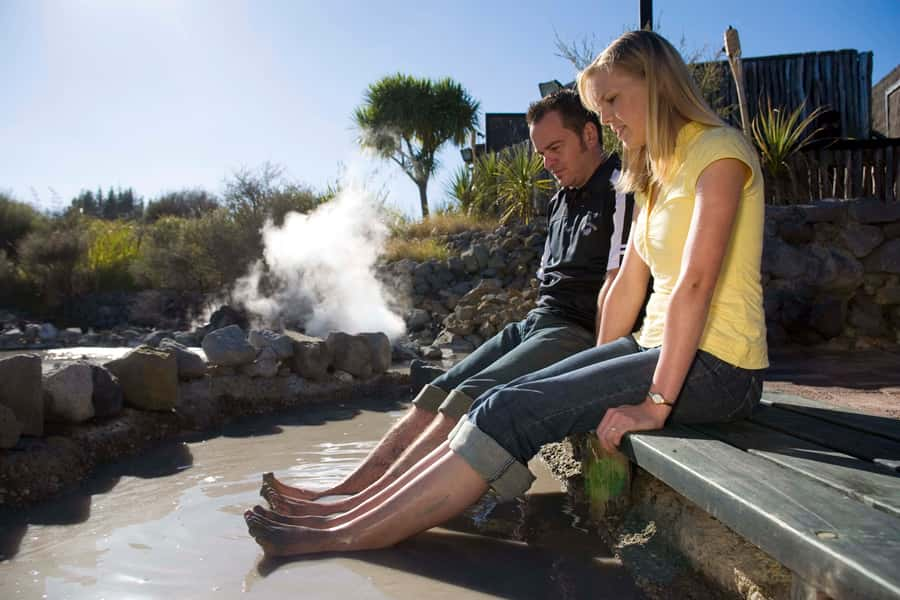
The extra activities can give the visit more cultural and hands-on interest. A complimentary Māori carving activity may be available after the walk, and a mud foot pool may also operate.
The carving is not guaranteed, so treat it as a bonus rather than the main reason to book. Children must be at least 12 years old to take part in the carving. That age rule is worth noting for families planning the day.
The mud foot pool is also subject to availability. Ask at arrival if it is operating and what instructions apply before entering. One practical complaint concerned the changing rooms, where more benches would be useful, so allow a little patience if you plan to use the activity areas.
The sulfur smell and what to wear
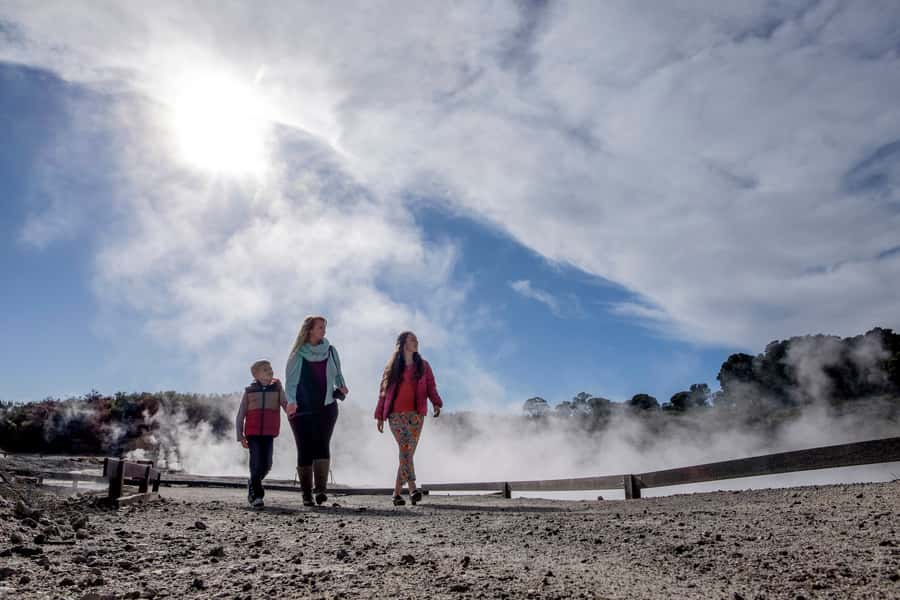
You should prepare for a strong sulfur odor. It often smells like rotten eggs, and some people find it overwhelming at first. The smell is part of the geothermal experience, not a sign that something has gone wrong, but it can be difficult for very young children and anyone sensitive to strong odors.
Take off valuable jewelry before walking into the field. Sulfur residue can tarnish silver and gold items, and this is an easy problem to avoid. I would also wear comfortable shoes, bring water, use sunscreen, and pack sunglasses.
The park operates in all weather, and rain can make the geothermal effects especially atmospheric. Bring weather-appropriate clothing and consider purchasing a rain cape onsite if the forecast looks unsettled. Wet paths and changing weather call for sensible footwear, even though the walk itself is generally manageable.
Smoking and drones are not allowed. Keep your attention on the marked path, especially around boiling mud and hot water.
Price, timing, and value
The listed price is $26 per person, but the supplied booking details also state that an entry ticket is not included. Because those two points do not line up neatly, confirm exactly what your booking covers before paying.
If $26 covers the stated walk and map, it can represent fair value for a one-hour visit close to Rotorua, especially if the guided walk, carving, or mud foot pool is available. If admission is an extra charge, compare the final total with other geothermal parks in the area.
The value here comes from variety rather than sheer size. You are not spending half a day at Hell’s Gate. Instead, you get a focused visit with a mud volcano, hot waterfalls, fumaroles, sulfur formations, boiling pools, a bush section, and possible cultural activities.
Allow at least one hour for the route. If you join the guided walk, allow about 1.5 hours. The cafe is useful at the end, and a coffee can be welcome after walking in cool rain or around strong geothermal fumes.
Free cancellation is available up to 24 hours before the activity, and you can reserve now and pay later. Those options help if your Rotorua plans depend on weather, although I would still check the final terms shown at booking.
Who will enjoy Hell’s Gate most
I would recommend Hell’s Gate to you if you want to see active geothermal features close to Rotorua without committing to a long excursion. It suits adults, older children, photographers, and anyone interested in geology, Māori culture, or unusual natural formations.
The route is described as easy to follow, but the activity is not suitable for people with mobility impairments. Boiling water, mud, and uneven outdoor conditions also mean that you should be comfortable walking on a marked geothermal path.
Families should think about the sulfur odor and the heat. Older children may find the bubbling mud and strange mineral colors fascinating, while younger children may struggle with the smell or need close supervision near the hot areas.
I would pick the guided option for first-time visitors and the self-guided route for anyone who wants flexibility. The map is useful, but the live explanation makes the vegetation, mineral deposits, and Māori connections easier to appreciate.
Should you book the Hell’s Gate walk?
Book it if you want a short, varied geothermal experience with more than hot pools. The mud volcano, hot waterfalls, sulfur crystals, bush section, and possible Māori carving give the visit a clear sense of place.
Skip it if your main goal is to see a dramatic geyser, soak in hot water, or avoid strong smells. Hell’s Gate is an active, pungent, sometimes wet outdoor site, and that is exactly why it appeals to the right visitor.
Before booking, confirm the final admission price, ask if the guided walk is running, and check the availability of the carving and mud foot pool. With those details clear, Hell’s Gate offers a memorable one-hour stop on a Rotorua itinerary.
FAQ
How long does the Hell’s Gate geothermal walk take?
The geothermal route takes about one hour and covers roughly 2 kilometres. The guided tour lasts about 1.5 hours.
Is the walk guided?
You can explore independently with the provided map, or join an English-language guided walk when available. Guided walks are scheduled for 10:30 AM and 2:30 PM.
Where is Hell’s Gate located?
Hell’s Gate is about 15 minutes from central Rotorua. Drive east on SH30, turn toward Whakatane about five minutes past the airport, and continue 3 kilometres.
What can you see at Hell’s Gate?
You can see New Zealand’s largest active mud volcano, boiling pools, hot water lakes, fumaroles, sulfur crystals, mineral deposits, hot waterfalls, and examples of land coral.
Does Hell’s Gate have a geyser?
The supplied information states that Hell’s Gate does not have a hot-water geyser like some other geothermal sites.
Is Māori carving included?
A complimentary Māori carving activity may be available, but it is subject to availability. Children must be at least 12 years old to participate.
Is the mud foot pool available?
The mud foot pool is subject to availability. Ask onsite whether it is operating and what instructions apply.
What should I bring?
Bring comfortable shoes, sunglasses, sunscreen, water, and clothing suited to the weather. A rain cape is available to purchase onsite.
Is Hell’s Gate suitable in rainy weather?
Yes. The activity operates in all weather, and the geothermal park is described as being at its best when it is raining.
Can people with mobility impairments join the walk?
The activity is not suitable for people with mobility impairments. Check directly with Hell’s Gate if you have specific access needs.
Just added around New Zealand
- West Coast Treetop Walk★ 4.5 · 131 reviews
- Cruise & Rainforest Walk – Franz Josef Glacier★ 5.0 · 89 reviews
- Full Day Guided Walking Tour and Picnic around Godley Head★ 5.0 · 147 reviews
- Ōtautahi: Christchurch Small-Group Inner City Food Walking Tour★ 5.0 · 85 reviews
- Kawiti Glow Worm Cave Tour & Opua Forest Walk★ 4.5 · 124 reviews
- Auckland: Flavours of our City Food Walk★ 5.0 · 371 reviews
- Auckland Small-Group Walking Tour with Treats★ 5.0 · 182 reviews
- Auckland Food Walking Tour★ 5.0 · 73 reviews
Walking Tours, compared.

Magical London: Harry Potter Guided Walking Tour
Read our review →
Reykjavik Food Walk – Local Foodie Adventure in Iceland
Read our review →
History and Hauntings of Salem Guided Walking Tour
Read our review →
New Orleans Premier Ghost, Voodoo and Vampire Walking Tour
Read our review →
Amsterdam Anne Frank: Small-Group Walking Tour & Local Guide
Read our review →

Edinburgh Castle: Guided Walking Tour with Entry Ticket
Read our review →
Anne Frank’s Story – Guided Walking Tour through Amsterdam
Read our review →Browse the lists this tour appears in