
REVIEW · ROME
Rome: Piazza del Popolo and City Sights Free Walking Tour
Rome makes a fine first impression at Piazza del Popolo, where an Egyptian obelisk, grand church fronts, statues, and marble columns set the stage for the city’s long story. This 2.5-hour walk then leads toward Castel Sant’Angelo, linking famous sights with smaller details you could easily miss alone.
I like the tour’s strong historical storytelling and its practical advice on restaurants and nightlife. I also like that guides such as Lucio and Nick leave room for questions, pictures, and the occasional coffee, gelato, or bathroom break. The main thing to consider is that this is a tip-based tour, so the $3.54 listed price should not be treated as the complete cost of the experience.
Key Points
- Piazza del Popolo begins the story: See the tall obelisk of Ramesses II and the square’s marble decoration before setting off.
- Porto del Popolo adds Roman context: Learn how this city gate marked the boundary between Piazza del Popolo and Piazzale Flaminio.
- Castel Sant’Angelo is the main landmark: Trace its change from Emperor Hadrian’s mausoleum to a medieval fortress.
- Guides bring different strengths: Lucio, Nick, Alessandro, Joan, and other guides have led walks with an emphasis on history, architecture, and amusing stories.
- You get useful Rome advice: Ask about restaurants, nightlife, and places worth revisiting after the tour.
- The format suits a first day: You can build a broad sense of Rome before tackling larger paid attractions.
Starting at Piazza del Popolo
The meeting point is outside the arches and entry gates of Piazza del Popolo. That is an important detail in a city where a large square can have several entrances and plenty of waiting people. Arrive with enough time to find the gates, then look for the guide rather than wandering into the middle of the piazza.
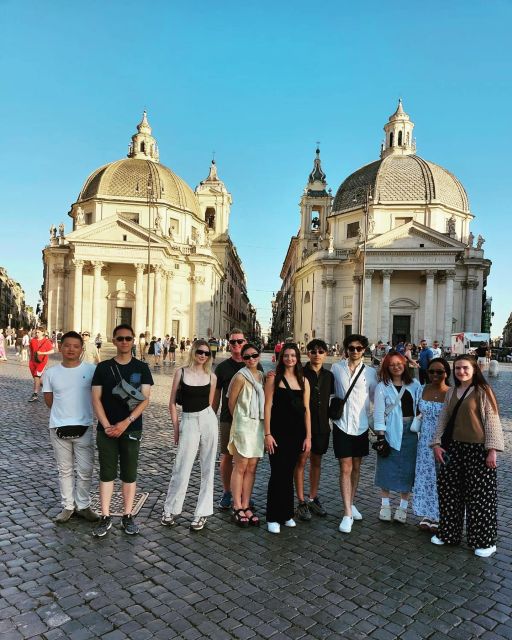
Piazza del Popolo gives the tour a strong opening. Its name means People’s Square, and it has long served as a major northern entrance to central Rome. The square is broad, formal, and easy to read, making it a good place for a guide to explain how Rome developed around roads, gates, churches, and public spaces.
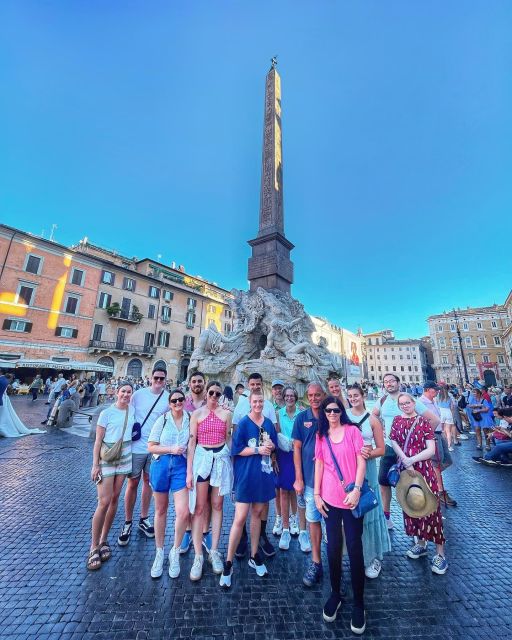
Your first major sight is the obelisk of Ramesses II. It is the tall central marker that draws your eye as soon as you enter the square. The obelisk began life in ancient Egypt and later became part of Rome’s collection of Egyptian monuments. You do not need to be an ancient-history expert to appreciate the oddity of seeing an Egyptian monument at the heart of a Roman piazza.
This opening stop also lets the guide point out the square’s marble columns and statues. Those details matter because Rome often tells its story through layers of decoration rather than through one single building. Look up, look across the square, and pay attention to how the architecture directs your eye toward entrances and churches.
A few more walking tours around Rome worth a look
- Rome: Guided Food Walking Tour with Wine in Trastevere
★ 4.9 · 3,105 reviews - Rome: Trastevere & Campo de Fiori Street Food Walking Tour
★ 4.9 · 2,768 reviews - Rome: Paranormal Night Walking Tour & Secret Backstreets
★ 4.9 · 1,921 reviews
Reading Rome Through Its City Gate
The walk continues to the Porto del Popolo, a gate in the Aurelian Walls. The gate forms the boundary between Piazza del Popolo and Piazzale Flaminio, so it is more than a pretty archway. It helps explain how Rome controlled movement into the city and how a simple passage could carry political and religious meaning.
This is one of the tour’s useful features: you are not only being taken from one famous monument to another. The guide can connect the spaces between them. A city gate, a road, a piazza, and a church become pieces of one larger story.
The Aurelian Walls date to the late Roman period and were built to protect the city. The tour information specifically places the Porto del Popolo within those walls, giving you a chance to understand Rome as a defended capital rather than only an open-air museum.
The walk is also a good setting for questions. If you are curious about the city’s ancient history, the roots of Christianity, Roman architecture, or the way old structures were reused, this is the time to ask. Guides such as Lucio and Nick have been praised for making complicated subjects easy to follow and for keeping the conversation open.
Ancient Stories, Christian Roots, and Amusing Tales
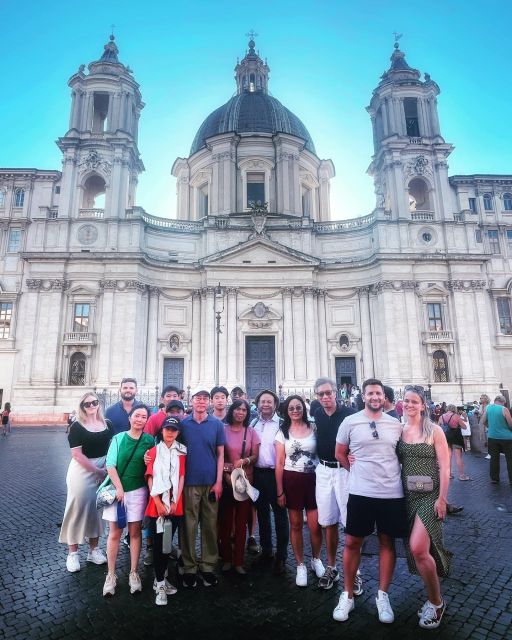
Rome’s history can become a blur of emperors, popes, wars, and building projects. A good walking guide gives those subjects a human scale. Instead of reading a paragraph about a monument and moving on, you hear why the site mattered and how it fits into the city around you.
This walk includes information about the roots of Christianity, an important part of understanding central Rome. The subject can stretch across many centuries, but the walking format helps you connect religious history with streets, gates, public spaces, and major buildings.
The style of the guide will shape the experience. Lucio has been singled out for clear explanations and an easy manner. Nick has led walks that mixed Roman history with architecture and lesser-known points around the city. Alessandro and Joan have also received warm praise for their guiding. Since the exact guide can vary, you should book this for the route and format first, then treat the individual guide as an added benefit.
Expect a mix of serious history and amusing tales. That balance matters during a 2.5-hour walk. A lecture can feel long if every stop is dates and names, while a string of jokes leaves you without much useful context. The strongest version of this tour appears to combine both, with time for pictures and questions along the way.
The Walk Toward Castel Sant’Angelo
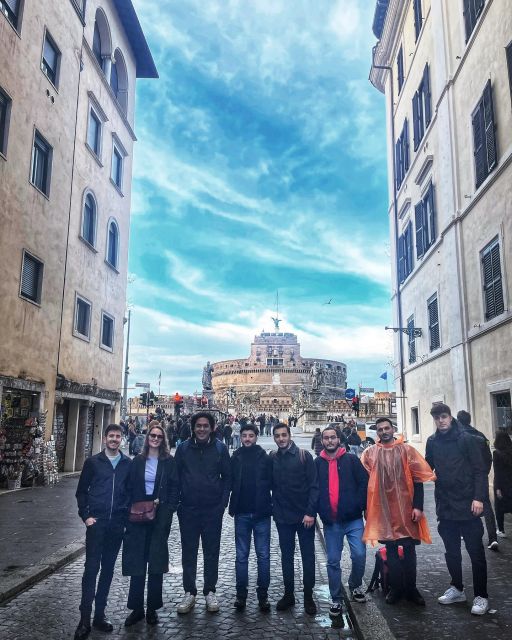
The route leads toward Castel Sant’Angelo, one of Rome’s most memorable buildings. Emperor Hadrian built it as a mausoleum, but it later became a castle around the 14th century. That change tells you a lot about Rome: buildings were rarely used for only one purpose across the centuries.
A mausoleum built for an emperor became a fortified structure. The same monument then entered the medieval story of Rome, when defense and power mattered as much as ceremonial grandeur. Your guide can help you see the building not as an isolated attraction, but as a record of changing Roman priorities.
The approach to Castel Sant’Angelo is valuable even if your tour does not include an interior visit. The activity is described as a walking tour of the city sights, with the guide leading you to the fortress. Do not assume that admission inside the castle is included, because the included services are the walk and the guide.
Castel Sant’Angelo also gives the tour a satisfying endpoint or major landmark focus, depending on the exact route used that day. The information provided does not specify a fixed final meeting place, so check the current details before you set up transportation immediately afterward.
Same streets, a different route:
- Rome: Colosseum Arena, Roman Forum & Palatine Hill Tour
★ 4.5 · 1,874 reviews - Rome: Trastevere Street Food Walking Tour with Local Expert
★ 4.8 · 1,784 reviews - Rome: Small-Group Guided Day or Night Walking Tour
★ 4.8 · 1,009 reviews - Rome by Night Walking Tour – Legends & Criminal Stories
★ 4.5 · 1,003 reviews
What the Guides Do Best
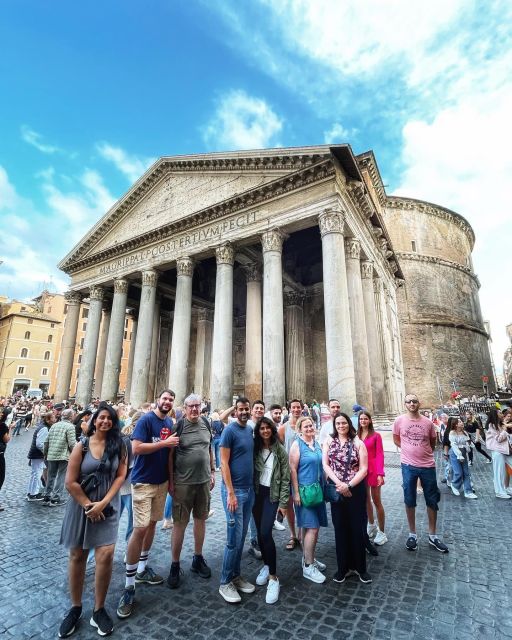
The most praised part of this experience is the quality of the explanations. You are not simply shown a building and given its name. The guide is expected to explain why it matters, answer questions, and point out details that standard Rome guidebooks may pass over.
Nick has been praised for keeping people interested for the full walk, even when they normally lose patience with long tours. Lucio has been described as particularly strong on Roman history and architecture, with a friendly, clear way of speaking. Those comments suggest that the experience works best for people who want context, not just photographs.
Another plus is the attention to historical women and overlooked parts of the city’s story. Joan, for example, has been noted for pointing out important historical women during the walk. That is a useful sign if you prefer a broader account of Rome rather than the usual parade of emperors and famous men.
You should also use the question time well. Ask for clarification when a date or name goes by too quickly. Ask which places are worth seeing again on your own. The tour is especially useful when you treat the guide as a local source of direction rather than as a recording you simply follow.
Restaurant and Nightlife Advice
The tour includes tips about restaurants and nightlife, which can be more useful than another list of monuments. Rome has plenty of places to eat, but choosing well depends on where you are staying, what time you eat, and what sort of evening you want.
The guide can offer suggestions suited to your plans, though the exact recommendations will vary by guide and current conditions. Ask specific questions: Do you want a simple meal, a longer dinner, a lively evening, or a place near your hotel? The more clearly you explain what you need, the more useful the advice should be.
A break for gelato, coffee, and a bathroom has been part of at least one version of the walk. Since the activity lasts 2.5 hours, that pause can make a real difference, especially in warm weather or when you are still adjusting to Rome’s walking pace. Do not assume the break occurs at a particular place or on every departure, but it is sensible to ask the guide about timing at the start.
These local tips are one reason I would schedule the tour early in your stay. You can use the restaurant and nightlife advice for the following evenings, and you can return to the areas that caught your interest without spending the rest of your trip deciding what to do.
Price, Tips, and Overall Value
The listed price is $3.54 per person, but this is a tip-based tour. That means you should think of the booking price as a low-cost way to reserve a place, not necessarily the final amount you will pay for the guide’s work.
The value can be excellent if you want a broad introduction to Rome without committing to an expensive private tour. You receive 2.5 hours with an English-speaking guide, a route linking important sights, historical explanation, and practical local suggestions.
Still, budget honestly. Set aside money for the tip and decide what amount feels fair based on the length, clarity, and usefulness of the walk. If you are unsure how the tip is handled, ask at the beginning rather than waiting until the end.
The tour can also save you from spending your first day moving randomly between attractions. A guide helps you understand the shape of the city, and the cost is modest compared with many paid Rome tours. The tradeoff is that the service is not a private experience, and the exact style depends on the guide assigned to your departure.
Who Should Book This Walk
I would choose this tour if you are visiting Rome for the first time and want to get your bearings through history rather than a bus ride. It also suits independent visitors who enjoy exploring on their own but want a strong introduction before setting off.
It is a good fit for people who like to ask questions. The walk has received especially strong praise for clear explanations, friendly guides, and engaging storytelling. If you prefer to stand silently while taking photographs, a shorter sightseeing stop may suit you better.
The tour also works well for repeat visitors who want lesser-known details around familiar sights. One useful feature is that it does not focus only on the biggest ticketed attractions. The Porto del Popolo, the city walls, and details within Piazza del Popolo can give you a fresh look at a part of Rome you might otherwise cross quickly.
The route is listed as wheelchair accessible. You should still confirm current route conditions if you have specific mobility needs, since historic city streets and public spaces can vary.
Practical Advice Before You Go
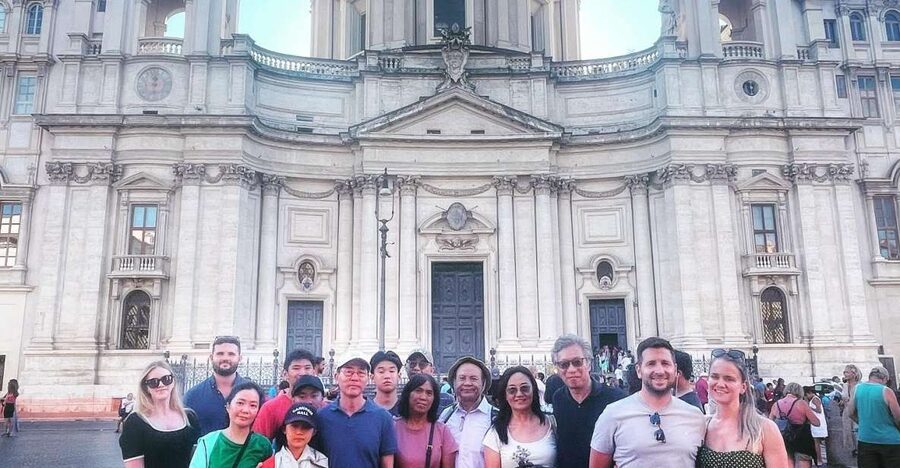
Wear comfortable shoes and bring water. The activity lasts 2.5 hours, and the route connects several city sights on foot.
Arrive at the Piazza del Popolo gates early enough to identify the meeting point outside the arches and entry gates. The meeting location is not described as being inside the square, so do not wait beside the central obelisk unless the guide directs you there.
English is the listed tour language. If you want the fullest experience, stay close enough to hear the guide and ask questions when the group pauses. The group size is not specified, so your ability to hear may depend on the departure.
The tour offers free cancellation up to 24 hours in advance for a full refund, and you can reserve now and pay later. Starting times vary, so check availability for your date before planning other timed attractions around it.
Should You Book the Piazza del Popolo Walk?
Book it if you want an affordable first look at Rome, clear historical explanation, and advice you can use for the rest of your stay. The combination of Piazza del Popolo, Porto del Popolo, ancient history, Christian roots, and Castel Sant’Angelo gives the walk a sensible arc.
Skip it if you need guaranteed entry to monuments, a private guide, or a tightly fixed itinerary with every minute specified. For most first-time visitors, though, the low listed price, flexible format, and strong guide focus make this a smart early-trip choice. Just remember that the tour is tip-based, so budget beyond the $3.54 booking price.
FAQ
Where does the tour meet?
Meet the guide outside the arches and entry gates into Piazza del Popolo.
How long does the walking tour last?
The tour lasts 2.5 hours.
What language is the tour in?
The live tour guide speaks English.
Is the tour wheelchair accessible?
Yes, the activity is listed as wheelchair accessible.
Is admission to Castel Sant’Angelo included?
The included services are the walking tour and tour guide. The activity description does not list admission to Castel Sant’Angelo, so you should not assume interior entry is included.
How does the tip-based price work?
The listed price is $3.54 per person, and the tour is tip-based. Reserve money for a tip in addition to the listed booking price, and ask the guide or provider if you need the current tipping details.
Just added around Rome
- Rome: Colosseum and Ancient Rome Guided Walking Tour★ 4.5 · 95 reviews
- Rome Walking Tour: Pantheon, Trevi, Navona & Hidden Gems★ 4.8 · 501 reviews
- Rome: Underground Trastevere Guided Walking Tour★ 4.8 · 87 reviews
- Rome: Trastevere and Roman Ghetto Guided Walking Tour★ 4.7 · 79 reviews
- Rome: Guided Walking Tour and Pantheon Priority Entry Ticket★ 4.3 · 317 reviews
- Rome: Trevi Fountain, Spanish Steps & Pantheon Walking Tour★ 4.6 · 336 reviews
- Rome: Relics from the Passion of the Christ Walking Tour★ 4.9 · 84 reviews
- Rome Trastevere Walking Food Tour★ 4.8 · 97 reviews
Walking Tours, compared.

Magical London: Harry Potter Guided Walking Tour
Read our review →
Reykjavik Food Walk – Local Foodie Adventure in Iceland
Read our review →
History and Hauntings of Salem Guided Walking Tour
Read our review →
New Orleans Premier Ghost, Voodoo and Vampire Walking Tour
Read our review →
Amsterdam Anne Frank: Small-Group Walking Tour & Local Guide
Read our review →

Edinburgh Castle: Guided Walking Tour with Entry Ticket
Read our review →
Anne Frank’s Story – Guided Walking Tour through Amsterdam
Read our review →Browse the lists this tour appears in