
REVIEW · WALKING TOURS
Riga: Guided Old Town Walking Tour
Riga’s Old Town is compact, handsome, and full of stories that are easy to miss when you wander alone. This two-hour walk links the Town Hall, House of Blackheads, St. Peter’s Church, guild halls, Swedish Gate, and Three Brothers while explaining how Riga grew from a medieval trading city into Latvia’s capital. I especially like the mix of solid historical context and lighter local tales, including legends, food tips, and stories about Art Nouveau. I also like that guides such as Gita, Guna, Rita, and Carlos are repeatedly praised for clear delivery and humor.
The main drawback is the setting itself: cobblestones and cold weather can make this a demanding walk from autumn through winter. Groups can also reach 30 people or more, and although many guides project well, street noise may make some details harder to catch.
Key points at a glance
- A useful first-day orientation: The route covers the core of Old Town and helps you decide where to return later.
- Strong local storytelling: Guides including Gita, Guna, Rita, Carlos, Baiba, and Normunds bring history, legends, politics, and daily life together.
- Major sights in two hours: You’ll see Town Hall Square, St. Peter’s Church, St. James’s Cathedral, the guild halls, Swedish Gate, Three Brothers, and more.
- Good value at $22: The price is modest for a live, two-hour introduction to Riga’s central sights.
- Winter needs planning: Slippery cobblestones and temperatures that can fall far below freezing call for warm clothing and sturdy shoes.
- Useful local advice: Guides can point you toward Latvian foods and places to eat during the rest of your stay.
Why this Riga walking tour works as an introduction
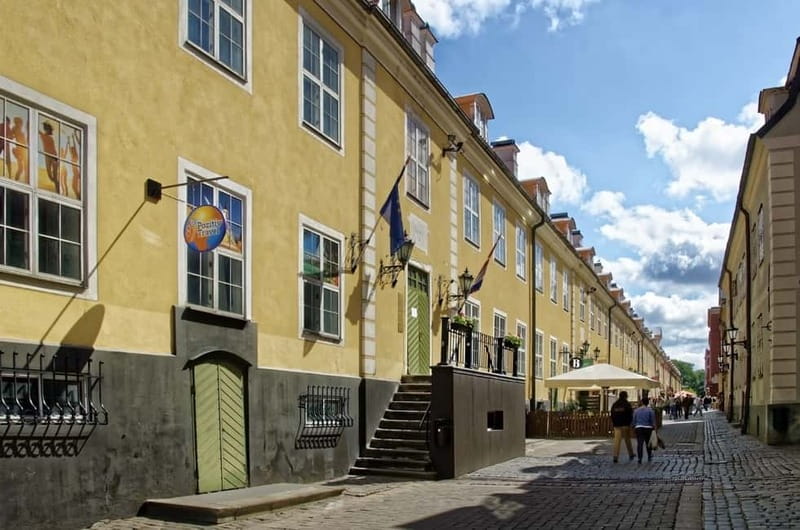
I like guided walks in cities where the buildings tell several different stories at once. Riga is one of those places. A medieval church may sit near a guildhall, a rebuilt merchant’s house, and a playful Art Nouveau facade. Without context, you see attractive streets. With a good guide, you start to understand who built them, who used them, and how Latvia’s past shaped the city.
This tour keeps the focus on central Old Town rather than trying to cover all of Riga. That is a sensible choice. Two hours is enough time to see the main landmarks without turning the outing into a long march. You’ll walk from the meeting point near Grēcinieku Street 18 through the historic center, then finish at one of two drop-off points around Dome Square.
The guides are a major part of the experience. Gita is often praised for her clear English, warmth, and ability to mix humor with serious history. Guna is noted for making the country’s past easy to follow, while Rita brings a lively and personal approach. Carlos has been praised for clear explanations and for answering questions. Other guides, including Baiba, Diana, and Normunds, are also described as engaging and well prepared.
The style can vary by guide, which is normal for a walking tour. Some guides lean more toward architecture and politics. Others use legends, personal stories, or food recommendations to keep the group moving. That variety is a plus, though your exact experience will depend on who leads the walk.
More Old Town Walking Tours in the world:
- Underground Vaults Walking Tour in Edinburgh Old Town
★ 4.5 · 8,506 reviews - Prague: 3-Hour Walking Tour of Old Town & Prague Castle
★ 4.7 · 5,696 reviews - Dubrovnik: Old Town Walking Tour
★ 4.8 · 5,174 reviews
Starting near Grēcinieku Street 18
The meeting point is close to Grecinieku Street 18. Look for the transparent door and the Riga city guide sign. The guide waits there before taking the group into Old Town.
This is a practical starting point because you are close to several of Riga’s central sights. Still, arrive with enough time to find the entrance. The meeting directions are simple, but a transparent door in a busy historic area can be easy to overlook if you arrive at the last minute.
You should bring warm layers, comfortable shoes, and enough protection from wind or rain. Food and drinks are not allowed on the tour, and large bags or luggage are not permitted. Smoking, alcohol, drugs, littering, and party groups are also not allowed.
The route is wheelchair accessible in general, but the operator warns that access becomes limited from the beginning of October through the end of March because of slippery cobblestones. Wheelchair users joining during this period should have someone along to assist them. That seasonal warning matters. Old Town’s paving is part of its charm, but it is not always easy underfoot.
Town Hall Square and the House of Blackheads
The first main stop is Riga Town Hall Square, where the guide spends about ten minutes. This is one of the best places to begin because it gives you a quick sense of Riga’s civic and commercial past.
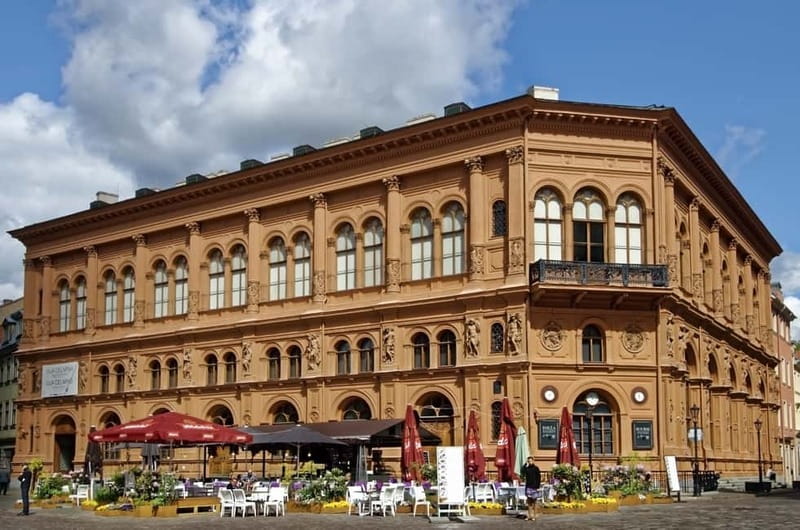
The square dates to the 13th century and has long been tied to public life in the city. The House of Blackheads is one of its most striking buildings. Its ornate facade draws the eye at once, but the guide helps explain the people and institutions connected with it rather than treating it as a photo stop.
This is also where a live guide adds real value. You can admire the architecture on your own, but you may not know why the square mattered, how Riga’s merchant groups operated, or how the city changed over time. Expect a short but useful introduction rather than a long interior visit. The tour is conducted outdoors, so weather can affect how long the group lingers.
St. Peter’s Church and Riga’s vertical landmark
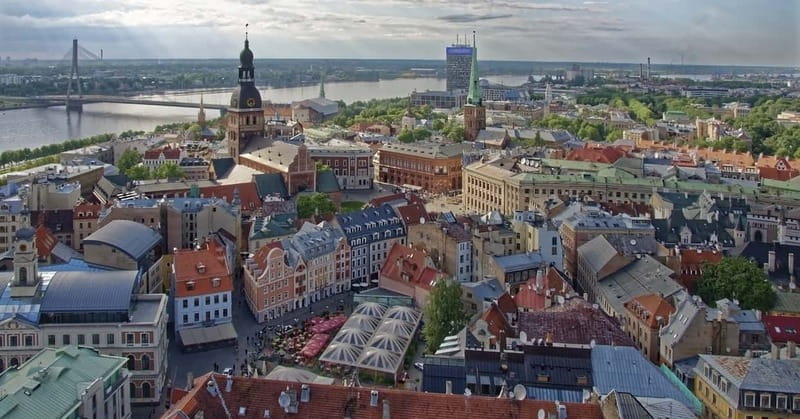
St. Peter’s Church receives another ten-minute guided stop. Its tower is one of the easiest ways to get your bearings in Old Town, and the building gives the walk a strong visual anchor.
The guide places the church within Riga’s story and points out details that can disappear when you are busy taking pictures. You’ll have time to look up at the tall exterior and hear about the role of churches in the city’s development.
Do not expect a full church visit or tower ascent as part of this experience. The listed activity is a guided walking tour, and the stop is designed for explanation and exterior viewing. If you want to go inside or climb the tower, you’ll need to plan that separately.
More Guided Tours in the world:
- Magical London: Harry Potter Guided Walking Tour
★ 4.7 · 22,044 reviews - History and Hauntings of Salem Guided Walking Tour
★ 5.0 · 14,564 reviews - Amsterdam Anne Frank: Small-Group Walking Tour & Local Guide
★ 4.8 · 12,789 reviews - Edinburgh: Harry Potter Magical Guided Walking Tour
★ 4.8 · 11,944 reviews
St. James’s Cathedral and the city’s religious past
The walk continues to St. James’s Cathedral, also known as St. Jacob’s Cathedral. The guide spends about ten minutes here, adding another layer to Riga’s religious and political story.
Seeing more than one major church is useful because the buildings are not interchangeable. They reflect different periods and roles in the city. The guide can help you keep those distinctions straight instead of leaving you with a blur of towers and stone walls.
This part of the walk also helps explain how Riga’s identity was shaped by changing powers, religious groups, and outside influence. Several guides are praised for discussing Latvia’s past occupations and political history in a clear way. That subject can be complex, but the best guides keep it connected to the streets around you.
The Great and Small Guild Halls
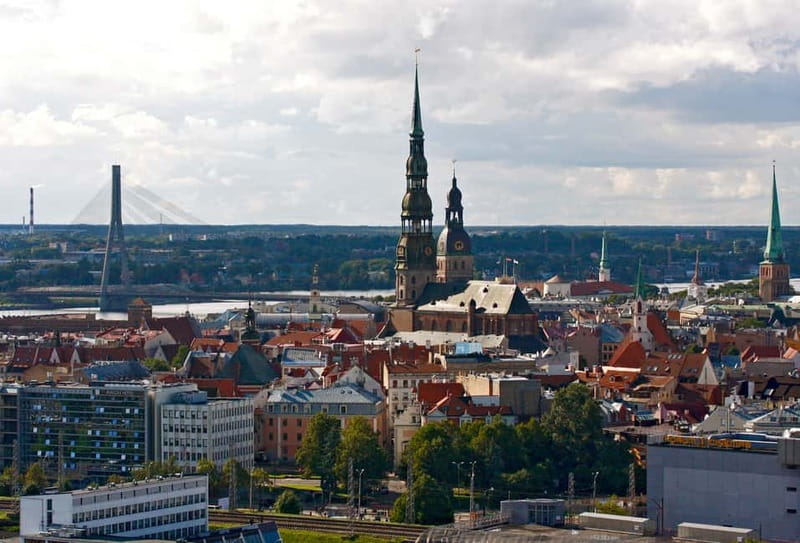
The Great Guild is another ten-minute stop. Along with the Small Guild, it recalls the trading and craft associations that helped run medieval Riga.
These buildings are especially useful for understanding that Old Town was not simply a royal or religious center. Merchants, craftsmen, and professional groups had their own institutions and rivalries. The guide turns facades into evidence of how people worked, traded, and organized themselves.
This is one of the tour’s stronger themes: you are not just being shown old buildings. You are learning how the city functioned. The guild halls may not take long to see, but the explanation helps connect Riga’s attractive streets with the practical business of medieval urban life.
Swedish Gate and the cobblestone walk
The Swedish Gate is a small but memorable landmark. It is one of the surviving entrances through Riga’s old defensive walls and makes a good point for discussing the city’s military and political past.
The route here runs over cobblestone streets, which create the right atmosphere but require care. In warm, dry weather, the paving adds character to the walk. In winter, ice and damp stone can make it awkward, particularly for anyone with limited mobility.
This is also where the guide’s voice matters. One large group of more than 30 people found that Gita could project clearly without headsets. Another visitor suggested earpieces for groups because street noise can sometimes interfere. I would stay reasonably close to the guide, especially at busy crossings or near open squares.
The Three Brothers and Riga’s domestic architecture
The Three Brothers are among the most recognizable buildings in Old Town. This group of adjoining houses shows how residential architecture changed over time, and the close arrangement makes it easy to see differences in age and design.
The stop is short, but it is visually rewarding. Rather than seeing one grand church or public building, you get a look at ordinary urban housing and the tight scale of the medieval center.
The guide may also use this area to explain how Riga’s architecture developed beyond its medieval core. The tour includes discussion of Art Nouveau, which arrived in Riga with force and left the city with one of Europe’s best-known collections of the style. The Old Town route cannot show every Art Nouveau street, but it gives you enough background to recognize why the city’s later buildings look so different.
If architecture interests you, ask your guide where to continue after the walk. Guides regularly provide suggestions for further sightseeing, food, and places worth returning to.
Art Nouveau, legends, and local food advice
One of the tour’s appealing features is its range. You get medieval buildings, churches, guild halls, politics, legends, and Art Nouveau rather than a single narrow lecture.
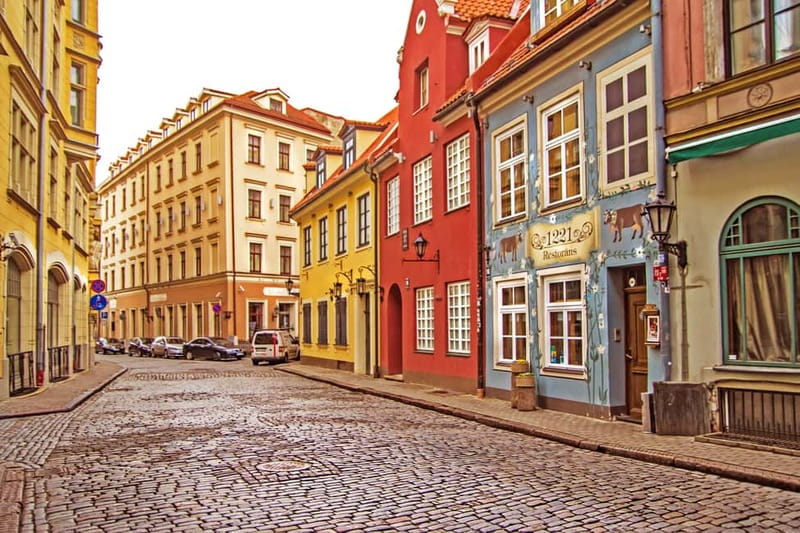
The Cat House is a good example of the lighter side of the walk. Its unusual design gives the guide a chance to talk about Riga’s architectural personality and the stories attached to the building. Guides also weave in local tales that may be true, partly true, or simply part of the city’s folklore.
That balance helps keep two hours from feeling heavy. Several guides are praised for using humor without losing sight of Latvia’s difficult past. This is especially useful if you are visiting Riga for the first time and want more than dates and construction styles.
Food advice is another practical bonus. Guides have recommended Latvian dishes and specific places to eat, and some people have found those suggestions useful during the rest of their stay. Treat this as a starting point rather than a formal food tour. You will hear what to taste and where you might eat, but you will not be stopping for samples during the walk.
The pace, group size, and weather question
The tour lasts two hours and is paced as a city orientation rather than a strenuous hike. You stop for explanations at the principal landmarks, then continue through the streets. That makes it suitable for most people who can comfortably walk on uneven paving for two hours.
Group size can vary. Some outings have had 30 or more people. A larger group can make it harder to ask questions or stay close, but the guides praised in the feedback generally speak clearly and keep the commentary audible. No headsets are listed, so I would choose a position near the front if hearing every detail matters to you.
Winter is the biggest practical concern. In temperatures around minus 17 degrees Celsius, the walk can be very cold even when the content is worthwhile. Wear a proper coat, hat, gloves, and shoes with good grip. Autumn and winter rain can be just as troublesome because wet cobblestones become slippery.
Several guides have adjusted the route or found warmer spots when conditions were unpleasant. That can help, but you should still treat this as an outdoor activity. If the forecast is poor, book a time when you have enough flexibility to warm up afterward.
Is $22 good value for two hours?
At $22 per person, I consider this a fair price for a live introduction to Riga. You are paying for two hours of guiding, not entry to monuments, food, transport, or a private group.
The value comes from the number of useful stops packed into a small area. You see the main Old Town sights and get a framework for understanding them. Afterward, you can return to the buildings that caught your interest, explore museums, or head toward Riga’s Art Nouveau district with a better sense of what you are seeing.
The price is especially reasonable if this is your first visit. A self-guided walk costs nothing, but it requires research and still may leave you unsure about the city’s political and architectural story. A guide can also point out details and alleyways you would likely pass without noticing.
The tour is less suitable if you want private attention, interior visits, or a slow photography walk. For those needs, a private tour or a museum visit may be a better fit.
Who should book this Old Town walk?
I would choose this tour early in a Riga stay. It gives you a map in your head and practical ideas for later. You’ll learn which buildings deserve a return visit, where to eat Latvian food, and how the medieval center connects to the city’s wider story.
It suits first-time visitors, couples, solo visitors, families with older children, and anyone who likes history explained in plain language. Teenage children may enjoy the legends and humor, especially with a lively guide such as Normunds or Carlos.
Architecture fans will appreciate the Art Nouveau background, though the main route focuses on Old Town rather than a full Art Nouveau tour. History-minded visitors should also find the discussion of foreign rule, politics, and occupation useful.
I would think twice if you dislike walking on uneven ground, plan to bring luggage, or want to stay indoors. The tour has no food or drink component, and the entire experience depends on outdoor conditions.
Practical booking details
The tour costs $22 per person and lasts two hours. Live guiding is available in English, German, French, and Spanish. The route ends at one of two locations near Dome Square, which is convenient for continuing your sightseeing.
You can cancel up to 24 hours before the start for a full refund, and the reserve-now, pay-later option keeps your plans flexible. Check the available starting times when booking because the schedule can change.
Look for the transparent door near Grēcinieku Street 18 and the Riga city guide sign. Leave large bags and luggage behind, and arrive ready for an outdoor walk.
Should you book it?
Yes, if you want an affordable and lively first look at Riga’s Old Town. The strongest part is the guiding. Gita, Guna, Rita, Carlos, Baiba, and others have been praised for clear speech, humor, strong storytelling, and useful local advice.
Book it for the first day or two of your stay, dress for the forecast, and stay close enough to hear the guide. If you visit from October through March, take the slippery cobblestones seriously. For $22, this is a sensible way to understand Riga before exploring it on your own.
FAQ
How long is the Riga Old Town walking tour?
The tour lasts two hours.
How much does the tour cost?
The price is $22 per person.
Where does the tour start?
It starts close to Grēcinieku Street 18. Look for the transparent door and the Riga city guide sign.
Where does the tour finish?
There are two drop-off locations near Dome Square, including Dome Square itself.
Which sights are included?
The route includes Riga Town Hall Square, St. Peter’s Church, St. James’s Cathedral, the Great Guild, the Swedish Gate, the Three Brothers, and other parts of Old Town.
Is the tour available in English?
Yes. Live guiding is available in English, German, French, and Spanish.
Is the walking tour wheelchair accessible?
The tour is wheelchair accessible, but access is limited during autumn and winter, from the beginning of October through the end of March, because of slippery cobblestones. Wheelchair users should bring someone to assist them during this period.
Can I cancel the booking?
Yes. You can cancel up to 24 hours in advance for a full refund.
Can I bring food, drinks, or luggage?
No. Food and drinks, luggage, and large bags are not allowed on the tour.
Just added around the world
- Fira: Guided Foodie Walking Tour with Tastings★ 4.9 · 474 reviews
- Fez: Guided Walking Tour of the Historic Medina★ 5.0 · 359 reviews
- Fez: Walking Tour in the Ancient City of Fez★ 4.8 · 73 reviews
- Faro: Old Town Guided Walking Food Tour★ 4.9 · 94 reviews
- Feel like a local – Walking Tour in Mykonos Town 2hours★ 4.4 · 77 reviews
- Fes: A Guided Walking Tour Through the Historic Medina★ 4.4 · 97 reviews
- Fez: Half-Day City Private Walking Tour with a Guide★ 4.6 · 114 reviews
- Fanal / Assobiadores – Levada Walk★ 4.6 · 93 reviews
Old Town Walking Tours, compared.
Underground Vaults Walking Tour in Edinburgh Old Town
Read our review →
3-Hour Walking Tour of Old Town & Prague Castle
Read our review →
Old Town and Jewish Quarter Guided Walking Tour
Read our review →
Marrakech: Ben Youssef, Secret Garden, & Souks Walking Tour
Read our review →Browse the lists this tour appears in