
REVIEW · REYKJAVIK
Reykjavik: Guided Folklore Walking Tour
Icelandic folklore is not a dusty museum subject. On this walk, elves hide in city stones, ghosts haunt old graveyards, and thirteen Yule Lads replace the single Santa you may know. The stories can be funny, strange, or properly creepy, and guides such as Einar, Stefan, Matthias, and Bo have brought them to life with songs, sound effects, jokes, and personal stories.
I like the way this tour connects old folklore with modern Reykjavik, rather than telling tales in a room far from the places that inspired them. I also like its short 90-minute length, which gives you a cultural introduction without taking over your day. The main caution is that some ghost stories and tales of Grýla, the child-eating troll, may unsettle young children.
Key points to know before you book
- The stories are tied to real Reykjavik places, including two old graveyards, Lake Tjornin, and the city’s Catholic cathedral.
- You hear more than elf tales, with ghosts, trolls, sea monsters, runes, magic, Norse mythology, and the thirteen Yule Lads in the mix.
- The guide makes the difference, using songs, acting, sound effects, humor, and personal connections to Icelandic traditions.
- The walk is a good first-day choice, since it gives you cultural background that can make the rest of your Iceland visit more meaningful.
- The tone is family-dependent: children around six and older may enjoy it, but the scarier stories are not ideal for every youngster.
- The $54 price is reasonable for a small cultural experience, especially if you value a live storyteller more than a standard sightseeing checklist.
Why Icelandic folklore works so well on a city walk
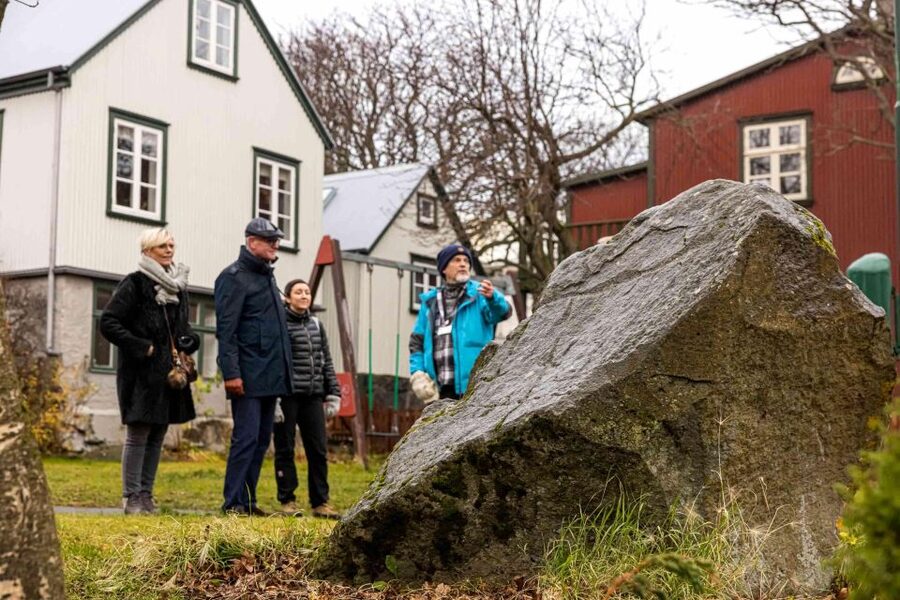
Reykjavik can look young and modern at first glance. Its streets are tidy, its buildings are colorful, and the center is easy to cross on foot. Yet Icelandic stories give the city another layer. A patch of stone becomes an elf dwelling. A graveyard becomes the setting for a ghost tale. A quiet pond brings up stories of strange aquatic creatures.
That is the charm of this experience. You are not simply stopping at monuments while someone recites dates. You are hearing how people once explained danger, weather, isolation, illness, family life, and the unknown.
The tour draws from Icelandic sagas, Norse mythology, local ghost stories, and folk beliefs that have survived into modern times. You hear about elves and trolls, but also about the Deacon of the Dark River, Icelandic monsters that are mostly associated with water, old runes, and the only known serial killer in Icelandic history.
The guide’s delivery matters a great deal here. Einar has been praised for singing folk songs and telling stories with real feeling. Stefan has used sound effects and even an Icelandic lullaby. Other guides, including Matthias, Dui, Bo, Oli, and Magnus, have been described as funny, warm, and engaging. Your guide will vary, but the experience clearly depends on performance as much as information.
More Guided Tours in the world:
- Magical London: Harry Potter Guided Walking Tour
★ 4.7 · 22,044 reviews - History and Hauntings of Salem Guided Walking Tour
★ 5.0 · 14,564 reviews - Amsterdam Anne Frank: Small-Group Walking Tour & Local Guide
★ 4.8 · 12,789 reviews
Meeting at Ingólfstorg in central Reykjavik
You meet outside Hlöllabátar, a sandwich shop facing Ingólfstorg Square and two tall stone pillars. CenterHotel Plaza is on your right, and benches, tables, and a covered ceiling give you a practical place to wait.
Look for a guide wearing a light blue jacket marked Your Friend in Reykjavik. This is useful in a busy central square, especially if you arrive early and are not sure which group is yours.
Ingólfstorg is a fitting place to begin. The square sits in the heart of old Reykjavik, close to restaurants, hotels, and the main pedestrian streets. Starting here means you can reach the meeting point without arranging a taxi or special transport if you are staying in the city center.
The tour is listed as 90 minutes. The route is not a hard hike, but you will be outside the whole time and will spend much of the walk standing while the guide tells a story. Wear weather-ready clothing. Reykjavik can be cold, wet, windy, or snowy, and the tour continues in poor weather.
Ingólfstorg: begin with settlement stories and hidden people
The opening stop at Ingólfstorg lasts about 10 minutes. This is where the guide begins to connect Reykjavik’s present-day streets with Iceland’s older stories.
You can expect an introduction to the hidden people, the Icelandic term often translated as elves, and to the way folklore sits beside everyday life in Iceland. The guide may also place the stories within the wider saga tradition and Norse mythology.
Do not expect a formal lecture. The strongest part of this walk is its conversational style. Guides answer questions, adjust the level of detail to the group, and use humor to keep the darker material from becoming too heavy.
This stop also sets up an important theme: Icelandic folklore is not just a collection of fantasy creatures. It reflects a culture shaped by long winter nights, remote farms, dangerous seas, lava fields, and limited forms of entertainment. Storytelling was a major way to pass time and preserve memory.
Suðurgata Cemetery: ghosts, old graves, and a darker tone
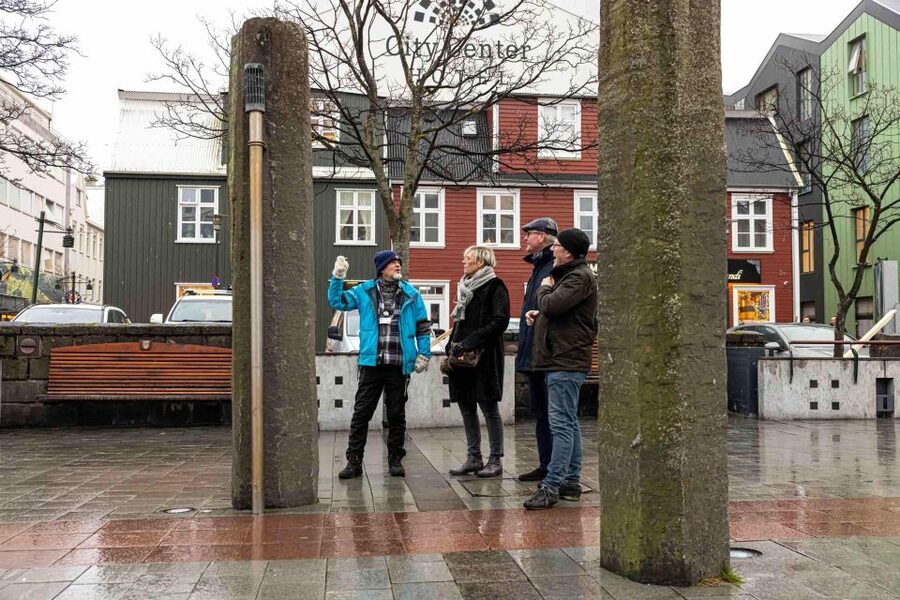
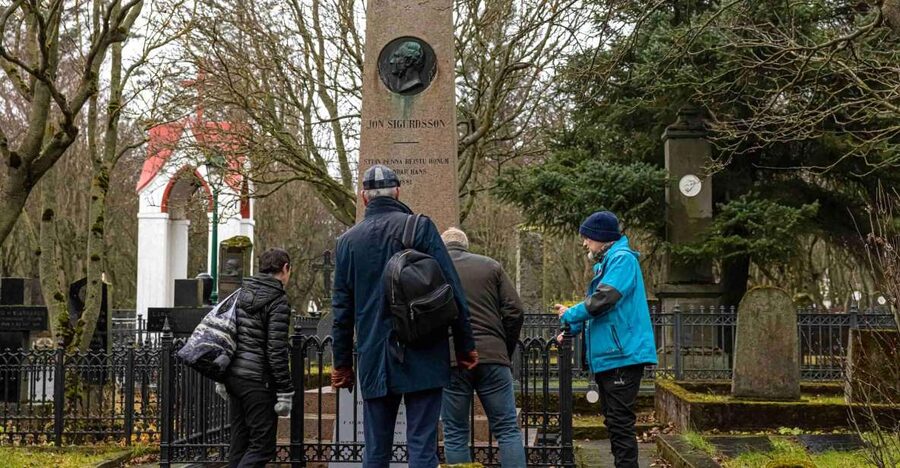
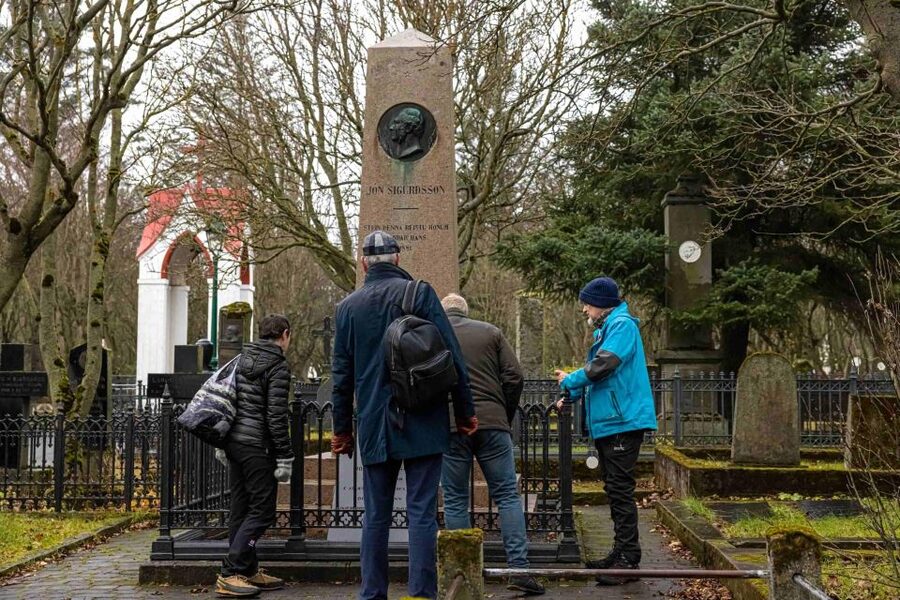
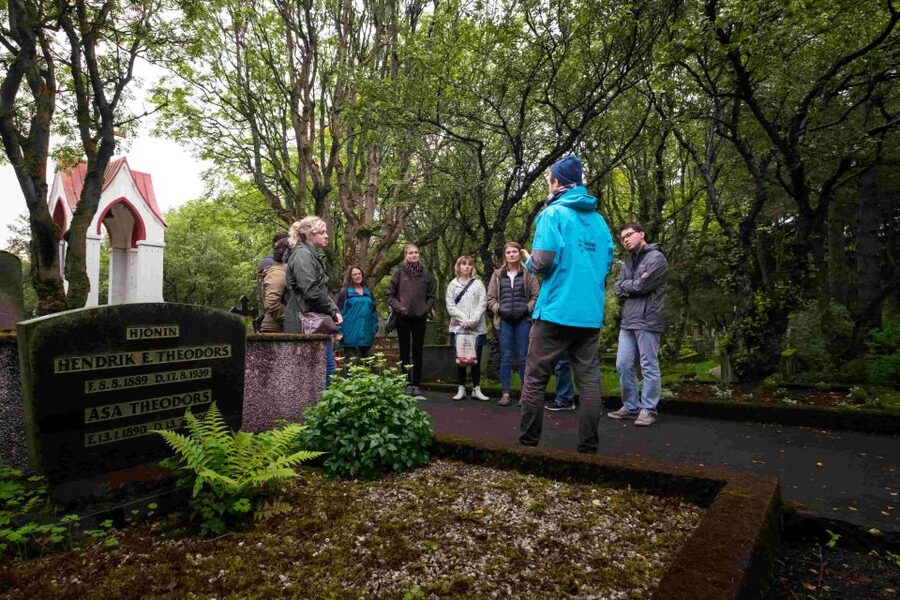
The route then reaches Kirkjugarðurinn Suðurgötu, one of the old graveyards connected with the walk. This is where the mood can shift from playful to eerie.
The guide tells ghost stories and explains how the dead appear in Icelandic folk tradition. The Deacon of the Dark River is one of the best-known tales associated with this part of the experience. Some guides act out the story, use changes in voice, or add sound effects. That performance can make the graveyard stop genuinely spooky, even if you are not normally drawn to ghost tours.
The tour includes two of Reykjavik’s oldest graveyards, though the exact way the second cemetery is presented depends on the route and guide. The graveyards are not treated as quick photo stops. They are places where the guide can talk about belief, fear, burial, and the stories people used to make sense of death.
This is also the point where parents should pay attention. The tour is not designed as a horror show, but it does include frightening scenes and macabre tales. Older children may find that exciting. Younger children may prefer a private version, which can be adjusted to reduce the scary material.
A few more walking tours around the world worth a look
- Reykjavik Food Walk – Local Foodie Adventure in Iceland
★ 5.0 · 18,952 reviews - New Orleans Premier Ghost, Voodoo and Vampire Walking Tour
★ 4.5 · 12,856 reviews - Edinburgh: Harry Potter Magical Guided Walking Tour
★ 4.8 · 11,944 reviews - Edinburgh Castle: Guided Walking Tour with Entry Ticket
★ 4.7 · 11,699 reviews
Christ the King Cathedral: Iceland’s Catholic story
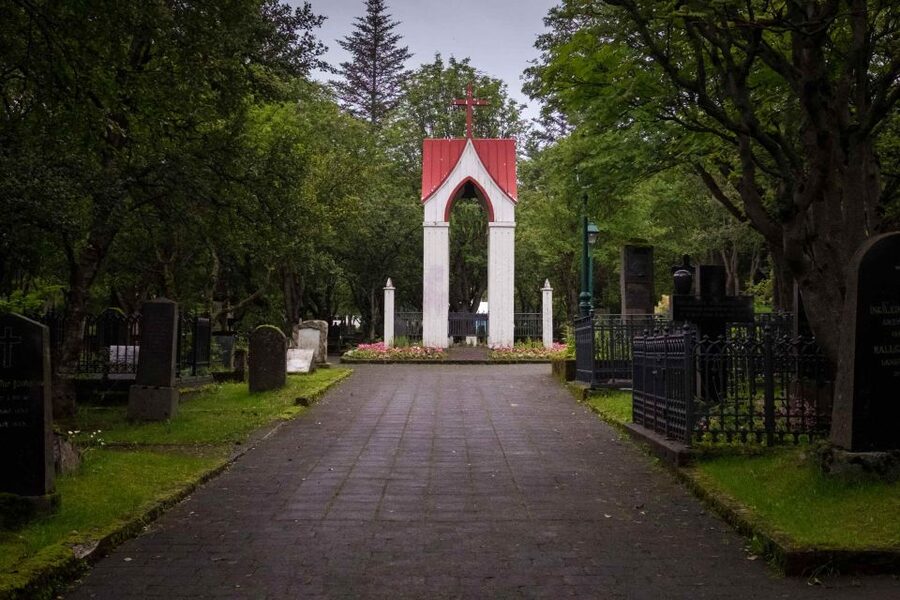
The next major stop is the Cathedral of Christ the King, Reykjavik’s Catholic cathedral. You spend about 20 minutes here, hearing about the building and the place of Catholicism in Iceland.
This stop adds useful balance. Without it, the tour could feel like a simple collection of monsters and ghost stories. The cathedral brings in religion, history, and the way different beliefs have shaped Icelandic life.
The building also gives you a change of mood after the graveyard. You are still hearing stories, but the setting encourages a wider look at Icelandic traditions. Pagan ideas, Christian beliefs, folk magic, and later cultural customs have all existed in the same country.
The tour also introduces Icelandic magic and old runes. This is one of the more unusual elements, since you are not only hearing about creatures but also learning how symbols and spells were understood in earlier times. Some guides have taught simple magical ideas or shown how runes fit into the old tradition.
Lake Tjornin: water monsters and city folklore
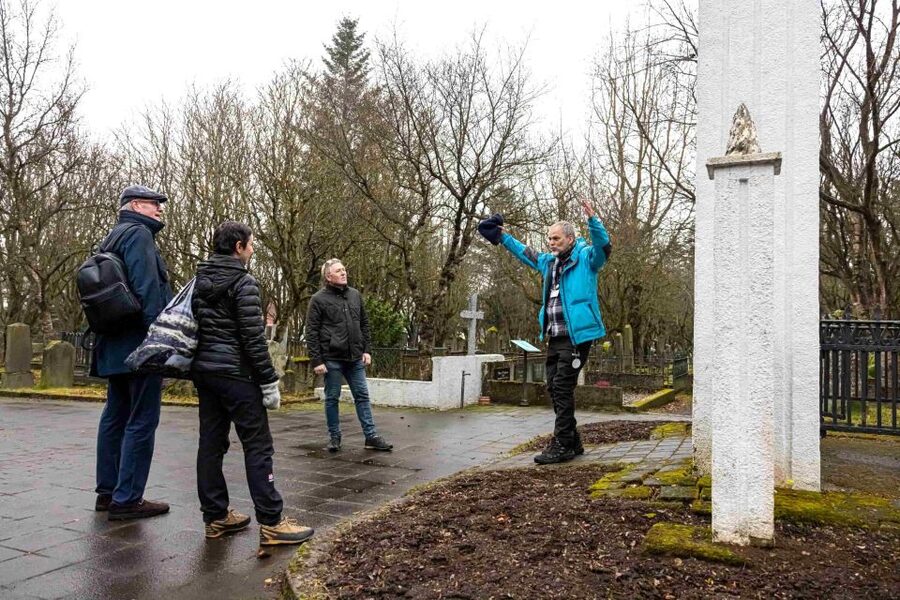
Lake Tjornin, a small body of water near central Reykjavik, is the setting for another 20-minute section of the tour. It is a natural place to talk about Iceland’s aquatic monsters.
Icelandic folklore has many creatures linked to water, and the guide explains why lakes, rivers, and the sea feature so strongly in local stories. One tale may remind you of the Loch Ness Monster, though Iceland’s creatures have their own names and character. A guide may also show a video connected with Iceland’s answer to that famous Scottish legend.
This stop works well because the subject matches the setting. You can look across the water while hearing about things that may or may not live beneath its surface. The stories are often strange rather than frightening, and the guide’s delivery keeps the group involved.
Lake Tjornin is also one of the more peaceful parts of the route. If you have spent the morning on a bus tour or rushing between attractions, this pause gives you time to slow down. You are still learning, but the pace is relaxed.
Austurvöllur: the Yule Lads, Grýla, and the final stories
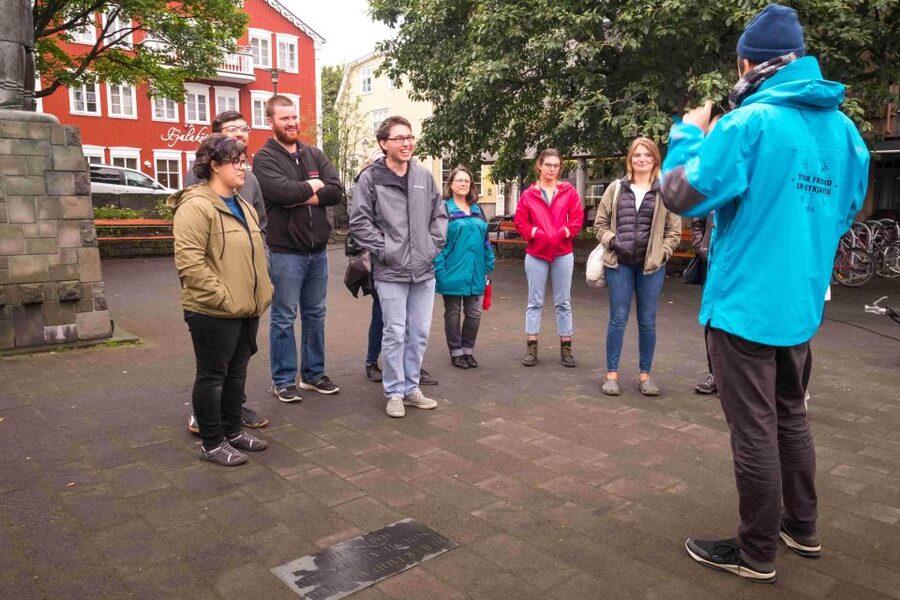
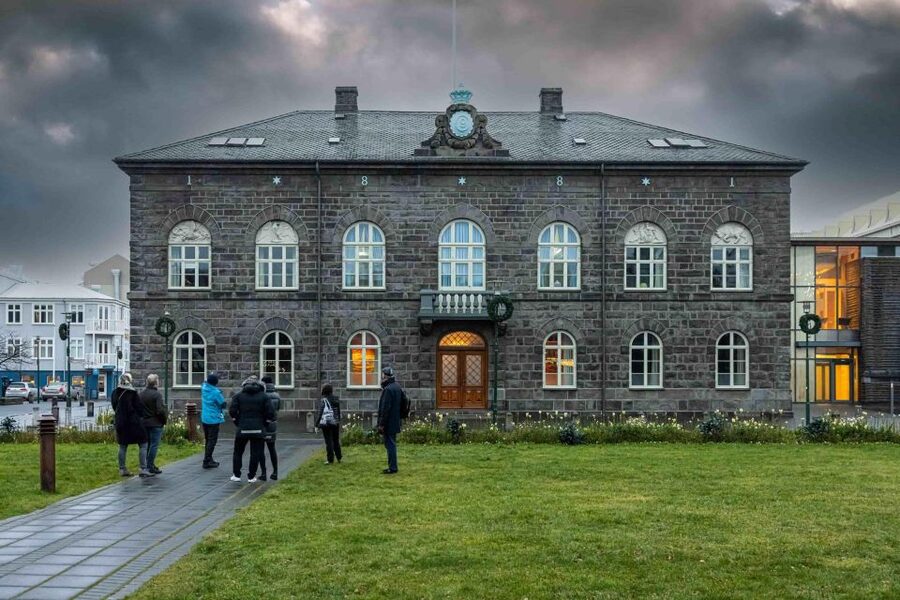
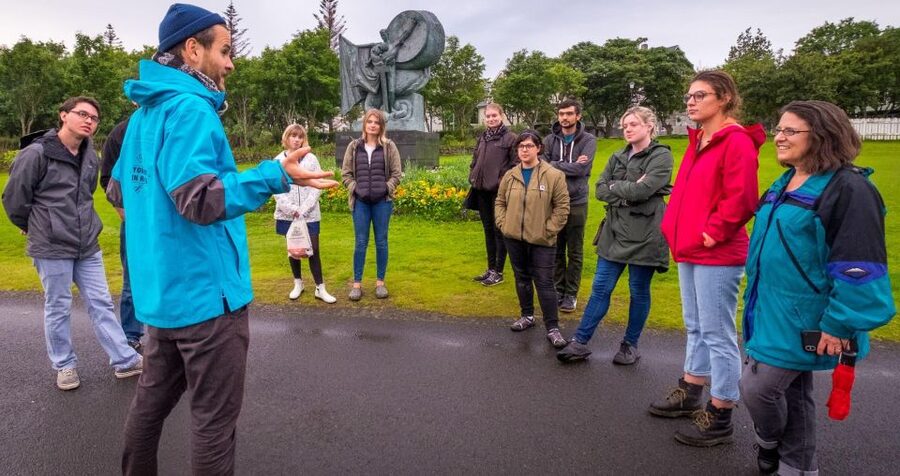
The walk ends at Austurvöllur, where the final 20-minute section brings together several of Iceland’s best-known winter traditions.
First come the thirteen Yule Lads. Iceland does not settle for one Santa Claus. Each Yule Lad has a name, a personality, and a particular kind of mischief. Learning about them gives you a better sense of Icelandic Christmas customs, especially if you visit in late autumn or winter.
Their mother, Grýla, provides the darker side of the story. She is a child-eating troll, not the gentle grandmotherly figure you might expect from a holiday tale. The contrast between the playful Yule Lads and their frightening mother is part of what makes Icelandic Christmas folklore so memorable.
The guide also returns to magic, trolls, ghosts, and the broader saga tradition. You may hear a lullaby or folk song at this point. Several guides have sung during the walk, and this is often where the storytelling feels most like a live performance rather than a standard city tour.
Austurvöllur is a practical ending. You finish in central Reykjavik, close to restaurants, cafés, hotels, and other sights. You can continue exploring on foot without having to find transport back to your starting point.
The Tolkien connection and Iceland’s storytelling culture
Fans of The Hobbit and The Lord of the Rings will find familiar ideas in the material. J.R.R. Tolkien drew heavily on Norse mythology and Icelandic sagas, and the guide explains some of the links between Tolkien’s imagined worlds and Icelandic traditions.
The point is not to claim that every elf, dwarf, or monster comes directly from Iceland. Instead, you get a useful look at the older northern stories that helped shape modern fantasy.
The tour also explains why storytelling matters so much in Iceland. On long winter nights, stories offered entertainment and a way to preserve family memory. Iceland is known for its strong reading culture, and the commonly repeated claim that one in ten Icelanders writes a book reflects the country’s close relationship with literature.
That context helps the creatures make sense. Elves and trolls are not only colorful tourist subjects. They belong to a larger habit of telling stories about people, nature, danger, pride, foolishness, and survival.
How much value do you get for $54?
At $54 per person, this is not the cheapest way to spend 90 minutes in Reykjavik. You can walk the same streets for free. The price makes sense if you want a live guide who can provide cultural context, performance, and access to stories you are unlikely to uncover by simply wandering.
You are paying for interpretation rather than admission to a major landmark. There is no complicated attraction ticket included, and the cathedral stop is part of the outdoor route rather than a promise of a full interior visit. The value comes from the guide’s storytelling, the carefully chosen stops, and the chance to connect folklore with real places.
I think the price is fair for people who enjoy history, mythology, ghost stories, and local culture. It is less compelling if you want a fast architectural tour or a detailed survey of Reykjavik’s major buildings.
The walk can also be a good first activity in Iceland. It gives you names, stories, and cultural references that may return during the rest of your trip. Bookings can be canceled up to 24 hours before the start for a full refund, and you can reserve without paying at once, which helps if your plans depend on weather.
Who will enjoy this walk most?
I would choose this tour for adults who like folklore, fantasy, ghost stories, or unusual local customs. It also suits solo visitors because the storytelling and group questions create an easy social setting without requiring a full-day commitment.
Families can enjoy it, but age matters. Children around six and ten have enjoyed the walk, and a 13-year-old may find the darker stories especially appealing. Still, the guide discusses ghosts, death, monsters, and Grýla, so parents should decide how their children handle scary material.
It is also a good choice for anyone who has already seen the main sights and wants something different. The route includes familiar central places, but the stories give them a new meaning.
The tour is wheelchair accessible. Guides offer the walk in English, Spanish, and French, and a private group is available if you want more control over the pace or the level of scariness.
Practical advice for getting the most from the tour
Wear waterproof outer clothing and shoes with a good grip. You do not need specialist hiking equipment, but Reykjavik weather can turn a pleasant city walk into a cold one quickly.
Arrive a little early at Hlöllabátar so you can identify the light blue jacket and settle in before the stories begin. Since the meeting point is in a central square, it is easy to combine the tour with lunch or an afternoon of sightseeing.
I would also avoid scheduling a tight activity immediately afterward. The official duration is 90 minutes, but you may want a few extra minutes to walk away from Austurvöllur, take photos, or continue a conversation with the guide.
Listen for the links between the stories. The elves, trolls, ghosts, runes, sea creatures, and Yule Lads are more interesting when you notice the shared themes: isolation, nature, family, danger, and the need to explain what cannot be seen.
Should you book the Reykjavik folklore walking tour?
Book it if you want stories with a sense of place, not just a list of city facts. The strongest guides, including Einar, Stefan, and Matthias, bring the material alive with singing, humor, personal stories, and theatrical delivery.
Skip it if you dislike ghost stories, need a fully indoor activity, or want a tour centered on architecture and political history. The weather is a real factor, and some material can be too frightening for young children.
For most visitors who want to understand Iceland beyond its waterfalls and volcanoes, this is a smart 90-minute introduction. It is short, unusual, easy to fit into a Reykjavik schedule, and full of stories you may still be telling after you leave Iceland.
FAQ
How long does the Reykjavik folklore walking tour last?
The tour lasts 90 minutes. It begins at Hlöllabátar near Ingólfstorg and finishes at Austurvöllur.
Where does the tour meet?
The meeting point is outside Hlöllabátar Sandwich Shop, facing Ingólfstorg Square and the two tall stone pillars. CenterHotel Plaza is to the right, and the waiting area has benches, tables, and a covered ceiling.
What languages are available?
The live guide is available in English, Spanish, and French.
Is the walking tour wheelchair accessible?
Yes, the activity is listed as wheelchair accessible.
Is the tour suitable for children?
Some children enjoy the stories, but several tales involve ghosts, monsters, death, and Grýla, the child-eating troll. Younger children may find parts of the tour scary. A private walk can be arranged with less frightening material.
Can I cancel or reserve without paying immediately?
You can cancel up to 24 hours before the tour for a full refund. You can also reserve now and pay later, keeping your plans flexible.
Just added around the world
- Vatnajökull Glacier Walk from Hali★ 5.0 · 479 reviews
- Old Hobart Pub Walking Tour★ 4.5 · 91 reviews
- Ice Cave and Glacier Walk into Blue Glacier Canyon★ 5.0 · 224 reviews
- Southwest Tasmania Wilderness Experience: Fly Cruise and Walk Including Lunch★ 5.0 · 233 reviews
- Saigon’s Hidden Flavors – Private Street Food Walk with Local Students★ 5.0 · 301 reviews
- Hobart History, People & Places – 2 hour city walk★ 5.0 · 224 reviews
- Vegan Walk Not Just Vegan Food★ 5.0 · 266 reviews
- Ho Chi Minh City: Highlights & Hidden Gems – Free Walking Tour★ 5.0 · 194 reviews
Walking Tours, compared.

Magical London: Harry Potter Guided Walking Tour
Read our review →
Reykjavik Food Walk – Local Foodie Adventure in Iceland
Read our review →
History and Hauntings of Salem Guided Walking Tour
Read our review →
New Orleans Premier Ghost, Voodoo and Vampire Walking Tour
Read our review →
Amsterdam Anne Frank: Small-Group Walking Tour & Local Guide
Read our review →

Edinburgh Castle: Guided Walking Tour with Entry Ticket
Read our review →
Anne Frank’s Story – Guided Walking Tour through Amsterdam
Read our review →Browse the lists this tour appears in