
REVIEW · KRAKOW
Krakow: Jewish Ghetto Guided Walking Tour
Kraków’s former Jewish Ghetto can look like an ordinary city district if you walk through it alone. This one-hour tour gives those streets their meaning, leading you from Schindler’s Factory to the wall fragments, Ghetto Heroes Square, and the historic Under the Eagle Pharmacy. I like the human scale of the route and the way it links daily life with forced labor, deportation, resistance, and survival.
I also like the practical value. At $15 per person, you get a licensed guide and a focused route through the former ghetto without paying for a long museum visit. Guides such as Elena and Renata have been praised for clear explanations and a speaking pace that is easy to follow. The trade-off is that one hour passes quickly, and entrance fees to attractions are not included.
Key points to know before you book
- The route begins at Schindler’s Factory: You get the wartime setting before walking into the former ghetto.
- The surviving wall fragments make history physical: They show how confinement was imposed on the city itself.
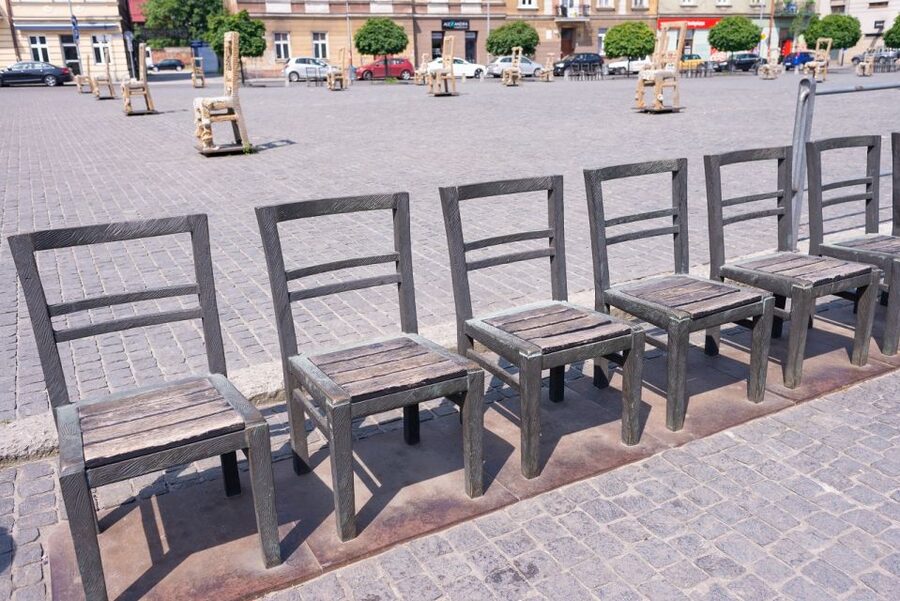
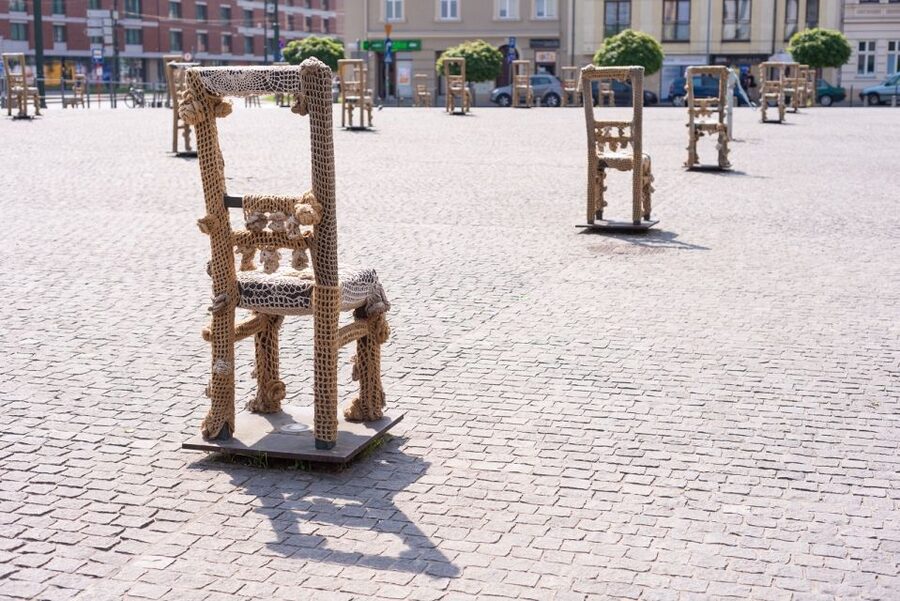
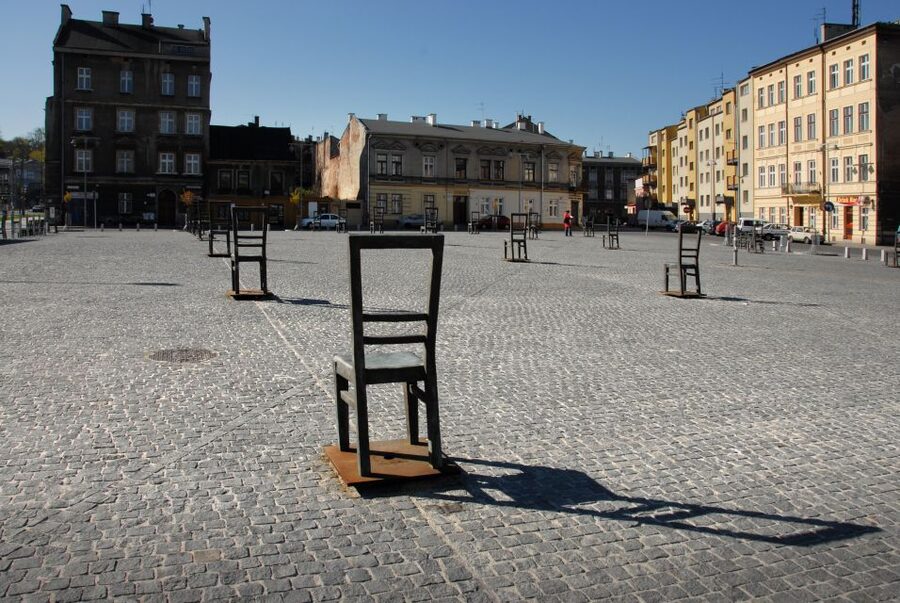
- Ghetto Heroes Square is the emotional center: Empty metal chairs mark the square where deportations took place.
- The Under the Eagle Pharmacy adds a story of courage: Tadeusz Pankiewicz and his staff helped people inside the ghetto.
- The tour is short and tightly focused: One hour suits a packed Kraków schedule, but leaves little time for lingering.
- Five guide languages are available: You can choose English, German, Italian, French, or Spanish when checking times.
Why this short Podgórze walk matters
This is not a general tour of Kraków. It focuses on Podgórze, the district where the Nazi occupation turned normal streets into a sealed Jewish Ghetto during World War II. That focus is useful because you are not simply collecting dates and names. You are seeing the places where those policies affected homes, work, movement, medicine, and family life.
I find this kind of walking tour especially helpful in Kraków because the former ghetto is not presented as one enclosed historic site. It is spread through a working part of the city. Without explanation, a wall fragment may look like an old piece of masonry, and an ordinary square may seem like just another public space. The guide connects each location to what happened there.
The tour also gives you a clear starting point for understanding the wider wartime story. Schindler’s Factory introduces the relationship between industry, forced labor, and occupation. From there, the route moves toward the boundaries of the ghetto and the places where people were gathered and deported.
The tone is serious, as it should be. This is not entertainment dressed up as history. It is a compact, guided visit to sites linked with fear, moral choice, and survival.
More Jewish Heritage Walks in Krakow:
- Krakow: Kazimierz Jewish Quarter Walking Tour
★ 4.8 · 571 reviews - Krakow: Jewish Ghetto Walking Tour
★ 4.6 · 349 reviews - Krakow: Jewish Quarter Guided Walking Tour
★ 4.8 · 119 reviews
Meeting at Schindler’s Factory
The meeting point is in front of the main entrance to Schindler’s Factory Museum, on the right-hand side. Your guide carries an excursions.city sign, so look for that rather than wandering around the whole museum complex.
Arrive 10 minutes early. This matters because the guide cannot wait for late arrivals once the group has left, and a missed start is not refundable. The meeting point also gives you a useful visual introduction to the district. You are beginning in a place closely linked to Kraków’s wartime industry, not at a random corner of Podgórze.
The tour does not include entrance to Schindler’s Factory Museum. If you plan to visit the museum separately, you will need to arrange that on your own. That can work well as a longer history day, but do not assume this walking ticket covers the museum.
The guide sets the context before the group moves on. You learn how occupation changed the district and how industry and forced labor became part of daily life. This opening prevents the rest of the walk from becoming a string of disconnected memorials.
Reading the former Ghetto Wall
The remains of the former Ghetto Wall are among the most useful stops because they give you something concrete to look at. A description of confinement can feel abstract. A surviving fragment shows the physical boundary that separated Jewish residents from the rest of Kraków.
Your guide explains what the wall meant in practice. It was not just a line on a map. It controlled movement and helped create a closed zone in which people were forced to live under Nazi rule. The surviving pieces are only fragments, but they make the scale of that control easier to grasp.
This stop is brief, yet it does important work. You can look closely, ask questions, and connect the structure to the ordinary streets around it. That contrast is part of the experience. The wall is not isolated in a preserved ruin. It remains within the city, where modern life continues around a place shaped by violence.
Do not expect a large monument or a full section of wall. The value comes from the explanation and the setting. If you walk past without a guide, you could easily miss why these fragments matter.
Ghetto Heroes Square and the empty chairs
The route continues to Ghetto Heroes Square, once the center of the Kraków Ghetto and a place connected with deportations. This is the emotional heart of the walk.
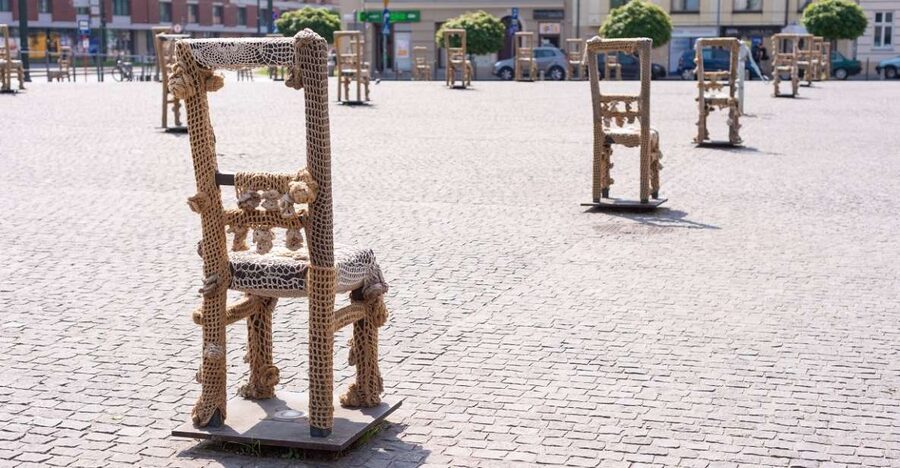
The square is marked by empty metal chairs. They symbolize the lives lost and recall the removal of people and their belongings during the ghetto’s destruction. The chairs are simple, widely spaced, and difficult to ignore. They turn an open public place into a memorial you can read at a glance.
I appreciate that the guide does not treat the memorial as a decorative photo stop. The story of the square gives the chairs their full weight. You learn why this location mattered and how deportations affected the people who lived in the ghetto.
This is also where the short duration becomes noticeable. You may want time to pause and think, but the walk has a fixed one-hour schedule. The guide needs to keep moving so the group can reach every main site. If you prefer long periods of silence at memorials, plan to return to the square after the tour.
Still, the compact format has one benefit. It keeps the memorial connected to the route rather than making it the only subject. You see the square as part of a district, with the wall, pharmacy, streets, and buildings forming one story.
More Guided Tours in Krakow:
- Krakow: Spooky Tales Guided Walking Tour
★ 4.6 · 164 reviews - Krakow: Old Town Guided Walking Tour
★ 4.6 · 94 reviews - Magical London: Harry Potter Guided Walking Tour
★ 4.7 · 22,044 reviews - History and Hauntings of Salem Guided Walking Tour
★ 5.0 · 14,564 reviews
Under the Eagle Pharmacy and moral choice
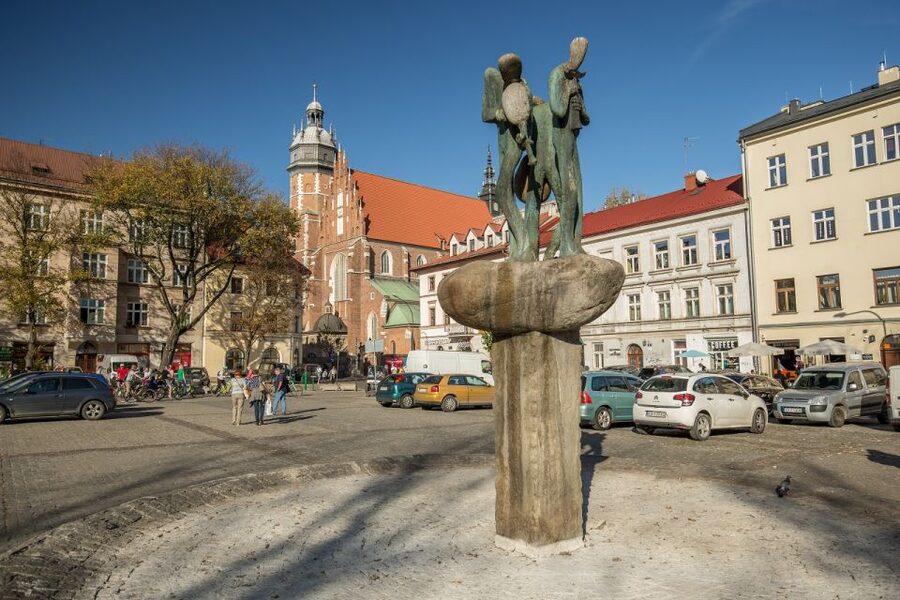
Across the square is the historic Under the Eagle Pharmacy. The pharmacy is linked with Tadeusz Pankiewicz and his staff, who provided vital help to people living in the ghetto.
This stop brings a different kind of wartime story. The wall and square show the machinery of control and deportation. The pharmacy points to practical assistance, courage, and moral choice within that system. Your guide explains how this place became important to people trying to survive.
The pharmacy also helps you think about everyday needs. Under occupation, medicine and basic care were not small matters. A pharmacy could become a place where information, aid, and human contact continued despite the danger.
Entrance fees to attractions are not included, so check the details for your selected departure if you hope to enter any site. The walking tour itself is built around the historic locations and the guide’s explanation. Do not book it expecting a long indoor museum visit.
For me, this is one of the strongest stops because it keeps the story personal. The history is not only about official orders and large events. It is also about people deciding what help they could offer when helping others carried risk.
What the preserved streets can tell you
Between the main stops, the route passes wartime streets and buildings in Podgórze. These places are important precisely because they are not presented as a stage set. You see a real city district, then learn how occupation changed its use and meaning.
The guide helps you picture daily life under severe restrictions. The supplied tour details emphasize ordinary places becoming scenes of fear, courage, and survival. That approach is more valuable than a simple list of dates because it asks you to consider how people ate, worked, moved, waited, and tried to protect one another.
You will not see every location connected with Kraków’s wartime past in one hour. This is a selected route. Its strength is the connection between a few important sites, not the number of addresses covered.
If you have already visited several museums about World War II, the walk can still add something. Museums provide documents, objects, and displays. Here, the streets and spaces give those stories a physical setting. If you know little about the period, the guide’s context is even more important.
The guide makes or breaks the hour
A one-hour history walk depends heavily on the guide. The best version of this experience needs clear speech, good pacing, and enough context to make each stop matter without turning the tour into a lecture.
The available guide languages are English, German, Italian, French, and Spanish. Recent guide feedback specifically praises Elena for being friendly and Renata for clear explanations and willingness to help. One English-language assessment also notes that the host spoke at a speed that was easy to follow and answered questions well.
Those details matter. History tours can become tiring when the guide races through names or speaks at length without checking whether the group is following. The comments about clarity and pace suggest that this experience is suited to people who want explanation without a heavy academic style.
Ask questions when there is a natural pause. With only one hour, the guide will need to balance questions with the planned route. You should expect a focused overview rather than a private discussion of every detail of Kraków’s wartime history.
Is $15 good value?
At $15 per person, this is an inexpensive way to put the Podgórze sites in context. You are paying for a professional licensed guide and a one-hour walking route. There is no transport cost to add within the tour, and the meeting point is easy to identify at Schindler’s Factory.
The price is strongest if you want orientation. You can walk through the former ghetto on your own, but you may not understand what you are seeing. The guide turns wall fragments, a square, a pharmacy, and ordinary streets into connected parts of one historical account.
The value is more limited if you expect several museum entries. Attraction entrance fees are not included, and the tour lasts only one hour. You are buying interpretation, not a full-day program.
I would treat this as a foundation visit. It can help you decide which museums or memorial sites deserve more of your time later. It also works well for a short Kraków stay because it delivers the main Podgórze context without taking half a day.
Timing, weather, and what to wear
The tour lasts one hour, and starting times depend on availability. That makes it easy to place before or after another Kraków activity, but you should leave a little space around it. Arriving late means missing the walk, and the ticket cannot be refunded after the group has departed.
The tour runs in all weather conditions. Check the forecast and dress for an outdoor walk. Comfortable footwear is important because the route takes place on city streets and includes several stops where you will stand while listening.
Rain or cold can affect how much attention you have for a serious subject. A waterproof layer, suitable shoes, and clothing for the forecast will make the hour easier. On a warm day, the same advice applies in reverse: bring what you need to stay comfortable while standing outdoors.
The weather policy is worth taking seriously. This is not a tour that moves indoors whenever conditions change. The route remains an outdoor walking experience.
Who should book this Podgórze tour?
I would recommend it to you if you want a clear introduction to Kraków’s Jewish Ghetto and prefer places explained on site. It is also a good fit if you have limited time, want a low-cost activity, or plan to visit Schindler’s Factory Museum separately.
It suits visitors who value human stories over a rapid checklist of attractions. The pharmacy, memorial chairs, and wall fragments work best when you are willing to pause and consider what ordinary city spaces meant during the occupation.
Families with older children may find the one-hour length manageable, though the subject is difficult. Anyone looking for light sightseeing should choose a different activity. This is a serious history walk, and the tone reflects that.
You should also consider your language needs. English, German, Italian, French, and Spanish are available, but you need to check the selected departure time for the language you want.
Should you book it?
Book this tour if you want the former Jewish Ghetto explained by a guide rather than encountered as a collection of unexplained streets. The $15 price and one-hour format make it an easy addition to a Kraków itinerary, especially before a separate visit to Schindler’s Factory Museum.
Skip it if you want long museum visits, extensive interior access, or a full-day study of wartime Kraków. The route is short, entrance fees are separate, and the subject demands attention.
For most visitors interested in Kraków’s wartime past, I think it is a sensible choice. The surviving wall, empty chairs, and Under the Eagle Pharmacy give you three strong anchors, while the guide supplies the meaning that the streets alone cannot provide.
FAQ
How long is the Jewish Ghetto walking tour?
The tour lasts one hour.
How much does the tour cost?
The listed price is $15 per person.
Where does the tour meet?
Meet in front of the main entrance to Schindler’s Factory Museum, on the right-hand side. The guide will hold an excursions.city sign.
Which languages are available?
The live guide service is available in English, German, Italian, French, and Spanish.
Is entry to Schindler’s Factory Museum included?
No. Entrance fees to attractions are not included in the tour price.
Can I cancel for a full refund?
Yes. You can cancel up to 24 hours in advance for a full refund.
Do I need to pay when I book?
No. The reserve now and pay later option lets you book your place without paying at the time of reservation.
What happens if I arrive late?
Arrive 10 minutes before the start. Once the group has departed, late arrivals cannot join, and the ticket cannot be refunded.
Does the tour run in bad weather?
Yes. The tour takes place as planned in all weather conditions. Check the forecast and wear suitable clothing and footwear.
Just added around Krakow
- Krakow: Jewish Quarter Guided Walking Tour★ 4.8 · 119 reviews
- Krakow: Old Town Guided Walking Tour★ 4.6 · 94 reviews
- Krakow: Old Town Highlights Walking Tour★ 4.5 · 173 reviews
- Krakow: 2h Kazimierz (Jewish Quarter) Walking Tour★ 4.5 · 75 reviews
- Krakow: Street Food Walking Tour★ 4.8 · 285 reviews
- Krakow: Jewish Ghetto Walking Tour★ 4.6 · 349 reviews
- Kraków: Old Town & Wawel Castle Walking Tour in English★ 4.8 · 532 reviews
- Krakow: Legends and Tales of Old Town Walking Tour★ 4.8 · 227 reviews
Jewish Heritage Walking Tours, compared.

Amsterdam Anne Frank: Small-Group Walking Tour & Local Guide
Read our review →
Anne Frank’s Story – Guided Walking Tour through Amsterdam
Read our review →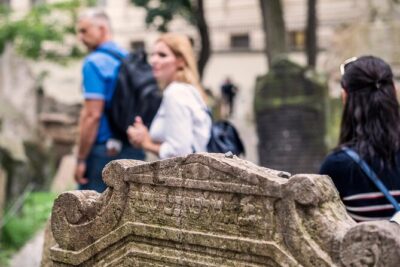
Jewish Quarter Walking Tour with Admission Tickets
Read our review →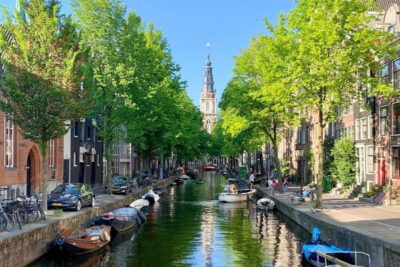
Anne Frank Guided Walking Tour in DE/EN/IT/ES
Read our review →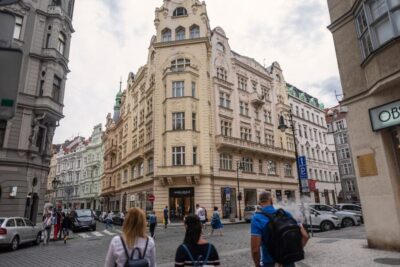
Old Town and Jewish Quarter Guided Walking Tour
Read our review →
Anne Frank Walking Tour Amsterdam Including Jewish Cultural Quarter
Read our review →
Anne Frank’s Last Walk & See Anne Frank House in Virtual Reality
Read our review →Browse the lists this tour appears in