
REVIEW · INDIA
Jodhpur Heritage Walk
Jodhpur’s best stories often hide in its narrow lanes, not behind the ticket desk at Mehrangarh Fort. This private walk begins near the Clock Tower and takes you into the old city’s blue-painted homes, temples, havelis, markets, and everyday life. I like the chance to see how the city works, not just how it photographs. I also like that guides such as Prabhat and Rishi Jodha can bring social and political context to the walk, instead of reciting dates.
The private format is another strong point. You can ask questions, pause for photos, shop, or try snacks without being tied to a large group. The main consideration is the walking itself: lanes can be crowded, surfaces uneven, and the hot weather may make a three-hour outing feel longer than expected.
Key points to know before you go
- Start beside the Clock Tower: Meet near Ghanta Ghar in Sardar Market, a useful central point in the old city.
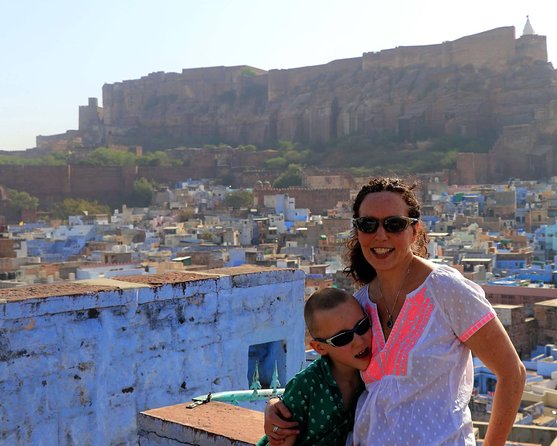
- See the Blue City at street level: The walk focuses on blue-painted homes, havelis, temples, architectural details, and narrow back lanes.
- Learn practical local traditions: Rainwater harvesting and other features of Jodhpur’s buildings are part of the explanation.
- Make room for food and shopping: You may stop for local snacks, sweets, tea, or a visit to a local home to learn about masala chai.
- Private guiding gives you flexibility: Only your group takes part, with several tour times available.
- Allow three to four hours: The advertised walk lasts about three hours, but the experience can run closer to four.
Why this walk adds meaning to Jodhpur’s blue lanes
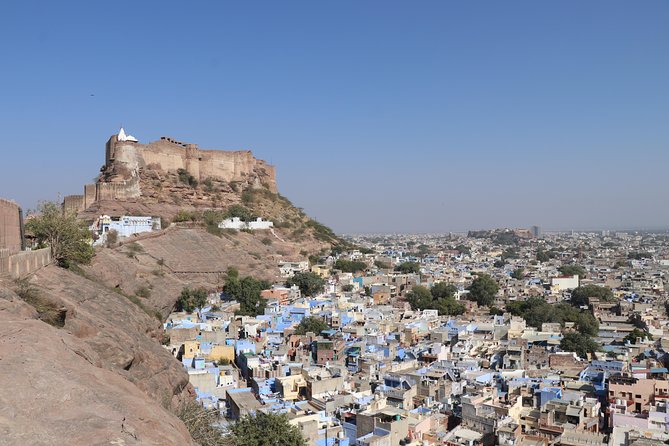
Jodhpur is easy to reduce to a postcard: blue walls, a giant fort, and a golden desert setting. The heritage walk gives you a better way to read the city. Instead of simply passing a painted doorway, you can ask why a building looks the way it does, how the old city was planned, and how people still use these lanes today.
That distinction matters. A fort visit gives you grand views and royal history. This walk is more intimate. You move through the spaces between the monuments, where temples, houses, shops, and daily routines share the same tight streets.
The guides bring different strengths. Prabhat is frequently identified with clear explanations of Jodhpur’s cultural and historical life, while Rishi Jodha is described as fluent in English and especially good at explaining the city’s social and political background. Pranhat has also led walks through the old city, and Sabiya has guided visitors to interesting places and photo spots. Since guides can vary, your experience may depend on who is assigned, but the private format gives you a chance to shape the conversation.
I would book this early in a Jodhpur stay. It helps you understand the old city before you return on your own, and it can point out places you might otherwise pass without noticing.
A few more walking tours around India worth a look
- Fontainhas Heritage Walk by Make It Happen
★ 5.0 · 2,834 reviews - The Great Indian Food Tour: Old Delhi Food and Heritage Walk
★ 5.0 · 1,698 reviews - Group Guided Walking Tour in Fort and Colaba
★ 5.0 · 1,073 reviews
Starting at Ghanta Ghar and Sardar Market
The meeting point is near Ghanta Ghar, Jodhpur’s Clock Tower, in Sardar Market. This is a sensible starting place because it puts you right beside the old city’s commercial heart rather than leaving you at the edge of a quiet neighborhood.
From here, expect a lively mix of market activity, old buildings, shopfronts, and lanes leading deeper into the city. The walk is not a staged attraction with a fixed display at every stop. Its appeal comes from seeing architecture in context, with homes and businesses still part of the scene.
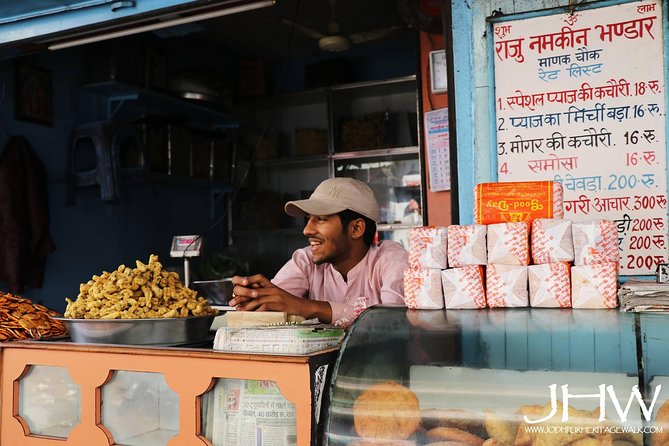
The market portion also gives you the option to shop or taste local snacks. You do not have to turn the walk into a shopping trip, but it is useful to have a guide nearby if you want help understanding what you are seeing or deciding what to buy. Keep in mind that stopping for food or shopping can stretch the outing beyond the shortest three-hour estimate.
This first section may feel busy compared with the quieter residential lanes later on. That contrast is useful. It shows how the old city shifts from market streets to domestic neighborhoods within a short distance.
Reading the Blue City one doorway at a time
The blue-painted houses are the visual centerpiece, but the walk aims to explain more than their color. You will see how doorways, walls, courtyards, facades, and narrow lanes fit into the city’s older design.
The blue paint creates excellent photo opportunities, and several guides have been praised for pointing out good places to take pictures. Still, I would treat the photos as a bonus. The better reason to join is the explanation of what sits behind the walls and how the old city developed.
The walk also includes temples and old havelis. These buildings help show the range of architectural styles in Jodhpur. Some details may be easy to miss when you walk alone, especially in lanes where several centuries of construction sit close together.
Do not expect a museum-style collection of labeled exhibits. The guide’s interpretation is the main attraction. You will learn by looking closely, asking questions, and comparing one street or building with the next.
Rainwater harvesting and the practical side of old architecture
One of the more useful parts of the experience is the attention to local practices such as rainwater harvesting. This gives the architecture a practical purpose. Old buildings are not only decorative backdrops. Their design reflects the need to manage water and adapt to a dry climate.
I like this kind of explanation because it changes the way you look at the city. A wall, roof, courtyard, or storage feature can tell you something about daily life and local problem-solving. You leave with more than a list of monuments. You begin to notice how buildings respond to the place around them.
The exact depth of this discussion will depend on your guide and your questions. If this is a subject you care about, ask for examples as you walk. A private tour is especially useful here because you do not need to hold back while the guide follows a set speech.
This is also one reason the walk suits repeat visitors. If you have already seen the main fort and palace, the practical details of homes and neighborhoods offer a fresh angle on Jodhpur.
Same streets, a different route:
- Spiritual City Walking Tour-THE Pushkar Route
★ 5.0 · 907 reviews - Private Guided Walking Tour in Fort & Colaba
★ 5.0 · 895 reviews - Old Goa Heritage Walk by Make It Happen
★ 5.0 · 797 reviews - Old Delhi Food, Heritage&Cultural Walk with Rickshaw ride to Masterji Kee Haveli
★ 5.0 · 742 reviews
Temples, havelis, and the story of a planned city
The walk is built around Jodhpur’s architecture and heritage monuments, while also tracing the city’s planning and establishment. You can expect the guide to connect individual buildings with the wider story of the old city.
Temples and havelis are important stops because they bring together design, belief, family life, and social history. A haveli is not simply an attractive old residence. Its layout and decoration can raise questions about privacy, status, climate, and how several generations used a home.
The experience also leaves room for social, economic, and political discussion. That is a major strength if you like history with its complications intact. Jodhpur is not presented only as a royal backdrop. The guide can help you think about how the city changed, who lived in its neighborhoods, and how older traditions connect with present-day life.
That conversational style may not suit someone who wants a fast checklist of sights. If you prefer to cover many monuments quickly, a sightseeing vehicle or standard fort visit may be more efficient. If you want to understand the old city’s texture, the slower pace works in your favor.
Market snacks, sweets, tea, and a possible home visit

Food is woven into the walk rather than treated as a separate tasting tour. You may have chances to try local snacks and sweets along the way, and past itineraries have also included tea at a blue house.
There may be an opportunity to visit a local home and learn how to make masala chai. This is a particularly appealing option because it turns a familiar drink into a small lesson in household routine and local flavor. It also offers a more personal encounter than buying a snack from a market stall.
The wording is important: these food moments are opportunities, not a guaranteed formal tasting menu. Your stops can depend on timing, availability, your interests, and the choices made during a private walk. Tell your guide early if you want to focus on food, shopping, architecture, or photography.
If you have dietary restrictions, ask before accepting anything. The supplied details do not specify a food-safety policy or alternatives, so you should handle this directly with the operator.
How the private format changes the experience
This is a private activity, meaning only your group participates. That affects the walk in several useful ways. You can ask about a carved doorway for five minutes, move on quickly from a shop, or stop for a photograph without holding up strangers.
A private guide can also adjust the conversation. Prabhat’s background in social and political discussion may suit someone who wants more than sightseeing. A guide such as Sabiya may be especially helpful if you want photo locations and local context. The available names show that the company has used several guides, so it is sensible to request a particular guide if that matters to you, though the supplied details do not promise that request can be fulfilled.
Several start times are available. That helps you fit the walk around a fort visit, a train arrival, or an afternoon rest. A morning departure may be more comfortable in warm weather, while another time could work better if your schedule is tight. The information does not specify every start time, so check the booking options before paying.
The walk ends back at the meeting point near the Clock Tower. That makes planning simple, especially if you are continuing into Sardar Market afterward.
Is $26.67 good value for three hours?
At $26.67 per person, the value depends on how much you want from a guide. You are not paying only for a list of sights. You are paying for a private conversation, local orientation, architectural interpretation, and the freedom to shape the route within the heritage walk.
For a solo visitor, the price may feel higher than joining a group. For two or more people, the private arrangement becomes more attractive because the cost buys attention for your own party. It can also save you from hiring separate help for finding the old city’s lanes, identifying buildings, and choosing where to stop.
The included admission is listed as free, so do not expect entrance tickets to major paid monuments to be part of this experience. The focus is on the streets, architecture, markets, and local encounters. You may also spend extra on snacks, tea, or shopping.
I consider the price fair for anyone who values local explanation and a relaxed pace. It is less compelling if you only want a quick photo walk or a transport-based tour of major attractions.
Walking comfort, timing, and practical preparation
The walk lasts about three hours, with the total experience described as roughly three to four hours. Wear comfortable shoes and bring water. The supplied details do not promise transport between stops, so plan on walking for the full outing.
The route passes through market areas and narrow lanes. Expect a street-level experience rather than polished paths. Most people can participate, but anyone with mobility concerns should ask the operator for more detail before booking because the available information does not describe the surfaces or step-free access.
A mobile ticket is provided, and confirmation arrives when you book. The meeting point is near public transportation, but no exact transport instructions are supplied. Use the Clock Tower and Sardar Market names when planning your approach, and allow a little extra time to find the precise meeting spot.
Good weather is required. If poor weather cancels the walk, you can receive a full refund or move to another date. You can cancel for a full refund up to 24 hours before the local start time. Inside that 24-hour window, refunds are not available and changes are not accepted.
Who will enjoy this Jodhpur walk most?
I would choose this for a first or second day in Jodhpur, especially if you want a better feel for the old city before exploring it alone. It suits curious visitors who enjoy asking questions, stopping for food, and looking at ordinary buildings as carefully as famous monuments.
It is also a good fit for photographers. The blue houses, old lanes, temples, havelis, market scenes, and possible rooftop or terrace views provide plenty to frame. Just remember that the walk’s value lies in the explanation as much as the pictures.
Families and small private groups may appreciate the flexible pace. Food-focused visitors should mention their interest at the start. History fans should ask for the social and political side of Jodhpur, an area that guides such as Prabhat and Rishi Jodha have handled well.
I would look elsewhere if you want a short, fully seated tour, guaranteed monument entry, or a tightly scripted list of attractions. This is a walking conversation through the old city, not a substitute for visiting Mehrangarh Fort or other major paid sights.
Should you book the Jodhpur Heritage Walk?
Book it if you want to understand the Blue City beyond its famous color. The strongest reasons are the private guide, the mix of architecture and daily life, the chance to discuss rainwater harvesting and local history, and the flexible stops for snacks, tea, shopping, or masala chai.
The main cautions are modest but real: you will walk for several hours, the route may be warm and crowded, and food experiences are possibilities rather than fixed inclusions. At $26.67 per person, I think it offers good value for a small group that wants personal attention and local context.
For the best result, request a morning time if the weather is hot, tell the guide what interests you, and allow the walk to set your bearings before you tackle Jodhpur on your own.
FAQ
Where does the Jodhpur Heritage Walk begin?
The meeting point is near Ghanta Ghar, the Clock Tower, in Sardar Market, Jodhpur. The walk ends back at the same meeting point.
How long does the walk last?
The activity lasts approximately three to four hours. The main walking portion is listed as three hours.
Is this a private tour?
Yes. Only your group participates, so you have personal attention from the guide and more flexibility than on a shared group walk.
What can I see during the walk?
The experience covers Jodhpur’s architecture and heritage, including blue-painted houses, temples, havelis, market areas, narrow lanes, and other architectural features. The guide also discusses local practices such as rainwater harvesting.
Can I try food or shop during the walk?
Yes. You have the chance to shop and try local snacks. Depending on the arrangements, you may also enjoy tea or learn to make masala chai in a local home.
What is the cancellation policy?
You can cancel up to 24 hours before the local start time for a full refund. Cancellations or changes made less than 24 hours before the start are not accepted for a refund. If poor weather causes the activity to be canceled, you can receive a full refund or choose another date.
Just added around India
- walk to bluecity heritage tour★ 5.0 · 123 reviews
- Private Jodhpur Blue City Walking Tour with Guide★ 5.0 · 321 reviews
- Blue City Heritage Private Walking Tour With Pickup and Drop-Off★ 5.0 · 441 reviews
- Jaipur Heritage Walking Tour – Local life, Havelis and Temples★ 5.0 · 72 reviews
- Jaisalmer private walking tour★ 5.0 · 85 reviews
- Jaipur Heritage Evening Walk – The Twilight Magic of Pink City★ 5.0 · 93 reviews
- Magical Walk of Jaipur★ 5.0 · 121 reviews
- Nahargarh Water Walk – Guided 2-Hour Heritage Tour in Jaipur★ 5.0 · 89 reviews
Walking Tours, compared.

Magical London: Harry Potter Guided Walking Tour
Read our review →
Reykjavik Food Walk – Local Foodie Adventure in Iceland
Read our review →
History and Hauntings of Salem Guided Walking Tour
Read our review →
New Orleans Premier Ghost, Voodoo and Vampire Walking Tour
Read our review →
Amsterdam Anne Frank: Small-Group Walking Tour & Local Guide
Read our review →

Edinburgh Castle: Guided Walking Tour with Entry Ticket
Read our review →
Anne Frank’s Story – Guided Walking Tour through Amsterdam
Read our review →Browse the lists this tour appears in