
REVIEW · UK
Fascinating Walking Tours Of Roman Chester With An Authentic Roman Soldier
Roman Chester comes alive when a guide in a legionary’s kit explains not just what remains, but how soldiers lived, worked, ate, were paid, and faced danger. This 90-minute walk covers the amphitheater, fortress walls, Roman Gardens, and archaeological fragments tucked into modern Chester.
I like the mix of major sights and small discoveries, especially the Roman stones and Principia columns visible beneath a café. I also like the human scale: guides such as Marcus, Julius, Gaius, and Hippolyta explain ranks, pay, hygiene, training, and daily life, then welcome questions.
The main drawback is that much of Roman Chester survives in fragments rather than grand standing ruins. The walk also depends on good weather, and one cellar stop may not suit every wheelchair user.
Key points to know before you book

- Britain’s largest Roman amphitheater: Learn about the people who fought and died here, using the remains and archaeological evidence on site.
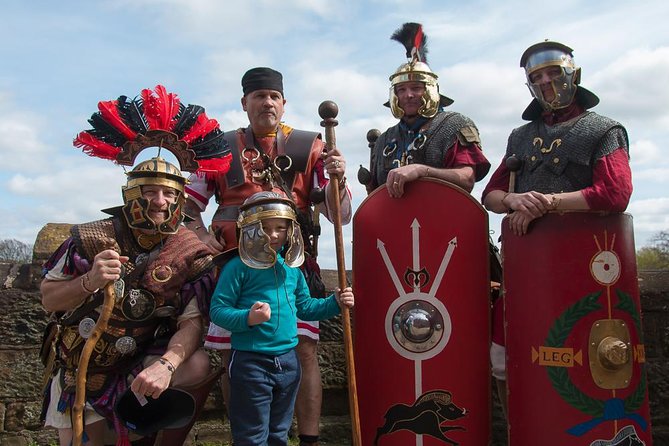
- A costumed Roman guide: Julius, Marcus, Gaius, Tiberius, Faustus, and Hippolyta are among the guides named in guest feedback, each bringing a different personality.
- Roman Chester beneath modern streets: See fortress remains, Principia columns beneath a café, and genuine Roman material in unexpected places.
- A practical 90-minute introduction: The route gives you a useful first look at Chester’s Roman past without taking up half a day.
- Small groups: The maximum group size is 15, which makes questions easier than on a large coach tour.
- Good value at $16.64: For a guided walk covering several Roman sites, the price is modest, especially if you want context rather than a quick look at stones.
Why a Roman soldier makes Chester easier to understand
Chester can be confusing at first. Roman remains are scattered through the modern city, and the original fortress is not preserved as one complete site. You may walk past an old wall, a column, or a stone set into a building without knowing what you are seeing.
A guide dressed as a Roman soldier gives the walk a clear thread. Instead of treating Chester as a string of disconnected ruins, the tour explains the city as a military base, a working settlement, and a home for people from across the Roman world.
The costume is not just a photo opportunity. It helps frame the practical questions that make ancient sites interesting. How much did a soldier earn? What work did he do? Where did he sleep? What did he eat? How did rank affect daily life? The guides cover these subjects along with personal hygiene, living quarters, training, and risk.
The human details are one of the strongest parts of the experience. One guide explained that some Roman soldiers came from areas now in Ukraine and Russia. A female guide also discussed the place of women around the fortress, including the rule that women had to sleep outside the walls. Details like these move the tour beyond generals and emperors.
Guides bring their own style. Marcus is described as funny and enthusiastic, while Julius is praised for strong historical knowledge and easy conversation. Gaius, Tiberius, Faustus, and Hippolyta also receive specific praise for keeping the walk lively. You should expect the exact tone to depend on who leads your group, but the format allows for both facts and personality.
A few more walking tours around the UK worth a look
- Magical London: Harry Potter Guided Walking Tour
★ 4.7 · 22,044 reviews - Edinburgh: Harry Potter Magical Guided Walking Tour
★ 4.8 · 11,944 reviews - Edinburgh Castle: Guided Walking Tour with Entry Ticket
★ 4.7 · 11,699 reviews
Starting at Chester Town Hall

The walk begins at Chester Town Hall on Northgate Street, a useful central meeting point. You do not need to plan a separate trip out to the edge of the city. The Roman remains are woven into the center, which is part of the appeal and part of the challenge.
This is an urban walking tour, not a visit to one enclosed archaeological park. You will move through public streets and open areas, pausing as the guide points out remains and explains their purpose. Wear sensible shoes, since the route involves walking through the city rather than standing in one viewing area.
The group limit is 15 people. That is small enough for the guide to hear questions and for you to follow the commentary without the feeling of being in a crowd. It also means that a group member who wants to ask about a particular stone, rank, artifact, or building can usually do so without holding up a large procession.
The tour is offered in English and includes a mobile ticket. Confirmation is provided when you book. Chester is served by public transportation, and the meeting point is in the city center.
Chester Roman Amphitheater: combat, crowds, and evidence
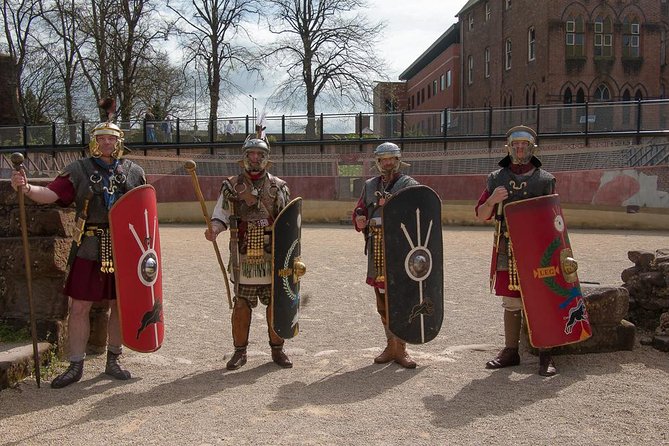
The Roman Amphitheatre is one of the tour’s clearest highlights. It is described as Britain’s largest Roman amphitheater, and the setting gives you a strong sense of the scale of public entertainment in Roman Chester.
The guide uses the remains and archaeological evidence to discuss the people who fought and died here. That framing matters. The amphitheater is not only a grand building; it was a place where real people faced violence while crowds watched.
Expect about 15 minutes at this stop. That is enough time for an explanation and questions, but not a long archaeological lecture. If you have already visited the site, the guide’s value comes from supplying the missing context. You may see the same stones on your own, but you are less likely to understand how the building fitted into the Roman fortress and the life of the city.
The walk does not turn the site into a sensational spectacle. It connects the arena to Roman military culture and public life. I would pay close attention to the archaeological clues here, since they show how historians work from partial remains rather than a complete ancient building.
Fortress walls and the scale of Roman Chester
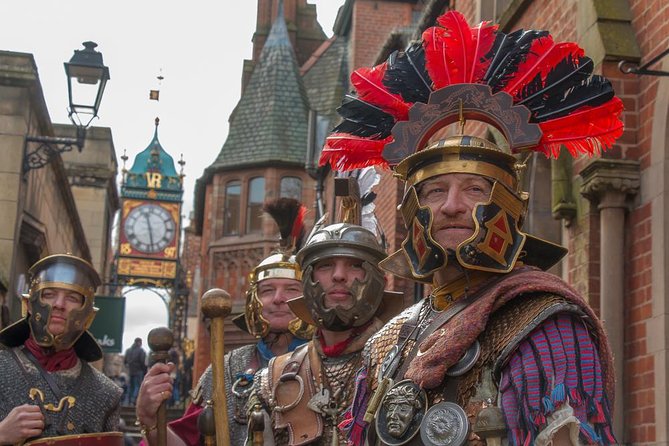
The Roman fortress once shaped the city, and parts of its defensive walls still survive. Some sections reach more than 5 meters in height, giving you a better sense of the fortress than low foundations alone could provide.
This is where a guide makes a real difference. A surviving wall can look like a piece of old masonry until someone explains where it sat in the larger fortress plan. The Roman route helps you picture Chester as a strategic military center, not simply a town with a few Roman stones.
The remains are spread through the modern city. That creates a pleasant sense of discovery, but it also means you should not expect a continuous Roman street plan. The walk connects fragments and explains what archaeologists have found around them.
A particularly memorable stop may be the Principia columns beneath a modern café. The remains are easy to miss if you do not know they are there. This is one of the best reasons to take the guided walk early in your Chester visit: you can return to the streets afterward with a better eye for what is old, reused, or hidden.
You may also handle reproduction pieces and some real artifacts during the explanation, depending on the guide and the tour conditions. That hands-on element gives children something concrete to focus on, while adults with a serious interest in ancient history can ask more detailed questions.
Same streets, a different route:
- Underground Vaults Walking Tour in Edinburgh Old Town
★ 4.5 · 8,506 reviews - London: The Original Jack the Ripper Walking Tour
★ 4.7 · 7,833 reviews - Oxford University Walking Tour With University Alumni Guide
★ 5.0 · 6,905 reviews - Edinburgh Castle: Guided Walking Tour with Entry Ticket
★ 5.0 · 5,540 reviews
Roman Gardens and the hypocaust system
The Roman Gardens provide another useful stop, lasting about 15 minutes. Here you see a reconstructed Roman hypocaust system, made with original pila stones and reconstructed or mosaic flooring found during excavations of Roman military baths.
A hypocaust heated a building from below. The pila stones supported a floor and left space for hot air to circulate beneath it. The guide explains how the system worked and why the surviving pieces were relocated to the gardens.
This stop is valuable because it turns a technical feature into something you can understand at ground level. Rather than seeing a few old stones without context, you learn what they supported and how the Roman bath complex functioned.
The display combines original material with reconstruction. That is not a weakness, but it is worth knowing. The rebuilt sections help you picture the system, while the original pila stones and recovered floor material connect the explanation to the ancient building.
The Roman baths also offer a reminder of how much Chester has lost. A large and impressive bath complex was demolished for a shopping development after only four days of basic archaeological investigation. The guide may use this story to explain why archaeological protection matters and how much evidence can disappear before it is properly recorded.
The small discoveries are often the best part
I like the way this walk looks beyond the main monuments. The most satisfying moment may not be the largest ruin, but a basement or café where Roman remains survive below the modern floor.
A cellar stop is included in some versions of the route. One section involves going into a basement, so a person using an electric wheelchair may miss that part. The rest of the tour was described as accessible for an electric wheelchair, but you should be aware of this specific limitation before booking.
The hidden remains also show why Chester rewards a guided walk. Modern buildings have grown around the fortress, and ancient stones have been reused or left in place below later structures. The guide points out what you would probably pass without noticing.
You can also ask about artifacts, military equipment, and the guide’s custom-made legionary kit. Handling a reproduction piece or seeing how the equipment fits together makes the Roman soldier less abstract. It helps you think about weight, rank, work, and identity rather than only dates.
What the guides do best
The strongest praise for this experience focuses on the guides’ delivery. The facts matter, but the walk works because the guides tell them with humor, energy, and patience.
Marcus is described as engaging, funny, and full of enthusiasm. Julius is praised for combining a historian’s command of the subject with a relaxed manner. Gaius is described as entertaining and good with questions, while Tiberius kept children involved during the walk. Faustus brought an entertaining style, and Hippolyta used anecdotes to explain the daily lives of legionaries and civilians.
You should not expect every guide to deliver the same script in the same way. That can be a benefit. One guide may focus on military life, another on archaeological evidence, and another on stories about Chester and the people who lived here.
The format suits curious questioners. Guides are happy to explain details about wages, ranks, trades, living quarters, hygiene, and the risks faced by soldiers. If someone in your group tries to dominate the conversation, the experience can become less smooth, but the normal setup encourages questions and discussion.
The tone also works across age groups. Children get costumes, equipment, and stories. Adults get archaeological detail and a clearer view of the Roman fortress. Someone with advanced study in ancient history may still find new facts, though the tour remains an introduction rather than a specialist seminar.
Price, timing, and who gets the best value
At $16.64 per person, this is a reasonably priced way to orient yourself in Chester. You are paying for 90 minutes of interpretation across several Roman locations, not admission to a large museum or a full-day guided program.
The free entry at the listed stops helps the value. The main expense is the guide, and that is exactly where the experience earns its keep. Roman walls, gardens, and an amphitheater are more useful when you understand what you are looking at.
The tour is usually booked about two weeks ahead, so I would reserve before your visit if your schedule is fixed. The maximum of 15 people keeps the walk personal without making it private.
This tour suits:
- First-time visitors who want a clear introduction to Roman Chester.
- Families looking for a short activity with stories and visual remains.
- History fans who enjoy military life, archaeology, and ancient engineering.
- People with only a morning or afternoon in Chester.
- Local residents who have walked past the remains but never had them explained.
It may not suit you if you want a long, quiet examination of one archaeological site, a fully indoor activity, or a tour with no walking between locations. Bad weather can affect the experience, since the activity requires good conditions.
Practical details before you go
The walk starts at Chester Town Hall, Northgate Street, Chester CH1 2HJ. The supplied directions state that tours terminate at the Roman Amphitheatre and that the guide will direct you to the next destination. A separate end address is also provided at 23 Little St John Street, so check the exact meeting and finishing instructions on your confirmation before setting off.
The activity is conducted in English. Service animals are allowed, and the route is near public transportation. Most people can take part, but remember the basement stop and the outdoor nature of the walk if mobility or weather is a concern.
Free cancellation is available if you cancel at least 24 hours before the start time. Cancellations made less than 24 hours ahead are not refunded, and late changes are not accepted. If poor weather forces cancellation, you can receive a different date or a full refund.
Should you book the Roman Chester walk?
I would book it if you want Chester’s Roman remains to make sense quickly. The amphitheater and walls provide the visual anchors, while the hypocaust, Principia columns, artifacts, and basement remains add the small details that make the city memorable.
At $16.64, the tour offers good value for a compact introduction. Choose it early in your stay if possible, since the guide can show you Roman features you might otherwise miss during later walks around Chester.
Skip it only if you dislike guided groups, need a fully indoor activity, or want an in-depth archaeological study. For most people who want a lively, practical look at Roman Chester, the 90-minute format hits the right balance.
FAQ
How long does the Roman Chester tour last?
The tour lasts approximately 1 hour and 30 minutes.
Where does the tour begin?
The meeting point is Chester Town Hall on Northgate Street, Chester CH1 2HJ, UK.
Where does the tour finish?
The tour information states that tours terminate at the Roman Amphitheatre and that the guide will direct you to the next destination. A separate end address is also listed as 23 Little St John Street, Chester CH1 1RF, UK, so check your booking confirmation for the exact directions.
What language is the tour offered in?
The tour is offered in English.
What Roman sites are included?
The walk includes Chester Roman Amphitheatre, sections of the Roman fortress walls, and the Roman Gardens. It also covers a reconstructed hypocaust, Roman bath remains, archaeological evidence, and Roman material beneath a modern café.
How many people can join the tour?
The maximum group size is 15 people.
Is the tour suitable for wheelchair users?
Most people can participate, and one electric wheelchair user completed nearly all of the tour. One basement section was not accessible to that participant, so you should allow for missing that part.
Can I cancel for a refund?
You can cancel for a full refund up to 24 hours before the start time. Cancellations made less than 24 hours before the experience are not refunded. If poor weather causes the operator to cancel, you will be offered another date or a full refund.
Just added around the UK
- Falmouth: Vibrant Historical Walking Tour (award-winning)★ 4.9 · 75 reviews
- The Must-Sees of Edinburgh: Small Group Walking Tour in French★ 4.9 · 88 reviews
- Edinburgh: Old Town History Walking Tour★ 4.9 · 528 reviews
- Edinburgh: Old Town Stories – Guided Walking Tour★ 4.9 · 86 reviews
- Ghosts, Ghouls & Gallows :The Original Bristol Ghost Walk★ 4.6 · 76 reviews
- Edinburgh: Private Walking Tour with a Local★ 4.4 · 78 reviews
- Edinburgh: Private Walking Tour in French with Clémentine★ 5.0 · 73 reviews
- Edinburgh: Multi-Sensory Old Town Historical Walking Tour★ 4.6 · 290 reviews
Walking Tours, compared.

Magical London: Harry Potter Guided Walking Tour
Read our review →
Reykjavik Food Walk – Local Foodie Adventure in Iceland
Read our review →
History and Hauntings of Salem Guided Walking Tour
Read our review →
New Orleans Premier Ghost, Voodoo and Vampire Walking Tour
Read our review →
Amsterdam Anne Frank: Small-Group Walking Tour & Local Guide
Read our review →

Edinburgh Castle: Guided Walking Tour with Entry Ticket
Read our review →
Anne Frank’s Story – Guided Walking Tour through Amsterdam
Read our review →Browse the lists this tour appears in