
REVIEW · DUBLIN
Dublin: North Quay Guided Ghost Walk
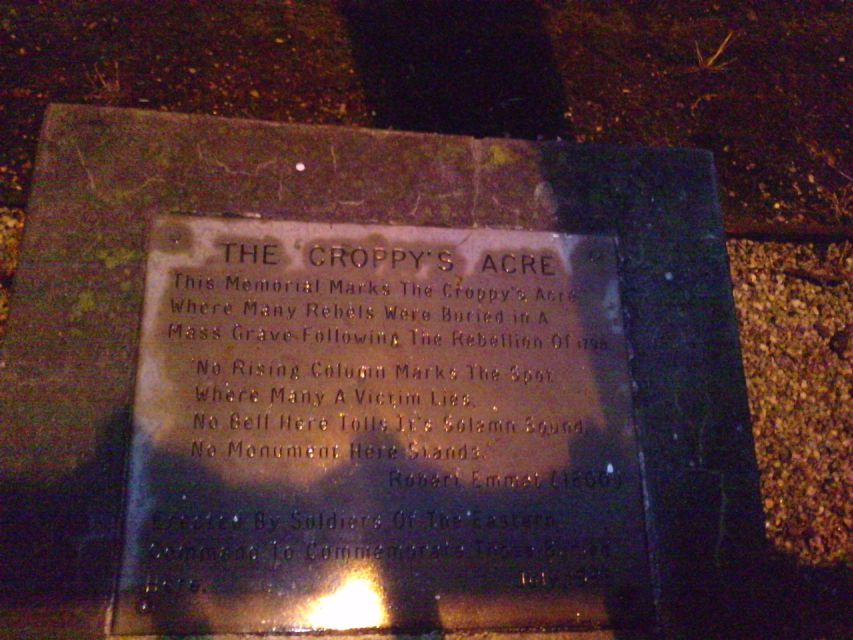
Dublin’s northside has more than pub stories and polished tourist sights. This walk takes you past Saint Mary’s Abbey, abandoned burial ground, haunted houses, and old Viking-era quarters, using ghost lore to reveal parts of the city many visitors miss. I like the mix of spooky tales and solid Dublin history, especially the stop at Croppie’s Acre, where a football pitch sits above a mass grave from the 1798 rebellion.
I also like that the guides, including Kate, Darragh, Derek, and Matthew, bring different personalities to the walk. Past tours have been funny, conversational, and free of overdone theatrics. The main caution is that this may feel more like a history walk with ghost stories than a full scare show, and the route keeps you on your feet for about 1.5 hours, with some people finding it closer to two.
Key points to know before you go

- Saint Mary’s Abbey reveals a forgotten medieval Dublin: A small ruin down an alley marks one of Ireland’s most powerful monastic settlements.
- Hendrick Street carries some of the darkest stories: Six ghosts were said to haunt the area between numbers 7 and 8.
- Croppie’s Acre adds serious historical weight: The site was once a football pitch, but beneath it lies a mass grave linked to the 1798 rebellion.
- The route explores Dublin’s northside: You’ll pass through medieval Oxmantown and former Viking enclaves, an area many standard city walks skip.
- The guides make or break the mood: Kate, Darragh, Derek, and Matthew have been praised for humor, storytelling, and useful local suggestions.
- It is spooky, not a haunted-house attraction: Expect stories, history, and atmosphere rather than actors, jump scares, or elaborate effects.
Why Dublin’s northside makes a good ghost walk

Dublin’s haunted reputation works best when it grows from real places. Here, old religious ruins, execution grounds, narrow streets, and forgotten neighborhoods provide the setting. You are not simply hearing a ghost story in a dark room. You are standing beside the place where the story is supposed to have happened.
That is the strongest idea behind the North Quay Guided Ghost Walk. The supernatural material gives you a reason to look closely at parts of Dublin that are easy to pass without noticing. At the same time, the walk gives historical context to the northside, including medieval Oxmantown and former Viking settlements.
I would not book this expecting a relentless horror experience. The tone leans toward storytelling, local history, and macabre detail. Some guides may play up the eerie side, while others may focus more on facts, jokes, and the odd strange tale. That variation is part of the appeal, but it also means the experience depends heavily on the guide on duty.
The overall rating is 4.2 from 144 ratings, which fits the experience well. The strongest response centers on the guides, the unusual route, and the amount of history packed into the walk. The weaker point is clear too: some people wanted more ghosts and less history, while others appreciated the balance.
More Ghost and Haunted Walks in Dublin:
- Haunted Dublin Walking Tour
★ 5.0 · 550 reviews - Dublin’s Haunted History Walking Tour
★ 4.3 · 345 reviews - Hidden Dublin: Haunted History Walking Tour v2.0 2026
★ 4.5 · 188 reviews
Meeting at The Church Bar on Mary Street
The walk begins outside The Church Bar and Restaurant on Mary Street, a practical central meeting point. You return here at the end, so there is no need to arrange a taxi or figure out a second location late at night.
Starting in a busy central area also gives the walk a useful contrast. You begin among ordinary Dublin streets, then move toward ruins, former settlements, and places linked to executions and apparitions. That change in mood tends to work better than starting in an obviously spooky setting.
Check the available departure times when you book. The listed duration is 1.5 hours, although some descriptions and feedback place the experience closer to two hours. Plan on being outside and walking for the full time. Comfortable shoes matter, especially if you have spent the day sightseeing already.
The tour is in English with a live guide. Group size can vary. One particularly enjoyable outing had a small group, which allowed Kate to answer questions and add extra Dublin tips. Other accounts describe a larger group that was still easy enough to follow, but a bigger crowd can make street-corner storytelling less intimate.
Saint Mary’s Abbey and the forgotten medieval city
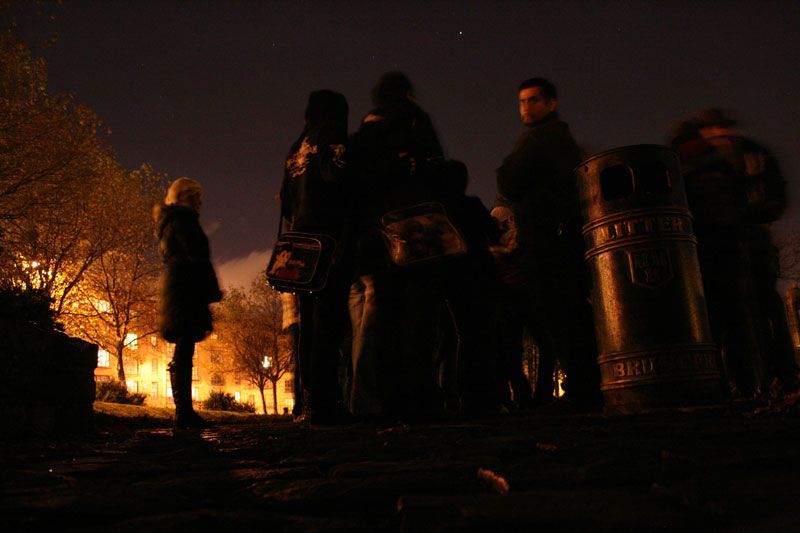
One of the first important stops is Saint Mary’s Abbey. Today, you find only a small ruin down an alleyway, an easy detail to miss while moving through the city. In medieval Ireland, though, the abbey was one of the country’s most powerful monastic settlements.
That contrast is exactly why this stop works. You see how much of Dublin’s past has been covered by later streets and daily life. Thousands of commuters may pass nearby without realizing that a major religious center once occupied the site.
The guide uses the abbey to set up the wider story of Dublin. Ghost stories here are tied to loss, upheaval, old buildings, and layers of history rather than simply a claim that a place feels cold or strange. I like that approach because it gives you something worthwhile even if you are skeptical about spirits.
You will also hear about medieval Oxmantown and former Viking enclaves. These names help you picture Dublin as a changing settlement rather than a city that began with its Georgian streets and modern shops. The northside route is valuable for that reason alone. It reaches parts of the city that can disappear from a first-time visitor’s plans.
Hendrick Street and Dublin’s haunted houses
The walk then heads toward Hendrick Street, once the location of two houses with a particularly grim reputation. Between numbers 7 and 8, no fewer than six ghosts were said to have lived or appeared.
This is the kind of stop where the guide’s delivery matters more than scenery. You are looking at an ordinary street, so the story has to supply the drama. A good guide gives you enough detail to imagine the building’s past without turning the moment into a stage performance.
Several guides have been praised for handling this balance. Matthew, for example, was described as funny and informative, with a good sense of timing. Darragh has also been praised as a personable storyteller. Kate has been singled out for answering questions and adding useful suggestions for the rest of a Dublin stay.
Do not expect access inside the former houses. The experience is a street-level walk, so the value comes from hearing what happened at each location and understanding the area around it. If you prefer active attractions with interiors, displays, or props, this stop may feel modest. If you enjoy letting a place and a story work together, it should land better.
More Guided Tours in Dublin:
- Dublin Highlights and Hidden Gems Guided Walking Tour
★ 5.0 · 6,020 reviews - Historical 2-Hour Guided Walking Tour of Dublin
★ 4.7 · 865 reviews - Food on Foot: Dublin Street Food Tour with Local Guide
★ 5.0 · 490 reviews - Dublin to Wicklow, Glendalough Small Group Tour with Guided Walk
★ 4.5 · 282 reviews
Croppie’s Acre and the weight of 1798
Croppie’s Acre is likely to be the most serious stop on the route. The site was used as a football pitch in the 20th century, yet underneath it lies a mass grave containing hundreds of rebels executed during the 1798 rebellion.
That detail changes the mood. The walk may be sold as a ghost experience, but places connected to political violence and mass burial need more than a spooky punch line. The story gives you a clearer sense of how Dublin’s past remains physically present, even when the surface use of a place has changed.
I appreciate this part of the route because it makes the tour more than a collection of haunted-house tales. It also explains why some people describe the walk as a history lesson with ghost stories. The supernatural angle may draw you in, but the political and social history can be what stays with you afterward.
The site may not offer much to look at in the usual sightseeing sense. Its importance comes from what lies beneath and what the guide tells you. Listen closely here, and treat the stop with some respect. It is not simply a spooky photo opportunity.
Saint Michan’s mummies and Bram Stoker’s Dublin
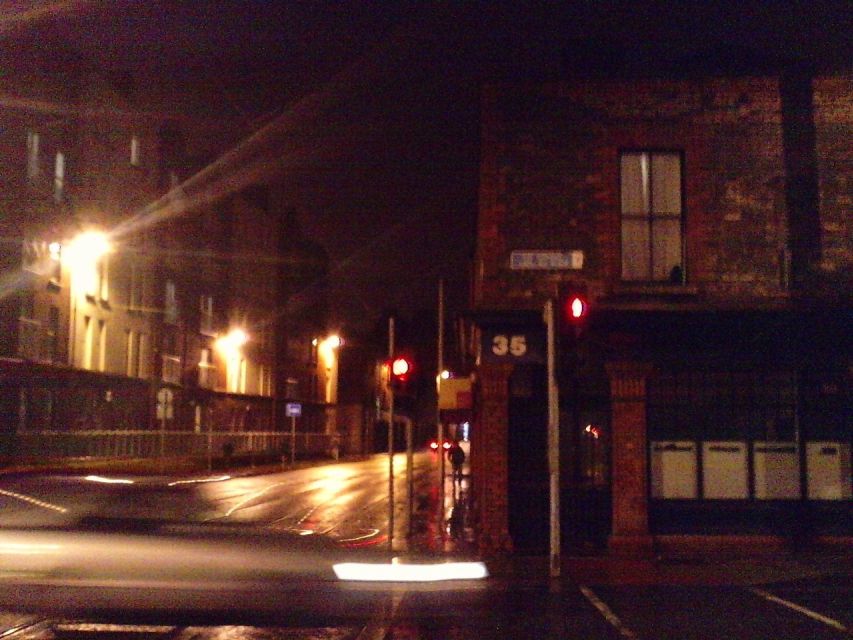
You will also hear about the mummies at Saint Michan’s Church, often described as one of Ireland’s most macabre attractions. The church and its preserved remains are linked to Dublin’s gothic side and to Bram Stoker, the Clontarf-born author of Dracula.
The walk does not present this as a substitute for visiting Saint Michan’s Church itself. Instead, the story adds another layer to the city’s connection with horror literature and local burial traditions. If you later visit the church during its opening hours, you will understand more of the atmosphere and history surrounding the mummies.
This is a good example of how the tour can help shape the rest of your Dublin sightseeing. The walk may point you toward places you would not have considered, and several guides have offered suggestions for what to do afterward. I would treat those tips as a useful bonus, particularly if this is your first stay in the city.
The Bram Stoker connection also helps place Dublin within a wider gothic tradition. The story is not only about a famous novel. It links a local figure, a real church, and the city’s fascination with death and the supernatural.
Scaldbrother, thieves, and the less polished side of Dublin
The tour includes the story of Scaldbrother, an infamous medieval thief. Tales of audacious criminals and old lawlessness give the walk some variety. Without them, an evening of graves and apparitions could become too heavy.
These stories also help you picture medieval Dublin as a rough, crowded settlement where theft, punishment, religion, and trade were closely tied together. You get a sense of people who lived outside respectable society, not just famous churchmen or political leaders.
One account also refers to stories involving underground tunnels, an electric factory, and arrogant thieves. The exact details you hear will depend on the guide and route on the night, but the wider point is useful: the walk draws from odd corners of Dublin’s past, not only from famous landmarks.
This is where the tour’s humor can help. Guides have been praised for being funny without making the whole experience corny. You may hear a joke after a grim story, or a modern observation about Ireland that brings the group back to the present. That rhythm keeps the walk moving.
What the guides do best
The most consistent strength is the live storytelling. The guides are not simply pointing out buildings and reading dates. They are expected to hold a group’s attention outdoors, often at ordinary street corners, while explaining why a place matters.
Kate has been praised for her preparation, detailed answers, and extra Dublin recommendations. Darragh has been described as personable and a strong storyteller. Derek has drawn praise for knowing the details behind the stories, while Matthew has been described as informative, funny, and full of good tales.
Those names come from individual tour experiences, so you should not assume a particular guide will lead your departure. Still, they show the range of presentation you can expect: humor, local detail, audience interaction, and a willingness to talk about Dublin beyond the ghost material.
The tour is not built around elaborate effects. That will please you if you prefer a guide who lets the locations and stories do the work. It may disappoint you if you want actors, costumes, props, or staged scares. A few people have found the factual material uneven, especially when they already knew Dublin history, so keep an open mind and enjoy the storytelling rather than treating every dramatic detail as a museum label.
Is the $28 price fair?
At $28 per person, the price is reasonable if you want both a guided walk and an unusual introduction to Dublin’s northside. You are paying for 1.5 hours of live storytelling, local history, and access to a route that is unlikely to appear on a basic city orientation walk.
The value improves if you are new to Dublin. You get a sense of the city’s medieval past, hear about sites such as Saint Mary’s Abbey and Croppie’s Acre, and may leave with ideas for later visits. It can serve as a lively orientation, especially if you want something less formal than a standard historical tour.
The value is less certain if you have already taken several Dublin history walks or want a strongly theatrical ghost show. The route does not include a haunted attraction with built effects, and the experience may feel more informative than frightening.
Free cancellation up to 24 hours before the activity gives you some flexibility, and you can reserve now and pay later. Those terms are useful when your Dublin plans are still changing, but the main buying decision should be based on your interest in storytelling and walking, not on the booking policy.
Who should book this Dublin ghost walk?
I would recommend it to first-time visitors who want to see beyond the usual central sights. It also suits repeat visitors, families with older children, couples, and anyone who enjoys a little macabre history without needing a full horror production.
You will likely enjoy it most if you:
- Like local stories tied to real streets and buildings
- Want to explore Dublin’s northside
- Enjoy history mixed with humor and ghost lore
- Are comfortable walking outdoors in the evening
- Prefer a live guide to an audio guide or scripted attraction
- Want recommendations for other Dublin places to visit
You may want to skip it if you dislike supernatural stories, have limited time for Dublin’s major sights, or need a fully seated activity. It is also not the best fit if your main goal is a high-scare experience. The tone is often spooky and occasionally macabre, but it is also educational and conversational.
Wear comfortable shoes and bring clothing suitable for the weather. The tour is mostly on foot, and one account specifically advised taking it after a restful day because the walk can approach two hours. In summer, late daylight may soften the mood, while a darker evening can make the same stories feel more atmospheric.
Final call: book it for stories, not jump scares
The North Quay Guided Ghost Walk is a good choice if you want Dublin’s forgotten places explained with a little darkness and humor. Its best moments come from the contrast between ordinary streets and extraordinary stories: a small abbey ruin, six ghosts linked to neighboring houses, a football pitch above a mass grave, and church mummies tied to Bram Stoker.
I would book it for the route and the guides as much as for the ghosts. Kate, Darragh, Derek, and Matthew have shown how much personality can add to a simple evening walk. Just set your expectations correctly. This is a lively northside history walk with supernatural material, not a haunted-house show. If that sounds like your kind of evening, $28 is fair value.
FAQ
Where does the Dublin North Quay Guided Ghost Walk begin?
The tour begins outside The Church Bar and Restaurant on Mary Street in Dublin.
Where does the tour finish?
The activity ends back at the meeting point outside The Church Bar and Restaurant.
How long does the ghost walk last?
The stated duration is 1.5 hours. Some descriptions and tour accounts place the walk closer to two hours, so allow extra time.
What language is the tour conducted in?
The live guided tour is conducted in English.
What places are included on the walk?
The route includes the area around Saint Mary’s Abbey, Hendrick Street, Croppie’s Acre, former Viking and medieval districts, and stories connected with Saint Michan’s Church.
Is the tour suitable for people who are nervous?
The walk includes ghosts, executions, mass graves, mummies, and other macabre subjects. People of a nervous disposition may find parts of it unsettling.
Can I cancel the booking?
You can cancel up to 24 hours in advance for a full refund. You can also reserve now and pay later.
Just added around Dublin
- Dublin (Dun Laoghaire) Top-Rated Coastal Walking Tour★ 5.0 · 80 reviews
- Food on Foot: Dublin Street Food Tour with Local Guide★ 5.0 · 490 reviews
- Dublin to Wicklow, Glendalough Small Group Tour with Guided Walk★ 4.5 · 282 reviews
- Private Fantastic Tour of Dublin (Walking Tour)★ 5.0 · 141 reviews
- Walking Tour of Dublin’s Viking/Medieval Quarter with a Viking★ 5.0 · 171 reviews
- DayTripper Dublin: A Guided City Walking Tour★ 5.0 · 90 reviews
- A Silent Disco Walking Tour★ 5.0 · 118 reviews
- Trinity Trails: Guided Walking Tour of Trinity College★ 4.5 · 203 reviews
Ghost and Haunted Walking Tours, compared.

New Orleans Premier Ghost, Voodoo and Vampire Walking Tour
Read our review →


Ghost Walking Tour Where Legends Come To Life
Read our review →
St. Louis Cemetery No. 1 Official Walking Tour
Read our review →

Savannah History and Haunts Candlelit Ghost Walking Tour
Read our review →
Browse the lists this tour appears in